
Needle Detection for Plush Toys with Metal Hardware: When to Use X-Ray Inspection
Ball chains, lobster clasps, key rings, internal joints, and bells can create a planned metal response. The inspection plan should therefore separate the plush-body scan from hardware attachment and define when conventional detection remains valid or when X-ray inspection is more appropriate.
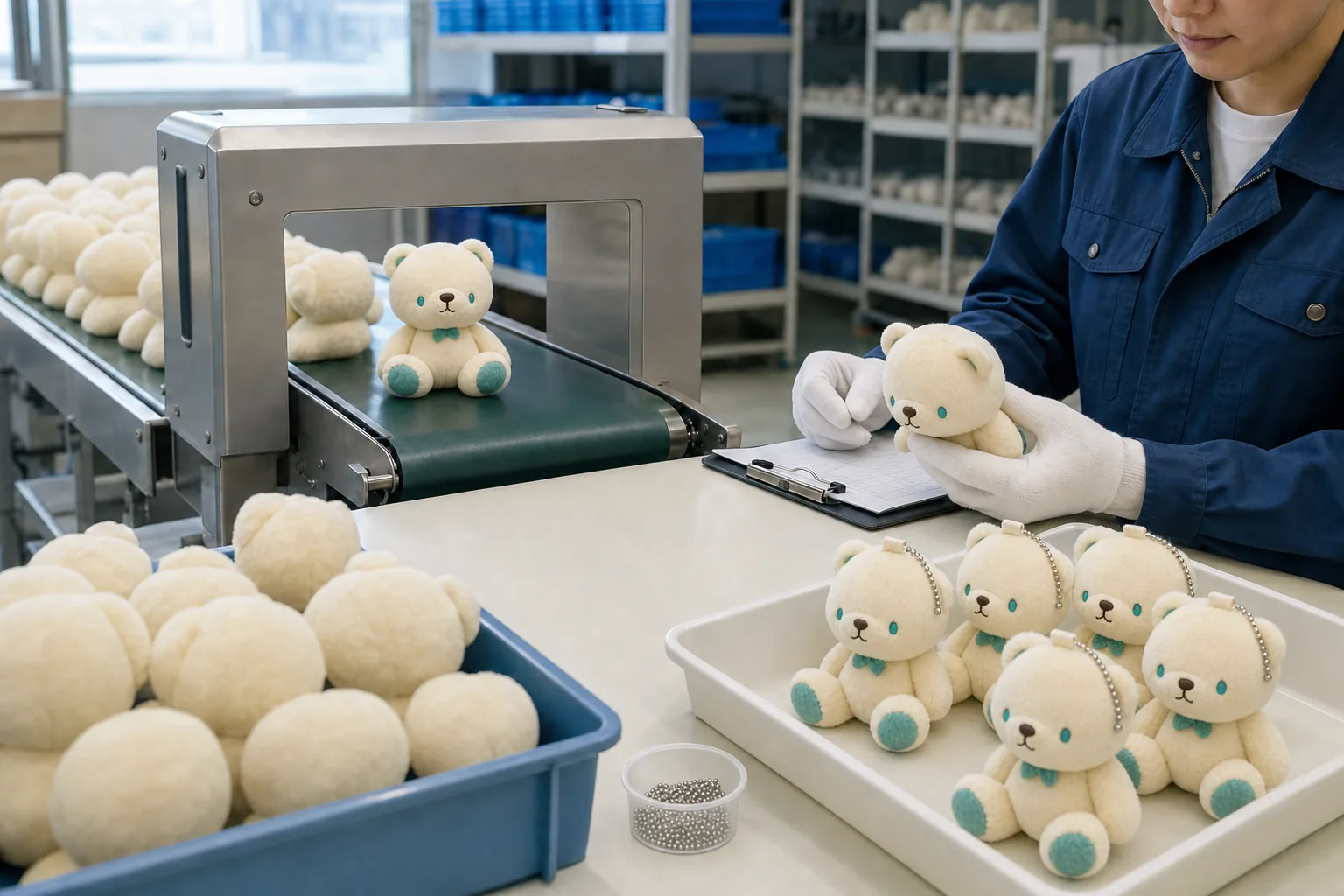
Start with the product specification, not a fixed scan count
The inspection method depends on the sewing process, target age, sales country, buyer standard, product thickness, approved metal components, packing method, and required evidence. Needle detection is one control within a wider product-safety and shipment plan; it does not replace material, pull, durability, labeling, or visual checks.
| Project condition | Decision before quotation | Evidence |
|---|---|---|
| Sewing operations | Needle type, issue/return, breakage response, affected work-in-progress | Needle log, fragment match, quarantine record |
| Approved metal | Ball chain, clasp, ring, bell, joint, spring, quantity, and position | Bill of materials, part lot, approved sample |
| Detection equipment | Method, sensitivity, test piece, product direction, and pass condition | Equipment ID and start/end checks |
| Buyer requirement | Full or sampling scope, report, third-party check, and reject action | Approved specification and lot result |
How many checks? Use two core candidates plus project-specific checkpoints
Instead of stating only “two scans,” name the production point in the specification. The two core candidates in this model close different risk windows; optional checkpoints are added when embroidery, packing, or shipment processes introduce another reason to inspect.
| Checkpoint | Role | Risk window |
|---|---|---|
| After embroidery or decorated panels | Optional | Needles or ferrous fragments from panel processing |
| After sewing / before stuffing | Core candidate 1 | Sewn shell and component assembly |
| After stuffing and closure / before hardware | Core candidate 2 | Completed plush body before planned metal is added |
| After hardware or packing | Conditional | Finished-product check using validated conventional or X-ray conditions |
| After carton packing | Buyer/factory specific | Lot identity and shipment-unit reconciliation |
Control broken needles before relying on a detector
A detector does not replace the response to a broken or missing sewing needle. Stop the affected operation, identify the last verified point, quarantine work-in-progress, recover and match fragments, define the affected quantity, then inspect and approve restart.
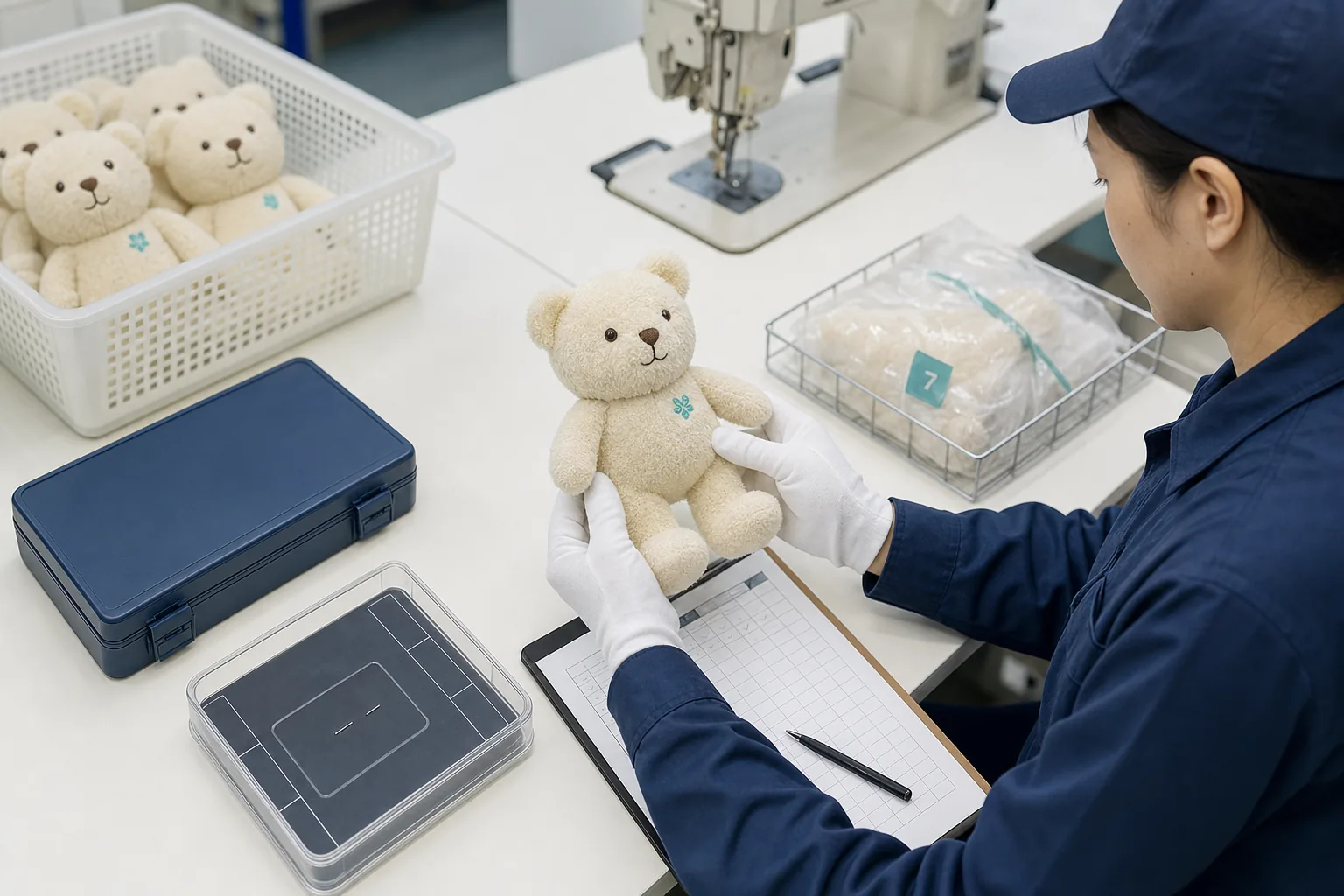
Scan the finished plush body before removable hardware is fitted
The body is easier to evaluate before a ball chain, lobster clasp, or key ring is attached. This stage reduces interference from approved accessories and helps separate a sewing-related response from the hardware added later.
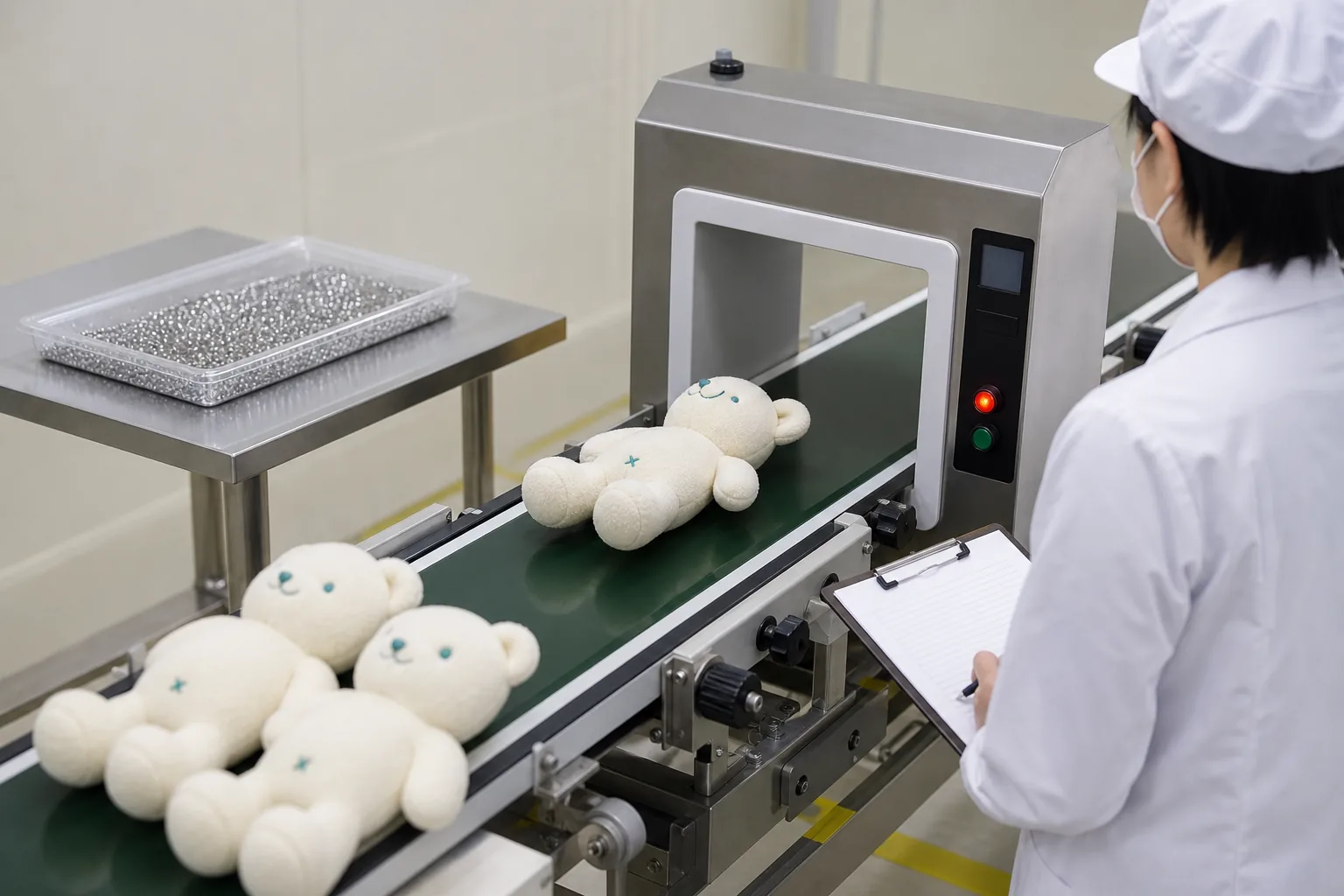
- Verify the equipment with the agreed test piece before use.
- Define product direction, thickness, spacing, and overlap.
- Record SKU, lot, quantity, time, equipment, operator, and rejects.
- Prevent scanned and unscanned bodies from mixing.
Attach ball chains and lobster clasps after the body scan
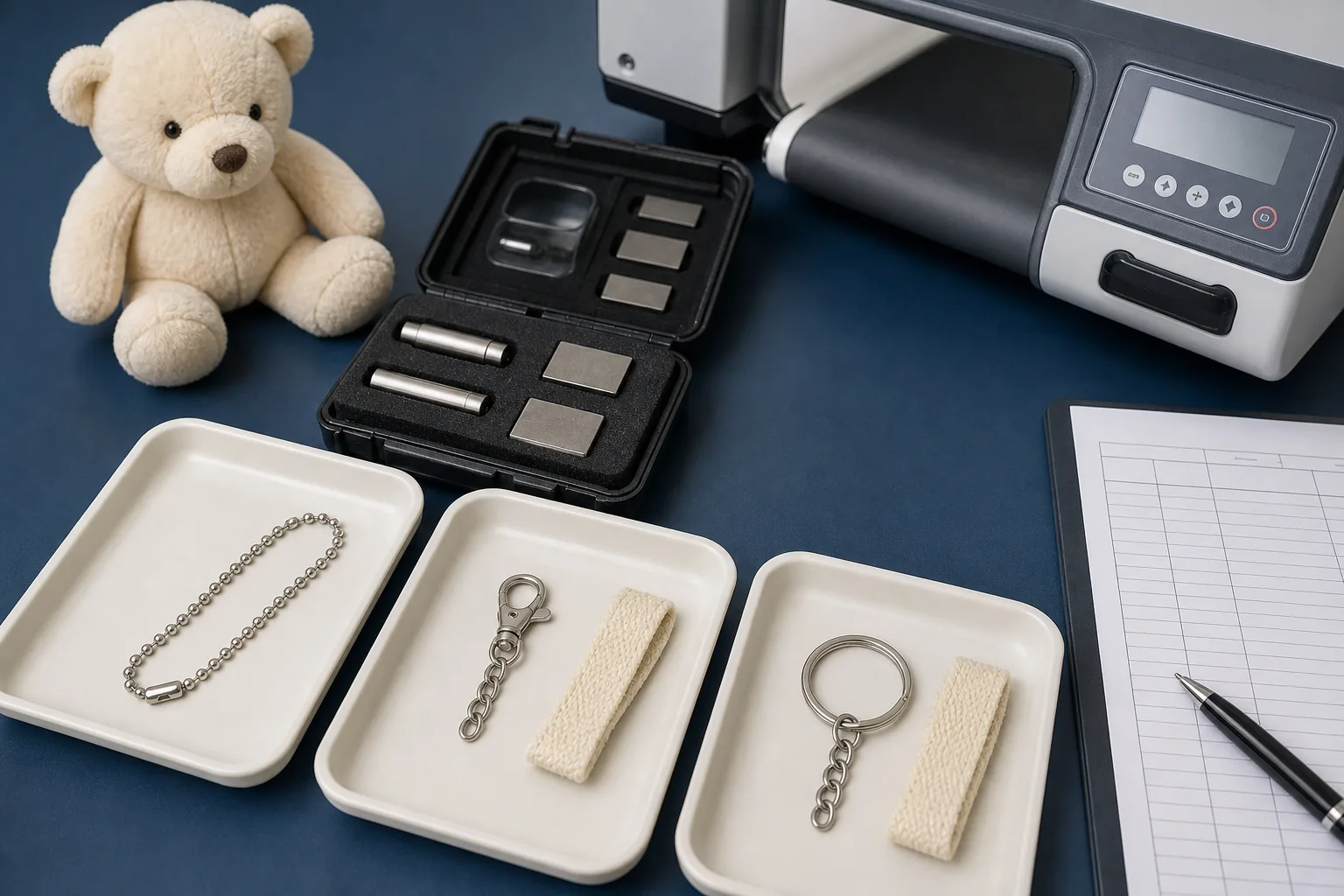
- Complete the bodyFinish stuffing and close the opening without removable hardware.
- Scan the bodyUse the agreed detector, test piece, product direction, and record.
- Attach the hardwareFit the approved ball chain, lobster clasp, ring, or strap.
- Check the finished productValidate conventional reinspection or select the agreed X-ray and final-QC route.
Use X-ray inspection when approved metal cannot be removed
Embedded joints, bells, support pieces, sewn-in metal, and non-removable approved components can prevent a conventional detector from separating the expected response from a broken needle. X-ray inspection can provide internal images without opening the plush, but the project still needs a validated reference and judgment method.
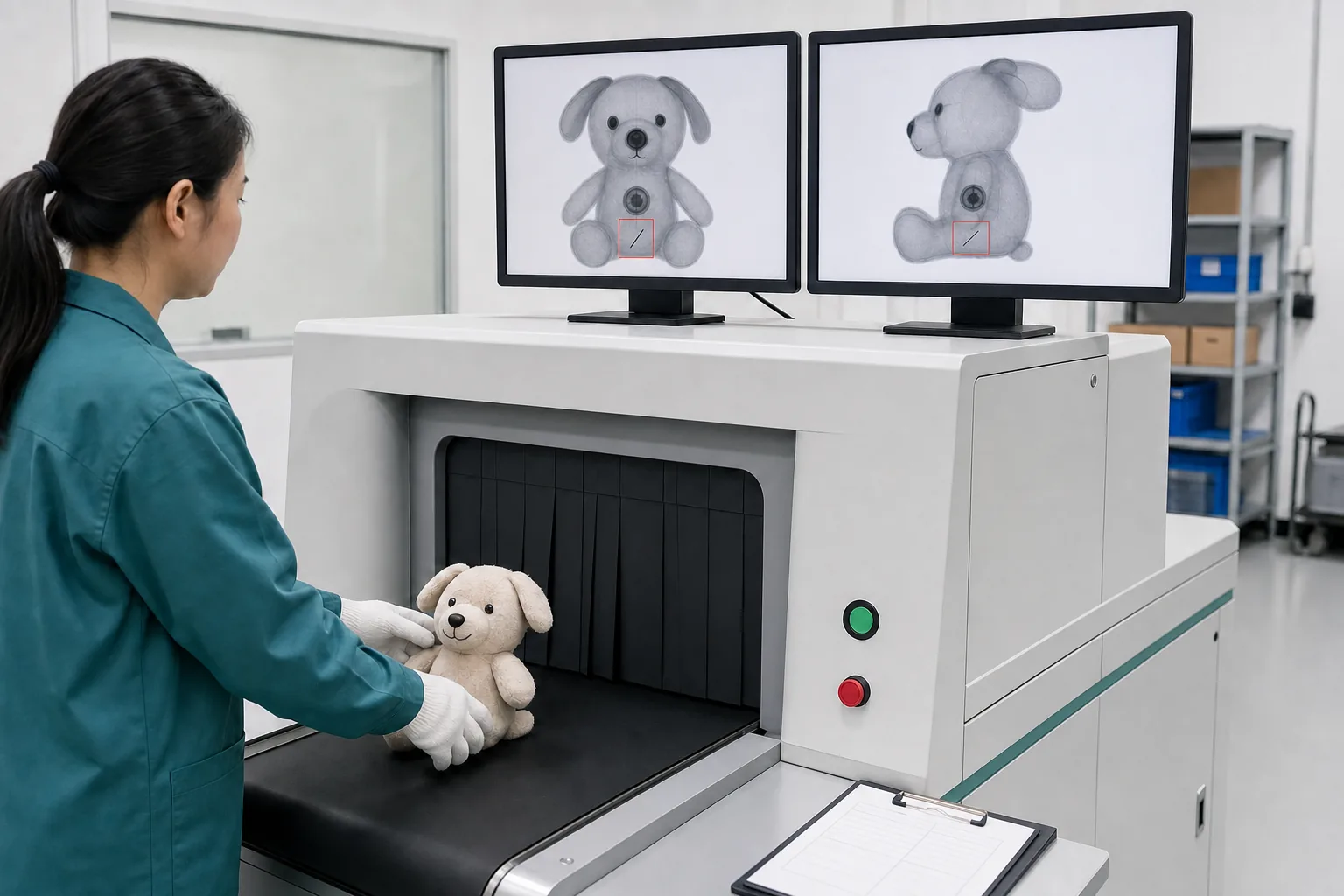
| X-ray condition | What to define |
|---|---|
| Reference image | Location and shape of every approved internal metal component |
| Viewing direction | Additional angle when approved metal may hide a foreign object |
| Judgment rule | Target object, thickness, density contrast, orientation, reviewer, and hold criteria |
| Traceability | SKU, lot, item, saved image, result, quarantine, and recheck action |
Quarantine responses and close the quantity balance
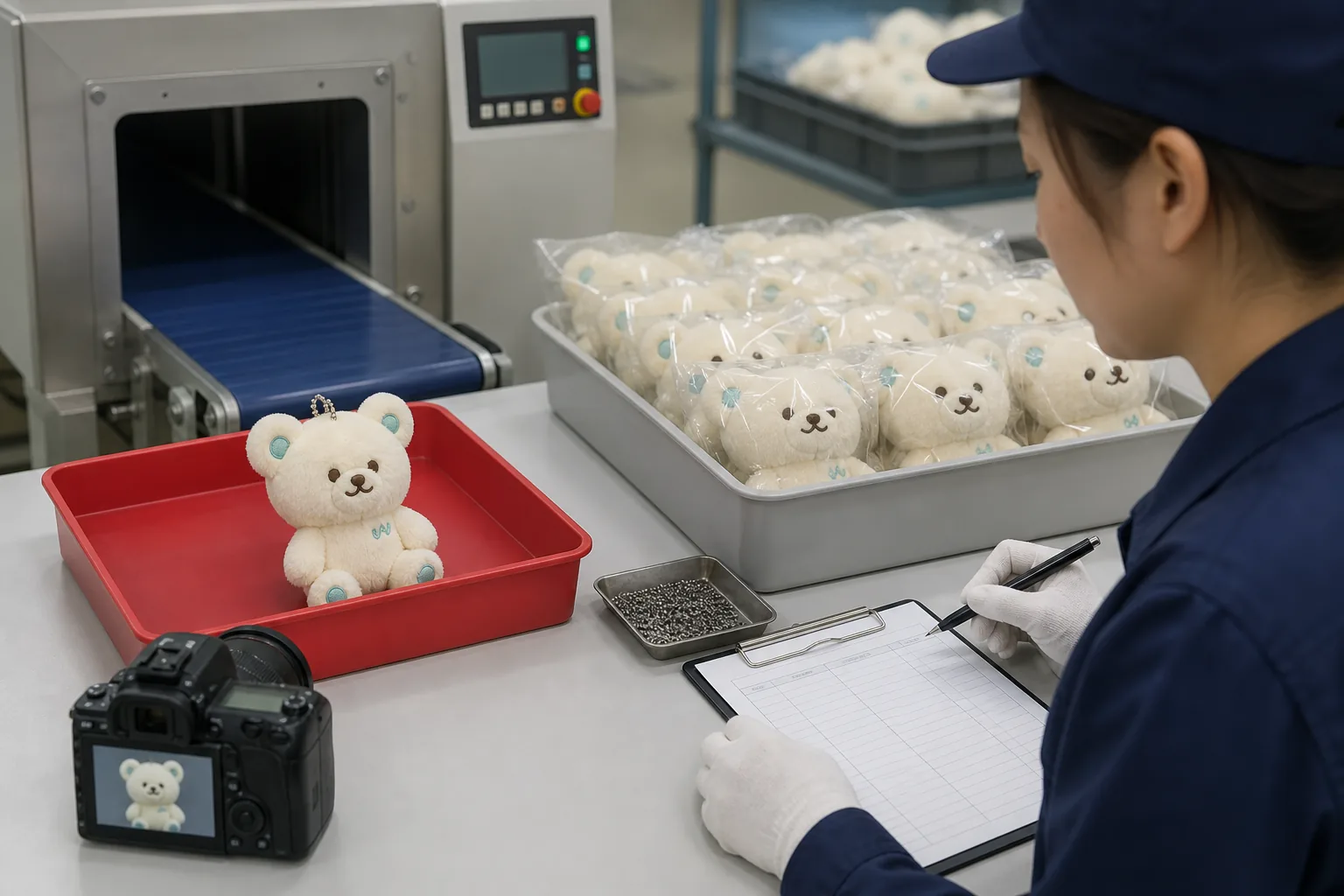
Do not repeatedly pass a responding item until it becomes silent. Identify the item, SKU, time window, hardware lot, and carton; separate the body, approved hardware, equipment, and environment as possible causes; record repair, replacement, reinspection, rejection, and released quantity.
Link the inspection record to the shipment lot
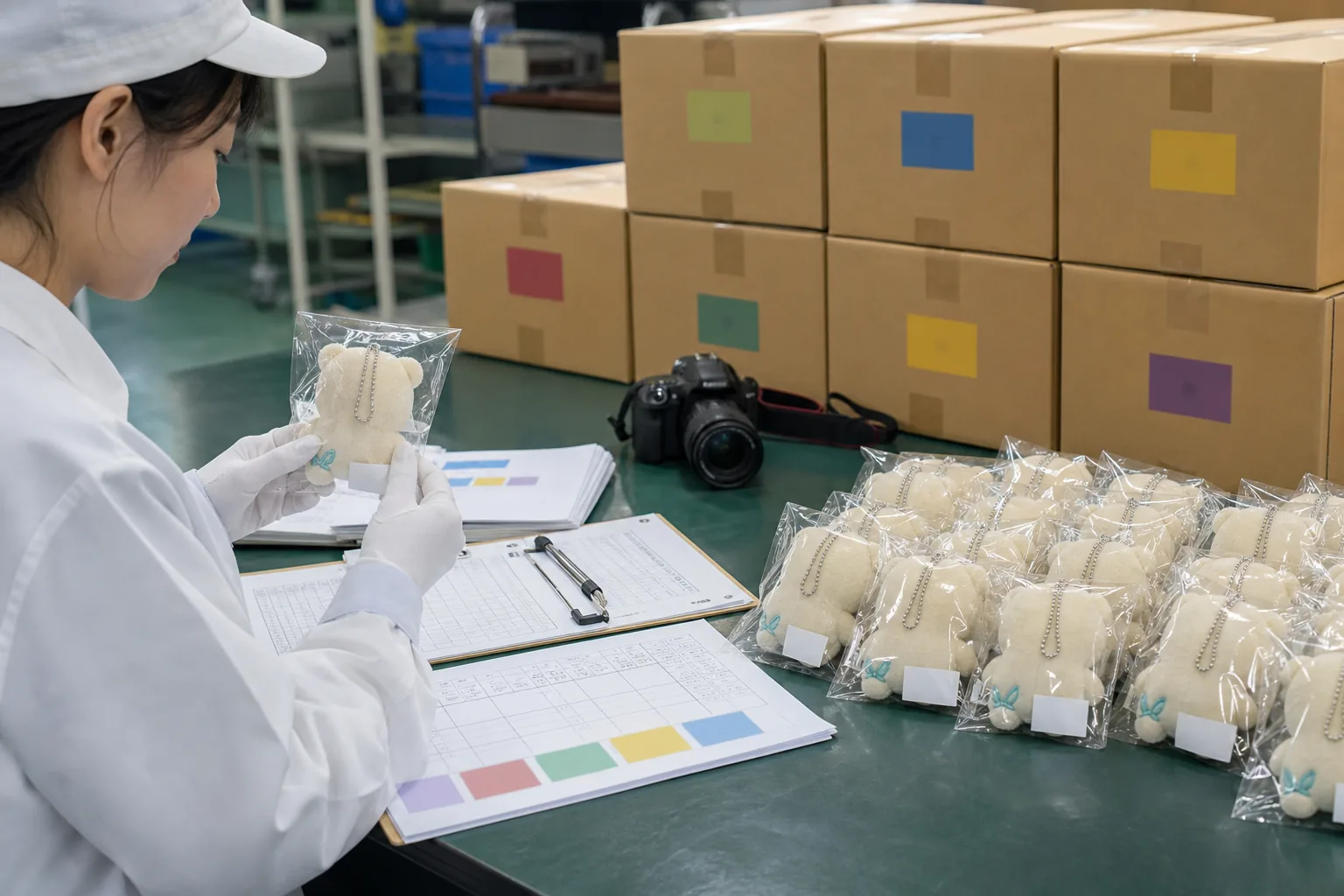
A useful report states what was checked, at which production point, with which equipment and condition, how many items were inspected, what responded, how exceptions were handled, and which cartons were released.
Information to share before quotation
- Product use, target age, sales country, and buyer standard
- Size, thickness, quantity, SKU count, and packing format
- Sewing operations and broken-needle response requirement
- Ball chain, lobster clasp, key ring, bell, joint, or other metal part
- Whether each metal component is removable, embedded, or sewn in
- Required detector, sensitivity, test piece, inspection direction, and report
- Whether X-ray images, multi-angle review, or third-party inspection are required
- Full/sampling scope, hold rule, repair, recheck, reject, and shipment release approval
For broader plush specifications, quotation inputs, and production flow, see our Custom Plush Toy OEM Overview.
Related plush production guides
Frequently asked questions
How many times should a plush toy go through needle detection?
There is no universal fixed count. This workflow uses two core candidates: after sewing or before stuffing, and after stuffing and closure but before metal hardware is attached. Embroidery, packing, or carton checkpoints may be added when the project specification requires them.
Does every custom plush project require the same needle-detection plan?
No. Product use, target age, sales country, buyer requirements, sewing steps, product thickness, and metal parts affect the method and scope. Needle control is still required even when a finished product cannot use a conventional detector.
Should ball chains and lobster clasps be attached before or after the body scan?
A practical sequence is to complete and scan the plush body before removable hardware is attached. After the ball chain or lobster clasp is fitted, validate whether the finished product can still pass the agreed detector condition, then complete attachment, visual, quantity, and packing checks.
Can a needle detector identify every type of metal?
No. Detection method and response depend on the machine, material, product thickness, position, quantity, and overlap. Confirm the actual product, approved hardware, detector, sensitivity, and test piece instead of relying on the hardware name alone.
Does NC-compatible hardware always pass a needle detector?
No. Accessories described as detector-compatible may still produce a response when several pieces overlap, a surface finish is damaged, or the product itself adds background response. Validate the approved production lot in the finished-product condition.
When should X-ray inspection be considered for a plush toy?
Consider X-ray inspection when approved metal parts are embedded or cannot be removed and a conventional detector cannot distinguish their response from a broken needle. Define the reference image, viewing direction, product orientation, judgment rule, reviewer, and image record before production.
Does X-ray inspection guarantee that every needle fragment will be found?
No. Approved metal can overlap a foreign object in the image, and detectability depends on density, thickness, angle, equipment, and review conditions. Validate the real product and equipment, use additional views when needed, and quarantine uncertain items.
Technical references
Define hardware and inspection conditions before production
Share the plush size, quantity, SKU count, hardware, embedded metal, packing method, sales country, and buyer inspection requirements so the quotation can separate pre-hardware detection, finished-product checks, and any X-ray inspection evidence.
Plan a plush hardware project