B2B OEM / HOLOGRAPHIC FINISH
Holographic Acrylic Keychains
Create custom holographic acrylic keychains with a controlled film pattern, reflected-color range and viewing-angle effect. Approve the actual material sample, effect orientation, print and white-ink layers, cut edge, hardware, SKU code and sellable packaging before bulk production.
Projects are quoted from finished size, holographic film or sheet code, artwork, quantity by design, hardware, packaging, inspection scope and delivery destination. General acrylic keychain procurement remains on the core keychain page.
PRODUCT DEFINITION
What are holographic acrylic keychains?
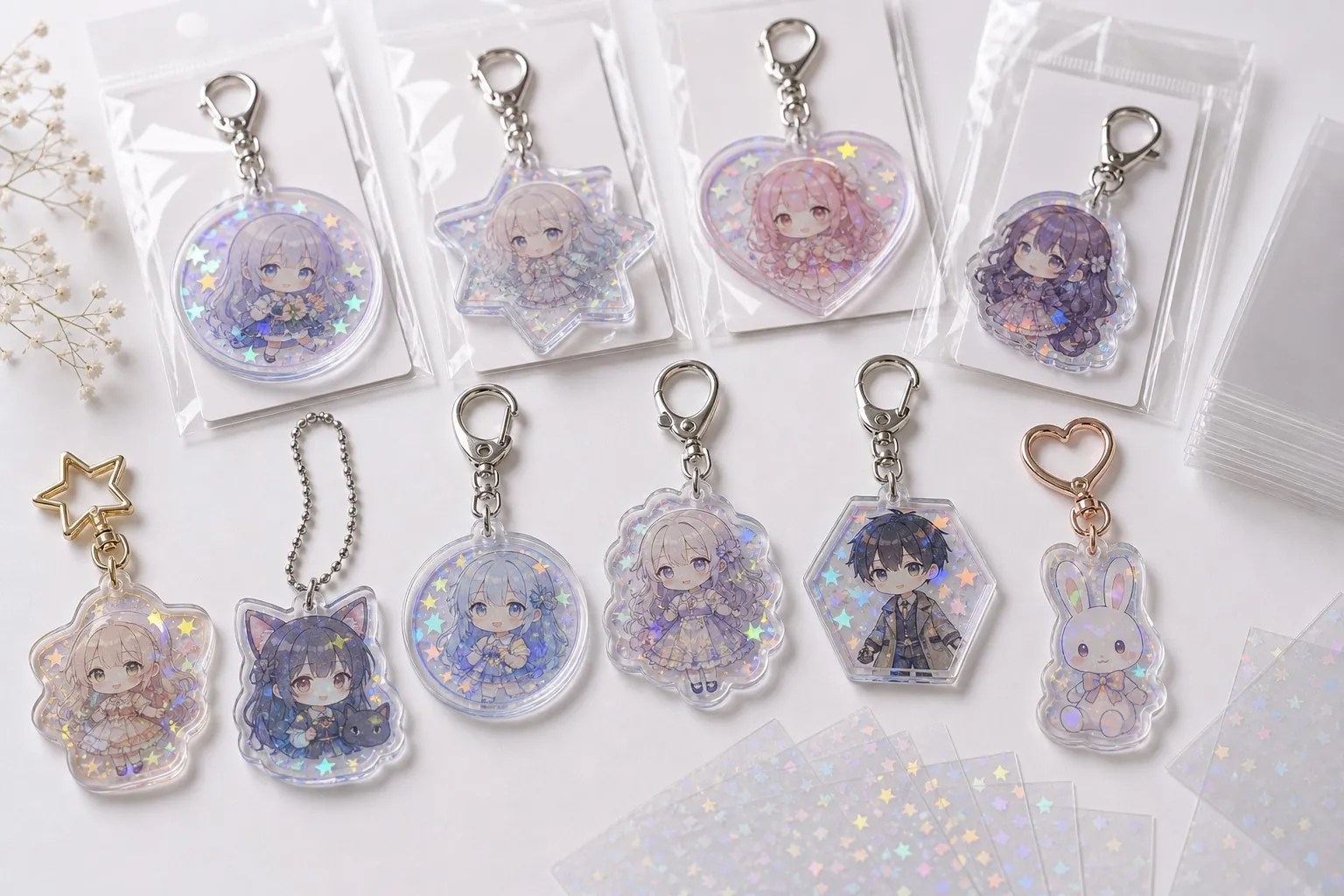
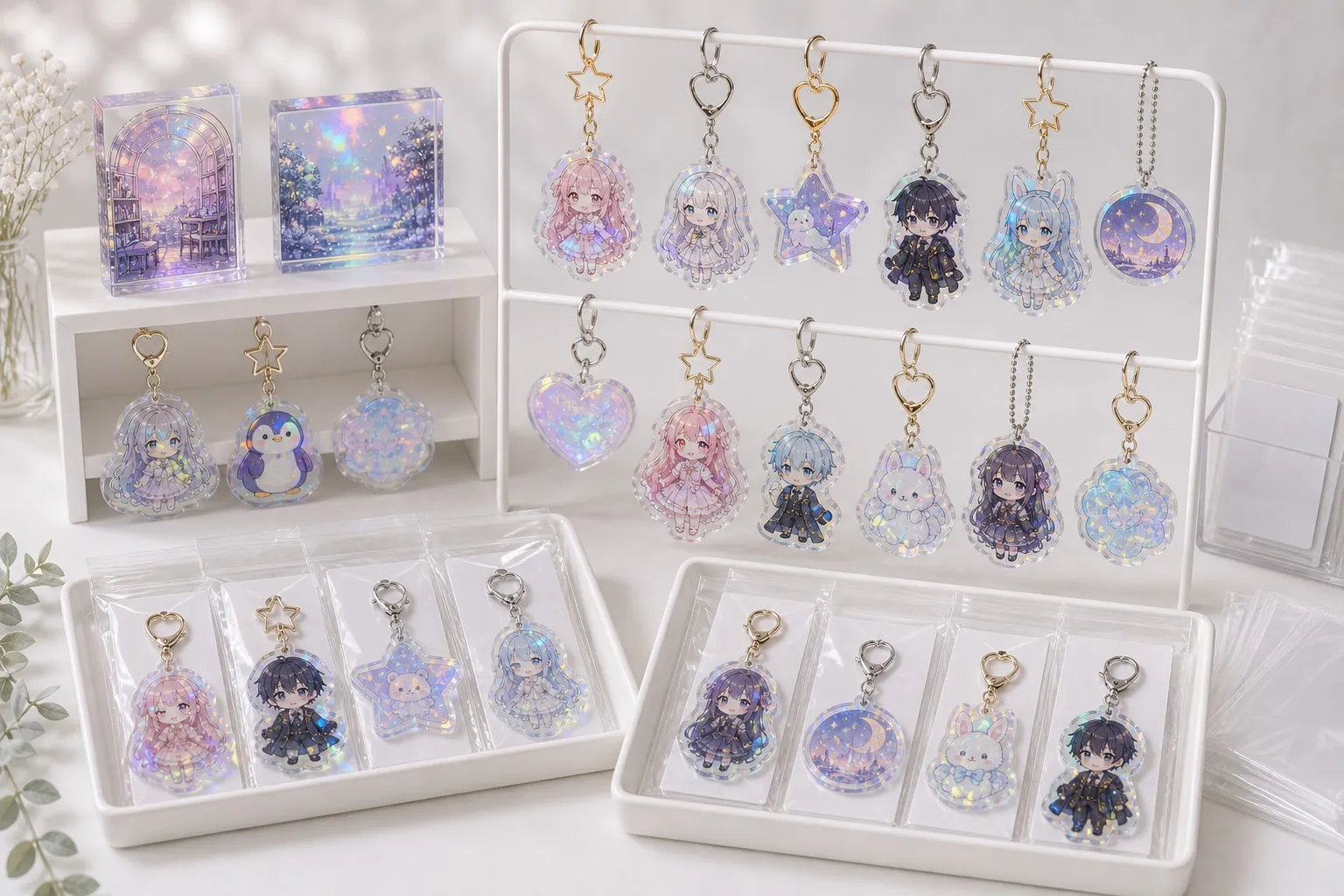
Holographic acrylic keychains are printed and cut acrylic keychains that use an optical film, patterned sheet or equivalent reflective material to create a rainbow-like effect that changes with light and viewing angle. The supplier should confirm the exact material construction because the effect may sit within, behind or on a designated face of the acrylic assembly.
The defining procurement issue is repeatable optical behavior. Buyers should specify the holographic pattern, reflected-color range, effect orientation, transparent areas, print contrast and which face is intended for viewing. These decisions should be approved on physical samples because a flat screen mockup cannot reproduce angle response, brightness or the way white ink blocks the reflective layer.
For standard sizes, generic print, supplier selection and acrylic keychain purchasing without a holographic requirement, use the Custom Acrylic Keychains page. This page retains only holographic-finish intent.
- Standard acrylic keychain: the primary decisions are body size, print, cut, hardware and packaging.
- Holographic acrylic keychain: pattern, reflected-color range, effect orientation, transparency and SKU separation become additional controls.
- Glitter acrylic keychain: individual decorative particles create sparkle and natural distribution variation; this is a different material behavior and keyword intent.
- Epoxy acrylic keychain: a raised clear resin surface introduces coverage and curing decisions; holographic alone does not imply an epoxy dome.
FINISH SELECTION
Choose the holographic material before artwork approval
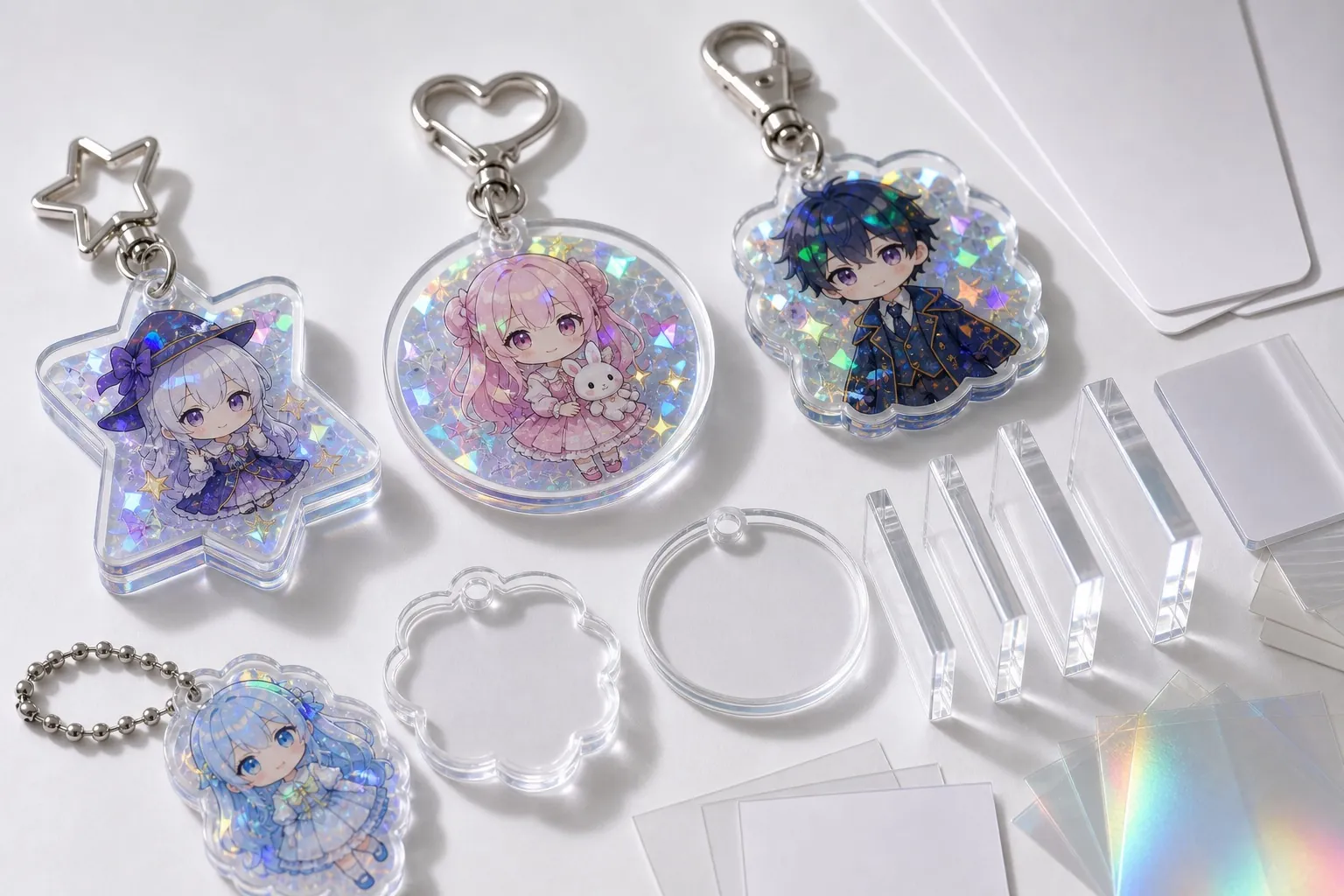
A reference photo is useful for direction, but the production specification needs a named sample or material code, effect orientation and a practical visual acceptance range.
Pattern type
Record the approved sample code for broken glass, stars, dots, rainbow lines or another optical pattern instead of using only the word holographic.
Reflected-color range
Review how the finish shifts across cool, warm and rainbow tones under several light sources and against the intended artwork palette.
Pattern scale and direction
Fine and large motifs read differently on small keychains. Define whether the effect has a directional alignment relative to the artwork.
Material construction
Confirm which face contains the effect, how it relates to the acrylic body and print layers, and whether a protective layer is required.
SPECIFICATION CONTRACT
Build one holographic keychain specification sheet
The sheet should connect the acrylic body, artwork, material code, effect orientation, hardware and final packaging so each SKU can be released without verbal assumptions.
| Finished body | Record width, height, acrylic thickness, cut shape, narrow points, hole diameter, edge distance and packed dimensions. |
|---|---|
| Print layers | Separate color, white ink and transparent areas. Mark which face carries the artwork and which areas depend on the holographic background. |
| Holographic option | Assign a sample or material code for pattern, pattern scale, reflected-color range, viewing face and construction. Attach the approved physical reference. |
| Effect orientation | Record the pattern direction relative to the upright artwork, hole position and intended front face. Add an orientation arrow when the effect is directional. |
| Visual range | Define acceptable angle response, brightness and reflected-color range under the agreed lighting checks. |
| Surface and edge | Confirm surface marks, edge finish, chips, layer alignment, effect visibility at the cut edge and any area that must remain clear. |
| Hardware | Match the hole and body size to the jump ring, key ring, lobster clasp, ball chain, cord or decorative fitting. |
| Retail packing | Define individual bag, backing card, blind bag, barcode or SKU label, set assembly and scratch protection. |
| Order matrix | List total quantity, quantity per design, holographic code, orientation, hardware, packing code, carton mark and destination for every SKU. |
ANGLE AND ORIENTATION
Control viewing-angle response and transparent space
A holographic layer is read through movement. The same keychain can look pale when viewed straight on and highly reflective when the product, viewer or light source moves. Buyers should approve the effect under front, tilted and side viewing positions rather than judging one studio photograph.
Pattern direction also affects the collection. A directional line, shard or star pattern can look inconsistent if one SKU is rotated relative to the others. The sample and order matrix should show the intended upright artwork orientation, front face and holographic direction. Check the result on white, dark and neutral backgrounds under ordinary ambient and point lighting.
- Approved holographic sample or code
- Pattern name and scale
- Reflected-color range
- Pattern direction arrow
- Intended front viewing face
- Clear space around important art
- Front and reverse angle response
- Accepted lighting conditions
PRINT AND WHITE INK
Coordinate artwork contrast with the holographic background
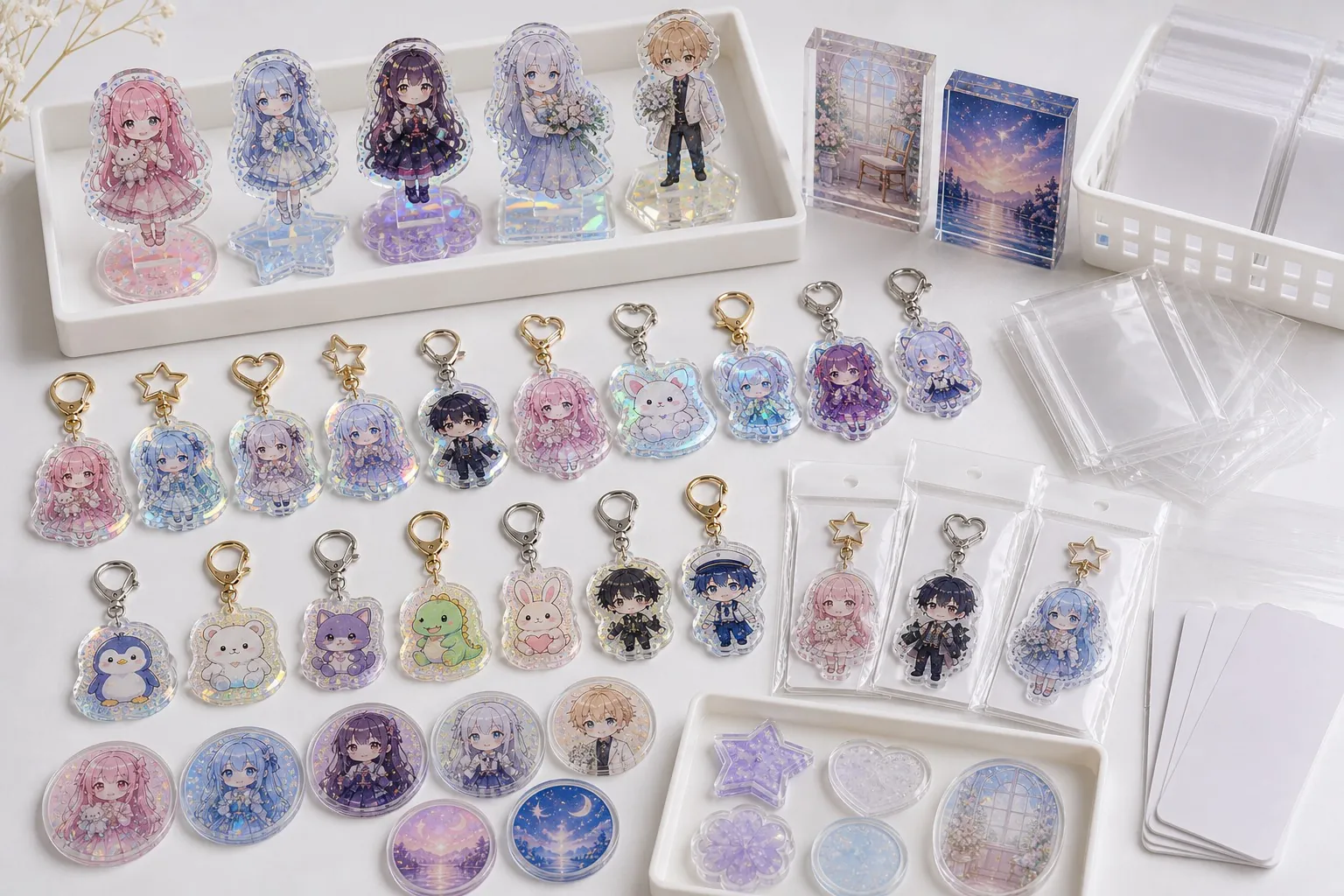
The print file should separate color artwork, white-ink support and transparent areas. White ink can isolate selected artwork from the holographic effect, while unprinted or selective-white areas allow the optical layer to remain visible. A full white plate may make the artwork more opaque but can hide the finish almost completely behind that area.
Fine lines, pale colors and small text may lose contrast over a bright moving background. Keep critical details inside the safe print area and decide whether outlines, white backing or a clearer local zone are needed. If artwork is visible from both sides, define the viewing direction and layer order so the reverse does not look mirrored or unexpectedly blocked.
- Color layer: keep important facial details, text and logos readable against the approved holographic option.
- White-ink layer: identify full, selective and no-white areas according to the intended opacity and sparkle visibility.
- Holographic reference: link the artwork SKU to one approved material code, pattern direction and angle-response standard.
SIZE AND HARDWARE
Check finished size, hole position and attachment fit
The decorative finish does not replace the mechanical specification. Body size, narrow points, hole geometry and hardware still determine handling and packing.
Record the finished acrylic dimensions and verify that the hardware hole has enough distance from the cut edge. A directional optical pattern near a small hole can make the attachment area look crowded or visually rotated, so the sample should be reviewed after the ring or clasp is assembled.
- Finished width and height
- Acrylic thickness
- Hole diameter and center position
- Distance from hole to cut edge
- Narrow points and corners
- Hardware type and finish color
- Assembled hanging direction
- Packed weight and dimensions
Use the Acrylic Keychain Fittings Guide to compare attachment types before sample approval.
Attachment review on the physical sample
Check the assembled unit from the intended front direction. The jump ring or clasp should move without catching on a narrow acrylic point, and the chosen finish color should support the artwork rather than hide it.
For sets with several shapes, record the hardware orientation for each design. A shared component can still hang differently when hole positions vary, so the approved sample and order matrix should show the correct direction by SKU.
SAMPLE APPROVAL
Approve holographic acrylic keychains in six steps
A screen proof can confirm artwork layers but not the final reflection, pattern direction or angle response. Physical samples should establish the visual and mechanical standard.
Define the finish intent
State the desired pattern, reflected-color range, viewing face, effect direction, transparency and comparison reference.
Lock the physical guide
Record finished size, cut line, hole, narrow points, acrylic thickness and hardware.
Separate artwork layers
Name color, white ink, transparent zones and any area that needs clear visual space.
Inspect the finish sample
Review the pattern under front, tilted and side angles, then check artwork contrast, surface, edge and reflected-color range.
Approve the sellable unit
Assemble the selected hardware and place the sample in final-style packaging with the correct SKU label.
Release one revision
Consolidate artwork, holographic code, hardware, packing and inspection changes before bulk production.
MASS-PRODUCTION RISK
Failure risks to resolve before bulk production
Effect orientation is missing
A directional pattern can be rotated between SKUs or production lots unless the approved file shows an upright orientation arrow.
The option is described only as rainbow
Different holographic films can share that name but use different motifs, scales and reflected tones; use a physical code or sample.
Fine artwork loses contrast
Small details can compete with a bright optical background when white ink and transparent zones are not planned together.
Holographic and glitter effects are mixed
Film-based angle response and individual decorative particles have different material behavior and should not share an ambiguous specification or keyword target.
Similar variants are mixed during packing
Close patterns or reflected-color options require clear finish codes, labeled trays, packing records and carton identification.
The sample is checked under one light
Brightness and reflected color can change under daylight, warm retail light and direct point light; approve several practical conditions.
Hardware hides a critical detail
Hole placement and attachment orientation may cover artwork or disturb the visual balance around the holographic field.
Late material changes bypass approval
A changed pattern, orientation, reflected-color range or construction is a finish change and should be resampled or explicitly accepted.
QUALITY CONTROL
QC checkpoints for a repeatable holographic finish
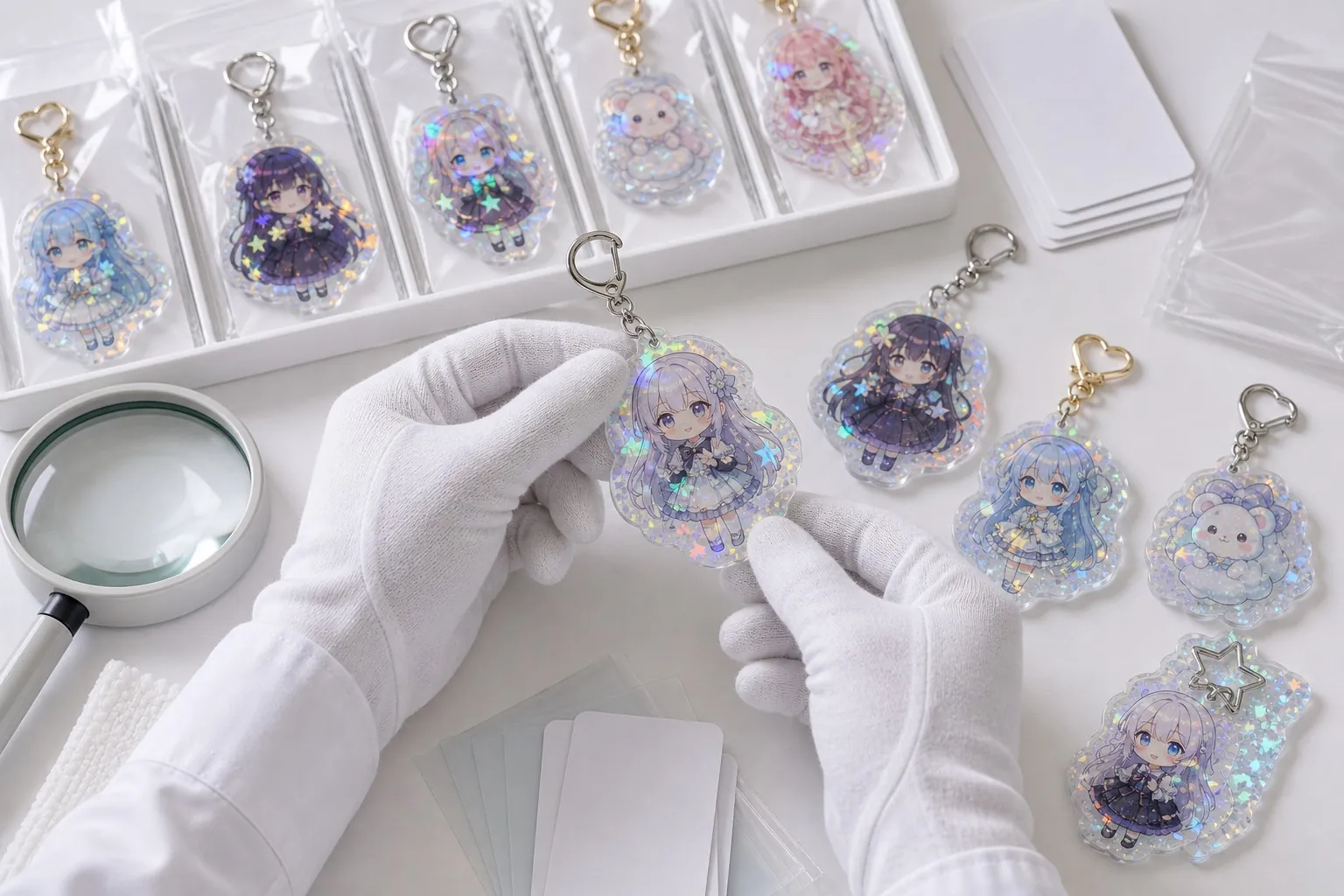
Inspection criteria should follow the approved physical sample and final specification. The scope can cover holographic identity and orientation, angle response, print, acrylic body, hardware assembly, packaging accuracy and pre-shipment checks.
- Holographic identityConfirm the correct material code, pattern, reflected-color family and approved construction for each SKU.
- Direction and angle responseCheck the approved pattern orientation and compare reflection from front, tilted and side viewing positions.
- Print and white inkCheck color density, registration, white halos, readability and transparent areas over the holographic background.
- Cut, edge and surfaceInspect dimensions, narrow points, chips, edge finish, marks and any visible layer misalignment.
- Hardware assemblyConfirm fitting type, color, ring closure, movement and intended hanging direction.
- Pack and carton accuracyVerify SKU, card, label, quantity, set or random rule and separation of similar finish variants.
See the Acrylic Goods Quality Inspection guide for inspection planning.
PACKAGING AND SKU CONTROL
Separate close holographic variants in the sellable pack
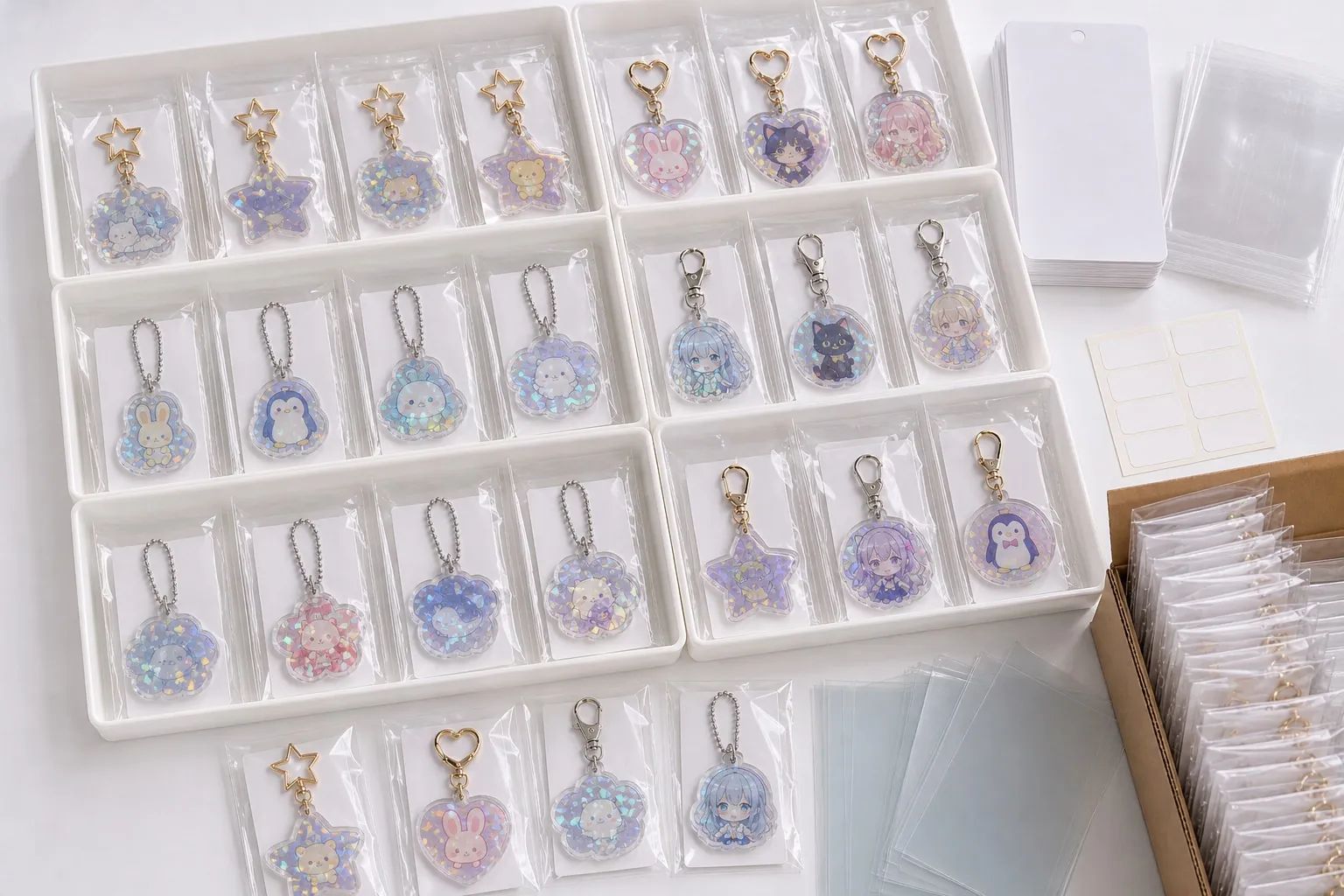
Holographic pattern and reflected-color options may create variants that look similar at a glance. The order matrix should connect artwork code, material code, effect orientation, hardware, backing card, barcode or SKU label and carton mark. Labeled work-in-process trays and packing records reduce mixups before final carton checks.
Individual retail
Clear bag or sleeve, backing card, SKU label and surface protection for open-display products.
Blind merchandise
Opaque bag, design code, randomization rule, inner-box quantity and controlled variant count.
Multi-piece set
Correct item combination, finish code, hardware orientation, separators and missing-part check.
Event fulfillment
Quantity by SKU, destination split, carton labels and venue or warehouse instructions.
Review the Keychain Scratch-Prevention Packaging guide before approving the final pack.
MERCHANDISE PROGRAMS
Use holographic effects where they support the collection
The finish should be selected for a specific merchandise idea rather than added as a generic decoration. It can support seasonal, event, creator and retail programs when artwork contrast, pattern direction and variant structure are planned around the approved optical material.
Seasonal releases
Use an approved color family for holiday, anniversary or campaign-specific merchandise.
Creator collections
Match the holographic pattern and reflected-color range to character palettes while keeping expressions and line art readable.
Event sales
Coordinate quantities, SKU labels, carton splits and arrival conditions for venue delivery.
Retail series
Plan front display, backing cards, blind or open packaging and consistent visual range across many designs.
QUOTE CHECKLIST
Information needed for an accurate project quote
Unconfirmed items can be marked for recommendation. The holographic material option, orientation and quantity split should be clear before comparing a realistic production route.
- Artwork for every design
- Finished body width and height
- Acrylic thickness and construction
- Cut line and hole position
- Color, white-ink and transparent layers
- Approved holographic sample or material code
- Pattern, reflected-color and direction intent
- Hardware type and finish color
- Total quantity and quantity per design
- Individual, blind or set packaging
- Backing card, barcode and label needs
- Required arrival date and destination
ORDER CONDITIONS
MOQ, sampling and delivery are project-specific
Quantity and schedule cannot be confirmed from the finish name alone. Finished size, number of designs, holographic option, hardware, packaging labor, inspection scope and destination all affect the practical route.
Quantity per design
Share the combined quantity and the split by approved artwork and holographic SKU.
Sample scope
Identify which material patterns, reflected-color options, print layers, hardware and packs require physical approval.
Bulk schedule
The schedule is confirmed after approved files, sample revisions, materials, packing and inspection conditions are known.
Delivery plan
Provide the country, destination, required arrival date, shipment split and venue or warehouse requirements.
PRODUCTION WORKFLOW
From holographic selection to shipment
- 01 InquiryArtwork, finish intent, quantities and destination
- 02 ReviewBody, layers, holographic code, hole, hardware and pack
- 03 SamplePattern, angle response, print, edge and sellable-unit check
- 04 ApprovalOne final artwork and specification revision
- 05 ProductionManufacturing, assembly, sorting, packing and QC
- 06 DeliveryCarton labels, documents and agreed shipment
Review the complete OEM order process before scheduling artwork submission and sample approval.
FAQ
Holographic acrylic keychain FAQ
What is the practical MOQ for holographic acrylic keychains?
The practical MOQ depends on finished size, holographic film or sheet option, quantity per design, hardware, packaging and inspection requirements. Share the total quantity and design split so the production route can be reviewed for the actual project.
Can different holographic patterns be used in one order?
Multiple holographic patterns or reflected-color options can be reviewed, but each combination should be treated as a controlled SKU with its own artwork, finish code, quantity, hardware and packing data. The physical sample set should establish the visual standard for every approved option.
How should the holographic effect be shown in the artwork?
Provide editable artwork with separate color, white-ink, cut-line and hole layers. Add a named holographic material reference and mark the areas where the effect should remain visible through transparent or selective-white zones.
Why does the holographic effect change with viewing angle?
The micro-pattern or optical film reflects light differently as the product, light source or viewer moves. Buyers should approve the pattern, reflected-color range, orientation and artwork visibility under several practical lighting and viewing conditions.
Can retail, blind or set packaging be prepared?
Individual bags, backing cards, opaque blind bags, SKU or barcode labels, set assembly and labeled cartons can be discussed. The packing specification should keep similar holographic variants separated and protect printed and acrylic surfaces from rubbing.
How are sampling, QC and delivery timing confirmed?
Timing is confirmed after artwork, holographic material code, effect orientation, quantity by design, hardware, packaging, inspection scope and destination are known. Bulk production should begin from approved physical samples and one final specification revision.
RELATED RESOURCES
Continue the acrylic keychain review
PROJECT REVIEW
Prepare a holographic acrylic keychain specification
Send the artwork, holographic reference, finished size, quantity by design, hardware, packaging and delivery destination. Unconfirmed items can be marked for recommendation.