Custom Non-Woven Bags Manufacturer / Trade Shows & Promotional Packaging
Custom Non-Woven Bags ManufacturerGSM, Laminationand Printing Choices
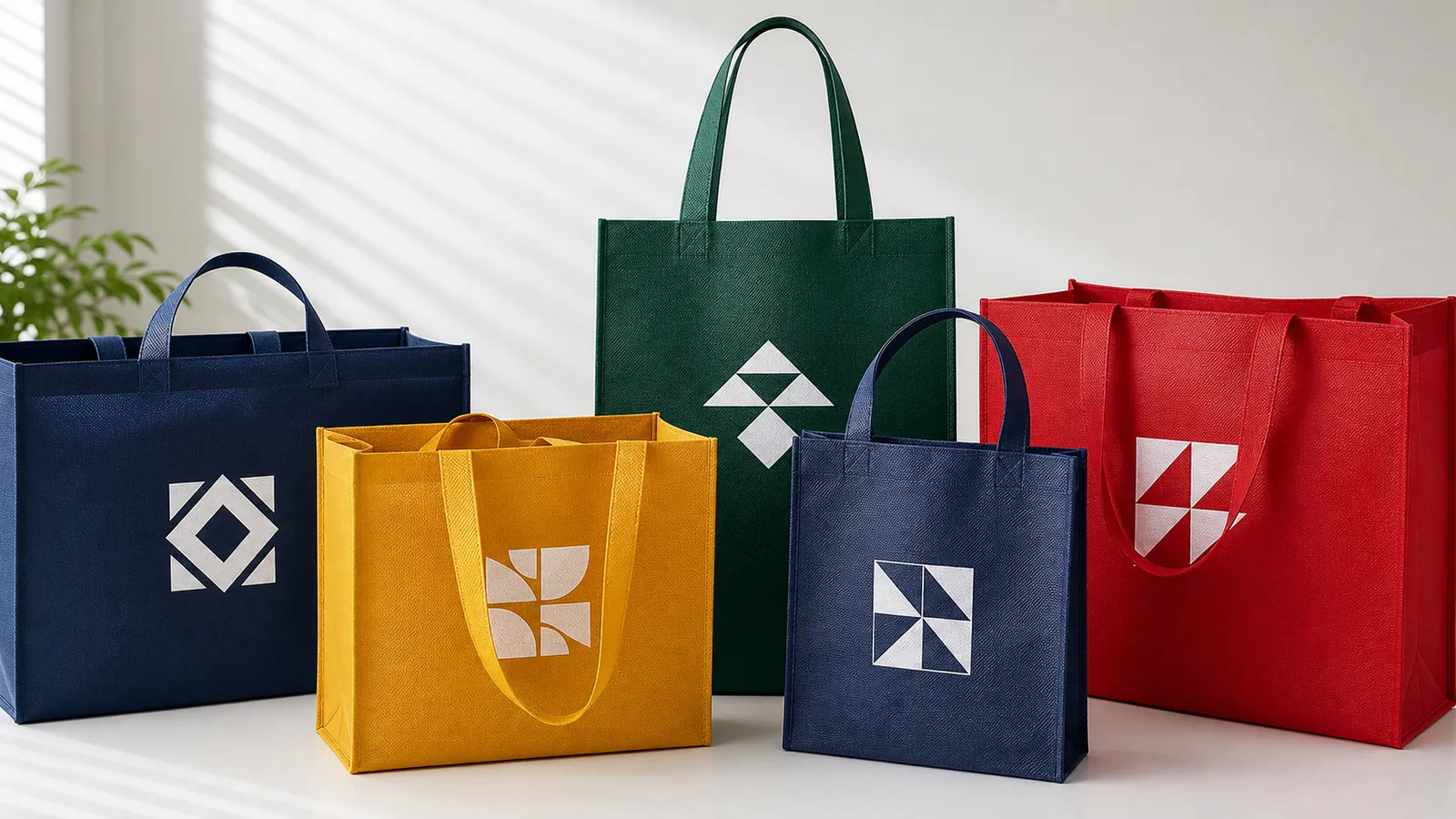
Custom non-woven bag projects should start with the contents, quantity, event date, and delivery route. From there, choose fabric GSM, gusset, handle length, body color, lamination, printing method, individual packing, carton labels, and split delivery conditions for trade shows, promotional campaigns, retail shoppers, gift sets, and IP novelty programs.
A4 Distribution
For A4 handouts, confirm the flat shape and handle length first
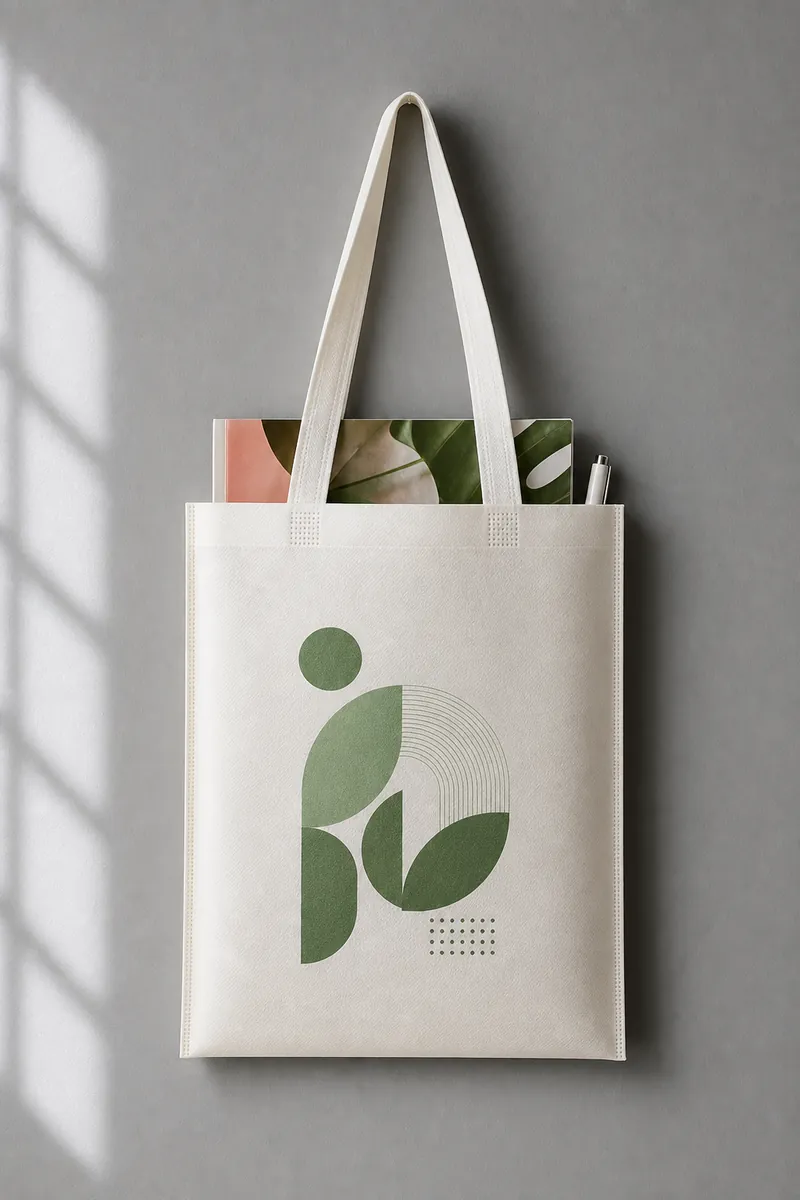
Trade shows, seminars, school events, and open-campus programs often need a simple non-woven document bag that keeps A4 brochures flat and easy to carry. A flat bag stores efficiently, packs predictably in cartons, and works well when the contents are mainly catalogs and flyers.
Use Case Matrix
Choose non-woven bag specifications by use case
| Use case | Main contents | Candidate specification | Sample checks |
|---|---|---|---|
| Trade shows and seminars | A4 brochures, catalogs, flyers | Flat or shallow-gusset bag, light to mid GSM | A4 fit, welded edges, handle length |
| Corporate campaigns | Samples, coupons, novelty items | Color SKUs, one-color or two-color print, OPP packing | Color swatches, individual packing, carton labels |
| Retail shoppers and gift sets | Products, apparel, gift bundles | Wide gusset, thicker fabric, bottom board, reinforced handles | Standing shape, bottom gusset, handle roots |
| IP and character novelties | Acrylic goods, cards, small merchandise | All-over artwork, lamination, color or artwork SKUs | Color vividness, fold lines, packing visibility |
| Gift packaging and small sets | Cosmetics, small goods, commemorative gifts | Non-woven drawstring pouch, ribbon, foil-like accent | Drawstring closure, ribbon, surface texture |
Color / Material
Body color affects printing, SKU control, and brand tone
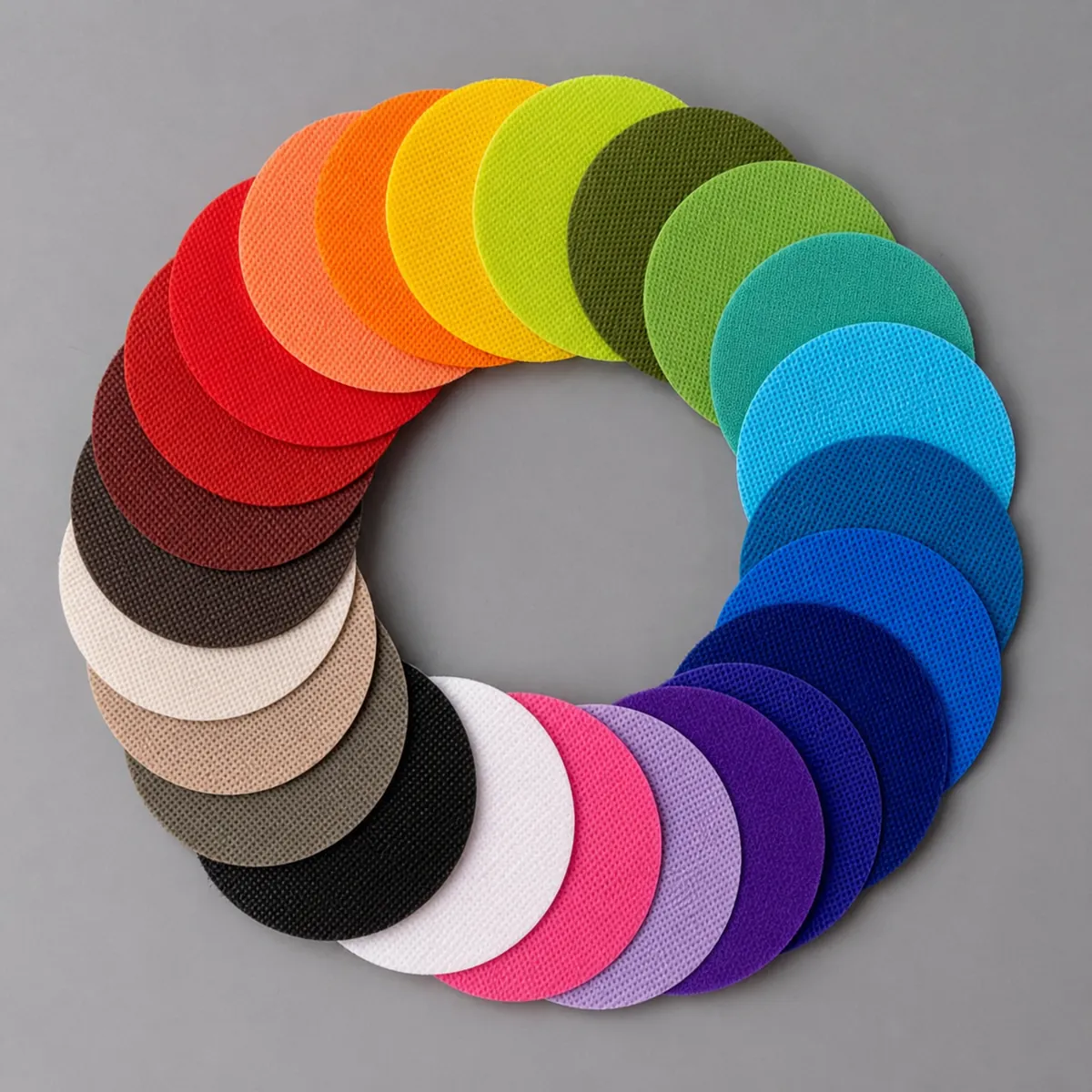
Non-woven polypropylene bags are available in many body colors. Light colors make fine artwork easier to read, while dark colors may require white ink, a white base, or a different printing method. When the project has several venues, schools, stores, or characters, color can also become a useful SKU management tool.
- Color SKUs: Prepare a quantity table when color is used by event, store, or campaign.
- Print contrast: Dark fabric requires white ink and coverage checks for light logos.
- Surface texture: Non-woven texture affects thin lines and small text.
- Stock and timing: More body colors can change material availability and lead time.
Shape / Structure
Retail shoppers need gusset, bottom, and handle reinforcement checks
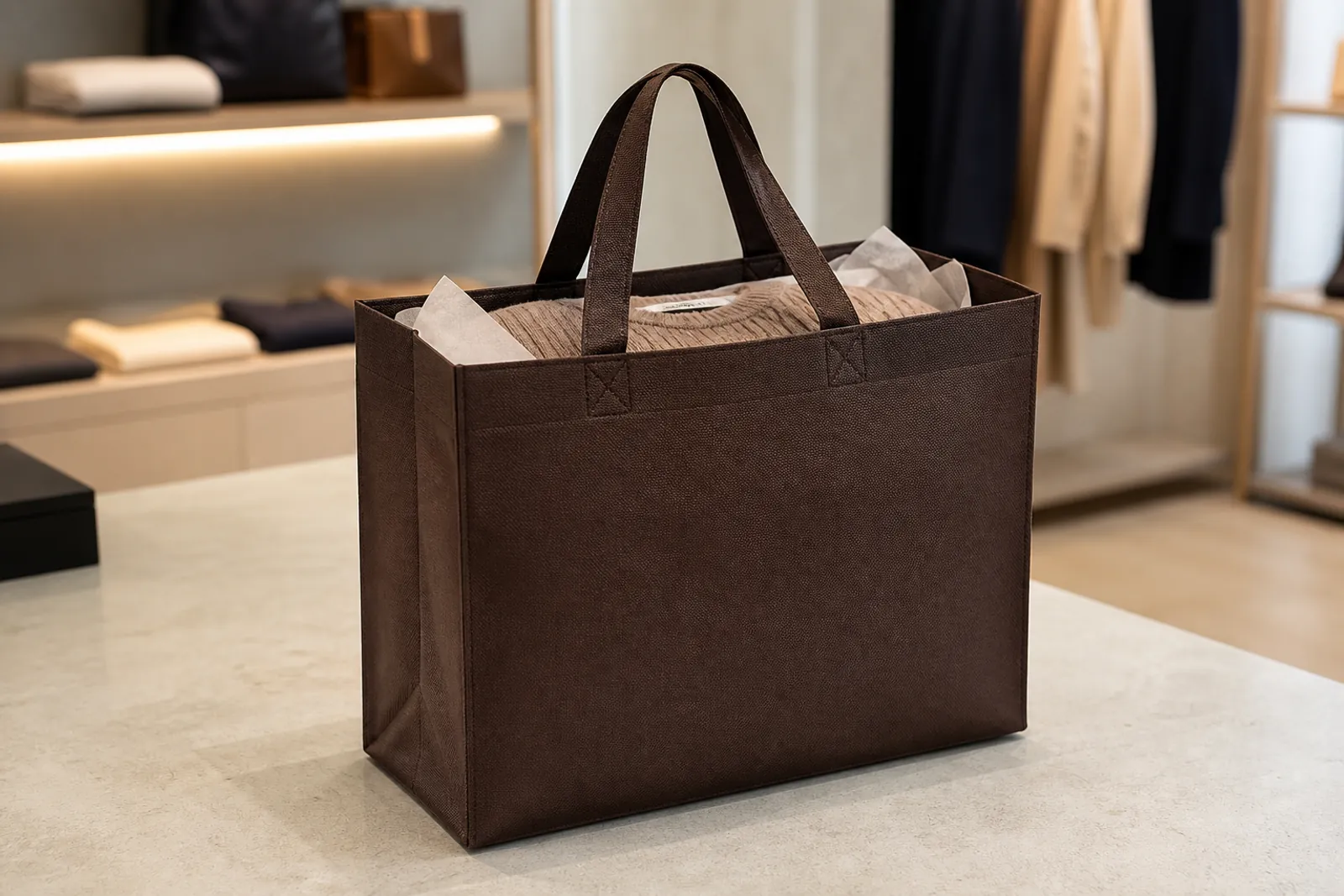
For apparel, gifts, lucky-bag style bundles, and product sets, the bag must do more than hold printed material. Check whether the bag stands upright, how the bottom gusset behaves under load, and whether the handle width and attachment method match the expected weight.
Lamination / Full Color
For all-over graphics, confirm lamination finish and fold behavior
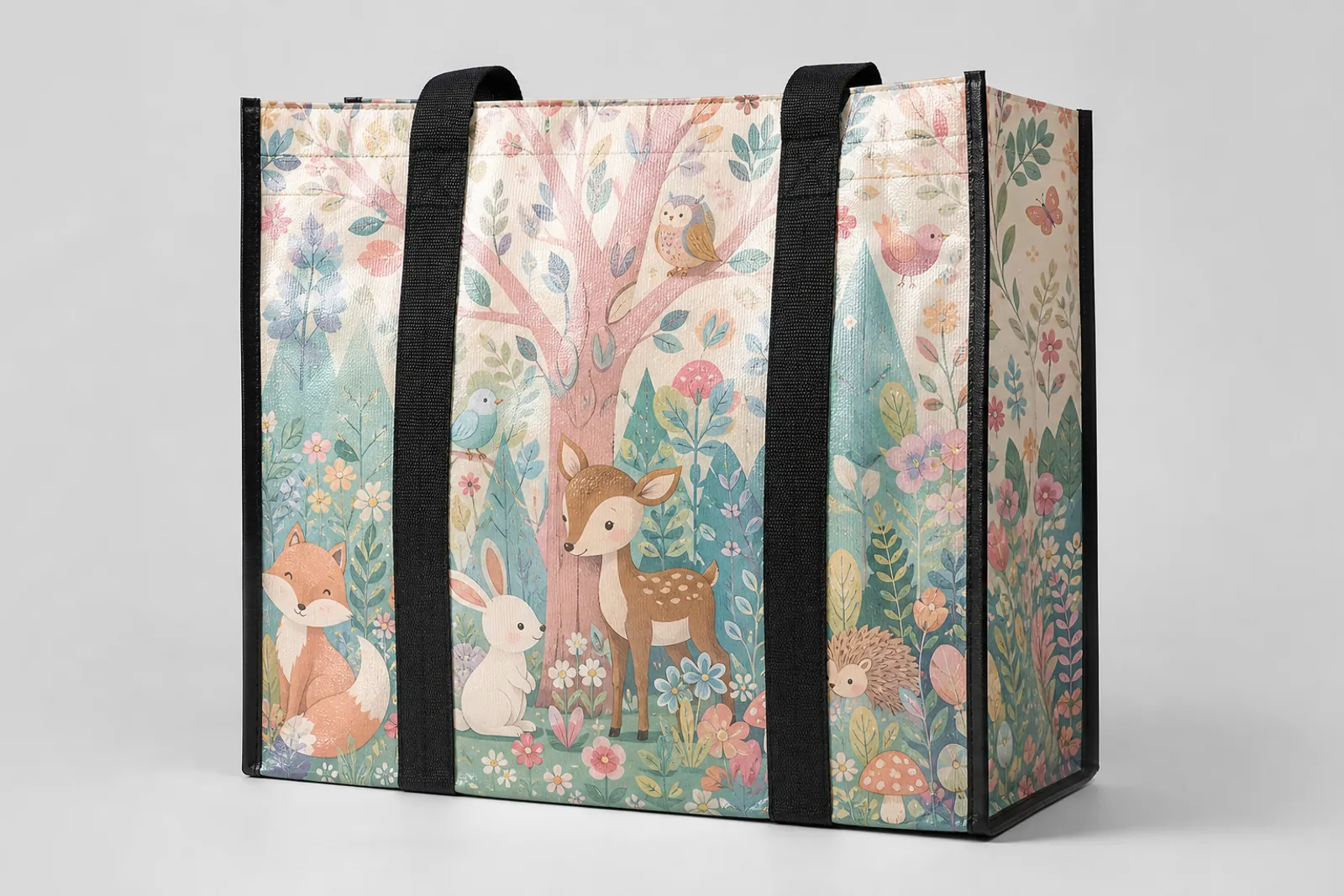
When artwork uses many colors, character visuals, gradients, or full-panel designs, PP, CPP, or BOPP lamination can make colors look more vivid and can create a cleaner printed surface. Confirm gloss or matte finish, side-panel alignment, fold lines, and handle reinforcement instead of judging only from flat artwork.
Printing Method Selection
Choose full-color printing by lamination, print area, and order size
For vivid photographic artwork or edge-to-edge character designs, a film can be printed first and then laminated onto the non-woven base. This route is better suited to larger runs because artwork setup, film printing, lamination, and proofing need to be included in the cost structure.
For non-laminated bags, the raw fabric texture makes full-color printing less uniform than paper or film. For smaller quantities, simple logos usually start with screen printing, while multi-color or character artwork may use heat transfer, DTF-style white-ink transfer, or digital/UV direct printing where the supplier supports the process.
Texture / Finish
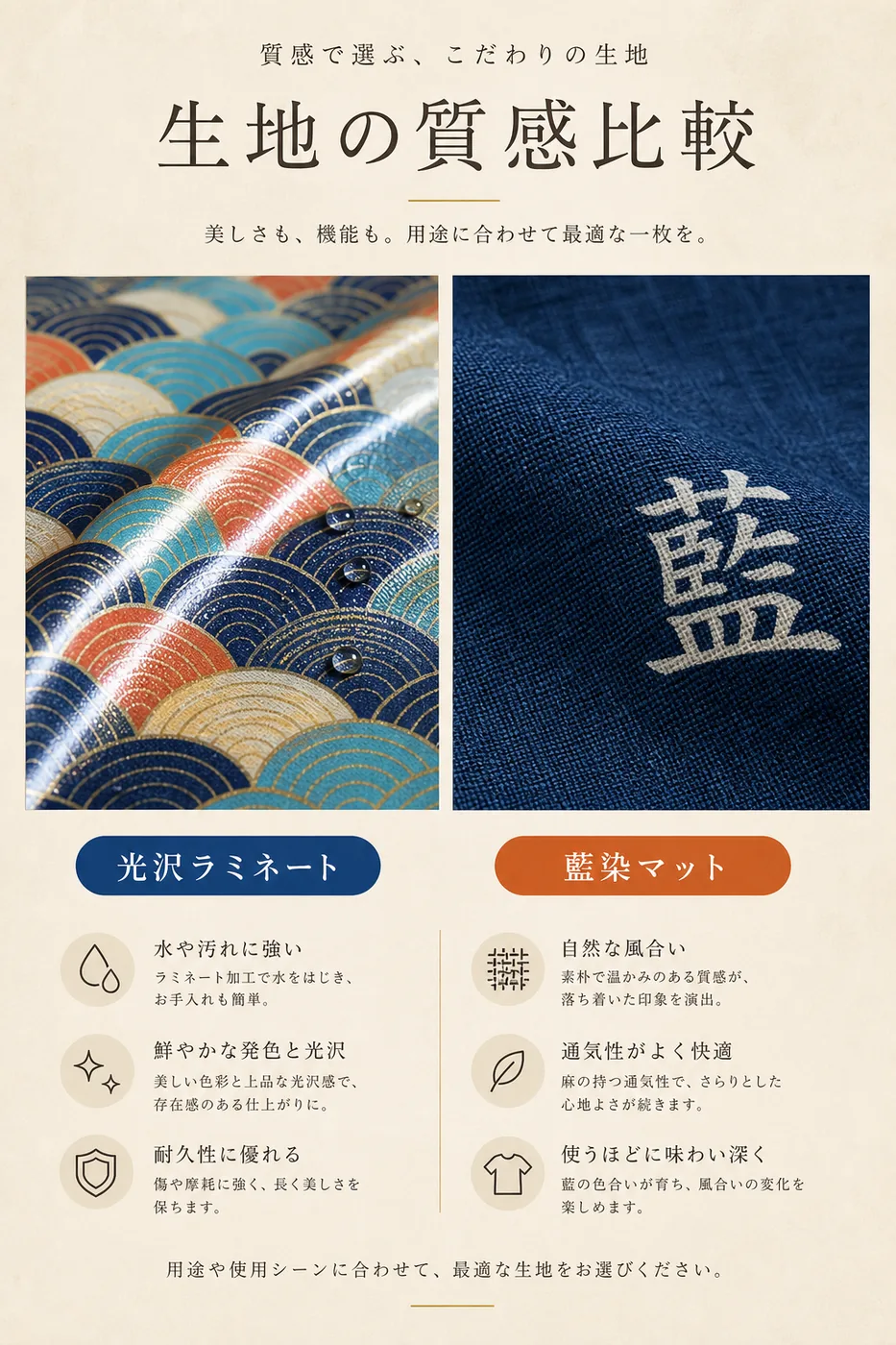
Compare glossy lamination and matte fabric before fixing artwork
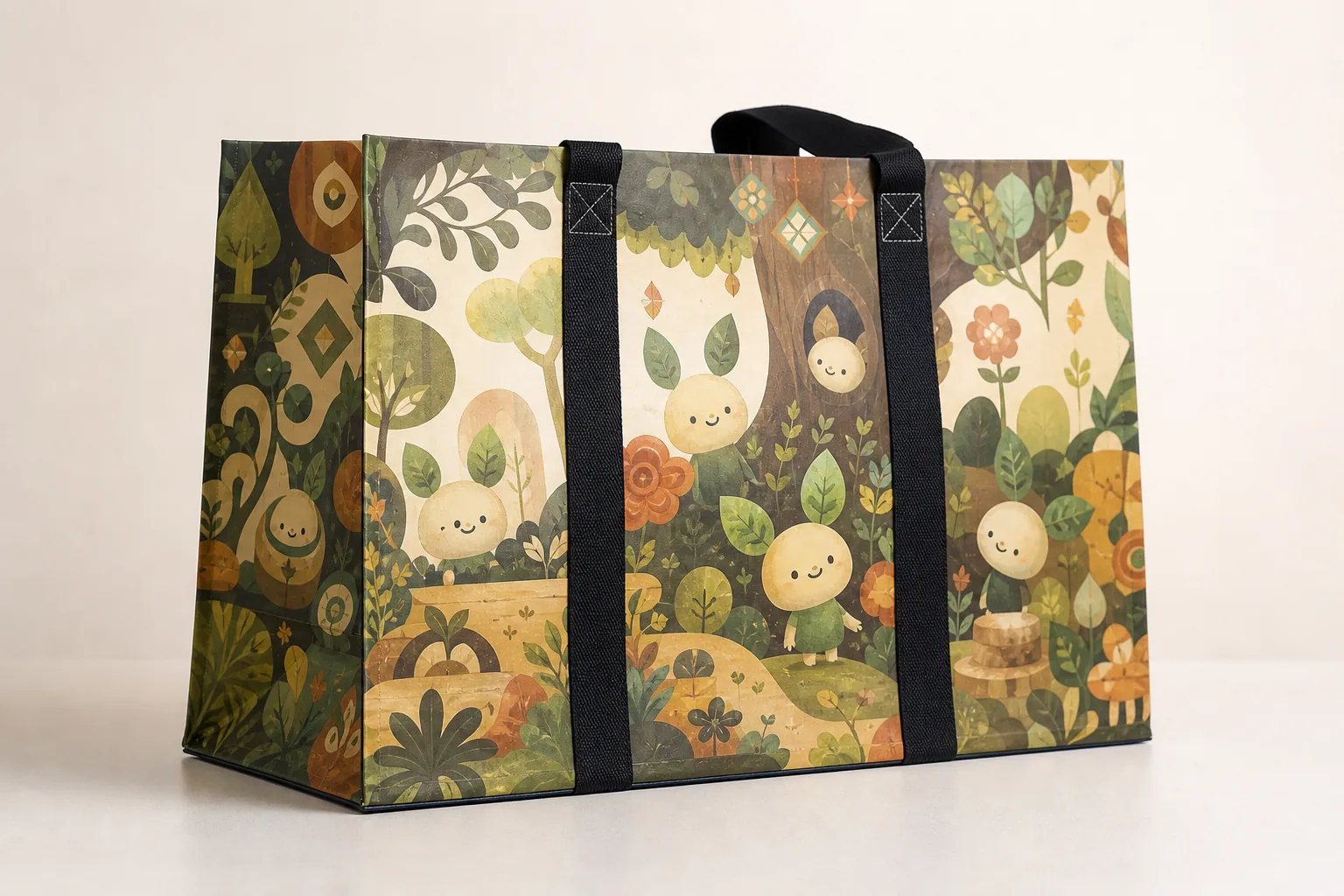
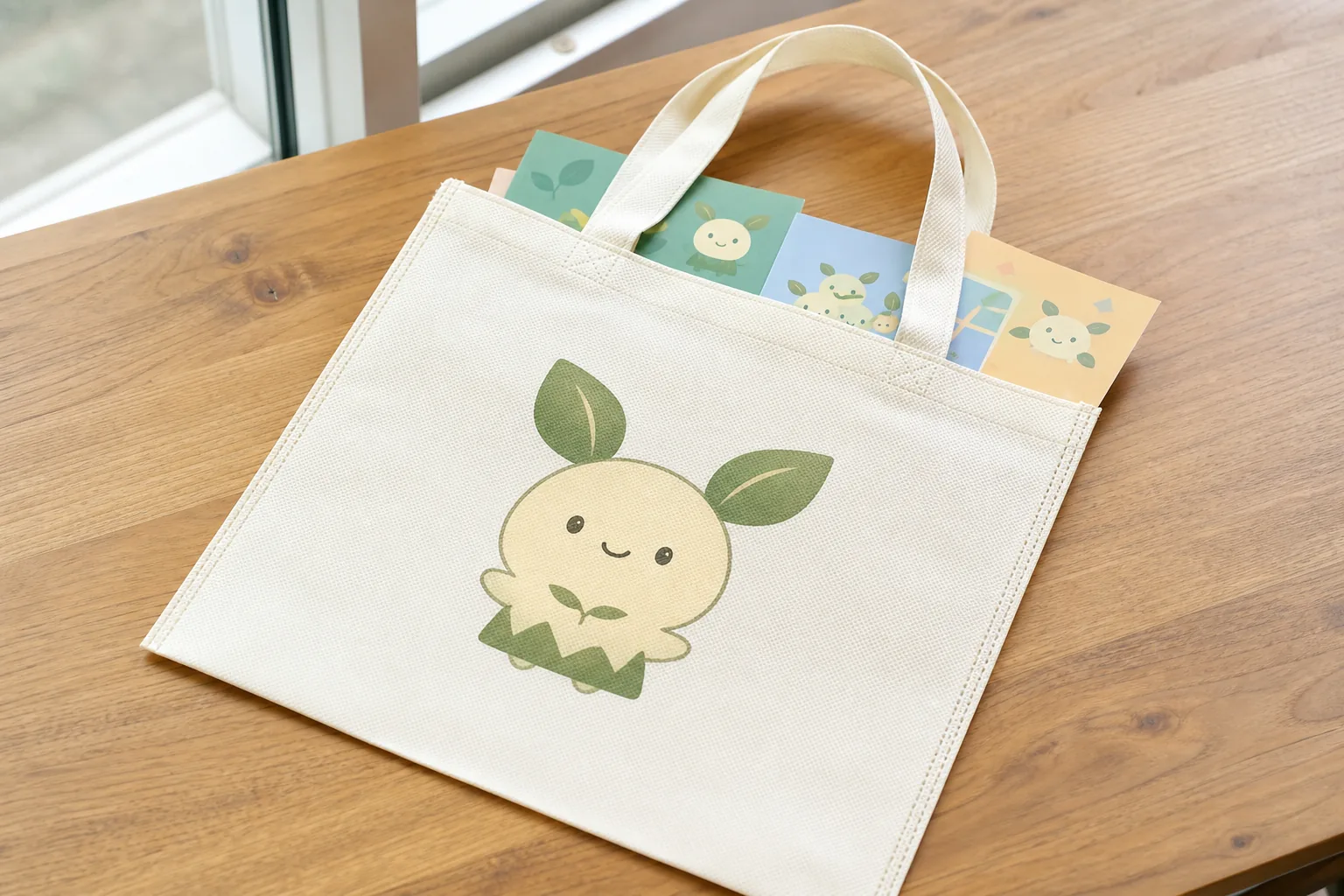
The same design can feel very different depending on the surface finish. Glossy lamination is useful when vivid color, photo-like graphics, or retail shelf impact matter. Matte fabric keeps a softer and more natural impression, which can be better for simple logos, subdued brand tone, or Japanese-inspired visual direction.
Before quoting, decide whether the buyer wants sharp commercial color, a calm textile feel, or a balance between the two. Then match the decision with the print method, white ink requirement, quantity, and sample approval process.
Print / Welded Seam
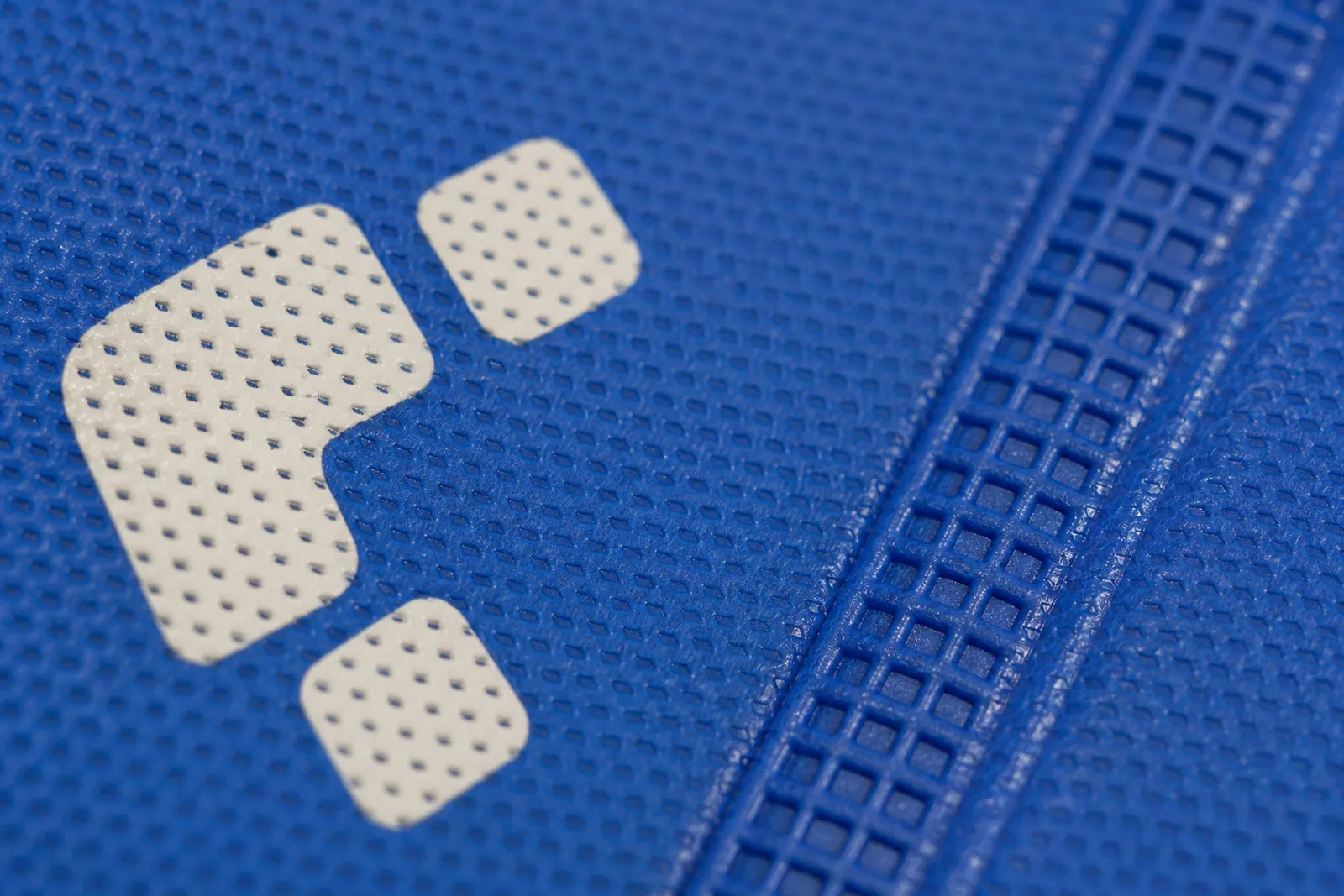
Check screen printing and ultrasonic welding with close-up samples
Non-woven surfaces are textured, so white ink, fine lines, small logos, and pale colors do not behave like print on smooth paper. Ultrasonic welded seams, handle roots, and opening edges also affect the perceived strength of the finished bag.
- White ink: Check opacity and uneven coverage on dark fabric.
- Fine lines: Confirm small text and thin shapes at actual print size.
- Welded areas: Review side seams, handle roots, and opening edges.
- Bulk tolerance: Define acceptable color and position variation before production.
Gift Variation
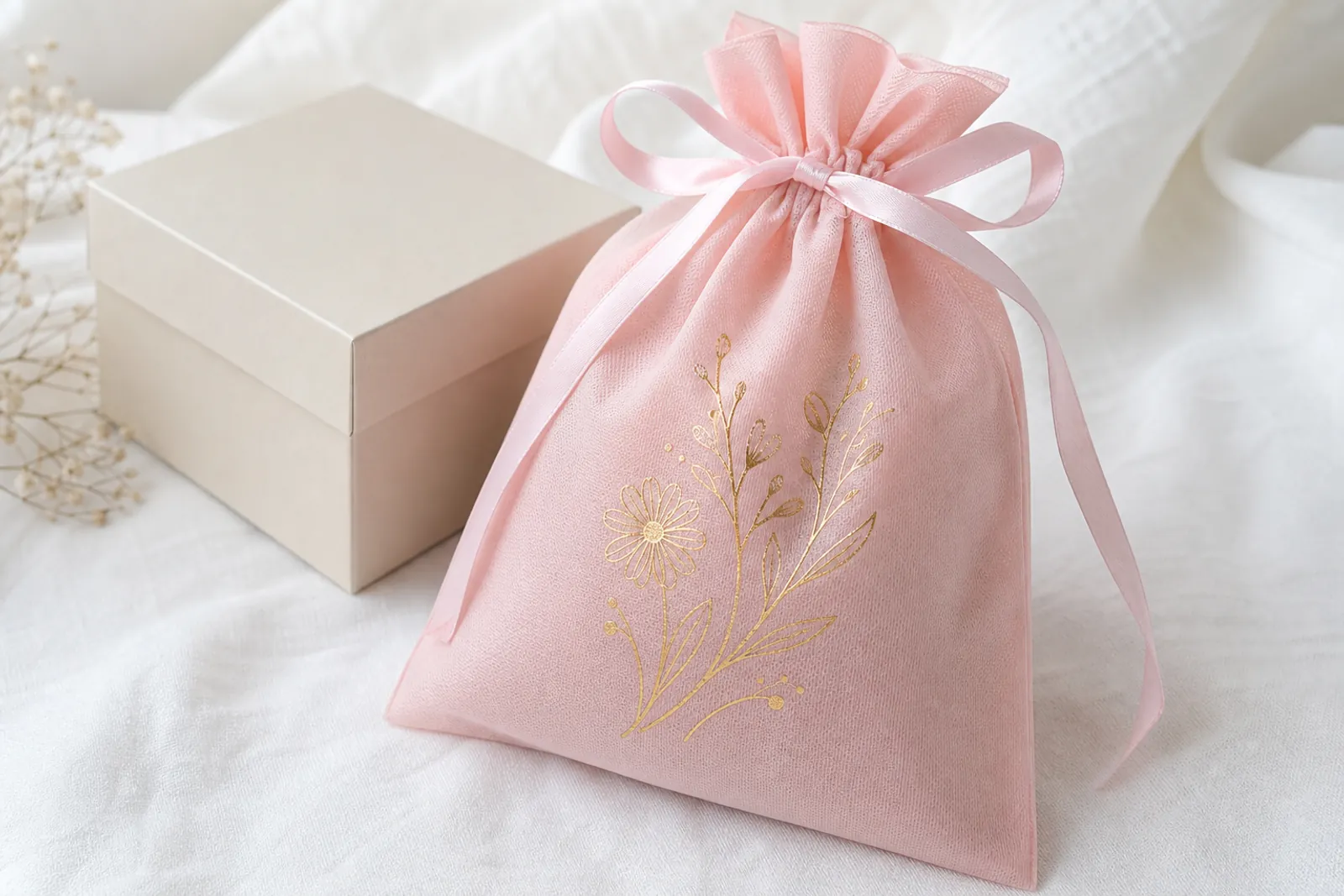
Non-woven drawstring pouches should be quoted as a separate variation
Drawstring pouches use the same broad material family, but the construction differs from a tote bag. Ribbon color, closing feel, foil-like accents, item thickness, and individual packing should be separated from the main tote-bag SKU.
Bulk Distribution
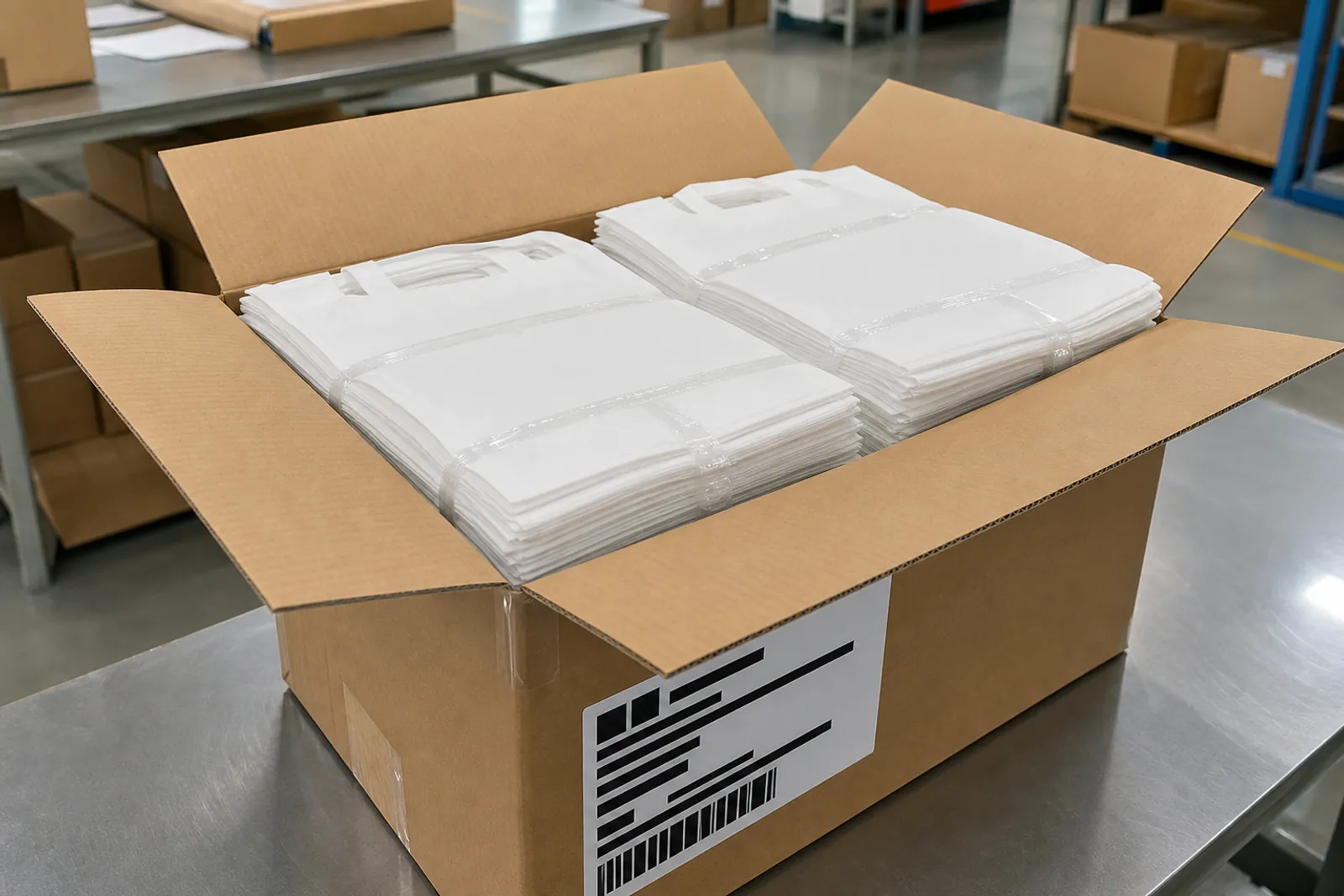
For bulk campaigns, fix carton quantity and destination sorting early
In high-volume non-woven bag programs, the operational risk often comes from packing and delivery rather than the bag alone. Decide bundle count, carton quantity, color or artwork SKU split, outer label rules, delivery destinations, and target arrival dates before quotation.
- 1SKUSplit quantity by color, artwork, and destination.
- 2PackingChoose individual packing, bundle packing, and carton quantity.
- 3LabelsConfirm management labels, carton marks, and venue names.
- 4DeliveryFix warehouse, venue, store, or split-delivery rules.
Sample Risk
Mass production risks to check with samples
The same GSM can look different by body color, lamination, and bag shape.
Heavy contents require checks for handle width, attachment, seam allowance, and bottom gusset.
Small text, thin lines, pale colors, and light ink on dark fabric need sample confirmation.
Check folding marks, OPP packing, carton quantity, SKU labels, and destination sorting.
RFQ Inputs
Information to prepare before quotation
The specification can still be undecided at the first inquiry. These inputs help narrow down fabric, shape, printing, packing, and delivery conditions quickly.
- Use case, event date, giveaway or retail-sale purpose
- Content size, thickness, weight, and A4/B4 fit requirements
- Outer dimensions, gusset, handle, bottom board, and opening style
- GSM, lamination, and recycled-material preference if any
- Logo or artwork data, print area, color count, white base, and fine-line rules
- Quantity, color or artwork SKUs, individual packing, bundle packing, and carton marks
- Delivery destination, target date, warehouse or venue receiving rules
Related Routes
Related pages
FAQ
FAQ about custom non-woven bags OEM
What GSM should I choose for custom non-woven bags?
For light A4 handouts, a lighter to mid-weight non-woven fabric may be enough. For retail shoppers, gift sets, or heavier contents, a thicker material, wider handle, gusset, reinforcement, or bottom board should be checked with samples.
How is laminated non-woven different from regular non-woven fabric?
Laminated non-woven bags use a PP, CPP, or BOPP film layer over the fabric, so full-color artwork can look more vivid and the surface can resist light dirt or splashes better. It should not be described as fully waterproof unless the full construction has been tested for that use.
Should exhibition document bags be flat or gusseted?
Flat bags are efficient for A4 brochures, catalogs, and handouts. Gusseted bags are better when samples, multiple catalogs, or thicker sets need extra capacity. Handle length also matters if visitors will carry the bag on the shoulder.
Which printing method fits a simple logo versus full-color artwork?
Simple one-color or two-color logos usually start with screen printing. Full-color artwork may require heat transfer, digital or UV direct printing where available, DTF-style transfer, or laminated film printing depending on order size, print area, fabric color, and durability needs.
What is the best option for small-lot full-color non-woven bags?
For small quantities, heat transfer, DTF-style white-ink transfer, or digital/UV direct printing may be considered when the supplier supports it. Large solid areas can feel like a transfer sheet, so confirm texture, white base, edge feel, and wash or abrasion expectations before bulk production.
Can fine text and gradients be reproduced on non-woven bags?
Reproduction depends on the method, fabric texture, line width, color contrast, and whether a white base is needed. Small text, thin lines, pale gradients, and light ink on dark fabric should be checked with actual-size artwork samples.
Can individual packing, carton labels, and split delivery be planned?
Yes. OPP packing, bundle packing, color or SKU grouping, barcode or management labels, carton marks, and delivery by venue, warehouse, or store can be included in the quotation conditions.
Can retail shopping bags or lucky-bag style projects use heavier construction?
Yes. Bottom gussets, wider side panels, bottom boards, reinforced handles, laminated finish, and thicker fabric can be considered based on product weight, retail display, and target price.
Can non-woven drawstring pouches and gift packaging be quoted together?
They can be organized together as related non-woven variations, but drawstring pouches, ribbons, foil-like accents, and set packing should be separated from standard tote-bag pricing because the construction and packing work differ.
What information is needed for a quotation?
Share the use case, quantity, content size and weight, desired bag dimensions, gusset, handle, GSM or lamination preference, artwork, color count, packing method, carton label needs, delivery destination, and target date.
Quote Consultation
Organize GSM, printing, lamination, packing, and delivery conditions
Send the intended use, quantity, event date, artwork, packing method, and delivery destination. If the specification is still open, we can help separate practical options by contents, order size, and printing requirement.
Request a custom non-woven bag quote