
B2B OEM / MOVABLE STAND STRUCTURE
Swinging Acrylic Stands
Create custom swinging acrylic stands with controlled moving-part geometry, connector clearance and repeatable motion. Approve the body, movable element, joint, base, print direction, movement range, protective pack and QC method before bulk production.
This page owns movable or pendulum-style acrylic stand intent. Static custom standees, material-only finishes and acrylic keychain attachments remain on their dedicated pages.

PRODUCT DEFINITION
What are swinging acrylic stands?
Swinging acrylic stands use one or more suspended, hinged or loosely connected acrylic parts that move after the assembled stand is touched. The movable element may be a character, accessory, sign, charm or decorative layer. The structure must be engineered around gravity, pivot position, clearance and the final upright orientation.
A digital mockup can show artwork relationships, but it cannot prove free movement, collision points, connector closure or how quickly a part settles. Buyers should approve a physical assembly with the intended body thickness, hole geometry, connector and base before releasing production.
This page does not target ordinary static acrylic standees. Its procurement contract centers on motion range, joint durability, part retention and packaging that prevents the movable component from rubbing or catching during shipment.
- Swinging standA separate acrylic part moves around a pivot or connector and needs clearance testing.
- Static standeeThe printed body remains fixed in the base and has no moving joint.
- Layered standSeveral parts may overlap but can remain fixed unless movement is specifically engineered.
- Acrylic charmA hanging component may use similar hardware, but the product is not designed to stand on a base.
For general body sizes, print, base and supplier selection, use the Custom Acrylic Standees page.
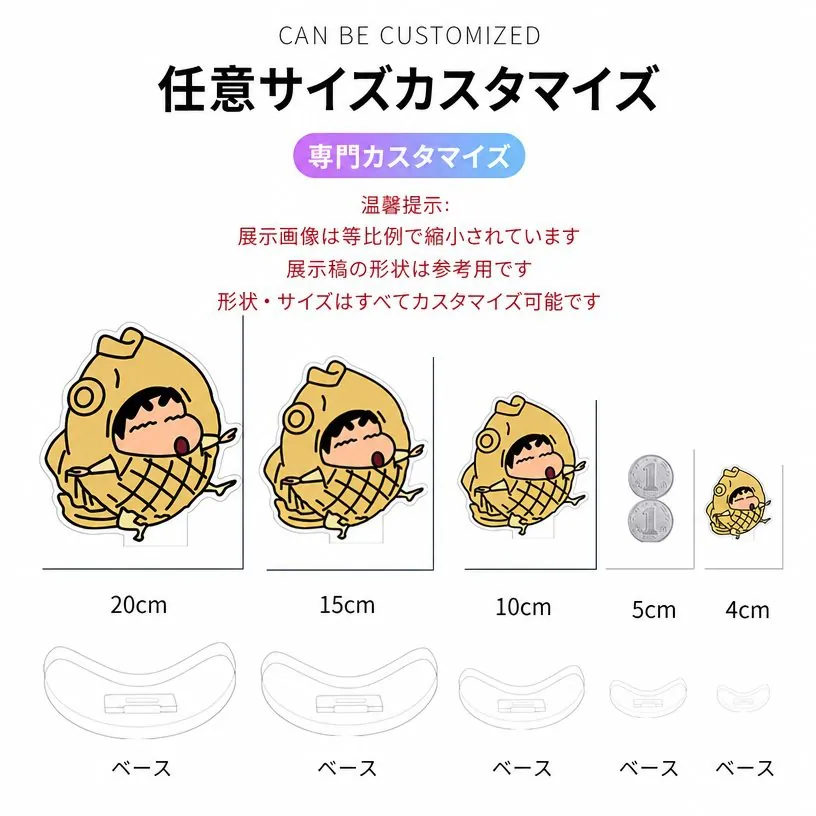
PROJECT DECISIONS
Lock the defining option before artwork release
The product name is not a complete specification. Record the material or structure decisions that create this page's distinct buyer intent.
Moving-part role
Define which component swings and what visual effect the movement should create.
Pivot position
Place the hole or joint so the part hangs correctly and returns without flipping.
Clearance envelope
Map the full motion path and keep it away from the body, base and neighboring parts.
Connector type
Approve ring, pin, chain or other joint for movement, retention and appearance.
SPECIFICATION CONTRACT
Build one quote-ready specification sheet
Connect artwork, material, body, base, packaging and SKU data in one controlled revision.
| Assembly map | Numbered body, moving part, connector, base and any spacer with front/reverse orientation. |
|---|---|
| Part geometry | Finished size, thickness, cut line, holes, hole-to-edge distance and narrow sections for every component. |
| Motion path | Resting angle, travel range, expected direction, collision-free envelope and acceptable friction. |
| Connector | Type, inside diameter, wire diameter, finish color, closure rule and retention check. |
| Print layers | Color, white ink, reverse view, transparent areas and double-sided relationship by part. |
| Base fit | Tab, slot, insertion force, assembled lean and stability while the moving part operates. |
| Packaging | Part immobilization, separators, sleeves, backing card, component count and unpacking order. |
| Order matrix | Quantity per design, assembly code, connector, base, pack, carton and destination. |
PRIMARY CONTROL
Map the movement envelope before cutting production parts
The moving component should have a defined resting position and enough clearance to move without scraping printed surfaces. The full envelope must account for connector play, acrylic thickness, hole tolerance and the possibility that the stand is nudged from either side.
A pivot placed too high can create weak movement, while a low or off-center pivot can cause the part to flip, strike the base or hang at an unintended angle. Approve movement with the final connector installed, not with a temporary wire or hand-held simulation.
- Moving-part center of gravity
- Pivot and hole position
- Hole-to-edge distance
- Connector inside diameter
- Front and reverse direction
- Collision-free travel range
- Resting angle
- Movement after repeated cycles
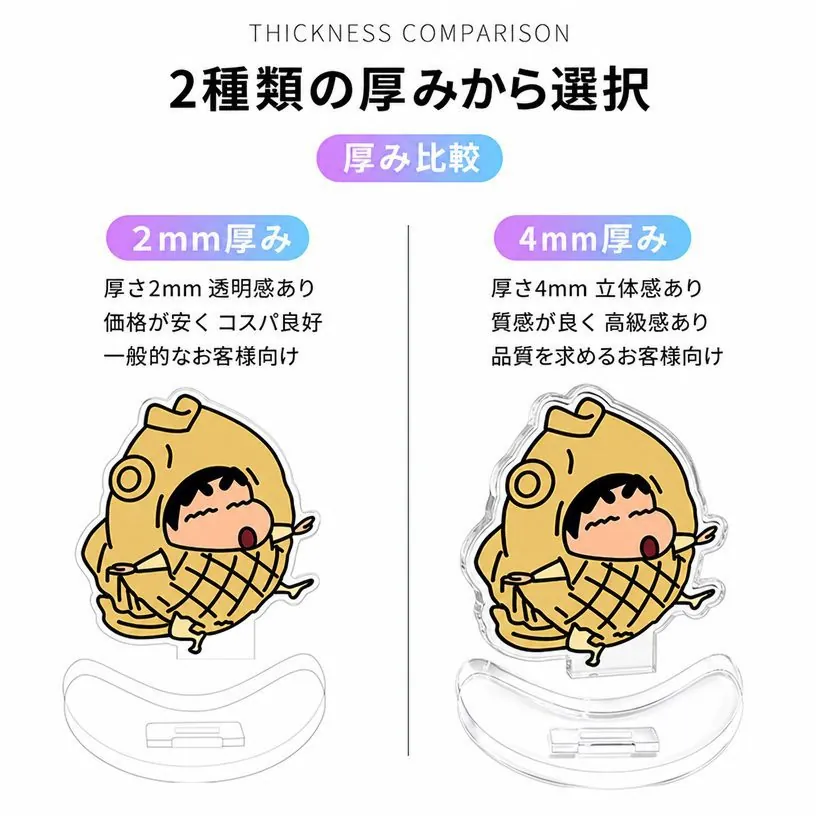
APPROVAL EVIDENCE
Approve four forms of physical evidence
Each item answers a different production question. A loose material sample alone cannot approve print, assembly, packaging or shipment condition.
Assembly drawing
Numbered parts, pivot, orientation and motion path shown in one file.
Motion sample
Finished joint demonstrates free travel, resting angle and collision clearance.
Cycle check
Repeated movement confirms retention, connector closure and surface protection.
Packed sample
Movable part is immobilized without bending the connector or scratching print.

STAND ENGINEERING
Balance connector clearance, base fit and part retention
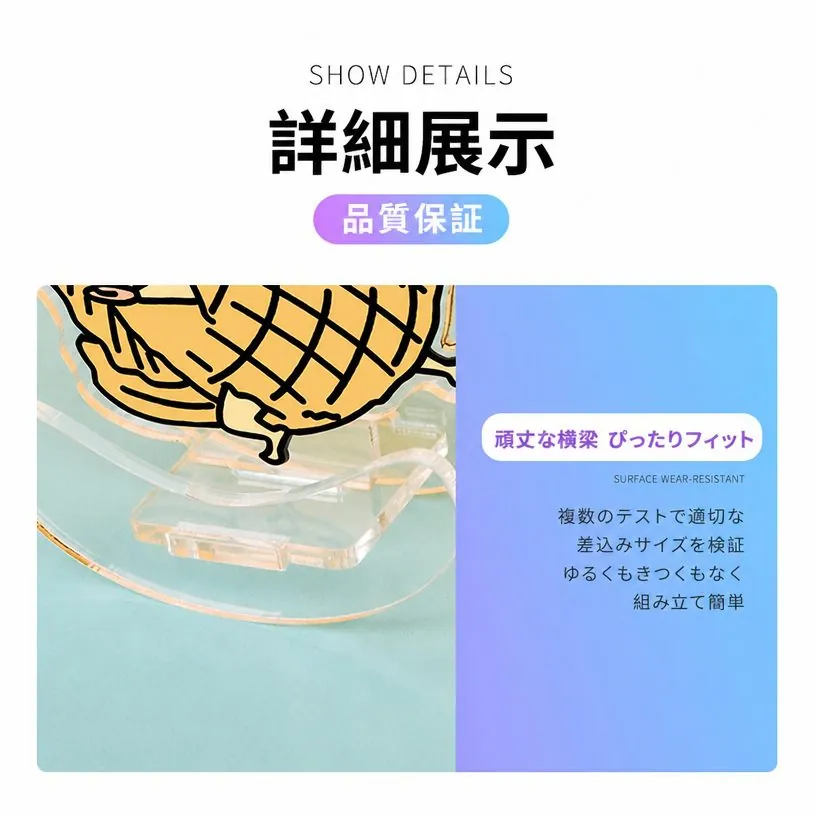
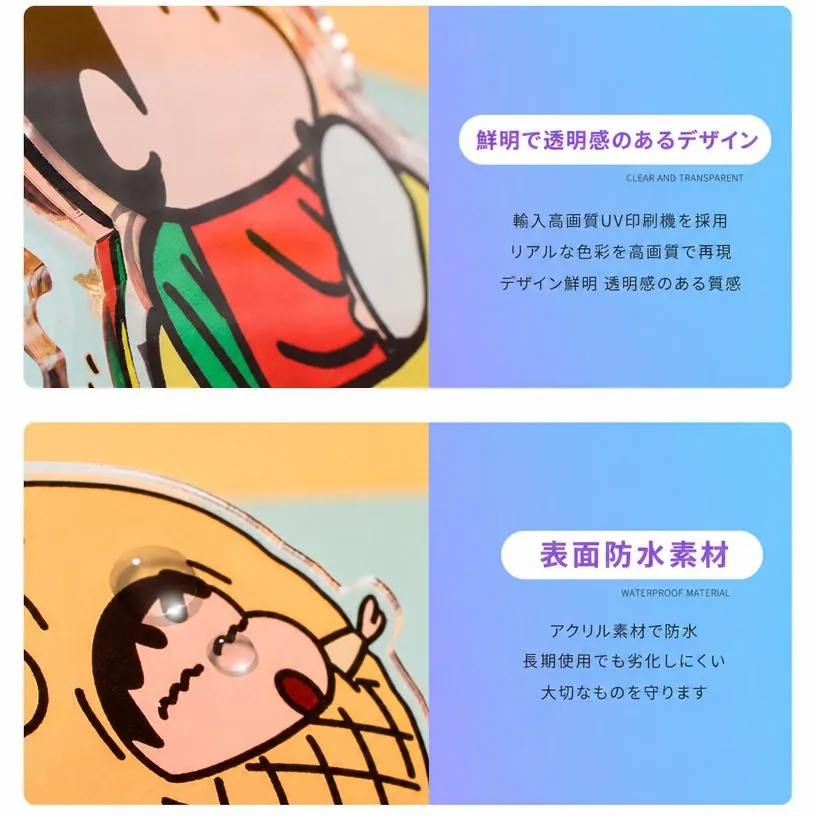
The joint must be loose enough for movement but closed enough to retain the part. Record ring closure and gap criteria, then check that no sharp connector end contacts the printed surface. If a spacer is used, include its thickness and assembly order in the approved sample.
Movement changes the load applied to the base. A wide or heavy suspended component can make a narrow stand rock or tip when touched. Test the complete assembly on a level surface and review whether base width, slot position or component weight needs adjustment.
Use the Acrylic Material Thickness Guide when sheet tolerance or component weight affects the project.
MASS-PRODUCTION RISK
Failure risks to resolve before bulk production
Motion path is not drawn
The moving part can strike the body or base after production tolerance is added.
Temporary hardware is used for sampling
The approved movement may change when the final connector is installed.
Pivot ignores center of gravity
The component hangs sideways, flips or does not create the intended motion.
Hole is too close to the edge
Repeated movement concentrates stress and increases crack or breakage risk.
Ring closure is inconsistent
Movable parts can detach during handling or transport.
Base is tested without motion
The stand may tip or rock when the moving component reaches the end of travel.
Printed faces rub together
Movement produces scratches, ink wear or visible marks around the joint.
Pack leaves the part free
Transport vibration causes surface damage or bends the connector before retail use.
QUALITY CONTROL
QC checkpoints tied to the approved sample
Inspection should follow the material, artwork, assembled stand and final pack rather than use a generic pass/fail statement.
- Part identityConfirm every body, movable component, connector and base by SKU.
- Hole and edgeCheck hole diameter, position, edge distance, chips and cracks.
- Motion functionVerify resting angle, free travel, collision clearance and repeat movement.
- Connector retentionInspect type, color, closure, gap and assembled orientation.
- Base stabilityCheck tab-slot fit, lean and tipping while the part moves.
- Pack accuracyConfirm component count, immobilization, separators, labels and carton quantity.
Review the Acrylic Goods Quality Inspection guide when planning sample size and evidence.
PACKAGING AND SKU CONTROL
Protect the finished stand and keep variants separated
Record body, base, protective layers, labels and carton quantities by SKU. The sellable pack should prevent face-to-face rubbing, missing components and mixups between visually similar variants.
Individual retail
Separate body and base, protect exposed faces, and apply the correct card or SKU label.
Blind merchandise
Use an opaque pack, controlled design code, randomization rule and inner-box quantity.
Multi-piece set
Verify component count, orientation, separators and the approved set combination.
Event delivery
Plan carton labels, destination split, warehouse or venue instructions and arrival condition.
Use the Acrylic Scratch-Prevention Packaging guide before pack approval.
BUYER USE CASES
Where the defining feature creates commercial value
Interactive character poses
Use a moving head, arm, accessory or companion element to create visible play.
Music and performance themes
Suspend microphones, notes or costume details that react when the stand is touched.
Seasonal decorations
Add moving stars, snow, hearts or signs while keeping the main body stable.
Event merchandise
Control multi-SKU assembly and protected packing for venue delivery.
QUOTE CHECKLIST
Information needed for a production review
Mark undecided items for recommendation. A useful quote starts from quantity by design and the page-specific material or structure decision.
- Numbered assembly drawing
- Moving-part dimensions
- Pivot and hole positions
- Connector type and finish
- Target motion path and resting angle
- Packed-state immobilization method
- Editable artwork for every design
- Finished width and height
- Acrylic thickness
- Total quantity and quantity per design
- Individual, blind or set packaging
- Required arrival date and destination
ORDER CONDITIONS
MOQ, sampling and delivery are project-specific
Finished size, material or structure, design split, base, assembly, packaging, inspection and destination all affect the practical route.
Quantity per design
Share total quantity and the split for every approved artwork and material combination.
Sample scope
Identify which material, print, base, assembly and pack require physical approval.
Bulk schedule
Timing is confirmed after files, samples, materials, packing and inspection conditions are approved.
Delivery plan
Provide country, destination, required arrival date and any shipment split or venue rule.
PRODUCTION WORKFLOW
From specification to shipment
- 01 InquiryArtwork, feature, quantity and destination
- 02 ReviewMaterial, geometry, base and pack
- 03 SampleVisual, fit, function and sellable unit
- 04 ApprovalOne final controlled revision
- 05 ProductionCut, print, assemble, sort, pack and inspect
- 06 DeliveryCartons, documents and agreed shipment
See the complete OEM order process.
FAQ
Swinging Acrylic Stands FAQ
What makes a swinging acrylic stand different from a standard standee?
It includes at least one movable acrylic component connected by a pivot, ring, pin or similar joint. The movement path, retention and packing require separate engineering checks.
How is the pivot position selected?
The pivot is reviewed against the component center of gravity, resting angle, motion path, hole strength and visual relationship to the main body.
Can both sides of the moving part be printed?
Yes. Provide front and reverse artwork relationships, white-ink layers and the intended viewing direction for each moving component.
How is movement checked during sampling?
Use the final connector and base, then review free travel, collision points, resting angle, retention and repeated movement cycles.
How should swinging stands be packed?
The moving part should be separated or immobilized so it cannot rub the printed body, bend the joint or strike the base during transport.
How are MOQ and schedule confirmed?
They depend on part count, design split, connector, assembly labor, packaging, inspection scope and destination.
RELATED RESOURCES
Continue the acrylic stand review
PROJECT REVIEW
Prepare the Swinging Acrylic Stands specification
Send artwork, the defining material or structure reference, finished size, quantity by design, base, packaging and destination. Unconfirmed items can be marked for recommendation.