
B2B OEM / ACRYLIC STAND PACKAGING
Acrylic Stand Packaging
Acrylic stand damage can come from the body, base, printed surface, corners, bag movement, and carton pressure. We define packaging, SKU, sales-channel, and delivery conditions before mass production to reduce avoidable breakage risk without over-packing.
This page does not promise damage-free delivery. It is a procurement guide for confirming packaging conditions, inspection records, and shipping requirements project by project.
SHORT ANSWER
Packaging conditions to confirm before mass production
Body-to-base contact, movement inside the bag, carton pressure, SKU mix-ups, and inspection photo records should be treated as part of the product specification before mass production.
Body, base, slot area, and any multi-part structure.
Corners, transparent surfaces, printed areas, thin hair or accessory parts.
OPP, backing card, EPE, dividers, and carton quantity.
Standard retail, lottery goods, blind packs, e-commerce, event sales.
Backing cards, JAN labels, bag types, carton labels, quantity sheets.
Appearance, packing, quantity, carton labels, and shipment photos.
This is not a fixed guarantee. Packaging should be confirmed through samples and mass-production conditions.
RISK MAP
Breakage that can still happen after a sample looks acceptable
Acrylic stand damage is affected by more than sheet thickness. Base contact, carton quantity, warehouse stacking, and SKU-specific packaging differences can all create risk.
| Issue | Main cause | Pre-production countermeasure |
|---|---|---|
| Body crack or chipped corner | Pieces hit each other inside the bag, or carton pressure concentrates at corners. | Review individual OPP, backing-card fixing, EPE bags, and carton quantity that avoids corner pressure. |
| Base-slot cracking | Slot width is too tight, the base rubs the body during packing, or assembly force is high. | Check acrylic thickness, slot width, assembly feel, separated base packing, and handling notes with samples. |
| Surface rub or printed-side scratch | Insufficient protection, bag movement, or contact with backing cards and accessories. | Define protected side, OPP thickness, backing-card fixing, product direction, and opening presentation. |
| Body and base mix-up | Bag, backing card, JAN, and carton labels are not matched across multiple SKUs. | Use SKU quantity sheets, packing instructions, JAN placement, and carton labels together. |
| Carton compression or deformation | Carton quantity is too high for the packed product size and weight. | Confirm packed dimensions, weight, stacking conditions, warehouse labels, and split-shipment requirements. |
| Difficult issue tracing after delivery | Shipment photos, carton labels, quantity records, or inspection criteria are missing. | Keep inspection photos, carton labels, lot numbers, and SKU-level check records. |
PACKAGING LOGIC
Think about breakage prevention in three layers
Acrylic stand packaging should be planned in order: protect the product surface, stabilize the item inside the individual pack, and protect the packed goods during carton shipping. The goal is to choose the necessary level for the shape and sales method, not to apply the most expensive packaging to every item.
1. Product surface
Protect transparent areas, printed surfaces, corners, and thin parts from direct contact.
2. Individual pack
Use backing cards or separate packing when the body and base may move inside the bag.
3. Carton and shipping
Match carton quantity, stacking, labels, warehouse requirements, and shipping distance.


BODY AND BASE
Protect the body and base separately when needed
Acrylic stand claims can come from the base as well as the printed body: chipped base corners, tight slots, assembly pressure, and body-to-base contact during shipping. We separate body and base checks before mass production.
- For the body, review transparent surfaces, printed areas, thin parts, and corner chips.
- For the base, review slot width, sheet thickness, assembly feel, and contact inside the bag.
- For large stands or dioramas, review dividers and carton orientation.
- For lottery and blind goods, keep backing cards and JAN labels away from the front artwork when possible.
PACKAGING OPTIONS
Choose the packaging specification by risk and cost
Excessively thick packaging can raise unit price, packing time, carton size, and shipping cost. The specification should match the weak points and sales price of the product.
| Packaging option | Best fit | Point to confirm |
|---|---|---|
| Individual OPP | Standard size, single-item sales, lightweight bases. | If the item moves inside the bag, add backing-card fixing or separated parts. |
| OPP + backing card | Retail display, JAN control, and projects that need less bag movement. | Check backing-card size, hang hole, JAN position, and artwork visibility. |
| EPE or cushioning bag | Large products, corner-chip risk, or surface-rub concerns. | Confirm the effect on packed thickness, carton quantity, and freight cost. |
| Divider or carton spacer | Multi-part products, diorama stands, or thick bases. | Balance packing labor with warehouse opening and checking efficiency. |
| Carton labels and lot control | Multi-SKU, split shipment, event delivery, and Japan warehouse delivery. | Check SKU name, quantity, lot number, delivery address, and carton number before shipment. |
SHIPPING CONTROL
Set carton quantity from the shipping conditions
Japan-facing DDP delivery, event venues, e-commerce warehouses, and split shipments can require different carton labels and strength. Packed size, weight, carton number, stacking, and warehouse labels should be confirmed early.
Carton side
- Carton size and quantity
- Weight and stacking
- SKU-level labels
- Breakage warning marks
Delivery side
- Destination and split shipment
- Warehouse label rules
- DDP conditions
- Shipment photos
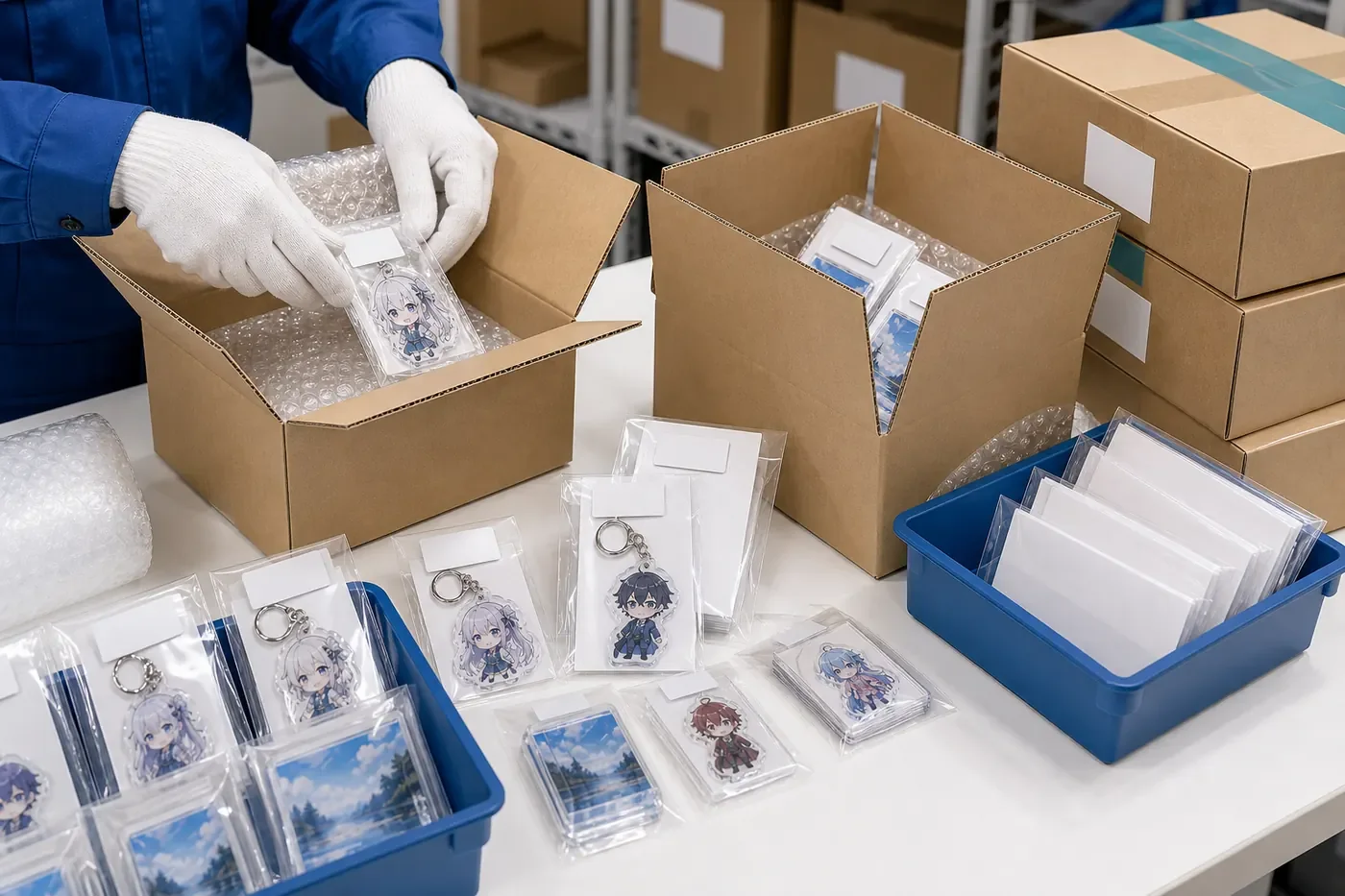
SKU AND LABEL
Fix the packing instruction sheet before multi-SKU production
For character variants, pose variants, different bases, secret items, and blind packaging, mix-up prevention is as important as breakage prevention.
SKU sheet
Check item code, artwork, quantity, base, and packing material in one row.
Backing card and JAN
Organize backing cards, JAN labels, caution text, and sales-channel rules.
Packing order
Fix the work order for body, base, backing card, bag, and label.
Carton label
Match SKU name, quantity, carton number, and delivery destination.
INSPECTION RECORD
Separate appearance, function, packing, and shipment checks
Inspection is not only about looking for defects. It should leave a record of what was checked. Depending on the project, photo reports, quantity sheets, and carton label photos can be arranged.
Appearance
- Cracks, chips, rub marks
- Print shift and color difference
- Protective film condition
Function
- Base slot fit
- Standing stability
- Part orientation
Packing
- Bag damage and card direction
- JAN label position
- Body-to-base contact
Shipment
- SKU-level quantity
- Carton label
- Destination and carton number

QUOTE MATERIALS
Materials to share before requesting a quote
With the following details, packaging, carton quantity, inspection scope, and delivery conditions can be reviewed faster. If some items are not fixed yet, early-stage consultation is also possible.
| Product specs | Body size, base size, acrylic thickness, part count, base-slot structure. |
|---|---|
| Artwork data | Print files, cut lines, white ink layer, front/back direction, color reference. |
| Quantity and SKU | Total quantity, quantity by SKU, secret item, assortment ratio. |
| Packaging condition | OPP, backing card, JAN, EPE, divider, carton, warehouse labels. |
| Delivery condition | Delivery address, target date, split shipment, DDP request, shipment photos. |
PROCESS
Flow from consultation to Japan-facing delivery
Confirm size, base, SKU, sales method, and destination.
Review OPP, backing card, cushioning, and carton quantity.
Check presentation, assembly feel, bag movement, and carton packing.
Produce and pack according to instructions and SKU sheets.
Check appearance, base fit, packing, quantity, and carton labels.
Ship according to Japan-facing delivery requirements.
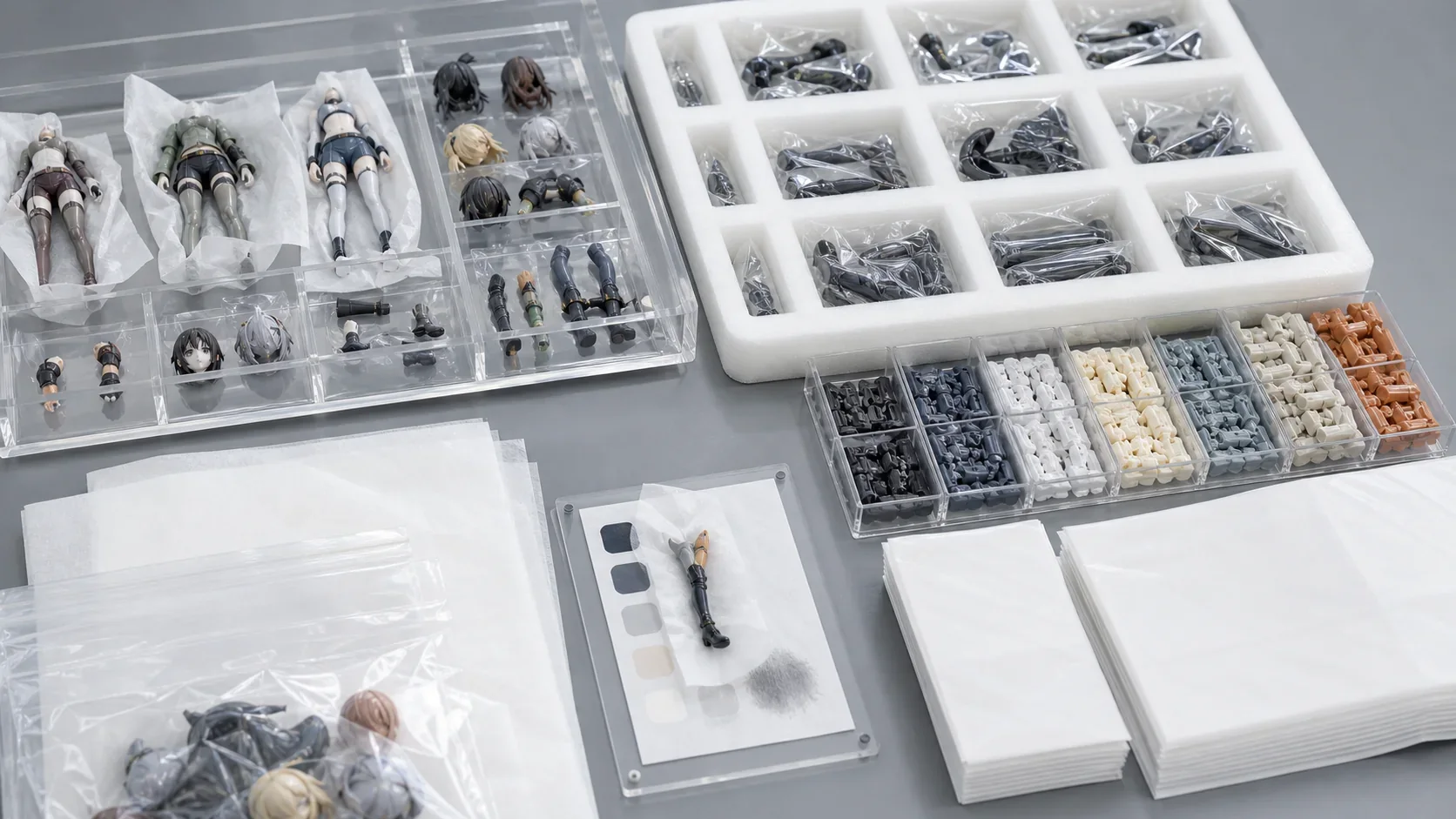
VISUAL CHECK
Packaging and inspection points shown with product images
The public page should show not only product appearance, but also packaging, SKU control, inspection, and shipment management. This helps distinguish the page from a generic acrylic stand OEM page.
FAQ
Frequently asked questions
Can packaging completely prevent acrylic stand breakage?
It should be treated as risk-reduction packaging, not a complete guarantee. We review the acrylic thickness, base shape, movement inside the bag, carton quantity, delivery route, and inspection points for each project.
Should the acrylic body and base be packed separately?
It depends on the product shape and sales method. If the base can rub against the printed body, move inside the bag, or add pressure to a large stand, separate OPP bags, backing cards, dividers, or cushioning can be reviewed before mass production.
Are protective film and EPE bags always required?
Not always. The right choice depends on whether the transparent surface, printed side, corners, or base slot needs protection. Over-packaging can increase unit cost, packing time, carton size, and shipping cost.
Can you support multi-SKU or blind-pack acrylic stand projects?
Yes. SKU quantity sheets, backing cards, JAN labels, bag types, carton labels, assortment ratios, and inspection photos should be aligned before production to reduce mix-ups and make issue tracking easier.
What should be checked for Japan-facing DDP delivery?
Confirm the delivery address, warehouse label rules, carton size, weight, labels, split shipments, event timing, and shipping distance. Carton quantity and stacking should match the packed product size.
What should we send before requesting a quote?
Please share the stand body size, base size, acrylic thickness, quantity, SKU count, sales method, packaging request, JAN or backing-card requirements, delivery address, target schedule, reference photos, and any breakage concerns.
Plan acrylic stand breakage-prevention packaging from real mass-production conditions
When body size, base, quantity, SKU count, sales method, packaging request, and delivery address are available, we can review packaging, inspection, and shipping conditions before quotation.
RELATED PAGES