OEM manufacturing for brands, creators and merchandise teams
Custom Acrylic Keychains
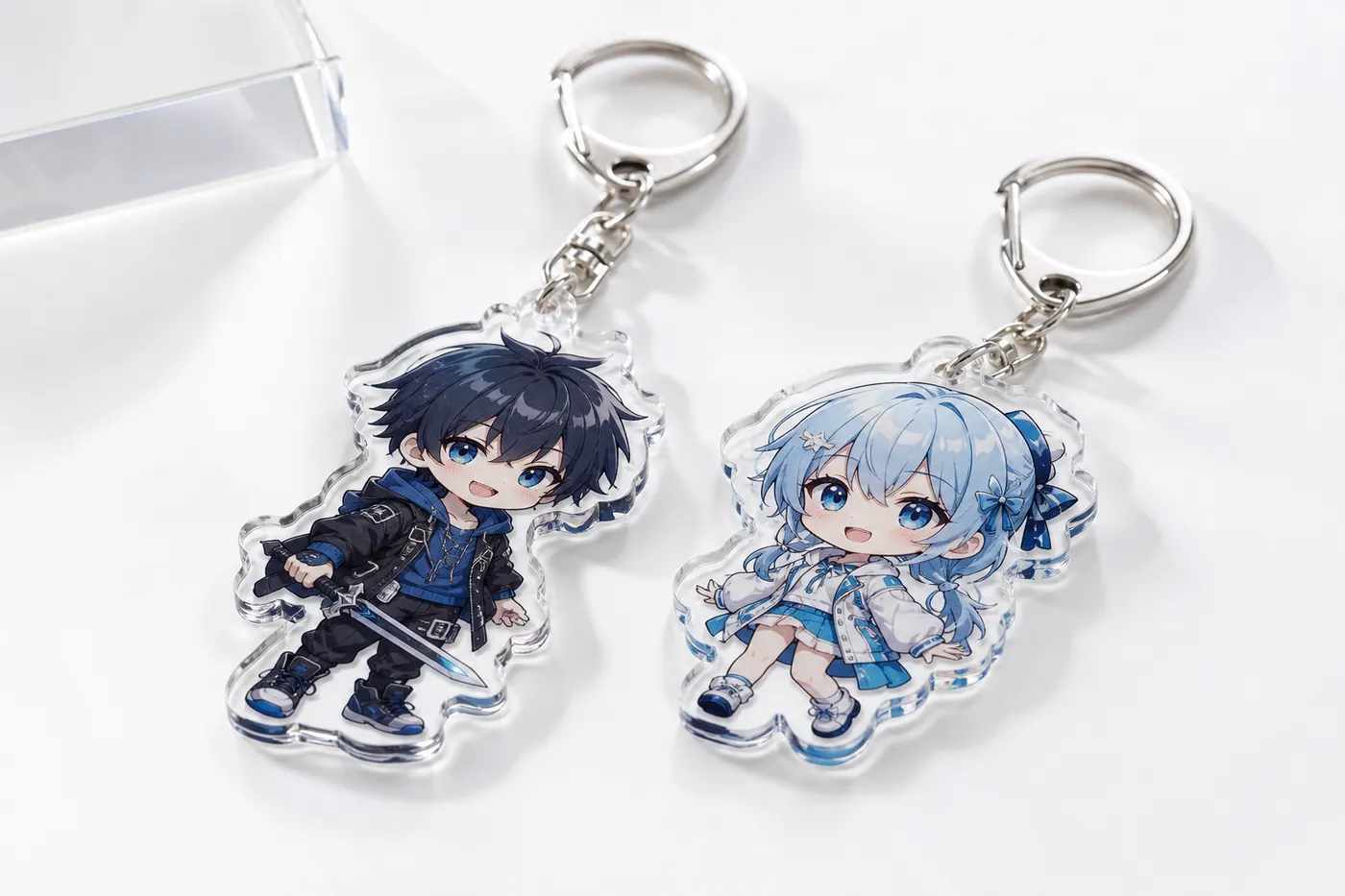
Custom acrylic keychains, also searched as custom acrylic keyrings in the UK, are produced from buyer artwork with the size, print layers, hole position, hardware, packaging and SKU plan confirmed before bulk production.
Direct answer
What buyers should confirm first
A reliable quotation needs more than artwork and total quantity. Finished size, acrylic thickness, single- or double-sided printing, hole location, hardware type, quantity by design, individual packing and required delivery date all change the production route.
Send the artwork or concept, target size, design count, quantity per design, preferred fitting, packing method and delivery destination.
Product fit
Where custom acrylic keychains work best
The core page covers standard bulk procurement. Finish-specific pages handle holographic, glitter and epoxy requirements so each page keeps a clear search intent.
Character merchandise
Multi-character collections for anime, games, creators and licensed campaigns, with design-level quantity and approval control.
Events and launches
Product sets planned around event dates, preorder schedules, pop-up retail or launch campaigns.
Promotional programs
Branded acrylic keyrings with defined hardware, packaging, carton labels and shipment allocation.
Specification contract
Size, thickness and cut-line decisions
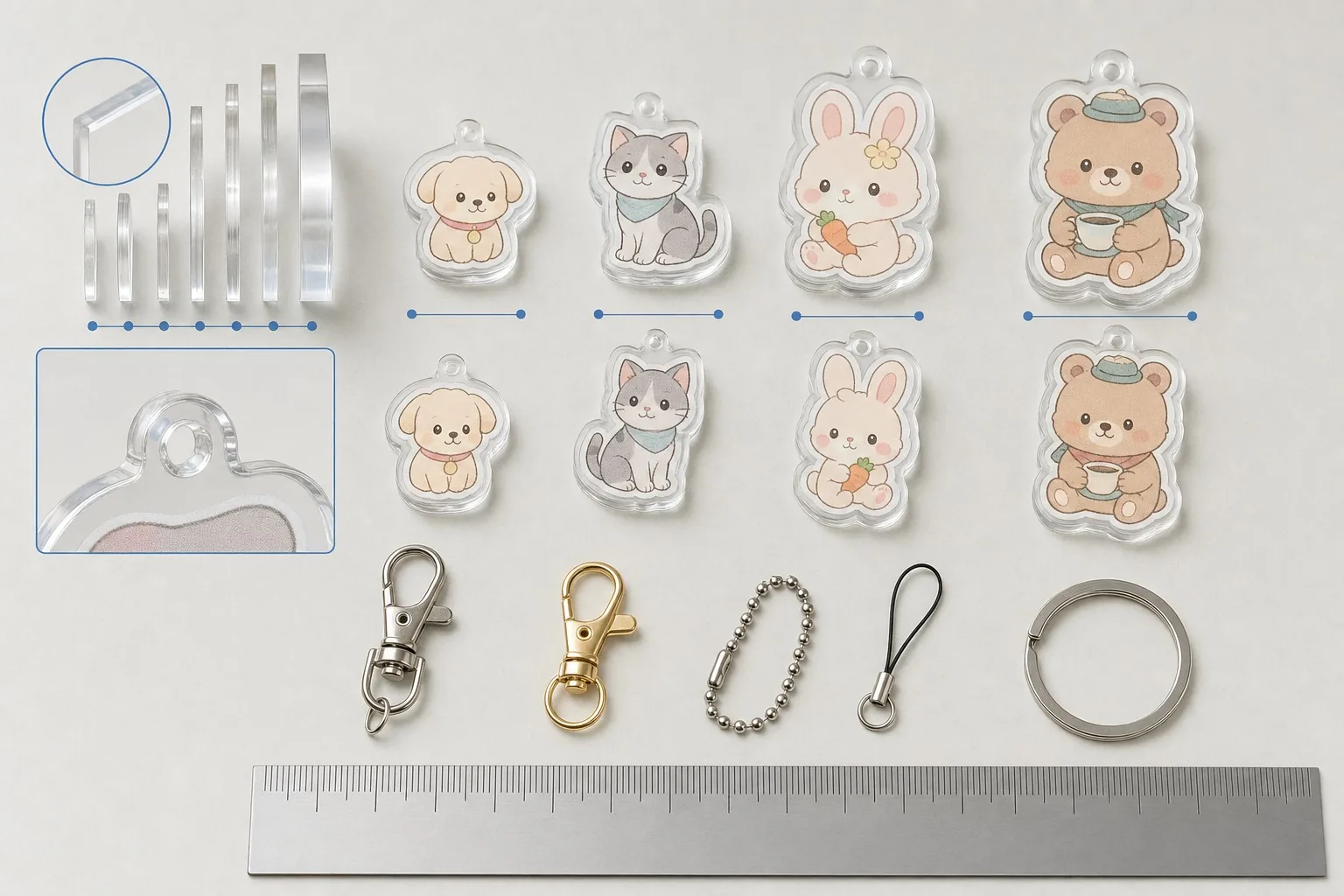
Dimensions should be stated as finished acrylic size, not artwork-canvas size. The cut line needs enough clearance around the printed design, and the hanging hole must leave sufficient material between the hole and the outer edge.
| Finished size | Confirm width and height for every design, including unusual long or narrow shapes. |
|---|---|
| Thickness | Choose according to size, rigidity, weight and the intended feel; confirm actual sheet tolerance during sampling. |
| Cut line | Review tight corners, thin projections and edge clearance that may chip or weaken the part. |
| Hole position | Check artwork balance, rotation when hanging and clearance for jump rings or direct fittings. |
Hardware and assembly
Match the fitting to the sales use
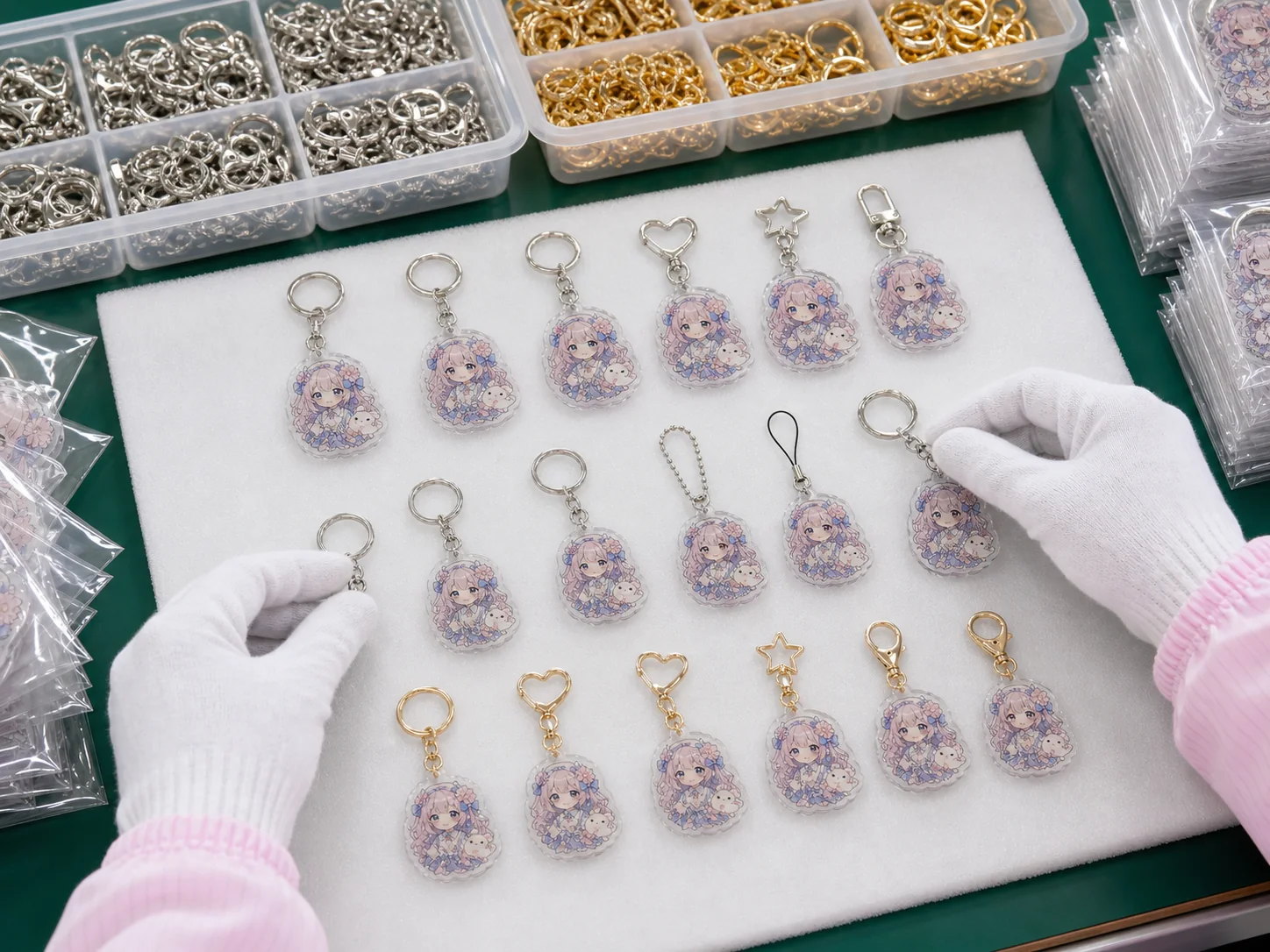
Split rings are familiar for general merchandise, while swivel or lobster clasps can simplify attachment to bags and pouches. Ball chains and phone straps suit lighter applications. Shaped clasps can add visual value but require separate color, plating and opening checks.
- Metal color and plating consistency
- Ring or clasp opening operation
- Jump-ring closure and assembly direction
- Hole clearance and hanging balance
Use the acrylic keychain hardware guide when the fitting decision is the main procurement question.
Cost drivers
Compare quotations on the same specification
A low unit price is not comparable when the assumed product or packing work is different. Ask each supplier to quote against the same released specification and identify what is included, excluded or still provisional. Record sample charges, packing materials, inspection scope, carton preparation and shipping terms separately so later revisions remain traceable.
Product construction
Finished size, acrylic thickness, print layers, unusual cut shapes, hole layout and custom hardware can change material, processing and assembly requirements.
Design and order mix
More designs create additional proofing, sample, sorting and inventory-control work. The quantity per design matters as much as the combined order quantity.
Packing and logistics
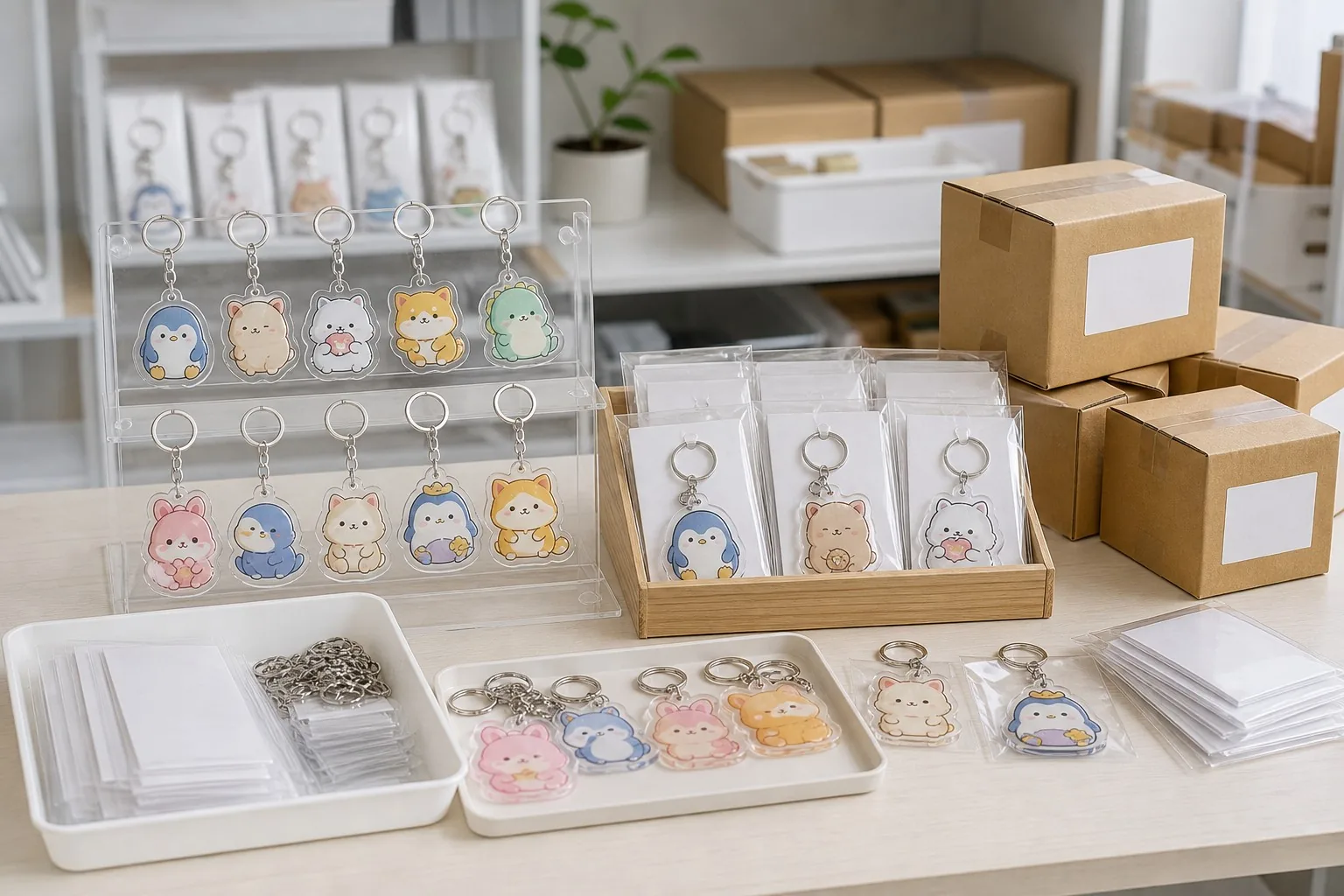
Backing cards, barcode labels, blind packing, assortment checks, carton allocation and delivery destination affect labor, materials, carton count and shipping preparation.
Printing and artwork
Control transparency, white ink and reverse orientation
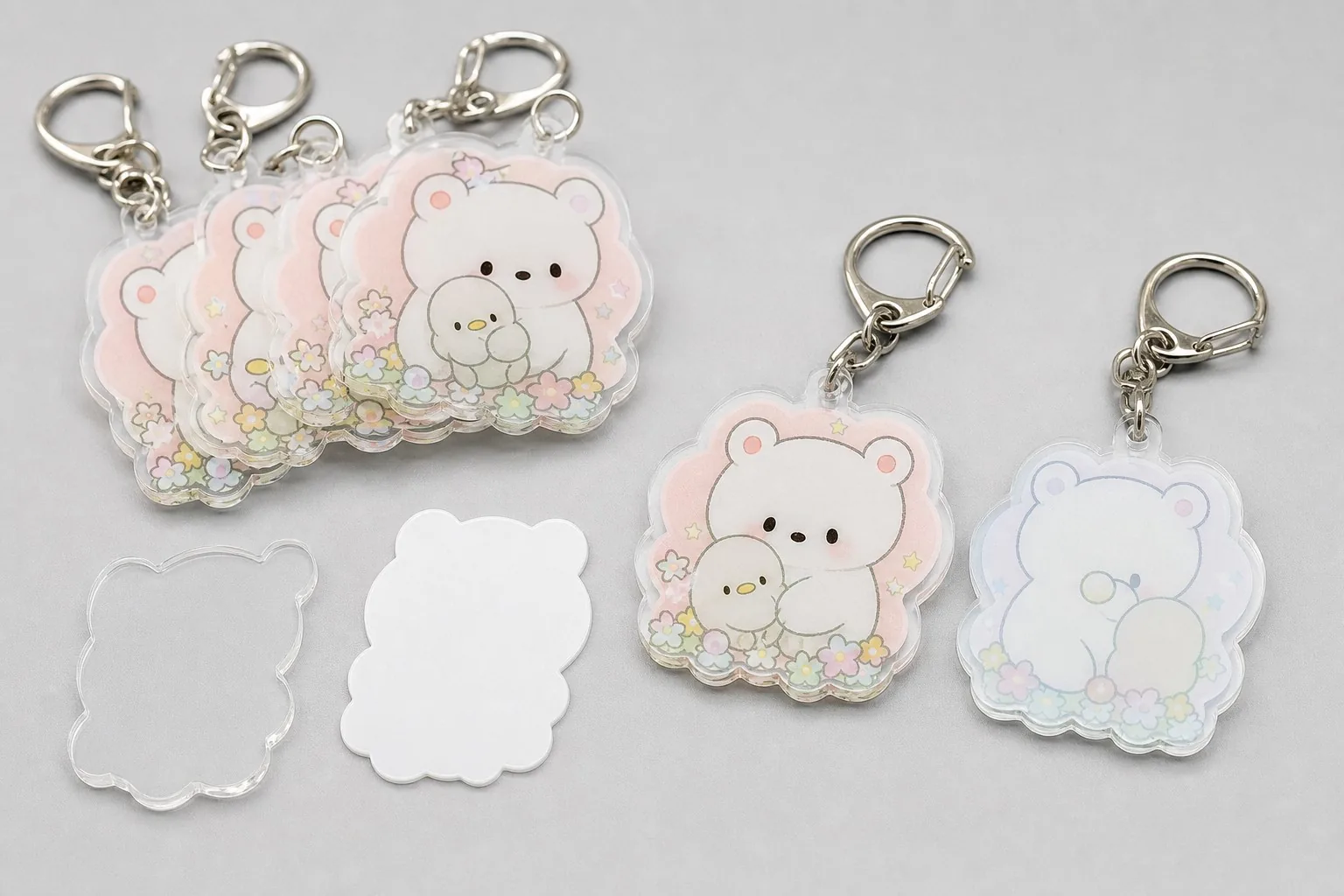
For standard one-sided production, confirm whether printed areas are viewed through the acrylic or printed on the outer surface. White ink controls opacity and color appearance, especially where artwork includes transparent or pale areas.
For different artwork on the front and reverse, the proof must identify viewing direction and layer order. A physical sample is recommended when alignment, transparency or color interaction affects the design. The double-sided acrylic keychain page covers this construction in more detail.
Sample approval
Freeze the production standard before the bulk run
A sample is not only a color check. It should confirm the complete relationship between artwork, acrylic, cutting, hole position, hardware and packaging.
Artwork proof
Confirm dimensions, cut line, print direction, white ink, front/reverse data and SKU naming.
Physical sample
Check printed color, transparency, edge finish, hole clearance, fitting operation and hanging balance.
Change control
Record approved changes and release one final specification so older artwork is not used for production.
Packaging and SKU control
Plan retail packing before mass production ends
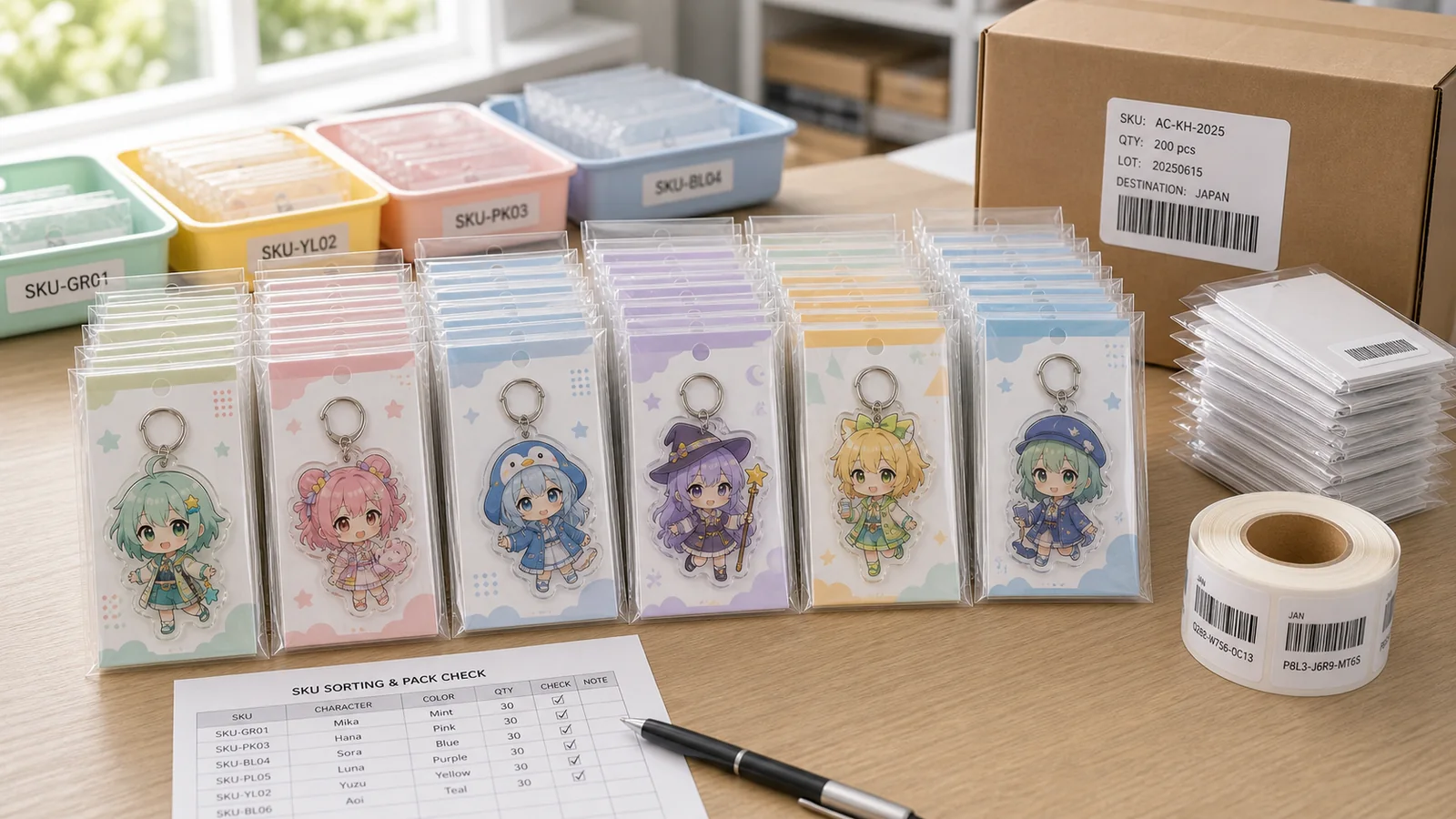
Individual clear bags may be enough for simple distribution, while retail programs can require backing cards, barcode labels, SKU labels or hang holes. Blind packs require an assortment rule, design identification method and recorded quantity check.
Share the packaging dieline and label data early. Late packing changes can affect bag size, card size, carton quantity, labor and delivery timing. For detailed scratch-control methods, see the acrylic keychain packaging guide.
Quality control
Inspect the risks that affect sellable units
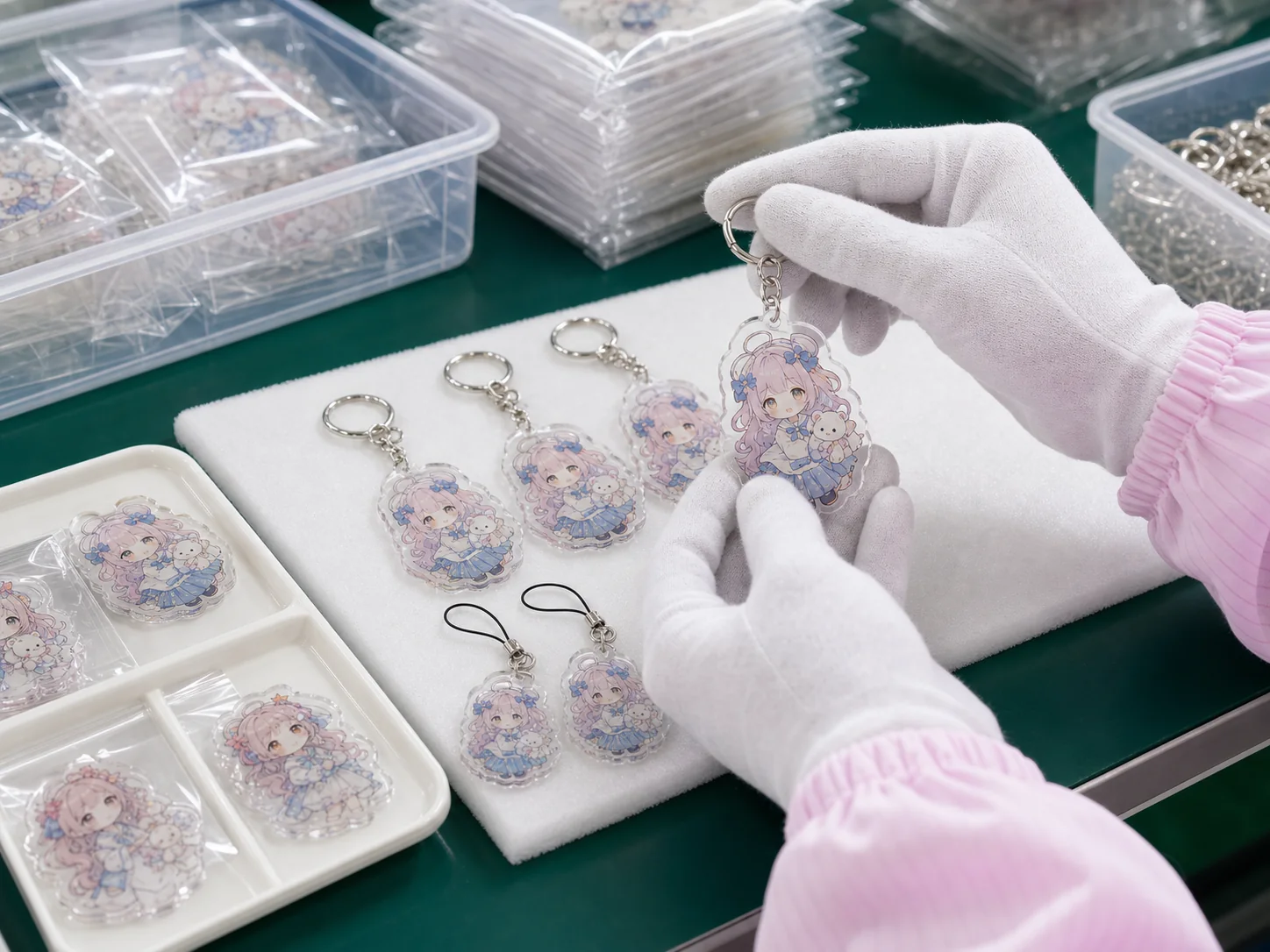
Inspection criteria should follow the approved sample and project specification. Important checkpoints include print shift, unexpected transparency, scratches after protective-film removal, chipped edges, incorrect hole position, loose hardware, wrong SKU packing and carton-label mismatch.
- Print registration and visible color difference
- Cut edge, thin areas and surface condition
- Hardware type, color and attachment
- SKU count, labels and carton allocation
Production workflow
From quotation to packed bulk order
Project review
Confirm use case, designs, quantities, delivery conditions and missing specifications.
Quotation
Price the approved size, print structure, fitting, packing and quantity assumptions.
Artwork proof
Check cut lines, holes, white ink, orientation, SKU names and packaging data.
Sample
Review the physical product and record accepted changes before release.
Bulk production
Produce against the released specification and approved reference.
Inspection
Check product appearance, assembly, SKU packing and shipment marks.
Packing
Complete individual, retail or blind packaging and carton allocation.
Delivery
Confirm shipment method and schedule based on the finished packing plan.
MOQ and schedule
Why there is no useful one-number answer
Practical MOQ and lead time change with the number of designs, size, thickness, print construction, special hardware, packaging workload and sample revisions. A collection with many designs may need a minimum per design even when the combined total is larger.
For launches or events, work backward from the required arrival date and allow time for artwork confirmation, sample review, bulk production, packing, inspection and international shipping. Dates should be confirmed for the actual specification.
Quote checklist
Information to send
- Artwork or product concept
- Finished size and thickness preference
- Number of designs and quantity per design
- Single- or double-sided print requirement
- Preferred hardware and metal color
- Individual, retail or blind packaging
- Delivery destination and required date
- Barcode, SKU label or carton-mark needs
Related procurement pages
Continue with the page that matches the next decision
FAQ
Custom acrylic keychain production questions
What is the practical MOQ for custom acrylic keychains?
MOQ depends on size, acrylic specification, print method, hardware, packaging and the number of designs. Share the total quantity and quantity per design so the production route can be assessed instead of relying on one fixed MOQ.
Can several designs be produced in one bulk order?
Yes. Multi-design programs are common for character sets, creator merchandise and event collections. Each design should have an approved artwork file, quantity, hardware choice and SKU identifier before packing instructions are released.
What artwork files are required?
Vector artwork is preferred. The production package normally identifies the cut line, hole position, print artwork, white ink layer, front and reverse orientation, finished size and any separate hardware or packaging instructions.
Can custom acrylic keychains have different artwork on each side?
Yes. A double-sided structure can use different front and reverse artwork. Orientation, white ink placement, transparency and the viewing direction must be checked on the proof and physical sample before mass production.
Which keychain hardware options can be compared?
Common options include split rings, swivel clasps, lobster clasps, ball chains, phone straps and shaped clasps. Hardware color, opening method, attachment strength and hole clearance should match the use case.
How are packaging and delivery confirmed?
Options can include individual bags, backing cards, barcode or SKU labels, blind packaging, assortment sorting and labeled cartons. Delivery timing is confirmed after sample approval, quantity, packing work and shipping conditions are known.
Prepare a specification-based quotation
Send the design count, quantity per design, size, print structure, hardware, packaging and delivery requirements. The response can then focus on the decisions that affect cost, quality and schedule.
Send Project Details