B2B OEM / KEYCHAIN FINISH
Double-Sided Acrylic Keychains
Produce acrylic keychains with a planned front view and reverse view for licensed merchandise, creator programs, events and retail collections. Approve the artwork direction, print layers, white ink, transparent zones, hardware and sellable packaging before bulk production.
Projects are quoted from finished size, front and reverse artwork, print construction, quantity by design, hardware, packaging, inspection scope and delivery destination. General acrylic keychain procurement remains on the core keychain page.
PRODUCT DEFINITION
What are double-sided acrylic keychains?
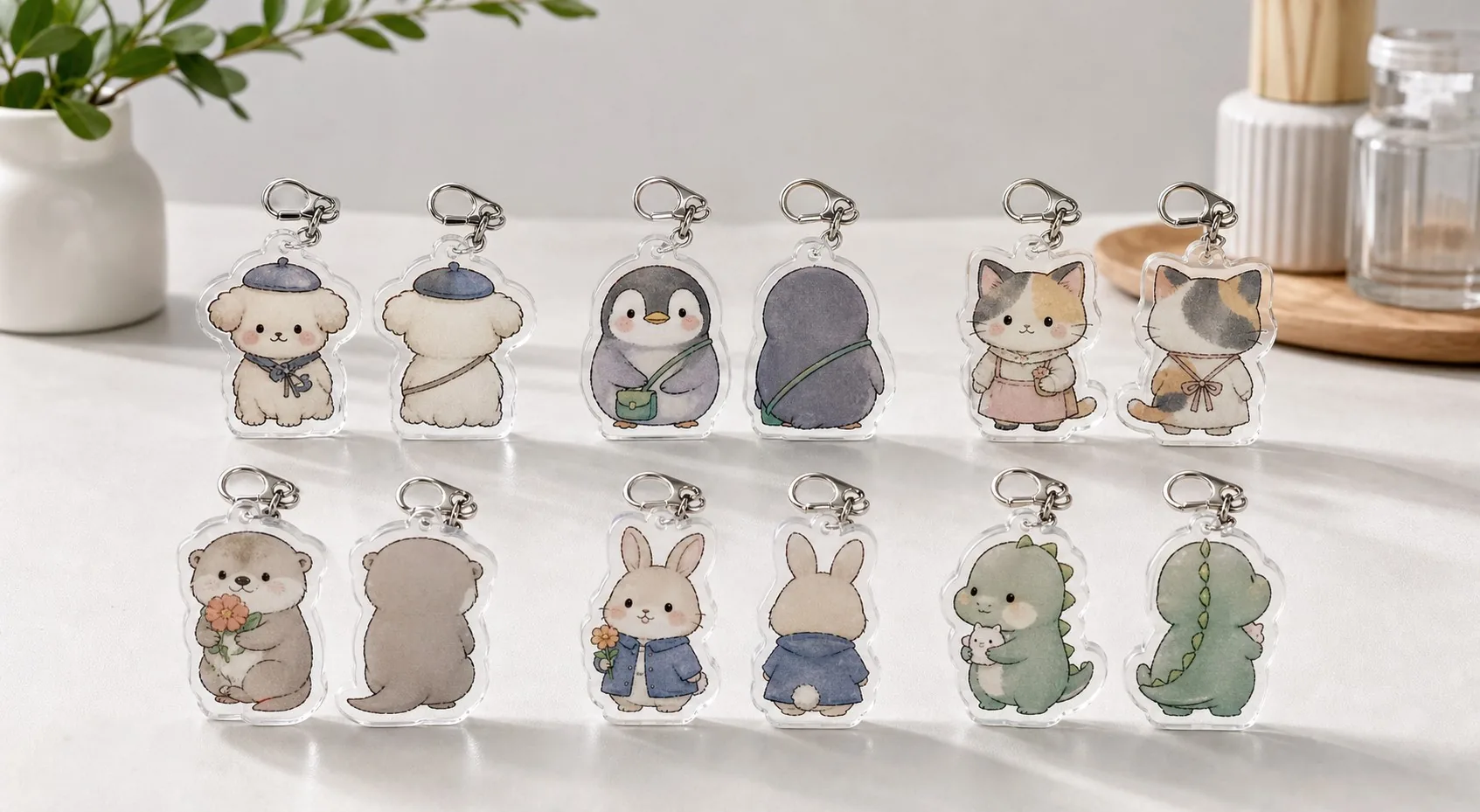
A double-sided acrylic keychain presents an intentional image on both visible faces of the acrylic body. The reverse can use independent artwork, a coordinated back view, alternate text or an approved mirrored version of the front.
The defining procurement issue is not simply printing more color. Buyers must specify how the two views relate, where white ink blocks or supports color, which areas remain transparent and how the artwork reads when the keychain hangs from its hardware.
For general size, hardware, packaging and supplier selection without a two-face print requirement, use the Custom Acrylic Keychains page. This page retains only double-sided print intent.
- Independent reverse artwork: front and back use different approved illustrations, poses, text or information.
- Coordinated reverse view: the reverse follows the same character or object from a planned back-facing perspective.
- Mirrored artwork: the same image is intentionally reversed only when text, logos and orientation still work.
SPECIFICATION CONTRACT
Product specifications to define before sampling
Use one specification sheet to connect both artwork faces to the cut body, hardware and final packaging.
| Artwork relationship | State whether the reverse is independent artwork, a coordinated back view or an intentionally mirrored version of the front. |
|---|---|
| Finished size | Record body width and height, acrylic thickness, corner geometry, hole diameter, edge distance and packed dimensions. |
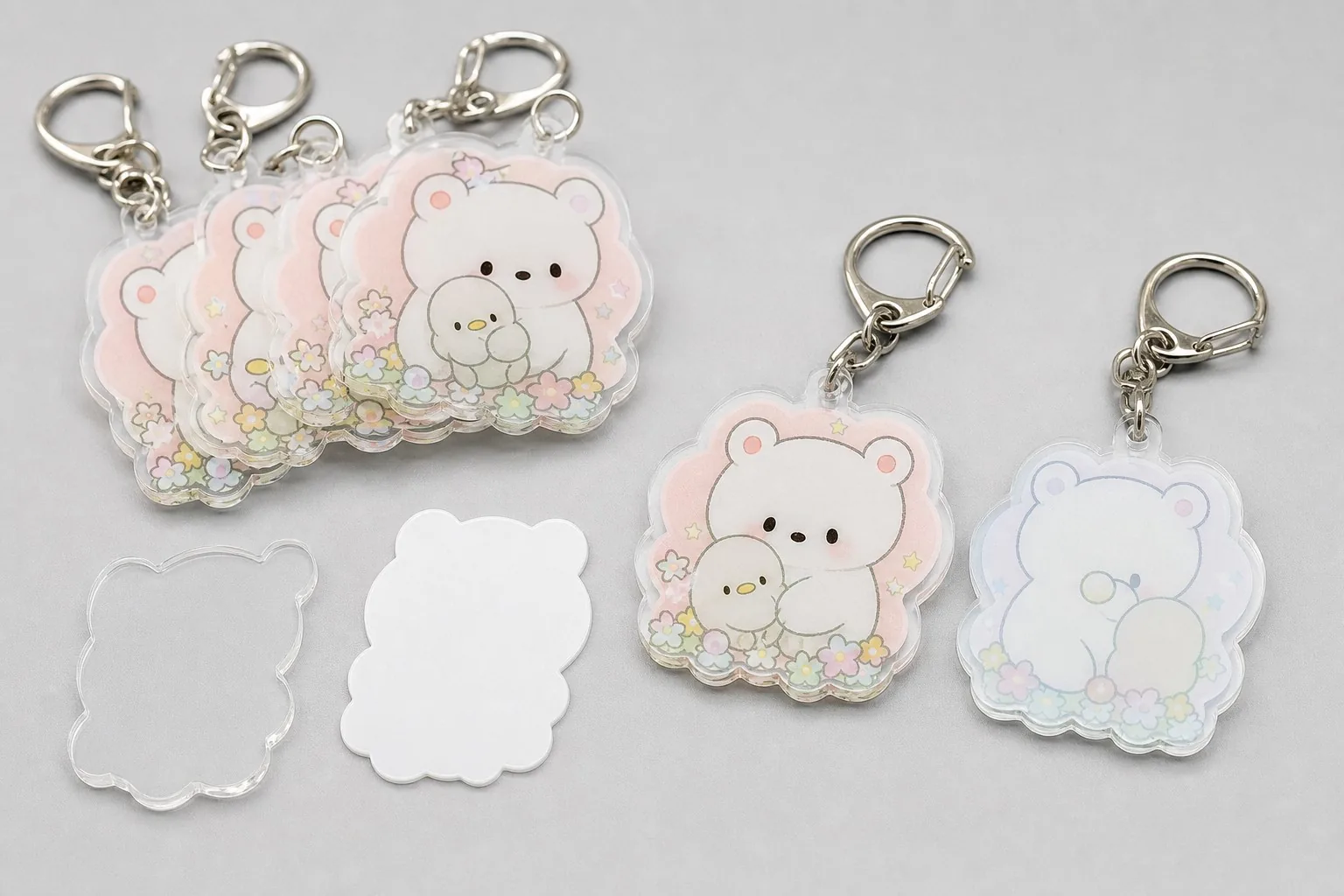
| Print layers | Separate front color, reverse color, white ink and transparent areas. Confirm which printed surface faces outward in the finished construction. |
| Cut line and hole | Use one shared cut line and hole reference for both faces so the two artwork files cannot drift during revision. |
| Orientation | Mark the top direction and hanging direction. Check readable text, asymmetrical elements and character poses on both sides. |
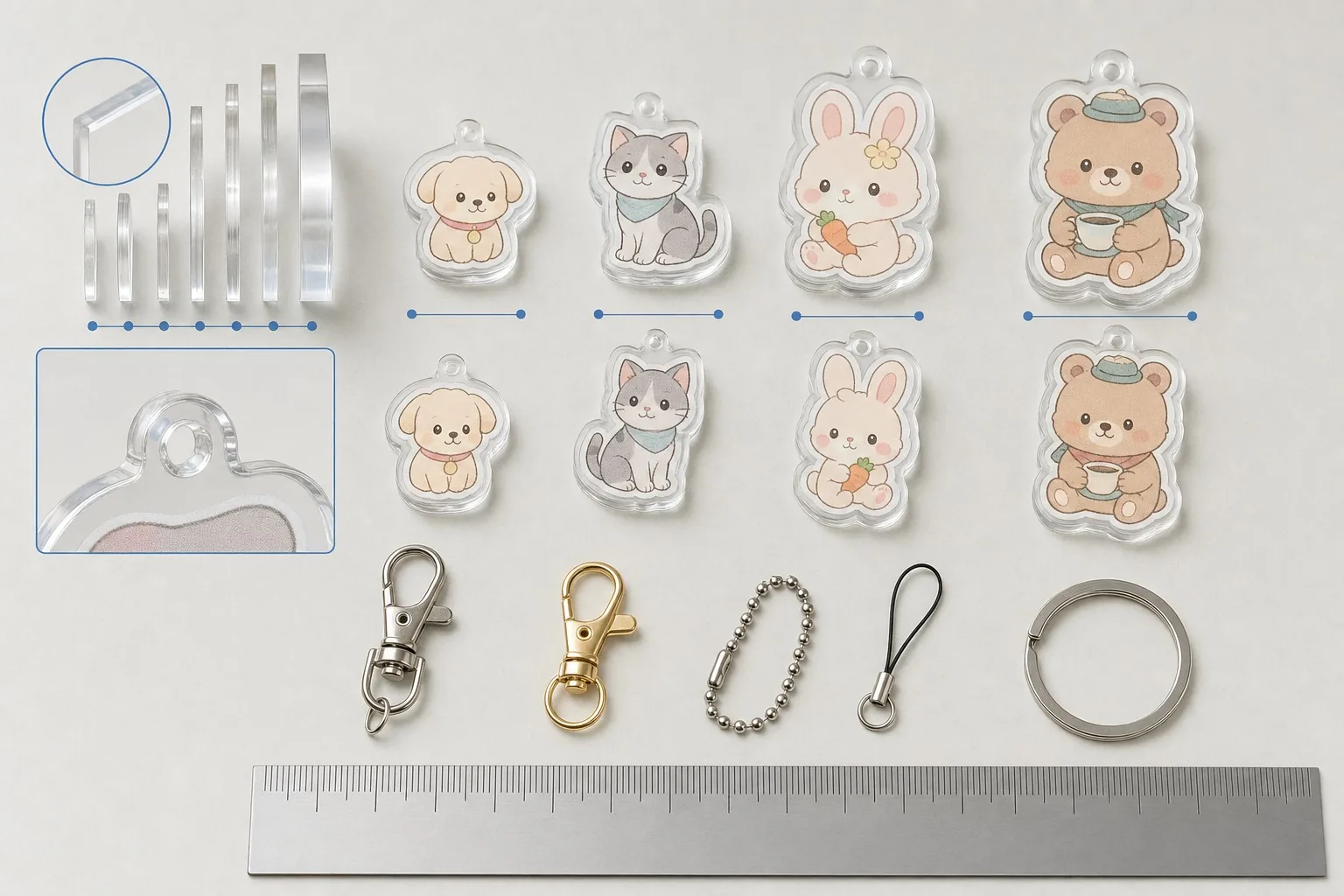
| Hardware | Match the hole and body size to the selected jump ring, key ring, lobster clasp, ball chain, cord or decorative fitting. |
| Surface protection | Confirm protective film handling, visible print-surface expectations, scratch criteria and any coating or finishing requirement. |
| Retail packing | Define individual bag, backing card, blind bag, barcode or SKU label, set assembly and carton-label rules. |
ARTWORK CONSTRUCTION
Plan front, reverse and white-ink layers together
Separate artwork files are easier to inspect when every layer has a single production purpose and both faces share the same physical reference.
Front color layer
Keep the approved front image, text and fine details inside the print and cut safe area.
Reverse color layer
Provide the final viewing direction rather than leaving the factory to infer whether the file should be mirrored.
White-ink plan
Define full white, selective white and no-white areas so color density and transparency match the intended effect.
Shared physical guide
Use one cut line, hole center, top mark and finished-size reference for both faces and every SKU.
SIZE AND HARDWARE
Check the two-face artwork in its real hanging direction
Size and attachment affect which face is seen first, how the keychain rotates and whether the reverse view remains intentional during use. The hole should protect narrow cut areas while giving the selected hardware enough movement.
- Finished width, height and thickness
- Hole diameter and center position
- Distance from hole to cut edge
- Top direction on both artwork files
- Jump ring and fitting dimensions
- Readable text on front and reverse
- Weight and handling feel
- Packed size with hardware folded
Use the Acrylic Keychain Fittings Guide to compare attachment types before approving the sample.
ARTWORK AND SAMPLE
Approve the artwork and physical sample in six steps
Do not release bulk production from front-view artwork alone. The physical sample must prove the relationship between both faces.
Define the reverse concept
Choose independent art, coordinated back view or mirrored artwork before production files are prepared.
Lock physical references
Record finished size, cut line, hole, top direction, thickness and hardware for all artwork files.
Separate print layers
Name front color, reverse color, white ink and transparent zones so they can be checked independently.
Inspect both sample faces
Check orientation, color, registration, white halos, transparency, edge quality and readable text.
Approve one sellable unit
Assemble the selected hardware and place the correct SKU in final-style packaging with the intended front display.
Release one revision
Consolidate all approved front, reverse, hardware and packing changes before bulk production.
MASS-PRODUCTION RISK
Failure risks to resolve before bulk production
Reverse art is unintentionally mirrored
Text, logos or character details can read incorrectly when the viewing direction was not stated in the file.
Front and reverse do not register
Small artwork shifts can create visible outlines or uneven borders through clear acrylic.
White ink creates a halo
White coverage that extends beyond color artwork can appear as a bright edge from one or both faces.
Transparent areas conflict
A transparent detail on one side can reveal unintended color or white ink from the other side.
The keychain hangs upside down
Artwork top direction, hole position and hardware assembly can disagree when only one face was reviewed.
Similar SKUs enter the wrong pack
Correct front art can hide an incorrect reverse design unless the packing matrix identifies both faces.
Protective film is misunderstood
Film and print-surface expectations must be clear to inspection, packing teams and, when needed, the end user.
Hardware covers important art
Rings and clasps can overlap top details when the hole and artwork safe area are not reviewed together.
SKU AND PACKAGING
Control both artwork faces in the packing matrix
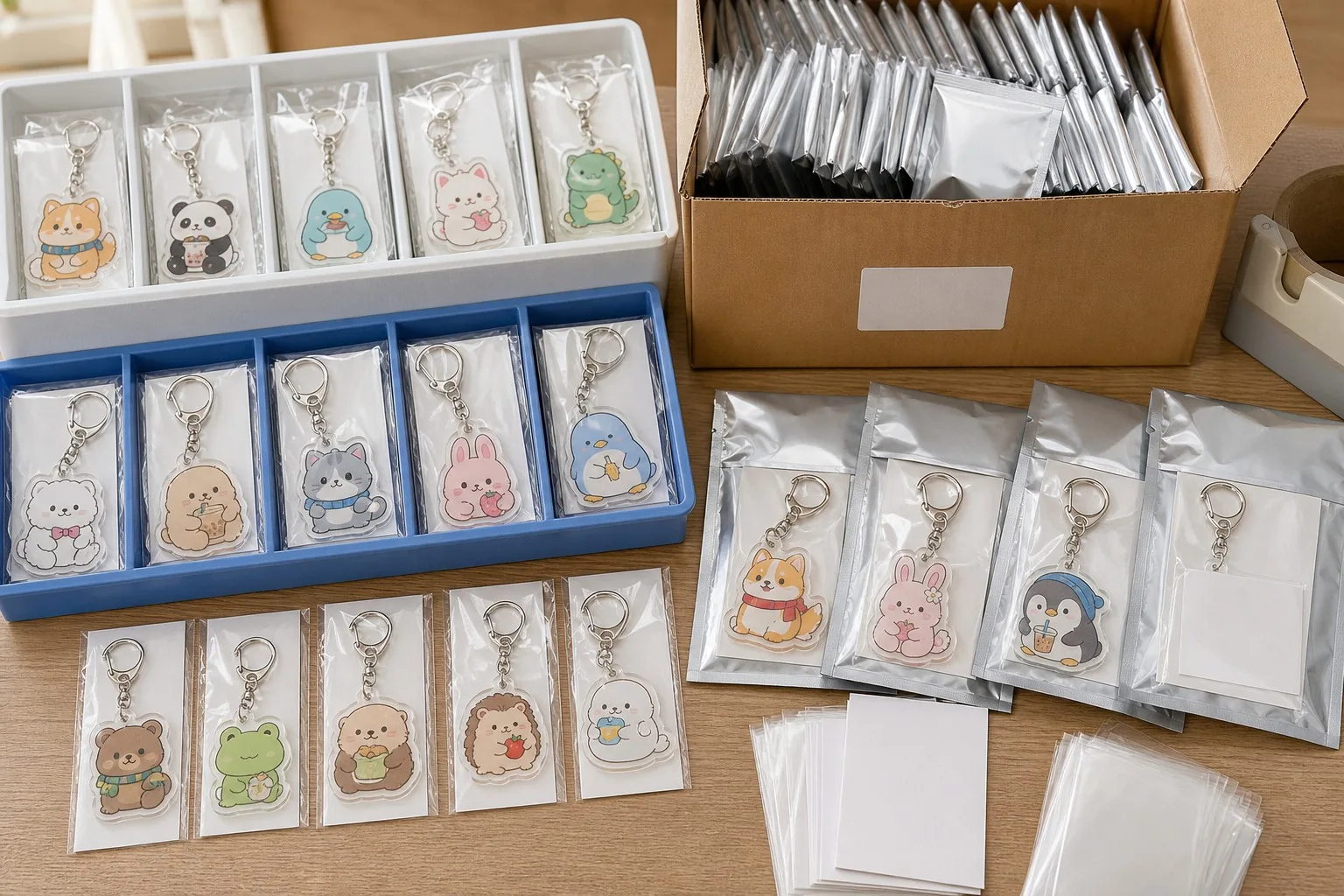
Double-sided designs require more than a front thumbnail. Assign one code to every approved front/reverse combination and use the same code in artwork folders, production lists, backing cards, labels and cartons.
Individual retail
Clear bag or sleeve, backing card, barcode or SKU label and intentional front-facing display.
Blind merchandise
Opaque bag, design code, randomization rule, inner-box quantity and disclosure label.
Multi-piece set
Front/reverse pairings, hardware orientation, set order, shared tray or card and missing-part check.
Event fulfillment
Quantity by SKU, destination split, carton labels and venue or warehouse instructions.
Review the Keychain Scratch-Prevention Packaging guide before approving the retail pack.
QUALITY CONTROL
QC checkpoints for double-sided acrylic keychains
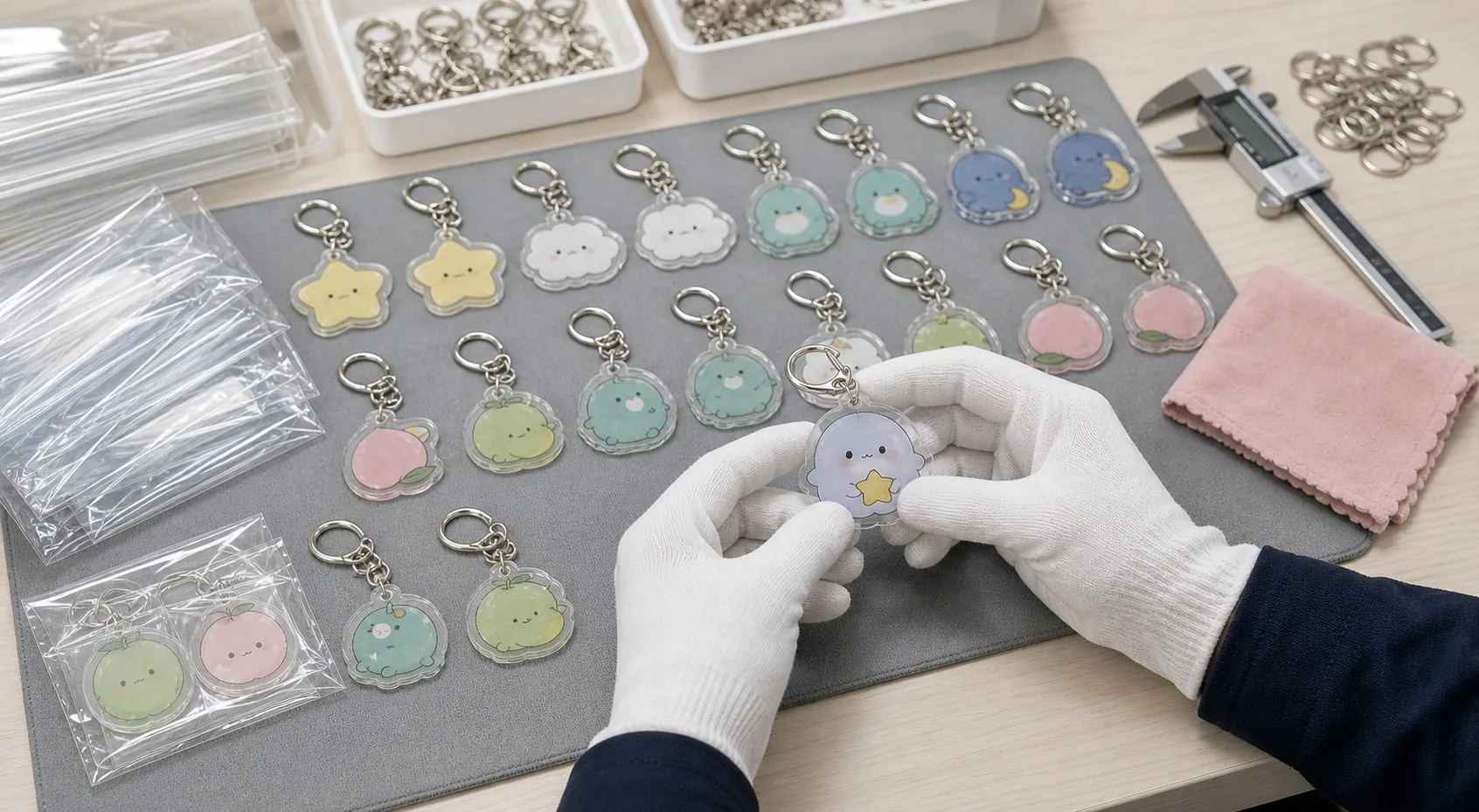
Inspection criteria should follow the approved sample, two-face artwork and sales pack. The scope can cover material, printing and cutting, hardware assembly, packaging accuracy and pre-shipment checks.
- Front and reverse identityConfirm the correct pair of artwork files and viewing direction for every sampled SKU.
- Registration and white layerCheck visible outlines, halos, color density and transparent areas from both faces.
- Cut, edge and holeReview finished dimensions, narrow points, chips, edge finish and hole position.
- Hardware assemblyConfirm fitting type, color, ring closure, movement and hanging direction.
- Surface conditionCheck scratches, dust, protective film and visible print-surface expectations.
- Pack and carton accuracyVerify design code, card, label, quantity, set or random rule and carton destination.
See the Acrylic Goods Quality Inspection guide for inspection planning.
SALES PROGRAMS
Use two-face artwork to add planned merchandise value
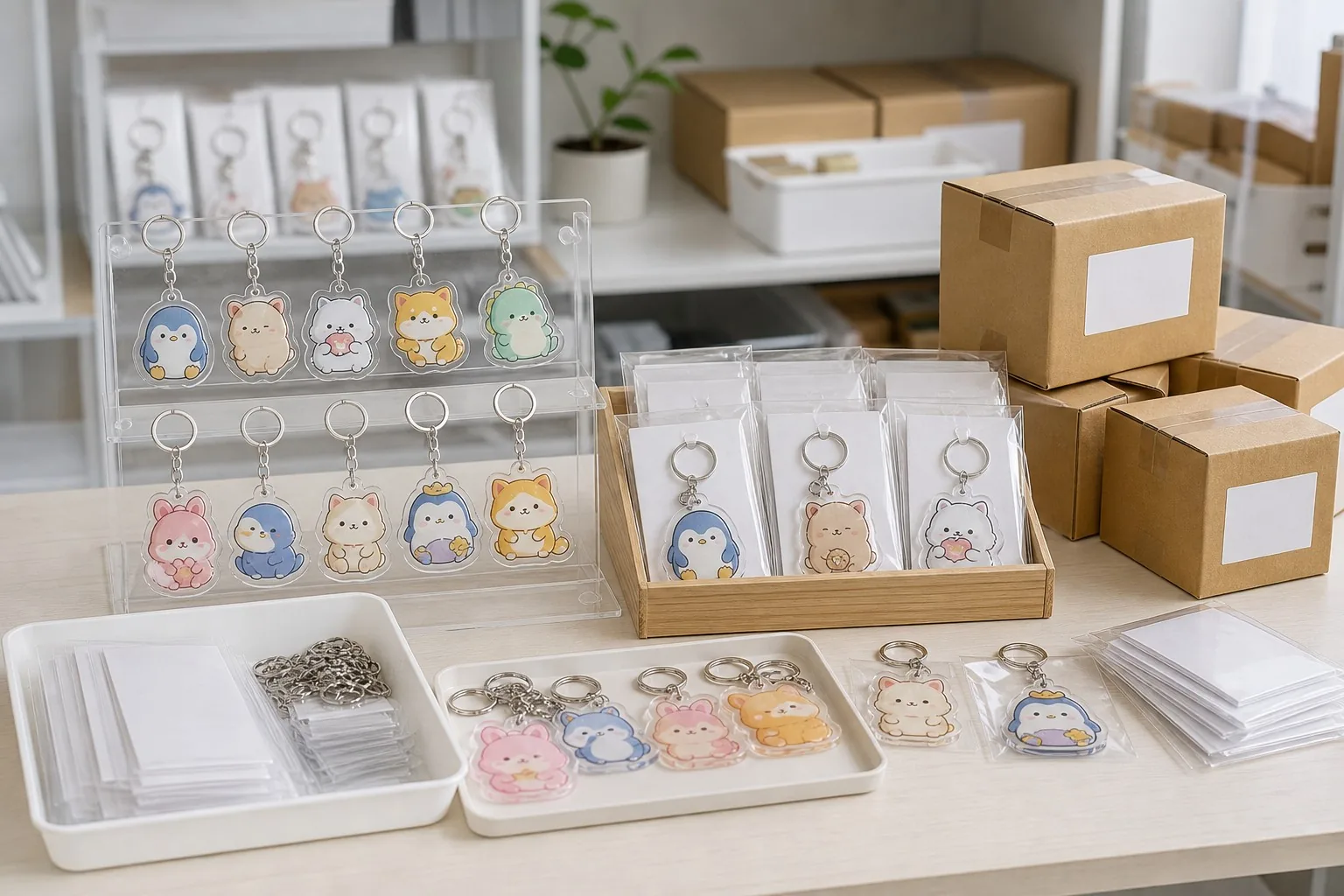
A reverse view can carry a second pose, alternate expression, character profile, event date, logo or coordinated pattern. The choice should serve the merchandise concept and remain readable after hardware assembly and packaging.
- Licensed character collections
- Creator and artist merchandise
- Concert and event goods
- Game and animation releases
- Retail and ecommerce launches
- Blind and collectible series
QUOTE CHECKLIST
Information needed for an accurate project quote
Unconfirmed items can be marked for recommendation. The two-face artwork relationship and design split should be clear before comparing a realistic production route.
- Front artwork for every design
- Reverse artwork or mirror instruction
- Finished body width and height
- Acrylic thickness and material
- Cut line and hole position
- White-ink and transparency plan
- Hardware type and color
- Total quantity and quantity per design
- Number of designs or SKUs
- Individual, blind or set packaging
- Backing card, barcode and label needs
- Required arrival date and destination
ORDER CONDITIONS
MOQ, sampling and delivery are project-specific
Quantity and schedule cannot be confirmed from the finish name alone. Finished size, number of designs, two-face print construction, hardware, packaging labor, inspection scope and destination all affect the practical route.
Quantity per design
Share the combined quantity and the split by approved front/reverse SKU.
Sample scope
Identify which artwork relationships, white-layer plans, hardware and packs require physical approval.
Bulk schedule
The schedule is confirmed after approved files, sample revisions, materials, packing and inspection conditions are known.
Delivery plan
Provide the country, destination, required arrival date, shipment split and venue or warehouse requirements.
PRODUCTION WORKFLOW
From two-face artwork review to shipment
- 01 InquiryArtwork relationship, quantities and destination
- 02 ReviewSize, layers, hole, hardware and pack
- 03 SampleBoth faces, registration and sellable-unit check
- 04 ApprovalOne final artwork and specification revision
- 05 ProductionManufacturing, assembly, packing and QC
- 06 DeliveryCarton labels, documents and agreed shipment
Review the complete OEM order process before scheduling artwork submission and sample approval.
FAQ
Double-sided acrylic keychain FAQ
What is the practical MOQ for double-sided acrylic keychains?
The practical MOQ depends on finished size, thickness, front and reverse print construction, hardware, packaging and the quantity allocated to each design. Share the total quantity and quantity per design so the production route can be reviewed for the actual project.
Can several double-sided designs be produced together?
Yes. A multi-design order can be planned when every SKU has approved front artwork, reverse artwork, orientation, quantity, hardware and packaging data. Cost and packing conditions depend on the final design split.
What artwork files are required for double-sided printing?
Provide separate named layers or files for the front image, reverse image, cut line, hole, white ink and any transparent areas. Mark the top direction and state whether the reverse should be independent artwork or a mirrored version of the front.
Can the reverse artwork be different from the front?
Yes. Independent front and reverse artwork can be reviewed. The sample must confirm orientation, registration, white-layer coverage, transparent areas and the appearance of both faces through the clear acrylic.
Can retail, blind or set packaging be prepared?
Individual bags, backing cards, opaque blind bags, barcode or SKU labels, set assembly and labeled export cartons can be discussed. The packing matrix should identify the correct front and reverse artwork, hardware and sales unit for every SKU.
How are sampling, QC and delivery timing confirmed?
Timing is confirmed after the artwork, construction, quantity by design, hardware, packaging and inspection scope are known. Bulk production should begin from an approved physical sample and one final specification revision.
RELATED RESOURCES
Continue the acrylic keychain review
PROJECT REVIEW
Prepare a double-sided acrylic keychain specification
Send the front and reverse artwork, viewing direction, finished size, quantity by design, hardware, packaging and delivery destination. Unconfirmed items can be marked for recommendation.