
B2B OEM / PATTERNED OPTICAL MATERIAL
Holographic Acrylic Stands
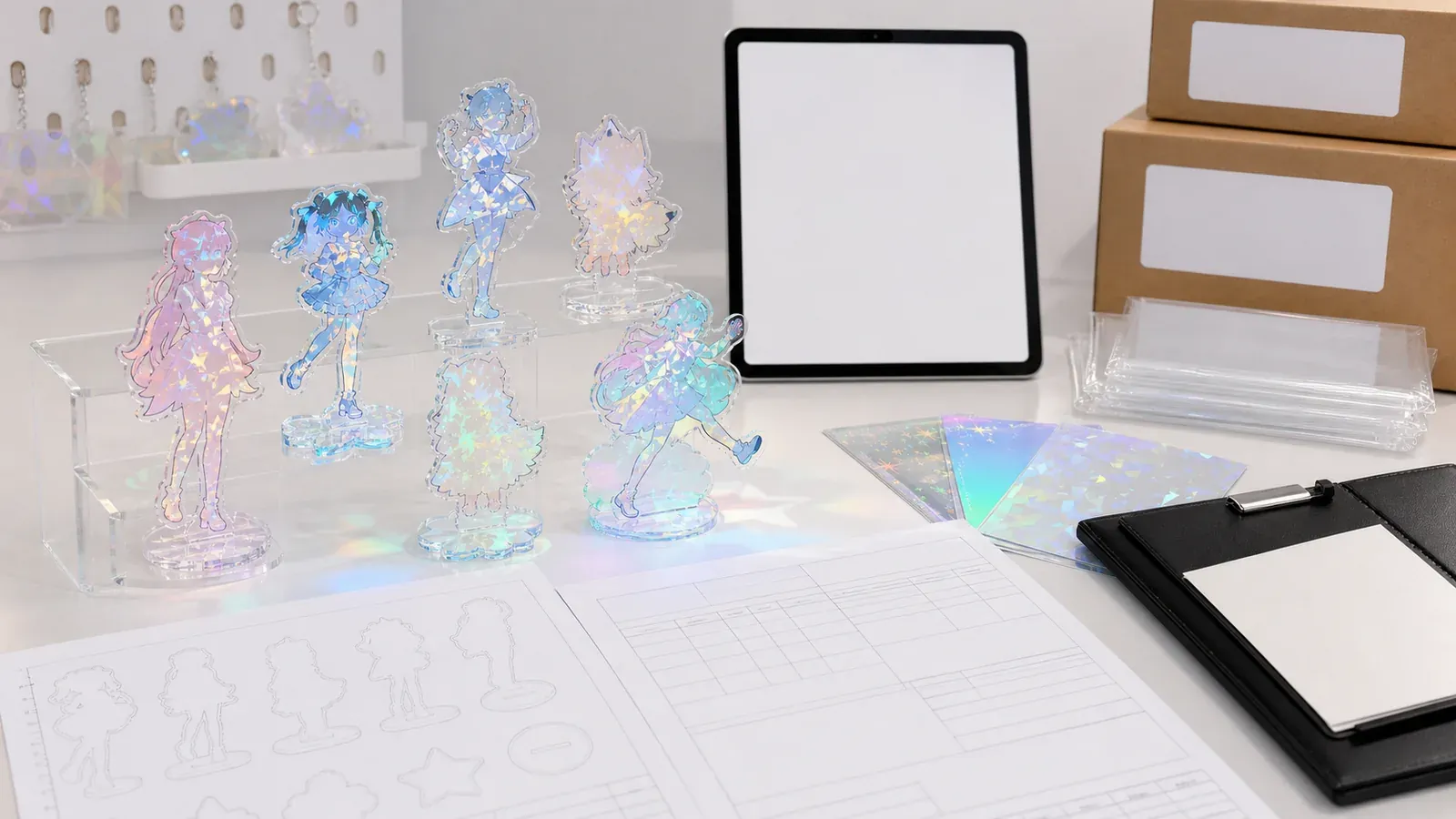
Create custom holographic acrylic stands with a controlled star, shard, dot, rainbow-haze or crushed-ice optical pattern. Approve the material code, pattern scale and direction, artwork visibility, body-to-base fit, packaging and angle-based QC before bulk production.
Holographic stand intent combines a patterned optical material with stand body and base engineering. Holographic keychains, smooth aurora materials and generic standees remain separate pages.
PRODUCT DEFINITION
What are holographic acrylic stands?
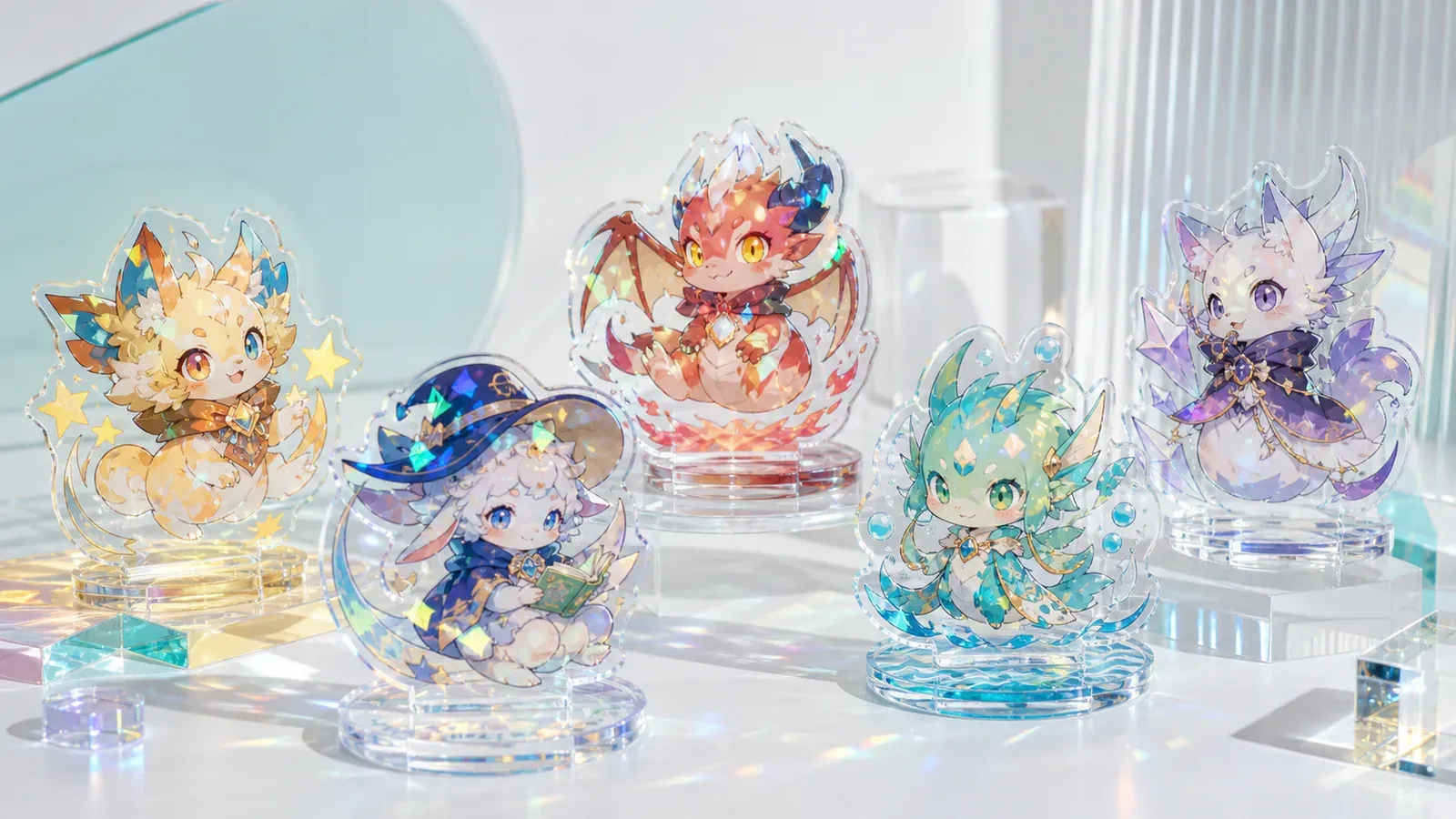
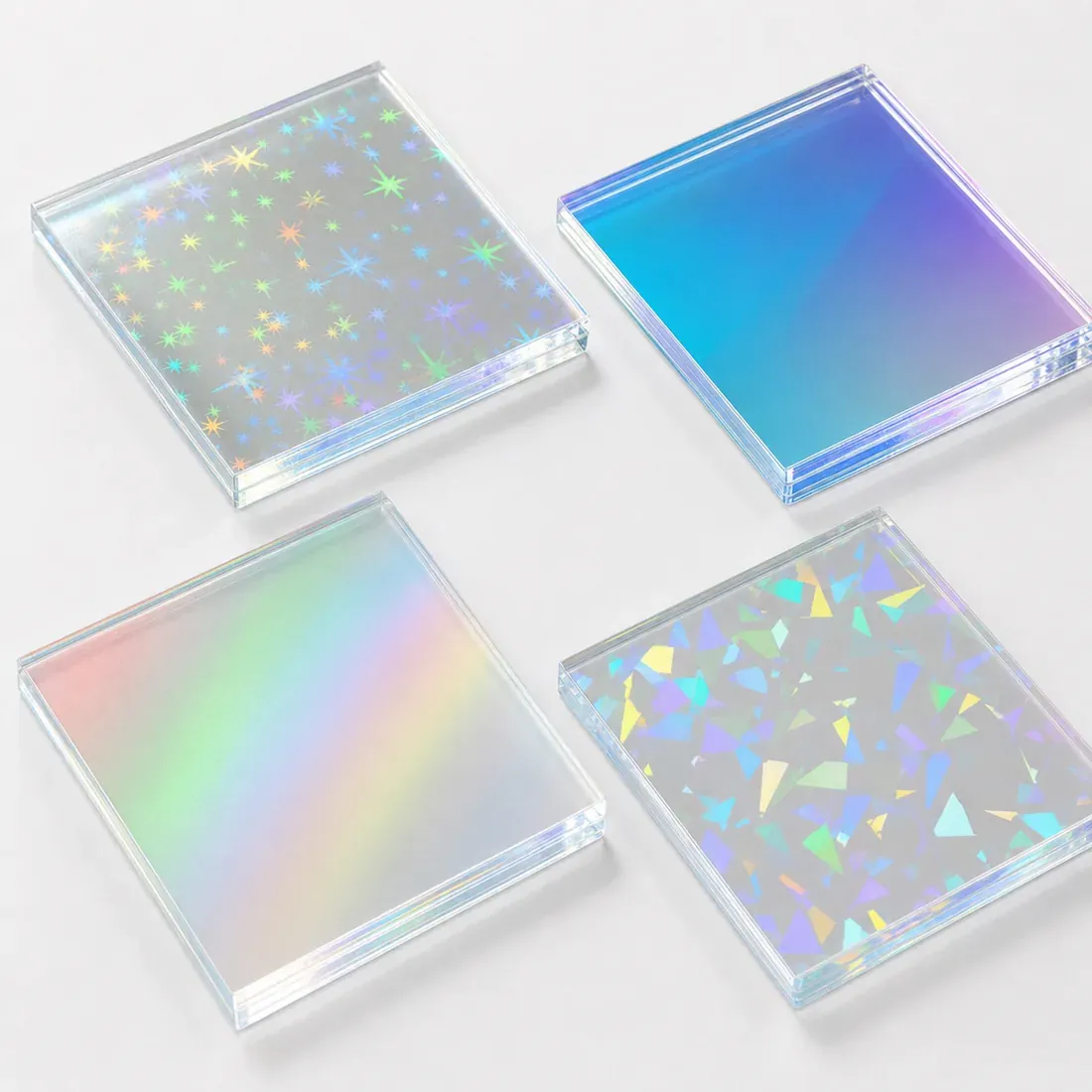
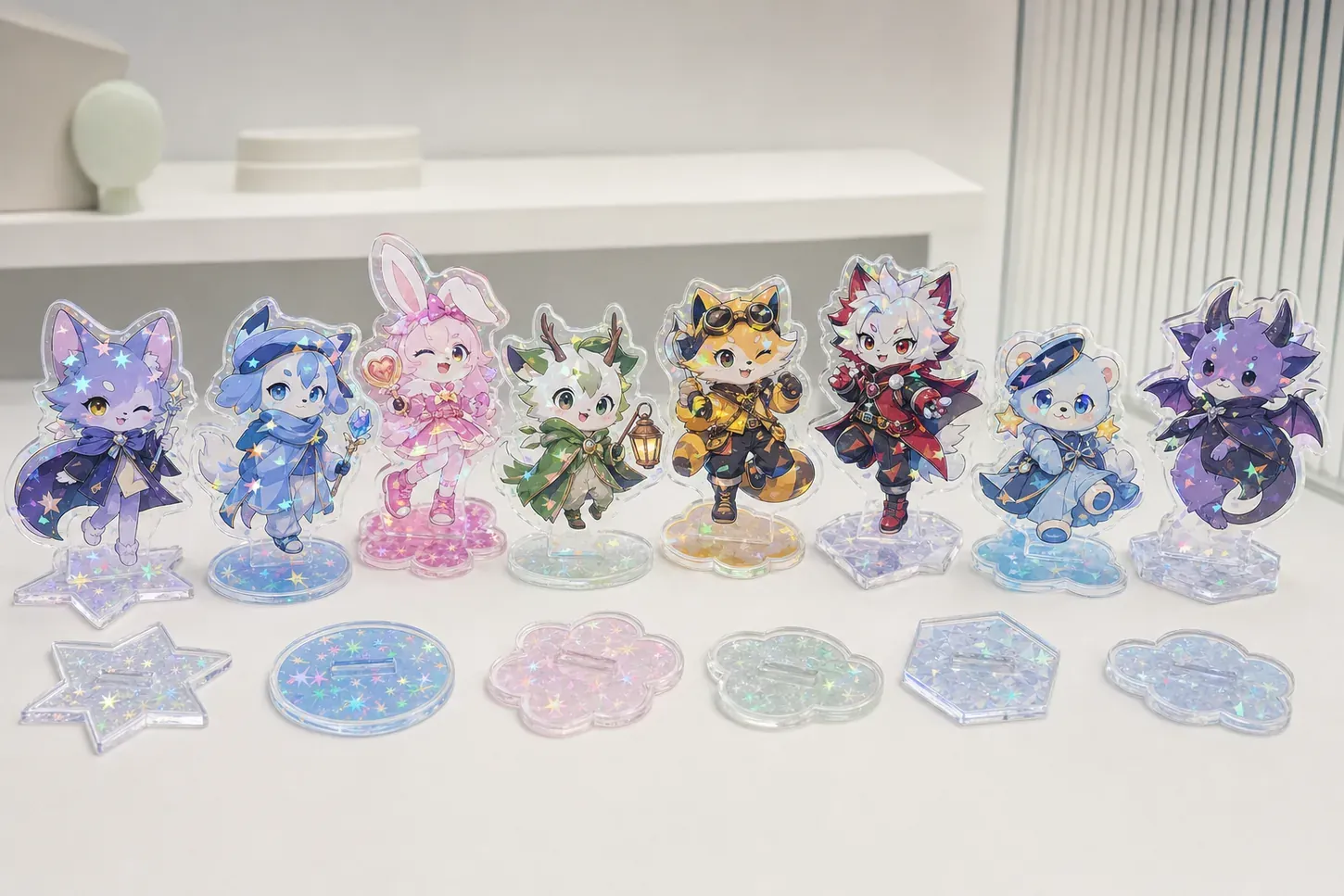
Holographic acrylic stands use a patterned optical film, sheet or equivalent reflective layer that produces visible motifs or structured rainbow effects under changing light. Common visual families include stars, broken glass, dots, rainbow haze and crushed ice, but names are not standardized across suppliers.
The pattern can compete with fine artwork or disappear behind full white ink. Buyers should approve motif scale, direction, viewing face and the zones where the optical layer remains visible. A finished upright sample is more useful than a loose sheet because the base, print and retail angle affect the result.
This page owns patterned optical material on an assembled stand. Smooth color-shift aurora materials and holographic keychains have different search and procurement intent, while ordinary body thickness and base design remain on their dedicated pages.
- Holographic standPatterned motifs or structured optical effects are visible on a standing body or base.
- Aurora standThe color shift is smoother and may not use a discrete repeating motif.
- Glitter acrylicIndividual decorative particles create sparkle and distribution variation.
- Holographic keychainThe optical material is engineered around a hanging product, hole and hardware rather than a base.
For general body sizes, print, base and supplier selection, use the Custom Acrylic Standees page.
PROJECT DECISIONS
Lock the defining option before artwork release
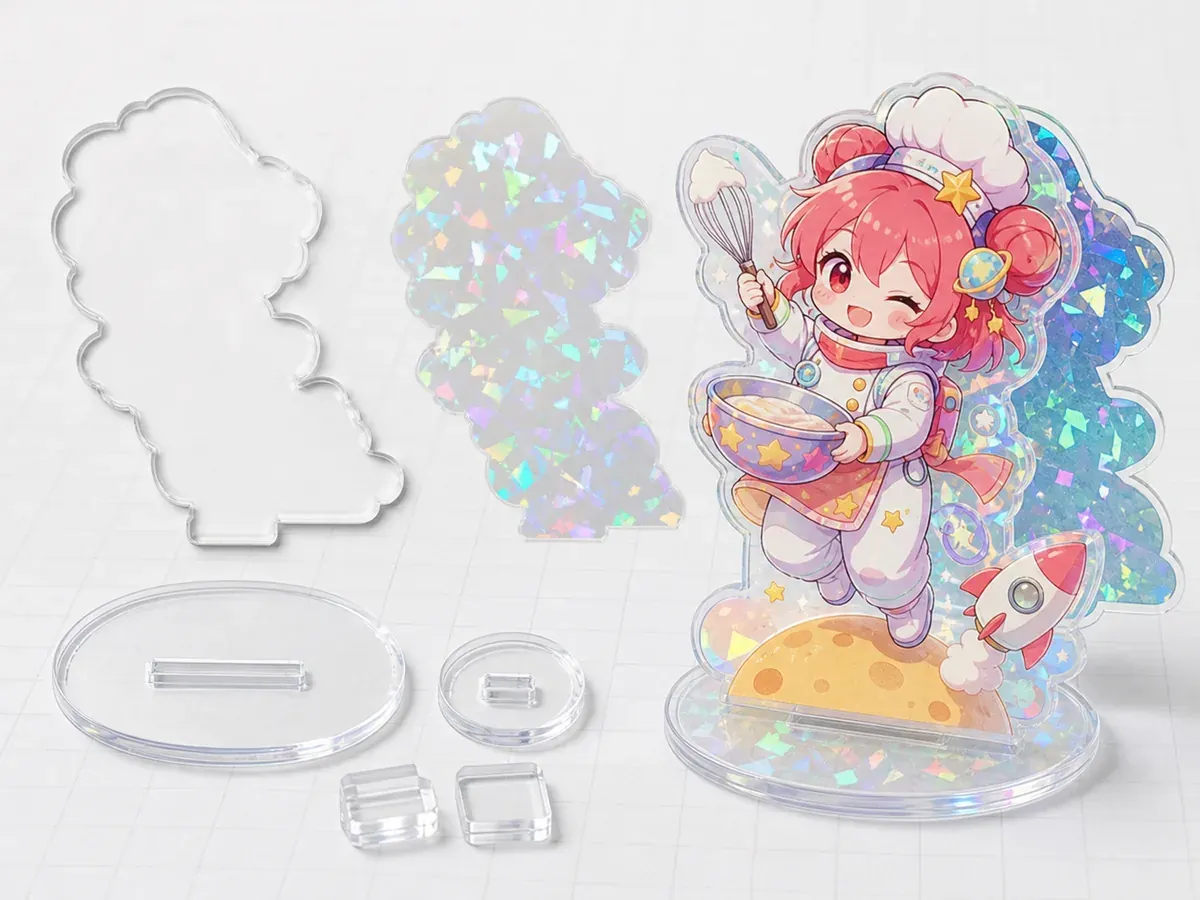
The product name is not a complete specification. Record the material or structure decisions that create this page's distinct buyer intent.
Pattern family
Approve star, shard, dot, haze, crushed ice or another named sample code.
Pattern scale
Match motif size to the finished stand and important artwork details.
Direction and face
Record the upright orientation and intended front optical face.
Body/base design
Choose matching, contrasting or clear base material and approve the assembled result.
SPECIFICATION CONTRACT
Build one quote-ready specification sheet
Connect artwork, material, body, base, packaging and SKU data in one controlled revision.
| Material code | Approved holographic sample, motif, scale, viewing face and reflected-color range. |
|---|---|
| Body geometry | Finished size, thickness, cut line, tab, narrow points and upright direction. |
| Pattern orientation | Arrow showing motif direction relative to artwork, tab and base slot. |
| Print layers | Color, white ink, transparent zones and front/reverse relationship. |
| Base fit | Base material, slot direction, width, insertion force, lean and stability. |
| Angle standard | Front, tilted and side checks under neutral and direct lighting. |
| Packaging | Protective film removal, body/base separation, sleeves, labels and scratch prevention. |
| Order matrix | Quantity by artwork, holographic code, orientation, base, pack and destination. |
PRIMARY CONTROL
Match holographic pattern scale and direction to the artwork
A large star or shard motif may dominate a small face or logo, while a very fine pattern can disappear at normal retail distance. Compare the physical material behind the actual artwork size and decide which zones should remain transparent or selectively supported with white ink.
Directional motifs require an upright arrow in the specification. If sheets are rotated during cutting, otherwise identical SKUs can reflect differently on shelf. Approve the body and base together and record whether their patterns should align or intentionally contrast.
- Approved motif code
- Pattern scale
- Upright direction arrow
- Front viewing face
- Reflected-color range
- Artwork clear zones
- Body/base alignment
- Light and dark background review
APPROVAL EVIDENCE
Approve four forms of physical evidence
Each item answers a different production question. A loose material sample alone cannot approve print, assembly, packaging or shipment condition.
Pattern swatch
Physical sample establishes motif, scale, direction and reflected-color range.
Printed body
Artwork, white ink and transparent zones are reviewed on the selected material.
Assembled stand
Body/base fit, stability and pattern alignment are approved together.
Packed SKU
Surface protection, labels and orientation remain controlled through shipment.
STAND ENGINEERING
Treat optical pattern and base fit as one assembled product
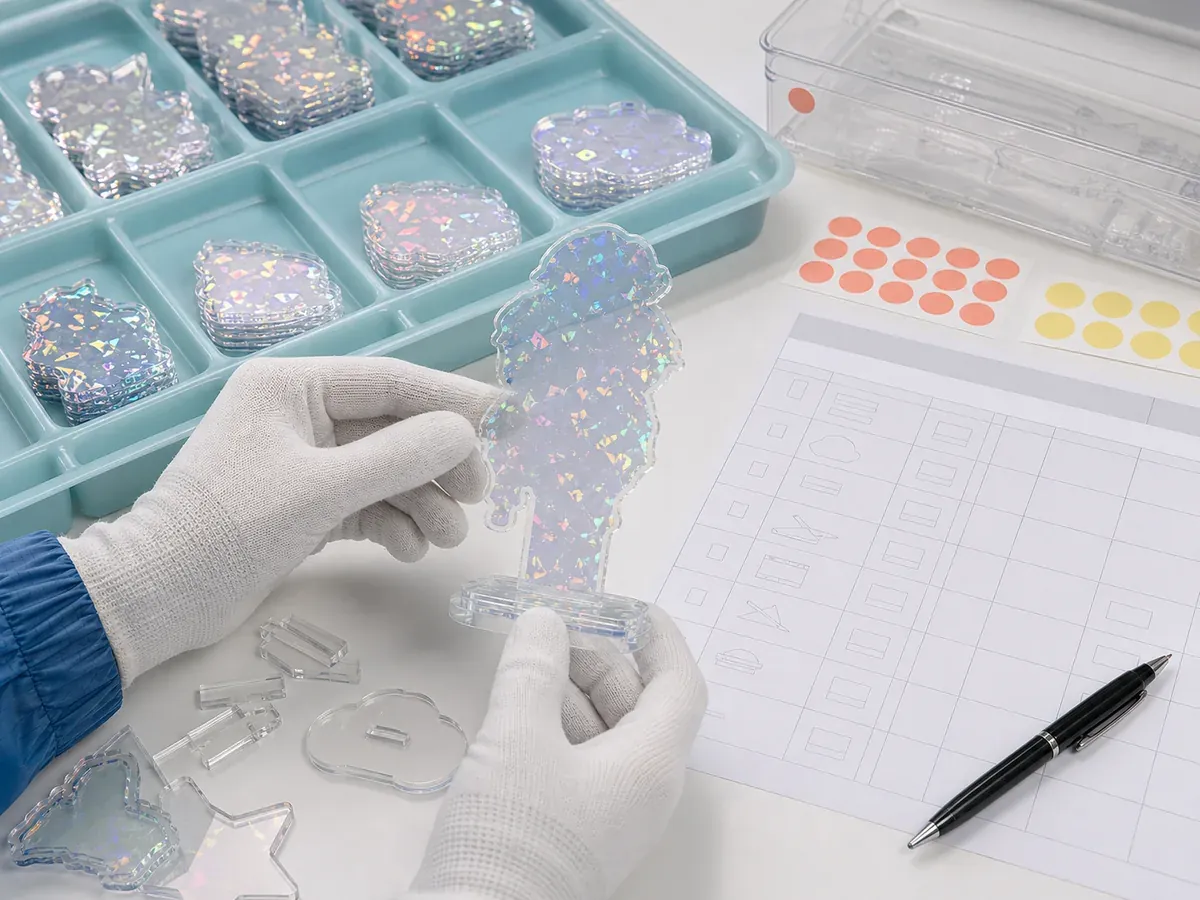
Actual holographic material thickness and layer construction can affect tab-slot fit. Use the production-intent body and base to approve insertion force, lean and stability. A patterned base may also make slot stress or misalignment more visible under angled light.
After protective film removal, inspect both faces and the cut edge. Fine scratches, haze or layer marks become prominent as the stand moves. Packaging should separate body and base and prevent a card, bag or neighboring unit from rubbing the strongest optical face.
Use the Acrylic Material Thickness Guide when sheet tolerance or component weight affects the project.
MASS-PRODUCTION RISK
Failure risks to resolve before bulk production
Finish is specified only as holographic
The delivered motif and pattern scale differ from the buyer's expectation.
Pattern direction is omitted
SKUs or lots are cut at different rotations and reflect inconsistently.
Full white ink hides the effect
The stand reads like ordinary printed acrylic despite the selected material.
Pattern overwhelms small details
Faces, text or logos lose contrast at common viewing angles.
Body and base are approved separately
The assembled pattern relationship and slot fit do not match the sample intent.
Protective film remains during QC
Surface scratches or reduced reflection are not judged on the final exposed face.
Holographic stand and keychain specs are reused
Base engineering, tab-slot fit and standing orientation are omitted.
Packed surfaces rub
Movement in transport creates scratches that are especially visible under direct light.
QUALITY CONTROL
QC checkpoints tied to the approved sample
Inspection should follow the material, artwork, assembled stand and final pack rather than use a generic pass/fail statement.
- Material identityConfirm motif, scale, direction, viewing face and reflected-color family.
- Pattern alignmentCheck upright orientation and body/base relationship by SKU.
- Print and white inkInspect opacity, registration, clear zones, halos and readability.
- Surface and edgeCheck scratches, haze, chips, layer marks and cut dimensions.
- Base assemblyVerify slot fit, insertion force, lean and stability after film removal.
- Pack accuracyConfirm separation, sleeves, labels, orientation and carton quantities.
Review the Acrylic Goods Quality Inspection guide when planning sample size and evidence.
PACKAGING AND SKU CONTROL
Protect the finished stand and keep variants separated
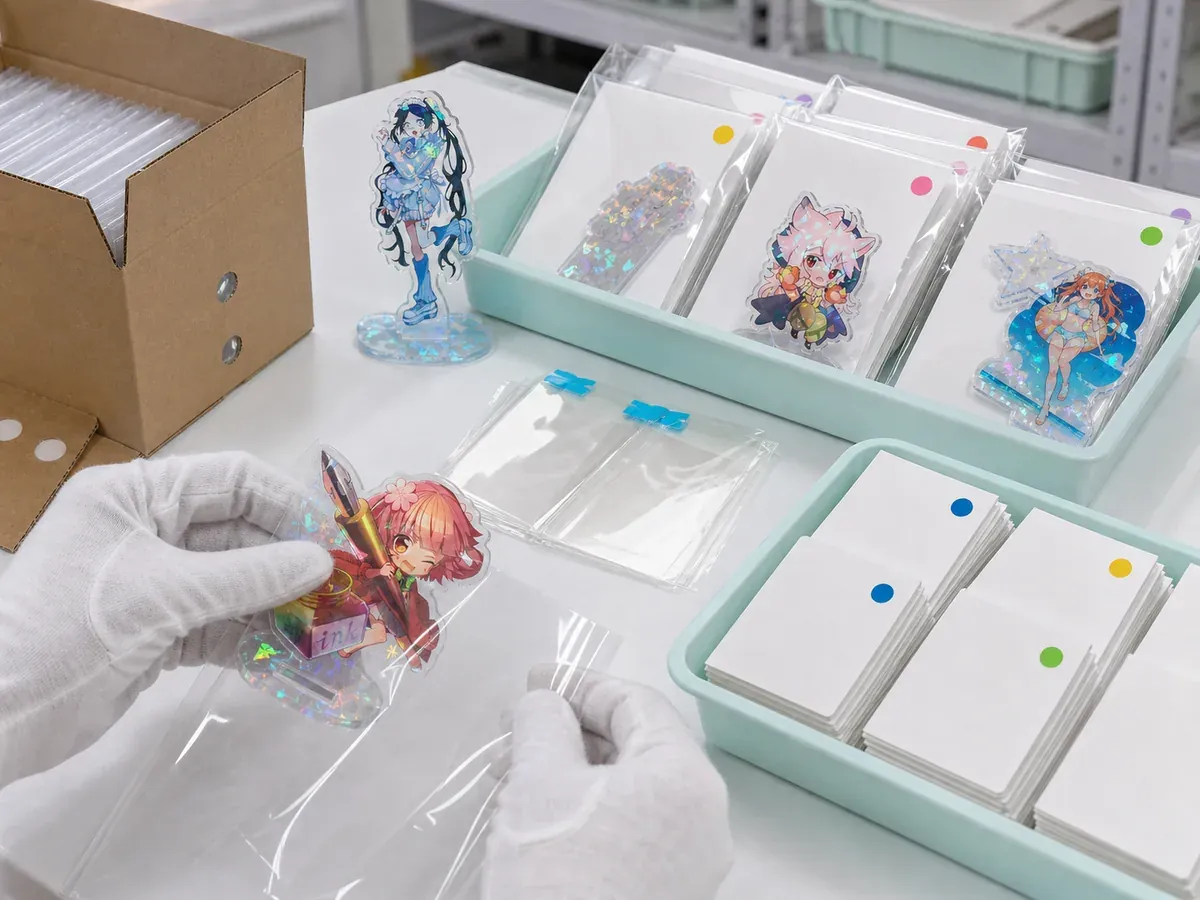
Record body, base, protective layers, labels and carton quantities by SKU. The sellable pack should prevent face-to-face rubbing, missing components and mixups between visually similar variants.
Individual retail
Separate body and base, protect exposed faces, and apply the correct card or SKU label.
Blind merchandise
Use an opaque pack, controlled design code, randomization rule and inner-box quantity.
Multi-piece set
Verify component count, orientation, separators and the approved set combination.
Event delivery
Plan carton labels, destination split, warehouse or venue instructions and arrival condition.
Use the Acrylic Scratch-Prevention Packaging guide before pack approval.
BUYER USE CASES
Where the defining feature creates commercial value
Premium character standees
Use visible motifs around characters while keeping expressions readable.
Event and anniversary editions
Assign an approved holographic family to a limited release.
Collectible multi-SKU sets
Control motif, artwork, base and label combinations through one order matrix.
Retail display lines
Approve the full lineup so pattern scale and reflection read consistently on shelf.
QUOTE CHECKLIST
Information needed for a production review
Mark undecided items for recommendation. A useful quote starts from quantity by design and the page-specific material or structure decision.
- Holographic material sample or code
- Pattern family and scale
- Upright direction arrow
- Front viewing face
- White-ink and transparent-area file
- Body/base pattern relationship
- Editable artwork for every design
- Finished width and height
- Acrylic thickness
- Total quantity and quantity per design
- Individual, blind or set packaging
- Required arrival date and destination
ORDER CONDITIONS
MOQ, sampling and delivery are project-specific
Finished size, material or structure, design split, base, assembly, packaging, inspection and destination all affect the practical route.
Quantity per design
Share total quantity and the split for every approved artwork and material combination.
Sample scope
Identify which material, print, base, assembly and pack require physical approval.
Bulk schedule
Timing is confirmed after files, samples, materials, packing and inspection conditions are approved.
Delivery plan
Provide country, destination, required arrival date and any shipment split or venue rule.
PRODUCTION WORKFLOW
From specification to shipment
- 01 InquiryArtwork, feature, quantity and destination
- 02 ReviewMaterial, geometry, base and pack
- 03 SampleVisual, fit, function and sellable unit
- 04 ApprovalOne final controlled revision
- 05 ProductionCut, print, assemble, sort, pack and inspect
- 06 DeliveryCartons, documents and agreed shipment
See the complete OEM order process.
FAQ
Holographic Acrylic Stands FAQ
What is the difference between holographic and aurora acrylic stands?
Holographic materials often show visible motifs such as stars, shards or crushed ice. Aurora materials usually create a smoother continuous color shift. Approve physical sample codes for both.
Can the holographic pattern be oriented?
Yes. Add an upright direction arrow and approve the pattern relative to the artwork, tab and base.
How should white ink be used?
Use full support where artwork needs opacity and selective or no-white zones where the holographic effect should remain visible.
Should the body and base use the same pattern?
They can match or contrast. Record the approved combination and inspect the assembled stand for fit, stability and pattern relationship.
How is holographic QC performed?
Compare material code, pattern direction, angle response, print, surface, cut edge, base fit and final packaging against the approved sample.
How are MOQ and timing confirmed?
They depend on material availability, size, design split, base, packaging, sample revisions, inspection and destination.
RELATED RESOURCES
Continue the acrylic stand review
PROJECT REVIEW
Prepare the Holographic Acrylic Stands specification
Send artwork, the defining material or structure reference, finished size, quantity by design, base, packaging and destination. Unconfirmed items can be marked for recommendation.