Custom figure manufacturer and OEM hub
Figure OEM
Manufacturing
To start a custom figure OEM project, prepare character artwork, target size, pose, material direction, quantity, color count, base, packaging, destination market, and target date. These inputs help a manufacturer assess sculpting, tooling, prototype approval, mass production, quality control, and delivery before giving a usable quotation.
- For companies and planning teams looking for a custom figure manufacturer
- Early material and process planning for PVC, sofubi, ABS, and mixed parts
- Multi-SKU production, color approval, packaging, and pre-shipment checks
Note: We cannot support unauthorized copies or imitation projects based on existing IP without rights clearance. Please contact us with original or licensed project materials.
Page role
Hub pageLinks to figure pagesMaterials
PVC / SofubiABS can be discussedQuantity
500 pcs+ guideConfirmed by specificationProduction
Multi-SKUColors and expressionsDelivery
Japan-facing termsPackaging and QC planningWhat should you define before custom figure manufacturing?
Figure OEM is a manufacturing service for turning characters, mascots, and company IP into three-dimensional products. This hub helps buyers compare materials, plan prototypes, prepare PVC figure production, review packaging and QC, and move to the right detailed product page.
For custom figure manufacturing, artwork review, 3D sculpting, tooling, painted samples, mass production, packaging, inspection, and delivery terms can be discussed according to the project scope. Before requesting a quote, prepare IP authorization, target size, quantity and SKU plan, packaging, sales market, and desired timing so manufacturing methods and quote conditions can be compared clearly.
We organize the specifications needed to turn character sheets, sketches, mascot designs, or rough concepts into manufacturable figures.
We review PVC flexibility, paint methods, pad printing, parting lines, tooling conditions, and mass production quantities.
We align multi-SKU production, bases, individual packaging, blind boxes, carton labels, and pre-shipment checks with each project.
What can be handled in custom figure manufacturing?
The practical scope of custom figure manufacturing depends on IP status, file readiness, target size, quantity, and SKU structure. The table below shows common items that can be discussed. The final scope is confirmed per project.
| Stage | Buyer inputs | What can be discussed | Approval item or output |
|---|---|---|---|
| Brief organization | Artwork, character sheets, reference size, IP status, target quantity | Specification wording, missing detail checks, initial condition alignment | Specification summary |
| 3D sculpting | 2D references or existing 3D files | Modeling, white prototype review, mold release direction, wall thickness, joints | 3D data or white prototype |
| Tooling and trial | Final sculpt approval and agreed revision scope | Tooling conditions, T1 sample review, feasibility of corrections | Tooling notes and trial samples |
| Painted sample | Color references and priority areas | Color matching, gloss, face, eyes, logo, and detail checks | Painted sample and color records |
| Mass production | Approved production master | SKU control, quantity control, mix-up prevention | Production master |
| Packaging, QC, delivery | Packaging specification, sales market, delivery terms | OPP bags, color boxes, blind boxes, inspection standard, Japan-facing shipment terms | Packaging sample and QC records |
The confirmed scope and conditions are reviewed per project. These items are not automatically included without quotation and agreement.
Key checks before placing a custom figure OEM order
Shape changes after tooling starts, unclear color priorities, and different interpretations of hidden areas can affect cost and timing. Confirm the points below before moving into later production stages.
| Check item | Why it matters | When to confirm | Useful record |
|---|---|---|---|
| IP authorization | Unauthorized or imitation products cannot be handled | First discussion | Rights proof and NDA when needed |
| Side, back, and hidden views | Reduces 3D interpretation gaps | Before sculpting | Side view, back view, accessories, joint details |
| Shape revisions before tooling | Shape changes after tooling affect cost and timing | Before final sculpt approval | Agreed revision scope |
| Painted sample approval | Color and expression become production references | Paint sample stage | Color codes and priority-area photos |
| Production master | Sets the comparison standard during mass production | Before mass production | Approved sample and checklist |
| Tooling ownership and storage | Repeat orders, repair, return, and disposal need written terms | Quotation or agreement stage | Contract or quotation clauses |
| Packaging and transport strength | Controls breakage and SKU mix-up risk | Packaging design stage | Packaging specification and test record when needed |
| Safety and labeling needs | Requirements vary by sales market and target age | Specification finalization | Requirement sheet |
How custom figure manufacturing differs from flat merchandise
Custom figure manufacturing depends on 3D form interpretation, part splits, mold release direction, tooling constraints, paint control, assembly, bases, production masters, and inspection. These points make the workflow different from flat printed goods.
3D form interpretation
When converting 2D artwork into a figure, hidden areas, thickness, pose, and accessory details need to be aligned before sculpting.
Part splits and mold direction
Feasible part separation, mold release direction, undercuts, and visible parting lines should be reviewed at the design stage.
Tooling change cost
Structural changes after tooling is started can affect cost and timing, so shape approval needs to be handled carefully.
Paint and print priority areas
Face, eyes, skin tone, logo, and small printed details usually need special control because they affect product value.
Assembly, base, and fit
Base stability, insertion strength, balance, and transport movement should be checked before mass production.
Production-master inspection
The approved sample is used to compare color variation, molding, paint, assembly, and packaging during production checks.
Review this together with the existing custom figure manufacturing workflow to identify the approval points before tooling, painting, and mass production.
PVC figures, sofubi, and ABS parts compared
The table below summarizes the main use cases, production methods, painting options, and safety-document checks for common figure materials. Safety standards and certificates should be confirmed by age grade, destination market, material, and final specification.
| Item | PVC figures | Sofubi figures | ABS and mixed parts |
|---|---|---|---|
| Main uses | Characters, mini figures, blind boxes, company mascots | Retro-style figures, soft figures, hollow mascots, art toys | Hard parts, bases, weapons, accessories, sharp shapes |
| Production guide | 500 pcs+ as an initial planning guide, checked by size and paint count | 500 pcs+ as an initial planning guide, checked by tooling and coloring conditions | Often reviewed together with PVC depending on structure and tooling cost |
| Process and tooling | Injection molding, part splitting, copper or steel tooling by specification | Soft vinyl molding, wall thickness, demolding direction, and joint design | Injection molding, assembly design, insertion fit, and strength checks |
| Painting and printing | Spray painting, pad printing, hand coloring, and color sample review | Hand painting, gradients, matte or glossy finish adjustment | Painting, silkscreen printing, logo expression, and coating checks at joints |
| Safety and documents | ST, RoHS, phthalates, and age-grade requirements checked per project | Non-phthalate options, paint safety, and labeling requirements organized per case | REACH, RoHS, strength, and small-part risk reviewed when needed |
Move to the detailed figure product pages
This page is the overall entrance for Figure OEM planning. Use this hub when material, size, and usage route are still undecided; use the child pages below when the project is already focused on mini figures, desktop display figures, car dashboard figures, or sofubi-style production.
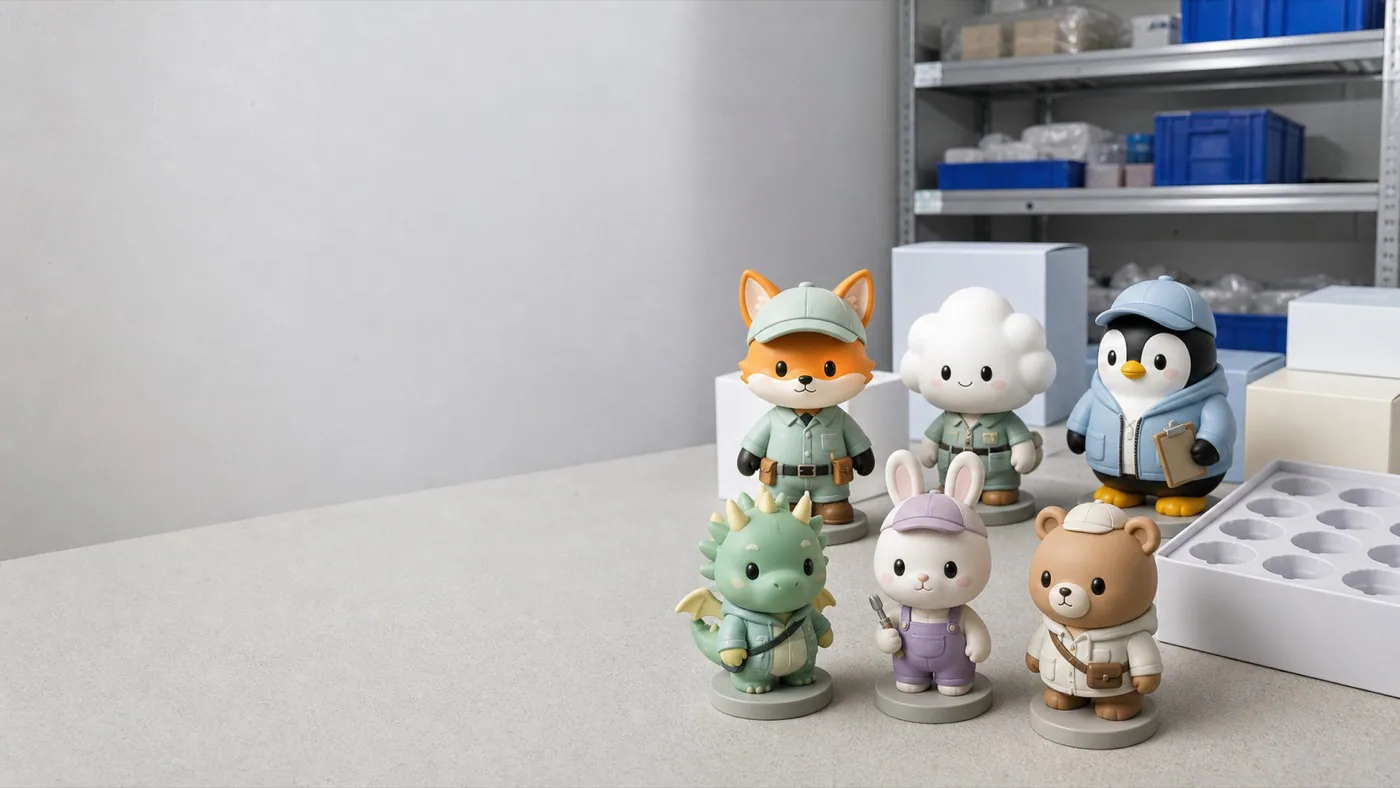
PVC and Sofubi Figure OEM
For buyers who need more detail on PVC/sofubi materials, prototype review, painting, and mass production conditions.
Review PVC and sofubi figure specs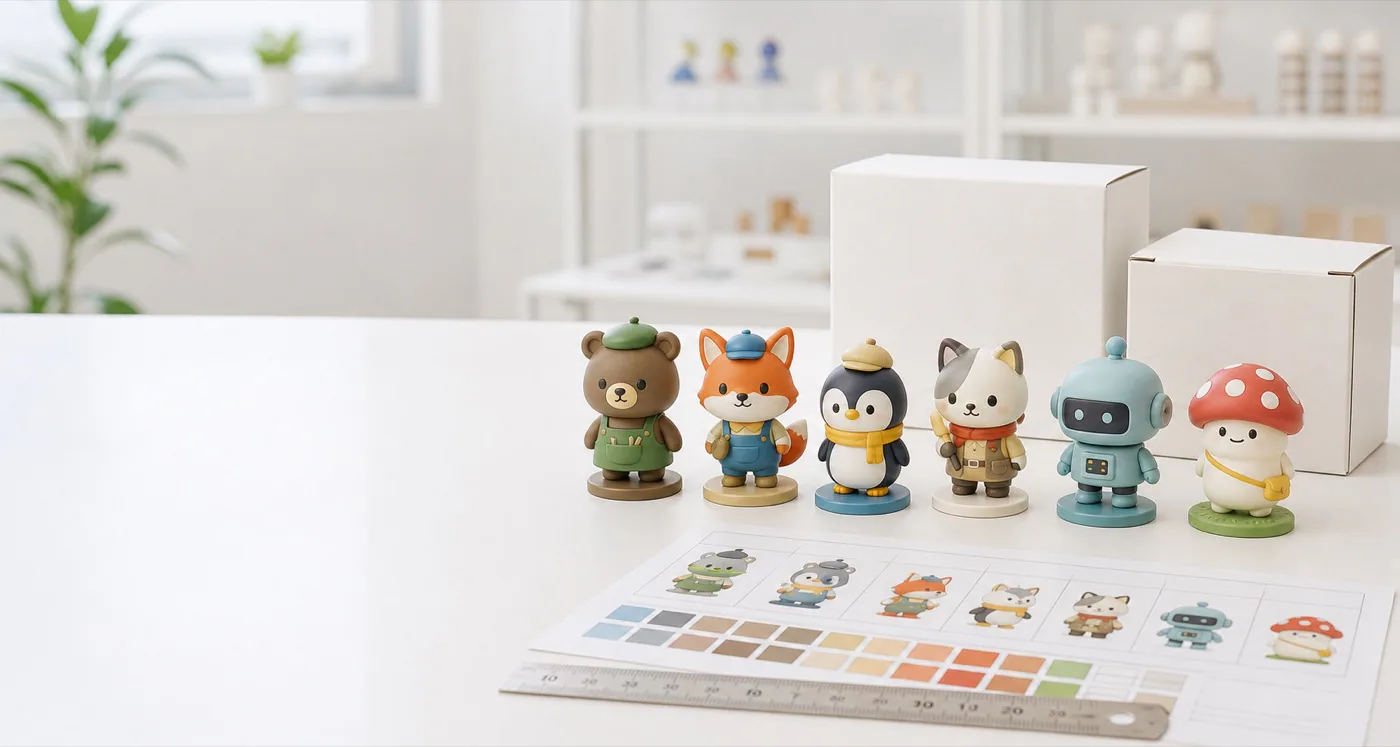
PVC Mini Figure OEM
For capsule toys, blind box series, multi-SKU planning, and small character figure production.
Review PVC mini figure specs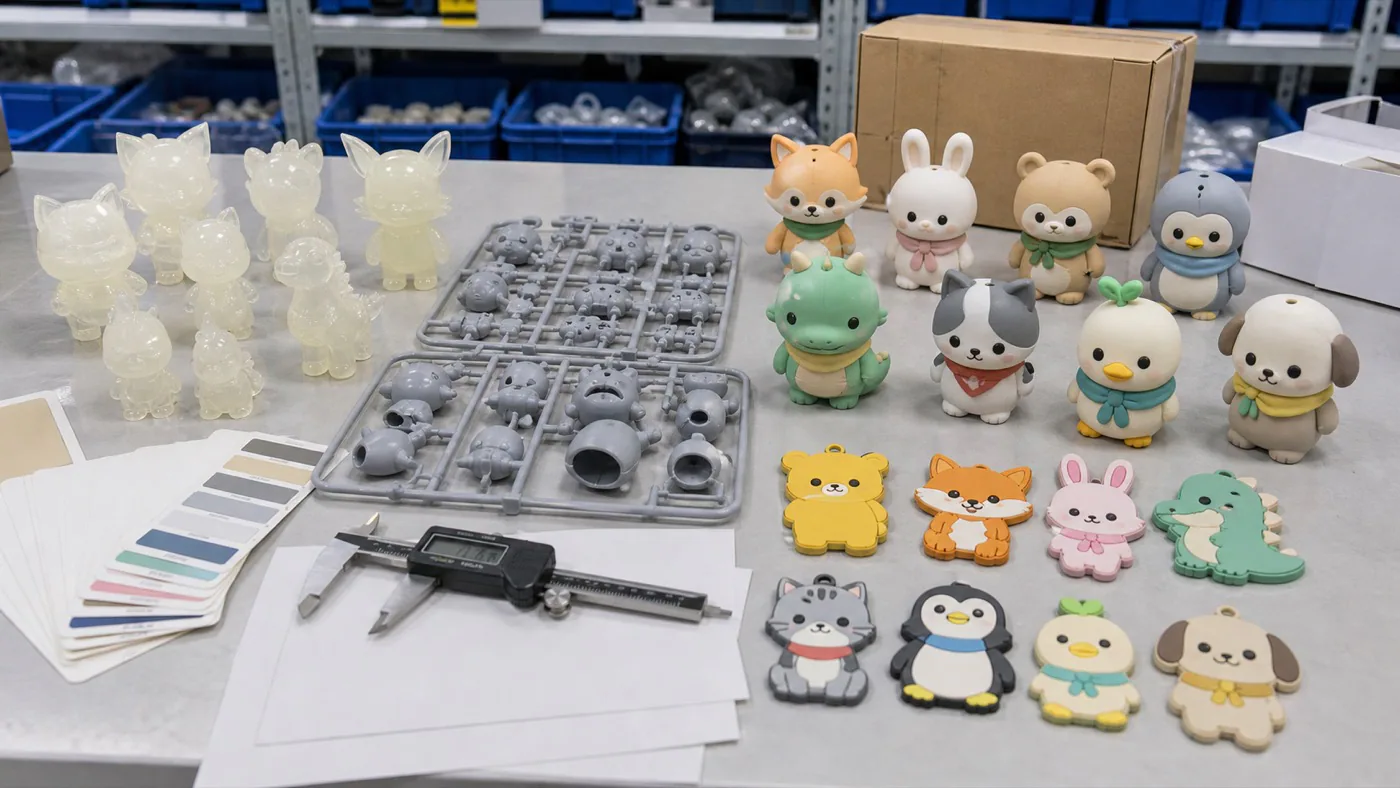
PVC Desktop Figure OEM
For corporate novelty figures, desktop mascots, base-mounted figures, and display goods planning.
Review PVC desktop figure specs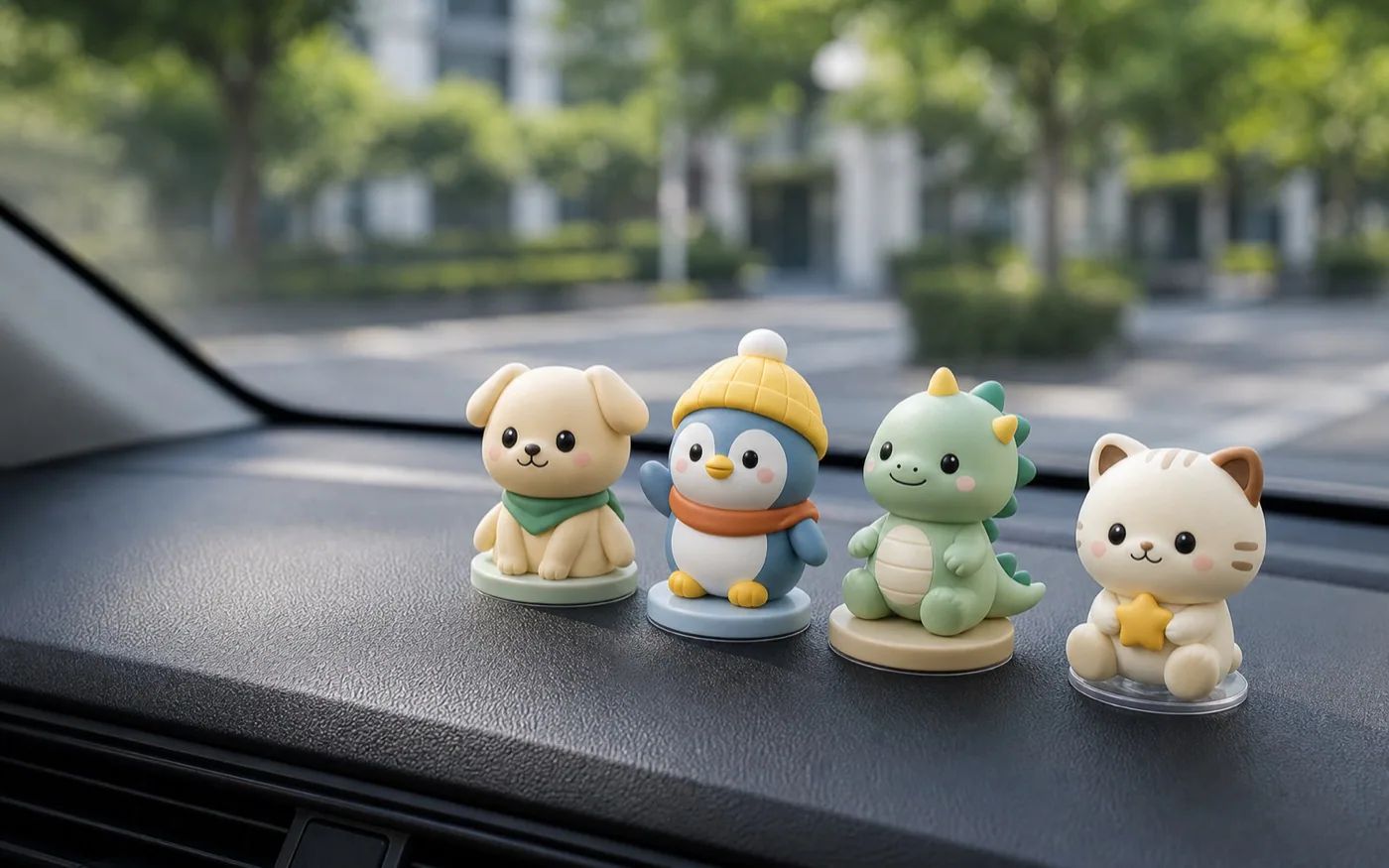
PVC Car Dashboard Figure OEM
For dashboard placement, bases, anti-slip pads, and project-specific in-car use checks.
Review car dashboard figure specsRelated PVC soft vinyl OEM pages
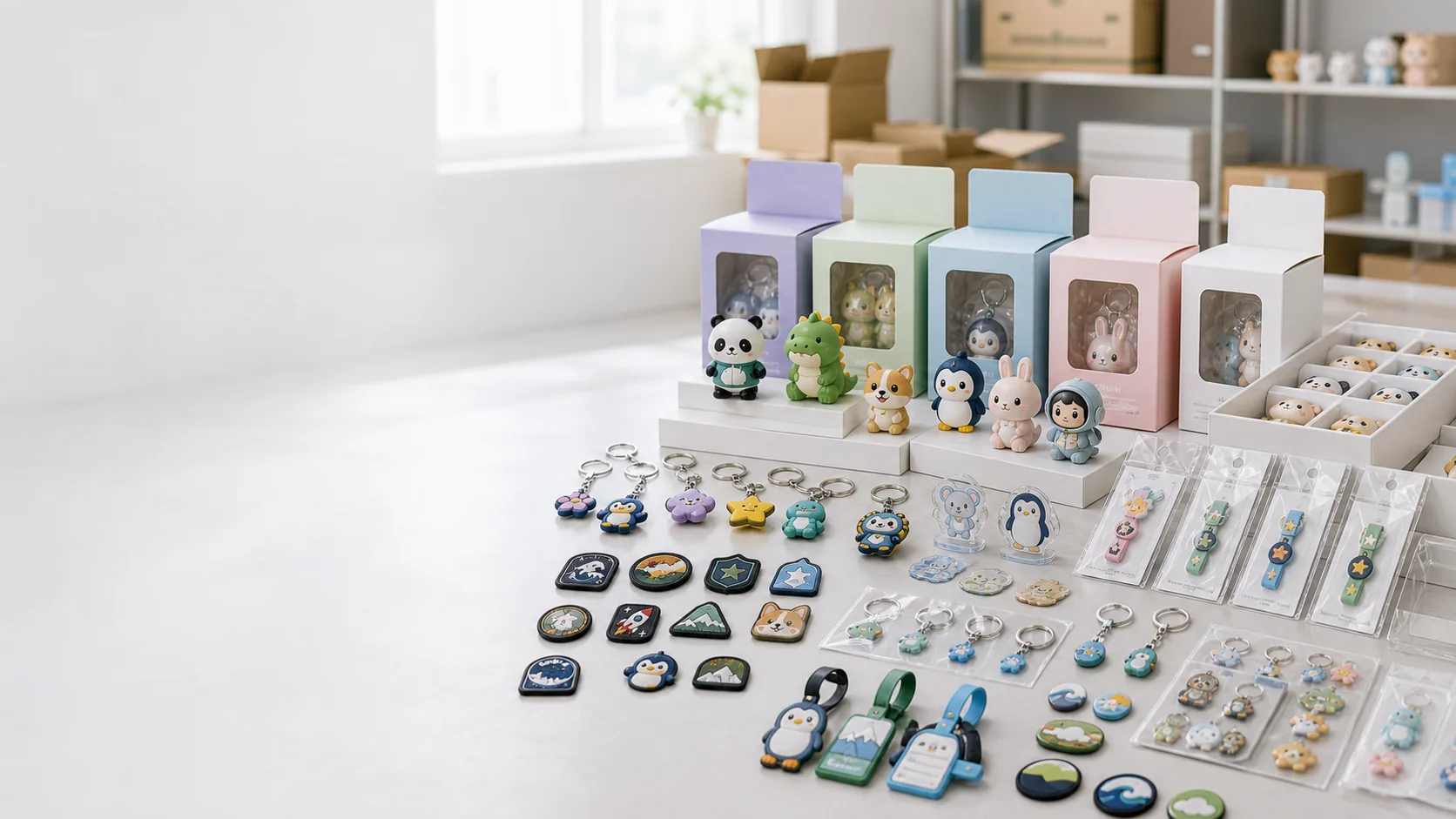 Custom PVC Soft Vinyl GoodsPVC goods OEM hub
Custom PVC FiguresPVC and sofubi figure production
Custom MINI FiguresSmall figures and multi-SKU series
Custom PVC Soft Vinyl Desktop FiguresDesktop and base-mounted goods
Custom Car PVC FiguresDashboard and vehicle display goods
Custom PVC Soft Vinyl GoodsPVC goods OEM hub
Custom PVC FiguresPVC and sofubi figure production
Custom MINI FiguresSmall figures and multi-SKU series
Custom PVC Soft Vinyl Desktop FiguresDesktop and base-mounted goods
Custom Car PVC FiguresDashboard and vehicle display goods
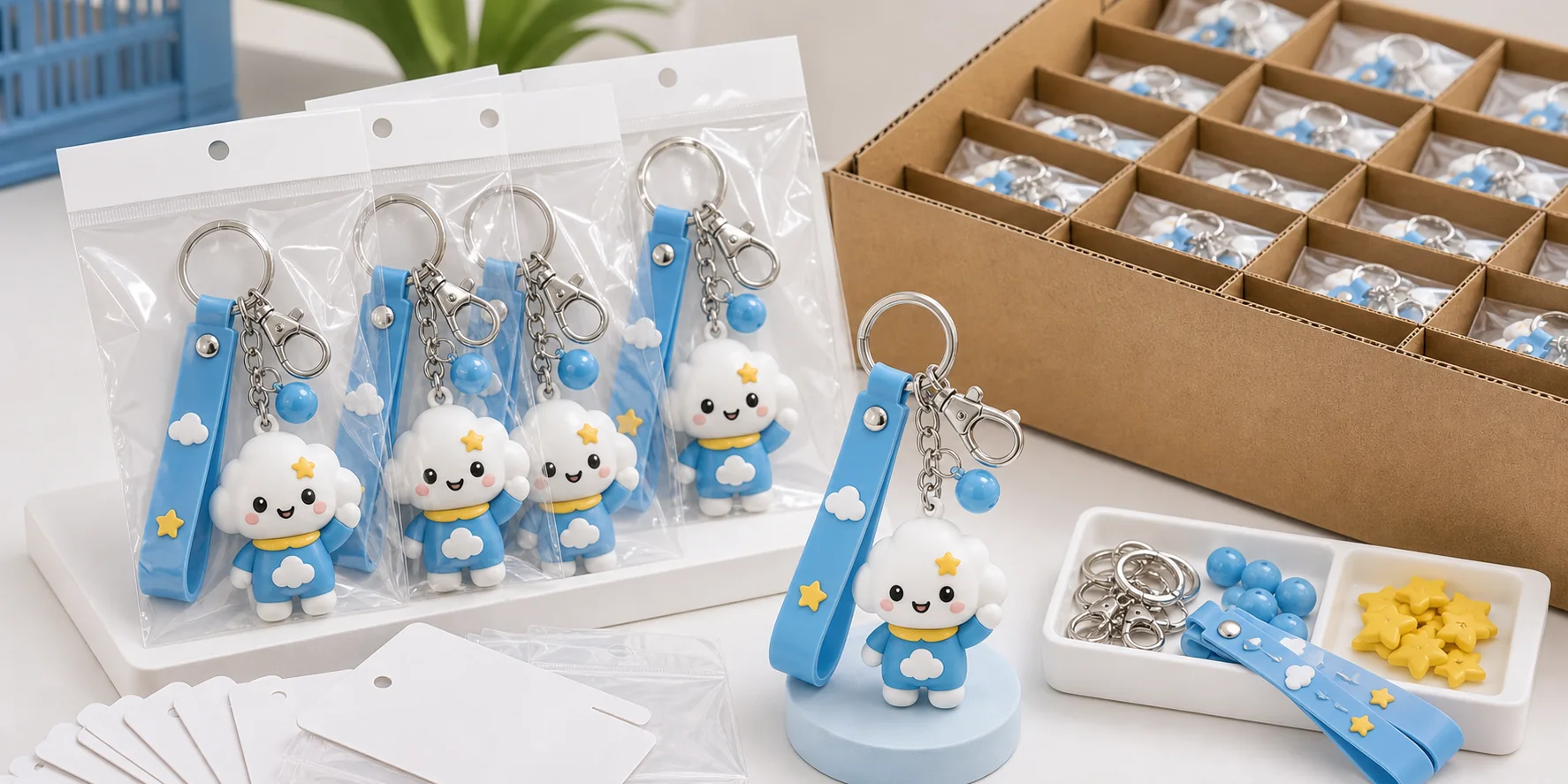 Custom PVC KeyringsFlat and semi-3D keyrings
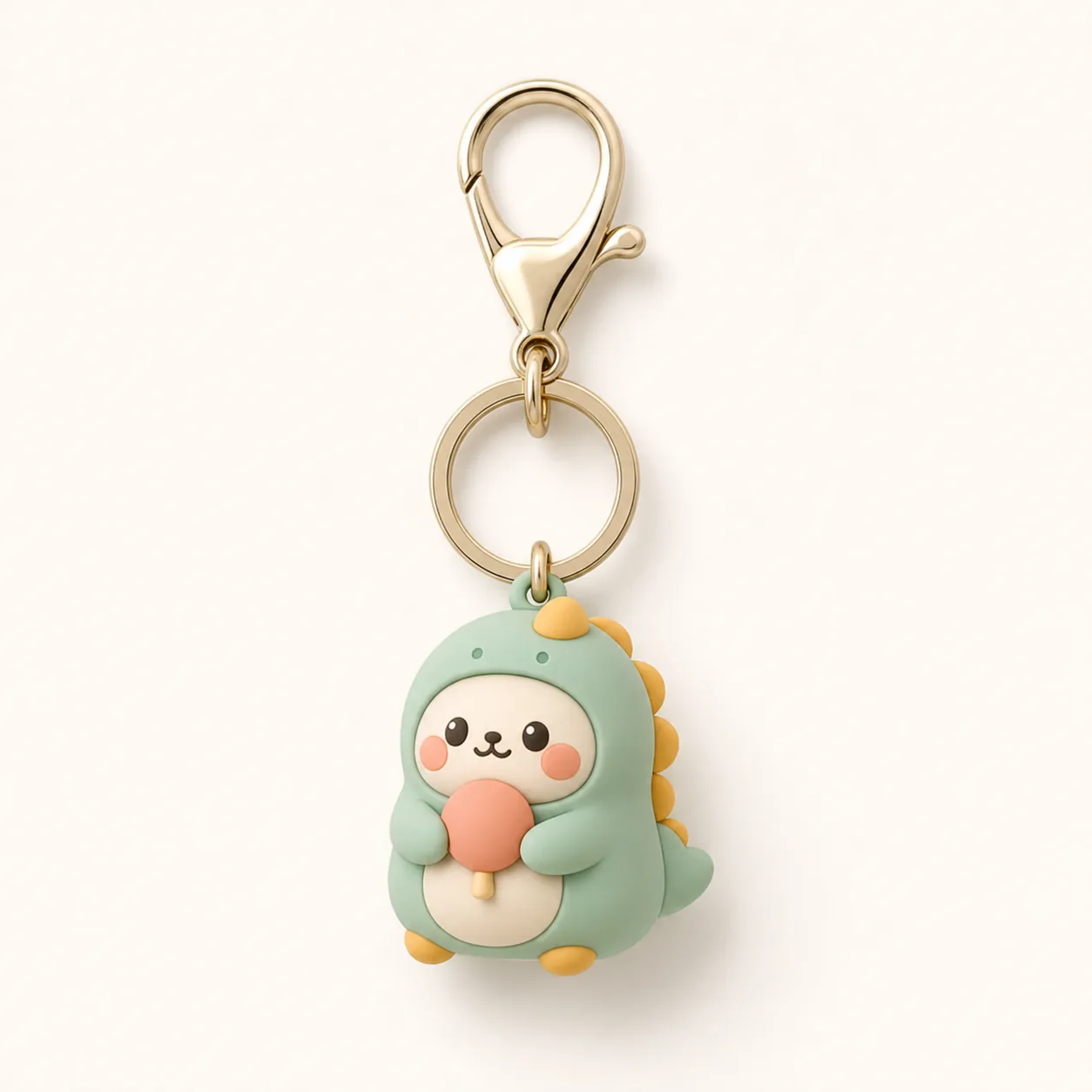 Custom 3D PVC Keyrings3D keyring projects
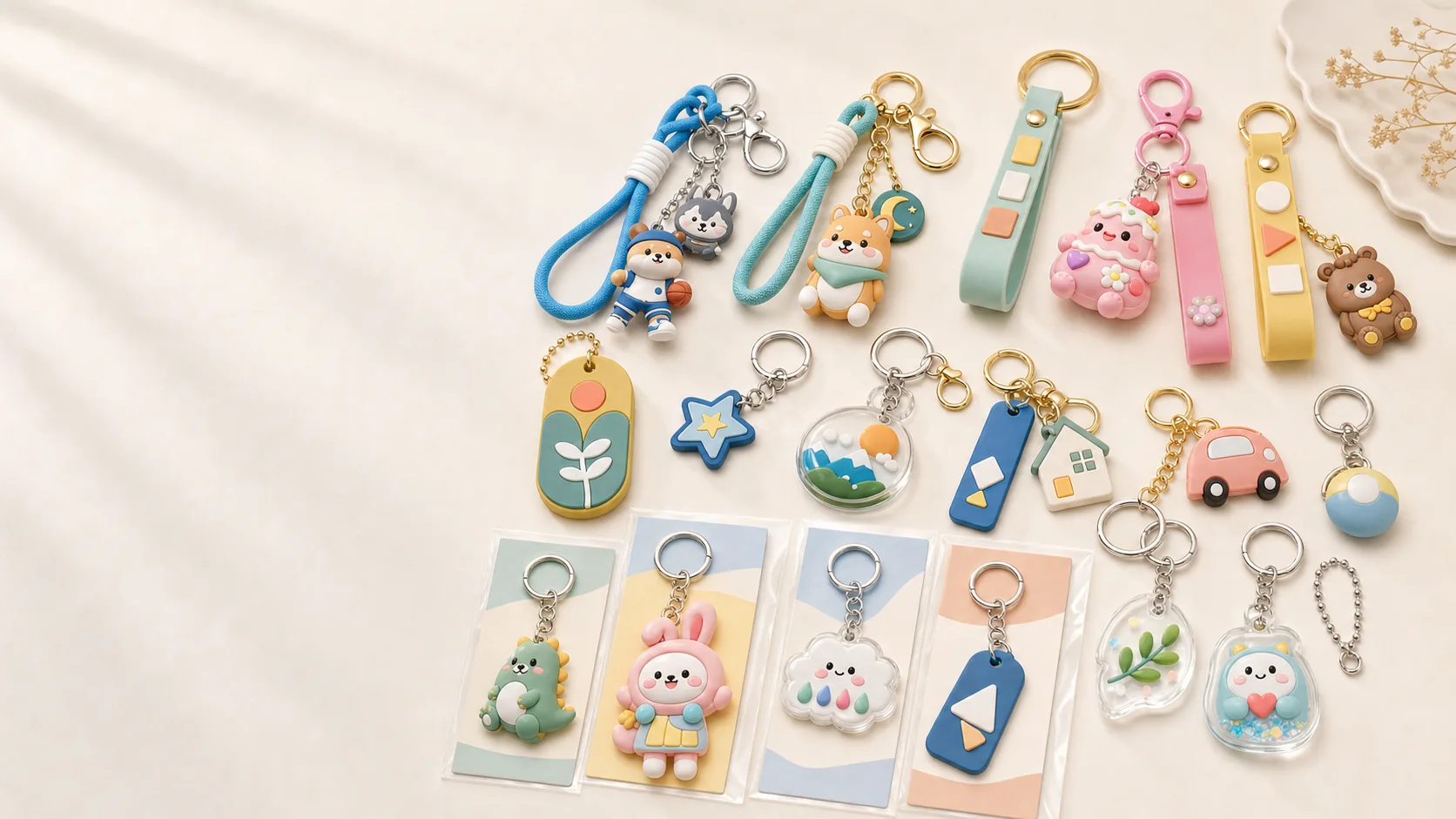 Custom PVC Bag CharmsBag charm production
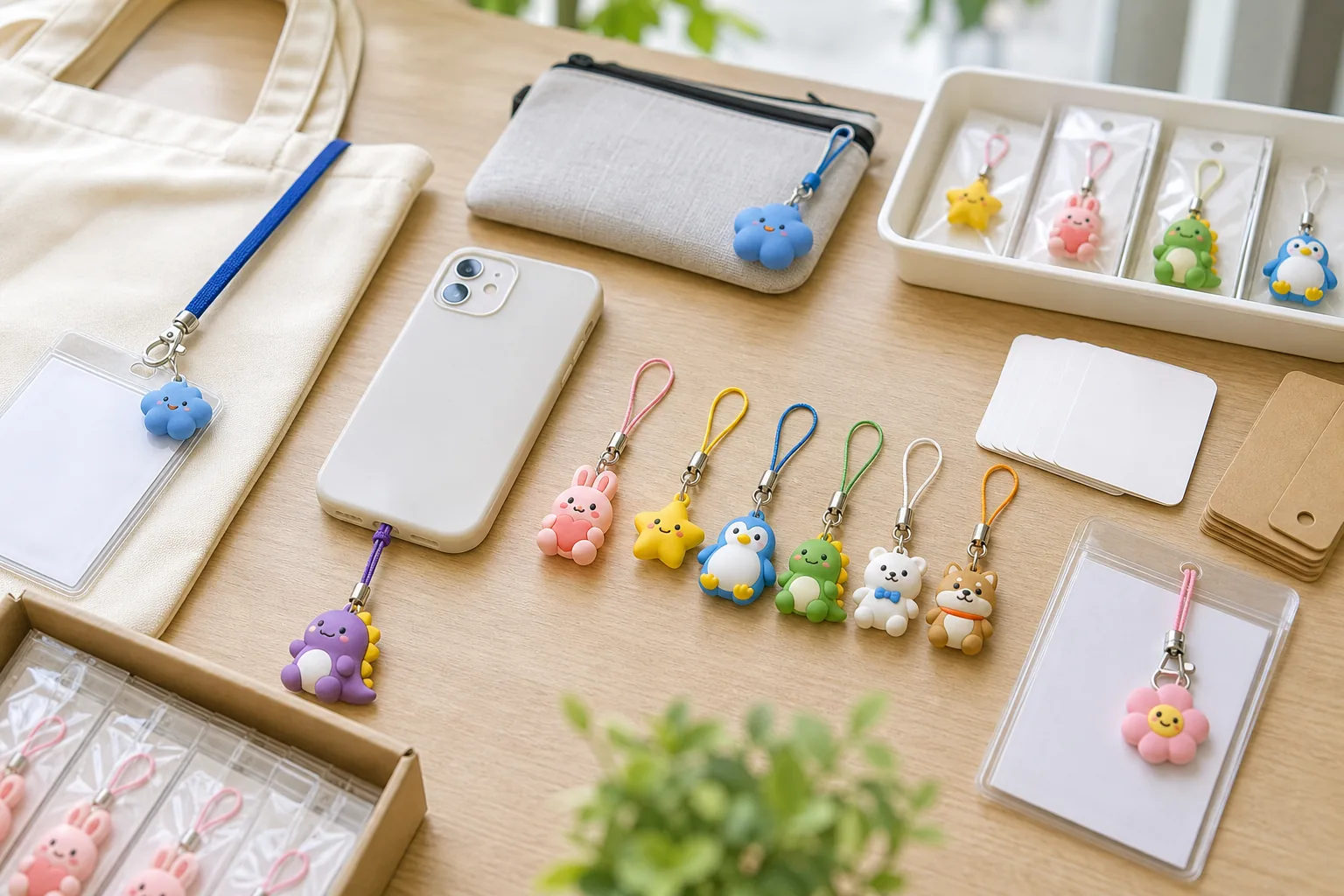 Custom PVC Phone StrapsPhone strap accessories
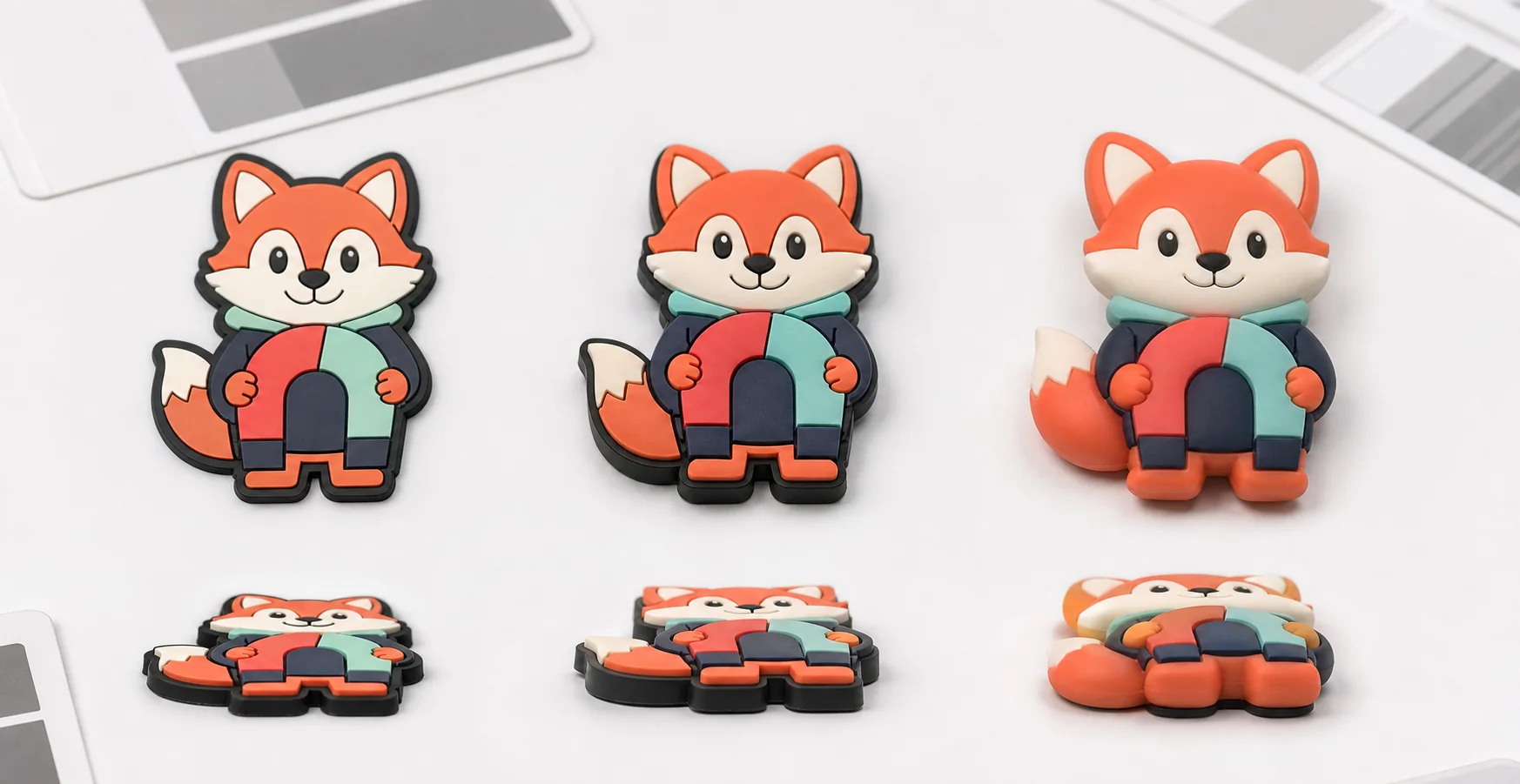 Custom PVC Fridge MagnetsMagnet goods
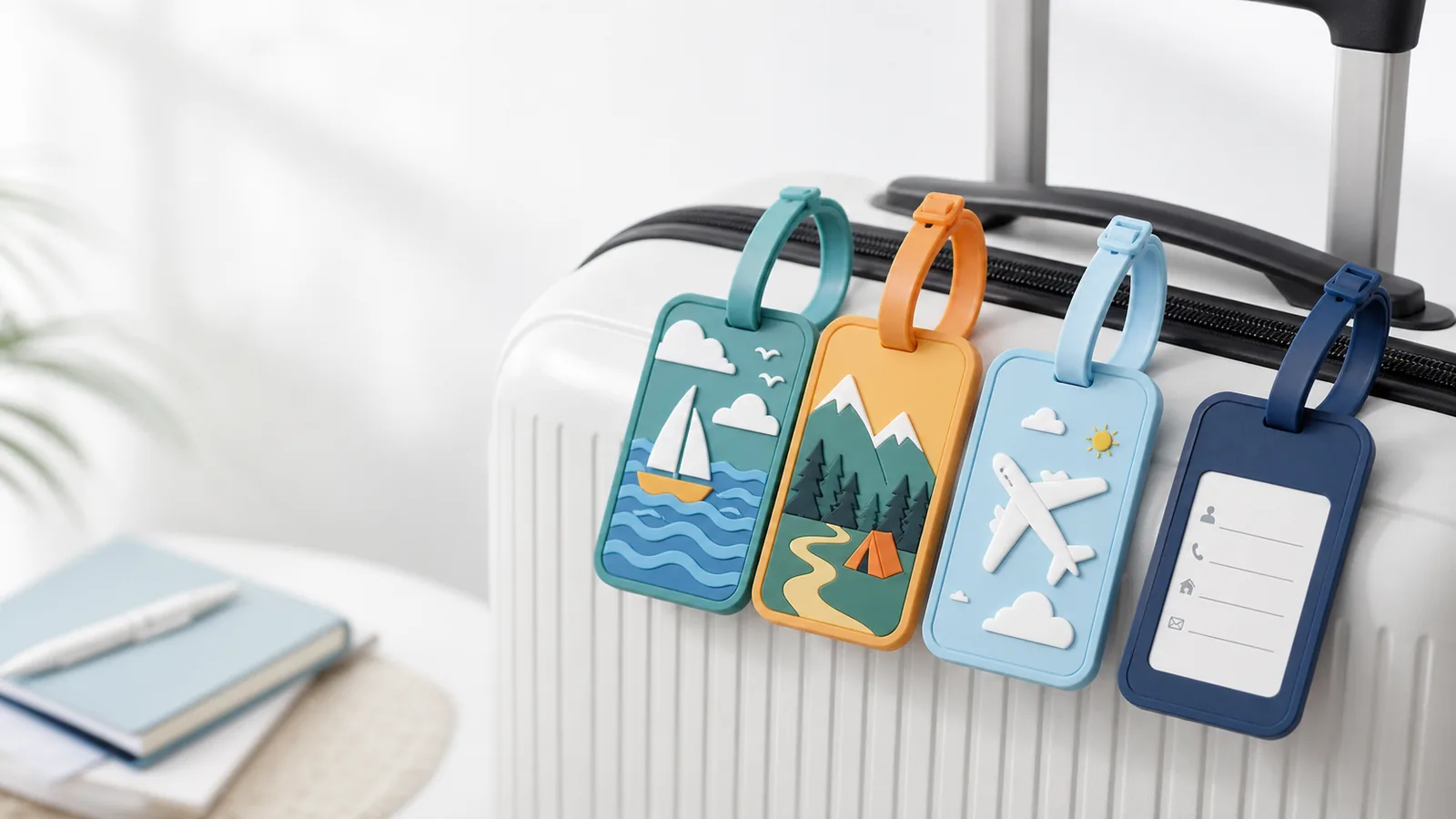 Custom PVC Luggage TagsTravel and event merchandise
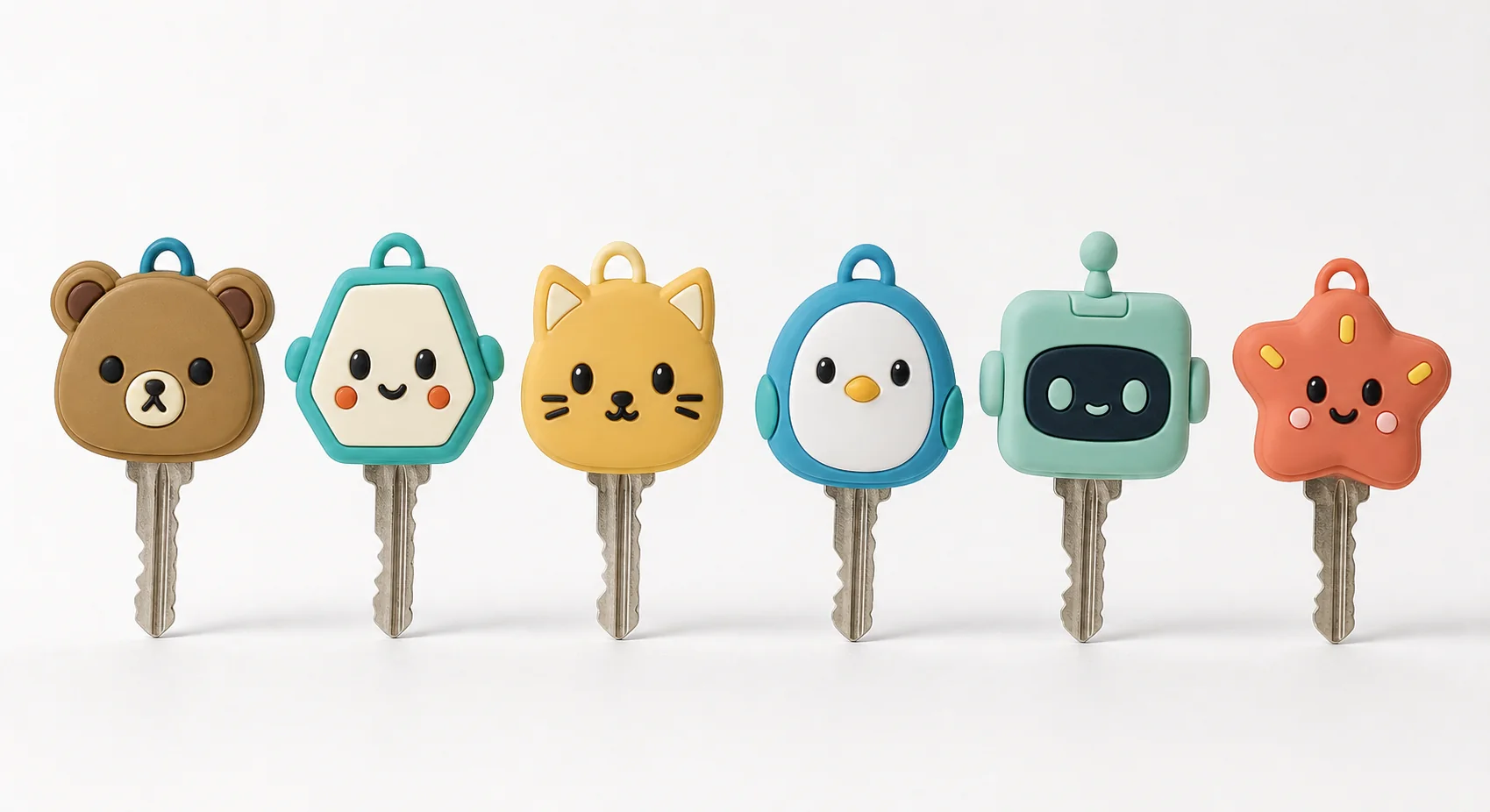 Custom PVC Key Covers & Key CapsKey accessories
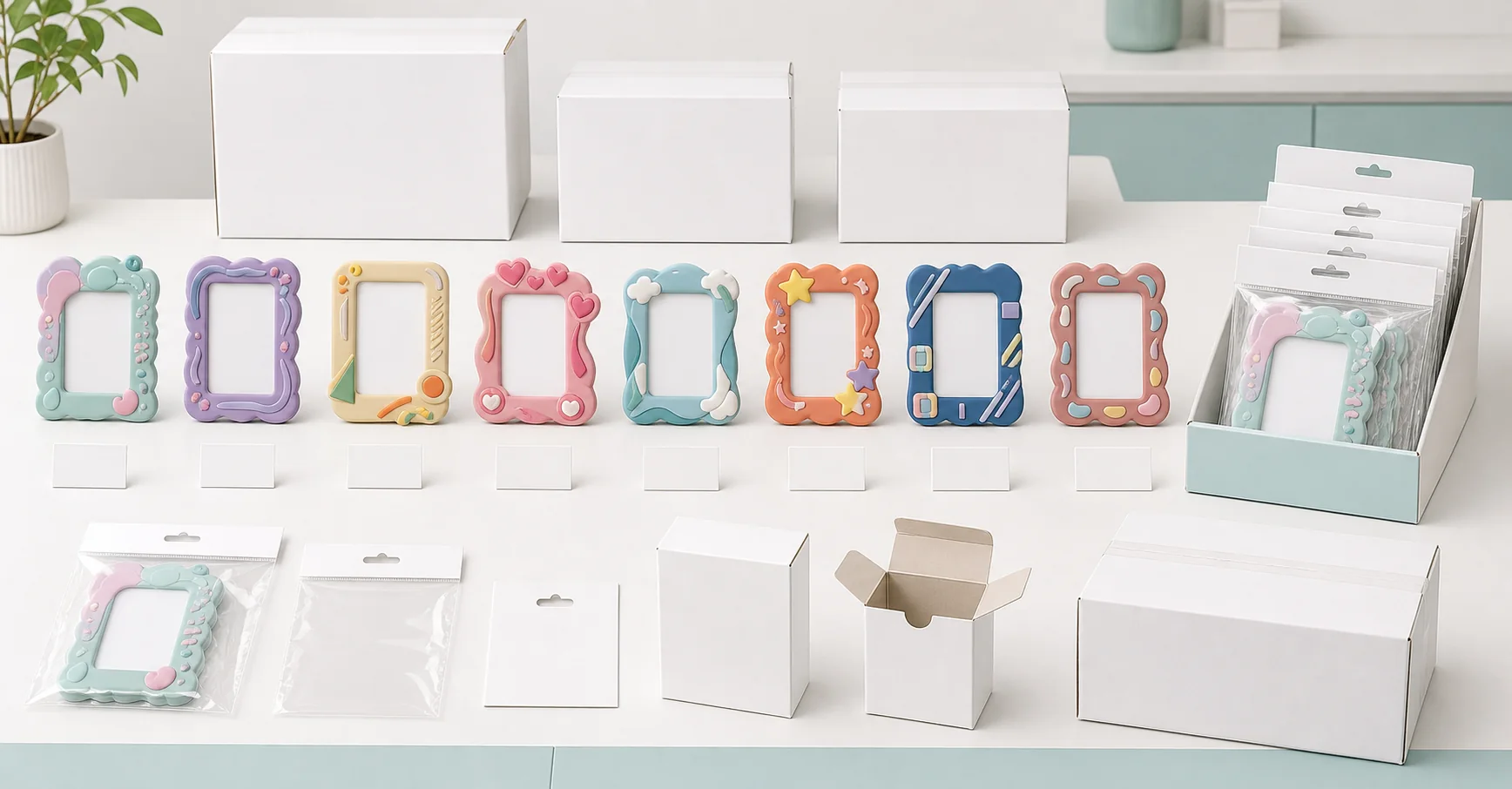 Custom PVC Photo FramesPhoto frame goods
 Custom PVC Mascot Bead StrapMascot bead strap projects
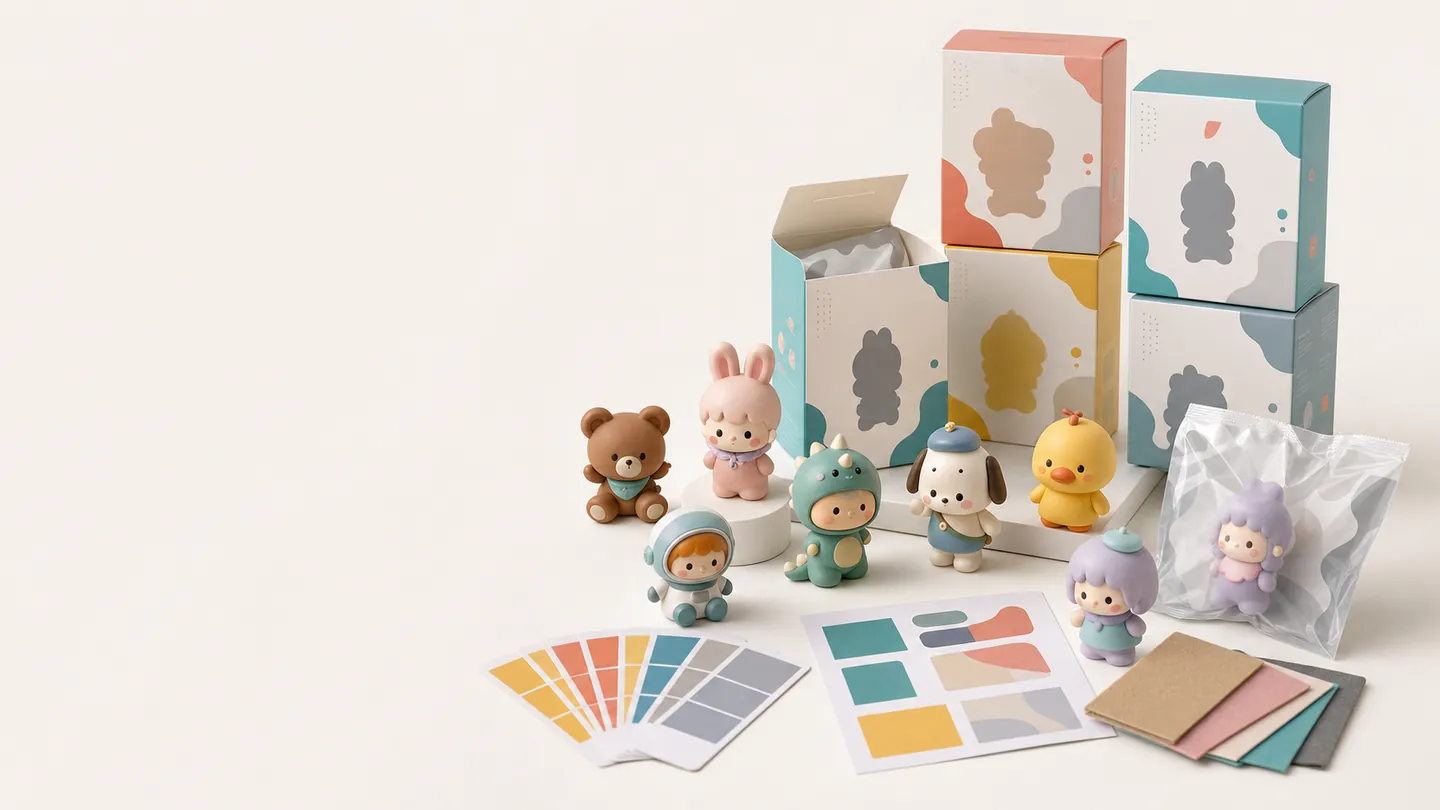 Random Insertion PVC Figure OEMBlind box and random series figures
Turn original characters and company IP into figures
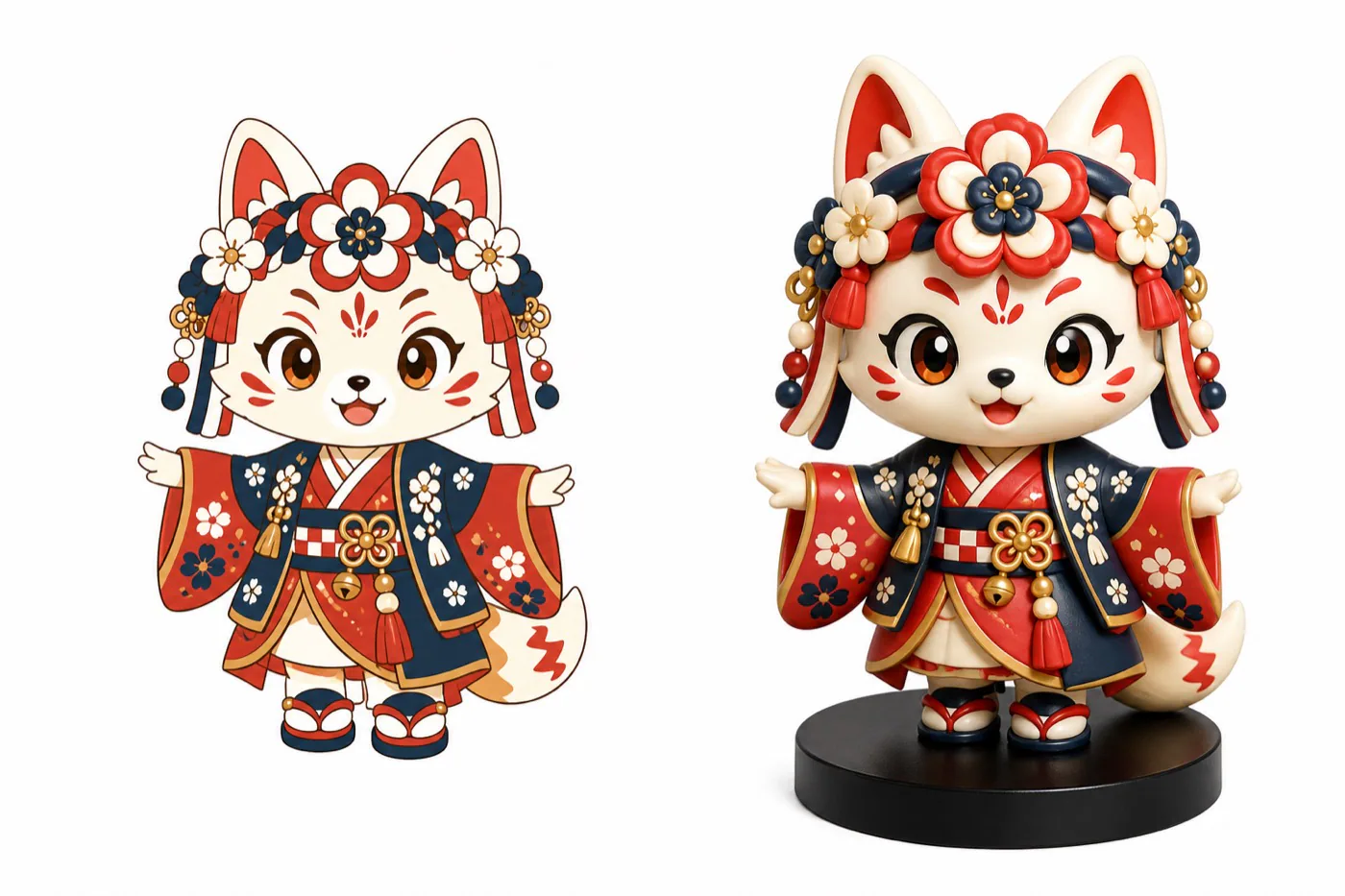
In original character figure production, face impression, eye printing, hair and costume part separation, bases, and color tone directly affect product value. We review the project through 3D sculpting, white prototype, painted sample, and mass production master stages.
- Focused review of face expression and eye-printing reproduction
- Figure sculpting direction matched to deformed, retro, mascot, or brand character styles
- NDA and approval workflows can be organized when the project requires them
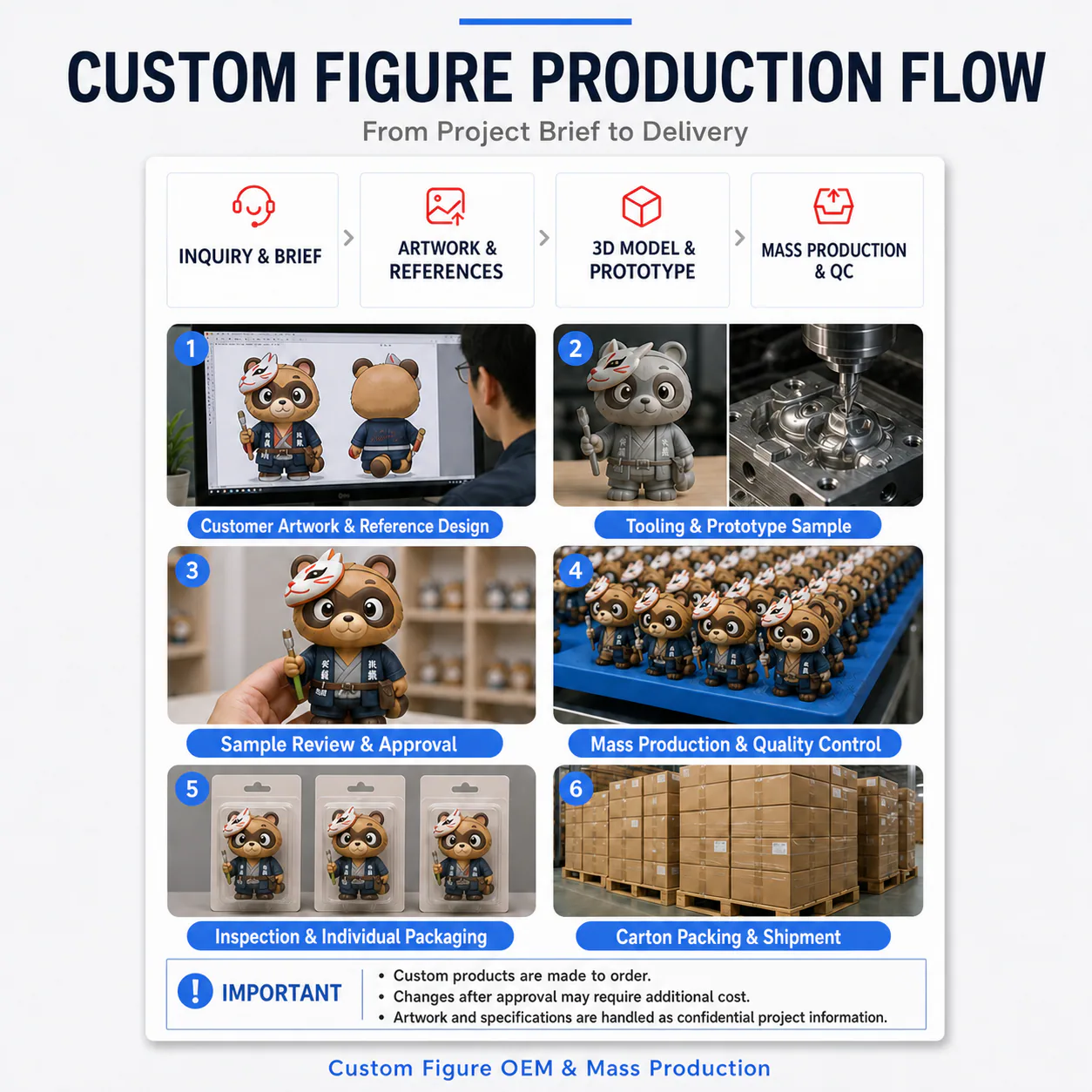
How PVC figure manufacturing usually moves forward
Separating approval points from first discussion to shipment helps reduce misunderstandings in shape, color, packaging, and QC conditions.
Material review
Artwork, character sheets, target size, quantity, and sales method are checked.
Specification planning
Material, size, part split, base, painting, and packaging are organized for quotation.
3D prototype
Modeling, white prototype, demolding direction, wall thickness, and connection points are reviewed.
Tooling and trial
Molding method, tooling conditions, T1 sample, and correction points are confirmed.
Painted sample
Color references, pad printing, gradients, and facial expression are reviewed.
Production approval
Mass production master, inspection standard, and packaging sample are approved.
Mass production
Multi-SKU quantities, individual packaging, carton labels, and counts are managed.
QC and delivery
Appearance, painting, assembly, quantity, and packing condition are checked before shipment.
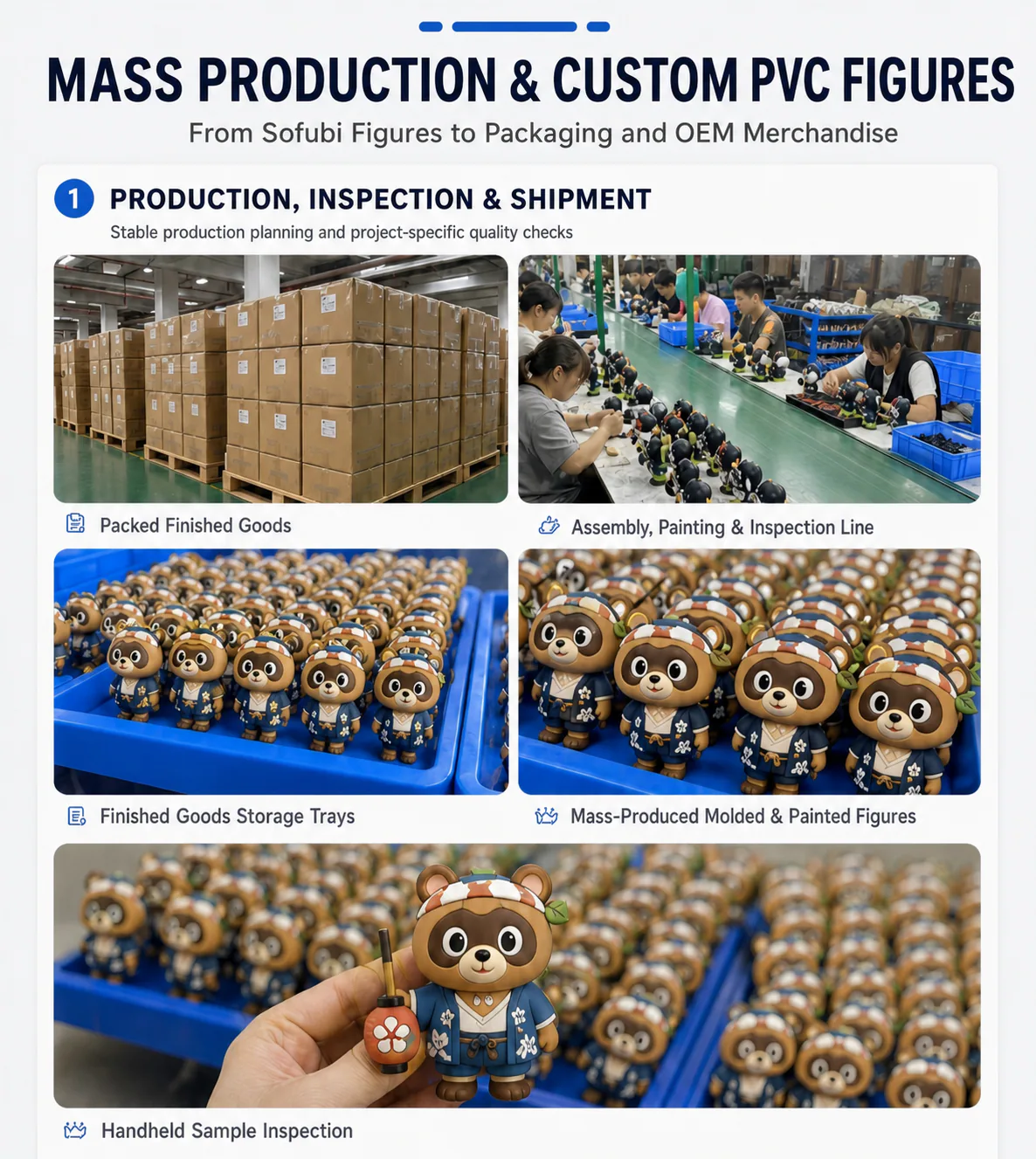
Key checks for PVC figure mass production
In mass production, the question is not only whether the approved sample looks good, but whether the same standard can be maintained across multiple SKUs. Parting lines, paint unevenness, color differences, base stability, packaging damage, and quantity errors should be turned into project-specific QC criteria.
- Fix multi-SKU quantities, insertion ratios, and carton labels before production
- Set separate review criteria for key areas such as faces, skin tones, and logos
- Japan-facing delivery conditions, photo reports, and third-party inspection can be discussed when needed
How to evaluate a figure OEM company or China factory
When sourcing figure OEM from China, it is safer to compare sample control, mass production management, inspection, packaging, and Japan-facing communication stability instead of choosing by low price alone.
Sample approval
Check whether white prototype, painted sample, and mass production master approvals are recorded and reflected in later stages.
Production control
Confirm the ability to manage multiple SKUs, color variants, bases, and packaging specifications without mixing them.
QC standards
Set appearance, painting, assembly, quantity, and packing checks according to destination market and product use.
Packaging design
Organize OPP bags, blind boxes, color boxes, inner trays, carton labels, and barcode or JAN label needs.
Documents and safety
ST, RoHS, REACH, phthalates, and related items should be confirmed by age grade, market, and material.
Japan-facing delivery
Confirm delivery address, carton strength, photo reporting, logistics terms, and customs conditions by project.
Supplier evidence checklist for custom figure manufacturing
Do not compare custom figure suppliers by price alone. Use the same brief and request comparable evidence for technical review, sample control, QC, ownership, packaging, logistics, and communication.
| Comparison item | Evidence to request | What to check |
|---|---|---|
| Technical response | Sculpting or tooling notes and annotated comments | Whether mold direction, wall thickness, joints, and structure are discussed specifically |
| Sample plan | White prototype, painted sample, and production-master schedule or history | Whether revisions are carried into the next approval stage |
| Revision and QC records | Inspection sheets, priority-area photos, and color records | Whether they can be used as production standards |
| Tooling and file rights | Quotation or agreement terms for ownership, storage, reuse, return, and disposal | Whether vague custody wording is avoided |
| Packaging and logistics scope | Included item list in the quotation | Whether trays, barcodes, carton marks, inspection, customs, and delivery terms are included or separate |
| Production communication | Redacted examples of photo reports or progress updates | How delay risks, sample changes, and production issues are reported |
8 factors that affect custom figure manufacturing cost
Custom figure manufacturing quotes vary by project. The main cost components below should be compared under the same brief and inclusion scope. Formal pricing requires project-specific quotation.
1. 3D sculpting
Artwork readiness, existing 3D files, and revision scope affect sculpting work.
2. Tooling
Material, figure size, part split, mold count, and repeat-order conditions matter.
3. Part count and structure
Separate parts, joints, accessories, bases, and undercuts affect complexity.
4. Painting and printing
Color count, priority areas, pad printing, hand painting, and gloss are reviewed.
5. Assembly and bases
Fit, insertion strength, stability, and transport movement can change labor and QC needs.
6. Quantity and SKU count
Total quantity, quantity by SKU, shared parts, and mix-up prevention need to be aligned.
7. Packaging
OPP bags, color boxes, blind boxes, trays, barcodes, and cartons affect quotation scope.
8. QC, logistics, and market terms
Inspection standard, delivery address, split shipment, import terms, and destination-market requirements should be stated.
Clarify what is included and what is separate. Competitor prices should not be copied directly because scope and conditions are rarely identical.
Materials that make quotation faster
A complete specification sheet is not required for the first discussion. The items below help us check material, process, and rough production conditions more efficiently.
Design files
Front, side, and back views, character sheets, color references, and logo usage conditions.
Size and specs
Height, width, depth, base requirement, part structure, preferred material, and age grade.
Quantity and SKUs
Total quantity, SKU count, color variants, expression variants, insertion ratio, and set sales plan.
Packaging conditions
OPP bag, blind box, color box, inner tray, backing card, carton label, and JAN or barcode needs.
Quality conditions
Critical areas, inspection standard, photo report, third-party inspection, and safety document needs.
Delivery conditions
Desired schedule, delivery address, split shipment, logistics terms, import conditions, and required documents.
Custom Figure OEM Planning FAQs
These priority answers cover scope, order checks, manufacturing features, supplier comparison, quote inputs, and tooling approval.
What can be handled in custom figure OEM manufacturing?
Artwork review, 3D sculpting, prototype review, tooling, painted samples, mass production, packaging, inspection, and Japan-facing delivery terms can be discussed according to the project conditions. The confirmed scope depends on IP status, file readiness, size, quantity, SKU structure, and packaging needs.
What should buyers check before placing a custom figure OEM order?
Key checks include IP authorization, missing side or back views, shape revisions before tooling, painted sample approval, production master control, tooling ownership or storage, packaging and transport strength, and safety or labeling requirements. Shape changes after tooling starts can affect cost and timing.
How is custom figure manufacturing different from flat merchandise?
Custom figure manufacturing depends on 3D interpretation, part splits, mold release direction, tooling constraints, paint and print control, assembly, bases, and production-master inspection. These approval points are different from flat printed goods.
How should custom figure manufacturers be compared?
Use the same brief and compare evidence such as sculpting or tooling notes, sample plans and revision history, QC records, tooling and file ownership clauses, packaging and logistics scope, and communication examples for production updates.
What affects custom figure manufacturing cost?
Main cost drivers include 3D sculpting, tooling, part count, structure complexity, painting and printing, assembly and bases, quantity and SKU count, packaging, inspection, logistics, and destination-market conditions. A formal quote needs the same conditions for comparison.
What should be prepared for a custom figure quote?
Useful inputs include IP status, artwork or character sheets, target size, quantity and SKU plan, material preference, packaging requirements, sales market, desired timing, and any inspection or logistics requirements.
Can custom figure OEM start from only a 2D illustration?
It can be discussed, but side views, back views, hidden areas, pose details, accessories, color references, and key expression details help reduce interpretation gaps during 3D sculpting. Additional reference needs are checked case by case.
What should be approved before tooling starts?
Shape, part splits, mold release direction, assembly method, base design, surface finish, paint boundaries, and revision scope should be reviewed before tooling approval. Structural changes after tooling begins may affect cost and schedule.
20 Custom Figure Manufacturing FAQs
Are vinyl figures and PVC figures the same material?
In many OEM discussions they refer to the same base material. PVC means polyvinyl chloride, while vinyl is a common product term. In practice, hardness, plasticizer requirements, safety documentation, and the target market should be confirmed for each project.
Can you manufacture original character figures?
Yes. We can discuss original or rights-cleared character figure projects, including 3D sculpting, prototype review, painted sample confirmation, and mass production specifications based on your artwork or character sheets.
Do you support soft vinyl or sofubi figure OEM?
Yes. Sofubi and soft vinyl figure projects can be discussed when the shape, size, wall thickness, paint method, and production quantity are clear enough to choose the suitable molding process.
What should buyers check when sourcing figure OEM from China?
Buyers should review sample approvals, production standards, color control, packaging strength, quantity control, inspection records, and communication stability instead of comparing price alone. Labeling and safety-document requirements should also be defined for the destination market and intended age group.
Can you produce retro-style character figures?
Retro-style, mascot-style, and deformed character directions can be discussed for original or rights-cleared projects. We cannot produce unauthorized copies or figures designed to imitate famous existing characters.
How many sample stages can be checked before mass production?
Depending on the project, approval stages may include a white prototype, painted sample, packaging sample, and mass production master. The approved sample then becomes the basis for production and QC standards.
What should I send for a custom figure manufacturing quote?
Share character artwork, target size, pose, quantity, color count, base, packaging, destination market, and target date. If some items are undecided, separate confirmed requirements from open questions so the supplier can define assumptions and next checks.
Can a project start from 2D artwork without a 3D file?
Yes. Front, side, and back views plus expression, accessory, and hidden-area references reduce interpretation gaps during sculpting. If only one front view is available, agree on the 3D assumptions and possible revision scope before development.
How should buyers choose between PVC, sofubi, ABS, and resin?
Compare the required shape, hardness, weight, detail, order quantity, cost structure, packaging, and shipping risk. When the material is undecided, share the product use and priorities first so suitable options can be evaluated.
How is the MOQ for a custom figure project determined?
MOQ depends on material, molding process, tooling, size, part count, paint operations, SKU count, and packaging. Any quantity shown on a page is an initial planning reference; the project quantity should be confirmed after the specification is reviewed.
What affects custom figure manufacturing cost?
Major cost drivers include 3D sculpting, tooling, part count, painting and printing, assembly, quantity, packaging, inspection, and logistics. Compare whether sample work, tooling, revision scope, packaging, and freight are included instead of comparing unit price alone.
How should buyers plan the custom figure production timeline?
Plan backward through artwork review, 3D sculpt, white prototype, painted sample, tooling, mass production, inspection, and delivery. Revisions, tooling structure, SKU count, packaging, factory capacity, and logistics can change the schedule, so share the launch date and required buffer early.
How are revision rounds and approval gates handled?
Define approval gates for the digital sculpt, white prototype, painted sample, packaging, and production master before work starts. Shape changes requested after tooling begins may affect cost and timing, so structural revisions should normally be closed before tooling approval.
How are colors and painted details approved?
Start with color codes or supplied color references, then review the actual material, paint method, surface gloss, and viewing light. The approved painted sample should be recorded as the comparison reference for mass production.
Does every custom figure need a base?
No. The decision depends on pose, center of gravity, contact area, tipping risk, display use, and packaging. An integrated or separate base can be considered when the figure cannot remain stable on its own.
How are part splits and tooling structure decided?
The 3D review should consider geometry, mold release direction, undercuts, paint boundaries, assembly, strength, and mold size. The structure must support repeatable production and inspection as well as the intended appearance.
When should packaging, labeling, and logistics be confirmed?
Confirm them before mass production once the product size and fragile areas are understood. Individual packs, trays, cartons, barcodes, labels, delivery address, and import requirements can affect samples, carton dimensions, inspection points, and shipping method.
Can multiple SKUs or color variants be produced together?
They can be discussed when the project conditions are clear. Define the SKU list, quantity by SKU, shared and unique parts, color references, packaging differences, and carton marks before production to reduce mix-ups.
What should be included in the mass production QC standard?
Use the approved sample to define critical areas, color variation, paint overflow, molding, assembly, base stability, quantity, and packaging condition. Decide before shipment whether photo reports or third-party inspection are required.
How should NDA, confidential files, and mold ownership be handled?
Before sharing confidential assets, agree on the NDA, file-access scope, authorized parties, and storage method. Tooling payment, ownership, storage, reuse for repeat orders, return, and disposal are not automatic and should be written into the quotation or manufacturing agreement.
Discuss your figure OEM project
You can contact us even if material, size, quantity, SKU plan, packaging, and QC conditions are not fully fixed yet. Please share your artwork, reference images, or planning notes first.