
Hand carry + detachable strap
Useful for retail goods, event merchandise, and collaboration items. Check D-rings, swivel hooks, strap adjuster, webbing width, hardware finish, and how the detachable strap is packed.
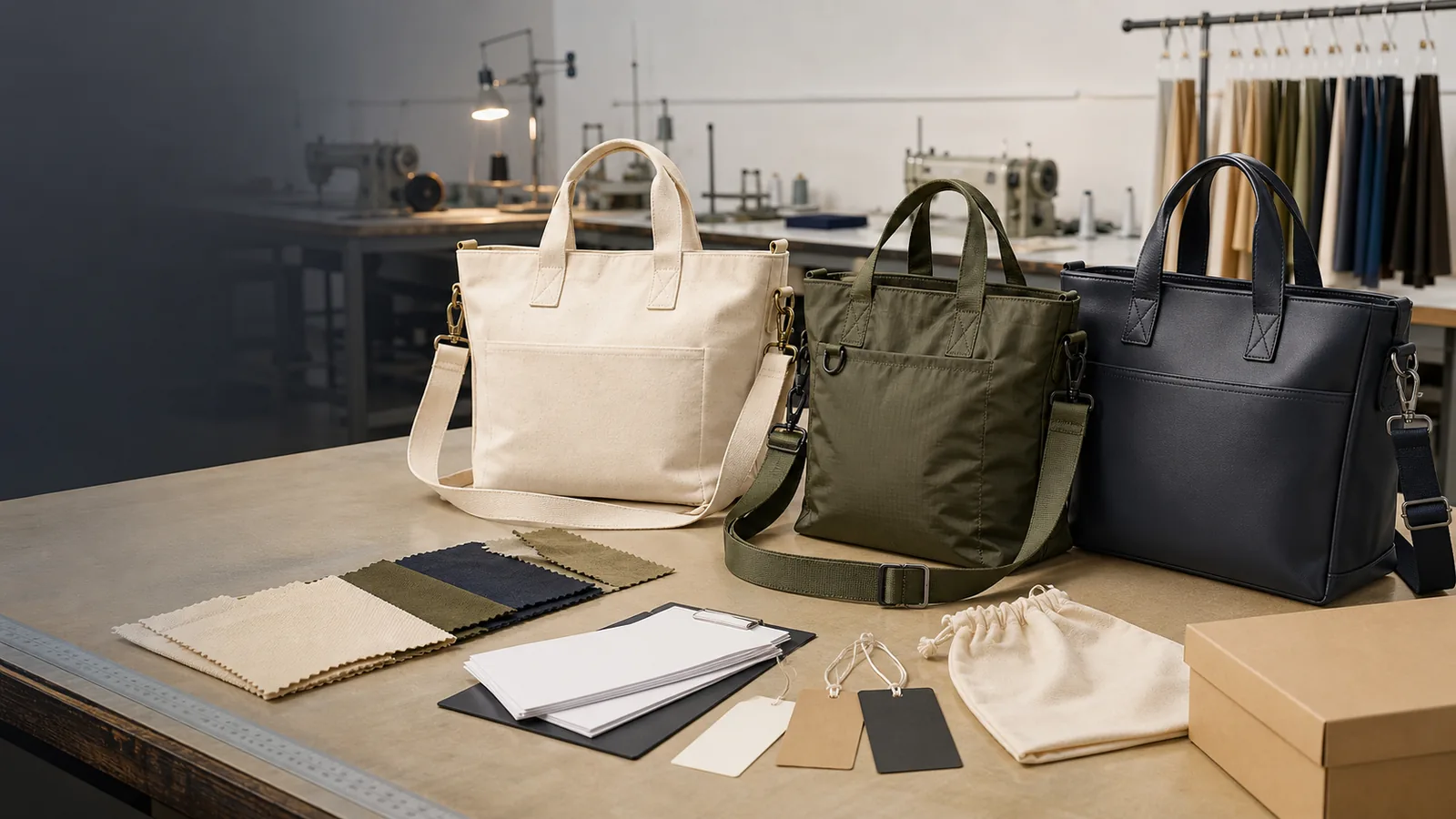
CUSTOM 2-WAY TOTE BAG OEM
Plan hand carry, shoulder carry, and crossbody use before locking hardware and reinforcement.
Strap width, D-ring position, swivel hooks, adjusters, reinforcement tabs, top closure, packing, and SKU pairing should be confirmed in one specification before sample approval.
A custom 2-way tote bag should be specified by carry mode first: hand carry plus detachable shoulder strap, hand carry plus longer shoulder handles, crossbody-ready tote, or a backpack-leaning tote. After that, strap width, D-rings, swivel hooks, adjusters, reinforcement tabs, top closure, packaging, and SKU rules can be locked in the same RFQ. If hardware is added late, the bag may tilt, stress the seams, or create packing mix-ups.
FIRST DECISION
"2-way tote" can mean several production routes. A detachable shoulder strap, longer shoulder handles, crossbody use, or backpack-leaning construction changes pattern work, hardware, reinforcement, packing volume, and sample testing. Define the use case and contents first so the hardware spec stays realistic.
Useful for retail goods, event merchandise, and collaboration items. Check D-rings, swivel hooks, strap adjuster, webbing width, hardware finish, and how the detachable strap is packed.
A simpler structure for lightweight giveaways and everyday totes. Handle drop, handle width, top opening, and root reinforcement still need to be approved by sample.
Closer to travel or event mobility projects. Rear strap points, bottom reinforcement, shape stability, and carton volume can change the production route.
CARRY STRUCTURE
The same tote body behaves differently when it is carried by hand, over the shoulder, or across the body. Hand carry puts more attention on handle roots and the top opening. Shoulder and crossbody use shift load toward D-rings, strap length, zipper access, and bag tilt.
| Carry mode | Typical use | Specification checks | Production risk |
|---|---|---|---|
| Hand carry + detachable strap | Retail merchandise, corporate gifts, IP goods | D-rings, hooks, adjuster, strap packing | Bag tilts when loaded if attachment points are wrong |
| Hand carry + longer handles | Giveaways, lightweight novelty bags | Handle drop, width, root sewing area | Low-cost structure still needs shoulder comfort checks |
| Hand carry + crossbody use | Travel, venue movement, event use | Strap width, length range, zipper/top closure | Contents can swing or block the closure if not tested |
| Tote + backpack-leaning use | Hands-free event or travel projects | Rear strap points, bottom reinforcement, pattern change | Often requires a more customized sewn structure |
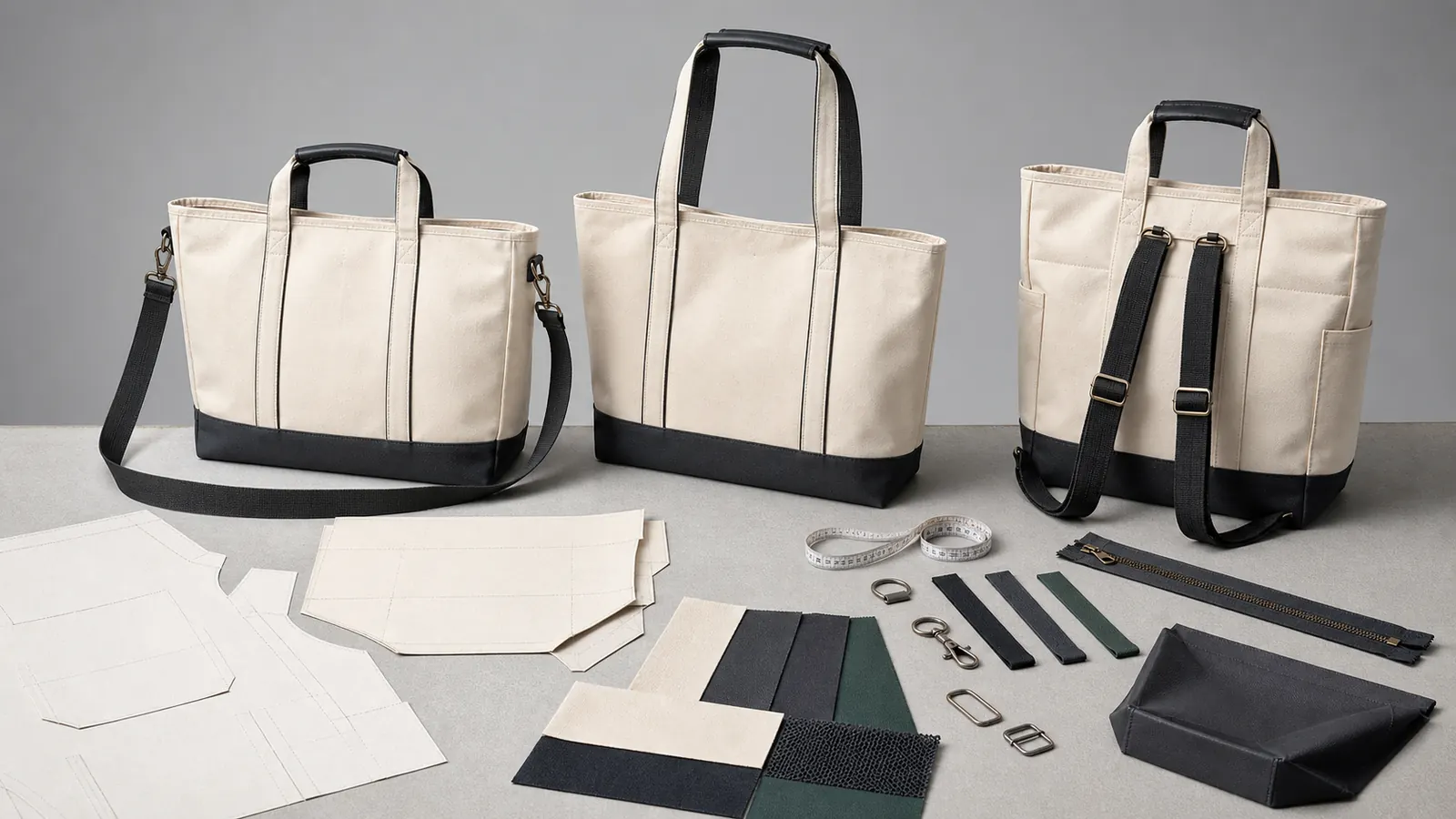
BELT AND HARDWARE
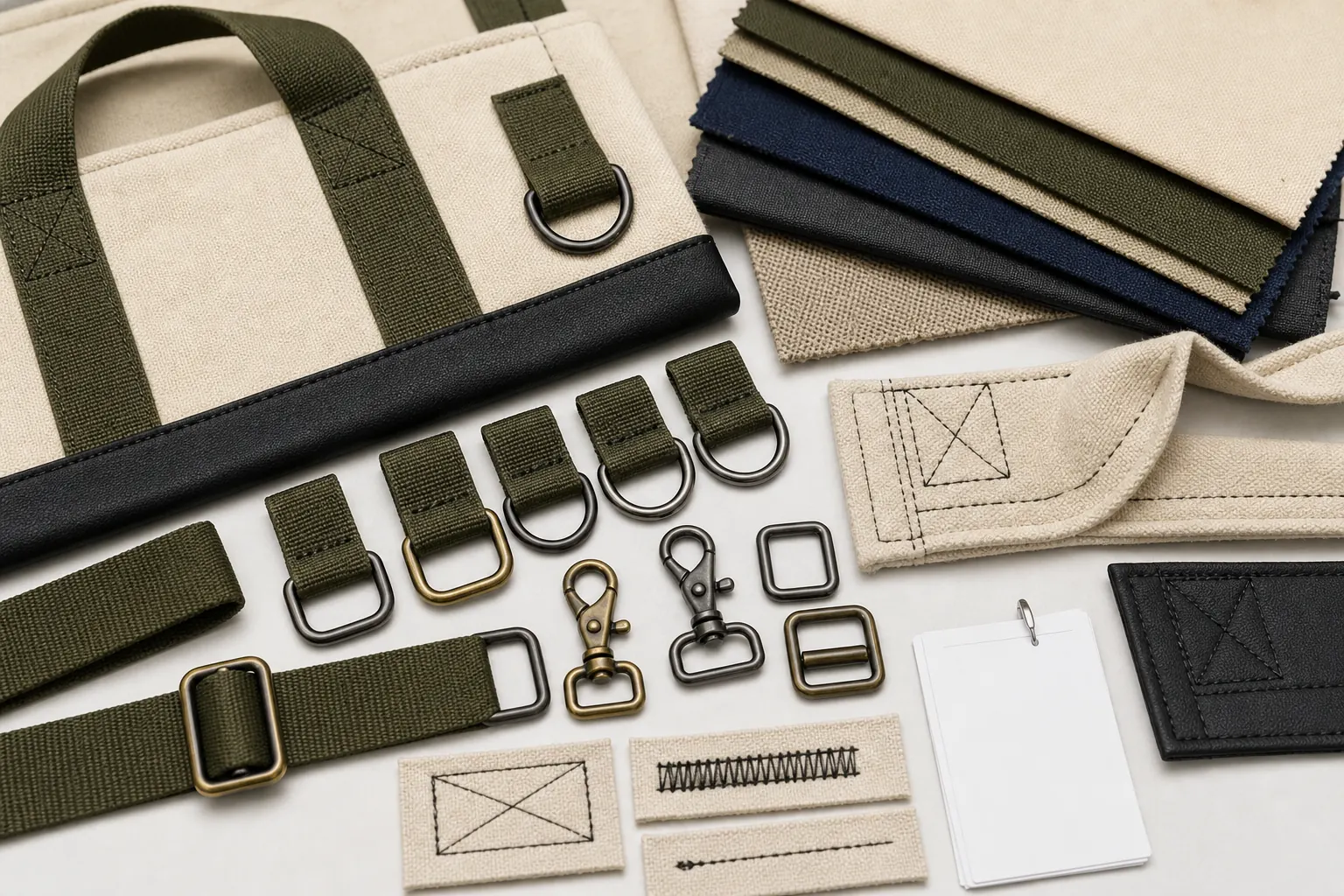
D-rings, swivel hooks, lobster clasps, strap adjusters, and webbing should not be selected only by appearance. The hardware size must fit the webbing width, sewing allowance, reinforcement area, material thickness, and the way the bag hangs when loaded.
Side seam, upper edge, or rear attachment changes load flow. Test bag tilt and seam pull with the intended contents inside.
Narrow straps look lighter but can limit comfort and hardware selection. Wider straps may improve support but change packing thickness and cost.
Silver, antique gold, gunmetal, black, or matched finishes should be checked with zipper color, fabric color, tags, and brand tone.
Detachable straps can be packed inside the same polybag or separately. This affects inspection, SKU pairing, and carton volume.
REINFORCEMENT
A 2-way tote is pulled from different directions depending on how it is carried. Before quoting, define where reinforcement is required so the first sample can test the real stress points instead of only the visible shape.
Box-X stitching, bartacks, backing fabric, and handle tape width affect both appearance and durability checks.
Small attachment tabs become load points. Specify backing, stitch lines, and fabric layers instead of leaving them as decorative details.
For heavier contents, check gusset shape, bottom board, bottom material, and corner wear in the sample.
MATERIAL FIT
This page focuses on the structure of a custom 2-way tote. For canvas thickness, ounce weight, and print compatibility, see custom canvas tote bag OEM. Here, material choice is judged by how it works with strap load, hardware, lining, top closure, and packing.
| Material option | Best-fit 2-way use | Checks before sample approval | Related decision |
|---|---|---|---|
| Canvas or cotton duck | Hand carry plus shoulder carry, retail totes | Thickness, handle reinforcement, print result, gusset | Retail feel, logo process, shape stability |
| Polyester or nylon | Lightweight events, foldable projects | Fabric slippage, sewing stability, strap color | Weight, packing size, cost range |
| PU or leather-like surface | Corporate gifts, higher retail feel | Hardware finish, seam allowance, corner wear, lining | Appearance, weight, bag-in-bag or box packing |
| Contrast bottom or reinforced panel | Crossbody use or heavier contents | Bottom material, corner reinforcement, seam position | Durability check and sample approval |
SAMPLE APPROVAL
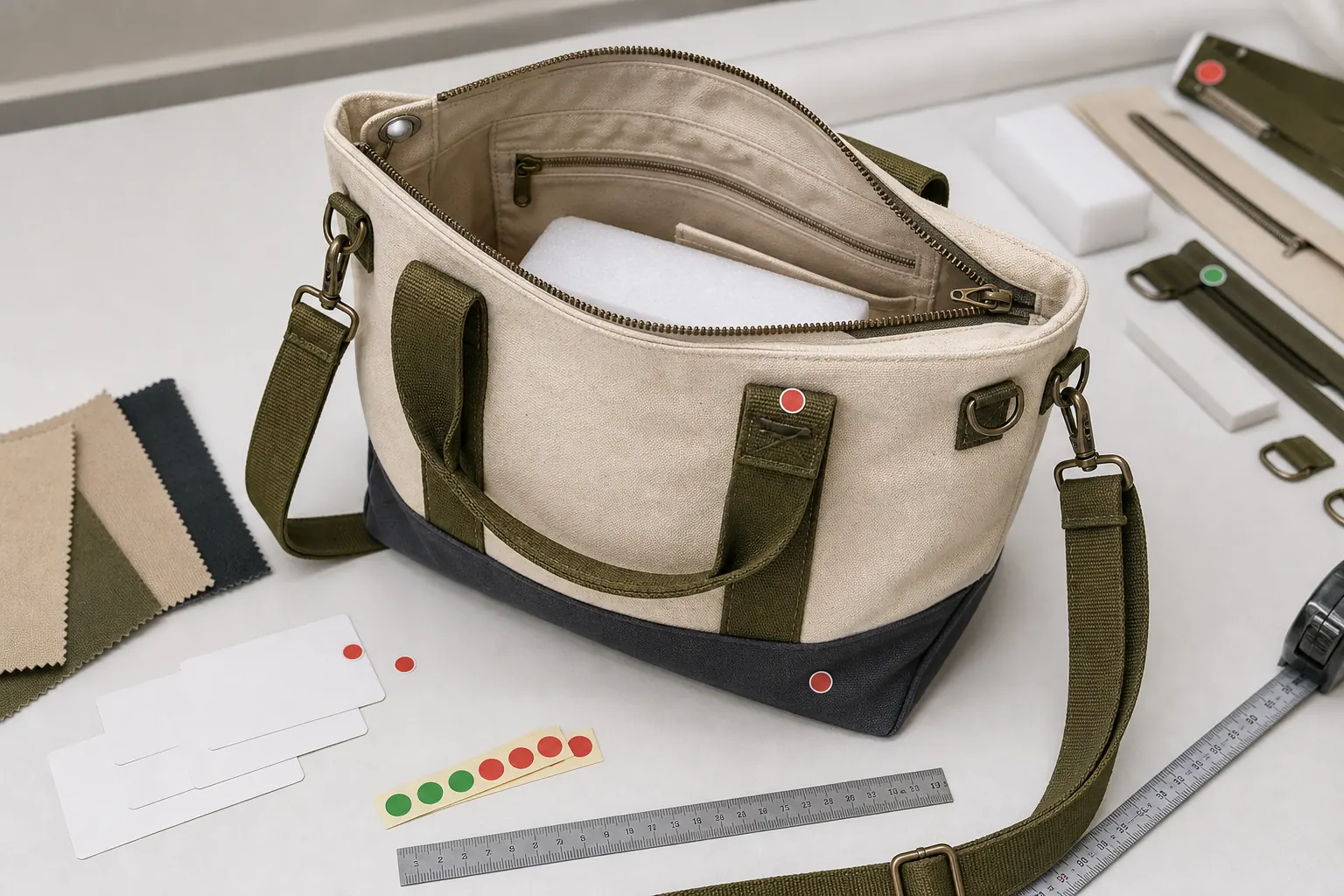
Drawings and reference images cannot fully show strap slide, hardware noise, zipper access, seam pull, or body tilt. Sample approval should recreate the real contents and the intended carry modes before mass production details are fixed.
SKU AND PACKING
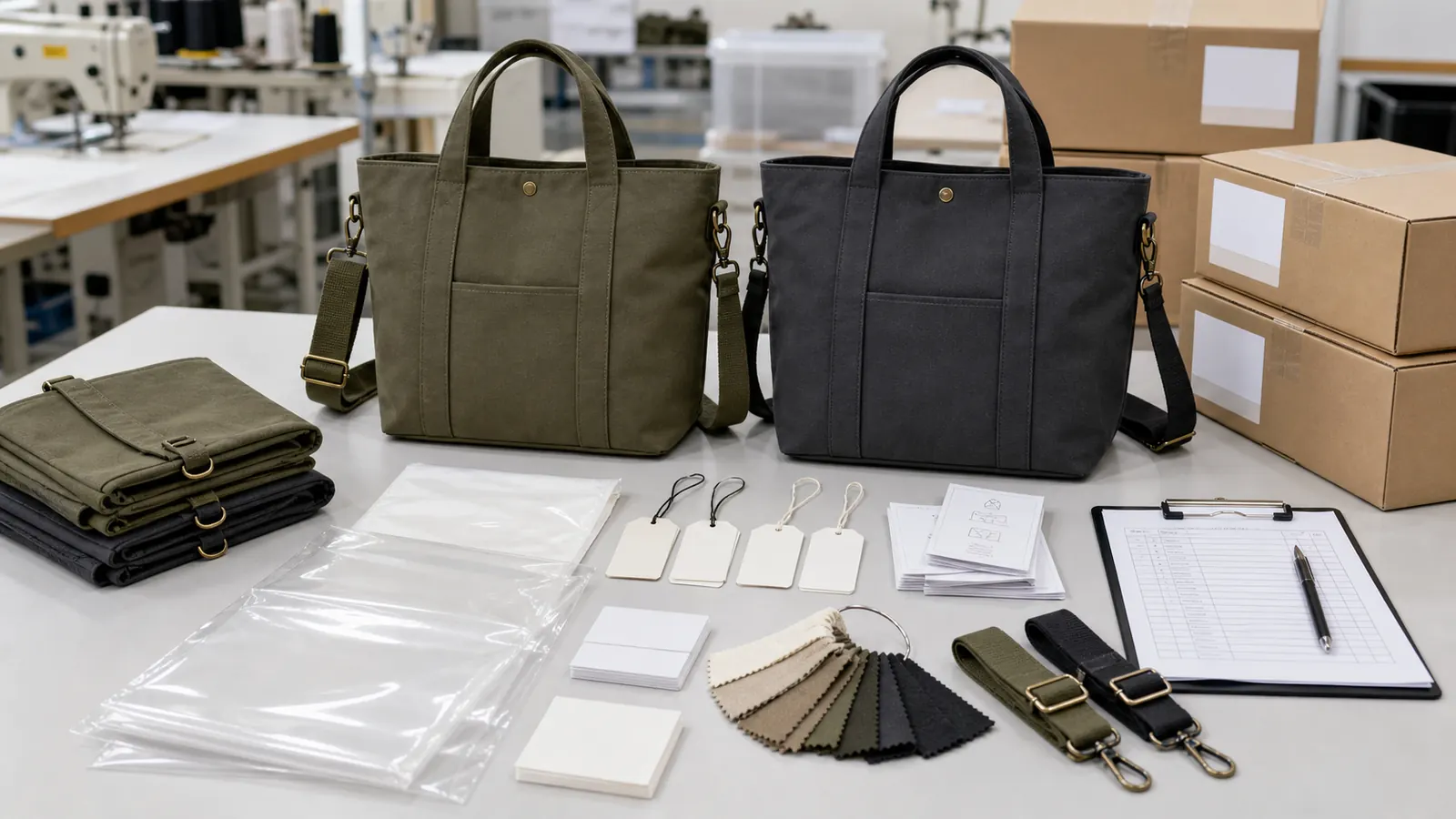
2-way tote orders often combine body color, strap color, hardware finish, labels, and individual packing. A SKU sheet helps the factory pair each detachable strap with the correct bag and reduces confusion during QC, packing, and split delivery.
RFQ INPUTS
A complete tech pack is helpful but not required for the first discussion. For a 2-way tote, the carry modes and target contents matter most because they affect hardware, strap width, reinforcement, and packing.
RELATED ROUTES
Compare ready-made printing, existing-pattern changes, and fully custom sewn tote bags.
View tote bag OEMReturn to the broader category when you need totes, pouches, PVC bags, or other sewn goods.
View bags and pouches OEMFor trade shows, corporate campaigns, and giveaway distribution, use the promotional bag route.
View promotional bagsFor display windows, plush carriers, fan events, and character merchandise storage.
View fan merchandise bagsReview canvas thickness, print compatibility, and material-specific tote decisions.
View canvas tote OEMCheck the flow from initial specs and sample approval to production, inspection, and delivery.
View order processFAQ
A 2-way tote is planned around more than one carry mode, such as hand carry plus shoulder carry or hand carry plus crossbody use. The body, handles, detachable strap, D-rings, hooks, adjuster, reinforcement tabs, and packing method need to be checked together because the load angle changes when the strap is used.
Choose a detachable shoulder strap when the bag needs a higher retail feel, a different wearing style, or separate strap color and hardware. Longer handles can be simpler for lightweight giveaway bags, but shoulder comfort, top opening, and handle reinforcement still need sample approval.
They can usually be planned by project, depending on material, stock, tooling, finish, and strength confirmation. Common choices include silver, antique gold, gunmetal, black, and matching webbing colors, but the final selection should fit the bag fabric, zipper, label, and target price range.
Strap width depends on bag size, expected contents, shoulder comfort, hardware size, and visual balance. Adjustable length should be tested for shoulder carry, crossbody use, unisex fit, excess strap position, and how the strap folds into the individual packing.
Reinforcement can be discussed, but we do not promise a fixed public load rating without project testing. The contents, gusset, handle width, D-ring position, fabric, lining, bottom board, and stitching method should be reviewed in the sample before production approval.
Yes. A top zipper, magnetic closure, inner pocket, front pocket, lining, or bottom board can be considered when it fits the use case and budget. For zipper bags, check whether the bag still opens smoothly when the shoulder strap is attached and carrying the expected contents.
Multiple colorways or designs are easier to manage when the SKU table is prepared before production. Record body color, strap color, hardware finish, woven label, hang tag, individual packing, SKU labels, carton marks, and delivery split so the strap and body are paired correctly.
Share the use case, target contents and weight, approximate dimensions, carry modes, strap width, strap length range, hardware color, material, print or embroidery artwork, quantity, SKU count, packing method, delivery address, and target schedule. Reference photos can be used to clarify structure, not to copy protected designs.
QUOTE CONSULTATION
Share the carry modes, contents, approximate size, strap width, hardware, reinforcement, packing, and SKU requirements. Unconfirmed details can be prioritized from the use case and target quantity.