
CUSTOM PROMOTIONAL BAGS
Custom Foldable Shopping Bags Manufacturer
Plan the open size, compact folded size, folding method, printable area, storage pouch, packing, and QC as one custom bag specification.
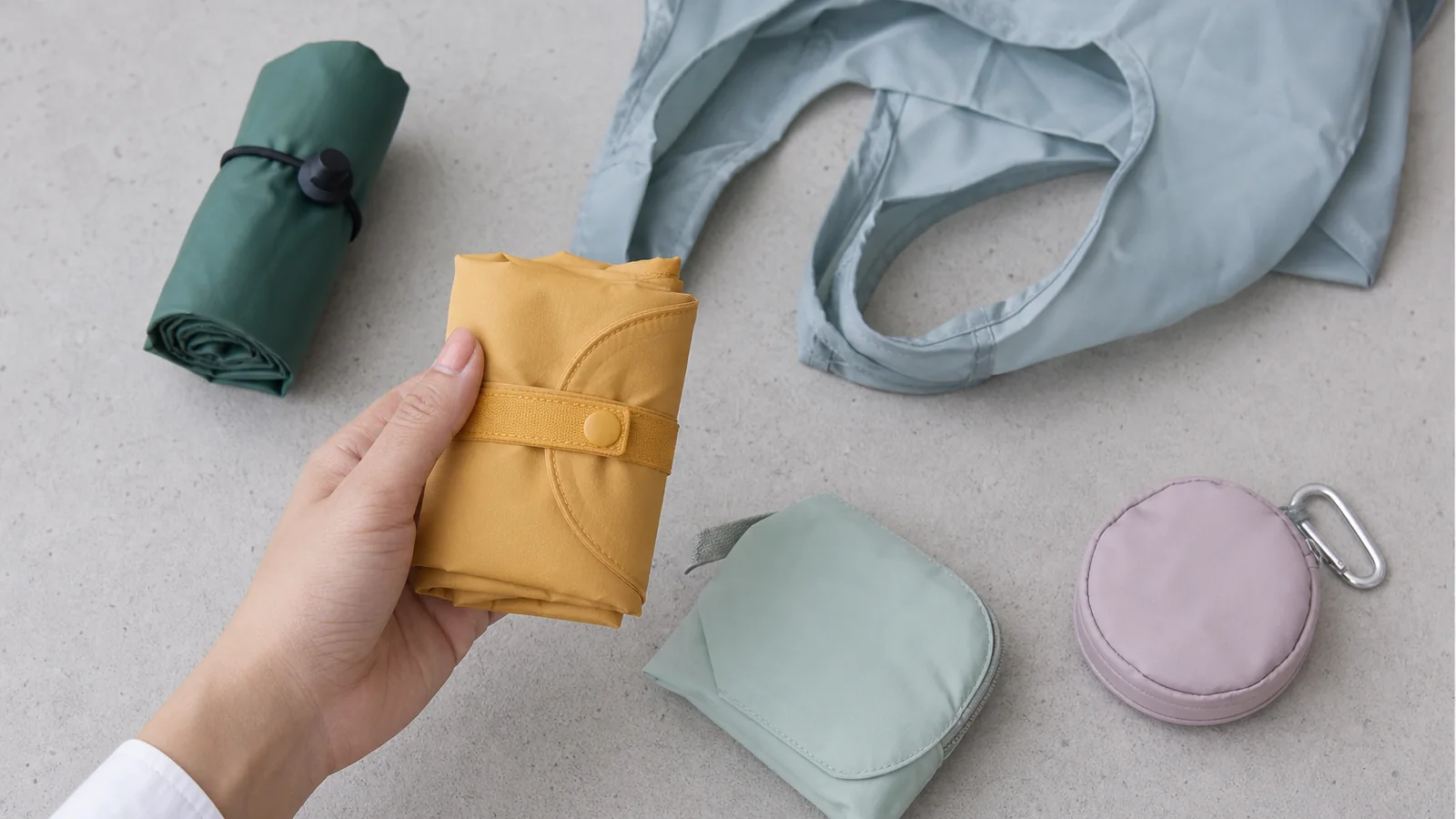
Choose the folding system before fixing artwork and packing
Custom foldable shopping bags should be specified by open size, folded size, folding method, print area, material, pouch or strap structure, packing, and QC. Integrated pockets, separate pouches, elastic or snap straps, and flat-fold routes change print visibility, component control, and packing size.
For promotional distribution, retail goods, or original-IP merchandise, confirm the target contents, artwork priority, SKU count, individual packing, and destination before sampling. MOQ, price, sample route, and lead time remain project-specific rather than fixed page promises.
Compare folding methods by print visibility and packing work
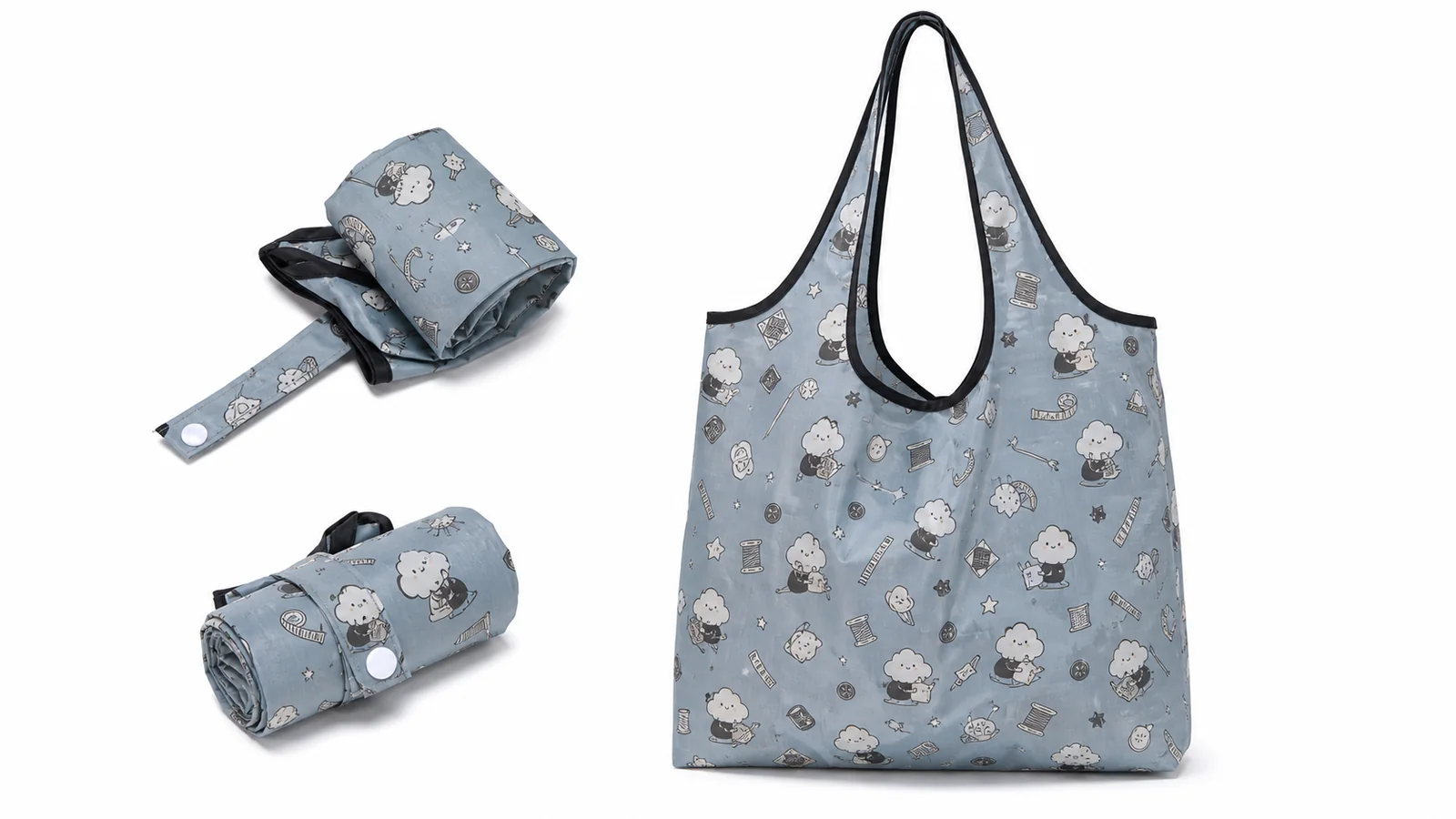
| Folding route | Suitable projects | Print consideration | QC checkpoint |
|---|---|---|---|
| Integrated pocket | Giveaways or retail benefits where loose parts should be reduced | Keep pocket sewing away from key artwork | Pocket sewing, insertion ease, and folded bulk |
| Separate pouch | Projects that need a second printable surface or gift-set appearance | Coordinate bag and pouch artwork, color, and orientation | Pouch inclusion, color difference, and packing count |
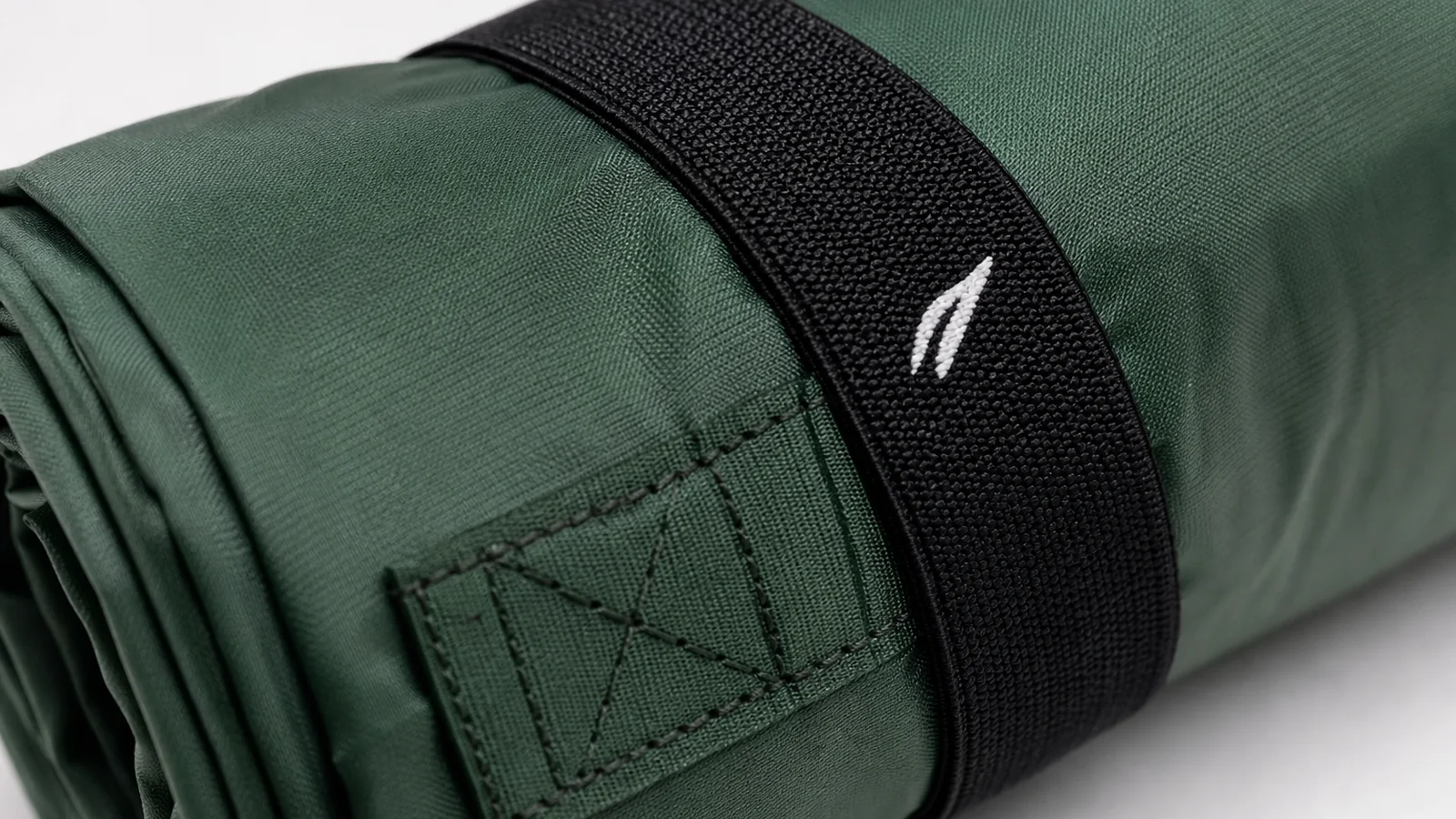
| Elastic or snap strap | High-volume distribution and simple compact storage | Confirm the strap does not hide a logo or character | Elastic recovery, snap position, attachment, and fold thickness |
| Flat fold | Mailers, inserts, flat storage, and document distribution | Wide print areas are possible, but fold lines stay visible | Fold consistency, sleeve size, and packing efficiency |
Set capacity, gusset, handles, and material from the use scene
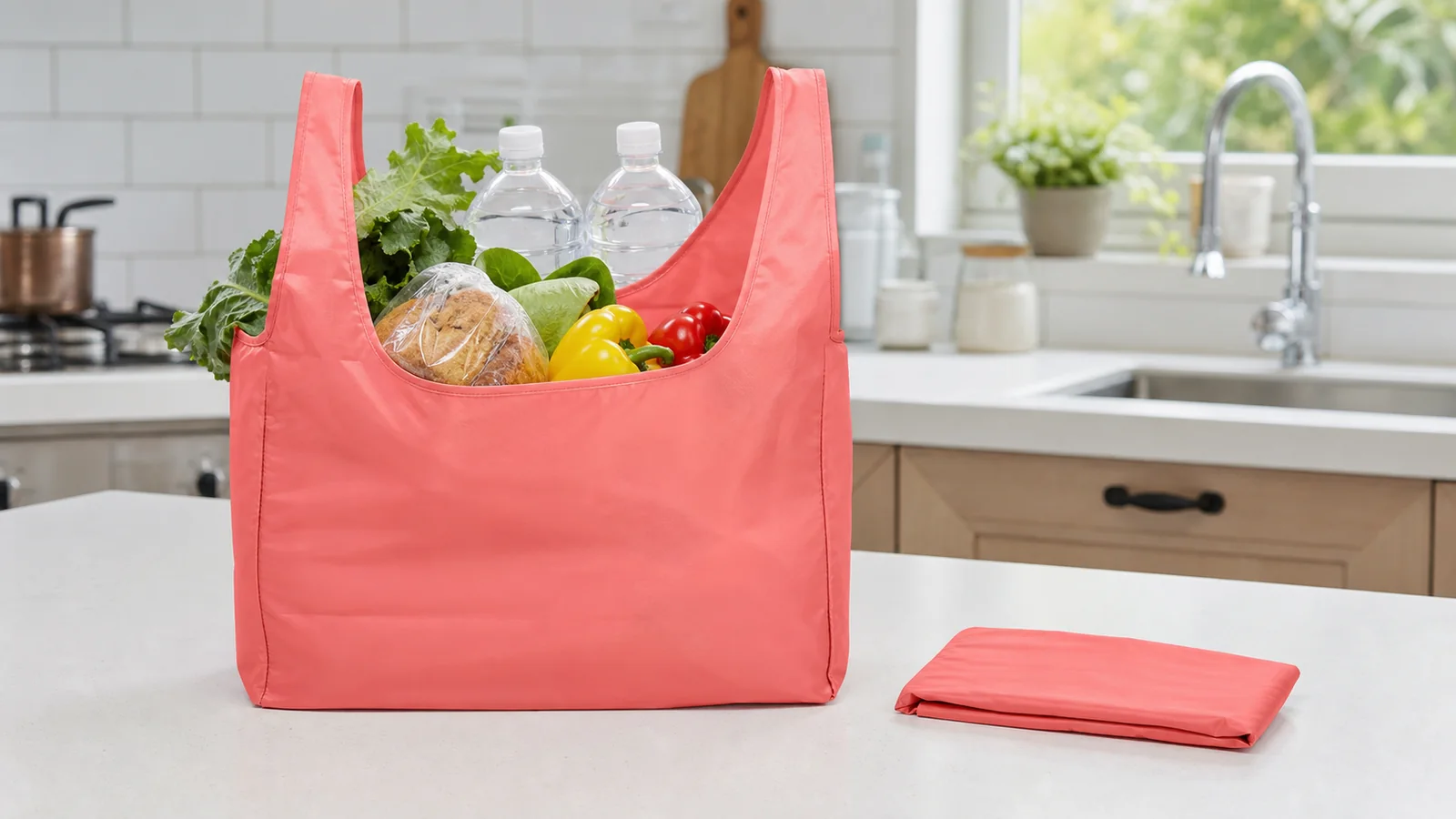
A grocery campaign, exhibition handout, retail item, and character-goods line do not need the same bag. Define representative contents and the carrying method before setting dimensions.
Lightweight and compact, with routes for multicolor or all-over concepts.
A candidate for high-volume document bags and cost-controlled distribution.
Review material proof and claim wording separately from foldability.
Map logos and characters across fold lines, seams, and storage parts
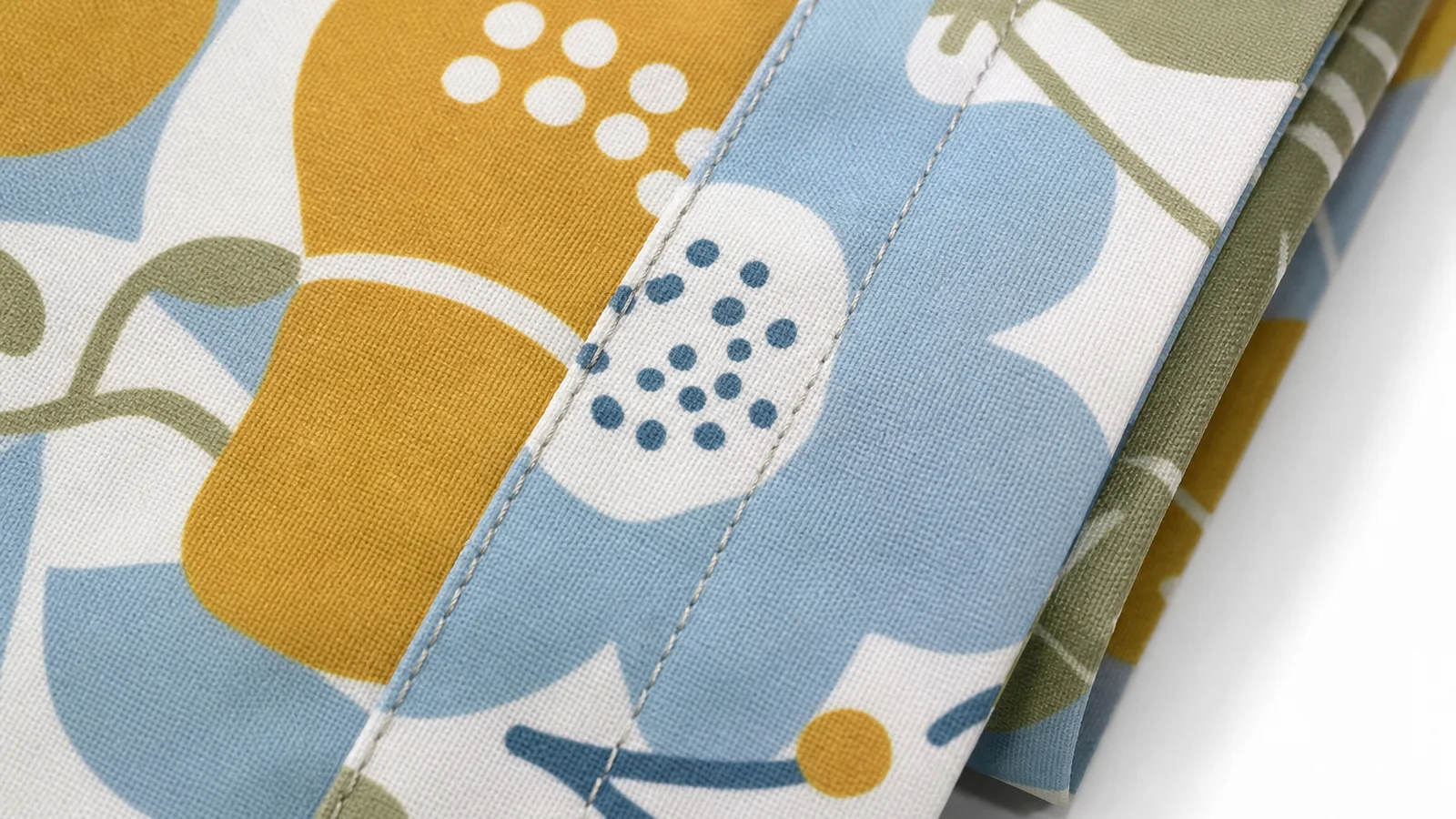
The open bag and final compact state expose different surfaces. Overlay the actual folding sequence, seam allowance, pocket, pouch, elastic, or strap position on the artwork before sample approval.
- Keep primary characters and logos away from critical fold lines
- Allow for seams, binding, and printable-area limits
- Check whether a pouch or strap hides the focal artwork
- Test rubbing, heat marks, transfer, and folded color appearance
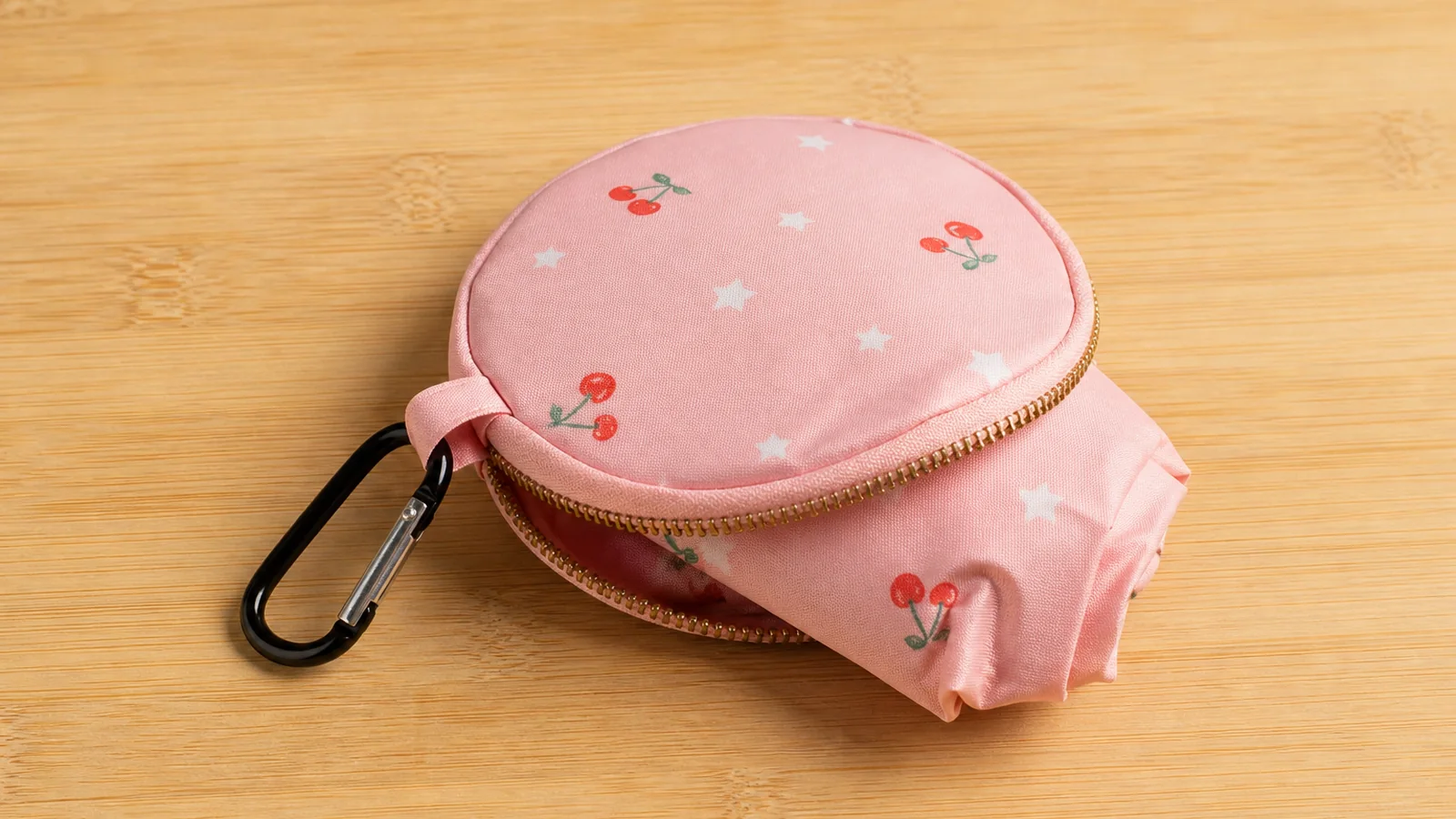
Storage pockets, separate pouches, and straps change component control
An integrated pocket reduces loose-part risk but adds sewing and artwork constraints. A separate pouch offers another branding surface but requires inclusion checks, color matching, and additional packing control.
For large distribution runs, also review how quickly the bag can be folded, inserted, labeled, counted by SKU, and packed into the planned carton quantity.
Specification examples for printing, storage, capacity, and use
Use physical samples to confirm the relationships among artwork, bag structure, compact storage, hardware, capacity, and packing.
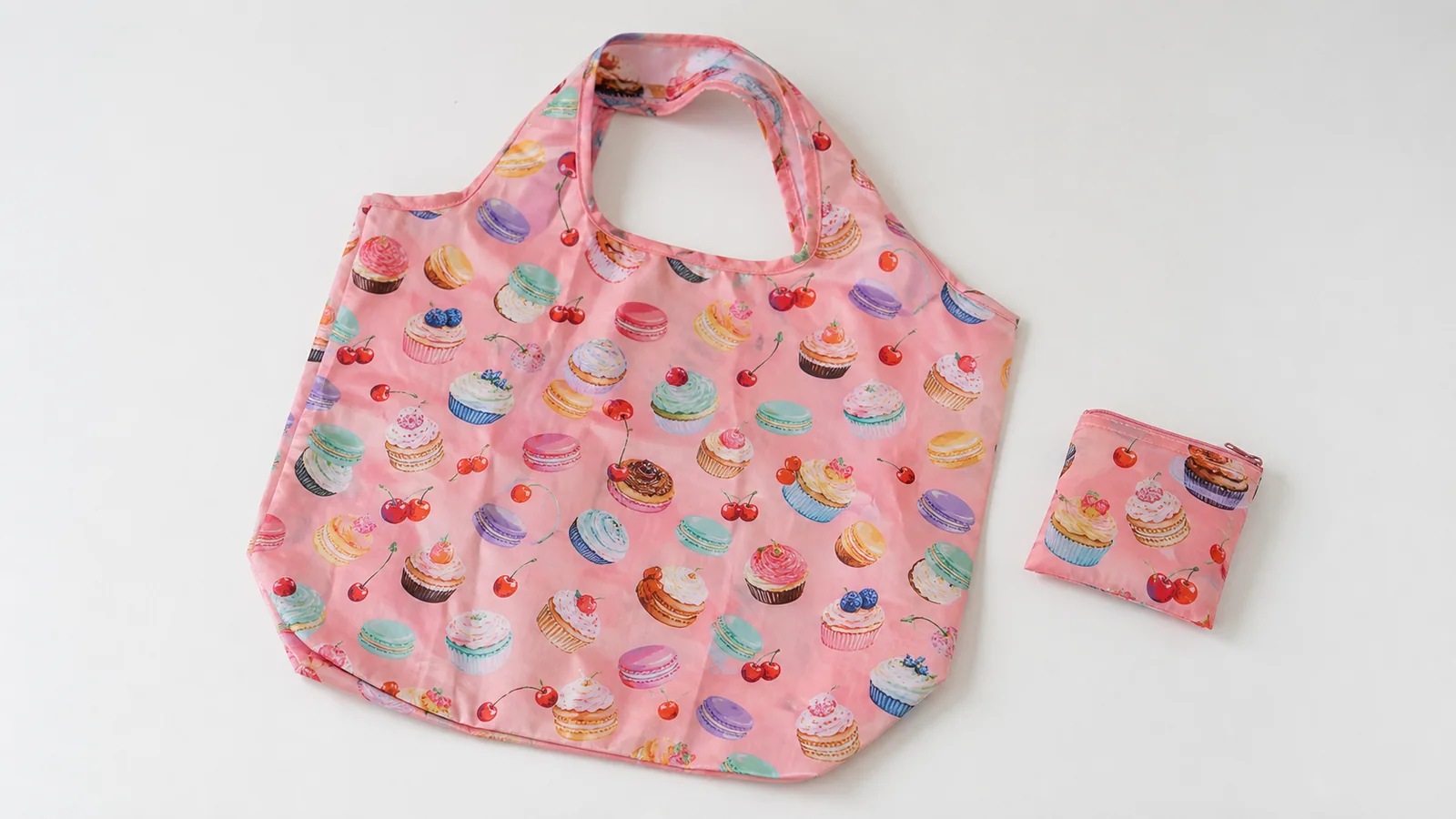
Custom Sublimation Foldable Bag and Matching Pouch
Use an all-over sample to review color, repeat, seam transitions, folded appearance, and pouch matching.
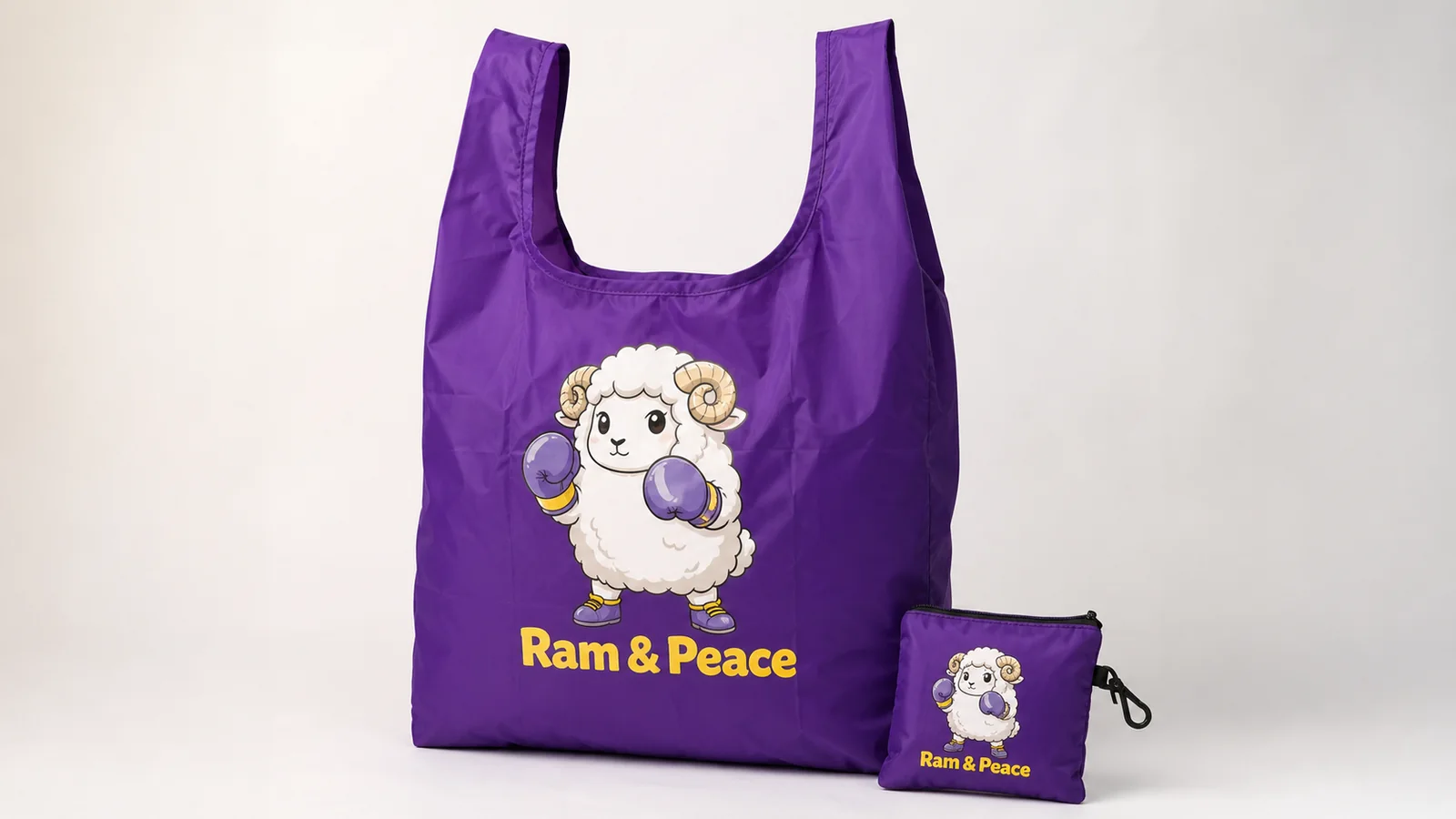
Custom Character Print Foldable Bag and Pouch
Check character scale, line width, print position, fold lines, and visibility after compact storage.
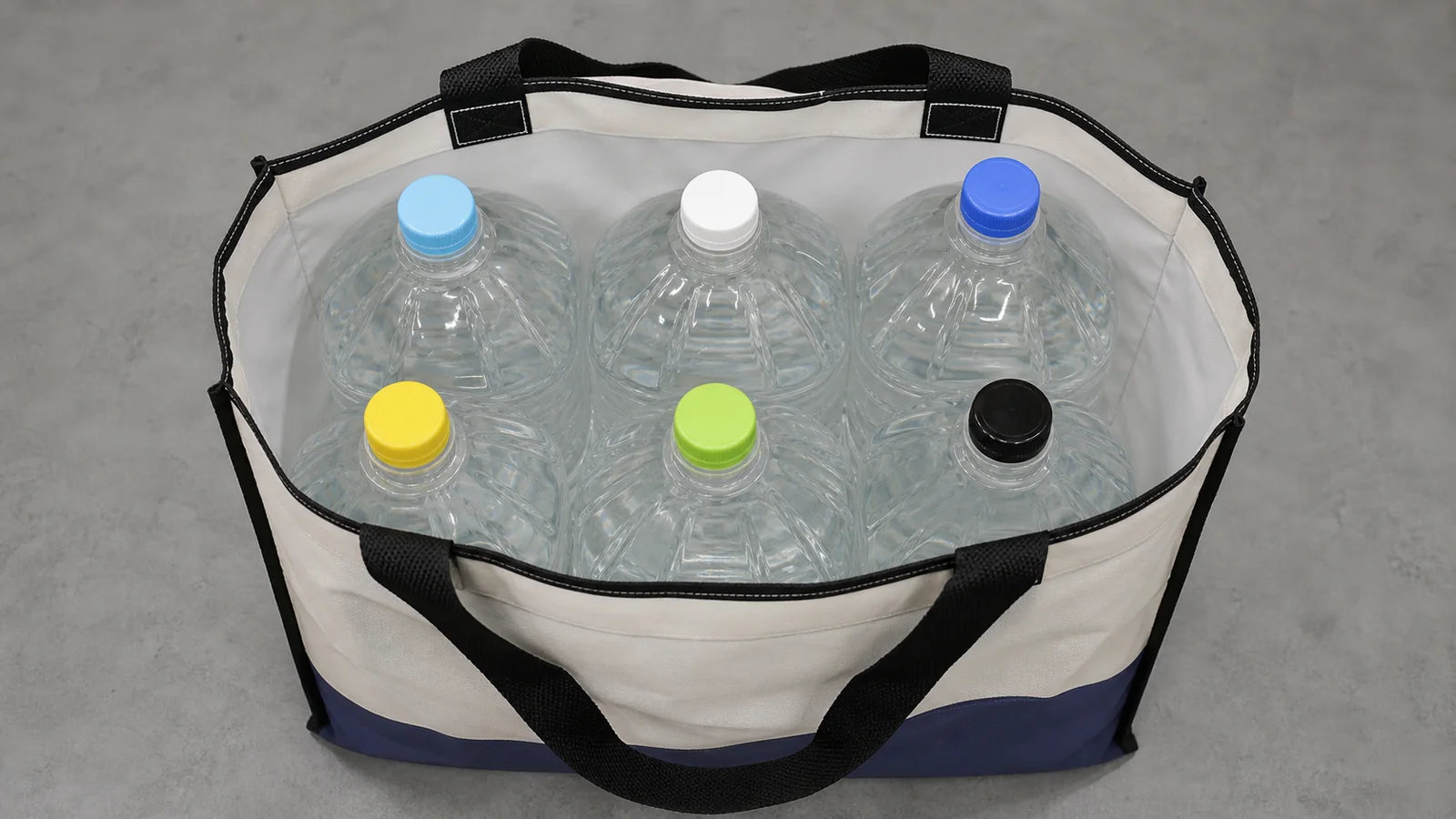
Large Foldable Bag Capacity with Six 2-Liter Bottles
A six-bottle sample helps define gusset, handle reinforcement, seam route, packing volume, and project-specific load testing.
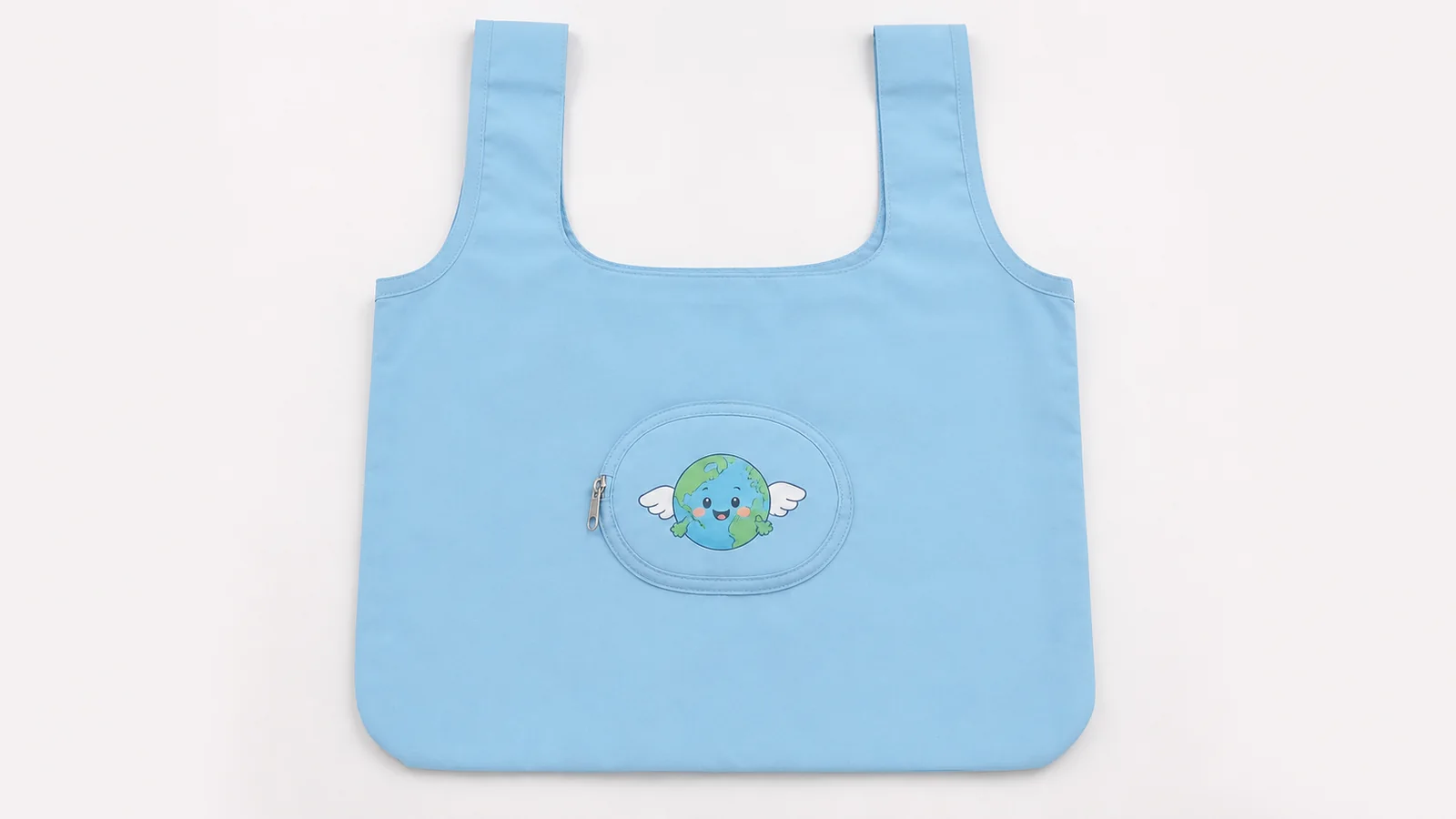
Foldable Bag with Attached Oval Zipper Pouch
Confirm attached-pouch position, zipper direction, artwork interference, folded thickness, and sewing reinforcement.
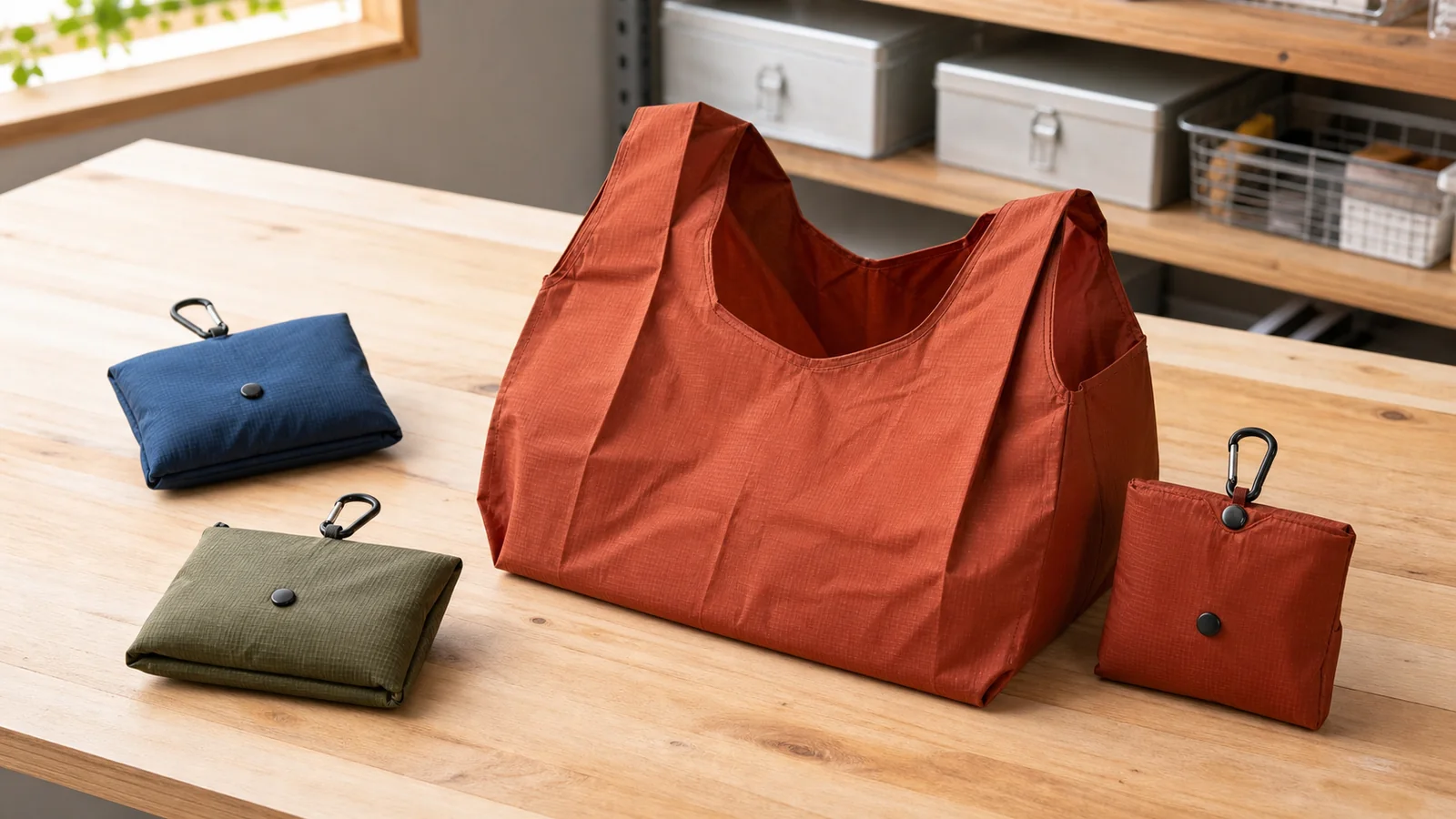
Foldable Bags with Carabiner and Snap Pouch Options
Color SKUs, snaps, carabiners, and separate pouches add component, packing, and inspection checkpoints.
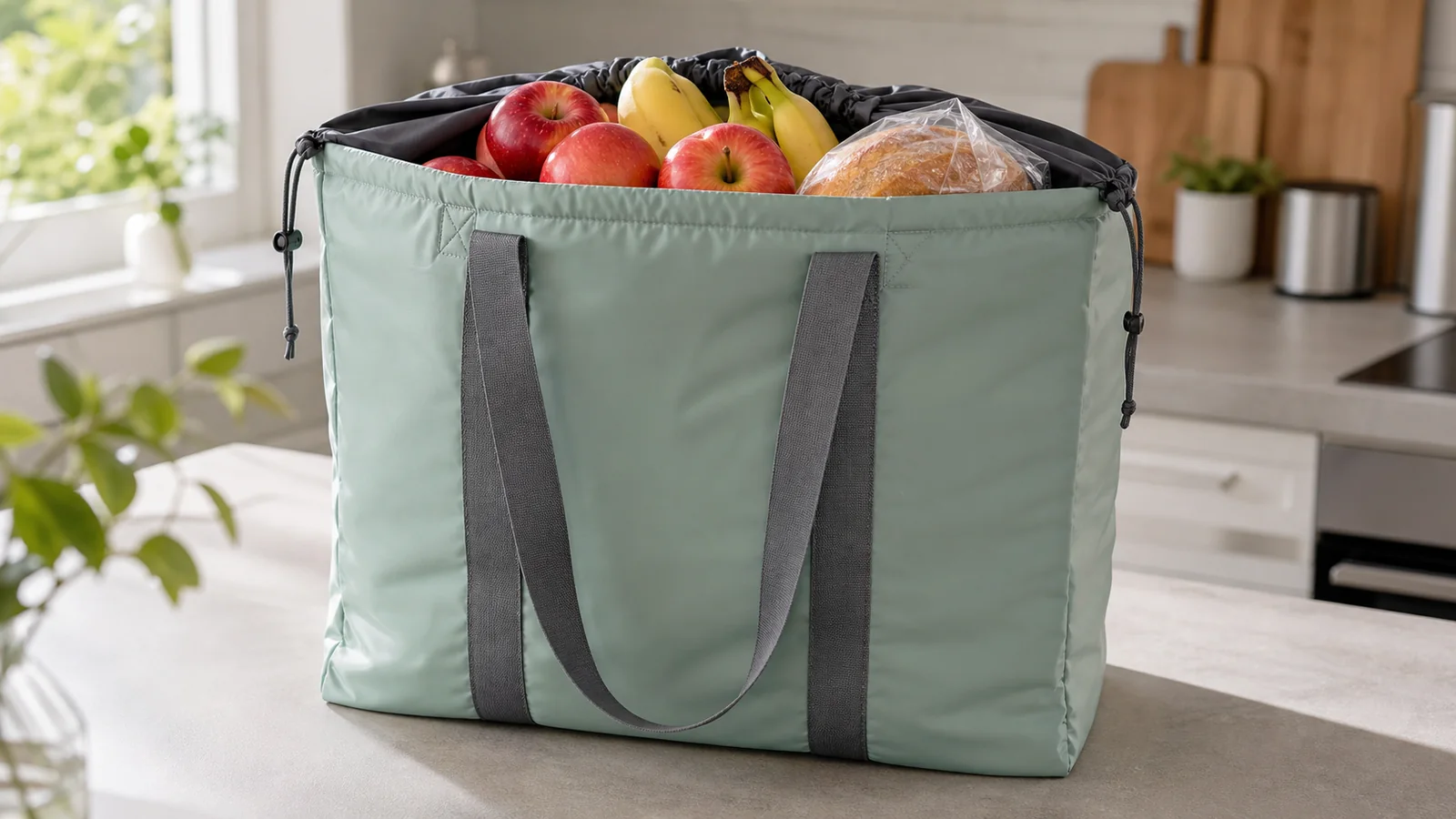
Foldable Register Basket Bag with Drawstring Top
Basket-compatible bags require the target basket dimensions, gusset, drawstring opening, and handle length.
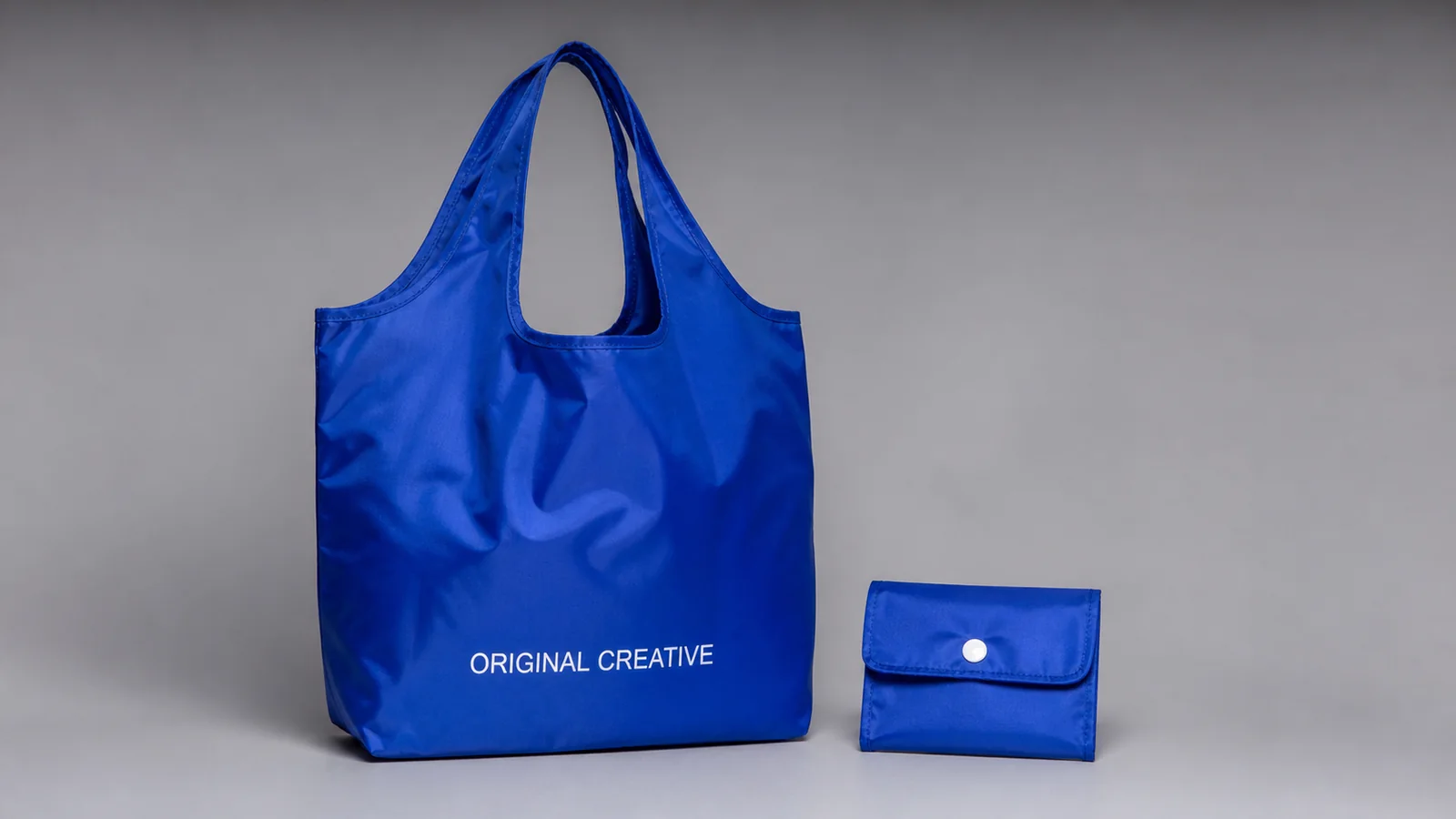
Custom Logo Foldable Bag with Flat Snap Pouch
Review white ink coverage, fine lines, logo position, pouch color difference, and fold visibility on dark fabric.
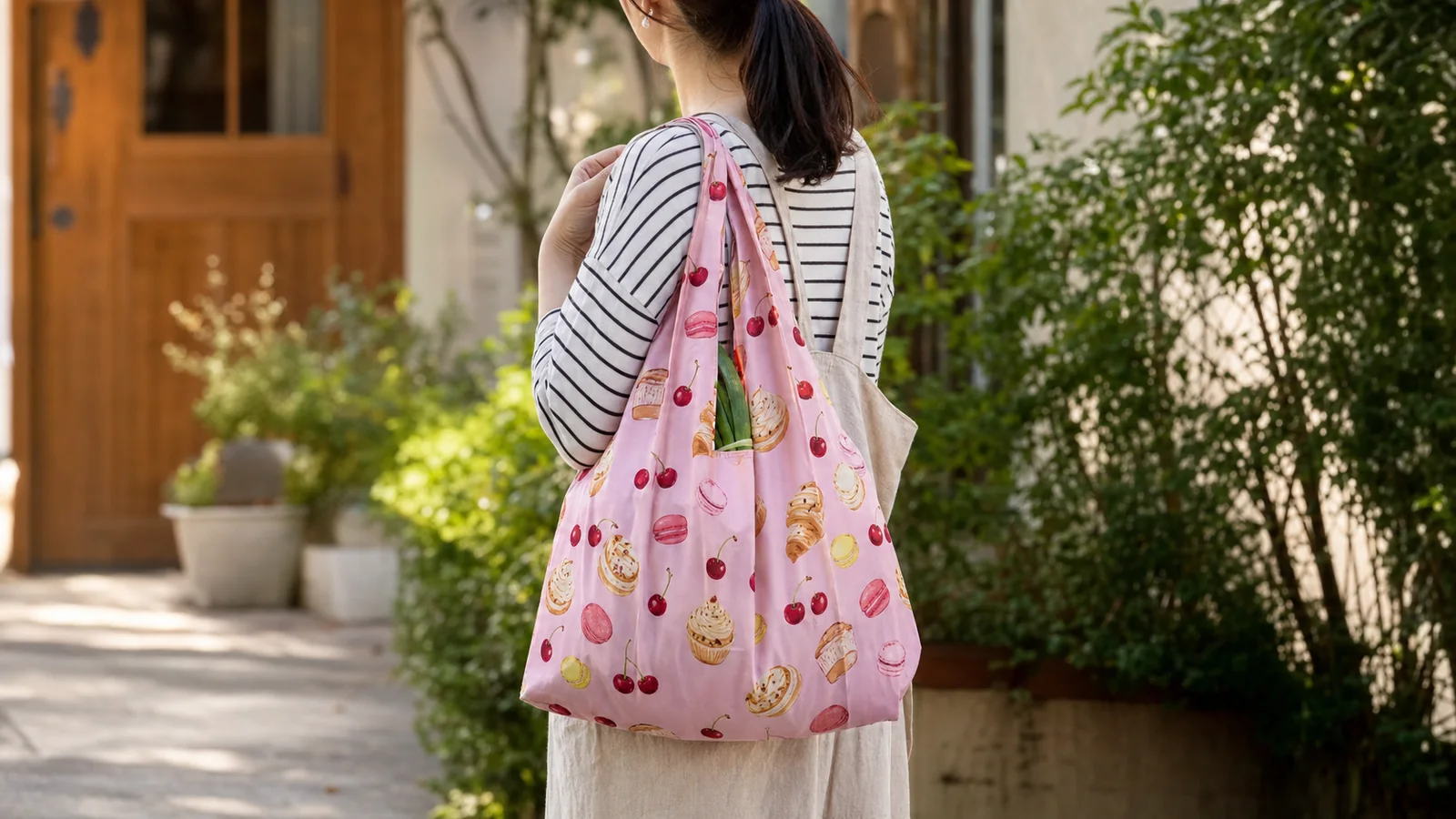
Printed Foldable Shopping Bag Shoulder-Carry Scene
A use scene helps confirm handle length, opening, capacity, artwork visibility, and expected carrying method.
Approve print durability and folding consistency on the same sample
Inspect artwork position, color, seams, binding, elastic or strap attachment, folded thickness, friction, and whether the final compact state can be reproduced consistently.
- Open-bag shape and dimensions
- Fold sequence and compact size
- Print position, seams, and color
- Pocket, pouch, strap, or hardware attachment
- Individual packing and final appearance
- Project-specific inspection record
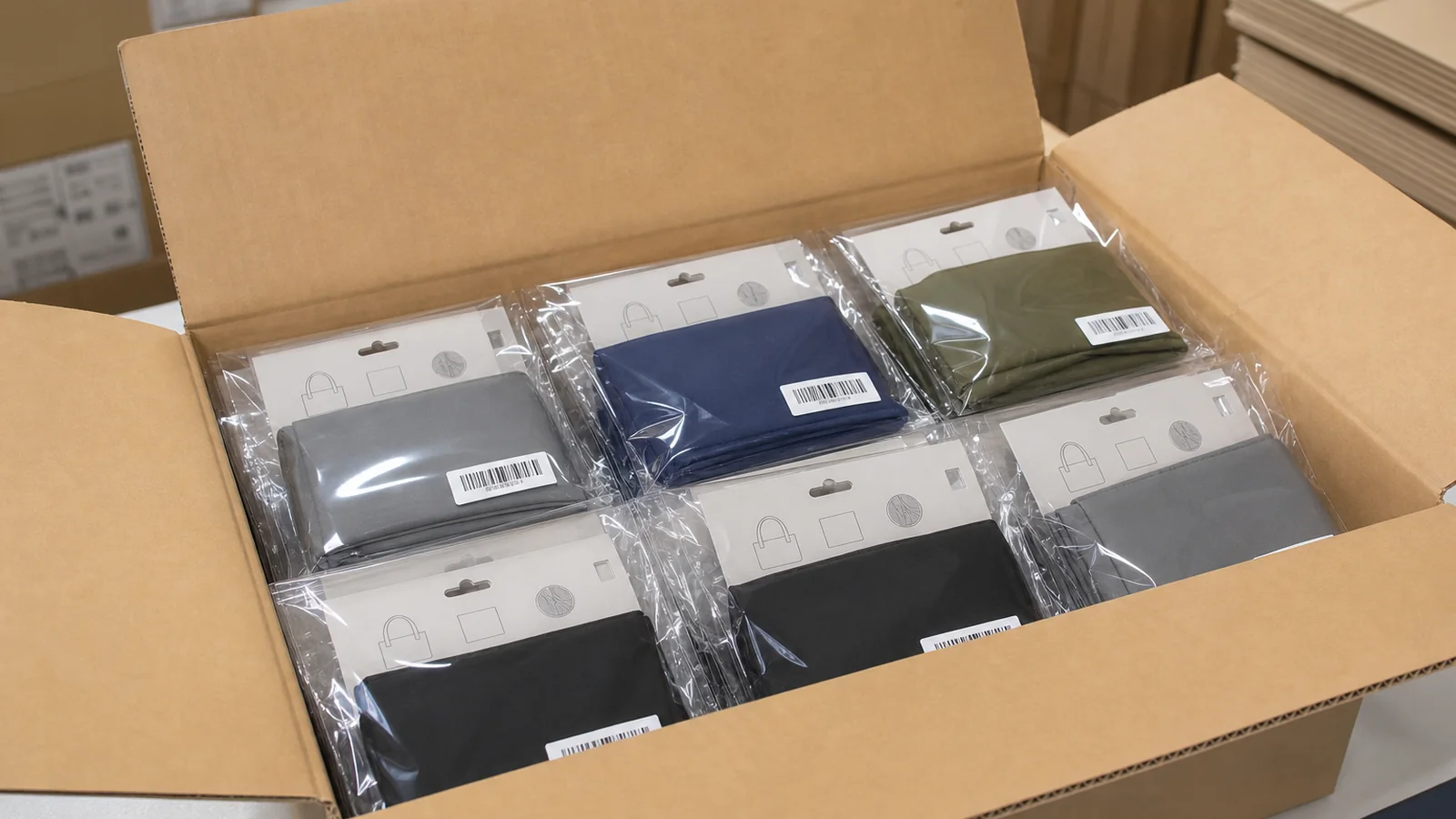
Include color SKUs, pouch parts, labels, and carton marks in the quotation
Bag color, artwork version, storage-part option, insert card, barcode or SKU label, individual packing, carton quantity, and delivery split can change both packing work and inspection scope.
| Item | Confirm |
|---|---|
| SKU plan | Colors, artwork versions, and quantities per version |
| Storage parts | Pocket, pouch, elastic, strap, snap, or carabiner |
| Individual packing | OPP, paper band, insert card, label, or retail pack |
| Carton control | Quantity per carton, carton mark, destination, and split shipment |
Send these inputs for a foldable shopping bag quotation
- Quantity bands and SKU count
- Open width, height, gusset, and handle length
- Target folded width, height, and thickness
- Material, color, coating, and acceptable alternatives
- Folding route, storage pouch, strap, or hardware
- Artwork, print size, colors, and all-over print need
- Individual packing, labels, carton marks, and destination
- Sample approval route and requested delivery date

Custom Foldable Shopping Bags FAQ
Which folding structure should a buyer choose?
Conclusion: choose the folding structure from distribution, portability, print visibility, and packing needs. Condition: an integrated pocket reduces loose parts, a separate pouch adds a second printable surface, an elastic or snap strap simplifies packing, and flat folding suits thin mailers. Compare folded size and packing work before sampling.
Which materials work for custom foldable shopping bags?
Conclusion: lightweight polyester, selected nylon, non-woven fabric, and project-specific RPET routes are common candidates. Condition: foldability, fabric weight, coating, print method, color, seam strength, and required material proof affect availability. Confirm the use scene and claim wording before fixing the material.
Can a foldable bag use an all-over character print?
Conclusion: all-over character printing can be reviewed on suitable polyester concepts. Condition: artwork repeat, seam allowance, fold lines, color route, heat marks, rubbing, and pouch matching must be checked on a physical sample. Keep key faces, logos, and small text away from critical folds and seams.
How do fold lines affect logos and character artwork?
Conclusion: important artwork should be mapped against the actual folding sequence before print approval. Condition: the open bag, partly folded state, and final compact state expose different areas. Confirm fold marks, pocket or strap overlap, seam allowance, and the artwork that must remain visible.
Is an attached pocket better than a separate storage pouch?
Conclusion: neither route is universally better. Condition: an attached pocket reduces missing-component risk but adds sewing and print-interference constraints; a separate pouch can carry matching artwork but needs inclusion checks and more packing control. Choose from user convenience, unit target, and inspection scope.
How should open size, gusset, and folded size be specified?
Conclusion: specify the open width, height, gusset, handle length, target contents, folded width, folded height, and thickness together. Condition: capacity and compactness compete with each other, while pouch, strap, and fabric thickness change the final pack. Confirm using a physical sample with representative contents.
What should be inspected for promotional or retail distribution?
Conclusion: inspect bag shape, print position, seams, folding consistency, pouch or strap attachment, individual packing, SKU labels, and carton marks. Condition: retail projects may need stricter appearance and labeling controls, while large giveaways may prioritize fast folding, packing efficiency, and component-count accuracy.
What information should be included in a foldable bag RFQ?
Conclusion: include quantity bands, open and folded dimensions, material, color, folding route, pouch or strap option, artwork, print method, SKU count, packing, destination, and deadline. Condition: undecided items can be quoted as alternatives. Reference photos and required inspection points help narrow the sample route.
Review your foldable bag specification and RFQ
Share the quantity, open and folded size, material, folding route, artwork, packing, destination, and deadline for a project-specific review.