Handle width and drop
Check shoulder comfort, hand carry balance, and whether the opening remains usable after loading.

CUSTOM LARGE EVENT TOTE BAGS
Large event totes should be specified from the contents first: brochures, catalogs, fan merchandise, towels, product sets, samples, and the way attendees will carry them. Size, gusset, handle reinforcement, material, individual packing, SKU labels, carton marks, and delivery splits need to be locked before sampling and quotation.
SHORT ANSWER
For custom large event tote bags, the safest RFQ starts with real contents and handling conditions rather than a generic bag size. Confirm the largest item, stack thickness, estimated weight, carry style, venue or warehouse packing rules, and SKU count. Then decide usable interior size, bottom gusset, handle drop, reinforcement, material, logo process, individual packing, carton quantity, and destination labels in one specification.
BUYER DECISIONS
| Use case | Main contents | Suggested tote route | Checks before quotation |
|---|---|---|---|
| Trade shows and conferences | Catalogs, A4 handouts, samples, welcome kits | Non-woven PP, polyester, RPET, or midweight cotton | Document protection, print area, high-volume packing, event date |
| Live events and fan merchandise | Fan-shaped goods, towels, penlights, brochures, purchase sets | Large cotton, polyester, or canvas event tote with longer handles | Usable width, gusset, handle drop, loaded shape, OPP/SKU labels |
| Pop-up shops and limited goods | Product sets, bundled gifts, retail packaging | Wider gusset tote, optional pocket, closure, label, or bottom board | Retail feel, set packing, color/design SKUs, carton quantity |
| Corporate campaigns | Printed materials, gifts, promotional products | Budget-focused non-woven, polyester, RPET, or cotton tote | Unit target, folding method, logo color, delivery split |
CAPACITY AND GUSSET
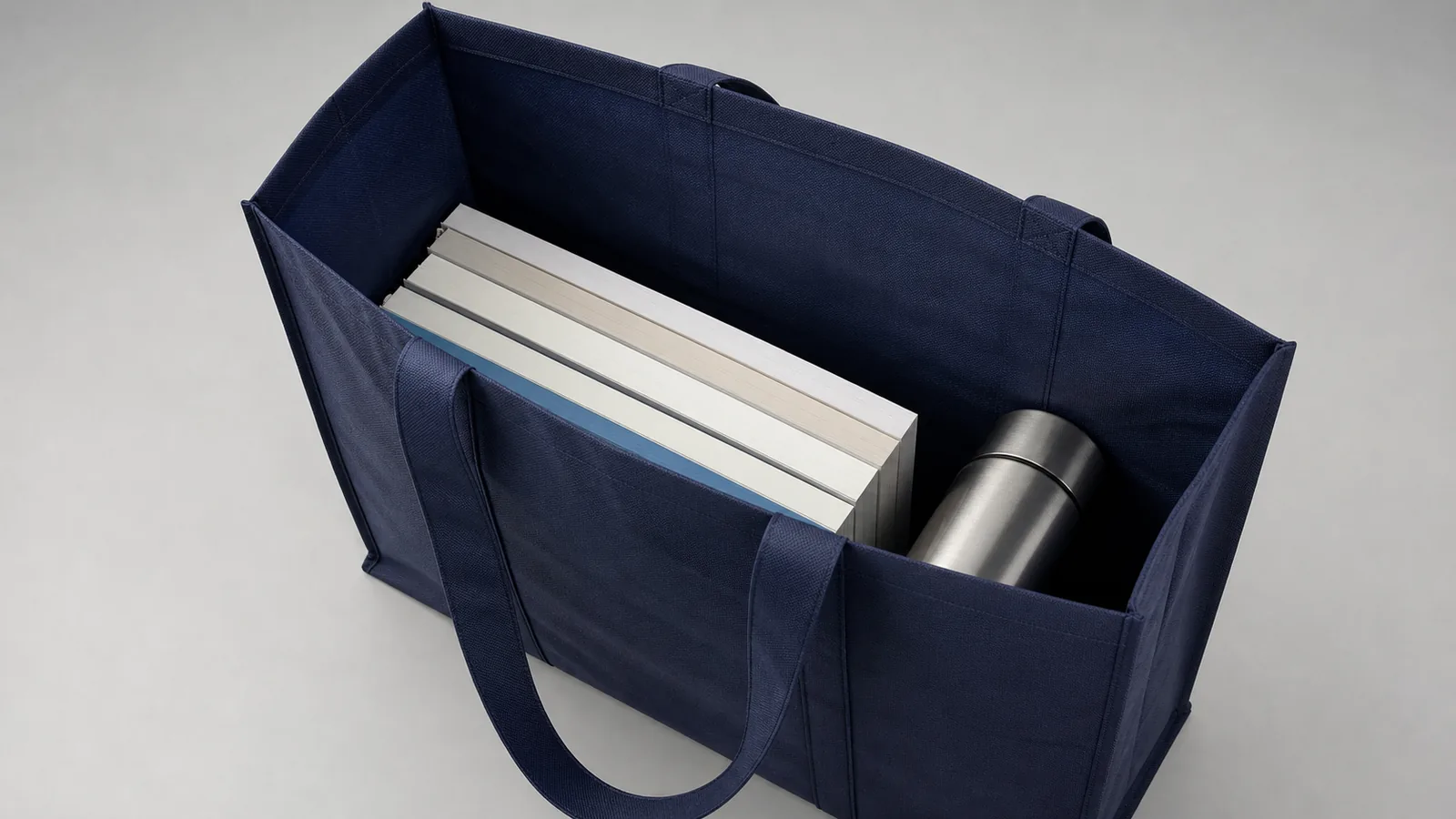
Outer size alone does not tell whether the tote will work. A4 stacks, rolled towels, bottles, fan-shaped items, boxed goods, and samples all use the interior differently. Check usable width, height, bottom gusset, opening width, and loaded standing shape before approving the sample.

REINFORCEMENT
Large tote strength is not decided by fabric thickness alone. Handle width, webbing material, attachment position, box stitching, bartacks, seam allowance, bottom support, and the angle of the load all affect how the bag behaves when carried.
Check shoulder comfort, hand carry balance, and whether the opening remains usable after loading.
Review box stitching, bartacks, and seam allowance at the handle root before mass production.
Use a loaded sample to confirm gusset behavior, bottom support, and whether the tote collapses or tilts.
MATERIAL ROUTES
Useful for high-volume trade show or exhibition distribution when cost, folding, and simple logo printing matter most.
Works for lightweight event totes, color fabric, reusable campaign bags, and projects that need smoother printing or stronger synthetic fabric.
Better for retail goods, fan merchandise, pop-up shops, and premium campaigns where hand feel and durability influence buyer perception.
Lining, pockets, closure, bottom board, or label parts can be added when they support the intended use and budget.
PACKING AND DELIVERY
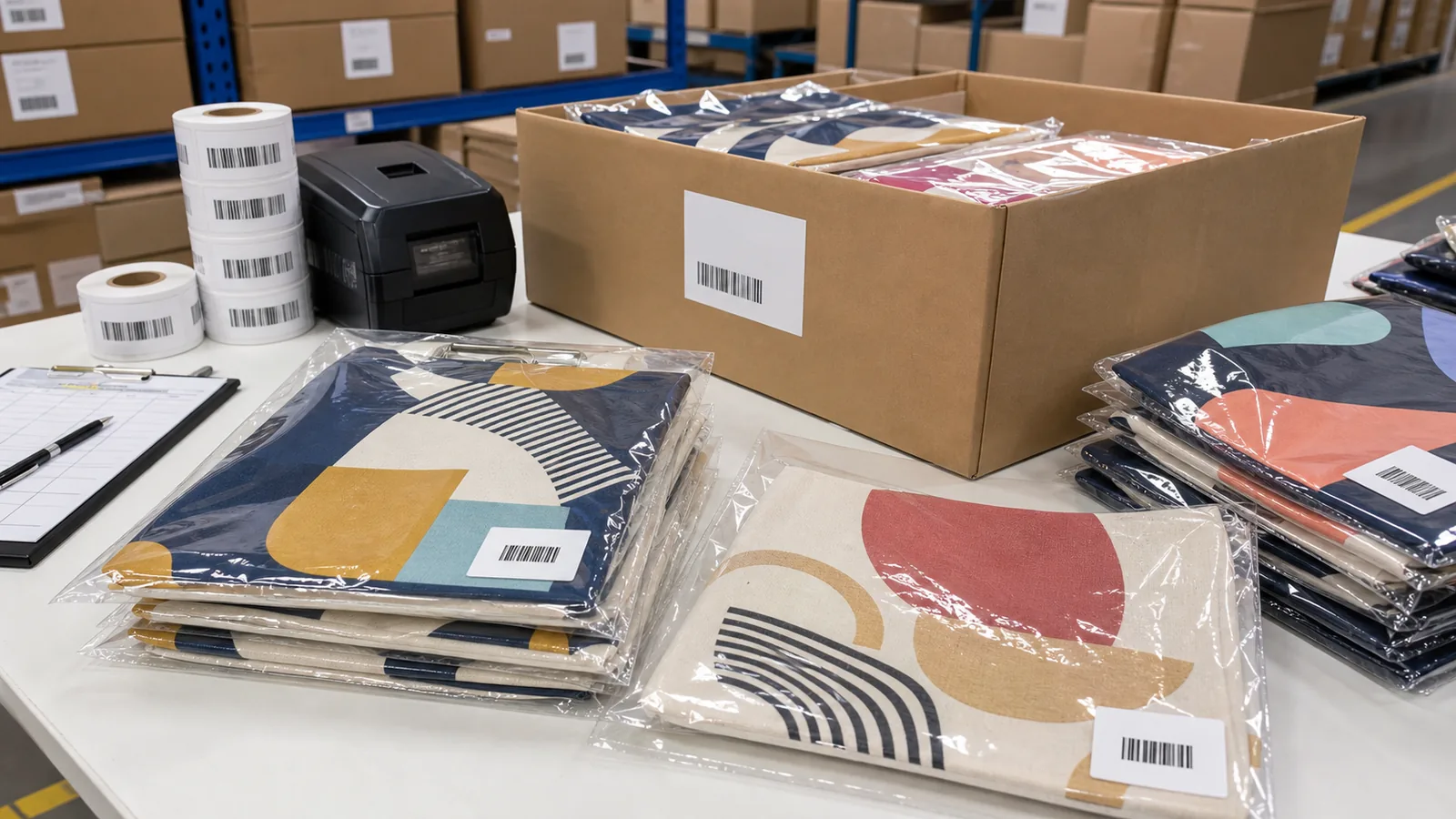
Event orders often fail at packing rather than sewing. If colorways, designs, destinations, or event dates differ, packing rules should be fixed before production: OPP method, SKU labels, barcode or JAN labels, carton quantity, master carton marks, destination codes, and delivery split.
RFQ CHECKLIST
Event type, attendee use, item dimensions, estimated weight, brochure stack, fan goods, towels, product sets, or samples.
Target outer size, usable interior size, gusset, handle drop, material, fabric weight, color, closure, pocket, divider, or bottom board.
Logo or artwork files, print area, color count, print method preference, woven label, hang tag, or care label requirements.
Total quantity, design/color/SKU split, individual packing, labels, carton marks, box quantity, destination split, and arrival date.
RELATED ROUTES
FAQ
A large event tote is specified around real event contents, such as brochures, catalogs, towels, fan merchandise, samples, or purchase sets. Usable capacity, handle drop, reinforcement, packing method, and carton allocation need to be planned together because the bag may be carried for hours at a venue.
Start with the largest item and the thickest stack, then add tolerance for easy insertion and removal. For A4 documents, fan-shaped merchandise, towels, bottles, or boxed goods, confirm usable interior size, bottom gusset, opening width, and loaded shape with a sample before production.
Common routes include non-woven polypropylene for high-volume giveaways, polyester or RPET for lightweight event bags, and cotton or canvas for retail merchandise with a more substantial feel. The best route depends on quantity, target price, print method, required structure, and the expected contents.
Reinforcement can be planned with wider webbing, box stitching, bartacks, seam allowance, bottom support, or lining, but a fixed public load rating should not be assumed without project testing. The loaded sample should be checked in the real carry direction before approval.
Yes, when the structure fits the use case and budget. Closure, inner pockets, dividers, lining, and bottom boards change pattern work, packing thickness, sample cost, and lead time, so they should be listed in the RFQ before quotation.
Multiple designs or colors can be managed when the SKU table is fixed before production. Record body color, artwork, label, individual packing, carton marks, box quantity, and destination rules so packing and delivery stay traceable.
Yes. Individual OPP bags, SKU labels, barcode or JAN labels, hang tags, carton labels, and destination marks can be discussed. Packing details should be confirmed before mass production because they affect labor, carton volume, and delivery checks.
Share the event type, expected contents and weight, target dimensions, material preference, handle style, artwork, quantity, SKU breakdown, packing method, carton rules, delivery destination, and required arrival date. Reference photos can clarify structure, but protected designs should not be copied.
QUOTE PREPARATION
We can help organize the tote specification before quotation when you share the expected event contents, artwork, quantity, material preference, sample needs, packing method, destination, and required arrival date.