
Retail Packaging Guide
Custom Plush Retail Packaging, Backing Cards and JAN Labels
B2B guide to custom plush retail packaging: buyer inputs, samples, MOQ, production risks, quality checks, lead time, and quote preparation.
Choose custom plush retail packaging from the sales method and display plan. OPP header bags, window boxes and blind boxes require different backing cards, barcode fields, warnings and SKU controls.
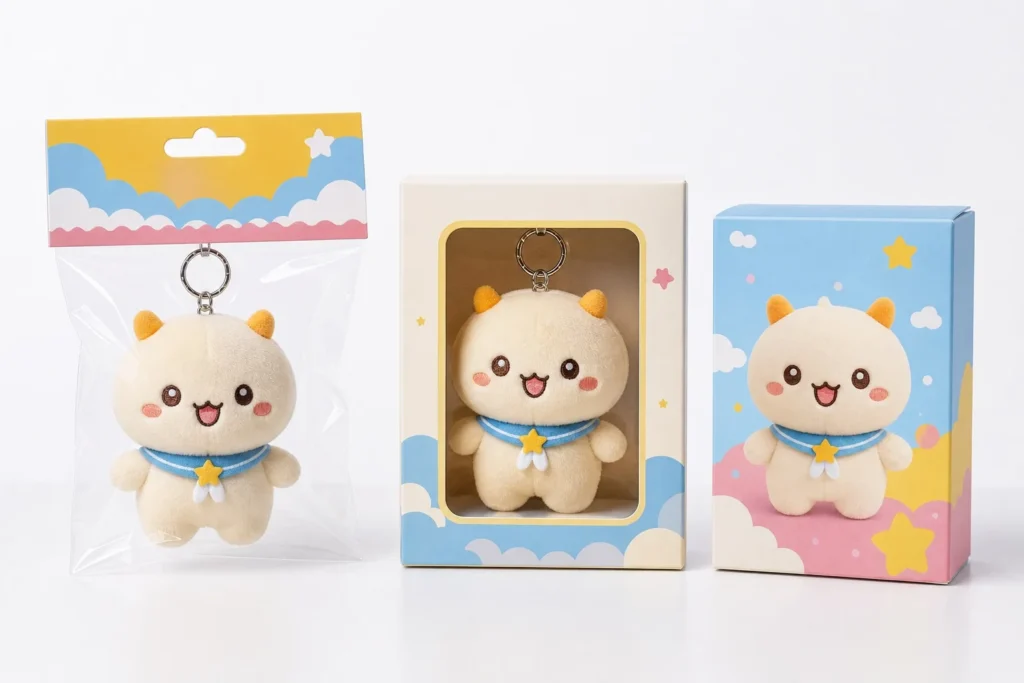
Six packaging items to decide first
The same plush may need different packaging for ecommerce, event sales, promotional campaigns, prize programs or capsule-style assortments.
Confirm bag size, thickness, closure, sticker position and air-release needs.
Decide hanging display, shelf display, brand area, punch-hole position and front/back direction.
Confirm barcode data, label position, SKU mapping and scanning direction.
Match character name, color, item code and packing group with the SKU table.
Review item name, SKU, quantity, case number and delivery-label requirements by carton.
Define random, blind, split delivery and mixed-carton rules before packing.
Three common retail packaging formats
Choose from the display method, sales unit, opening experience, transport protection and cost priority rather than selecting packaging in isolation.
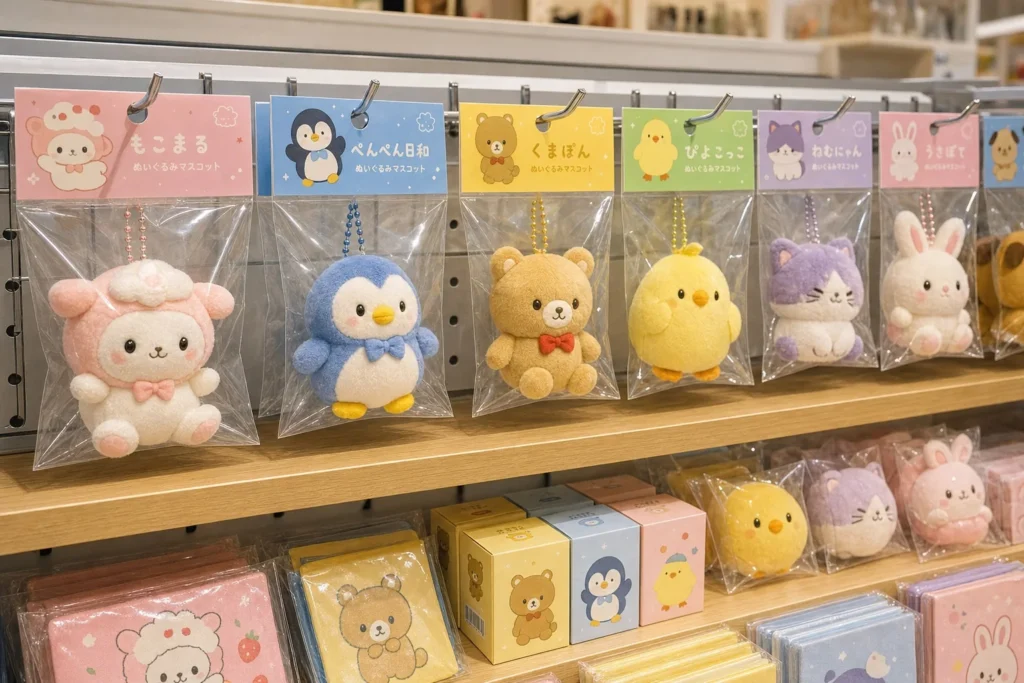
A common option for hanging display, event sales and promotional goods. Confirm bag size, punch hole, hardware position and barcode-facing side.
Useful when the plush should remain visible while the pack feels gift-ready. Check window position, internal fixing, rubbing and crush resistance on a sample.
For random or trading programs where the item must remain hidden. Plan common outer artwork, SKU identification, inner bag, assortment and ratio control separately.
Custom plush packaging specifications and defect examples
Packaging affects SKU matching, retail display, warehouse receiving and event delivery. It should be treated as a production specification.
| Packaging item | Use case | Confirm before quotation | Common issue |
|---|---|---|---|
| OPP individual bag | Ecommerce, events, retail and prize delivery | Bag size, closure, item direction and attachment protection | Example Torn bag, wrong direction or metal part rubbing |
| Backing card | Hanging display, brand area and series presentation | Size, punch hole, front/back layout, print color and insertion method | Example Wrong direction, wrong hole position or hidden plush face |
| Header | Top display on bag and promotional area | Fold width, tape or staple method, display side and barcode area | Example Crooked header or reversed display side |
| JAN or barcode | Retail, warehouse, POS and inventory control | Code data, label position, SKU mapping and scan direction | Example Wrong barcode, misplaced label or wrong scan side |
| SKU label | Multiple characters, color variants and split delivery | SKU table, item code, color name, quantity and carton unit | Example SKU mixing, item-code typo or quantity mismatch |
| Carton label | Domestic warehouse, DDP delivery and event venue delivery | Quantity per carton, case number, delivery address and label fields | Example Carton label mismatch or missing case number |
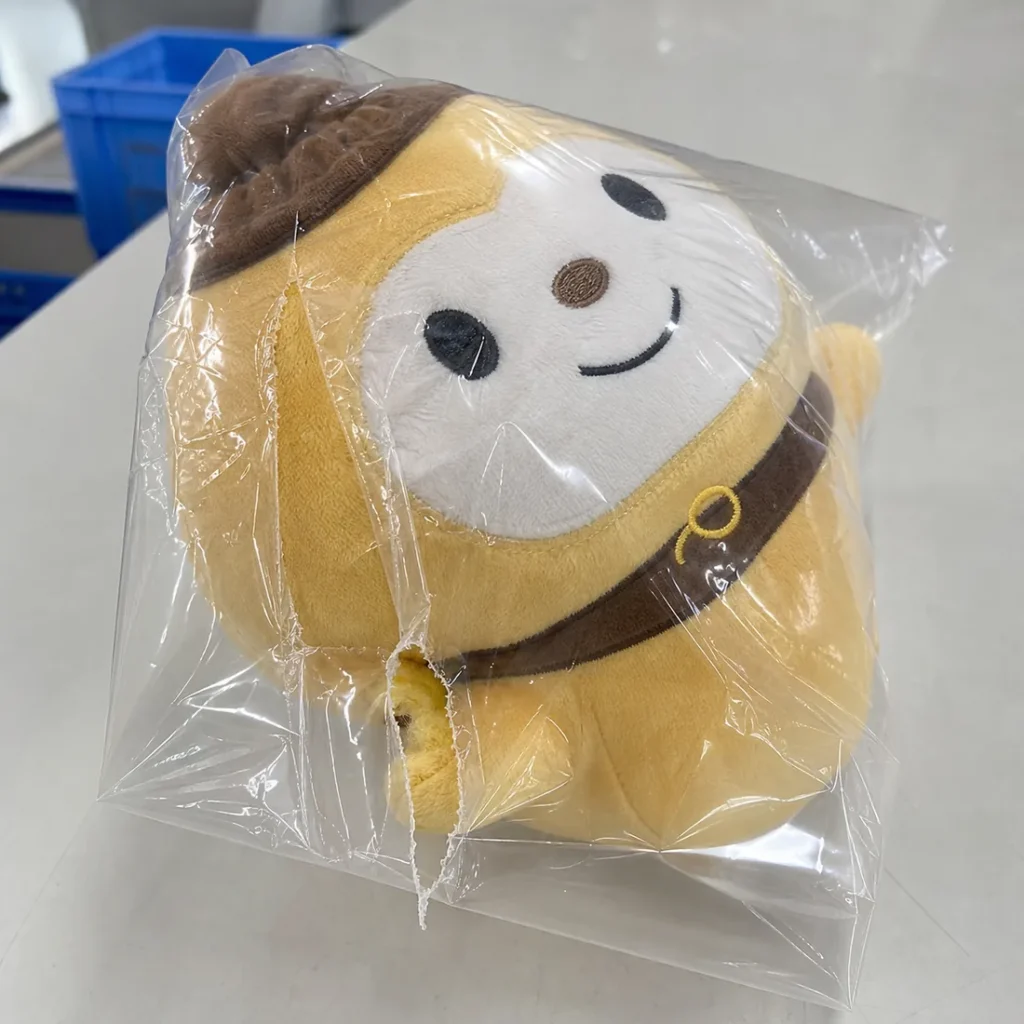
An undersized OPP bag places excessive tension on the heat-sealed side seam and causes it to split.
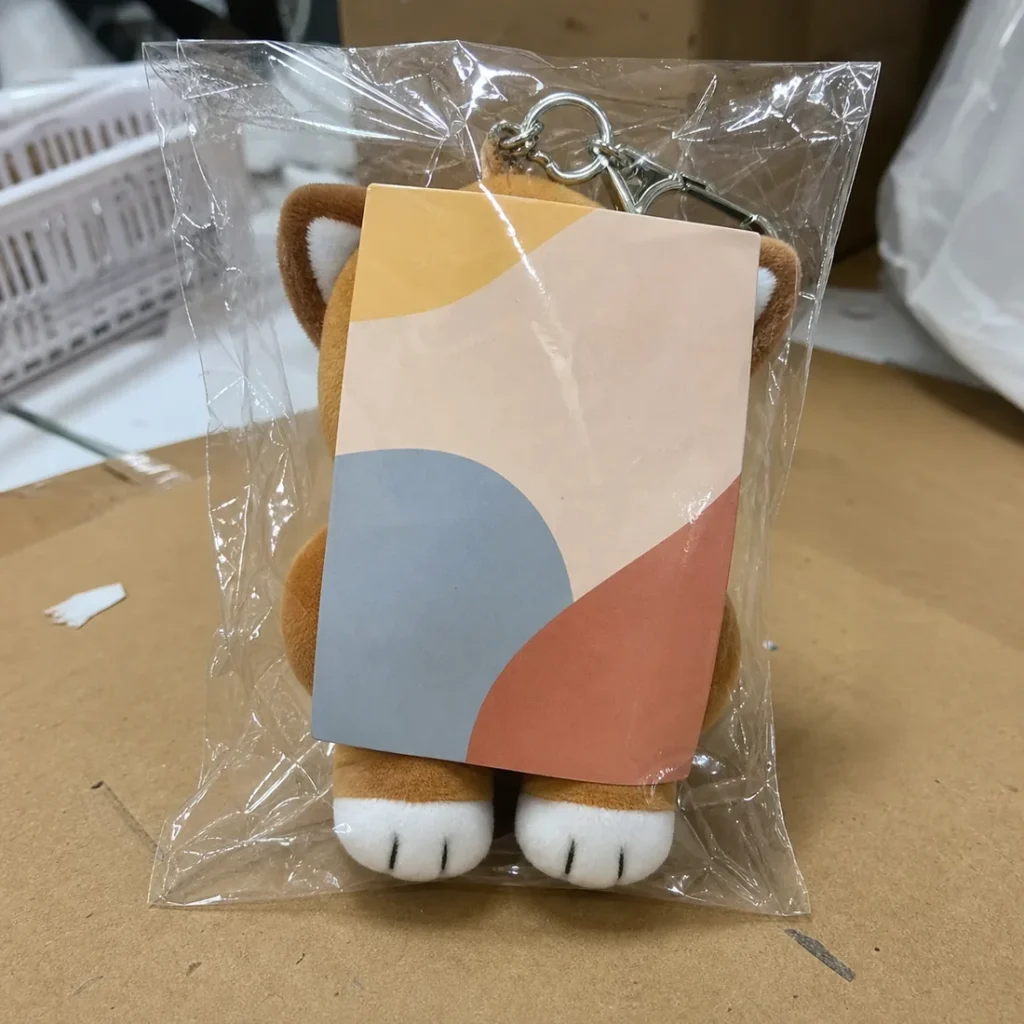
Incorrect insertion and poor fixing allow the backing card to move in front of the plush and hide the product face.
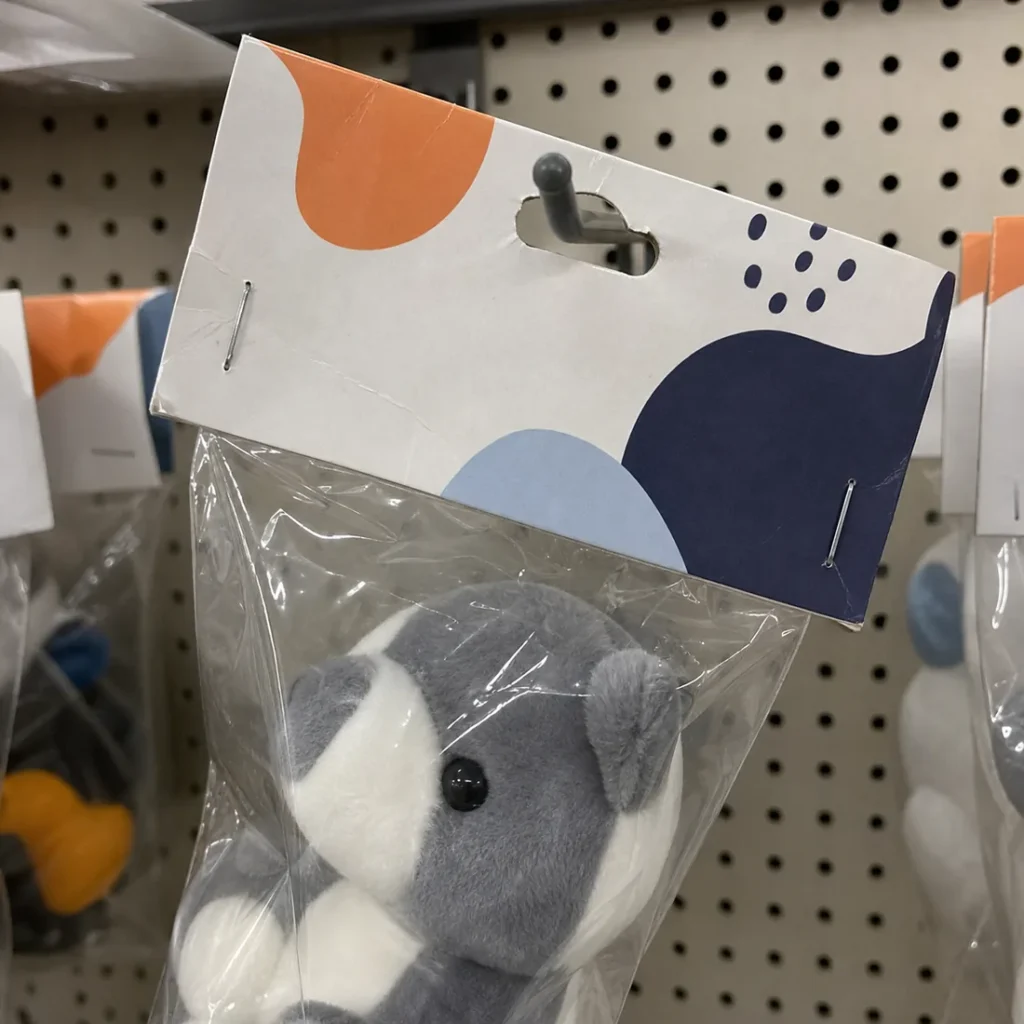
Misaligned staples, hanging hole and bag edge make the package sit crooked on the retail display hook.
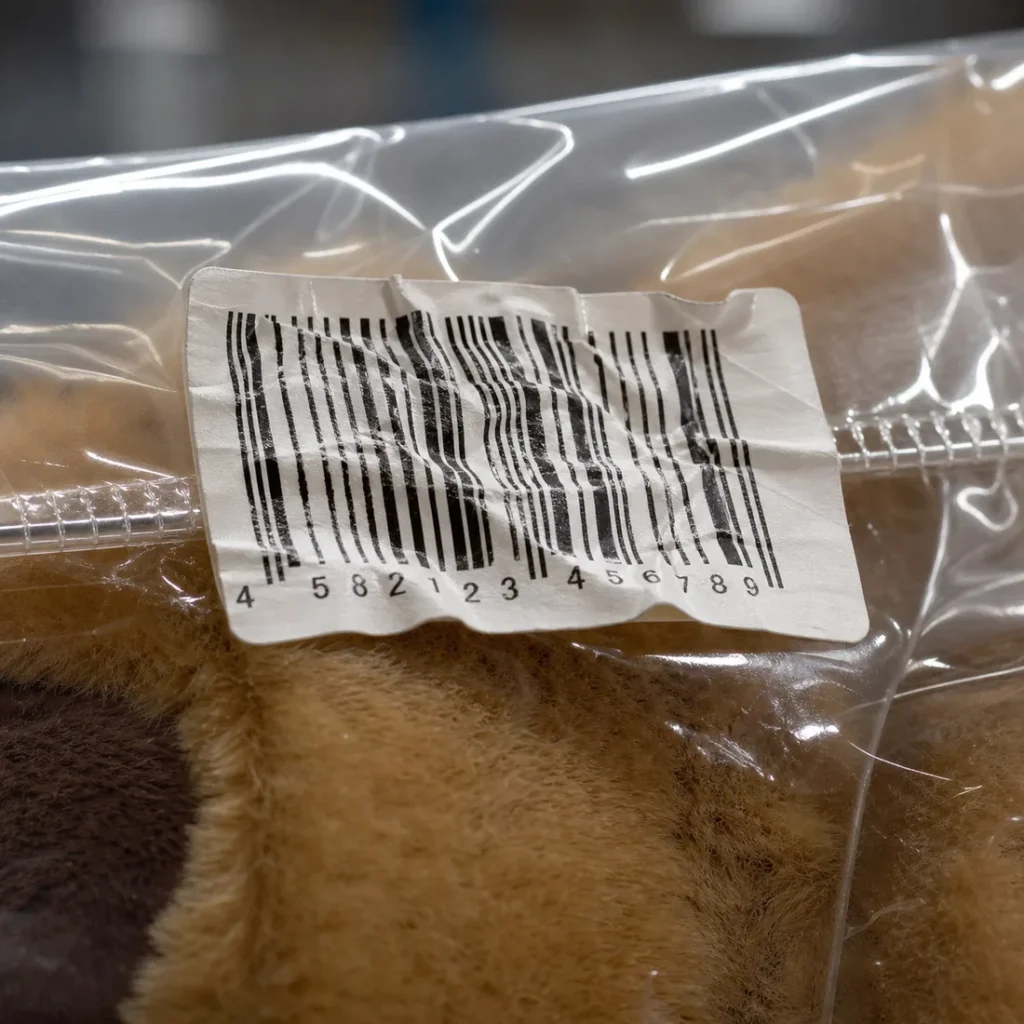
Placing the barcode over a folded or wrinkled OPP flap distorts the bars and can prevent reliable scanning.
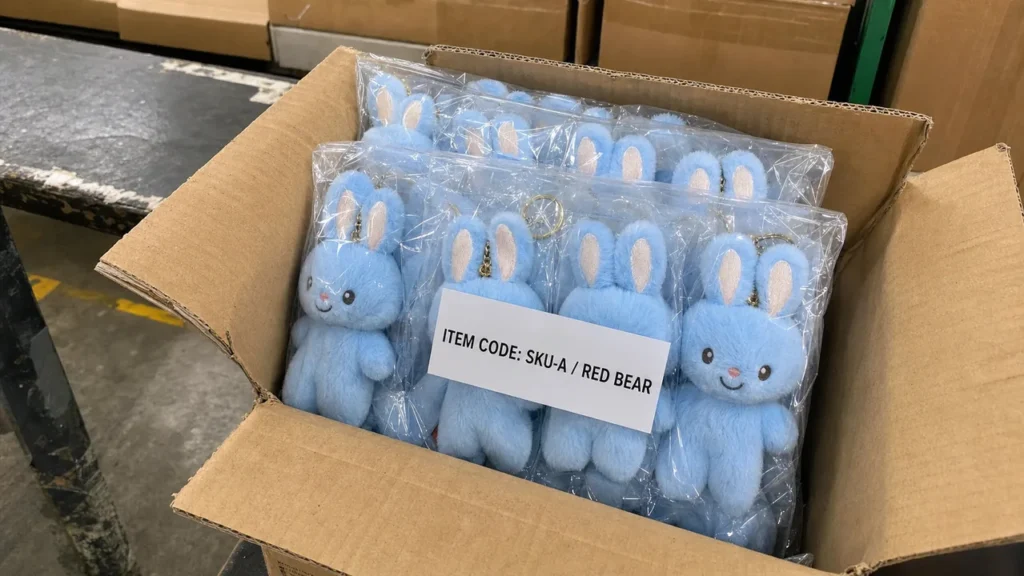
The item code, color and product name on the SKU label do not match the plush products inside the carton.
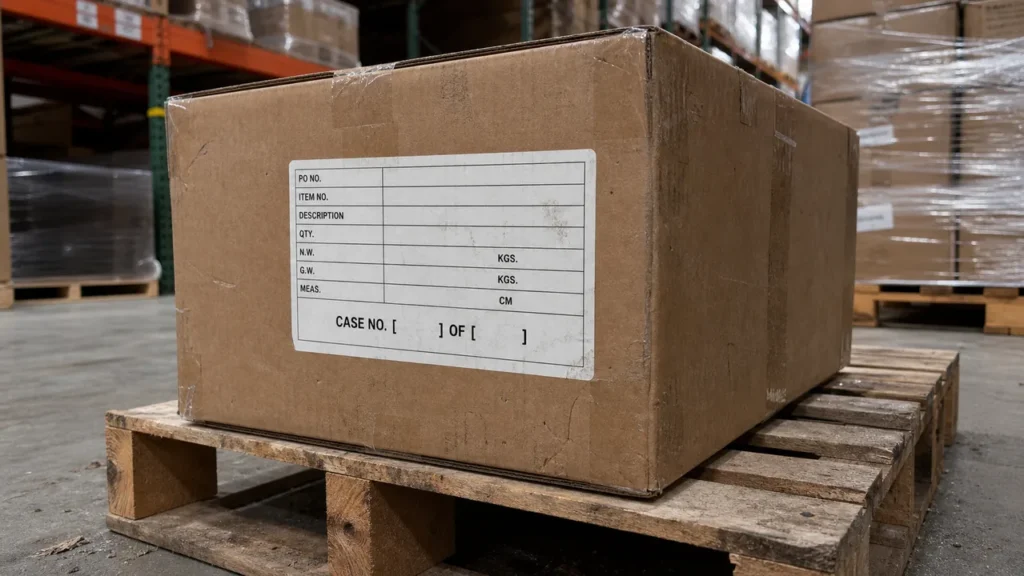
A blank CASE NO. [ ] OF [ ] field prevents the receiving warehouse from reconciling carton quantities correctly.
JAN barcode, hangtag and warning information
For Japanese retail and event sales, back-side information and SKU accuracy matter as much as the front artwork.
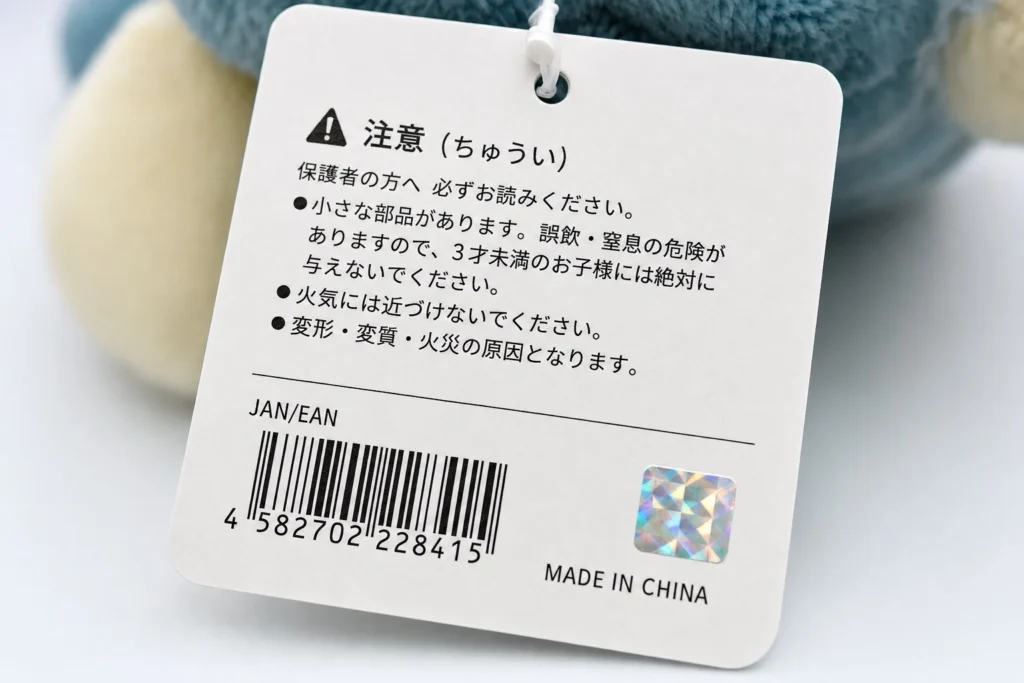
Six steps from packaging definition to shipment
For retail and event sales, sales method, label artwork, individual packing, SKU matching and outer carton labels should be managed as one connected process.
Confirm retail, ecommerce, event or random-sale method.
Select OPP, backing card, header, window box or inner bag.
Fix barcode, warnings, SKU and license-sticker area.
Review orientation, internal fixing and barcode scan conditions.
Match SKU, barcode, quantity and appearance before and after packing.
Confirm case quantity, case number, carton label and destination.
Packaging decisions by sales channel
Over-packaging increases cost and handling work. Start from what the sales channel actually needs.
Prioritize OPP protection, SKU labels and rubbing control during combined shipment.
Confirm backing card, JAN label, hanging hole and store display rules early.
Organize giveaway unit, logo display, carton quantity and event receiving rules.
Focus on blind packing, assortment, outer labels and SKU-mixing prevention.
Individual packing, needle detection and pre-shipment checks
After packaging materials are fixed, confirm product direction, hardware protection, needle-detection conditions, SKU matching and bag or box appearance by process step.
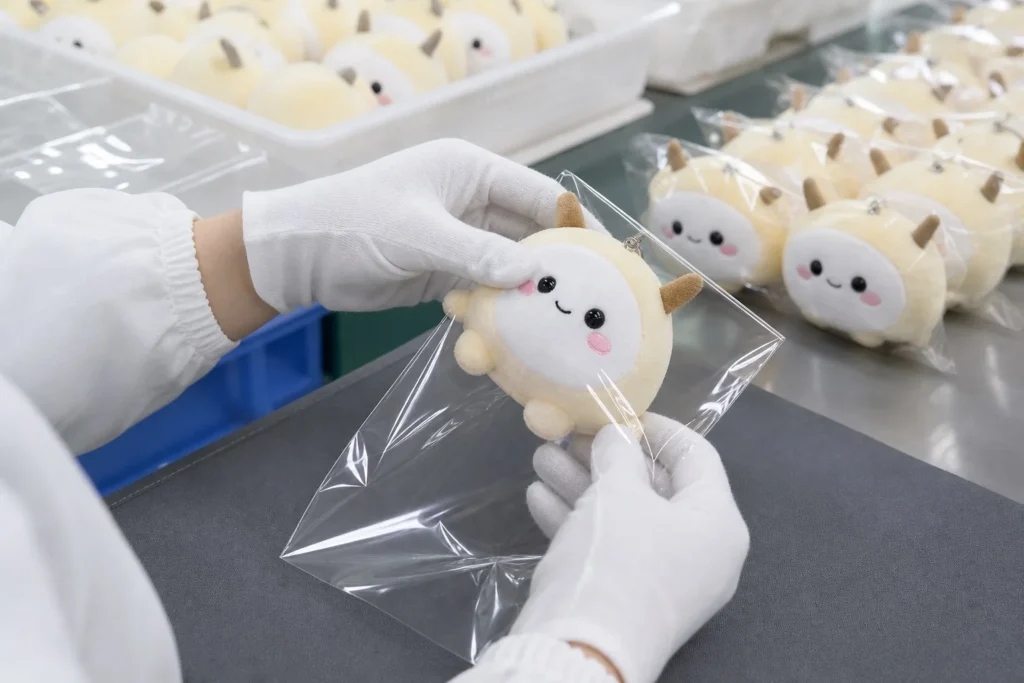
In a clean work area, compare against the approved sample and SKU table while checking plush direction, hardware position, bag wrinkles and tears.
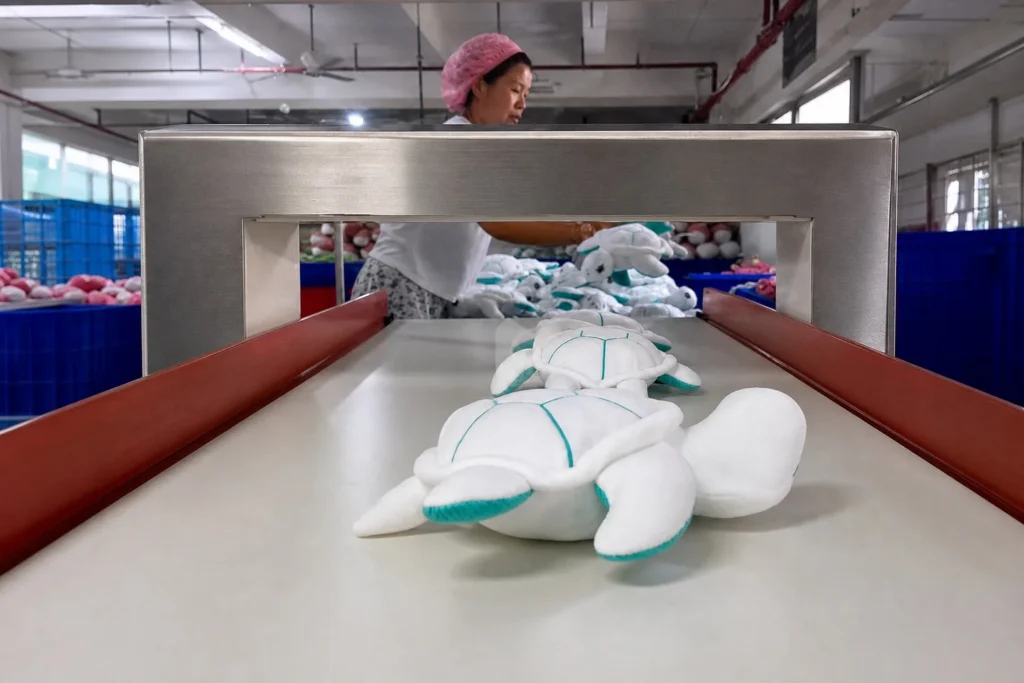
Review the plush body, hardware and packaging materials separately, then set detection timing and records for the project. For metal attachments, plan body detection and post-attachment confirmation as separate decisions.
Packaging materials to share before inquiry
Even if packaging is not finalized, sales method and SKU count help convert the idea into a workable specification.
- Retail, ecommerce, event or prize use
- Target delivery style, split delivery or DDP need
- Warehouse or venue label rules
- OPP bag, backing card and header needs
- Backing-card size, punch hole and brand display
- Protection method for body and attachments
- JAN data or barcode image
- SKU table, color variants and character names
- Label size and placement position
- Quantity per carton and case number
- Carton label fields
- Mixed carton or assortment rules
Related pages
Packaging specifications are easier to define together with quote materials, MOQ, inspection, novelty programs, prize/gacha programs and plush keychain planning.
FAQ
When should retail packaging be decided for custom plush?
Decide the OPP bag, backing card, header, JAN or barcode label, SKU label and carton label before quotation whenever possible. These details affect packaging cost, handling work and shipment checking.
How do we choose between an OPP header bag, window box and blind box?
An OPP header bag suits hanging display and cost control, a window box supports gift presentation while keeping the plush visible, and a blind box suits random sales where the item must remain hidden. Product size, hardware, shelf plan and budget should be reviewed together.
Can the factory issue a JAN code?
The seller should confirm ownership and administration of JAN data and provide the approved code plus an SKU mapping table. We can apply the supplied data to the packaging specification and review print position and scan conditions on a sample.
What information belongs on a plush hangtag?
Typical fields include product name or item code, JAN, target age, material, country of origin, seller information, warnings and a license-sticker area when required. Final fields depend on product design, market, retailer and licensor instructions, so the customer should approve the final artwork.
Can the warning text shown in the example image be reused?
The image is a layout example only. Warnings for small parts, fire, attachments or other risks must be reviewed for the product structure, target age, market and sales channel.
Can barcode readability be checked?
Sample review can cover final print size, quiet zone, contrast, placement surface and the effect of bag wrinkles or curved surfaces. Share any retailer-specific verification method with the specification.
What matters most for multi-SKU packaging?
Manage character name, color, SKU code, JAN, backing card and carton label in one table. A clear matching process before and after packing reduces the risk of SKU mixing.
Can blind packaging or assortment packing be planned?
Blind packaging, assortment ratio, master carton labels and split delivery should be reviewed project by project. Ratio handling needs process design, so the target rules should be shared at the planning stage.
What is the sequence for needle detection, hardware attachment and individual packing?
Plan the plush-body detection condition, metal-hardware response, attachment step and packing method separately. The timing and final check should follow the product structure and destination requirements rather than one universal sequence.
What packaging materials should we prepare before inquiry?
Share the packaging reference, backing card size, JAN data, SKU table, quantity per carton, carton label fields and delivery rules. Undefined items can be converted into a packaging specification during quotation.
For retail and event sales, packaging works better when the SKU table is prepared before quotation
We can review OPP bags, backing cards, JAN/barcode labels, SKU labels and carton labels before mass production.