Cost-Down Design Guide
Cost-Down Design for Custom Plush Mass Production
Learn how to reduce custom plush production cost for B2B production. Review samples, MOQ, cost drivers, quality checks, lead time, and quote preparation.
Custom plush unit cost is shaped not only by quantity, but also by shared fabric, embroidery scope, part count, SKU differences, packaging and inspection requirements.
Cost-down design should separate specifications that can be shared from the expression and silhouette that must remain recognizable, instead of simply lowering quality.
We generally plan from 500 pieces for one design. Multi-SKU programs can be reviewed from 300 pieces per SKU when shared fabric, parts, packaging and total quantity make the production plan workable.
Design factors that affect unit cost
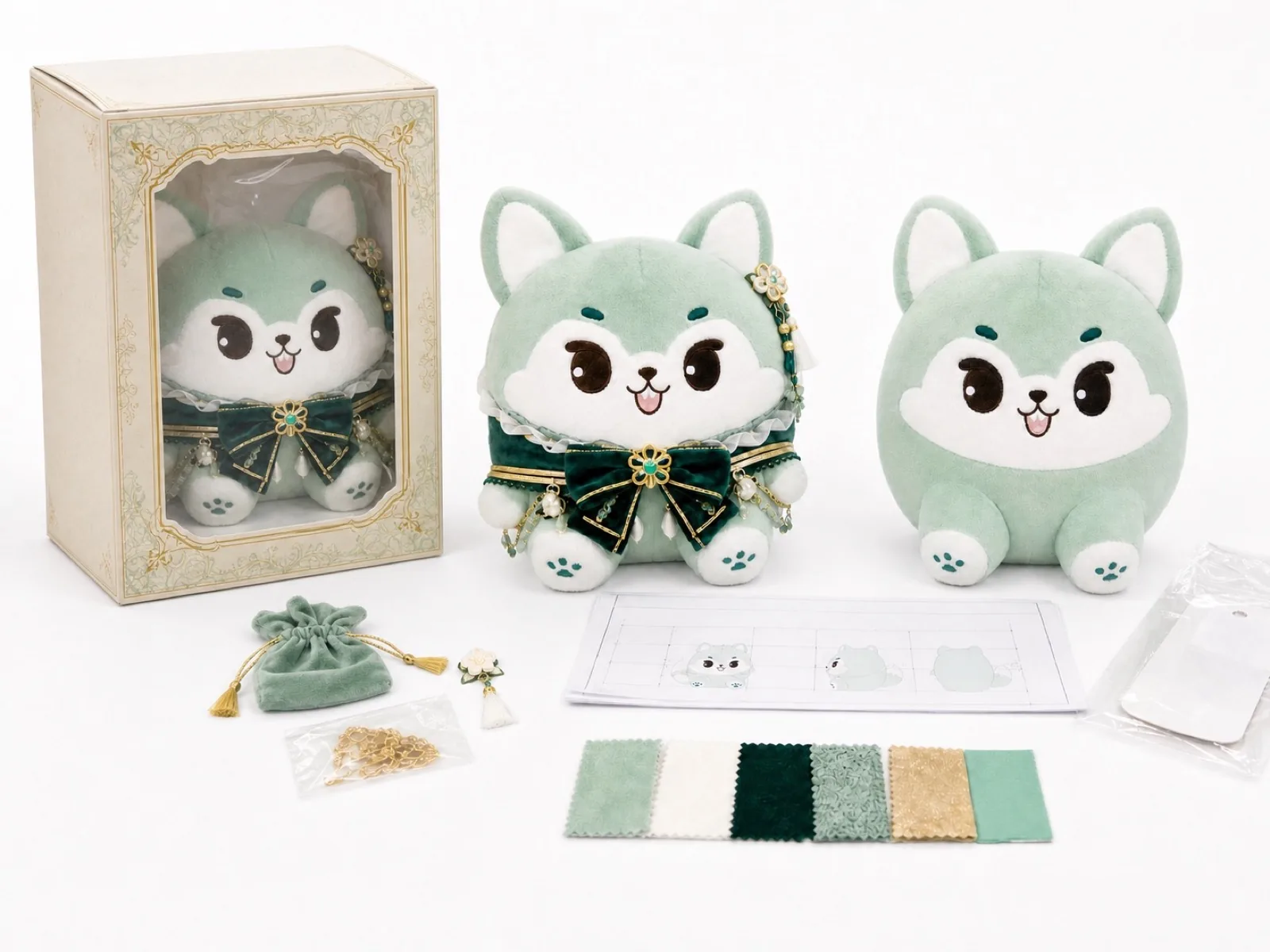
More materials and production steps can improve visual detail, but they also add checking and management work. The key is deciding what can be shared across SKUs.
Using the same pile length or similar color family across a series can simplify material checks and SKU control.
Prioritize the expression areas that matter most, then review whether costume details or rear-side artwork can be simplified.
Separate fabric panels, ears, tails, ribbons and outfits add sewing steps and inspection points.
Keeping the base size consistent across characters also helps packaging, carton quantity and display planning.
OPP bag, backing card, barcode label, blind bag and carton label needs should match the actual sales channel.
Define inspection needs by use case and separate necessary checks from excessive individual requests.
Turn cost variables into design decisions
A cost-down request needs design priorities. The table below helps separate what to keep, what to share and what can be simplified.
| Design item | Why it affects cost | Decision before mass production |
|---|---|---|
| Fabric and colors | Special fabrics, many colors and different pile lengths add sourcing and color matching work. | Check whether shared fabric, similar colors or only accent-color differences can work. |
| Expression embroidery | Thread colors, fine lines, area size and symmetry affect sample revisions and inspection. | Keep eyes, eyebrows and mouth accurate; simplify small costume motifs where possible. |
| Outfit and separate parts | Ribbons, hats, clothing panels and tails add sewing and attachment checks. | Separate essential character features from details that can be printed, embroidered or tagged. |
| SKU differences | Different patterns, materials and packaging by character make management more complex. | Share body pattern, size, packaging and tags; list only the differences in the SKU table. |
| Packaging | Backing cards, barcode labels, headers and blind bags add material and packing work. | Keep packaging required by the sales channel and avoid unnecessary decorative layers. |
| Delivery conditions | Split delivery, DDP, proxy shipment and carton instructions change logistics preparation. | Confirm delivery address, carton label and split ratio early. |
Adjustable areas that can protect the final look
Cost-down design should not damage the character feel. Set design priorities first, then choose specifications that can be adjusted.
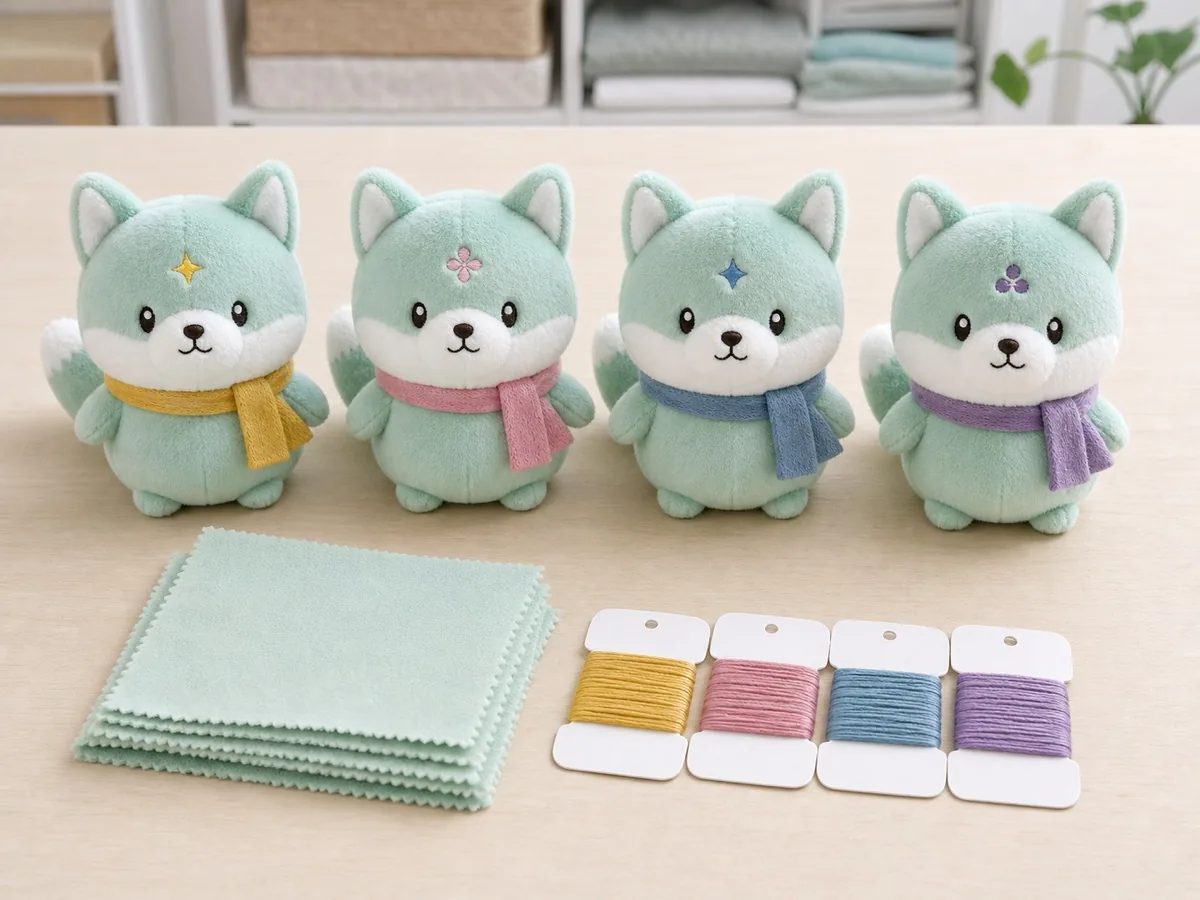
Using materials consistently across a series simplifies color and material control.
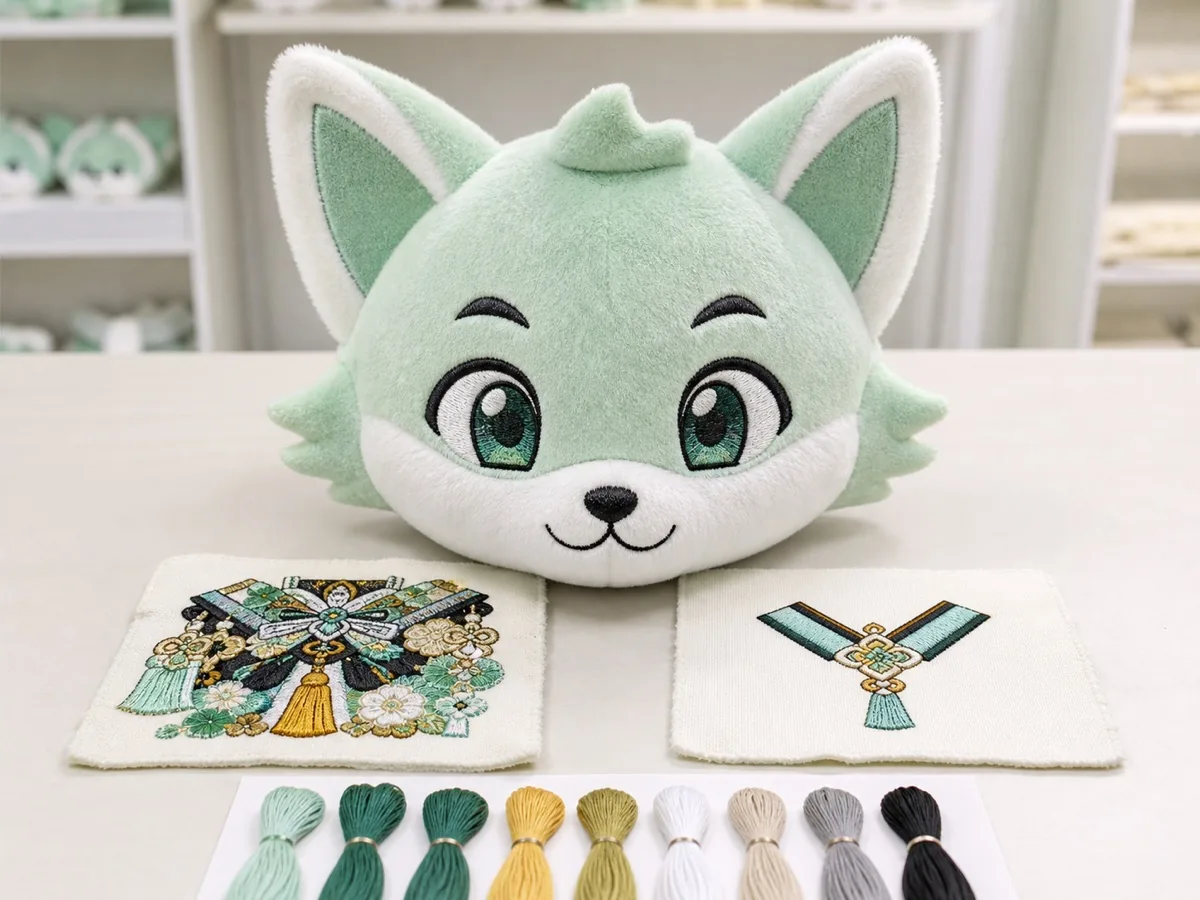
Keep the expression accurate while setting adjustment room for small details.
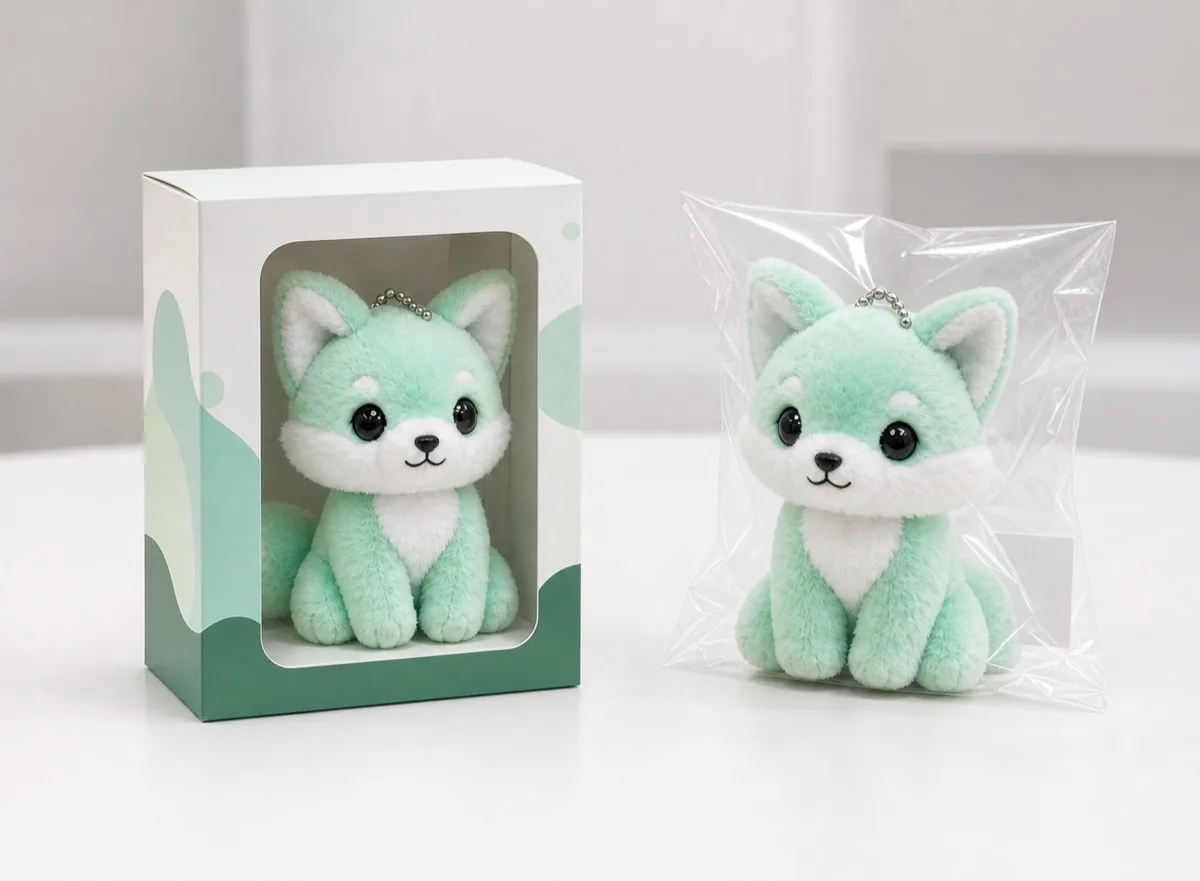
Keep packaging that is needed for the sales channel and avoid unnecessary materials.
Before-and-after cost-down design example
The same character can become easier to manage in production when the expression and silhouette are protected while materials, parts and packaging are organized.
- Fine embroidery across expression and costume areas
- Several special fabrics and decorative parts by SKU
- Window box, inner tray and multiple decorative packaging materials
- Eyes, eyebrows, mouth and silhouette remain protected
- Main body moves to shared fabric and shared colors
- Costume details and part count are reviewed, with OPP-based packaging
Decide which details must be protected before adjusting cost
If cost becomes the only priority, sample revisions and approval feedback can increase. Protect the key details first, then review adjustable specifications.
- Character expression, eyes, mouth and silhouette
- Brand colors or symbolic outfit parts
- Required labels and barcode information for sales
- Small patterns on the back or less visible areas
- Fabric and tags that can be shared across SKUs
- Packaging that can stay OPP-based
- SKU quantity and shared parts
- Embroidery versus printing choices
- Carton quantity, split delivery and destination
- Approval points from the IP owner
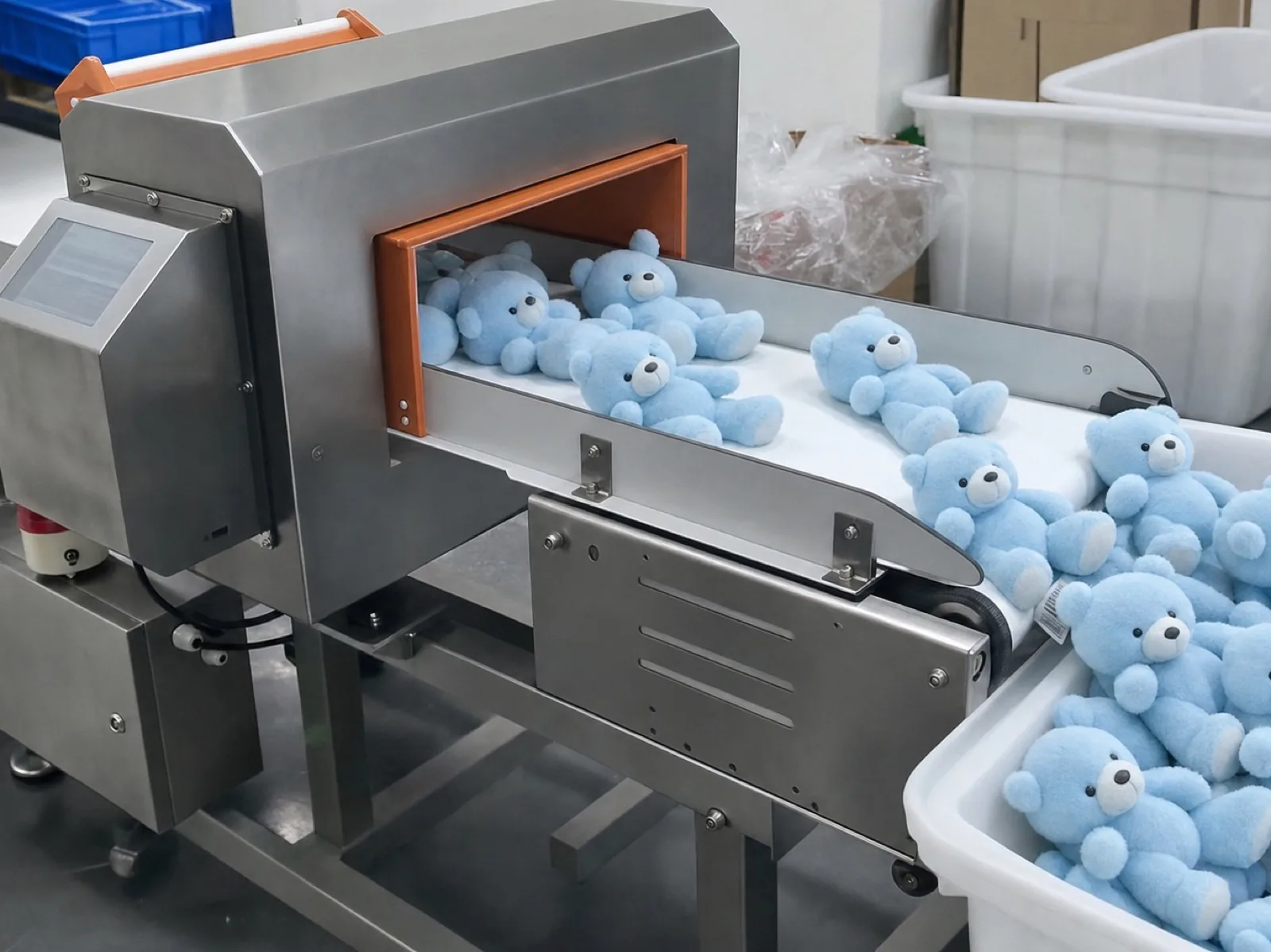
- Needle detection, accessories and warning labels
- Schedule counted back from release or event date
Safety requirements to protect during cost optimization
Safety and sales-channel requirements should remain part of the production specification even when materials, embroidery or packaging are simplified.
- Needle-detection process and metal contamination prevention
- Target age, sales country, safety labels and AQL inspection level
- Attachment strength for ears, eyes, tails and metal hardware
- Expression, silhouette and signature parts required by IP approval
Free Download
Custom Plush Cost-Down Checklist (Excel / PDF)
Use the latest checklist to separate shareable specifications from protected character details before removing design elements.
- Items that can be shared across SKUs
- Expression and part priority table
- Packaging simplification checklist
Write “Cost-Down Checklist” in the inquiry form, and we will send the latest version.
Common mistakes in cost-down discussions
Trying to reduce cost without organizing specifications can create pressure on appearance, QC and schedule.
Fine lines and many thread colors increase sample revisions and production checks.
Material checks, color matching and QC criteria increase by SKU.
Retail packaging that is not needed for the channel can add packing work and logistics complexity.
Mass-production design review flow
Rather than cutting design details first, break down the specification and check which adjustment actually improves production management.
| Step | What to check | What to prepare |
|---|---|---|
| 1. Break down specs | Separate fabric, embroidery, parts, packaging and SKU differences. | Artwork, target size and SKU table. |
| 2. Set priorities | Separate protected expression details from adjustable small details. | Approval points and non-negotiable features. |
| 3. Review shared specs | Consider shared fabric, shared tags, shared packaging and common cartons. | SKU quantity, sales channel and packaging needs. |
| 4. Confirm quote basis | Review production conditions and sample scope by adjustment plan. | Preferred schedule, destination and QC requirements. |
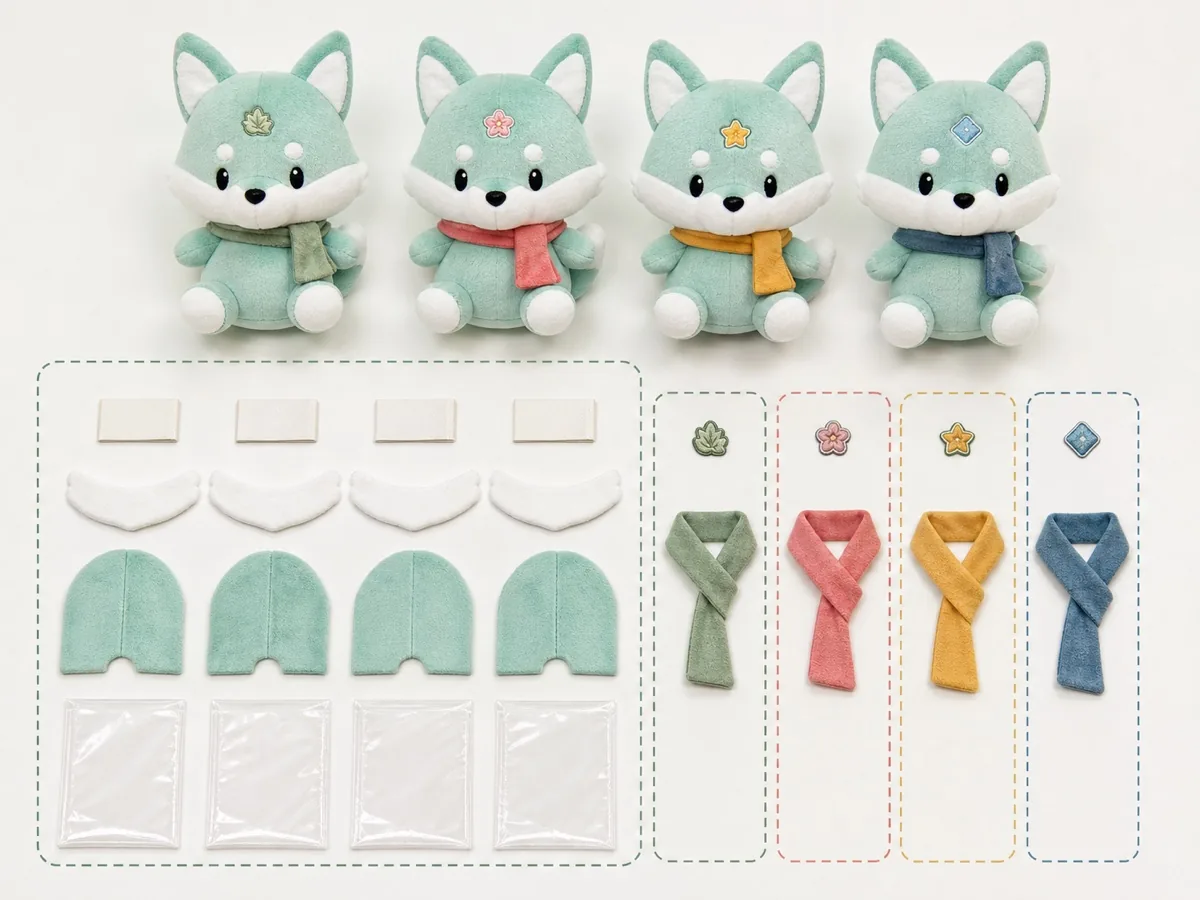
Separate shared elements from character-specific details for multi-character series.
Separate required inspection points from excessive individual requirements.
Document adjustment plans before confirming mass-production conditions.
Related pages
For quote materials, MOQ, product formats and packaging conditions, review these pages together.
FAQ
Can unit cost be reduced during plush design planning?
It can often be improved, but the goal is not to lower quality blindly. Shared fabric, shared size, embroidery scope, part count, packaging method and SKU management should be reviewed so the design is easier to produce at scale.
How does shared fabric help cost planning?
When SKUs use the same fabric or similar colors, material checking, color matching, stock control and inspection become easier to manage. Many special fabrics or small color differences usually add sourcing and management work.
Will fans be dissatisfied if embroidery is reduced?
Keep identity-defining areas such as the eyes, eyebrows and mouth accurate. Small costume motifs can be replaced with print or simplified stitch lines while preserving the overall character impression and silhouette.
How can a multi-character series keep cost more stable?
Keep the body size, base pattern, main fabric, packaging and tags shared where possible. Then separate character differences into embroidery color, small accessories or hang tag artwork. A SKU table should show shared and SKU-specific parts.
Does simpler packaging hurt retail sales?
It depends on the sales channel. OPP packaging can be enough for some online or event sales, while retail shelves may need backing cards, barcode labels, headers and caution text. Simplification should match the actual sales method.
What should we send before asking about cost-down design?
Share artwork, target size, quantity, SKU count, parts that can be shared, details that must stay accurate, packaging method and preferred schedule. Clear priorities make it easier to separate protected design points from adjustable cost factors.
Can we discuss cost-down design below 500 pieces?
A single design is generally planned from 500 pieces. For a multi-SKU program, review can start from 300 pieces per SKU depending on total quantity, shared materials and packaging. Share the specification so we can assess a practical production route.
Organize mass-production specifications before removing design details
Share fabric that can be standardized, expression details that must stay accurate, adjustable embroidery areas and packaging conditions. We will review the balance between appearance and manufacturability and plan a practical route from 500 pieces per design.