Small-Lot Plush OEM Guide
Custom Plush MOQ and Small-Lot Production Guide
B2B guide to low MOQ custom plush manufacturing: buyer inputs, samples, MOQ, production risks, quality checks, lead time, and quote preparation.
To prioritize stable quality and reliable scheduling, our standard planning reference is 500 pieces per design. Multi-SKU programs, including colorways and different characters, can be reviewed from 300 pieces per SKU after specifications are checked.
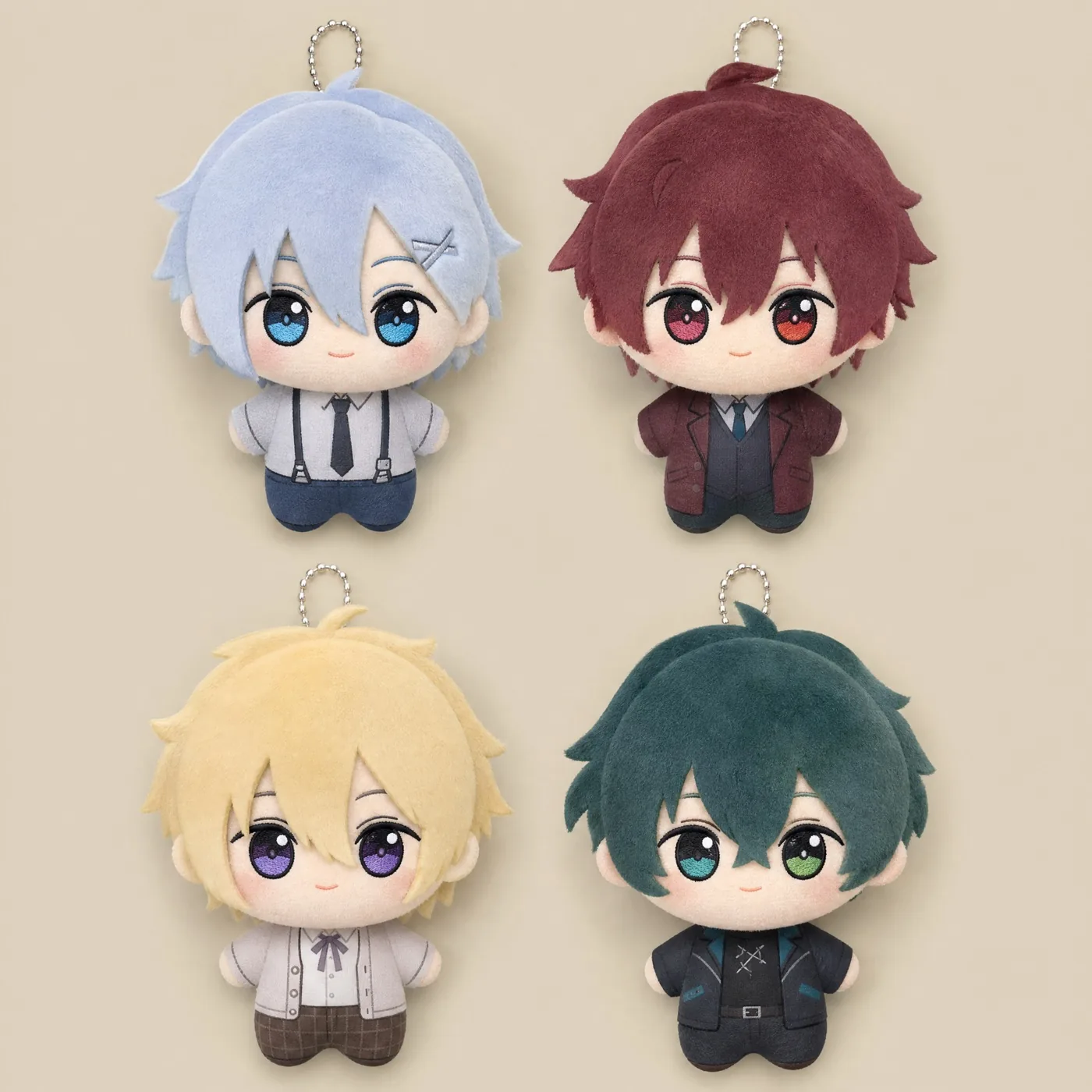
Our small-lot planning references
MOQ is reviewed together with size, pattern, fabric, embroidery, hardware, packaging, inspection, and delivery conditions.
| Product type | Standard MOQ per design | Multi-SKU planning | Key review points |
|---|---|---|---|
| Standard plush, 15 to 30 cm | 500+ pieces | 300+ per SKU, subject to review | Embroidery, outfits, and part count |
| Small charms and keychains | 500+ pieces | 300+ per SKU, subject to review | Hardware, tags, and individual packaging |
| Character series | Reviewed as a program | 300+ per SKU, subject to review | Shared fabric, packaging, and total schedule |
| Large or complex specifications | Individual review | Individual review | Material lot and production steps |
Why custom plush production needs an MOQ
Plush products combine many materials and manual operations. Below 200 to 300 pieces, preparation costs are concentrated and stable quality and scheduling become harder to maintain.
Fabric, patterns, stuffing, embroidery thread, tags, hardware, and packaging are purchased and managed by specification.
Embroidery files, thread colors, placement, print conditions, trials, and machine adjustments are required.
Each new design needs pattern development and controls for expression, shape, and stuffing volume.
Appearance, sewing, hardware, needle-detection conditions, labels, bags, and carton marks add preparation steps.
At 500 pieces or more, line conditions are easier to establish and manage, helping reduce differences between the approved sample and mass production.
Concrete quantity-planning models
These are quotation models for organizing quantity and SKUs. Actual feasibility, price, and schedule are confirmed after specification review.
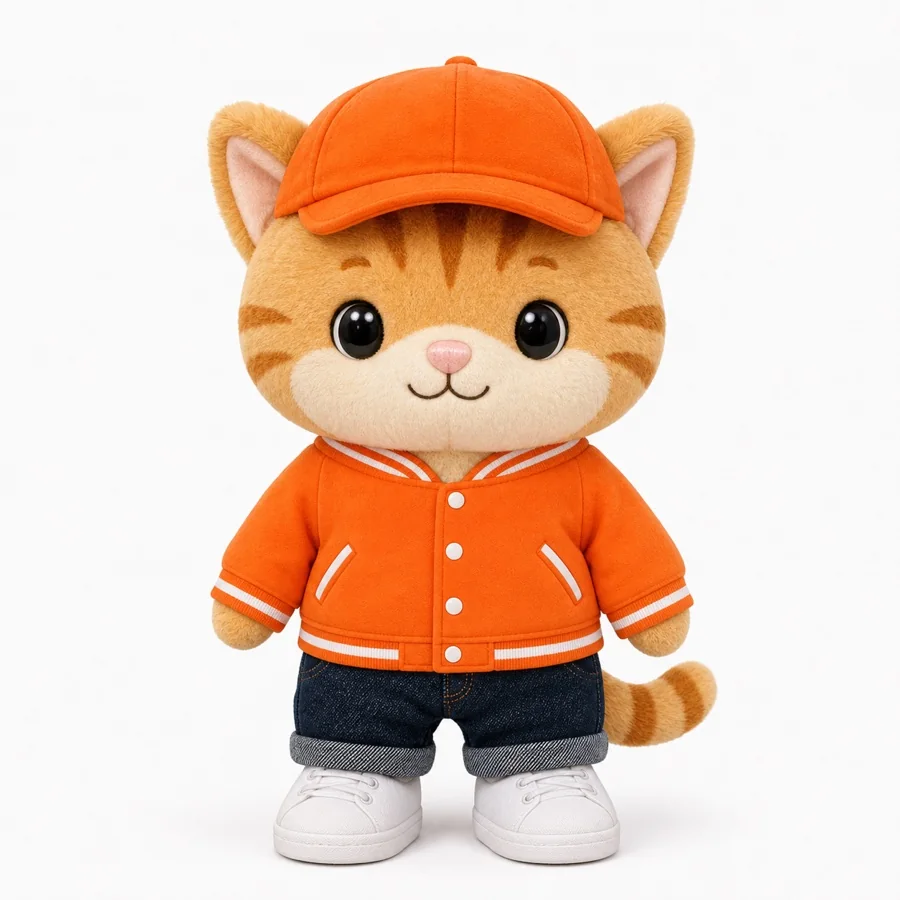
A basic model that concentrates fabric, pattern, embroidery, and packaging into one production specification.
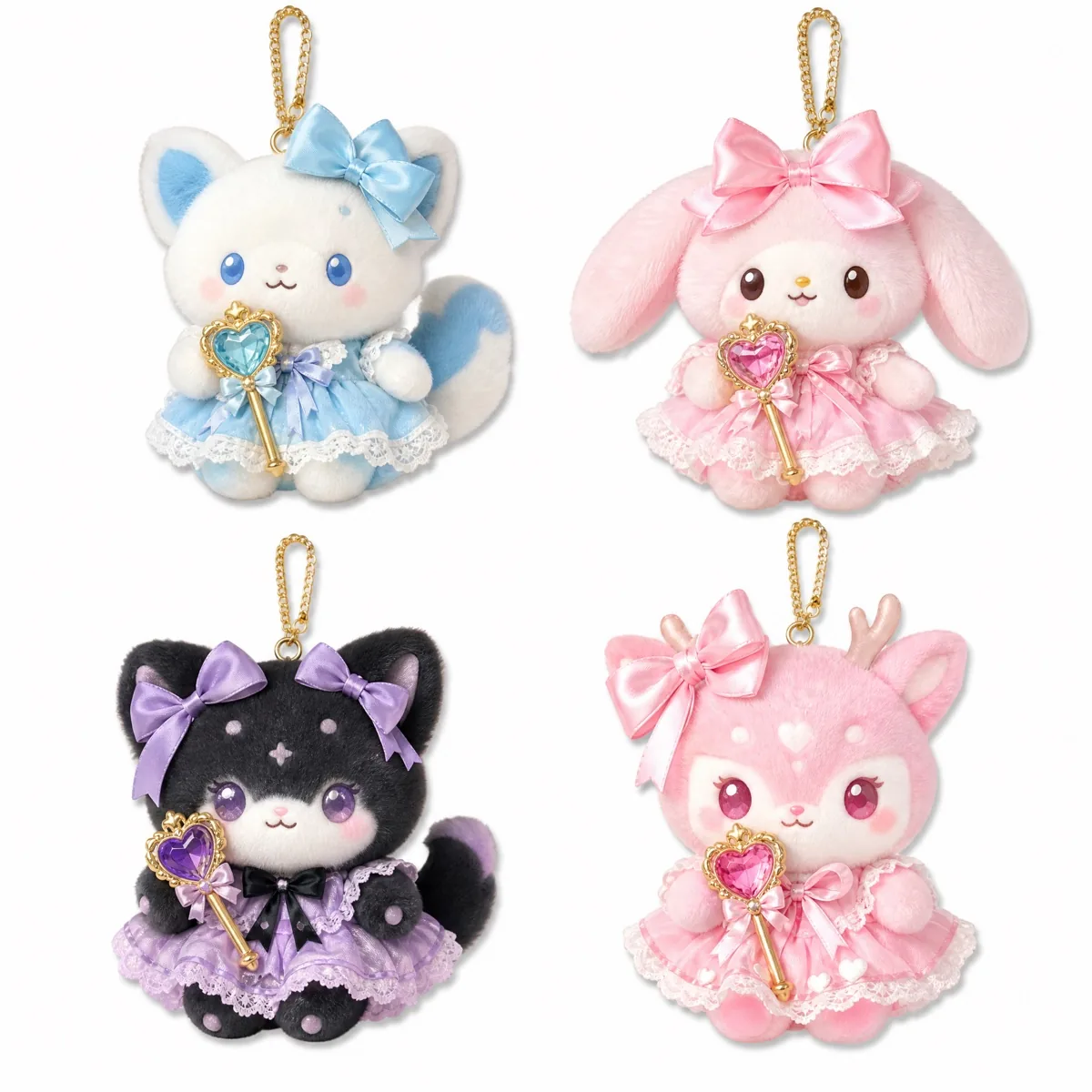
A model that secures quantity per SKU and identifies where size, hardware, and packaging can be shared.
When the body pattern and packaging are shared, color and embroidery differences can be controlled in an SKU table and reviewed as a 900-piece series program.
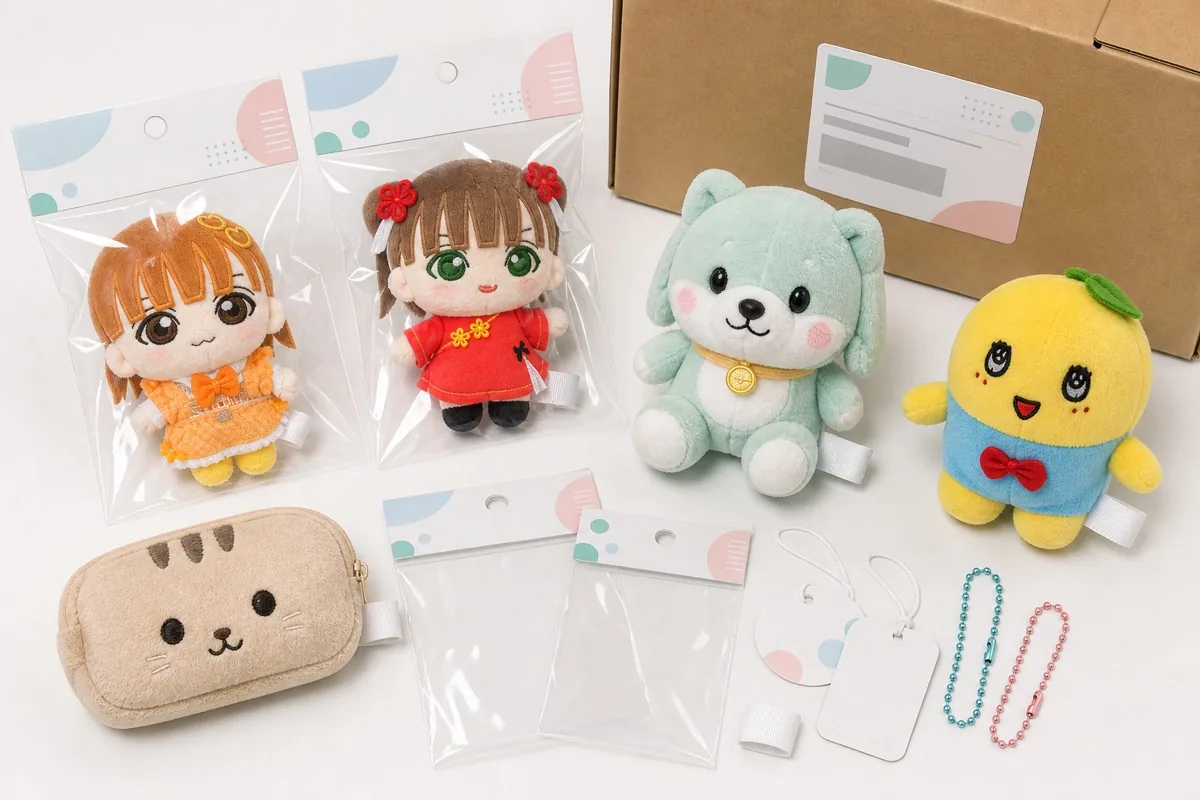
Define shared specifications before increasing SKU count
If every SKU uses a different specification, preparation and inspection work increases. Define common elements first to make quantity and quotation conditions easier to plan.
- Size, body pattern, and stuffing
- Shared fabric, hardware, and tags
- OPP bags, backing cards, JAN labels, and carton marks
- SKU-specific colors, expressions, and outfits
Do not remove necessary quality controls from a small-lot plan
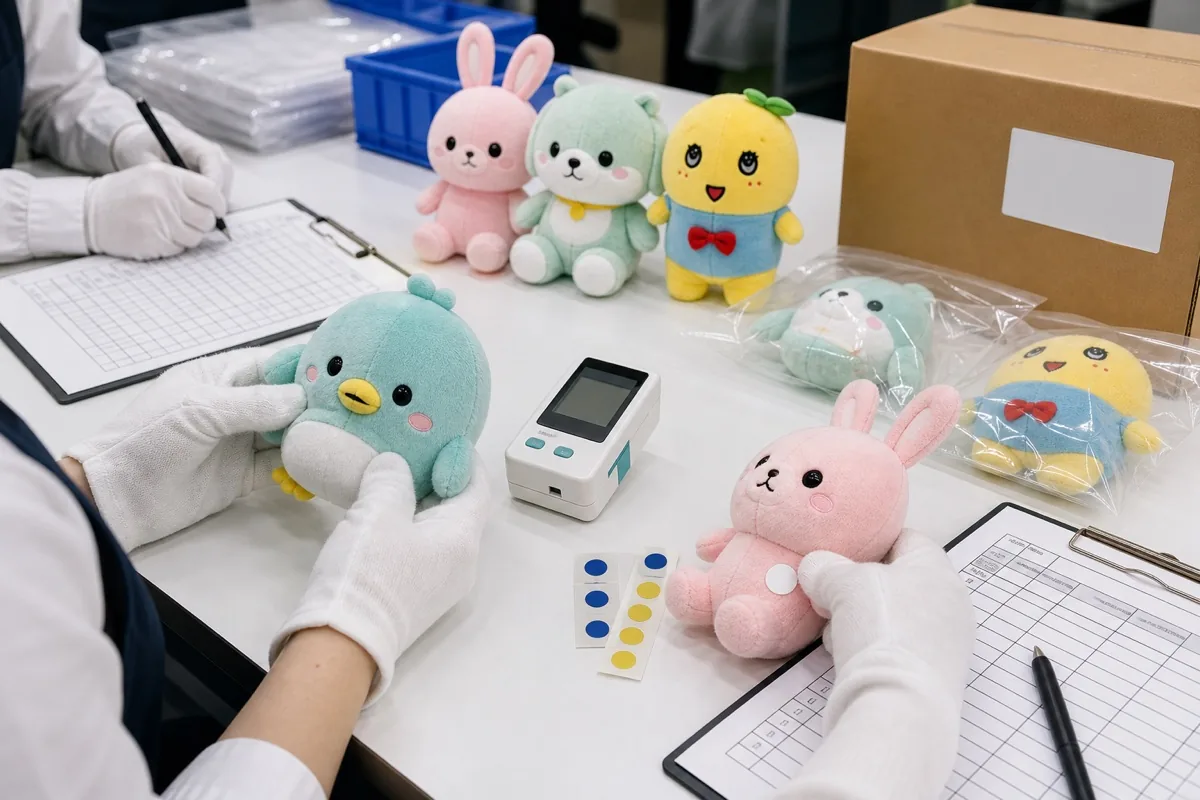
Our sewing factory compares approved sample requirements with mass-production steps. Required inspection points are defined even for smaller runs.
- Appearance, sewing, thread finishing, and parts
- Packaging, labels, SKU, and quantity checks
- Needle-detection timing based on hardware and sales requirements
- AQL sampling level based on customer standards and product risk
Information to prepare before quotation
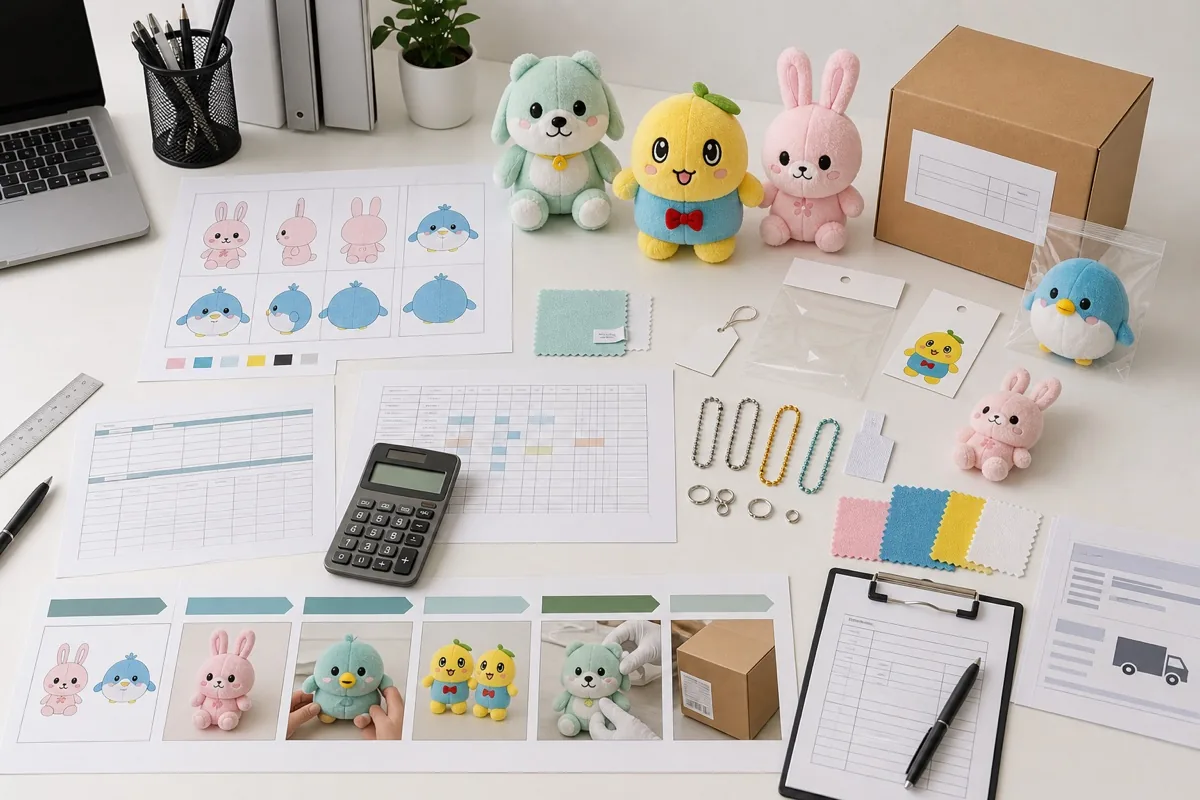
You can contact us before quantity is finalized. These inputs help determine whether to plan one design at 500 pieces or a series from 300 pieces per SKU.
- Design artwork, views, and target size
- Design count, SKU count, and quantity per SKU
- Fabric, embroidery, printing, hardware, and tags
- OPP, backing card, JAN label, or blind packaging
- Target schedule, destination, and split delivery
Related guides
Use these pages to define specifications, quality conditions, and quotation inputs.
Frequently asked questions
Can you produce 200 to 300 pieces?
For one design, our standard planning reference is 500 pieces or more to stabilize quality and production steps. A single design at 200 to 300 pieces is often difficult. For a multi-SKU project, we can review specifications from 300 pieces per SKU.
Can you handle small lots for multiple characters or colorways?
Yes. The discussion reference is 300 pieces per SKU. The quotation depends on total quantity, shared fabric and patterns, embroidery, packaging, and the delivery schedule. Conditions may change when specifications differ greatly between SKUs.
Does the standard MOQ vary by product type?
Standard plush and small plush charms normally start from a 500-piece planning reference per design. Large sizes, complex outfits, special fabrics, or component-heavy designs require individual review.
Can quantities for different characters be combined?
A shared fabric, size, similar pattern, and common packaging can make the overall program easier to plan. Quantities cannot always be combined when each character uses different patterns, embroidery, outfits, or packaging.
Why does unit cost increase on smaller lots?
Pattern development, embroidery files, machine setup, material purchasing, sample adjustment, inspection, and packaging preparation are required regardless of order size. On a smaller run, those setup costs are distributed across fewer units.
Are inspection and needle detection available for small lots?
Yes. Appearance, sewing, parts, packaging, and SKU checks can be planned. Needle-detection frequency and AQL sampling levels are defined per project according to sales country, age grade, hardware, and customer requirements.
Do packaging and JAN labels affect MOQ?
They can. OPP bags, backing cards, JAN labels, blind bags, SKU labels, and carton marks change material purchasing and packing work. Share packaging requirements before quotation.
What should I send before requesting a quotation?
Send the design, target size, quantity, SKU count, fabric, embroidery or print area, hardware, packaging, desired schedule, and delivery destination. If quantity is not fixed, we can plan from 500 pieces for one design or 300 pieces per SKU for a series.
Can I order just one custom plush toy?
No. We do not offer one-unit retail orders or one-piece mass production. A single prototype may be discussed for design review, but sampling has a separate workflow and cost from a bulk order. Our standard planning references are 500 pieces per design or 300 pieces per SKU for a multi-SKU program, with the final MOQ confirmed after specification review.
Plan from 500 pieces and discuss the production structure
Tell us the sales method, target quantity, SKU count, size, hardware, packaging, schedule, and destination. We will organize a practical route for one design or a multi-SKU program.