Plush OEM Guide
How to Choose Plush Hardware and Attachments
B2B guide to plush keychain hardware options: buyer inputs, samples, MOQ, production risks, quality checks, lead time, and quote preparation.
Compare ball chains, lobster clasps, keyrings, carabiners, and strap cords by use case, packaging, and mass-production checks.
Choose plush hardware by use case first
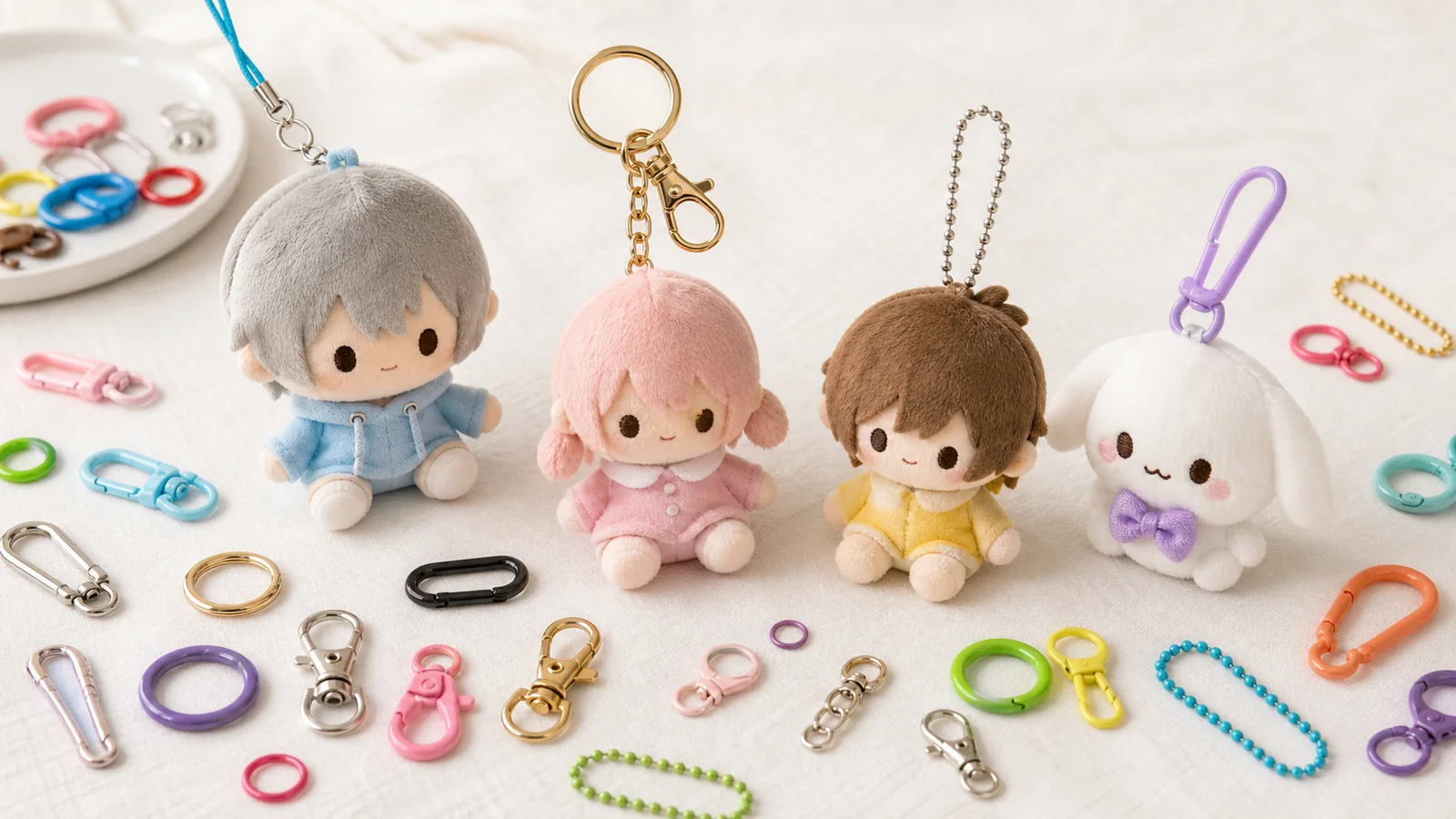
Hardware should not be selected by appearance alone. Use case, plush weight, packaging, and sales channel all affect sampling and production decisions.
Ball chain, lobster clasp, keyring, and carabiner comparison
Before quotation, define how the item will be sold and used. That helps align hardware, sample checks, and packaging from the beginning.
| Use case | Hardware option | Why it fits | Checks before mass production |
|---|---|---|---|
| Lightweight plush keychains | Ball chain | Cost-friendly and easy to pair with backing cards for retail or event merch. | Check chain length, color, detachment risk, and use-case restrictions during sampling. |
| Plush bag charms | Lobster clasp | Easy to attach to bag handles or metal fittings, and easy for buyers to understand at retail. | Confirm body weight, clasp opening width, connector position, and drop-risk checks by use case. |
| Key use | Keyring | Works well when the plush item is meant to be used with keys and needs a practical-goods feel. | Check ring stiffness, load on the plush body, and interference with backing card packaging. |
| Larger plush charms | Carabiner | Useful for larger bag charms or outdoor-inspired goods with stronger visual presence. | Larger hardware changes packing dimensions and the visual balance of the plush item. |
| Phone, pouch, and bag use | Strap cord | Short loops or cord straps can support phone, pouch, and bag use cases. | Review cord color, length, connector parts, and channel-specific durability checks. |
Checks for plush bag charm use
For plush bag charms, hardware affects how the item hangs, how visible the character is, and how secure the attachment feels during daily use. Review lobster clasps, ball chains, keyrings, and strap cords by use case, then check weight, connector position, OPP bag size, and backing card dimensions together.
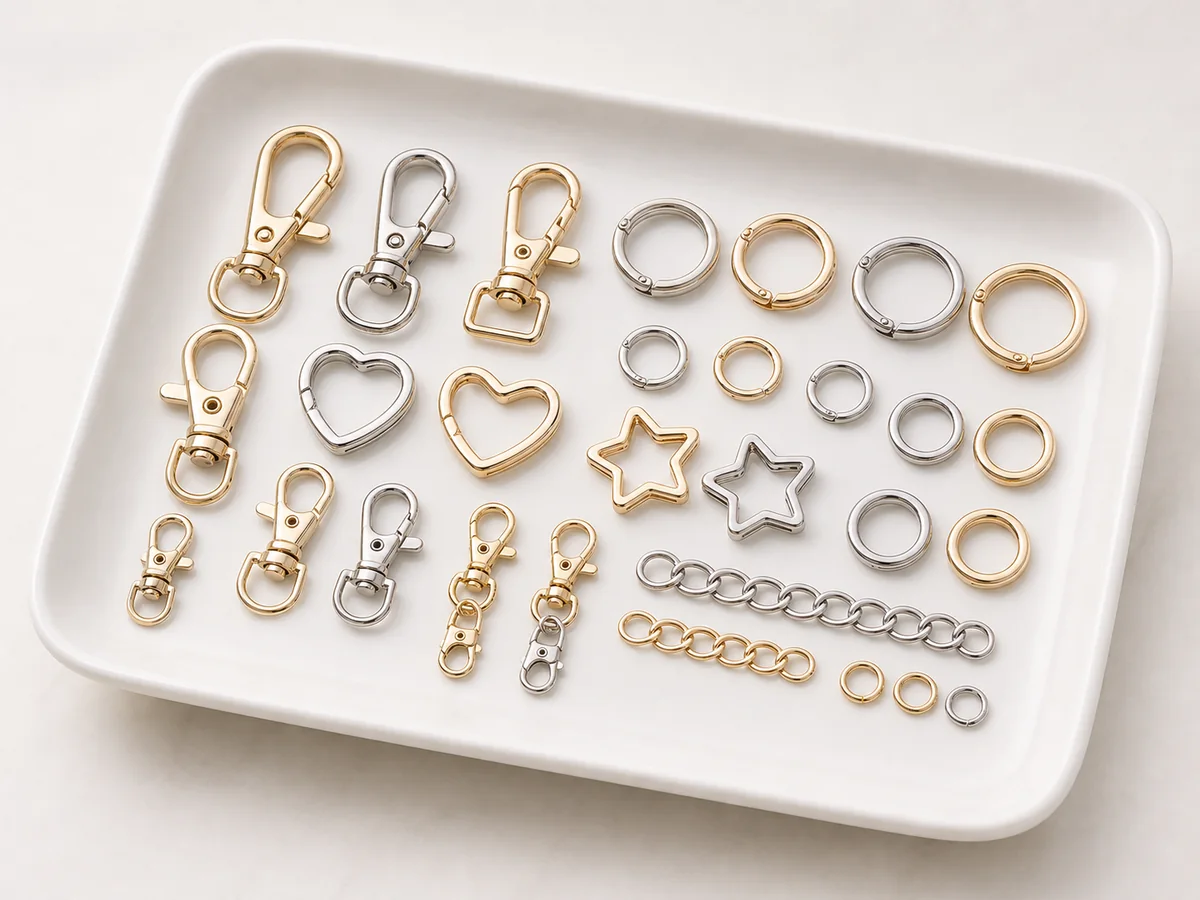
For bag or key use, check opening width and plush body weight together.
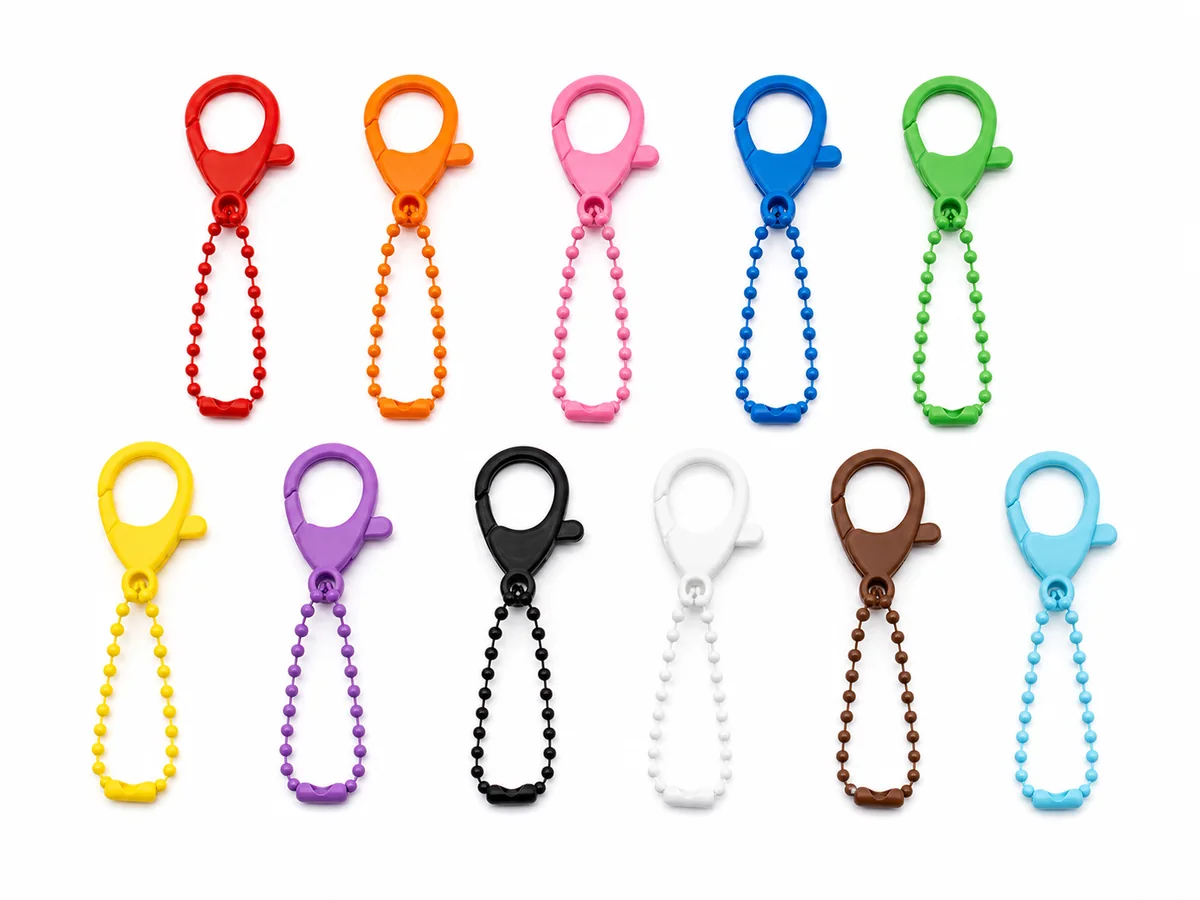
Useful for lightweight charms and backing-card retail, with color and length as specification items.
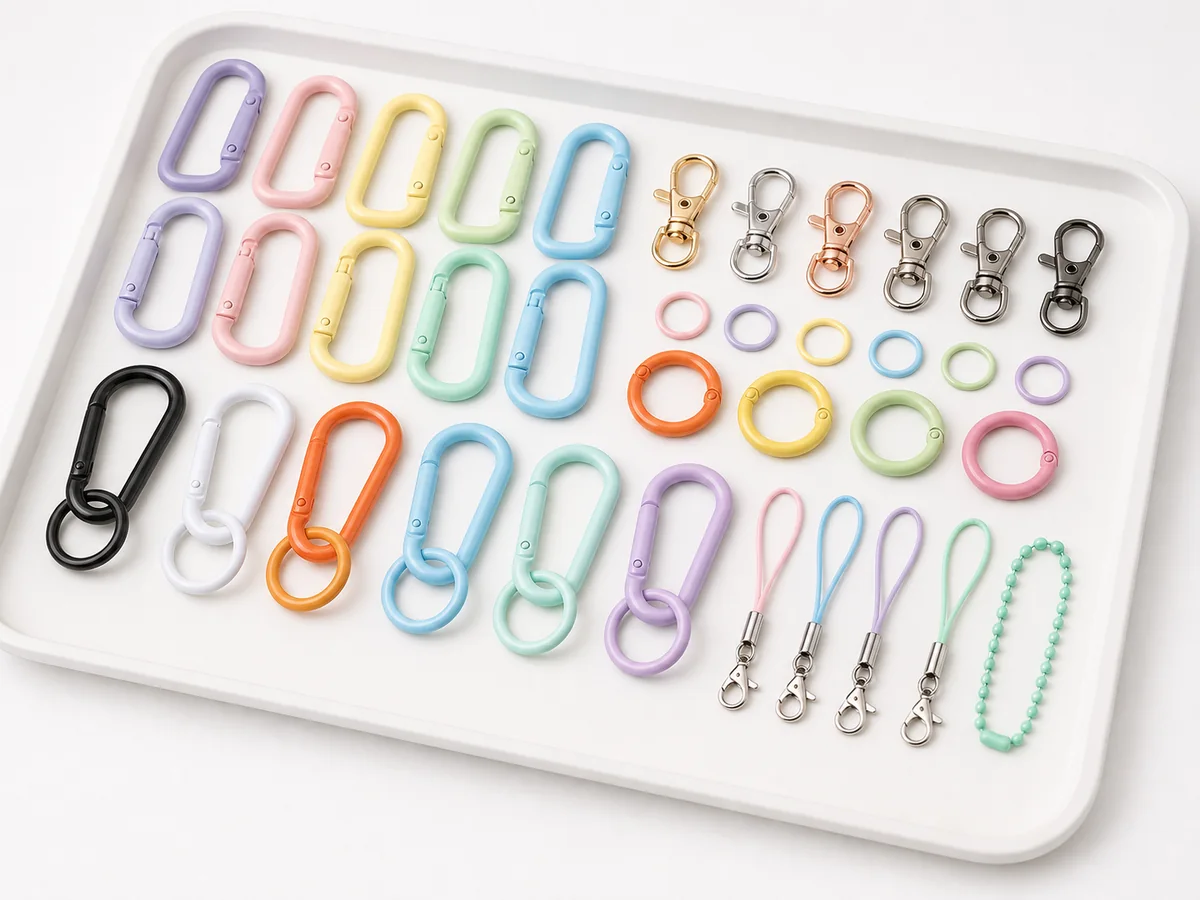
Effective for larger charms, but they can change packing dimensions and visual balance.
Connector position and plush body checks
The same hardware can hang differently depending on loop placement and stitch reinforcement. Decide the connector position before sampling to avoid hiding the character face, outfit, or front details.
- Top, back, or side connector position
- Loop tape, D-ring, and connector color
- Stitch reinforcement point
- Front angle when hanging
- Metal or plastic color
- Opening width, ring diameter, chain length
- Balance with plush body weight
- Interference with backing card or OPP bag
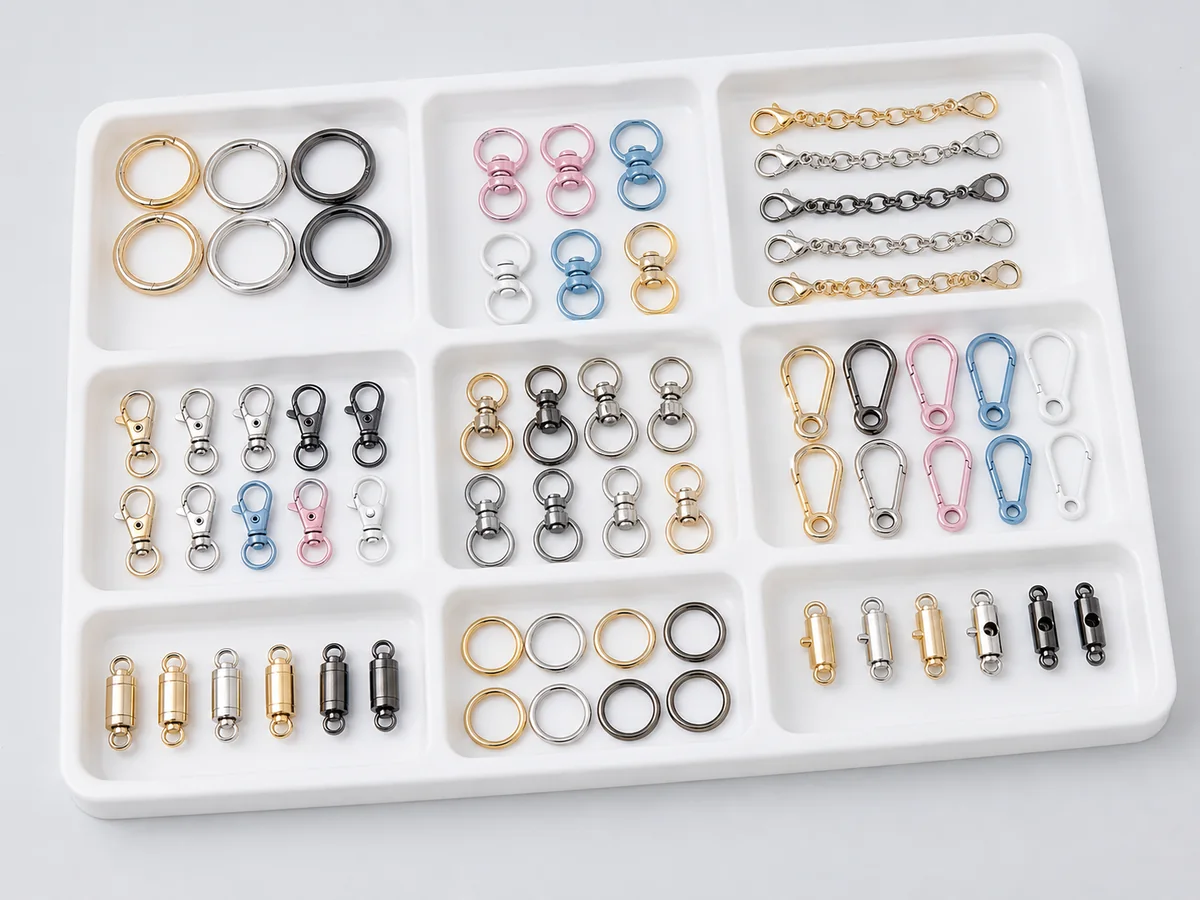
Connector placement, rings, chains, and stitch reinforcement should be reviewed during sampling.
Backing cards, OPP bags, and SKU labels
Hardware should be planned together with the retail presentation. If backing cards are used, check card holes, header space, JAN or barcode labels, OPP bags, multi-SKU labels, blind-sale requirements, and carton labels by sales channel.
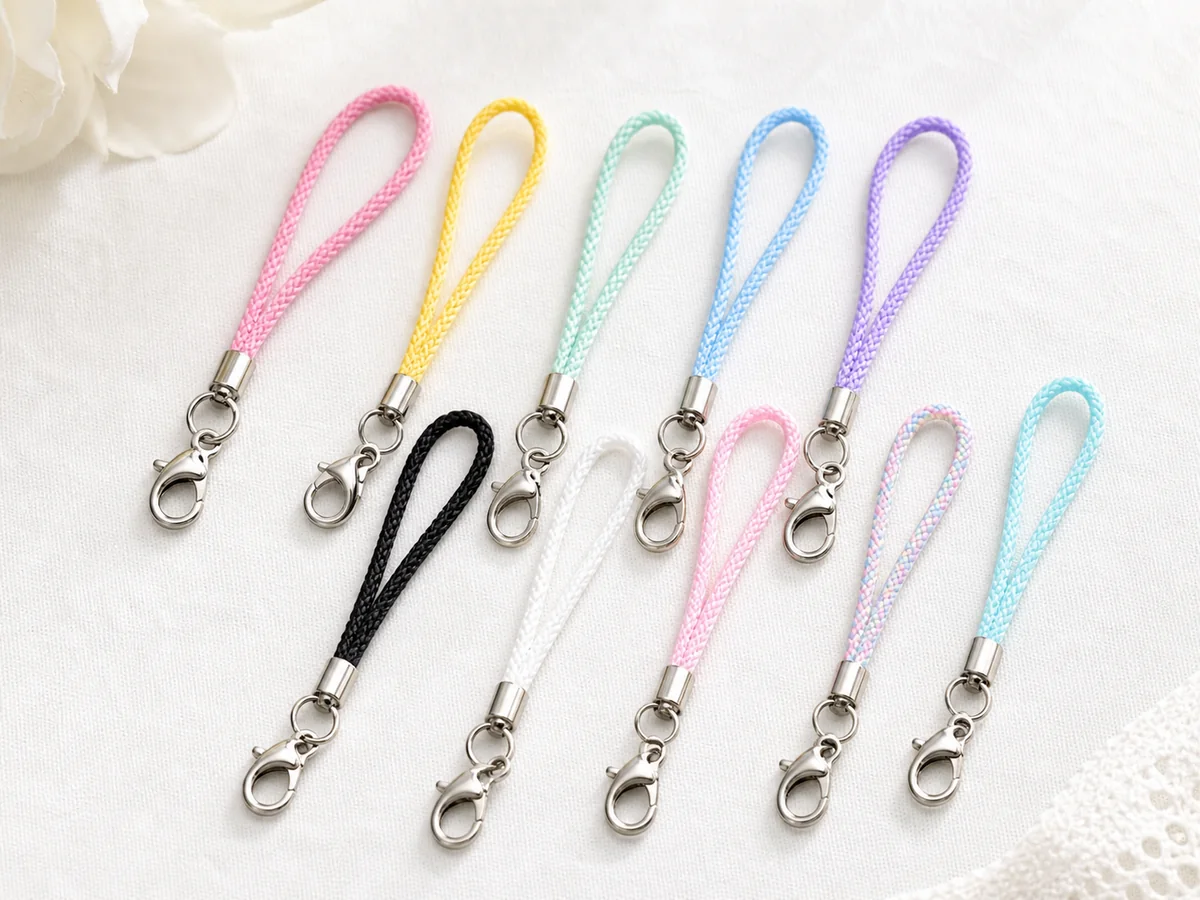
For phone, pouch, and bag use, cord color and length become part of the specification.
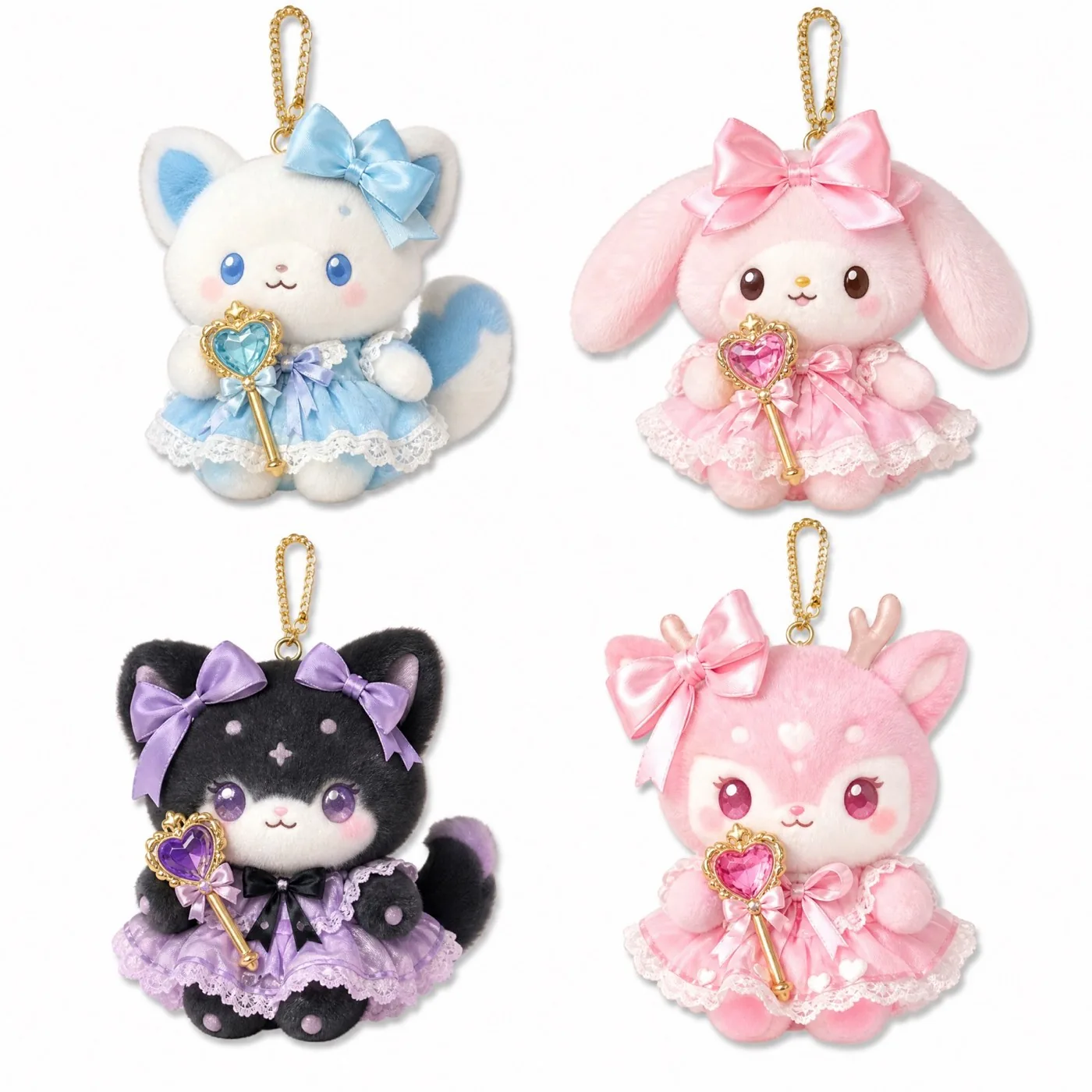
For character series, backing cards, JAN labels, and carton labels should be managed together.
Decide plush body, hardware, and packaging as one quotation package.
Quote-prep checklist
These details help align hardware, samples, and packaging before quotation.
- Plush size, weight, and quantity
- Single SKU or multiple SKUs
- Use case: bag, keys, phone, pouch
- Preferred hardware, even if tentative
- Backing card, OPP only, or blind-sale packaging
- JAN, barcode, or SKU labels
- Event merch, e-commerce, novelty, or retail use
- Target schedule and sample review rounds
Frequently Asked Questions
Which hardware is best for plush keychains?
For lightweight retail items with backing cards, a ball chain is often a good candidate. For bag attachment, a lobster clasp is easier to attach and remove. For key use, a keyring may be better. For larger plush charms, a carabiner can also be considered. The final choice should be checked with the body size, weight, connector position, and packaging method during sampling.
Should I choose a ball chain or lobster clasp for plush bag charms?
If easy attachment to bags is the priority, lobster clasps are often easier to use. If the item is lightweight and cost control matters, ball chains can also work. In both cases, the plush weight, hanging angle, and backing card size should be checked together.
Can plush charms be made with strap cords?
Yes. Cord straps or short connector loops can be reviewed for phone, pouch, and bag use. Recommended specifications depend on quantity, size, and the real use case, so it helps to share the intended use before quotation.
Can backing cards and OPP bags be arranged together with hardware?
Yes. Hardware, backing cards, OPP bags, JAN or barcode labels, multi-SKU labels, and carton labels can be organized together based on the sales channel. Event merch, blind sales, novelty campaigns, and retail goods often need different packaging details.
Can hardware be changed before mass production?
Hardware can usually be reviewed during the sampling stage. A late change may affect backing card holes, OPP bag size, packing dimensions, and inspection points, so it is better to narrow down the options early.
How should hardware strength be checked?
Check the pull direction, connector position, stitch reinforcement, and the actual hanging angle. This should be treated as a project-specific risk check rather than an absolute guarantee.
You can ask before the hardware is finalized
For plush keychains, bag charms, and strap-cord versions, we can review hardware, packaging, and multi-SKU requirements based on the sales channel.