Plush OEM Cost Guide
Using a 13-15cm upright embroidered plush keychain as an example, this guide explains how buyers can estimate MOQ, unit price, sample development fees, production lead time, and international shipping before requesting a formal quotation. The figures below are case-based estimates; final pricing depends on the approved design, fabric, embroidery area, packaging, and delivery terms.
Short Answer: Plush OEM Cost Is Not Decided by Size Alone
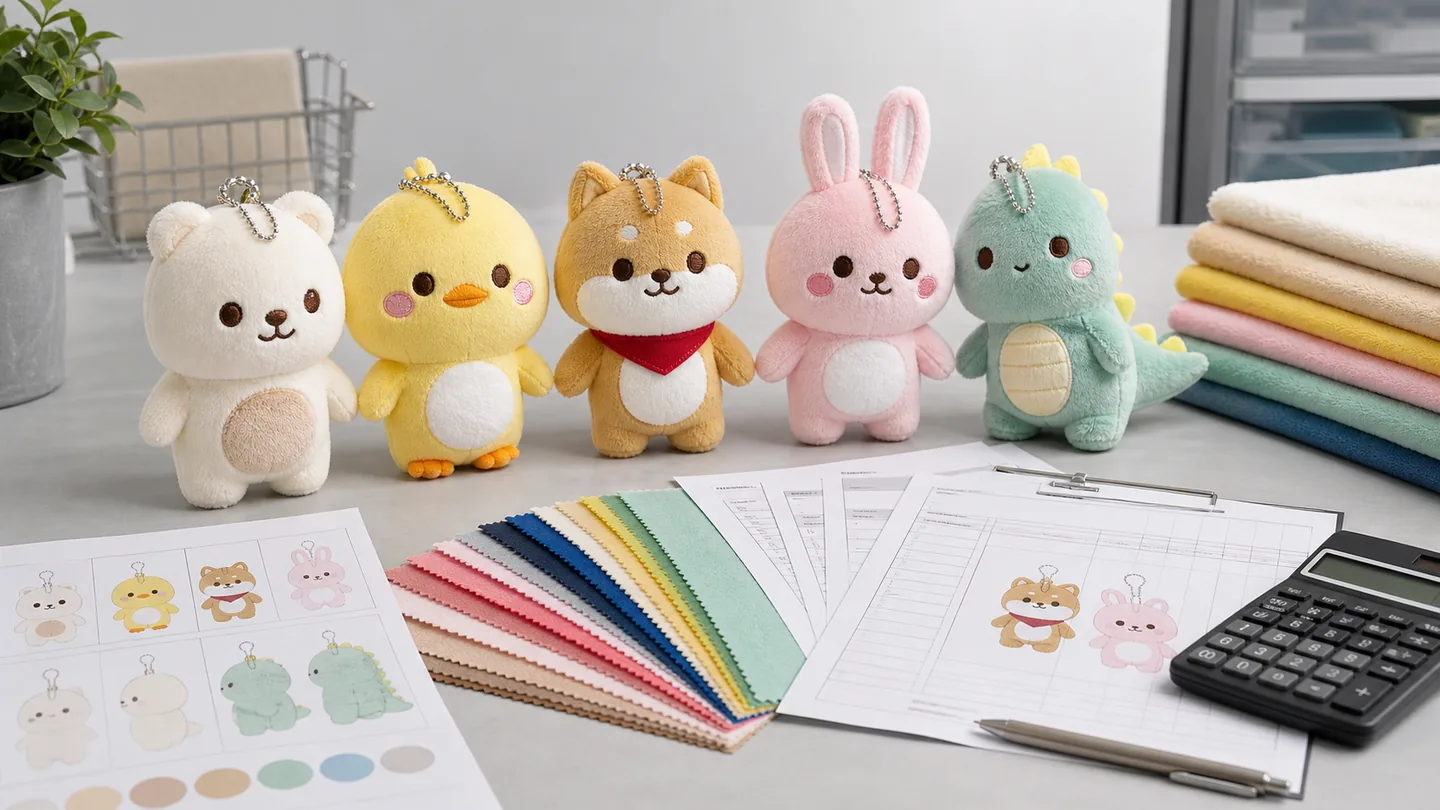
Asking “How much is a 13cm plush?” is a useful starting point, but it is not enough for an accurate quotation. Plush unit cost is affected by pattern complexity, embroidery area, fabric, accessories, packaging, quantity, and destination.
Case reference: for a 13-15cm upright embroidered plush with a ball chain, 500 pcs per design can be estimated at about US$3.5 each. For multiple SKUs at 300 pcs per design, the working estimate is about US$4.0 each.
Initial development: the sample or pattern development fee is estimated at US$120 per design, covering pattern work, material testing, and first sample sewing.
Timing: after design confirmation, sample making usually takes about 7-10 days; after sample approval, mass production is estimated at about 40-45 days. Multi-SKU or peak-season orders need buffer time.
A single design in a more concentrated batch helps spread preparation costs and usually supports a better unit price.
A useful planning quantity when launching 9-10 designs for market testing, though the unit price may rise.
This is a development cost for patterning and first sample work, not the same as the mass production unit price.
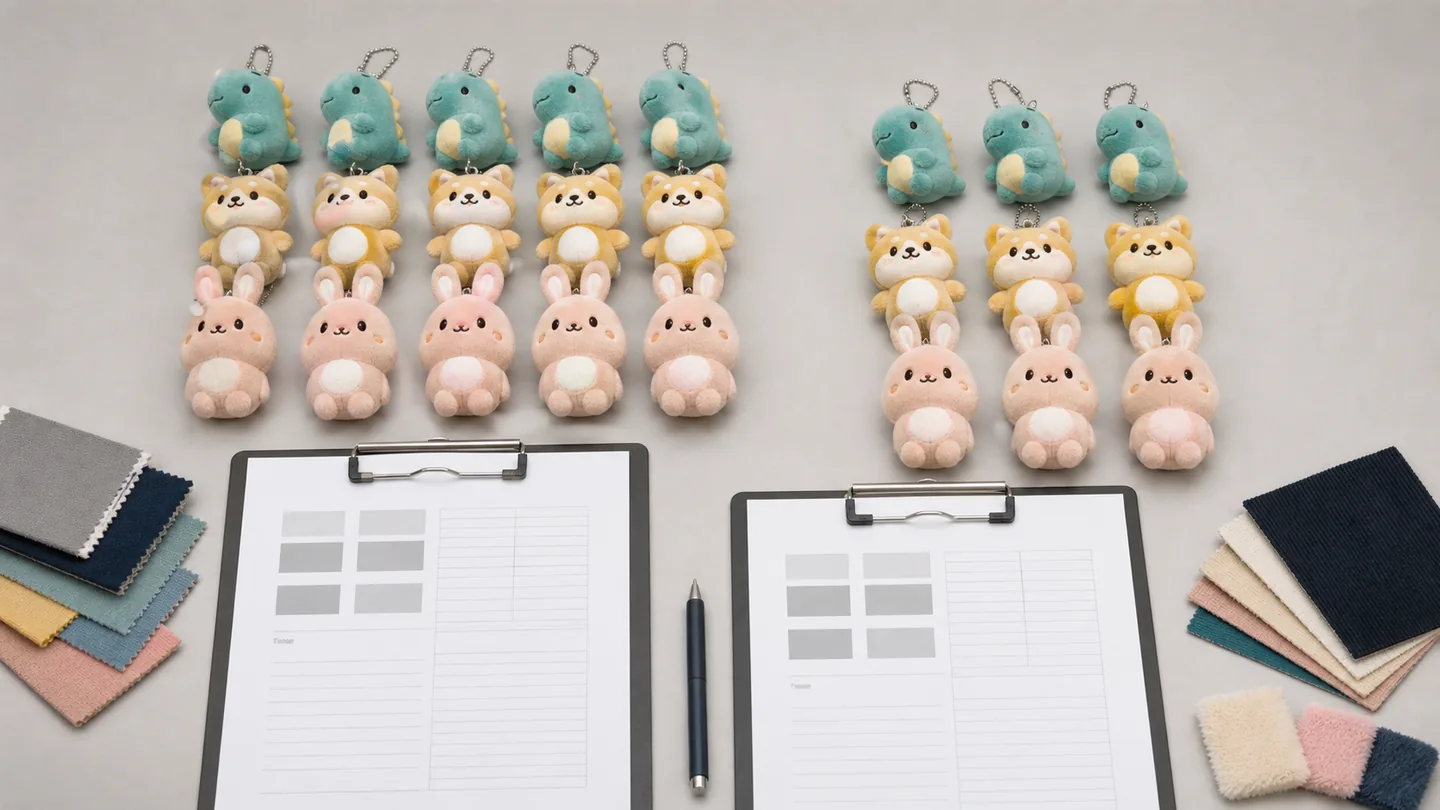
How MOQ Changes Unit Price: 500 pcs vs. 300 pcs per Design
MOQ is not just a factory threshold. It is the production unit that allows cutting, embroidery, sewing, stuffing, shaping, needle inspection, and packing to run efficiently. Larger quantities reduce line changes and material loss, which usually helps unit cost.
- Single design: in this case, 500 pcs per design is the standard planning point, with an estimated unit price of about US$3.5.
- Multiple designs: if 9-10 SKUs are developed together at 300 pcs each, the estimate moves to about US$4.0 per unit.
- Buyer decision: when budget is tight, reducing SKU count and increasing quantity per design often makes the total cost easier to control.
Why the Same Plush Size Can Have Different Prices
Size alone is not a complete specification. The final quote depends on whether the character can be patterned efficiently, how much embroidery is needed, whether the fabric is standard, and whether accessories or packaging add extra operations.
Ears, tails, clothing parts, body balance, and standing stability affect pattern breakdown and sewing time.
Detailed faces, outfits, and body decoration increase thread colors, machine time, and sample review work.
Short plush, softer pile, specialty fabrics, ball chains, header cards, and individual bags all change the cost structure.
For faster quotation, prepare the design artwork, target size, SKU count, quantity per SKU, embroidery scope, packaging method, and delivery destination together.
Buyer Types That Change the Cost Discussion
The same 13-15cm plush OEM project can have different cost priorities depending on who is buying and how the goods will be used. The plush SEO materials emphasize a clear cluster around custom plush toys, plush keychains, corporate characters, novelty goods, multi-SKU fan merchandise, prize programs, pouches, packaging, inspection, and delivery planning.
Custom plush toy OEM projects should budget for artwork approval, expression matching, color review, sample revisions, and production-ready specs.
When multiple characters are produced together, SKU labels, colorways, assortment planning, and split delivery should be discussed before sampling.
Corporate plush projects often require internal approval materials, NDA handling, design-to-sample evidence, and repeatable quality standards.
Novelty plush cost depends on campaign deadlines, individual packing, backing cards, JAN/barcode labels, and destination-side delivery rules.
Prize programs need early confirmation of assortment ratios, SKU sorting, variation control, inspection criteria, and warehouse delivery instructions.
Custom plush keychains and bag charms require hardware, OPP bag, header card, and attachment checks in the quote stage.
Why Sample Development Is Quoted Separately
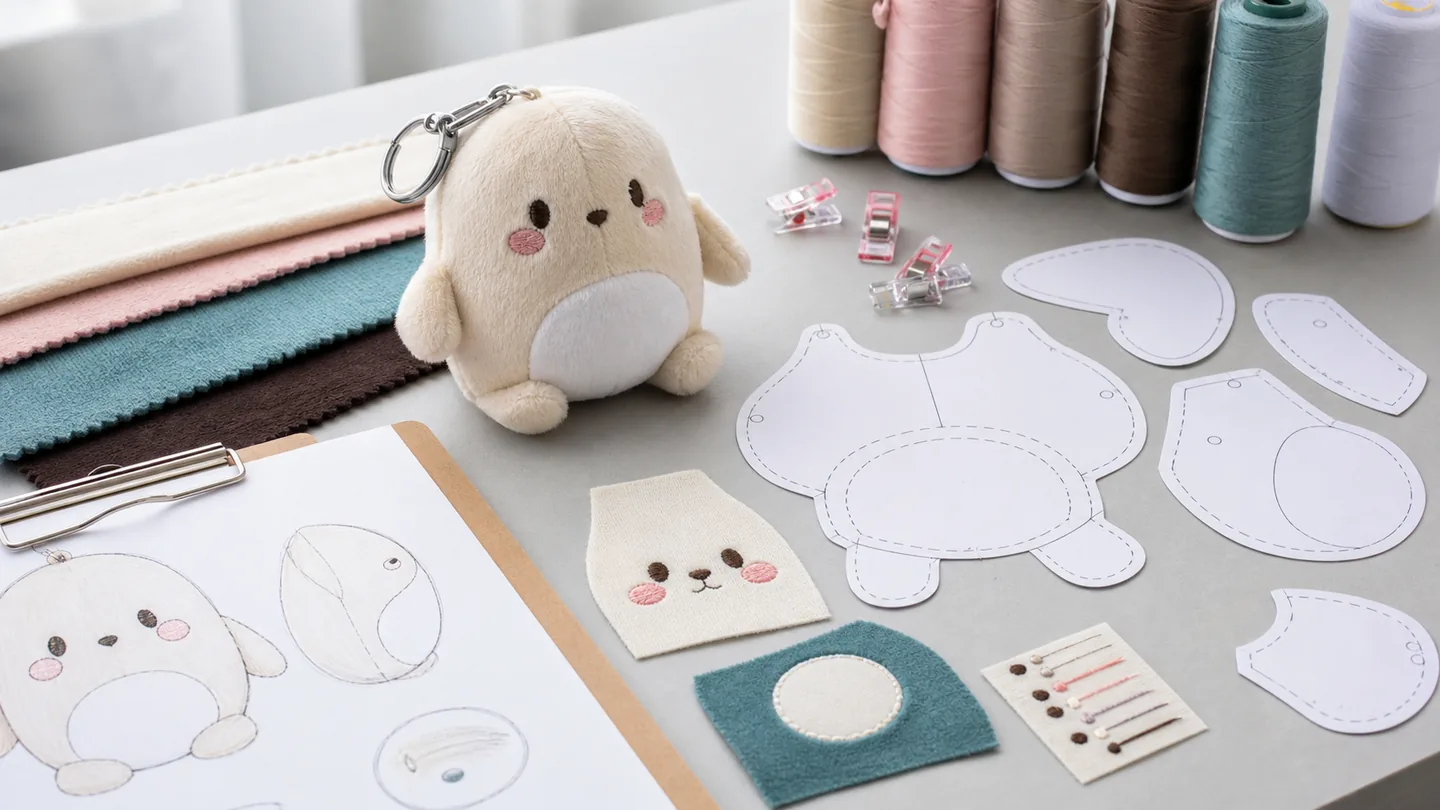
A plush sample fee is not simply the cost of making one piece. It covers the work needed to turn a 2D character into a sewable 3D plush structure, including pattern making, fabric testing, embroidery placement, and first sample sewing.
In this case, the sample development fee is estimated at US$120 per design. For 10 designs, the initial development budget is US$120 × 10 = US$1,200. Unless the main structure changes significantly, this is usually an upfront development cost rather than a repeated charge for every mass production batch.
- Confirm the artwork before pattern making to reduce unnecessary revisions.
- During sample review, check expression, embroidery placement, standing balance, hand feel, and ball chain position.
- If the character structure changes substantially, confirm whether a second sample or adjustment fee is needed.
Lead Time Planning: 7-10 Days for Sample, 40-45 Days for Production
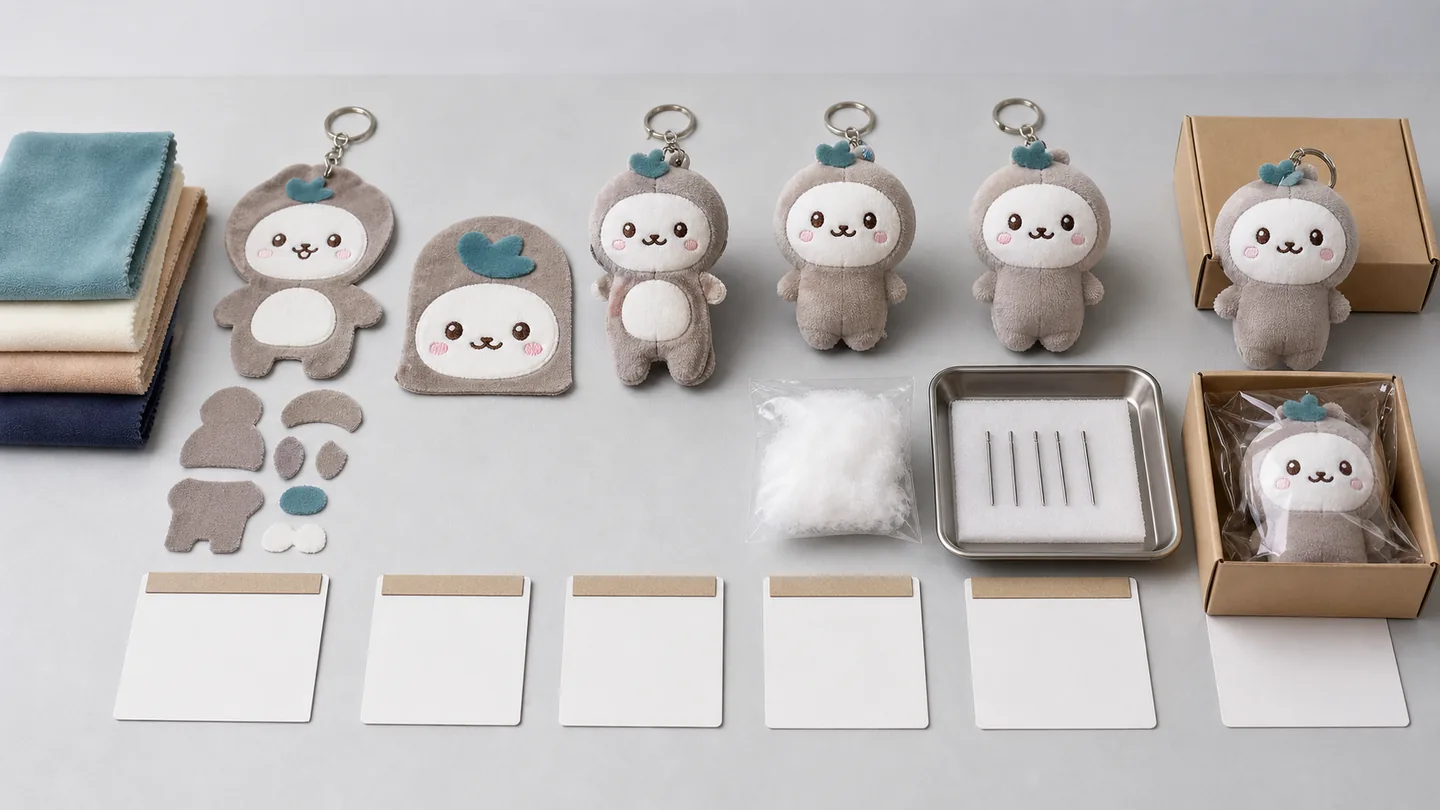
Plush production includes many manual and semi-automated steps, so lead time should not be judged by sewing alone. Fabric preparation, cutting, embroidery, sewing, stuffing, shaping, needle inspection, packaging, and pre-shipment checks all matter.
Confirm front, side, back views, size, embroidery position, fabric, and accessories.
For this case, the first sample is estimated at about 7-10 days after design approval.
After sample approval, production is estimated at about 40-45 days depending on schedule and SKU count.
Needle inspection, appearance checks, individual packing, carton packing, and shipping documents are reviewed.
Shipping and Import Costs: Check What Is Included
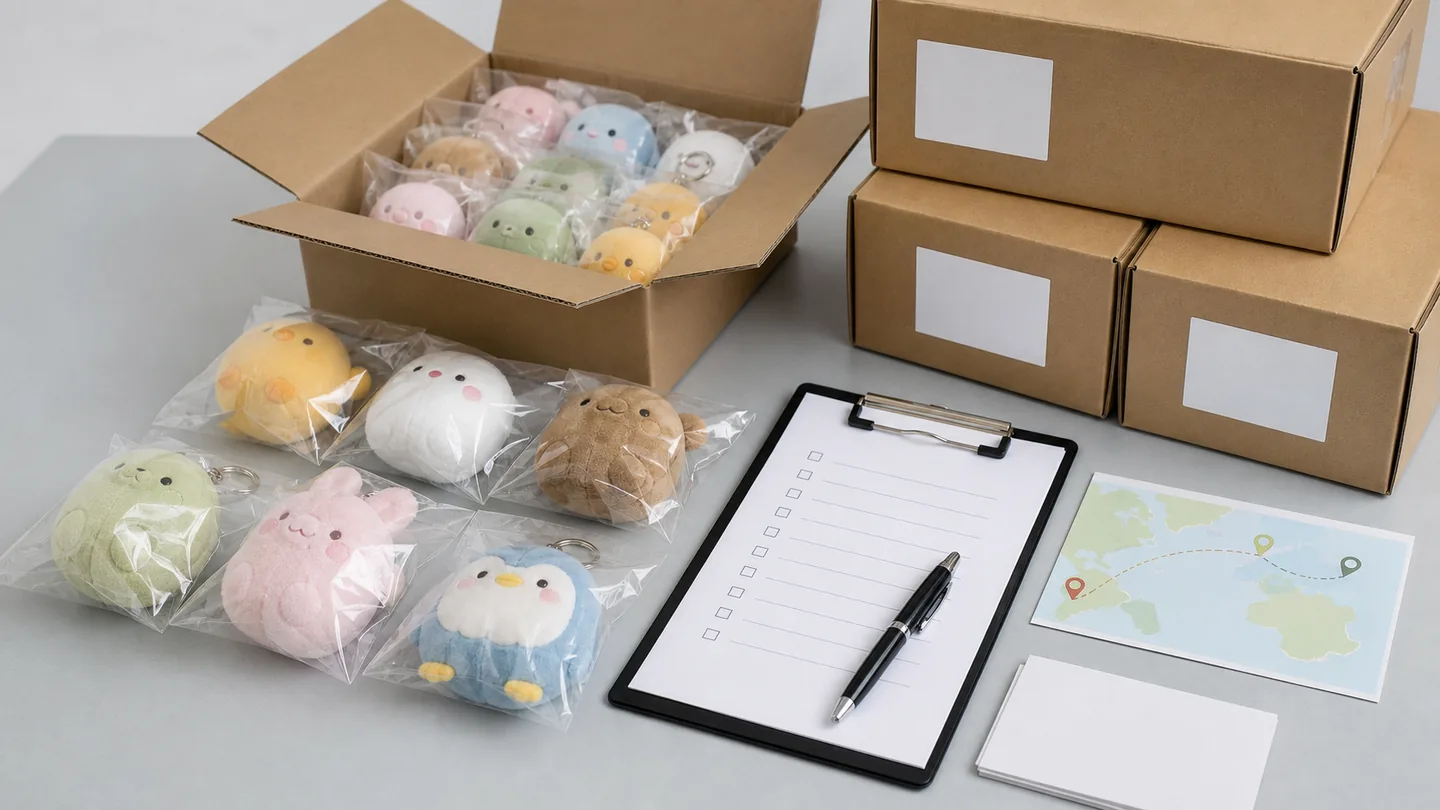
For cross-border OEM orders, logistics can significantly affect the total budget. Using Saitama, Japan as an example, the air-sea shipping estimate in this case is about US$300-500. Buyers should confirm whether China export customs, Japan import customs, local delivery, duties, and consumption tax are included.
- Confirm delivery city, warehouse rules, and requested arrival date.
- Separate export customs, import customs, and local delivery in the cost discussion.
- Clarify who pays duties, consumption tax, or destination-side handling fees.
Cost Estimate Table for a 13-15cm Plush OEM Project
The table below uses 10 designs, 300 pcs per design, and delivery to Japan as a planning example. Final pricing should be confirmed after artwork review, sample approval, and logistics confirmation.
| Cost Item | Calculation | Estimate | Buyer Note |
|---|---|---|---|
| Mass production | US$4.0/unit × 300 units × 10 designs | US$12,000 | Multi-SKU small batches usually cost more per unit than a standard batch. |
| Sample development | US$120/design × 10 designs | US$1,200 | An upfront cost for pattern development and first sample work. |
| Shipping estimate | Reference for Saitama, Japan | US$300-500 | Confirm customs, tax, and local delivery scope. |
| Total planning budget | Production + sample fee + shipping reserve | Approx. US$13,700 | Useful for project planning, not a formal quotation. |
What to Prepare Before Requesting a Quote
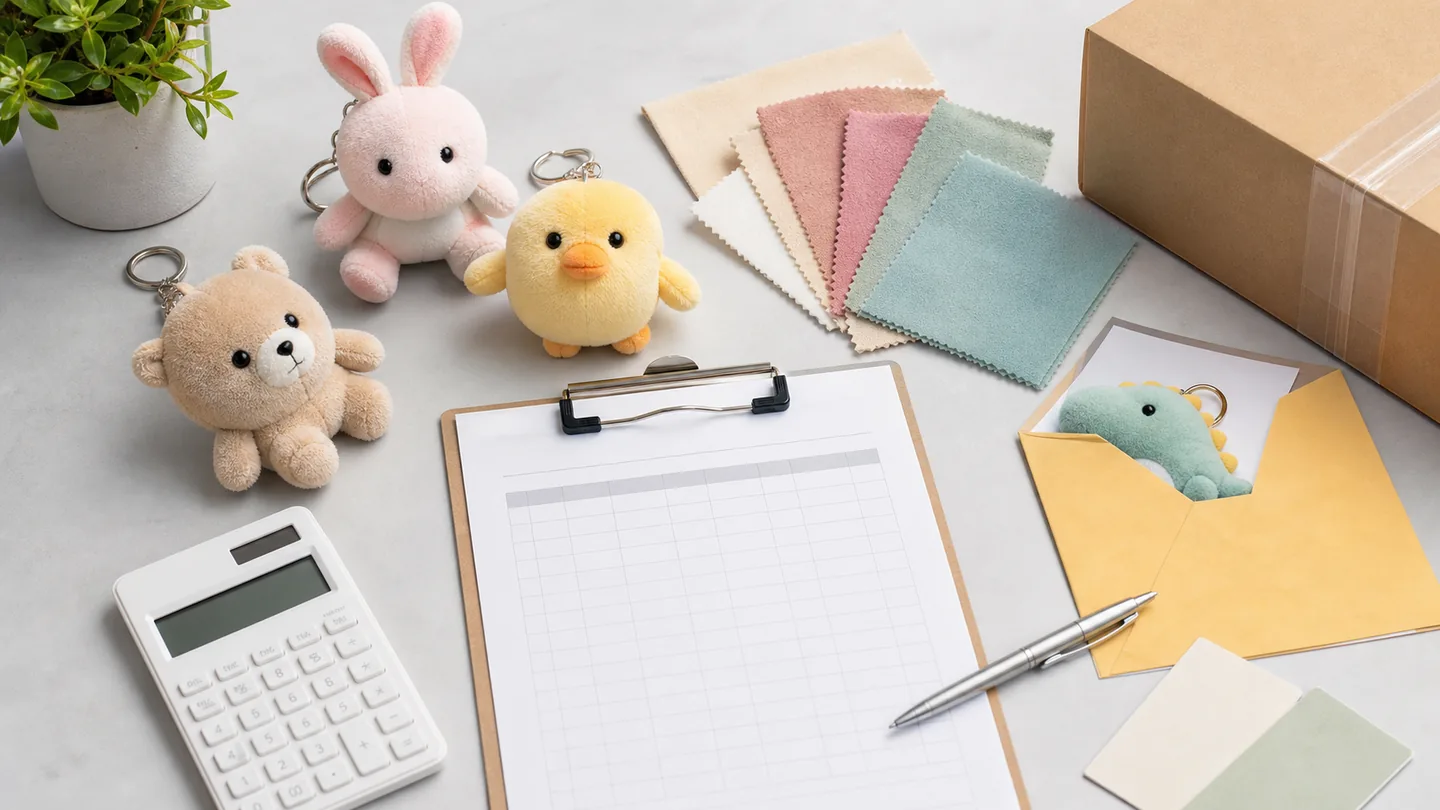
Before contacting a plush OEM factory, prepare the following information to make pricing, sampling, and lead-time confirmation faster.
- Front, side, and back character artwork
- Target size, such as 13-15cm
- SKU count and planned quantity per SKU
- Embroidery position, color count, and detail level
- Preferred fabric or reference hand feel
- Ball chain, tag, individual bag, or other accessories
- Backing card, bag, carton, JAN/barcode, or label rules
- Destination country, city, and target delivery date
Related Product Pages and Buyer Guides
Use these internal links to move from cost planning into the right product or guide page. English pages are kept on the English site path, avoiding links that redirect visitors back to Japanese content.
For custom plush toys, original plush mascots, character plush goods, MOQ, inspection, and delivery planning.
For ball chains, attachment hardware, backing cards, OPP bags, and portable plush merchandise.
For quote preparation, inspection, packaging, SKU management, and production workflow articles.
FAQ
Does a 13cm plush cost much less than a 15cm plush?
Size affects fabric and stuffing, but it is not the only cost driver. Embroidery area, pattern complexity, fabric, accessories, and quantity can create a larger difference than 2cm of height.
Why is 300 pcs per design more expensive than 500 pcs?
Small-batch multi-SKU projects require more line changes, material management, and inspection work. A 500 pcs batch spreads preparation costs more efficiently.
Can the sample fee be deducted from the mass production order?
It depends on the project terms. Confirm what the sample fee includes, how many revisions are covered, whether any deduction applies, and who pays sample shipping.
Is 40-45 days a guaranteed production lead time?
No. It is a case-based estimate after sample approval. SKU count, peak season, material lead time, sample revisions, and packaging confirmation can all change the schedule.
Need a Cost Estimate for Your Plush Project?
Share your artwork, target size, SKU count, quantity, packaging method, and destination, and we can estimate the project based on your conditions. You can also review our OEM production guides and custom plush keychains and bag charms OEM page before sending files.
Request a quotation