
B2B OEM / KUJI PRIZE ACRYLIC GOODS
Kuji Prize Acrylic Goods
For kuji operators, IP companies, and merchandise planners producing acrylic stands, keychains, badges, blocks, and other prize-tier acrylic goods.
We help organize prize structure, SKU count, assortment ratio, blind packaging, carton labels, inspection, and delivery conditions before mass production.
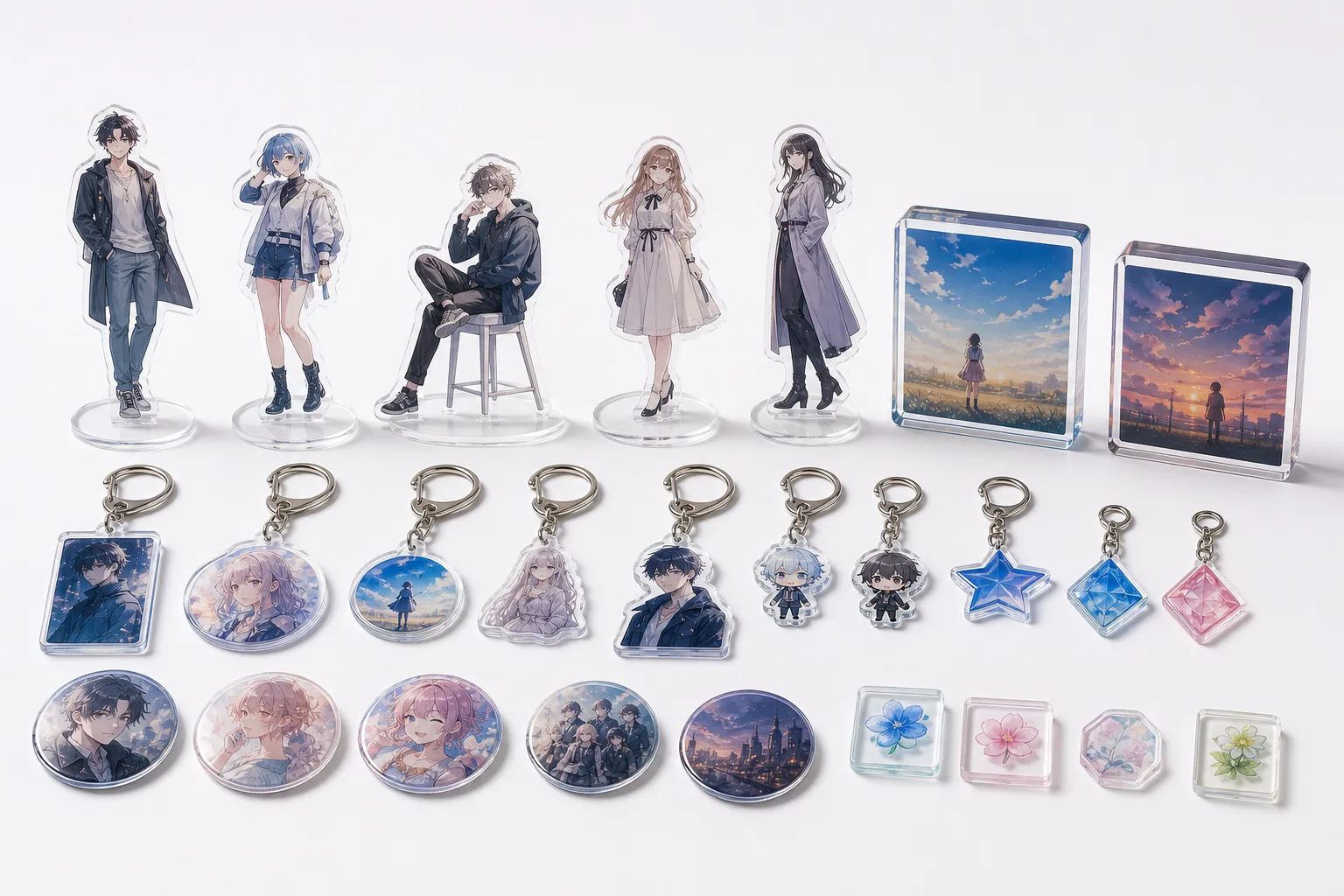
Kuji Prize Projects Need Prize, Packaging, and Delivery Control
Compared with a single acrylic goods order, kuji prize production has more control points: A prize, B prize, C prize, random prize structure, SKU count, assortment ratio, blind packaging, carton labels, and destination requirements.
CharacterCraft Gift can review specifications, sampling, mass production, inspection, packaging, and delivery conditions for anime, game, character IP, event, and e-commerce prize projects.
Related keywords: kuji prize acrylic goods OEM, ichiban kuji prize OEM, random packaging acrylic goods, multi-SKU management, blind packaging, assortment ratio control, character goods OEM.
Best-Fit Customers and Projects
Kuji Operators
Plan prize tiers, insertion ratio, outer labels, and delivery schedule according to the sales method.
IP Companies
Review color, white ink, approval samples, character SKUs, and inspection criteria before production.
Merchandise Planners
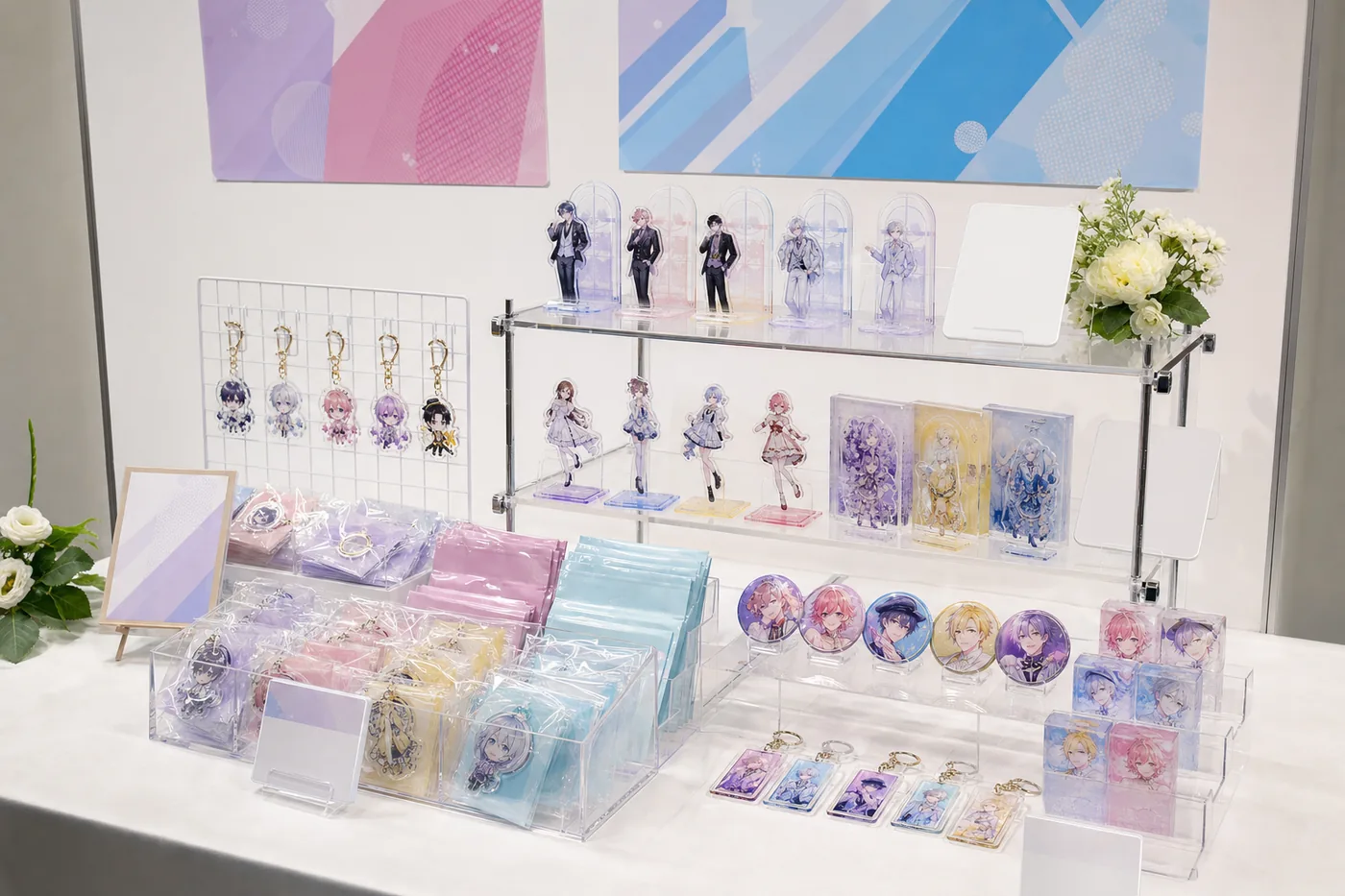
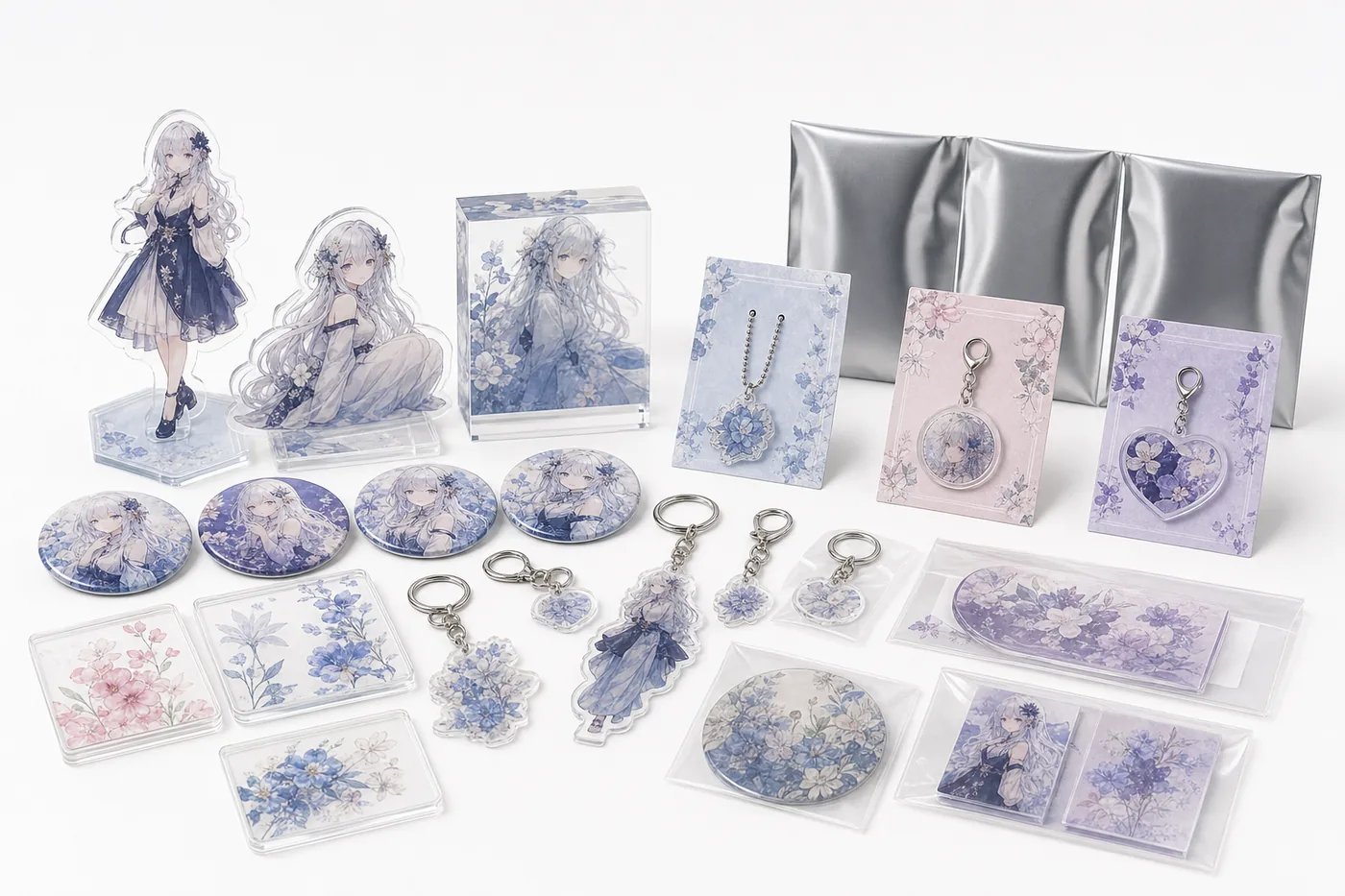
Combine acrylic stands, keychains, badges, blocks, and other items into one prize series.
Events and E-commerce
Prepare individual packaging, JAN labels, SKU sorting, and carton organization for event or warehouse delivery.
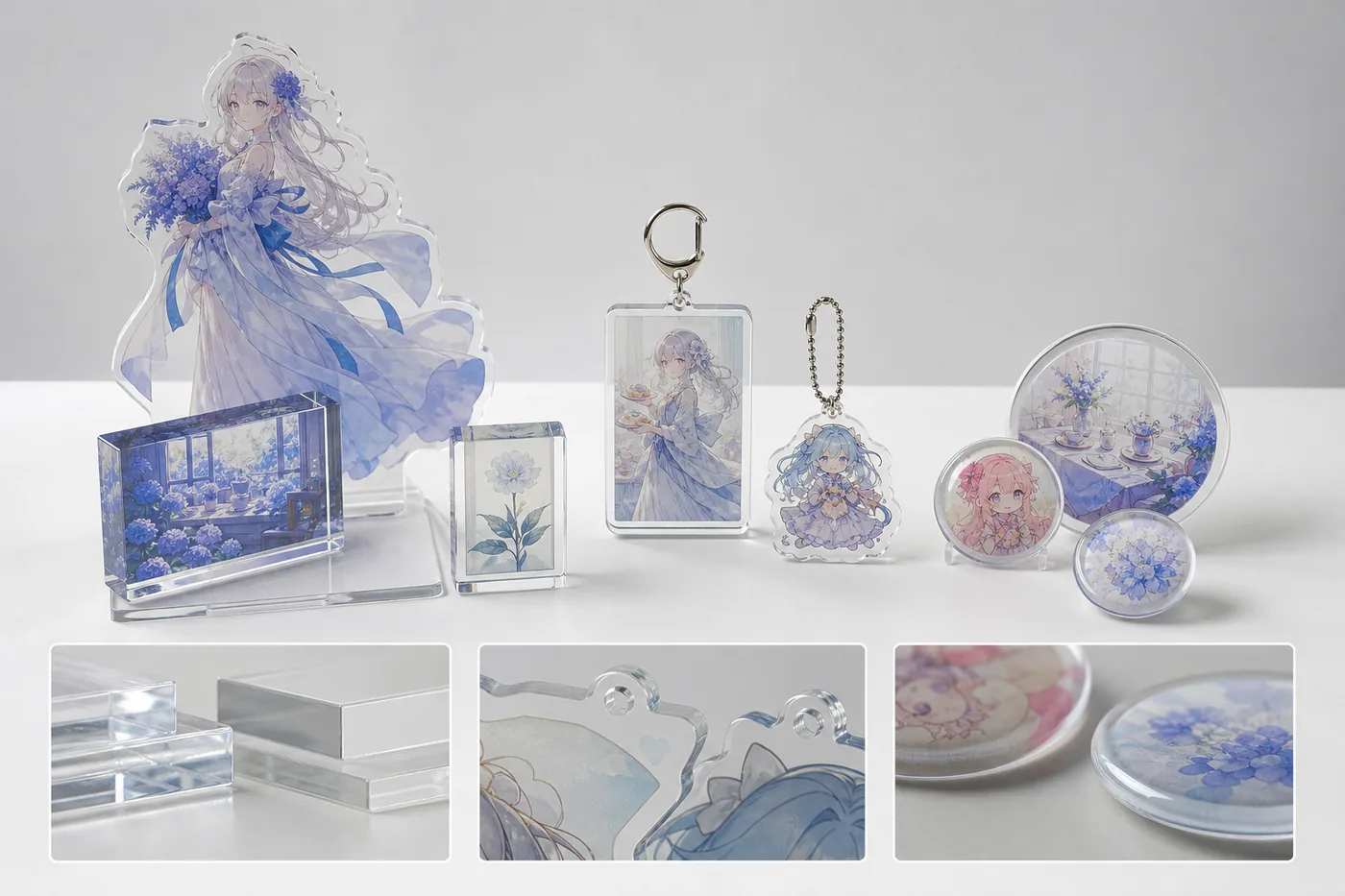
Supported Acrylic Goods Types
Upper prizes may use acrylic blocks or large acrylic stands, while lower prizes may use acrylic keychains, charms, badges, coasters, or mini stands.
Example Prize-Tier Product Design
| Upper prize | Large acrylic stand, acrylic block, or premium display item with stricter sample approval. |
|---|---|
| Middle prize | Standard acrylic stand, acrylic coaster, or acrylic charm series by character. |
| Lower prize | Acrylic keychain, mini charm, badge, or small collectible goods for higher-volume tiers. |
| Random prize | Blind packaging, SKU ratio planning, carton labels, and mix-prevention controls. |
Organize Prize SKUs, Random Packaging, and Ratios First
Before quotation, prepare a quantity table by prize tier and SKU. Confirm whether the project needs regular packaging, blind packaging, random insertion, prize-tier carton separation, or mixed cartons.
- SKU list and character count
- Quantity by SKU and prize tier
- Assortment or insertion ratio
- Backing card, bag, and JAN label needs
- Carton label and destination rules
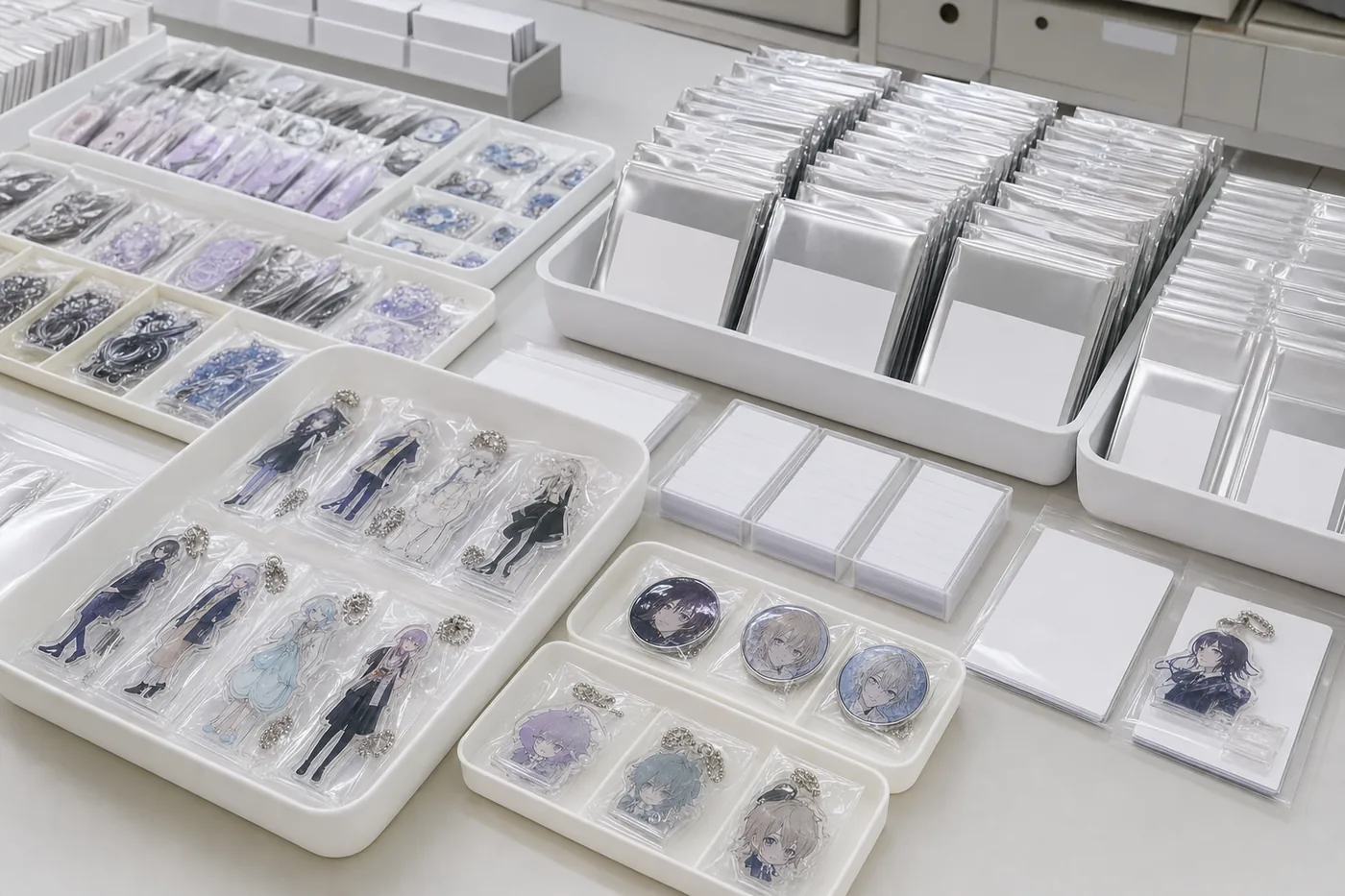
Packaging, Carton, and Delivery Control Points
Insertion Control
Separate by SKU, prize tier, or blind package rule to reduce mixing errors.
Carton Labels
Use outer labels, quantity sheets, and destination notes for warehouse or event delivery.
Delivery Plan
Confirm carton size, delivery term, destination, and target arrival date before shipment.
Main Specifications We Can Review
| Material | Clear acrylic, colored acrylic, special acrylic materials, and thickness by prize type. |
|---|---|
| Printing | UV printing, white ink layer, double-side printing, color sample confirmation. |
| Processing | Laser cutting, holes, bases, fittings, protective film, and surface finish options. |
| Packaging | OPP, backing card, silver bag, blind packaging, JAN labels, carton labels. |
| Delivery | Warehouse, event venue, or designated-address delivery can be discussed by project. |
Common Risks in Kuji Prize Production
SKU Mixing
Prevent with quantity sheets, separated packing, and outer carton labels.
Color Variation
Check samples and confirm white ink and print density before mass production.
Late Delivery
Confirm approval timing, production lead time, inspection, and shipping schedule early.
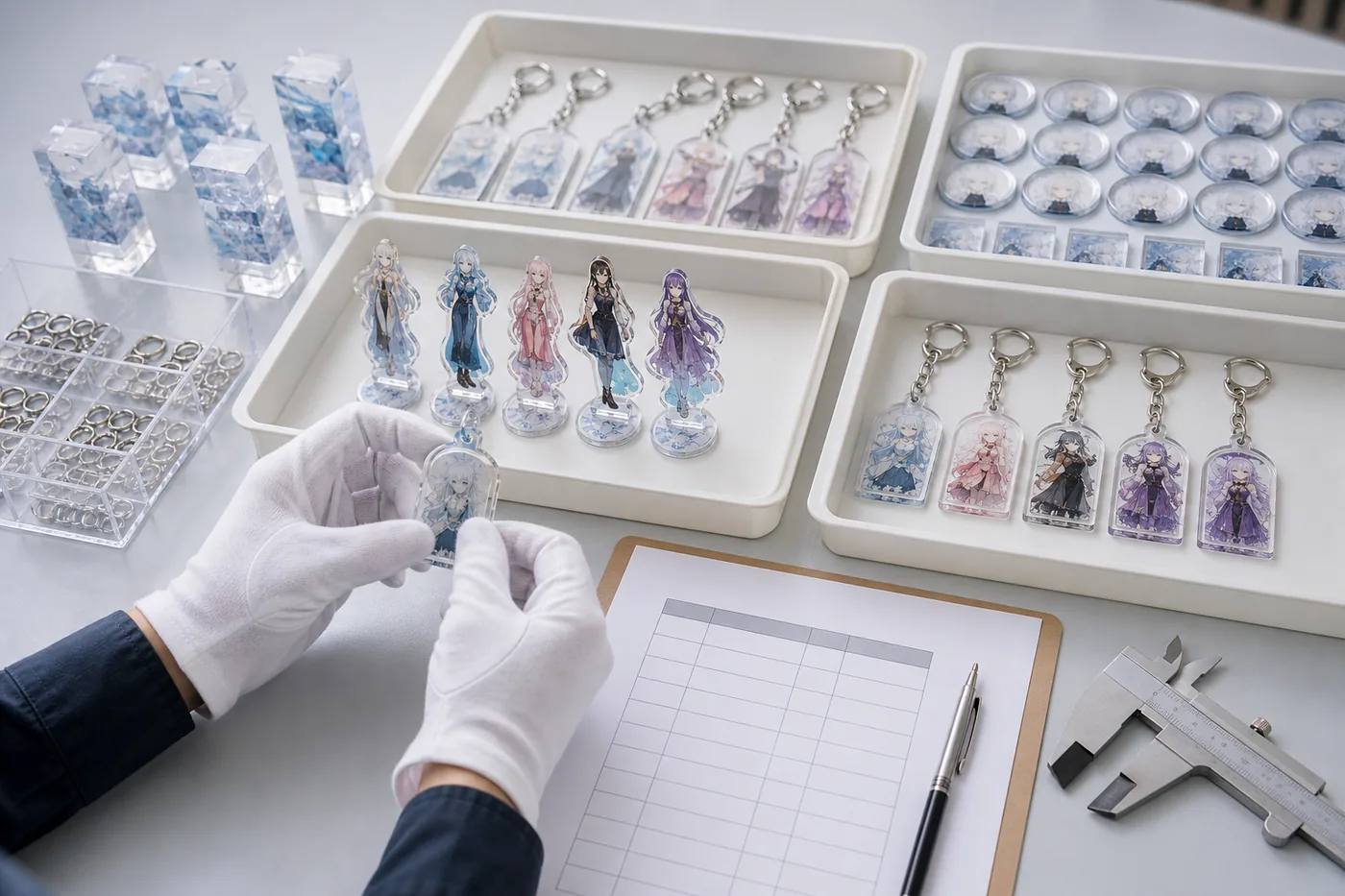
Items to Confirm Before Mass Production
Artwork
- White ink layer
- Cut line and margin
- Character-by-character color checks
Packaging
- Regular or blind packaging
- Backing card, JAN, silver bag
- Prize-tier sorting and quantity table
QC and Delivery
- Scratches, chips, print shift
- SKU mix prevention
- Destination and schedule
Workflow From Production to Japan Delivery
Sample Review Criteria
At the sample stage, review material clarity, print color, white ink, cut line, hole position, fitting strength, package appearance, SKU labels, and the expected inspection standard.
Materials Needed Before Quotation
Please prepare artwork, target sizes, total quantity, SKU count, prize-tier structure, assortment ratio, material, printing, package type, delivery destination, and desired schedule.
Series Expansion Can Be Reviewed Together
If your prize campaign includes acrylic stands, keychains, badges, blocks, and packaging materials, we can organize them as one production plan so SKU quantities, carton labels, and delivery schedules remain consistent.
FAQ
Can kuji prize acrylic goods be produced with multiple SKUs?
Yes. We can organize quantities by character, prize tier, design, and package type, then confirm SKU sorting and carton labels.
Can blind packaging or random insertion be discussed?
Yes, depending on project conditions. OPP, silver bags, backing cards, JAN labels, random insertion, and prize-tier sorting can be reviewed.
Can prize assortment ratios be specified?
Project conditions can be checked after you provide the quantity table for A prize, B prize, C prize, random prizes, and other tiers.
Can DDP delivery to Japan be discussed?
Delivery to Japanese warehouses, event venues, or designated addresses can be discussed together with carton labels, packing method, and delivery schedule.
What should be checked with pre-production samples?
Material appearance, print color, white ink layer, cut line, fittings, package condition, SKU mix prevention, and inspection standards should be confirmed.
What materials are needed for quotation?
Please share artwork, desired size, quantity, SKU count, prize structure, assortment ratio, material, printing, packaging, delivery address, and schedule.
Can each prize tier use a different product type?
Yes. For example, upper tiers can use acrylic blocks or large stands, while lower tiers use keychains, charms, badges, or coasters.
Can carton labels and warehouse sorting be supported?
Depending on conditions, cartons can be sorted by SKU, prize tier, and destination with outer labels and quantity lists.
Related Product Pages
Discuss Kuji Prize Acrylic Goods Specifications
Share your prize structure, SKU table, quantity, artwork, packaging method, delivery destination, and desired schedule.