B2B OEM / LOTTERY ACRYLIC PRIZE GOODS
Lottery Prize Acrylic Goods
Plan prize tiers and SKUs.Review blind packaging and QC.Set carton labels before production.
SHORT ANSWER
Lottery acrylic goods should be planned from the sales method, not only the product shape
Compared with a standard acrylic goods order, lottery prize production needs clear answers for which item belongs to which prize tier, which SKU is inserted at which ratio, and what package state should arrive at the warehouse. We review SKU sheets, package instructions, carton labels, and inspection units together with the product samples.
Separate specs by prize level
Upper prizes emphasize presence, middle prizes emphasize display value, and lower prizes emphasize collectability.
Build the quantity table first
Artwork, size, package type, hardware, and quantity are organized SKU by SKU to reduce mix-ups.
Confirm insertion ratios
For random or secret prizes, assortment ratio and insertion instructions should be fixed before packaging.
Specify the delivery state
Carton labels, carton separation, delivery destination, and target timing are reviewed from the quotation stage.
PRODUCT LINEUP
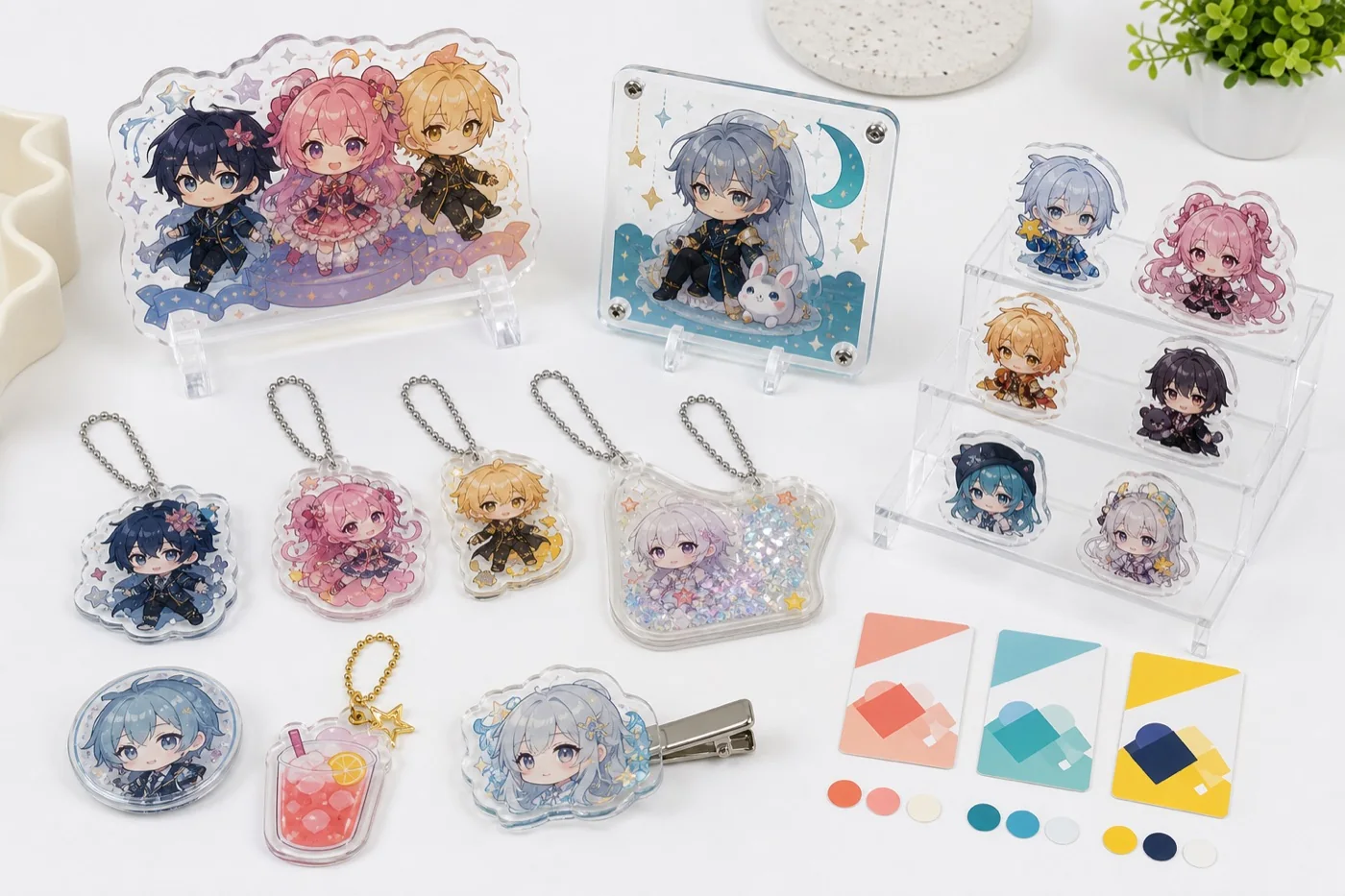
Acrylic item types that work well for lottery prizes
Product size, thickness, stand bases, hardware, printing, and packaging can be adjusted according to the target cost and prize tier. The page is built for projects that combine multiple acrylic formats within one IP or campaign series.
| Upper prize | Large acrylic stands, acrylic blocks, or limited stand-base sets where visual presence and approval samples matter. |
|---|---|
| Middle prize | Standard acrylic stands, acrylic display plates, glitter charms, or series items that balance collectability and production stability. |
| Lower prize | Acrylic keychains, small charms, badge-style acrylic items, and high-SKU goods where cost balance and sorting matter. |
| Random prize | Blind packaging, insertion ratios, SKU sorting, carton labels, and mix-prevention rules should be reviewed before production. |
SKU / BLIND PACKAGE
Random insertion starts with a shared SKU table and ratio sheet
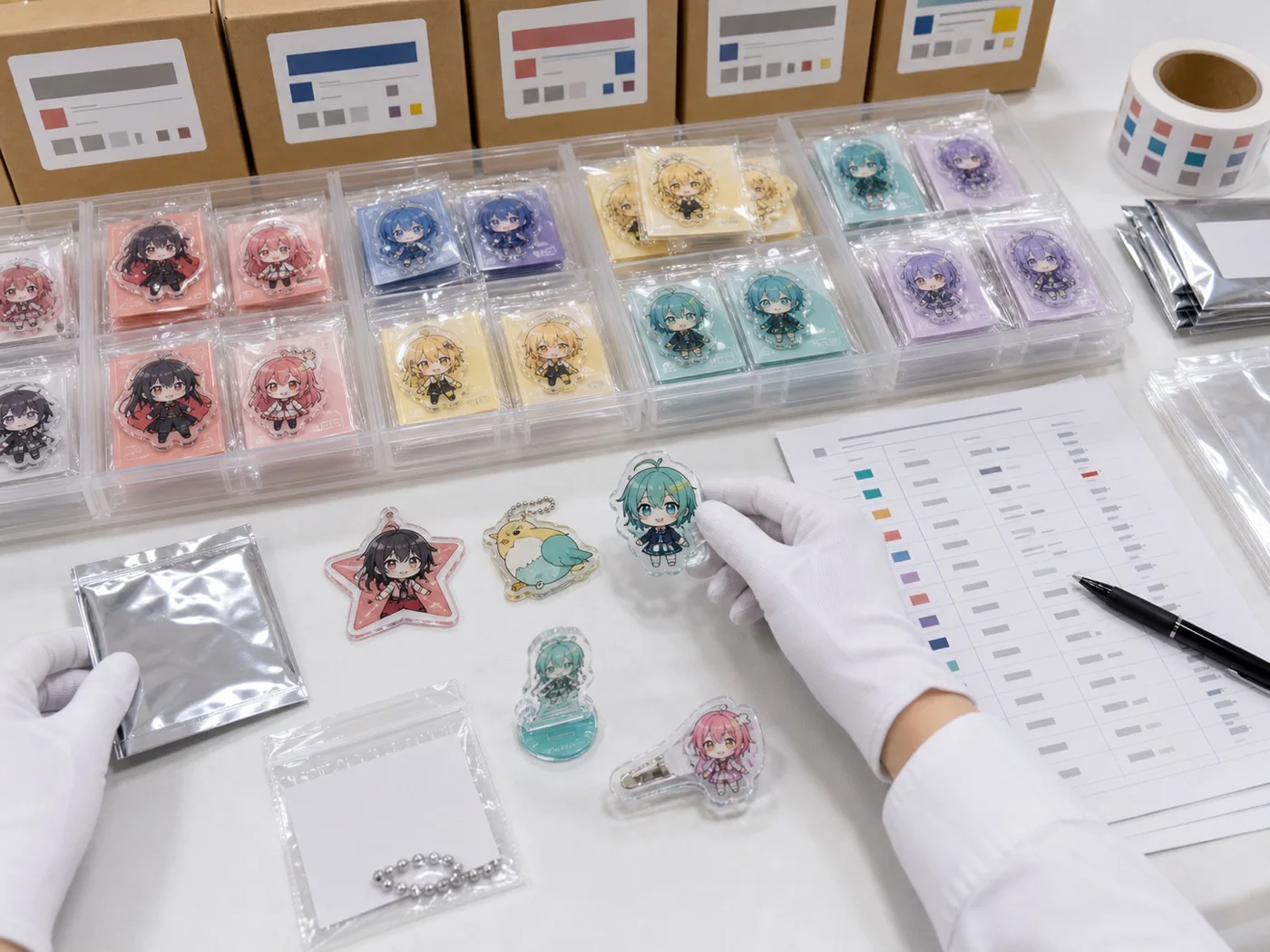
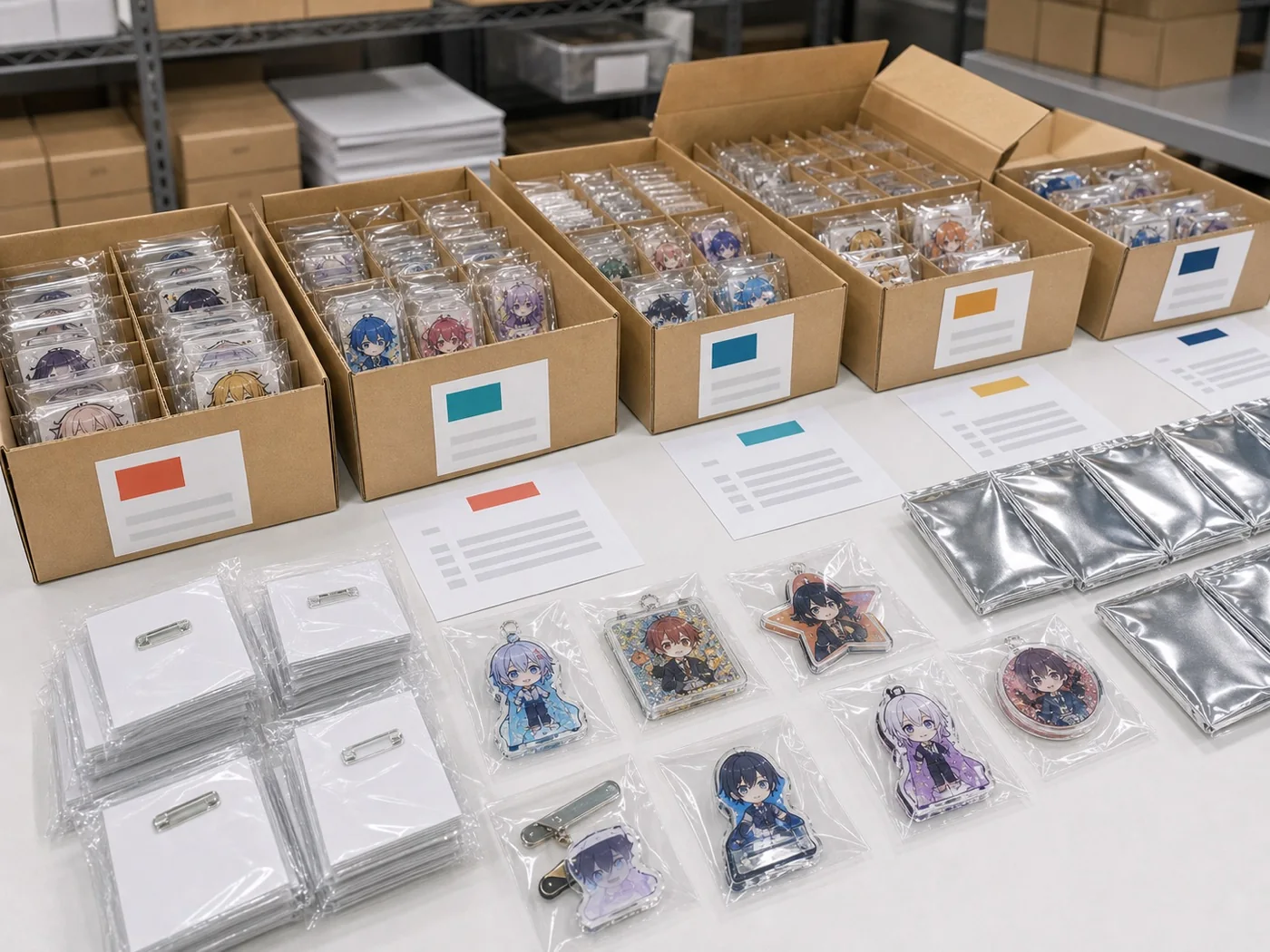
For blind sales and lottery prizes, the SKU table, assortment ratio, spare quantity, inspection unit, and carton label rules should be aligned before packaging. Reviewing package procedures during the sample stage helps reduce mismatches after mass production.
- SKU table: artwork, prize tier, package, quantity, spare quantity, and carton label are managed in one sheet.
- Package instruction: OPP, silver bag, backing card, JAN, insertion direction, and inserts are reviewed together.
- Assortment: regular SKUs, secret SKUs, prize-tier ratios, and carton separation rules are confirmed before packing.
- Review method: package, backing card, labels, and carton display are checked close to the final production state.
SPEC CHECK
Acrylic specifications to review before mass production
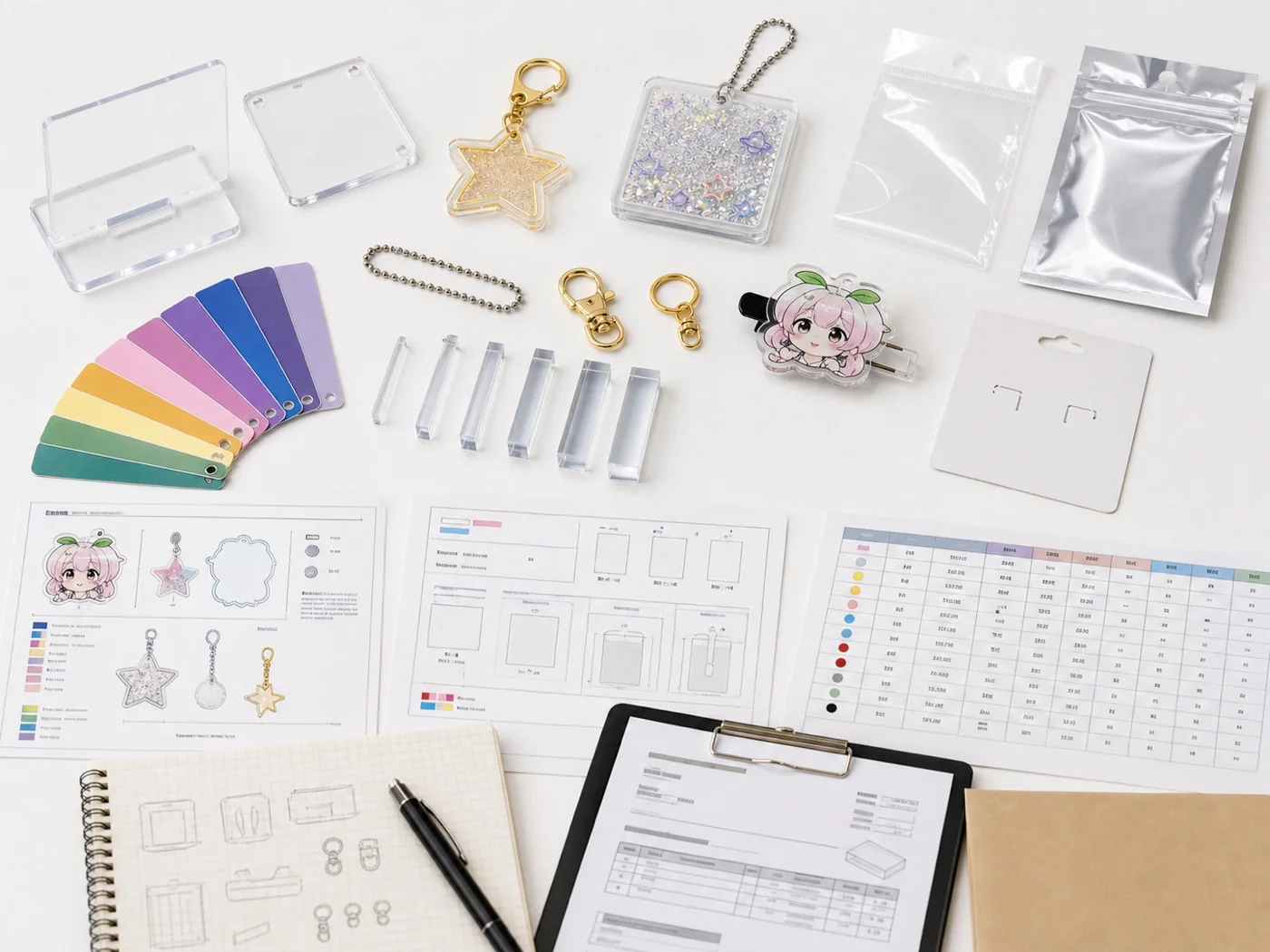
Lottery prize projects often use different sizes and specifications by prize tier. Review not only material and printing, but also package appearance and hardware handling after individual packing.
Material and thickness
Clear, colored, glitter, or special-effect acrylic can be reviewed through sample appearance, thickness, clarity, and edge finish.
Printing and white ink
Single-side, double-side, white ink range, transparent effects, color density, and fine-line reproduction are checked by project.
Processing and hardware
Laser cutting, hole position, stand bases, ball chains, clasps, clips, and fittings are selected by use case and cost target.
Packaging
Individual OPP, backing cards, silver bags, JAN labels, blind packaging, and outer carton labels are planned from the sales method.
Inspection unit
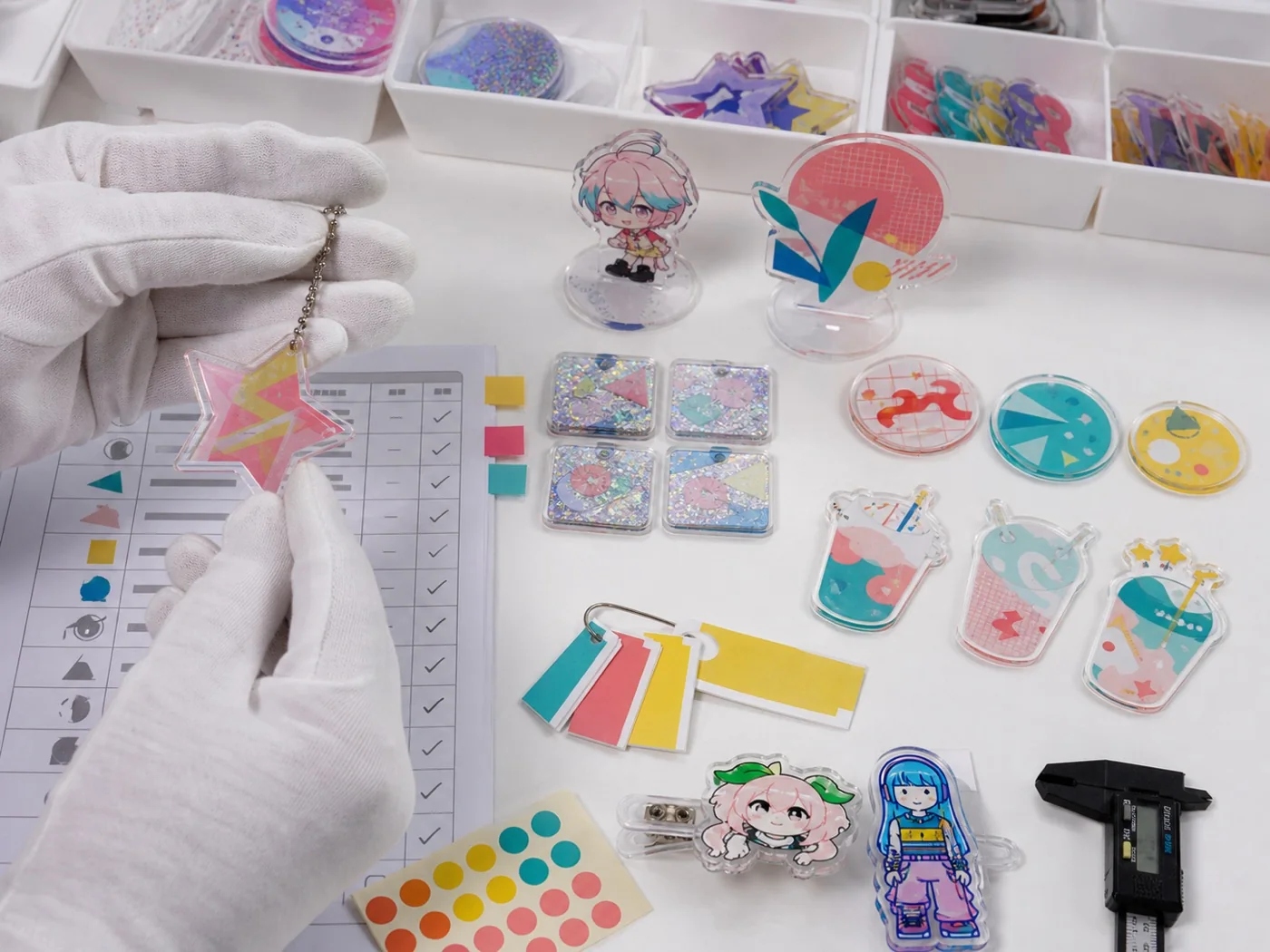
Appearance, print shift, scratches, chips, hardware, insertion, labels, and quantity should have a clear review unit.
Delivery conditions
Japanese warehouse, event venue, designated address, split delivery, and carton display are confirmed at the quotation stage.
RISK CHECKLIST
Common lottery-company risks should be broken down before production
In addition to acrylic product quality, lottery projects carry risks around SKU mixing, insertion mistakes, incorrect carton labels, and delivery timing against the campaign launch date. Instead of making fixed promises, we define review points and judgment standards for each project.
- SKU mix-ups: controlled with SKU trays, quantity sheets, outer carton labels, and insertion instructions.
- Color variation: reviewed through white ink, print density, material color, and approval sample standards.
- Packaging mistakes: backing card, silver bag, JAN, prize labels, and inserts are checked before packing.
- Delivery conditions: launch timing, warehouse receiving rules, split delivery, carton labels, and documents are confirmed.
PACKAGE / DELIVERY
Packaging and carton labels are planned from the final delivery state
Lottery prizes need to be easy for sales teams and warehouses to handle. Beyond making the goods, we review how they are separated by prize tier, SKU, and destination.
| Individual package | OPP, backing card, silver bag, JAN label, inserts, and insertion direction are reviewed. |
|---|---|
| Carton control | Prize tier, SKU, quantity, destination, and carton number display conditions are confirmed. |
| Delivery method | Japanese warehouse, event venue, designated address, and split delivery conditions are organized by project. |
QUOTE MATERIALS
Materials to prepare before quotation
If some details are not fixed yet, temporary assumptions can be used. SKU count, prize-tier quantity, packaging, and target delivery timing strongly affect cost and schedule planning.
- Artwork data: file format, white ink layer, cut line, and approval conditions
- Product specs: size, thickness, material, hardware, stand base, and print method
- Quantity table: prize-tier quantity, SKU count, spare quantity, and secret SKU status
- Packaging specs: OPP, silver bag, backing card, JAN, insertion ratio, and outer labels
- Delivery conditions: destination, target timing, split delivery, warehouse rules, and documents
- Priorities: cost, visual presence, schedule, packaging work, and inspection standard
CAMPAIGN DISPLAY
Acrylic prize series can be planned as one campaign line
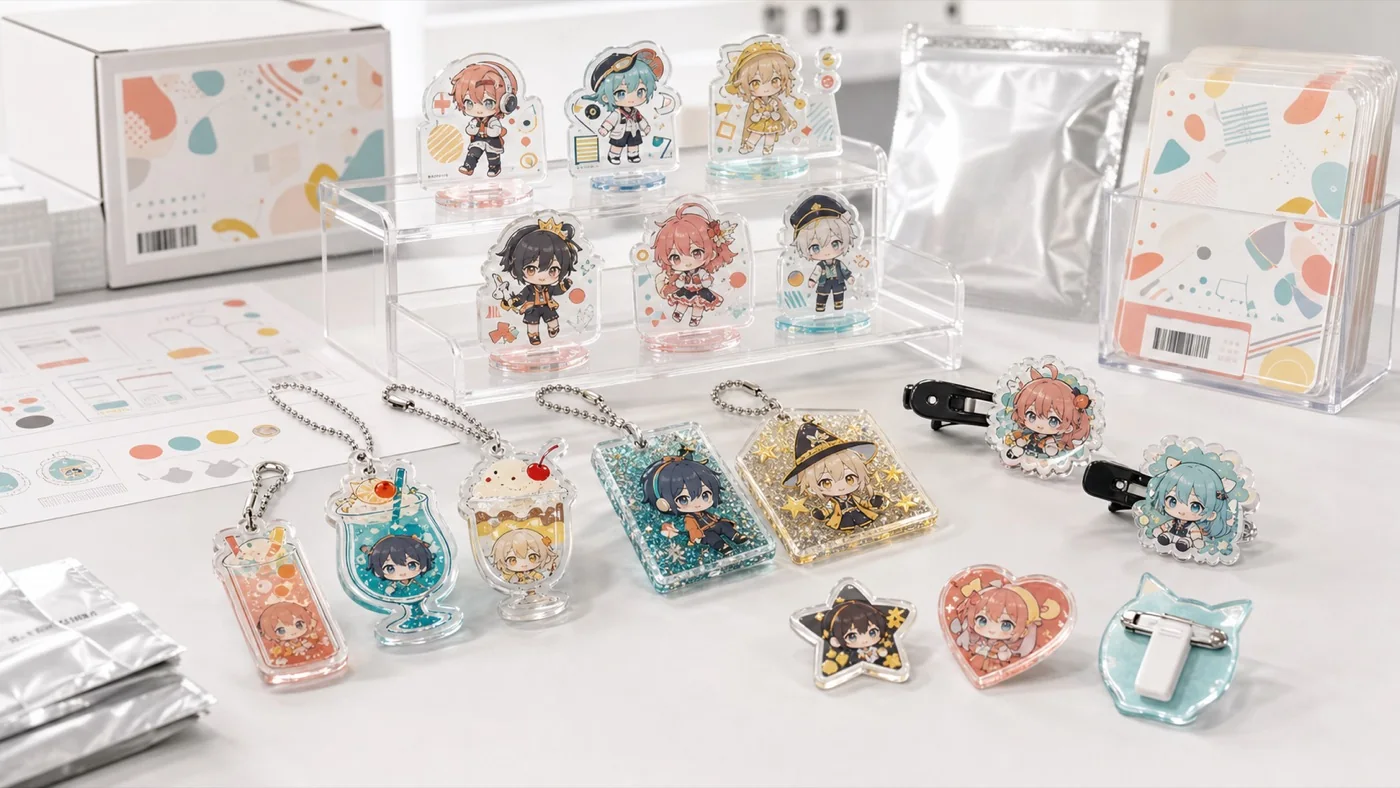
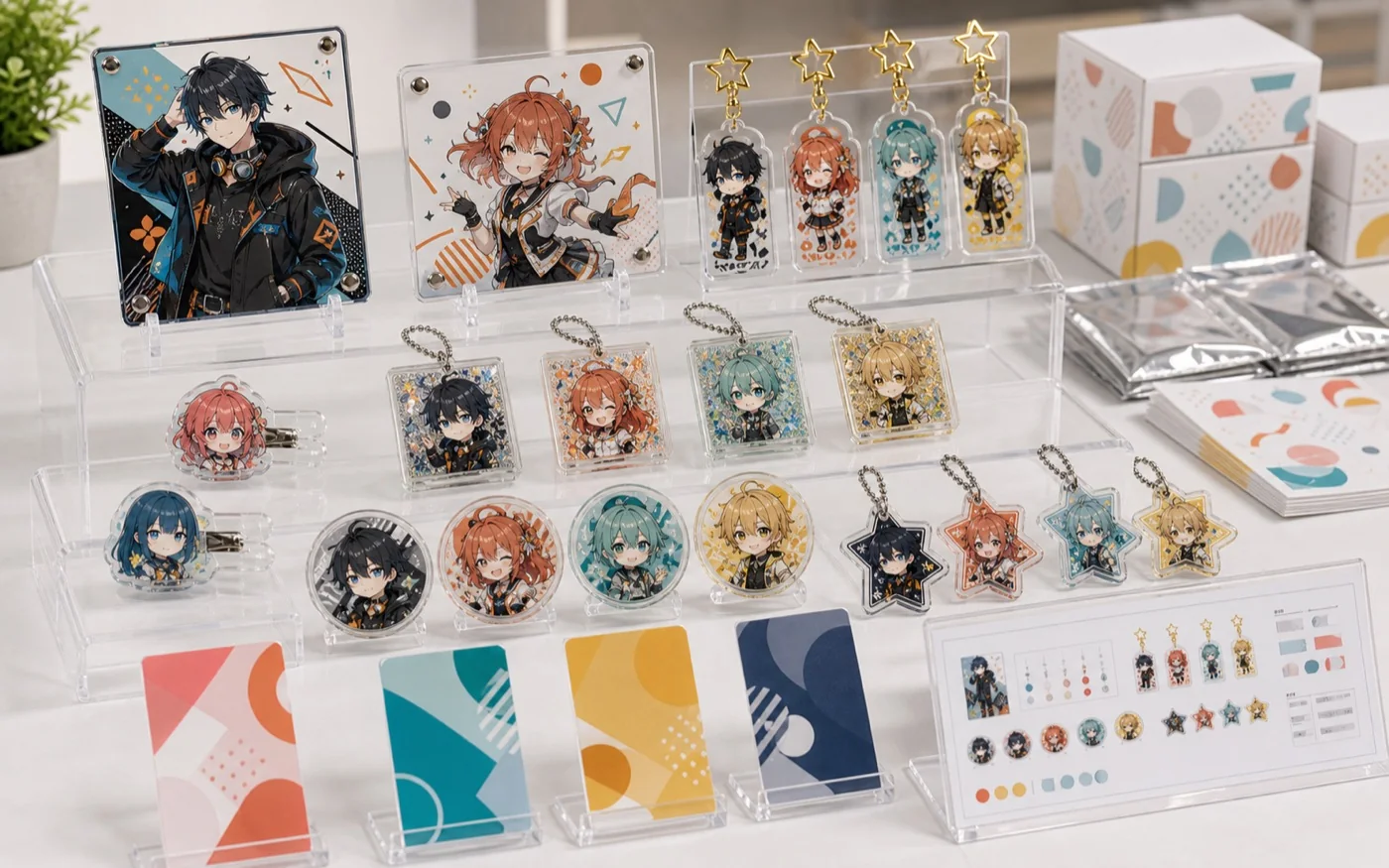
When acrylic stands, keychains, glitter charms, clip items, and badge-style goods share one IP theme, SKU names, quantities, backing cards, color checks, and packaging states should be reviewed across the whole series.
- Sales plan: store lottery, e-commerce, events, and campaign prize use cases can be reviewed.
- Series control: each prize tier can use a different size or specification within the same character series.
- Expansion: related badges, stickers, clear cards, and backing-card materials can be organized together.
OEM FLOW
Workflow from planning to delivery
Lottery prize campaigns often have fixed launch timing, so sample review, approval, mass production, packaging, inspection, and shipment should be broken down early.
Confirm prize items, SKU count, quantity, and target launch timing.
Organize material, print, hardware, packaging, and delivery conditions.
Check color, white ink, cut line, and package state.
Produce according to fixed specifications and SKU tables.
Review insertion, labels, quantities, and carton display.
Confirm designated warehouse, venue, and split-shipment conditions.
FAQ
FAQ
Can multiple SKUs of acrylic prize goods be managed in one project?
Yes. We organize prize tier, artwork, package type, quantity, spare quantity, and carton labels as a SKU table before mass production.
Can blind packaging or random insertion be discussed?
Depending on project conditions, silver bags, OPP bags, backing cards, JAN labels, insertion instructions, assortment ratios, and carton sorting can be reviewed.
Can different acrylic item types be used for A, B, and C prizes?
Yes. Upper tiers can use large acrylic stands or acrylic blocks, middle tiers can use stands or display plates, and lower tiers can use keychains or small charms.
What should be checked with pre-production samples?
Material clarity, print color, white ink layer, cut line, hole position, hardware, stand base, package condition, SKU labels, and inspection standards should be reviewed.
Can delivery to a Japanese warehouse or event venue be reviewed?
Delivery destination, carton size, outer labels, split shipment, target timing, and required documents can be organized according to project conditions.
What materials are needed before quotation?
Please share artwork data, desired size, material, thickness, quantity, SKU count, prize tiers, assortment ratio, packaging requirements, delivery destination, and target schedule.
RELATED PAGES
Related Product Pages
Discuss acrylic prize specifications, SKUs, and packaging
Share the prize structure, SKU table, quantity, packaging requirements, delivery destination, and target schedule for a smoother review.