Start by separating one-time costs from per-unit costs
A quote can look low simply because it excludes a step that another supplier includes. Before comparing unit prices, normalize the sample scope, packaging, inspection, testing and delivery basis.
| Cost group | What to compare | Why quotes differ |
|---|---|---|
| Development | Pattern work, prototype, revisions, approval sample | Different revision and engineering scope |
| Production | Body, clothing, accessories, embroidery and handwork | Different part count and labor minutes |
| Packaging | Polybag, hangtag, backing card, retail box, carton marks | Different materials and packing operations |
| QC and testing | Visual checks, needle detection, attachment checks, lab scope | Different use, age grade and target market |
| Delivery | Factory pickup, port terms, freight, customs and final delivery | Different responsibility and landed-cost scope |
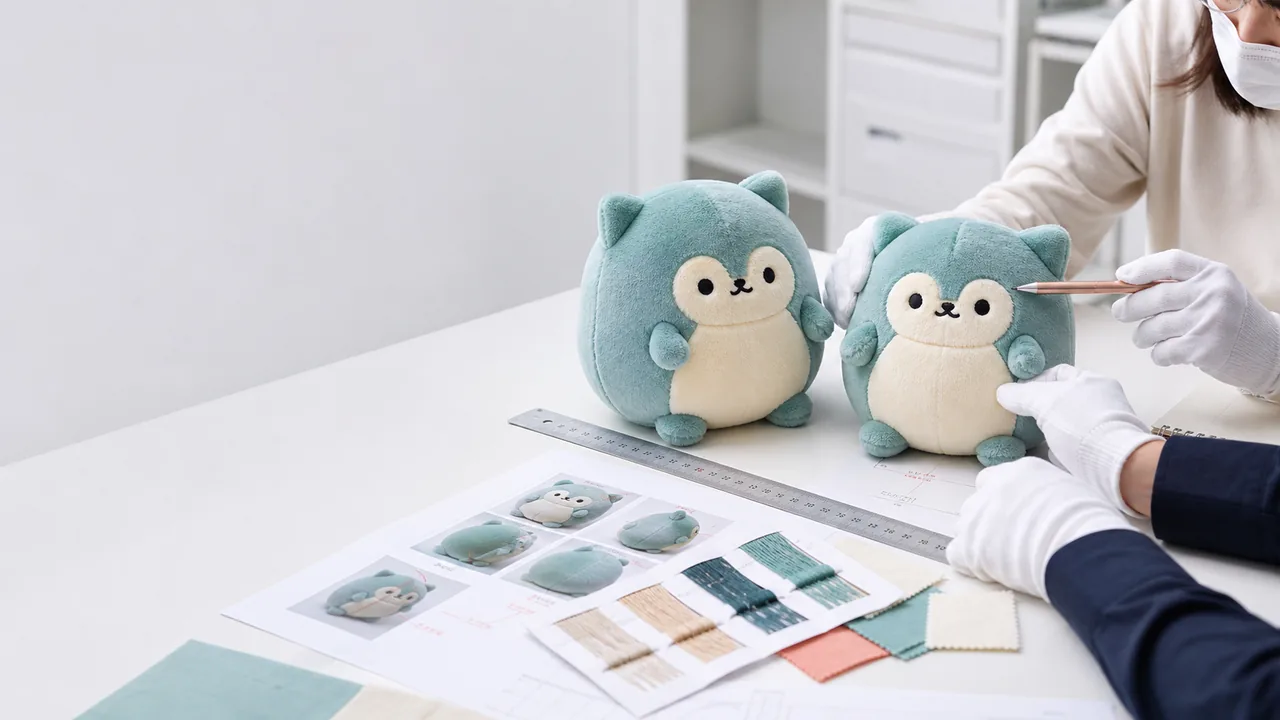
Prototype fees pay for product development
The factory converts flat artwork into sewable patterns, sets proportions and volume, selects fabrics and filling, digitizes embroidery and confirms how the plush should sit or hang. The approved sample becomes the reference for bulk production and inspection.
More pattern pieces create more operations
Hair layers, ears, fingers, tails, removable clothing and small props add cutting, alignment, sewing, turning and shaping steps. A smaller plush is not automatically cheaper when tiny components make assembly harder to control.
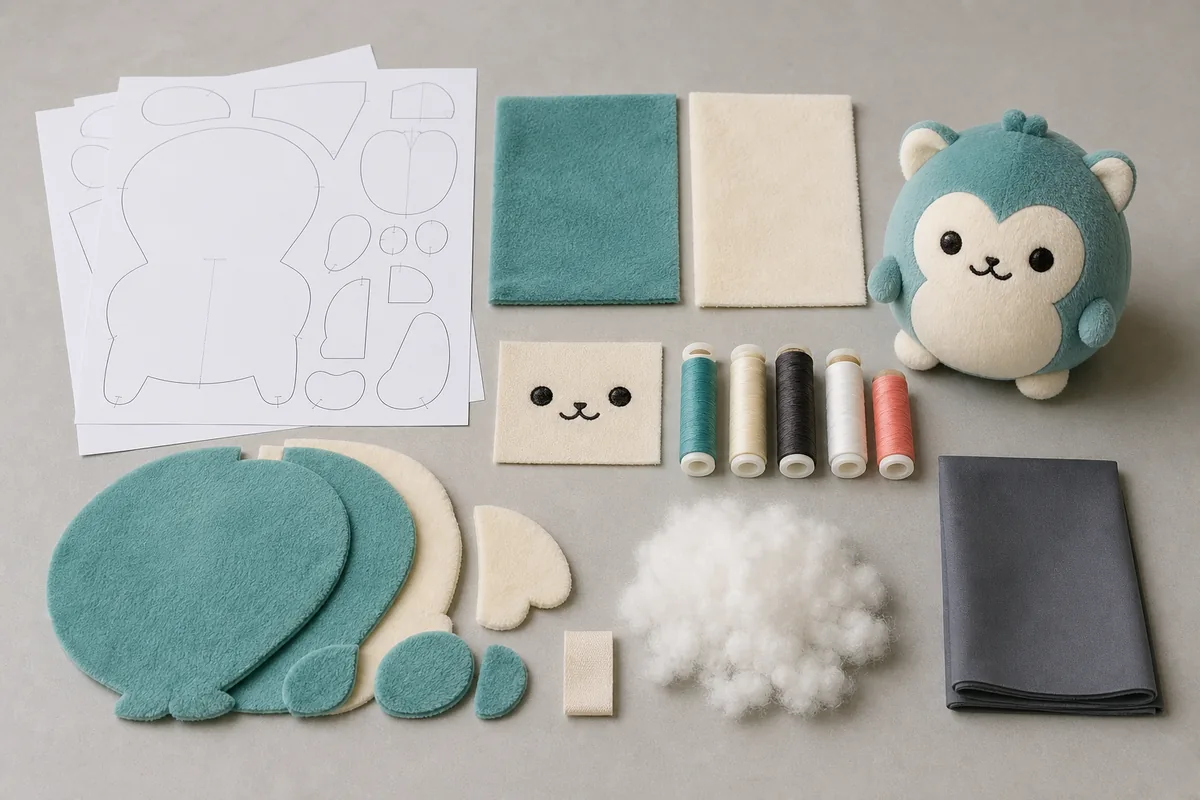
Finished size is only one input; construction and material choices define the production method.
Sewing, embroidery and shaping are time-based costs
Cutting, embroidery setup, sewing, stuffing, closing, shaping, needle detection, visual inspection and packing all require controlled work. Dense embroidery, frequent thread changes and face-critical placement increase both machine time and quality-control time.
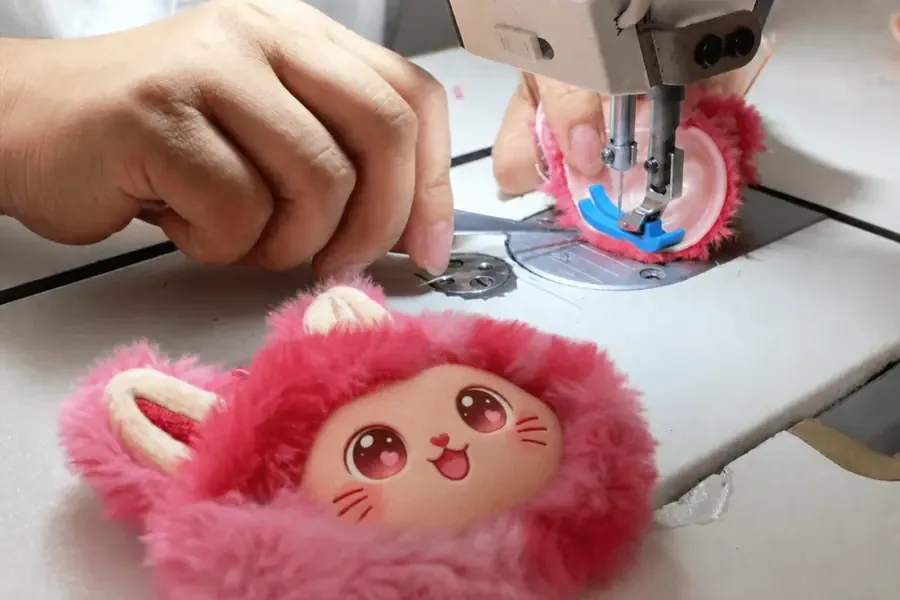
Part count and seam complexity translate into labor minutes on every unit.
Materials and accessories have purchase minimums
Plush fabric, filling, embroidery thread, labels, hardware, backing cards and printed packaging come from different supply chains. A custom-dyed fabric or unique accessory may need to be purchased in a larger batch than one small SKU consumes.
MOQ economics are usually reviewed per design or SKU
Pattern files, embroidery programs, color changes, line setup and sorting are repeated for each distinct design. A 1,000-piece order split across ten SKUs is not produced like one 1,000-piece SKU, even when the total quantity is identical.
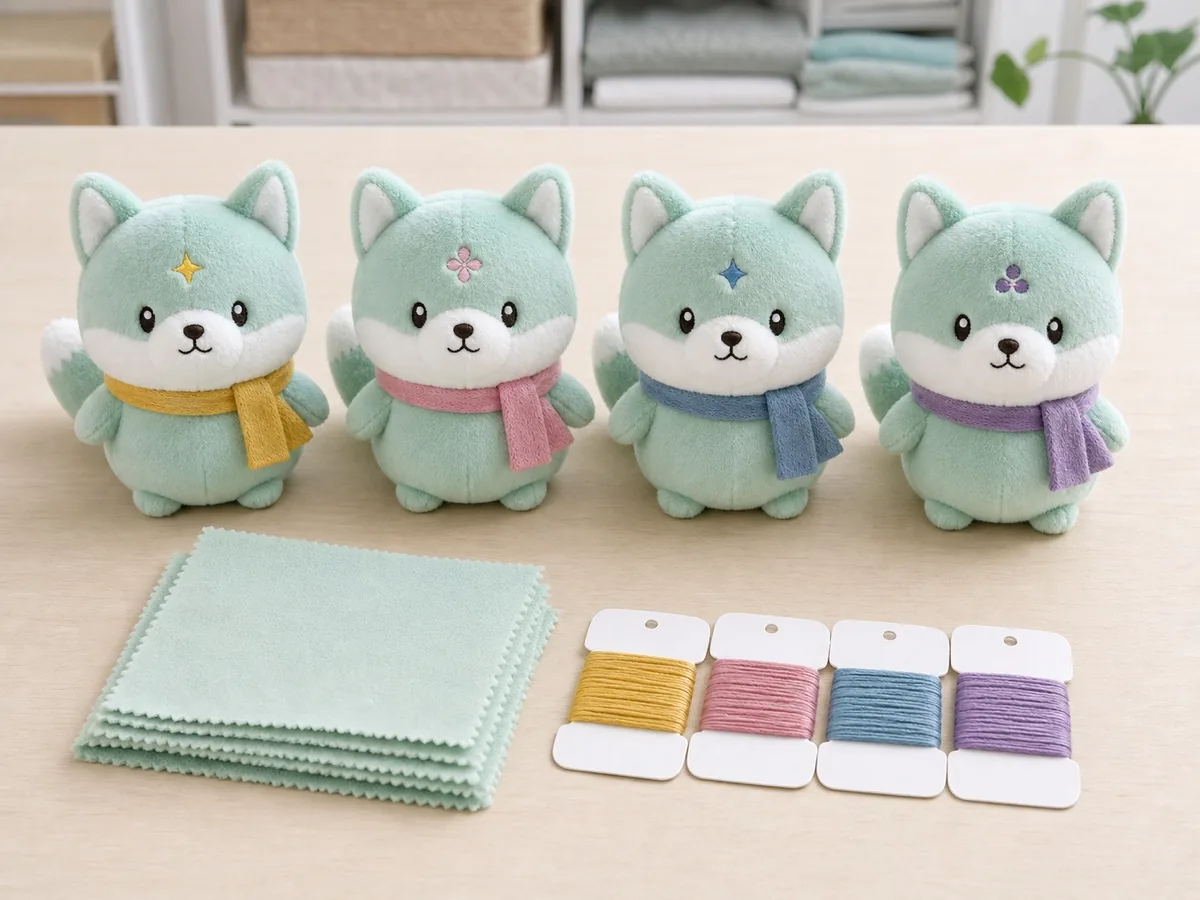
Share materials where practical, but quote the quantity and setup requirements for every SKU.
Retail packaging and target-market requirements change scope
A plain polybag is different from a backing card, hangtag, barcode label, blind pack or printed gift box. Inspection and testing requirements also depend on the product use, target age, sales market and documents requested by the buyer.
Delivery terms can make two unit prices incomparable
A factory-gate or port-based price does not include the same responsibilities as a quote covering international freight, customs support, domestic delivery or split shipments. Always compare the same destination, date and delivery basis.
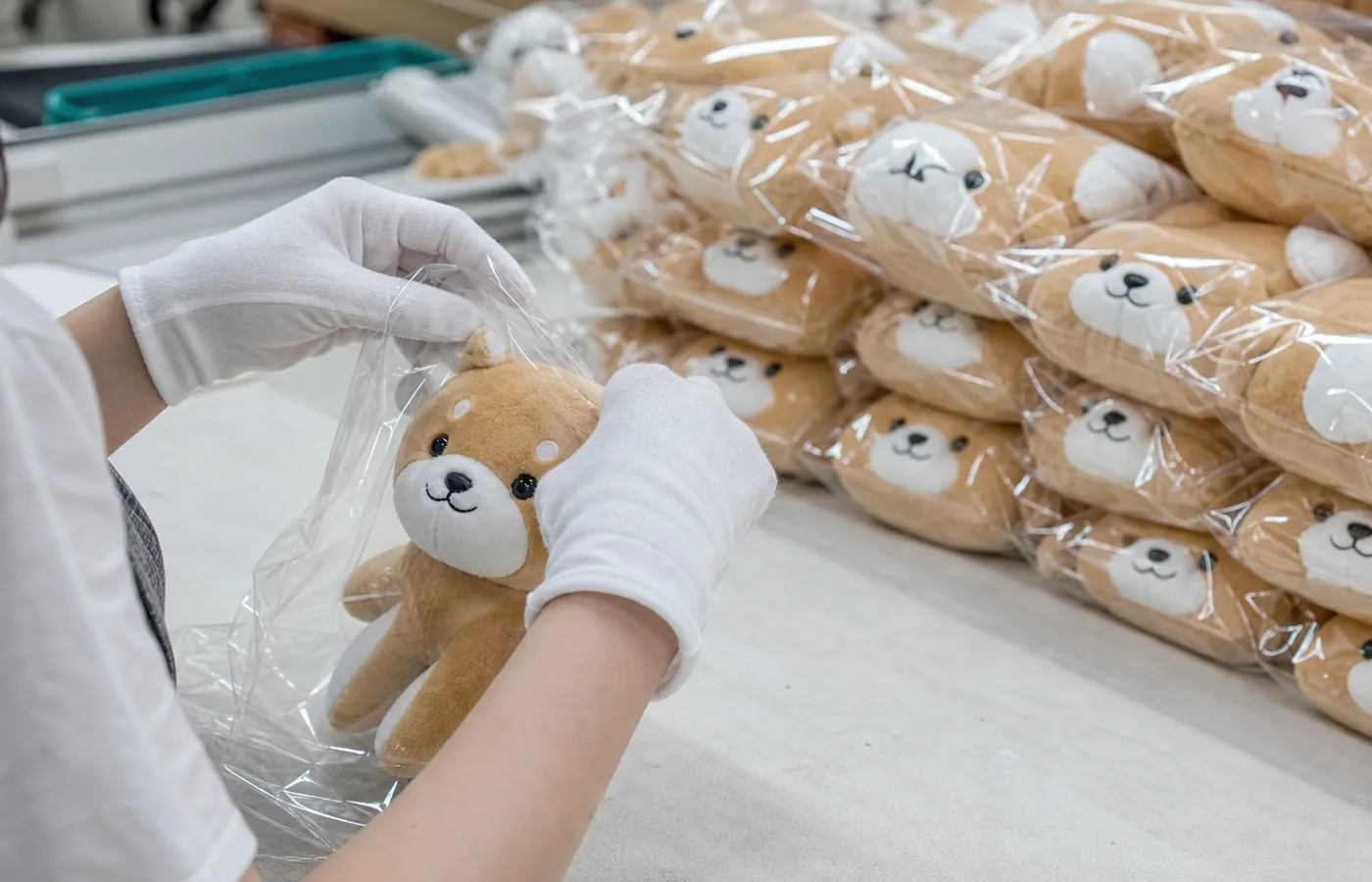
Packaging, QC, documentation and delivery must be defined before quote totals can be compared.
Reduce cost in an order that protects the product
- Lock the face, silhouette, brand colors and required safety or labeling conditions.
- Separate must-have details from hidden or very small decorative features.
- Share fabrics, threads, hardware and packaging across SKUs where practical.
- Review quantity per SKU, not only the combined purchase quantity.
- Match packaging to the real channel: event handout, retail shelf or e-commerce.
- Confirm target markets and required testing before sampling.
- Request quantity-break quotes against one unchanged specification.
Information that makes a custom plush quote more accurate
- Front, side and back artwork
- Finished size and measurement points
- Total quantity and quantity per SKU
- Fabric, colors, embroidery and printing
- Clothing, props, hardware and labels
- Polybag, card, hangtag, box and carton marks
- Target market, age grade and sales channel
- Inspection, testing and document requirements
- Required date, destination and split delivery
- Budget and priority order for design, timing and packaging
Frequently asked questions
Is a smaller plush always cheaper?
No. A small surface with detailed embroidery or tiny three-dimensional parts can be harder to sew and control. Size, construction, materials and quantity must be reviewed together.
Is the prototype fee included in the bulk unit price?
Quote structure varies. Ask whether the first sample, revision rounds, sample shipping and final approval sample are included or listed separately.
Does a high total quantity guarantee the same price across many SKUs?
No. Each SKU may need its own patterns, embroidery program, materials, color changes, packaging and sorting. Provide both total volume and quantity per SKU.
What should buyers compare before comparing unit prices?
Confirm that every quote uses the same specification, quantities, sample scope, packaging, inspection, testing and delivery basis.
Can cost be reduced without removing required quality?
Yes, when required appearance, function and market conditions are locked first. Then review hidden decoration, dedicated materials, SKU differences and packaging that do not add buyer value. Confirm any change through sampling.
Build a quote around the production specification
Share your artwork, size, quantity by SKU, materials, packaging, target market and required delivery date. We can separate development scope from bulk-production conditions before the quote is finalized.