
B2B OEM / ACRYLIC DIORAMA
Custom Acrylic Dioramas
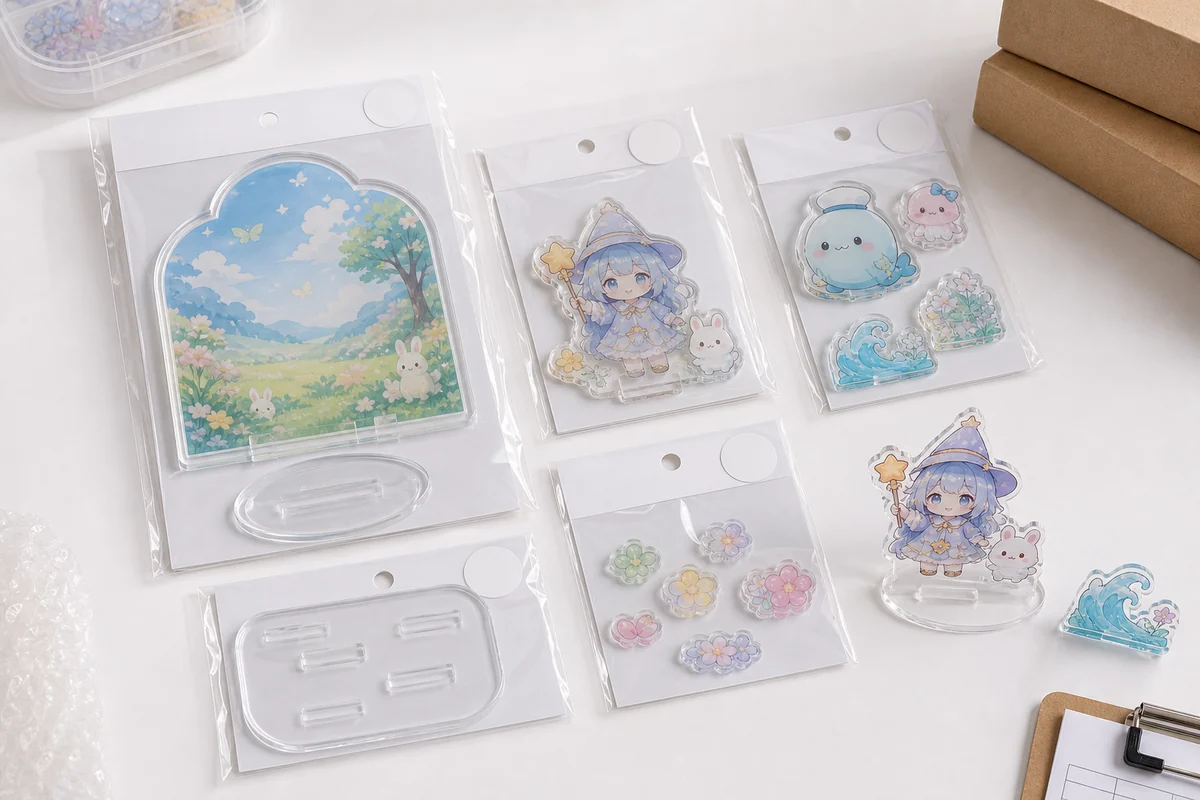
Acrylic dioramas combine a background plate, character standees, foreground parts, and a slotted base to create a layered display scene. Compared with a standard acrylic stand, procurement needs more attention to part count, base slots, insert tolerance, assembly order, protective packaging, and SKU sorting.
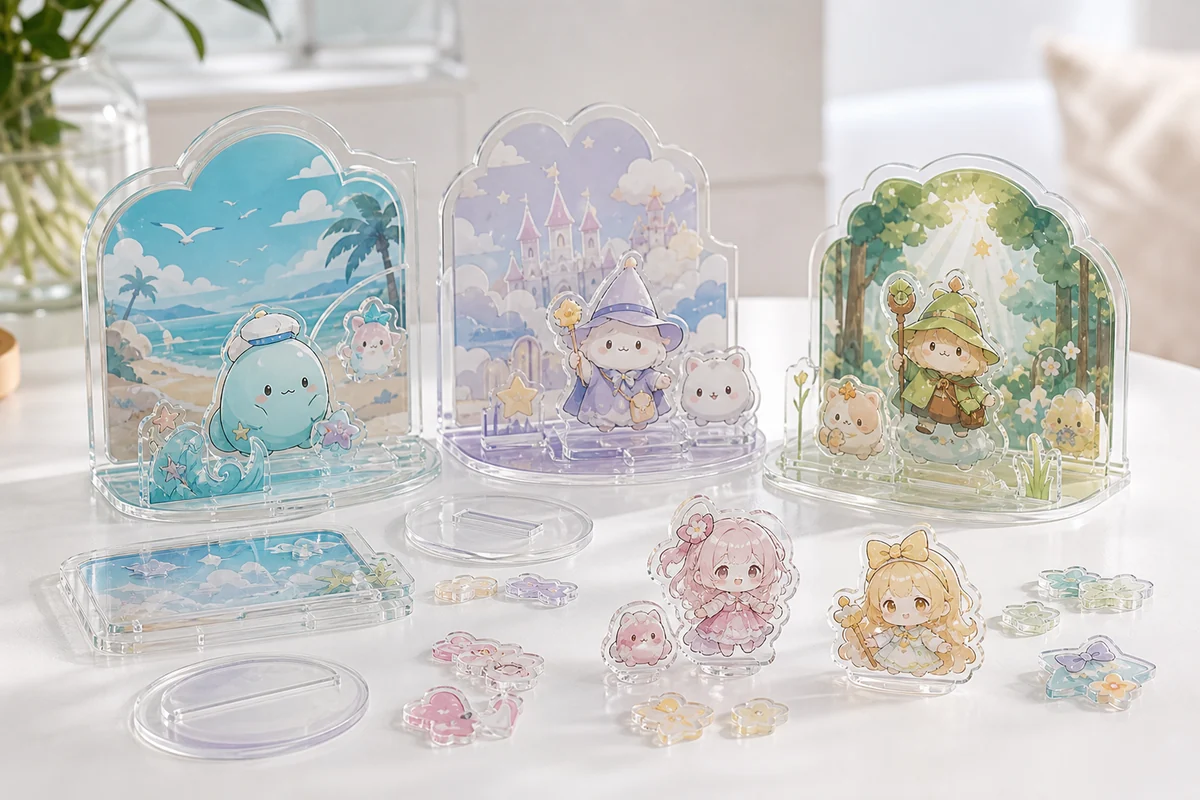
What Acrylic Diorama OEM Means for Buyers
Acrylic diorama OEM is bulk production of layered acrylic display goods made from multiple printed acrylic parts and a slotted base. For reliable production, confirm part count, base slots, acrylic thickness, white-plate printing, protective film, individual packaging, and SKU sorting before sampling and mass production.
30-Second Decision: When Acrylic Dioramas Fit Best
Choose acrylic dioramas when
- The product needs character and background together
- Event merchandise, lottery prizes, or anniversary goods need higher perceived value
- Multiple SKUs will be sold as sets or random packs
Compare other goods when
- Use acrylic stands for a single character display
- Use acrylic blocks when thickness and weight are the main value
- Use acrylic panels for flat wall or desk display
Prepare before quotation
- Background, character, foreground, and base part count
- Base slot count, thickness, tab shape, and insert direction
- OPP bags, backing cards, set boxes, SKU labels, and carton labels
Specification Order Before Quotation
| 1. Sales use | Event merchandise, lottery prizes, ecommerce sets, collaboration cafes, or anniversary goods. Sales method affects part count, packaging, and SKU control. |
|---|---|
| 2. Part structure | Background plate, character parts, foreground accessories, title plate, and base. More parts create richer scenes but require stricter assembly and packaging checks. |
| 3. Base and insert fit | Confirm slot count, slot width, tab shape, insert direction, stability, and compatibility with acrylic thickness during sampling. |
| 4. Printing and white plate | Review UV printing, white plate, transparent areas, fine lines, cutline margin, protective film, and front/back appearance. |
| 5. Packaging and SKU | Plan separated OPP bags, backing cards, set boxes, random packing, JAN labels, carton labels, and SKU quantity sheets. |
Acrylic Diorama vs Acrylic Stand vs Acrylic Block
| Acrylic diorama | Best for building a character scene with background, character, and foreground layers. Part count, base slots, assembly order, packaging sequence, and SKU sorting are key. |
|---|---|
| Acrylic stand | Better for a single character display. The structure is simpler, and the main check is the tolerance between the standee and base. |
| Acrylic block | Best for thickness and premium weight. Clear body, print surface, chipped corners, weight, and protective packaging matter more than insert slots. |
| Acrylic panel | Best for flat display or wall display. Check print area, stand legs, frames, and packing size rather than layered depth. |
Related keywords: acrylic diorama OEM, custom acrylic diorama, acrylic stand base slots, acrylic goods white plate printing, character goods OEM, China factory, SKU sorting, DDP delivery to Japan
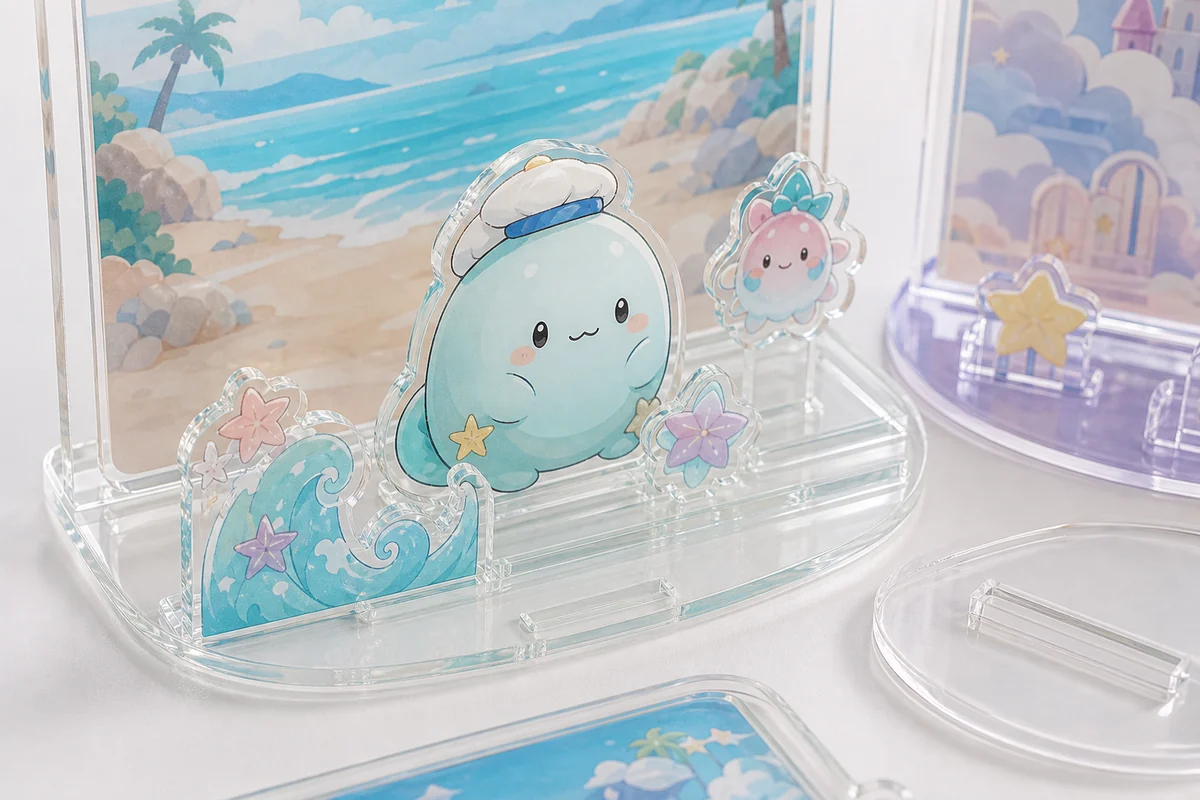
Check Base Slots and Insert Tolerance with Samples
Acrylic dioramas use multiple parts in one base, so checking only one slot is not enough. Review acrylic thickness, printed surface, protective film, tab shape, and insertion angle with a fully assembled sample.
- Risk of tight slots, loose slots, tilting, or parts falling out
- Front/back order and part interference check
- Base size and carton quantity balance
- Related: acrylic stand base design
Manage Background, Character, and Foreground Parts Separately
If every piece is treated like the same flat acrylic part, white plate, cutline, transparency, and layer visibility can drift. Separating each part by job makes sampling, inspection, and packaging much clearer.
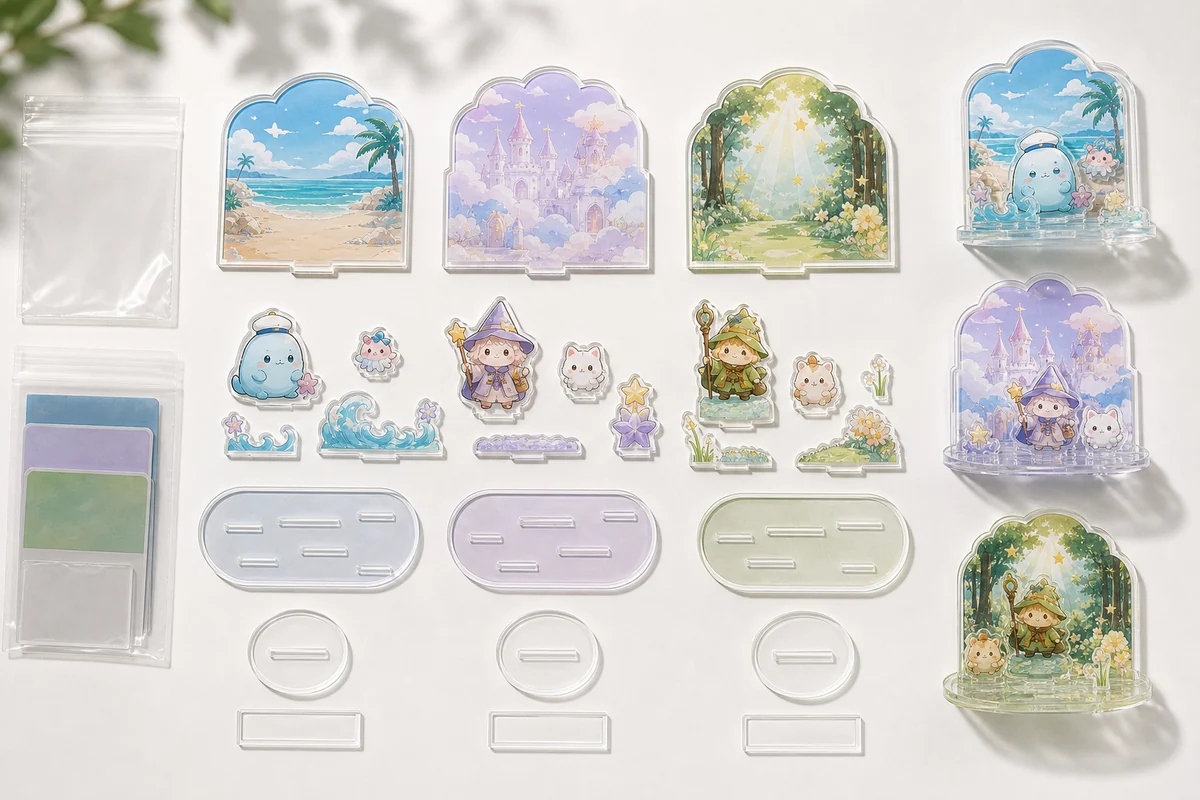
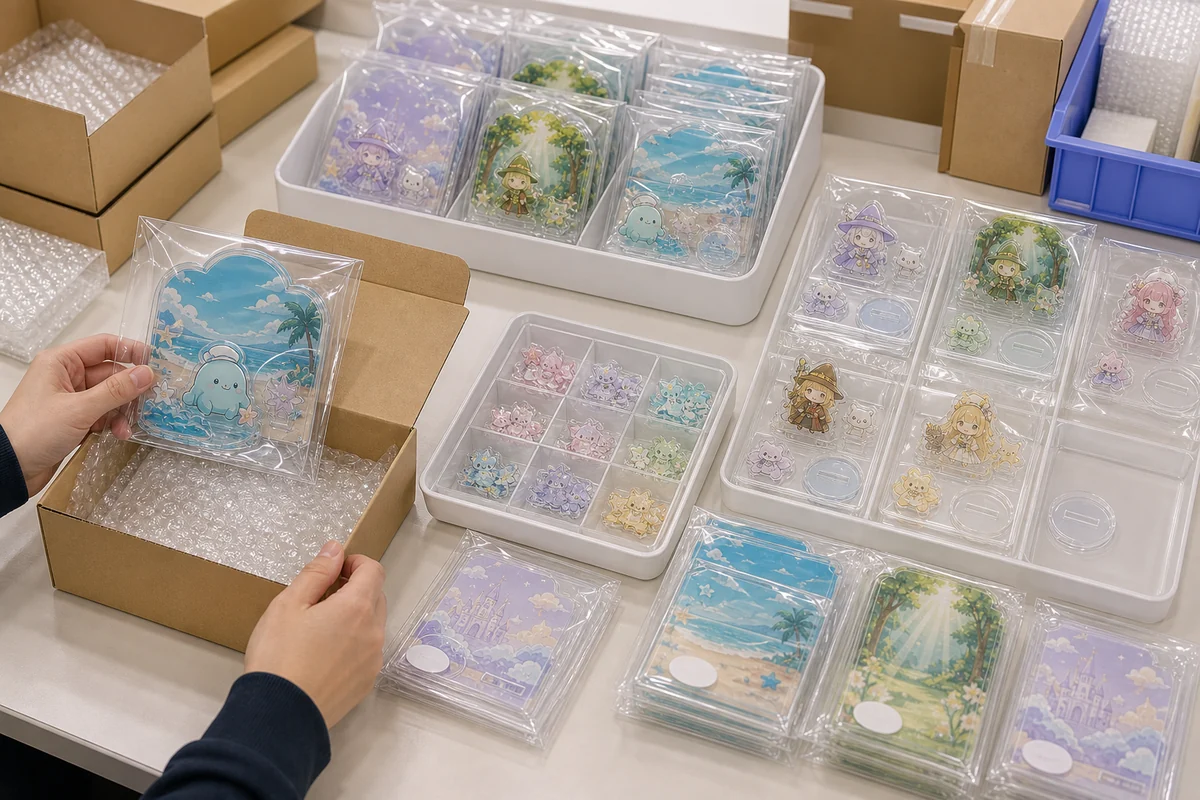
Images for Printing, Packaging, and SKU Shipment Checks
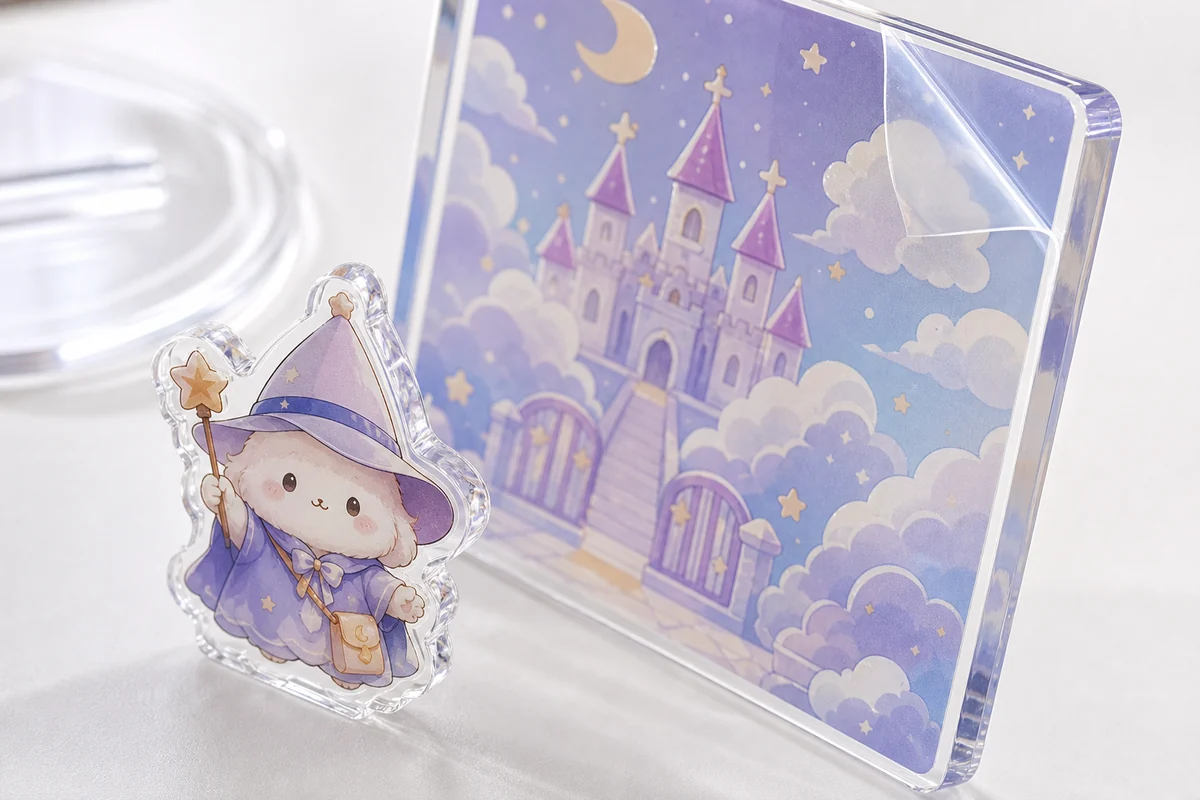
Common Mass Production Risks
Parts do not fit or tilt
Confirm slot width, acrylic thickness, tab shape, and protective film with all parts inserted together.
Wrong part combinations
Link background plates, characters, foreground parts, bases, backing cards, and JAN labels by SKU before packing.
Scratches or chipped corners
Use separated OPP bags, protective film, backing cards, dividers, and carton quantity rules so printed surfaces do not rub during shipment.
Flow from Production to Delivery
Quote Checklist Before Inquiry
| Artwork data | AI, PSD, PDF, white plate, cutline, part-by-part artwork, SKU list, and color references. |
|---|---|
| Body specs | Finished size, part count, acrylic thickness, base size, slot count, insert direction, and single/double-side printing. |
| Packaging specs | Separated OPP bags, backing cards, set boxes, random packing, JAN labels, SKU labels, and carton labels. |
| Delivery terms | Quantity, SKU breakdown, delivery address, target delivery date, DDP terms, inspection standard, and carton quantity. |
Frequently Asked Questions
What is acrylic diorama OEM production?
It is OEM production for multi-part acrylic display goods made with a background plate, character parts, foreground accessories, and a slotted acrylic base. It fits event merchandise, lottery prizes, ecommerce sets, and anniversary goods.
How is an acrylic diorama different from an acrylic stand?
An acrylic stand is usually a single character display. An acrylic diorama uses several acrylic pieces, so base slot count, insert tolerance, layer order, part matching, and packaging sequence are more important.
What should be checked if parts are too loose or too tight?
Before mass production, confirm slot width, acrylic thickness, tab shape, insert direction, protective film, and printed-surface thickness with an assembled sample.
Can you support multiple SKUs or random packing?
Yes. Background plates, character parts, foreground pieces, bases, backing cards, JAN labels, and carton labels can be managed by SKU to reduce mix-ups and quantity errors.
How should packaging be planned?
Packaging can include separated OPP bags, protective film, backing cards, set boxes, random packing, SKU labels, and carton labels. Parts should be protected so printed surfaces and edges do not rub during shipment.
What information is needed for a quote?
Please share finished size, part count, acrylic thickness, base structure, printing details, white-plate requirements, quantity, SKU count, packaging method, delivery address, target delivery date, and DDP needs.
Related Products and Pages
Acrylic Diorama OEM Specification Review and Quote
If finished size, part count, base slots, packaging, SKU count, and delivery schedule are available, we can organize a practical specification for mass production.
Procurement controls for Custom Acrylic Dioramas
Custom Acrylic Dioramas are quoted for B2B production after the buyer confirms layer count, slot fit, scene depth, assembly order, protective packaging, and bulk inspection evidence. A useful supplier comparison therefore covers the finished product, approval sample, packaging and inspection evidence, rather than unit price alone.
Search intent boundary: This page owns the specific product intent for custom acrylic dioramas. Use the acrylic hub for the complete product family and the linked guides for artwork, inspection and packaging decisions.
What to lock before approval
For custom acrylic dioramas, approve the construction as one connected specification. A change to one component can affect appearance, function, packing dimensions or inspection, even when the front artwork is unchanged. The six controls below should appear in the same quotation, sample record and inspection instruction.
| Decision | What the buyer must define | Acceptable approval evidence |
|---|---|---|
| Layer Count | Define layer count by SKU before quotation and do not replace it with a vague good-quality instruction. | Keep an approved dimensioned specification or controlled reference that production and QC can identify during bulk release. |
| Slot Fit | Define slot fit by SKU before quotation and do not replace it with a vague good-quality instruction. | Keep an approved artwork proof and component record that production and QC can identify during bulk release. |
| Scene Depth | Define scene depth by SKU before quotation and do not replace it with a vague good-quality instruction. | Keep an approved representative physical sample that production and QC can identify during bulk release. |
| Assembly Order | Define assembly order by SKU before quotation and do not replace it with a vague good-quality instruction. | Keep an approved sellable pack or use-condition check that production and QC can identify during bulk release. |
| Protective Packaging | Define protective packaging by SKU before quotation and do not replace it with a vague good-quality instruction. | Keep an approved inspection photo and measured result that production and QC can identify during bulk release. |
| Bulk Inspection Evidence | Define bulk inspection evidence by SKU before quotation and do not replace it with a vague good-quality instruction. | Keep an approved SKU-linked bulk report and carton trace that production and QC can identify during bulk release. |
Failure risks to close
- Layer Count is not controlled: suppliers can interpret the same request differently and the quotation is not comparable.
- Slot Fit is not controlled: the physical sample can pass while the wrong revision enters bulk production.
- Scene Depth is not controlled: packing or use conditions reveal a failure that a loose visual sample did not show.
- Assembly Order is not controlled: the buyer cannot separate an isolated defect from a repeated batch or SKU problem.
Quote inputs
- project name and target market for Custom Acrylic Dioramas
- editable artwork and the latest revision code
- finished dimensions and quantity for every design
- layer count
- slot fit
- scene depth
- individual packaging, label and barcode requirements
- inspection evidence and acceptance criteria
- delivery destination and required arrival date
Sample-to-bulk control
Approve a finished sample that represents the intended artwork, construction and sellable package. Record the sample date, revision, dimensions, material or component codes, visual limits and function checks. If a later change affects artwork, material, hardware, assembly or packaging, identify the impacted SKUs and obtain a new approval instead of relying on the earlier sample.
For bulk inspection, use the same viewing conditions, measurement points and pass/fail language used during approval. The report should identify the purchase order, SKU, batch, sampled quantity and result. Photographs are useful evidence only when they show the relevant scale, lighting, label or test condition and can be traced to the inspected lot.
When comparing quotations, separate confirmed specifications from assumptions. Ask each supplier to identify exclusions, proposed substitutes, sampling scope, packaging labor and delivery basis. A lower figure is not equivalent when it omits a component, uses a different inspection level or assumes that several designs can share one uncontrolled pack. Close those differences before price approval so the purchase decision remains auditable.