
B2B OEM / ACRYLIC COASTER
Custom Acrylic Coasters
Acrylic coaster OEM is for producing clear acrylic character goods for collaboration cafes, event merchandise, prize goods, and ecommerce set products. Confirming shape, thickness, white plate, print surface, protective film, packaging, and SKU sorting before production helps reduce misunderstandings after mass production starts.
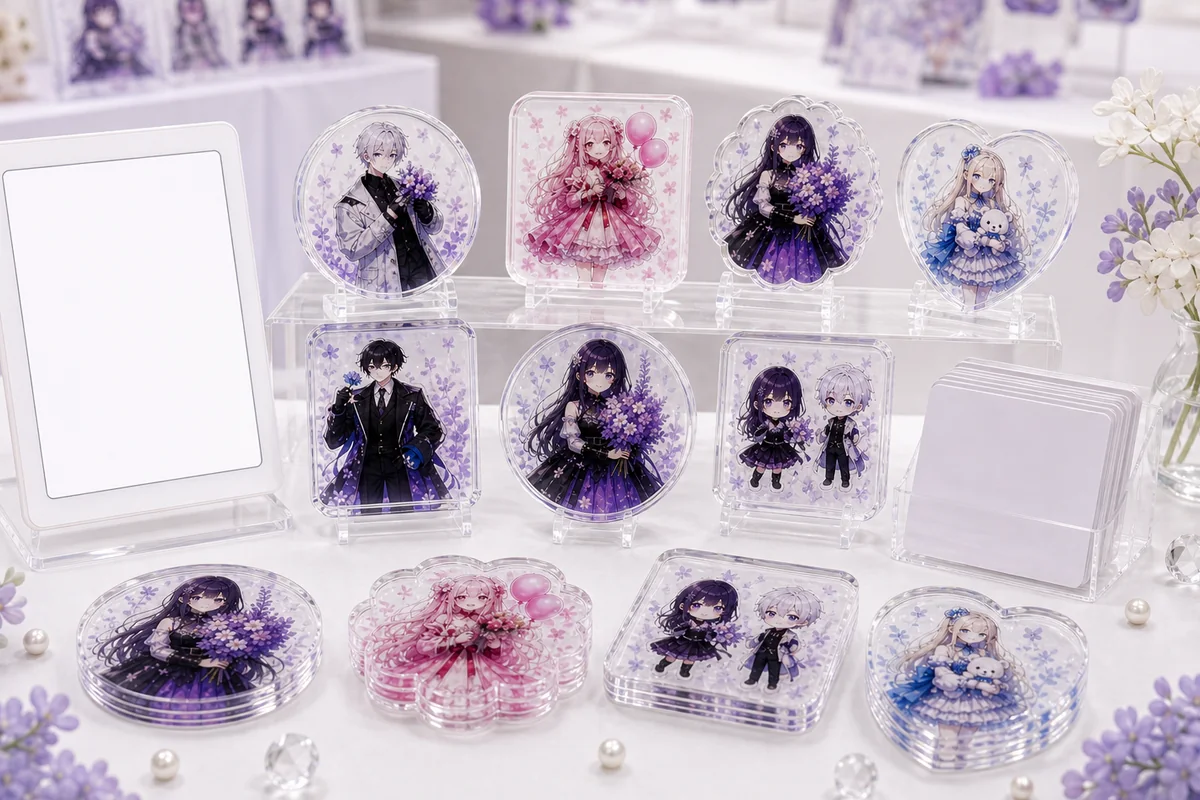
What Acrylic Coaster OEM Means for Buyers
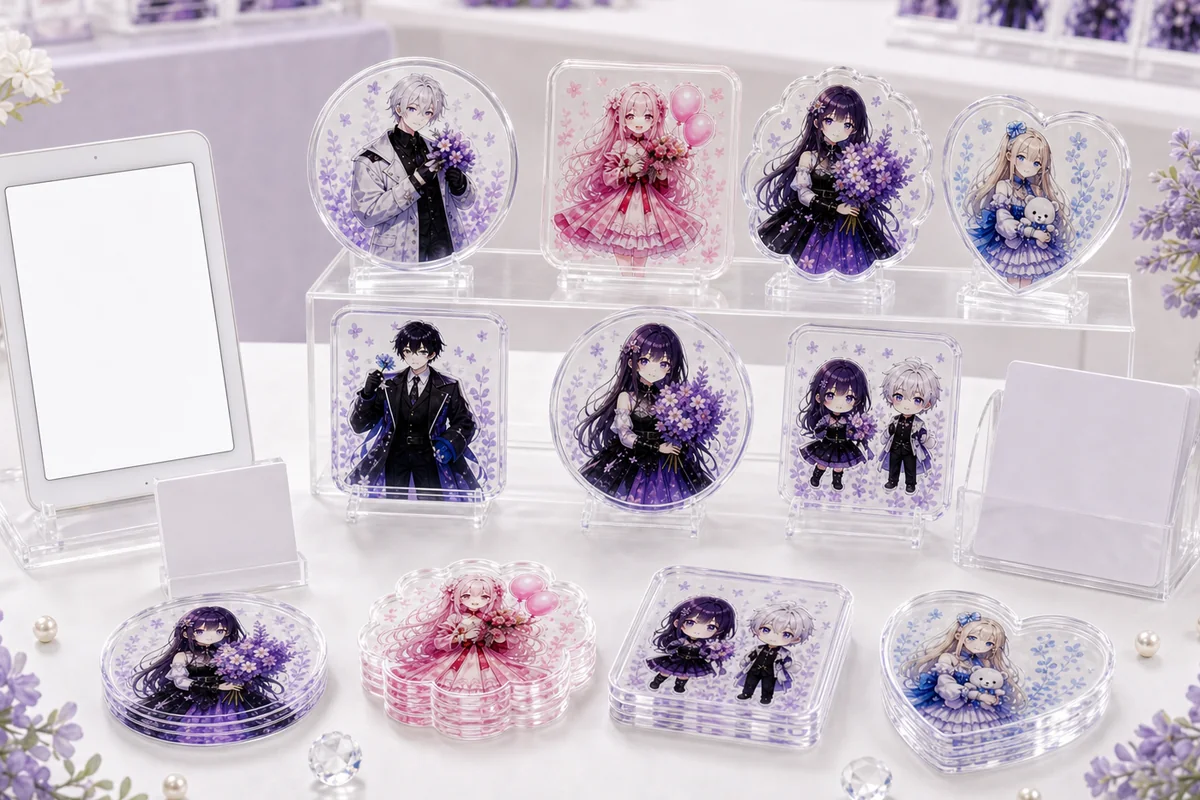
Acrylic coaster OEM is the mass production of clear or color acrylic coasters cut into round, rounded-square, flower, or custom shapes and printed with character artwork using UV printing and white-plate layers. It fits collaboration cafes, event merchandise, random-sale goods, and set sales. Quotation should confirm size, thickness, printing, cutline, protective film, packaging, and SKU management.
30-Second Decision: When Acrylic Coasters Fit Best
Good fit
- Collaboration cafe goods or drink purchase benefits
- Clear character goods with strong visual appeal
- Multi-SKU sets, event merchandise, and prize goods
Confirm carefully
- Hot cups, water behavior, or anti-slip conditions
- Transparent areas and white-plate visibility
- OPP, clear case, backing card, and JAN requirements
Compare alternatives
- PVC or silicone for insulation and anti-slip needs
- Paper coasters for low-cost giveaway programs
- Acrylic stands for display-first goods
Specification Order Before Quotation
| 1. Sales use | Collaboration cafe, event merchandise, drink benefit, prize goods, or ecommerce set. Use affects size, thickness, packaging, and SKU count. |
|---|---|
| 2. Shape and thickness | Round, rounded-square, flower, character outline, 3mm/5mm, and the balance between cup area and visual impact. |
| 3. Printing and white plate | UV printing, single/double side, white plate, transparent areas, fine lines, color tone, and cutline margin. |
| 4. Packaging and SKU | Individual OPP, backing card, clear case, set box, JAN label, random packaging, SKU sorting, and carton labels. |
Acrylic vs PVC/Silicone vs Paper Coasters
| Acrylic coaster | Good for clear appearance and printed character art. Suitable for cafe goods, benefits, and set merchandise. |
|---|---|
| PVC or silicone coaster | Better for softness, anti-slip texture, and molded relief. Compare this when grip or insulation is the priority. |
| Paper coaster | Low-cost and suitable for short campaigns. Durability and premium appearance are lower than acrylic. |
| Production focus | For acrylic, check print surface, white plate, clear edge, scratch prevention, and protective packaging. |
Related keywords: acrylic coaster OEM, custom acrylic coasters, collaboration cafe goods, character coaster, clear acrylic coaster, white plate printing, backing card packaging, SKU sorting, DDP delivery to Japan
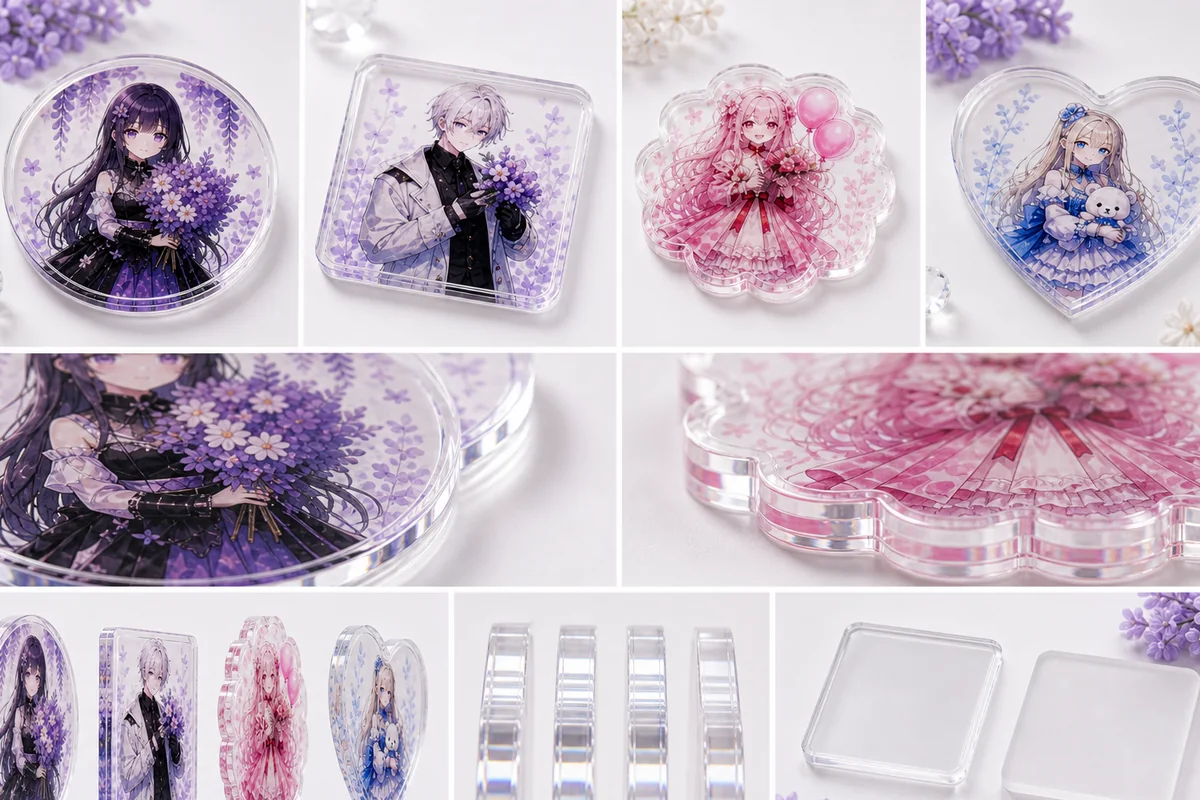
Check Thickness, Clear Edge, and Cutline During Sampling
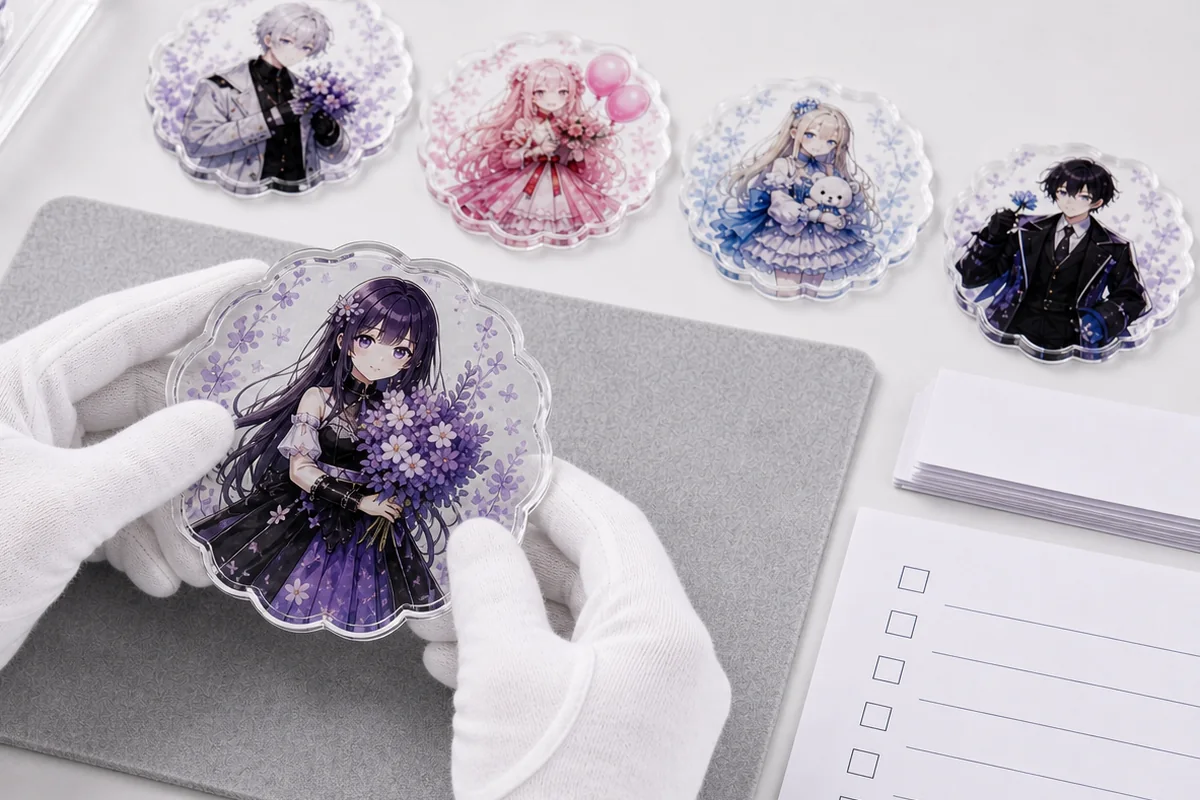
Acrylic coasters are flat goods, but thickness and edge clarity strongly affect perceived value. Shapes with fragile edges, small cutouts, white-plate placement, and cutline margin should be reviewed with samples before mass production.
- Round, rounded-square, flower, and character-outline cut stability
- 3mm/5mm thickness balance between weight, cost, and appearance
- Clear edge, protective film, and surface scratch checks
- Related: acrylic goods artwork data guide
Review Size and Surface Behavior in the Actual Use Scene
Check whether the cup hides too much artwork, whether water drops affect the surface, and whether the coaster may slide on the table. Packaging notes or alternate materials can be compared when needed.
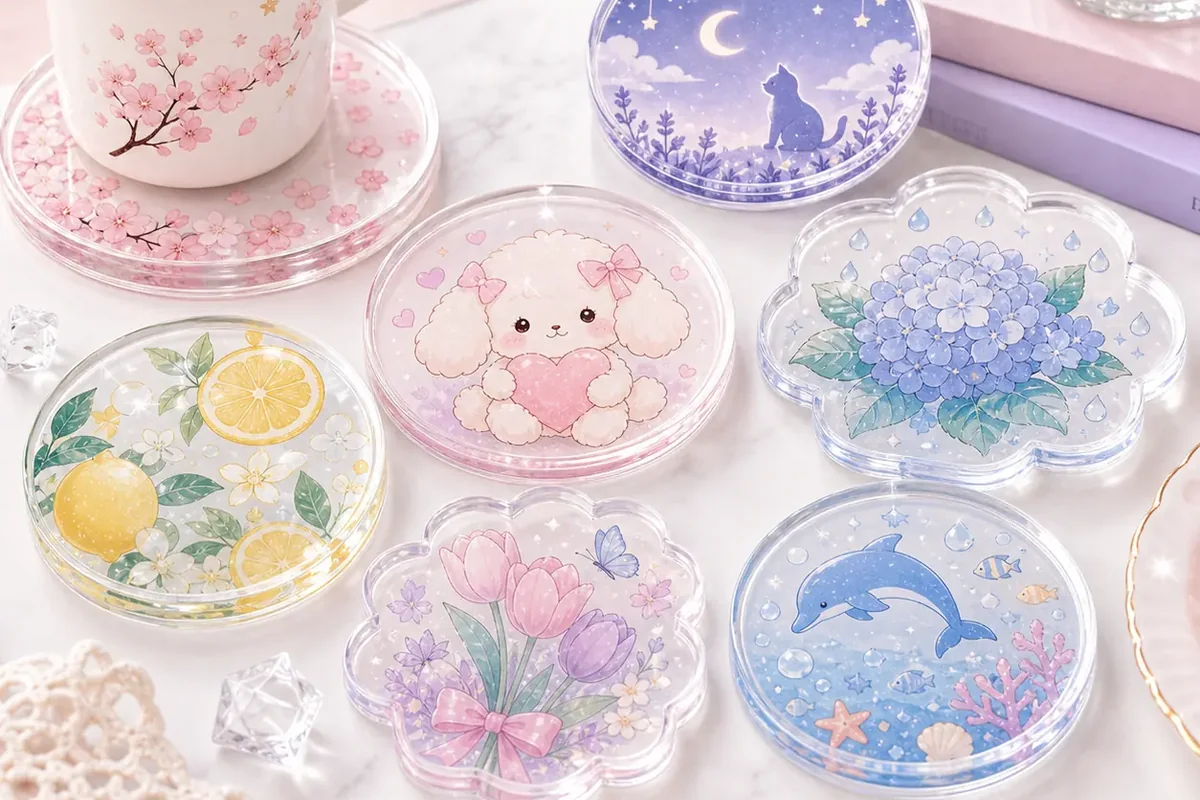
Images for Packaging, Set Sales, and Sample Review
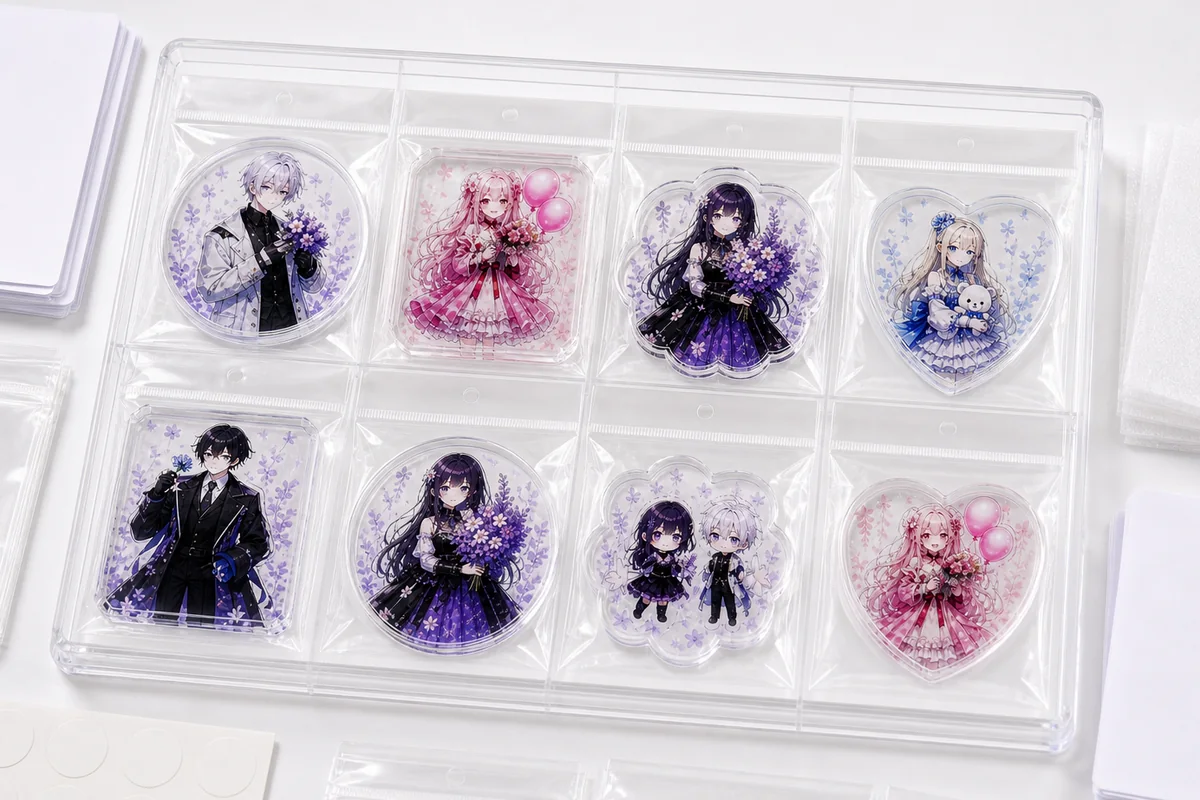
Common Production Risks and Prevention
Print or white-plate mismatch
Transparent designs can show white-plate mistakes clearly. Confirm artwork data and sample appearance together.
Scratches or chipped edges
Stacking and shipping can rub the surface. Confirm protective film, OPP bags, separators, and carton conditions.
SKU mix-ups
For sets or random goods, JAN labels, backing cards, carton labels, and quantity sheets must match the SKU plan.
Flow from Production to Delivery
Quote Checklist Before Inquiry
| Artwork | AI, PSD, PDF, SKU list, white plate, transparent areas, color notes, and approval requirements. |
|---|---|
| Body specs | Size, shape, thickness, rounded corners, cutline, surface protection, and use scene. |
| Packaging specs | OPP bag, backing card, clear case, set box, JAN label, random packaging, and SKU sorting. |
| Delivery terms | Quantity, SKU breakdown, delivery destination, target delivery date, DDP terms, and carton labels. |
Frequently Asked Questions
What is an acrylic coaster OEM product?
It is a decorative coaster for cafe goods, event merchandise, and character goods, made from clear or color acrylic with printed artwork.
How is it different from silicone or PVC coasters?
Acrylic is better for clear appearance and printed character art. If softness, anti-slip performance, or insulation is the priority, PVC or silicone should also be compared.
Can it be used for very hot cups or cookware?
Standard character-goods acrylic coasters are not designed as trivets or high-temperature products. Heat conditions should be confirmed before quotation.
Can you support multiple SKUs or set sales?
Yes. Character designs, shapes, packaging types, assortment ratios, JAN labels, and carton labels can be managed together.
What packaging options are possible?
Individual OPP bags, backing cards, clear cases, set boxes, random packaging, and SKU sorting can be planned based on the sales method.
What information is needed for quotation?
Please share artwork data, size, shape, thickness, quantity, SKU count, printing, packaging, delivery destination, and target delivery date.
Related Products and Pages
Acrylic Coaster OEM Specification Review and Quote
If artwork, quantity, SKU count, shape, thickness, packaging, and delivery date are available, we can help review a practical specification for mass production.
Procurement controls for Custom Acrylic Coasters
Custom Acrylic Coasters are quoted for B2B production after the buyer confirms diameter, thickness, anti-slip backing, print durability, set packaging, and bulk inspection evidence. A useful supplier comparison therefore covers the finished product, approval sample, packaging and inspection evidence, rather than unit price alone.
Search intent boundary: This page owns the specific product intent for custom acrylic coasters. Use the acrylic hub for the complete product family and the linked guides for artwork, inspection and packaging decisions.
What to lock before approval
For custom acrylic coasters, approve the construction as one connected specification. A change to one component can affect appearance, function, packing dimensions or inspection, even when the front artwork is unchanged. The six controls below should appear in the same quotation, sample record and inspection instruction.
| Decision | What the buyer must define | Acceptable approval evidence |
|---|---|---|
| Diameter | Define diameter by SKU before quotation and do not replace it with a vague good-quality instruction. | Keep an approved dimensioned specification or controlled reference that production and QC can identify during bulk release. |
| Thickness | Define thickness by SKU before quotation and do not replace it with a vague good-quality instruction. | Keep an approved artwork proof and component record that production and QC can identify during bulk release. |
| Anti-Slip Backing | Define anti-slip backing by SKU before quotation and do not replace it with a vague good-quality instruction. | Keep an approved representative physical sample that production and QC can identify during bulk release. |
| Print Durability | Define print durability by SKU before quotation and do not replace it with a vague good-quality instruction. | Keep an approved sellable pack or use-condition check that production and QC can identify during bulk release. |
| Set Packaging | Define set packaging by SKU before quotation and do not replace it with a vague good-quality instruction. | Keep an approved inspection photo and measured result that production and QC can identify during bulk release. |
| Bulk Inspection Evidence | Define bulk inspection evidence by SKU before quotation and do not replace it with a vague good-quality instruction. | Keep an approved SKU-linked bulk report and carton trace that production and QC can identify during bulk release. |
Failure risks to close
- Diameter is not controlled: suppliers can interpret the same request differently and the quotation is not comparable.
- Thickness is not controlled: the physical sample can pass while the wrong revision enters bulk production.
- Anti-Slip Backing is not controlled: packing or use conditions reveal a failure that a loose visual sample did not show.
- Print Durability is not controlled: the buyer cannot separate an isolated defect from a repeated batch or SKU problem.
Quote inputs
- project name and target market for Custom Acrylic Coasters
- editable artwork and the latest revision code
- finished dimensions and quantity for every design
- diameter
- thickness
- anti-slip backing
- individual packaging, label and barcode requirements
- inspection evidence and acceptance criteria
- delivery destination and required arrival date
Sample-to-bulk control
Approve a finished sample that represents the intended artwork, construction and sellable package. Record the sample date, revision, dimensions, material or component codes, visual limits and function checks. If a later change affects artwork, material, hardware, assembly or packaging, identify the impacted SKUs and obtain a new approval instead of relying on the earlier sample.
For bulk inspection, use the same viewing conditions, measurement points and pass/fail language used during approval. The report should identify the purchase order, SKU, batch, sampled quantity and result. Photographs are useful evidence only when they show the relevant scale, lighting, label or test condition and can be traced to the inspected lot.
When comparing quotations, separate confirmed specifications from assumptions. Ask each supplier to identify exclusions, proposed substitutes, sampling scope, packaging labor and delivery basis. A lower figure is not equivalent when it omits a component, uses a different inspection level or assumes that several designs can share one uncontrolled pack. Close those differences before price approval so the purchase decision remains auditable.