
1
Artwork & specification
Lock template, bleed, safe area, white underprint and back hardware
— See the production decisions behind the product
For B2B buyers, the important question is what must be approved before each operation is repeated across every SKU.
SHAPE OPTIONSRound · oval · rounded rectangle · heart · star · polygon
Request a quotation →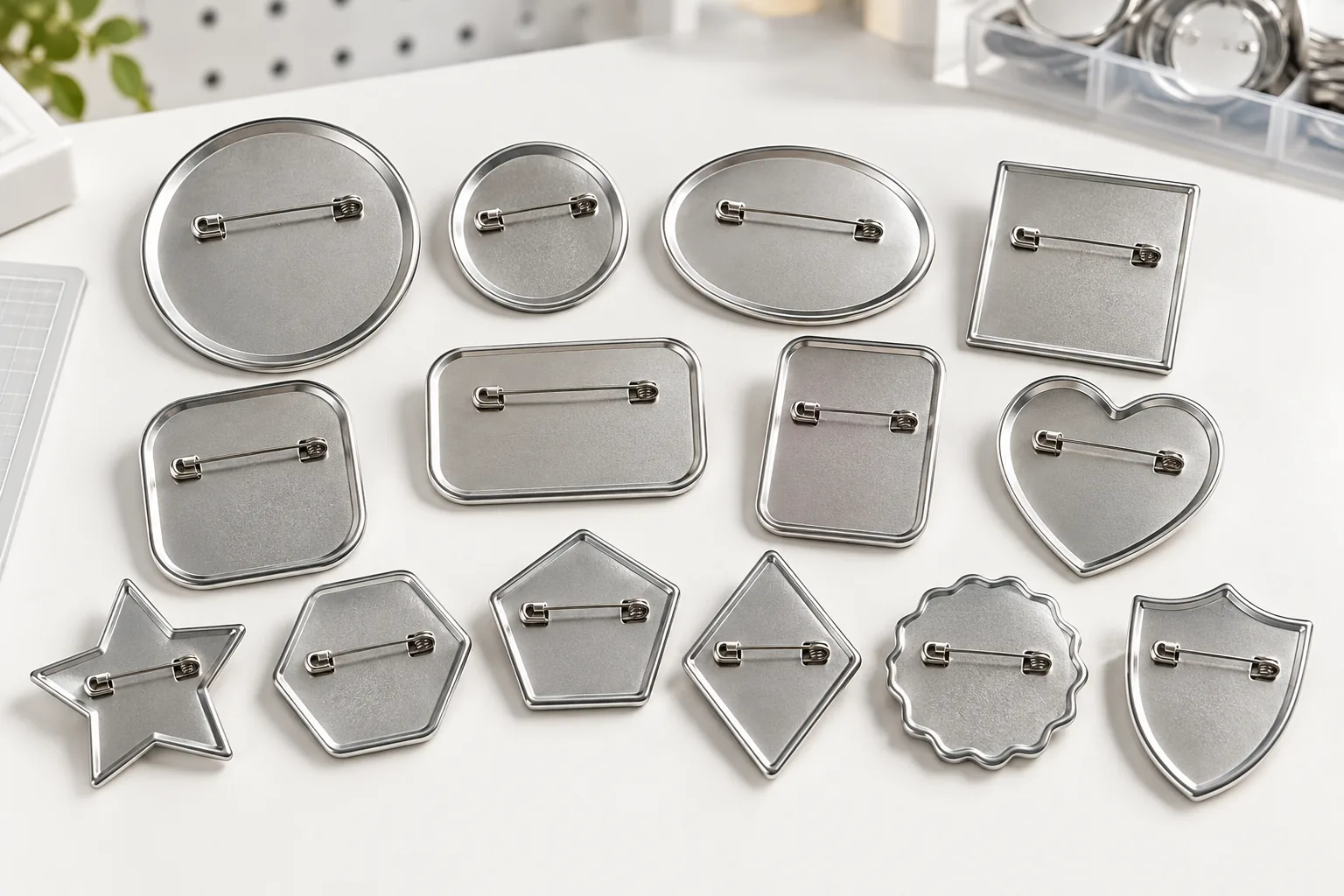
Compare shape options
at a glance.
REFERENCE VIDEO
The samples are rotated under light to show prismatic reflection, surface grain, short pile, embroidery thread, matte texture and foil. This supports selection; it does not replace a finished-sample approval.
Lock the approval evidence before mass production.
Lock template, bleed, safe area, white underprint and back hardware
Approve substrate, color reference, white layer and finished appearance
Confirm cut position, artwork center and hologram direction
Crimp shell, print, PET and selected back component in dedicated tooling
Compare color, position, edge, joint and pin operation with the approved sample
Reconcile bag, card, label, SKU quantity, ratio and destination cartons
BADGE TYPE & SURFACE
This guide groups the visible samples into double glitter, PU leather look, printed plush, embroidery with up to four flat thread colors, paper-touch film, and foil plus double glitter. The images use one newly created original character; no reference-video artwork is reused.
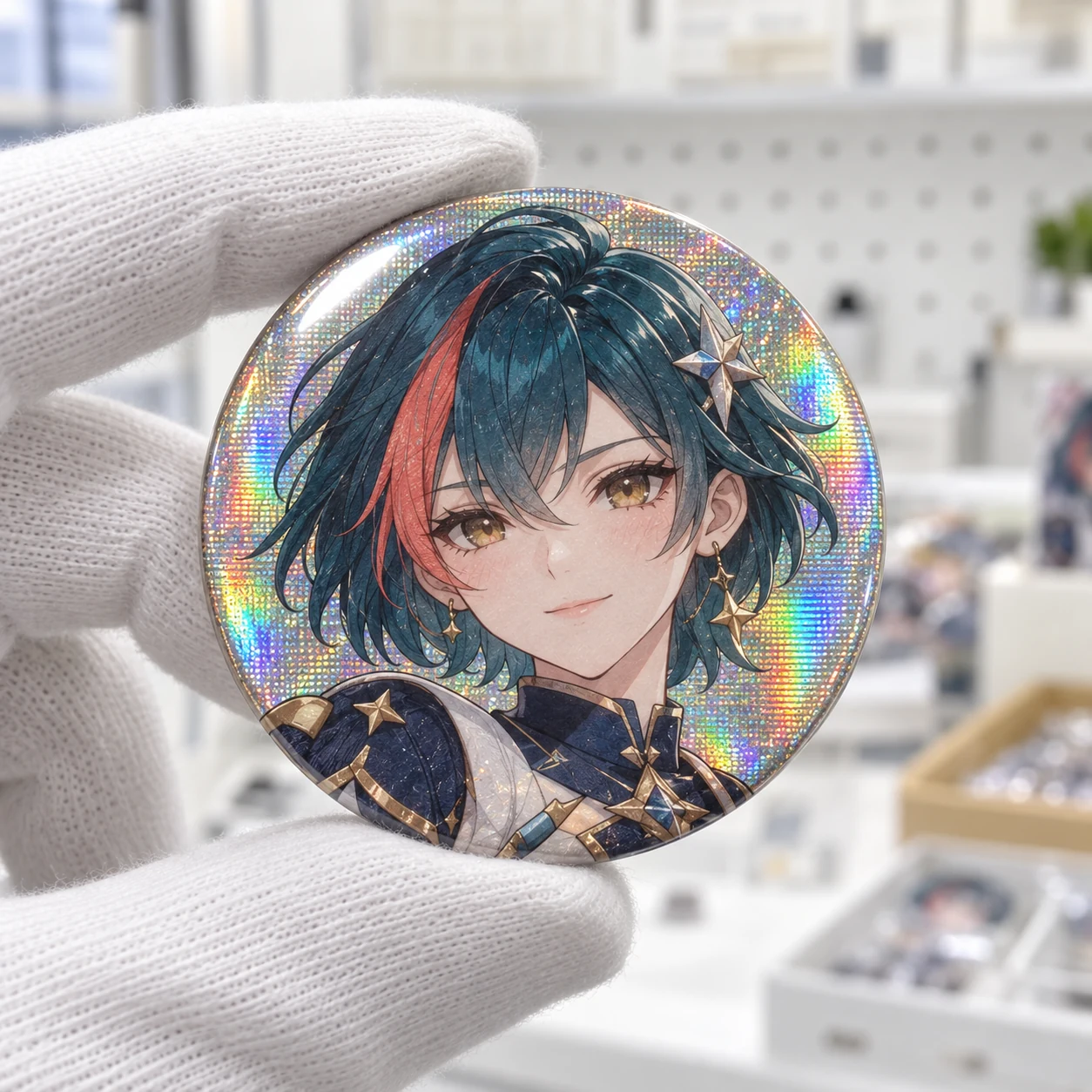
Reflective finish
Fine prismatic reflections create a layered sparkle that changes with the viewing angle.
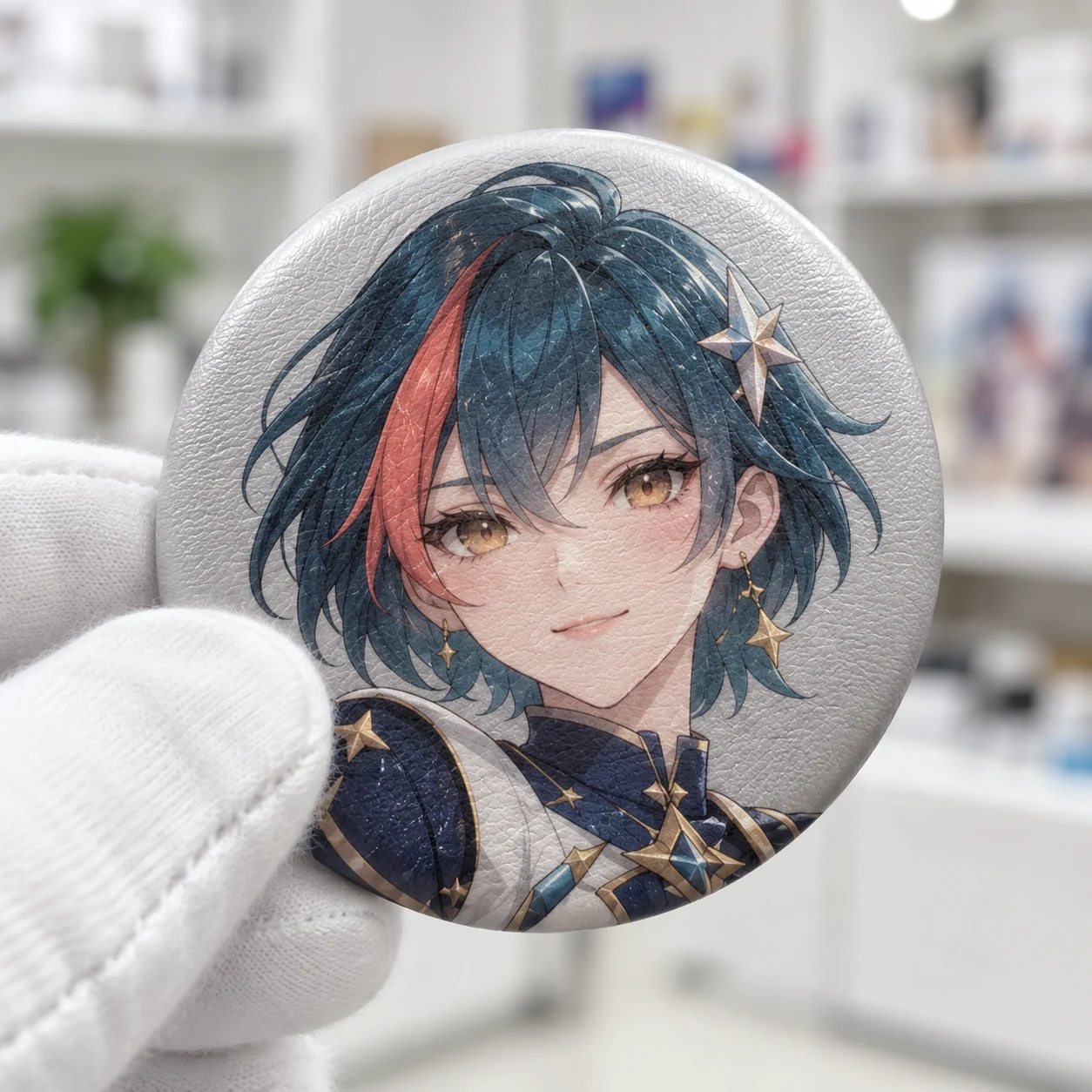
Soft-touch finish
A fine grain and soft thickness reduce gloss and make surface feel part of the design.
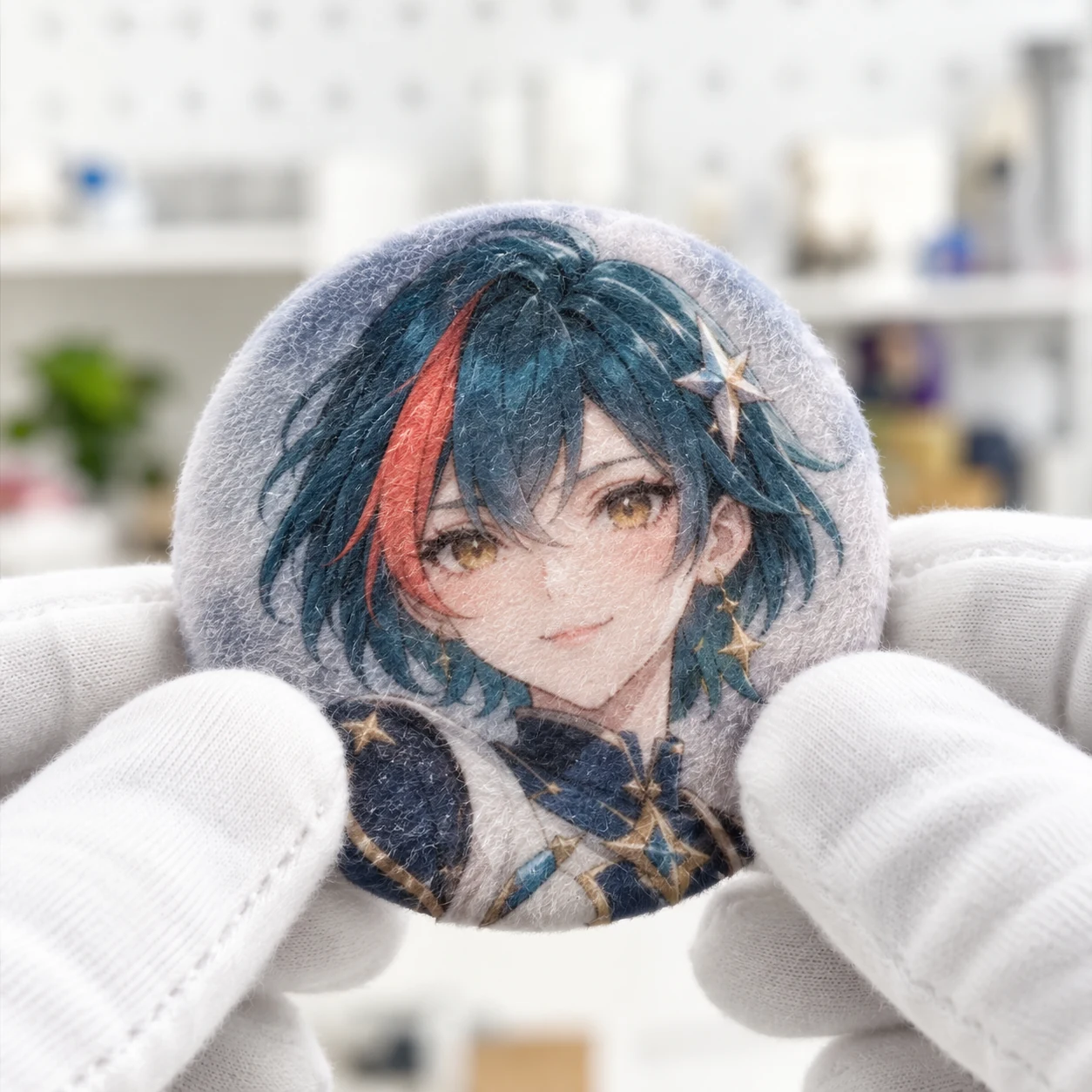
Short-pile finish
Artwork is printed on a short-pile surface for a softer, plush-like appearance and feel.
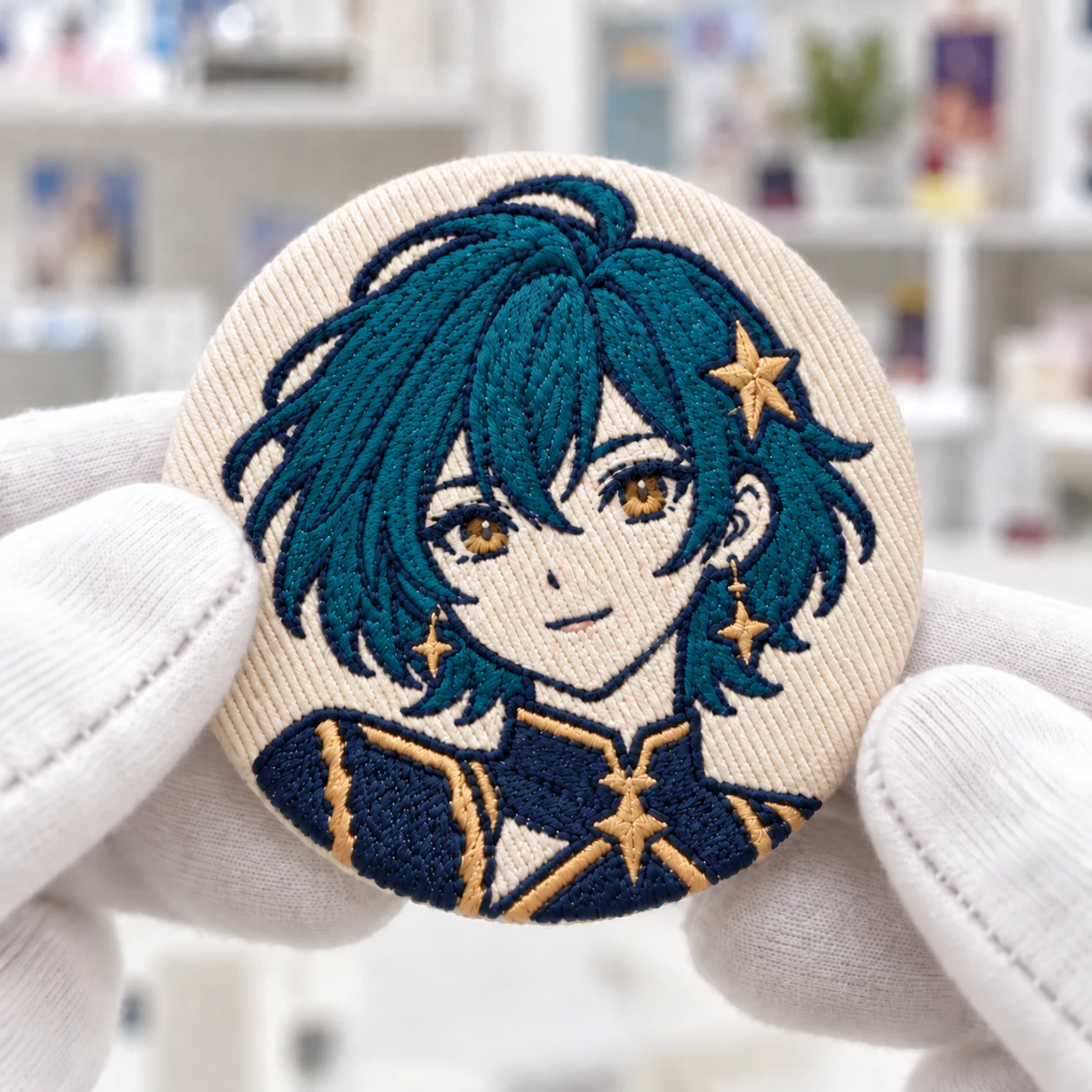
Four-thread embroidery
Flat color blocks and bold stitched outlines replace gradients; the hair uses one solid deep-teal thread.
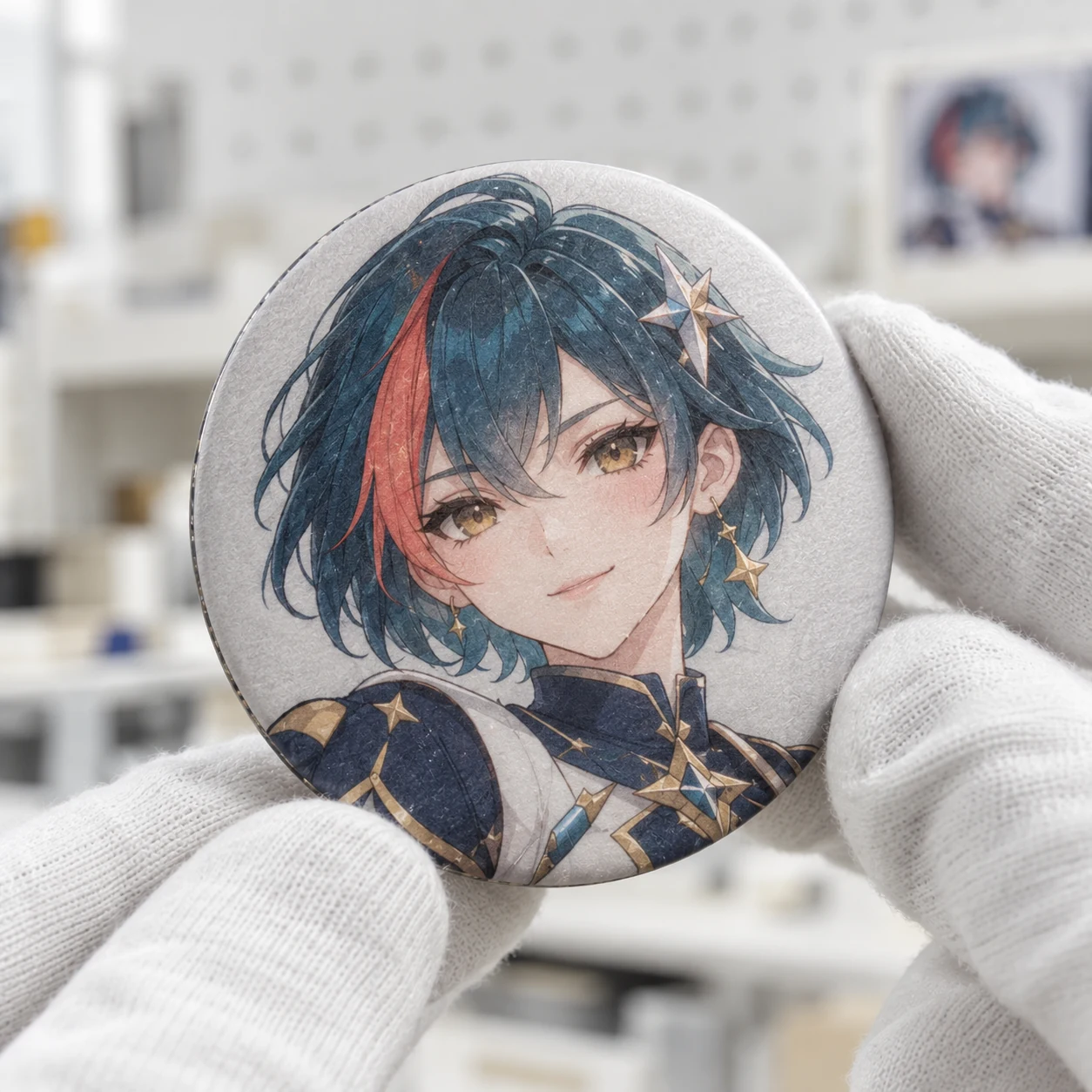
Matte tactile finish
A matte, fiber-like surface reduces glare and gives the artwork an illustration-paper character.
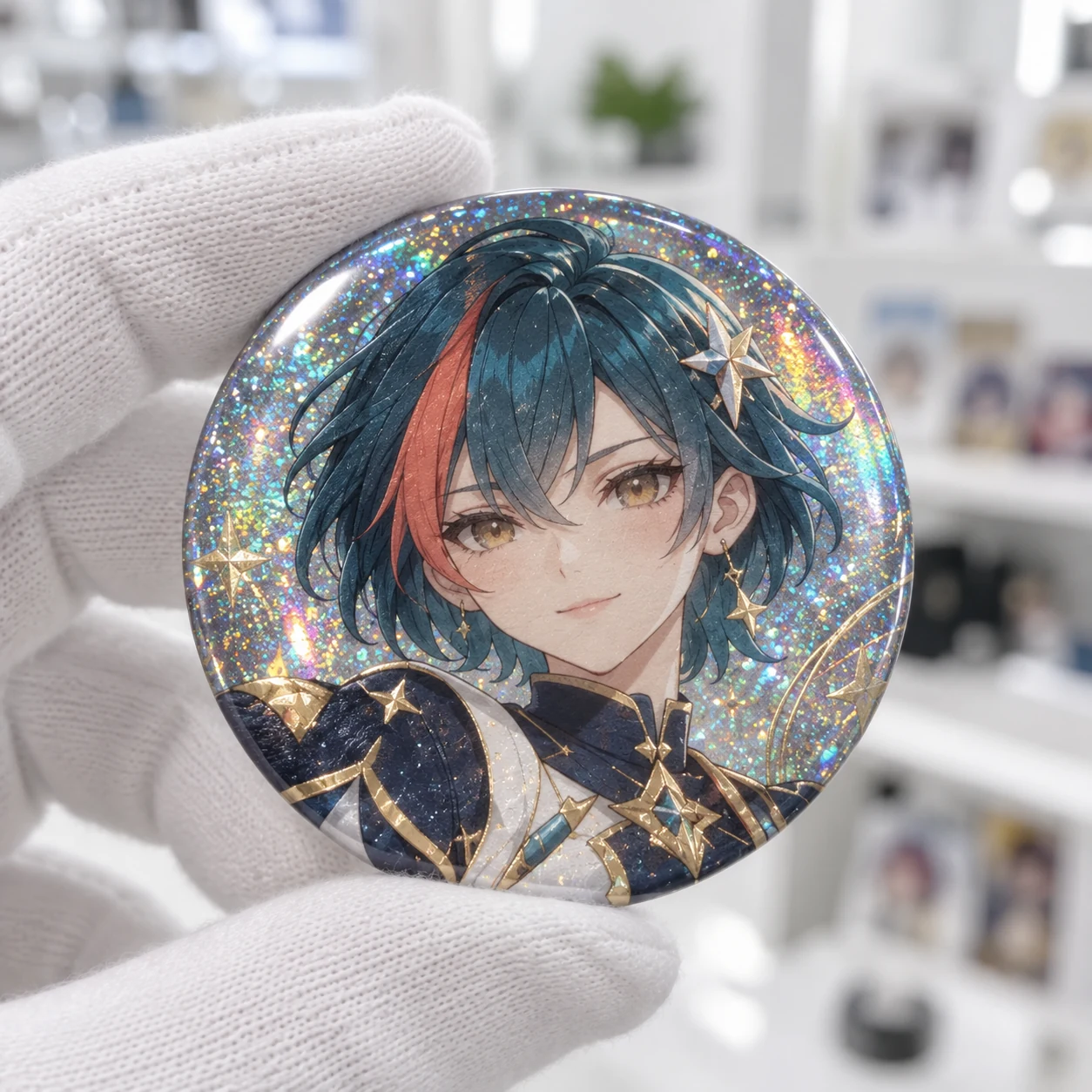
Foil plus reflective finish
Metallic foil and prismatic reflection highlight selected costume or emblem details.
Finish names summarize the reference-video appearance for B2B planning. Confirm the actual layer stack, supported size, trial method, MOQ and mass-production feasibility for each project.
Compare design papers and films →Button badge OEM specifications ↗Send artwork and finish requirements ↗DESIGN PAPER & SURFACE FILM
The supplied sample groups show 12 colored glitters, 30 hologram patterns, and 14 silk, pearl, reflective or ceramic-like effects. Do not approve only a name or swatch; evaluate the completed sample under several angles.View specialty paper options & wholesale guide ↗
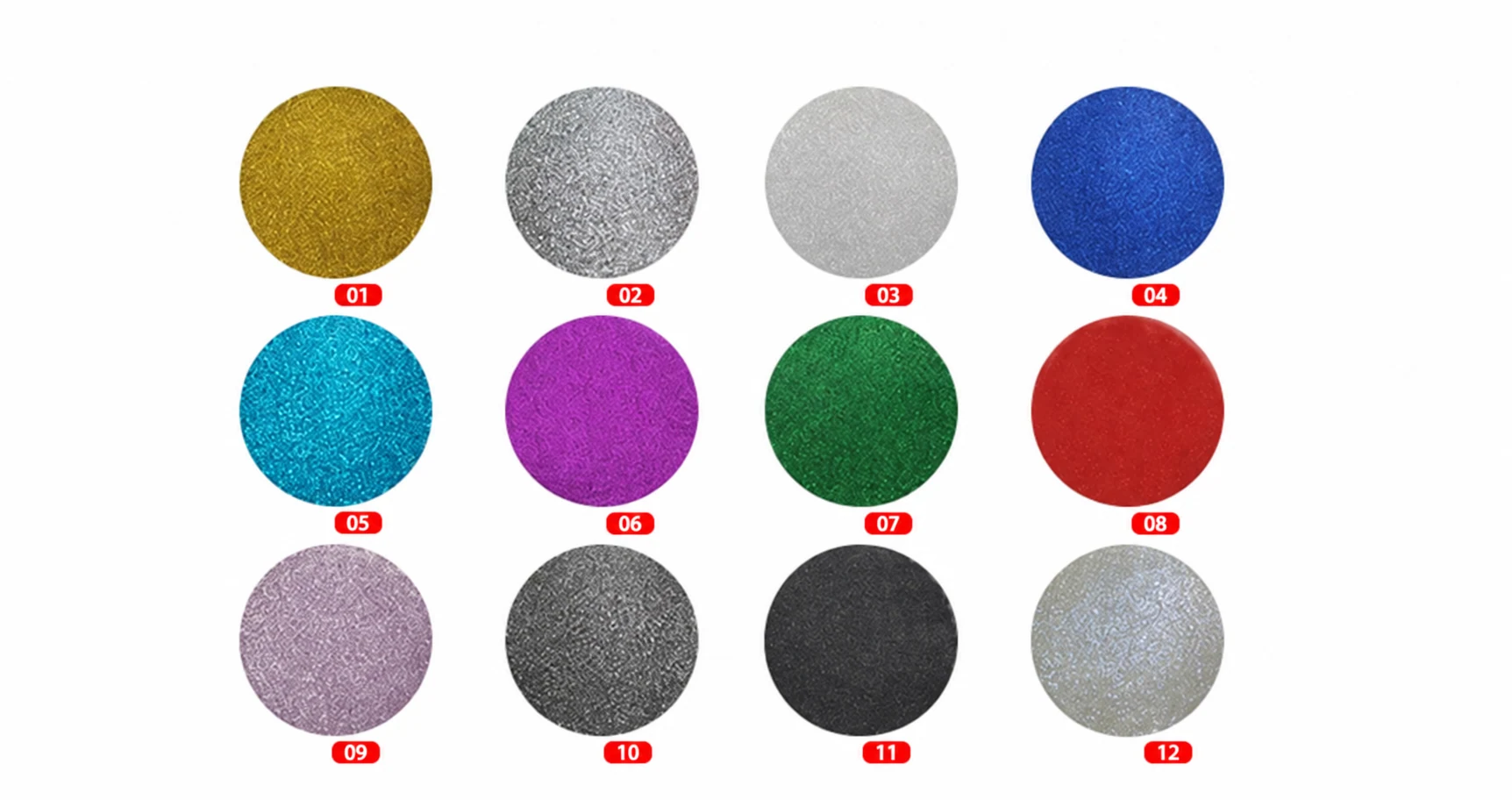 No.01–12
COLOR GLITTER
Fine glitter particles add color and sparkle. They can support a full background or a controlled accent matched to a character theme.
Anniversary merchandise, event editions, member-color SKUs, stage costumes, stars and gems
Approve glitter density, base color, white-underprint coverage, and face, text and fine-line legibility
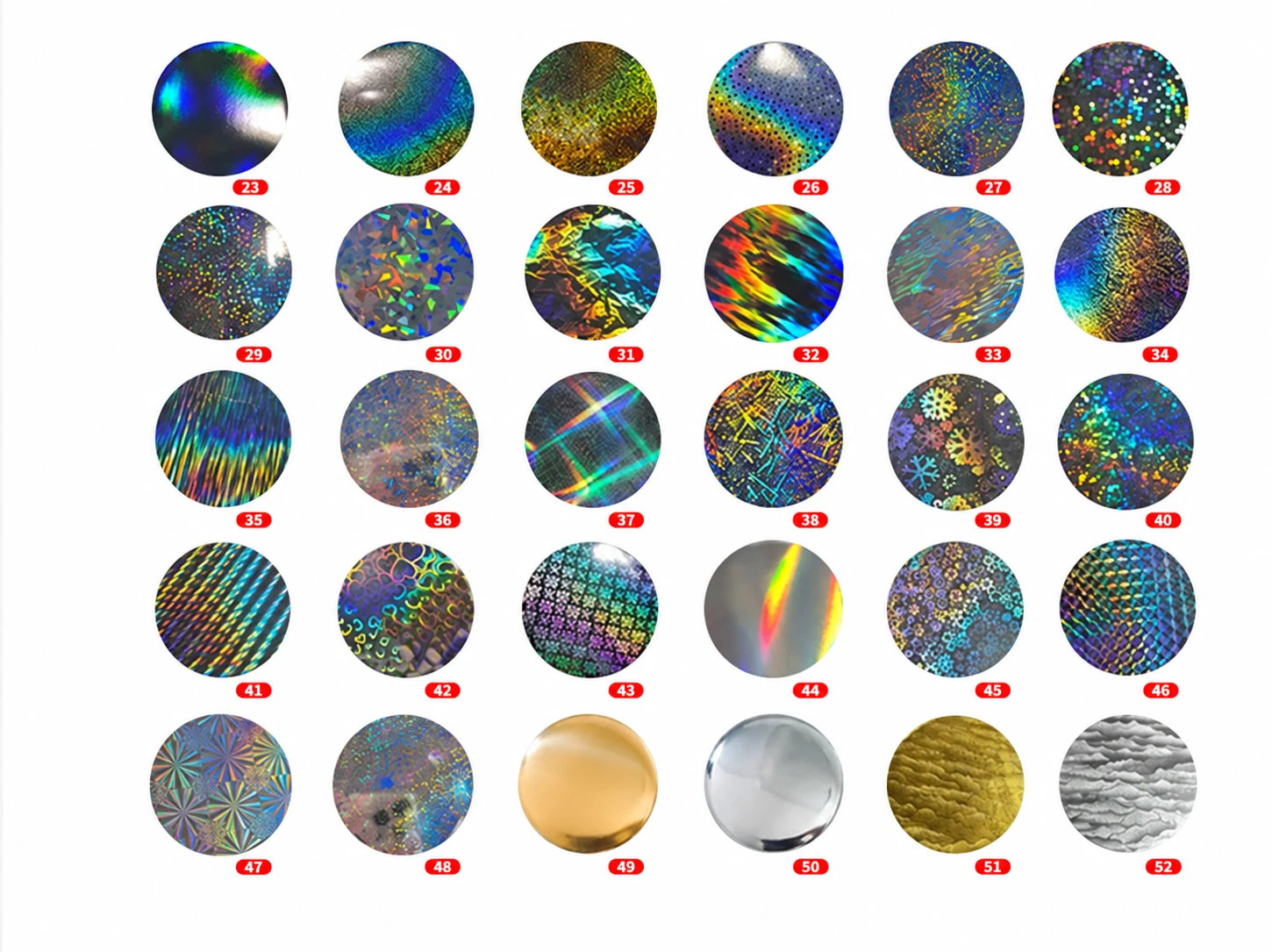 No.23–52
HOLOGRAM PATTERN
Rainbow patterns move with the light and viewing angle. Pattern direction and density can materially affect faces, text and fine details.
Concert goods, anniversaries, night-sky, magic, flame and floral motifs, limited editions
Approve direction, density, white knockouts, overlap with faces or text, and the finished appearance at several angles
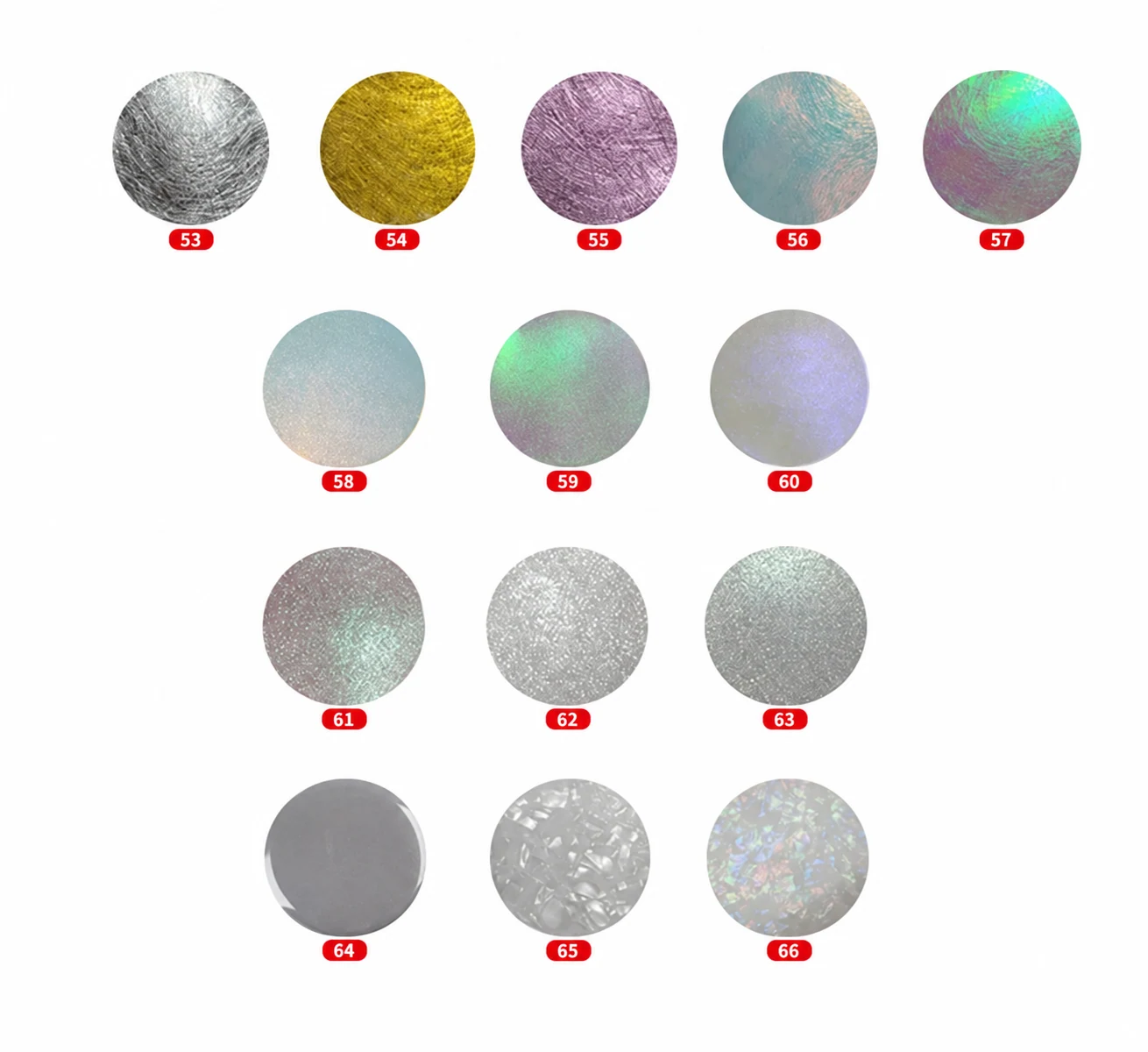 No.53–66
SPECIAL TEXTURE
Fiber, pearl, scattered-glitter, reflective and ceramic-like effects suit projects that need material character rather than a strong repeating pattern.
Watercolor and pale artwork, premium collections, bridal and Japanese-inspired motifs
Approve texture direction, gloss level, pale-color sinking, color interference and acceptable lot variation
Each card identifies the operation, materials or equipment, production terms, buyer approvals and a common risk.
Review artwork, printing, physical color, die cutting, surface effects, component staging, pressing, front appearance, back hardware and SKU packing against the released specification and approved sample. A process name is not an acceptance criterion.
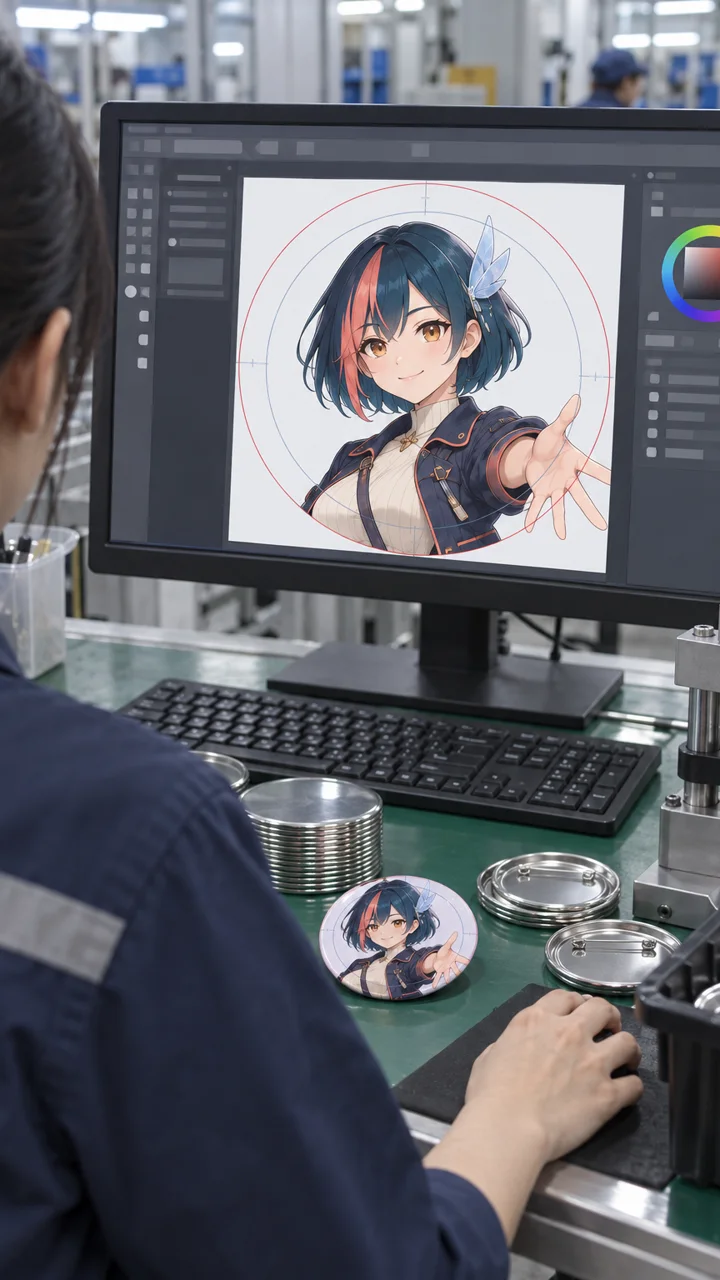
Check the artwork on the factory template, including the face, wrapped edge and production notes.
RiskInsufficient bleed may expose white at the edge; critical art can wrap away from the face; RGB conversion and live fonts can change output.
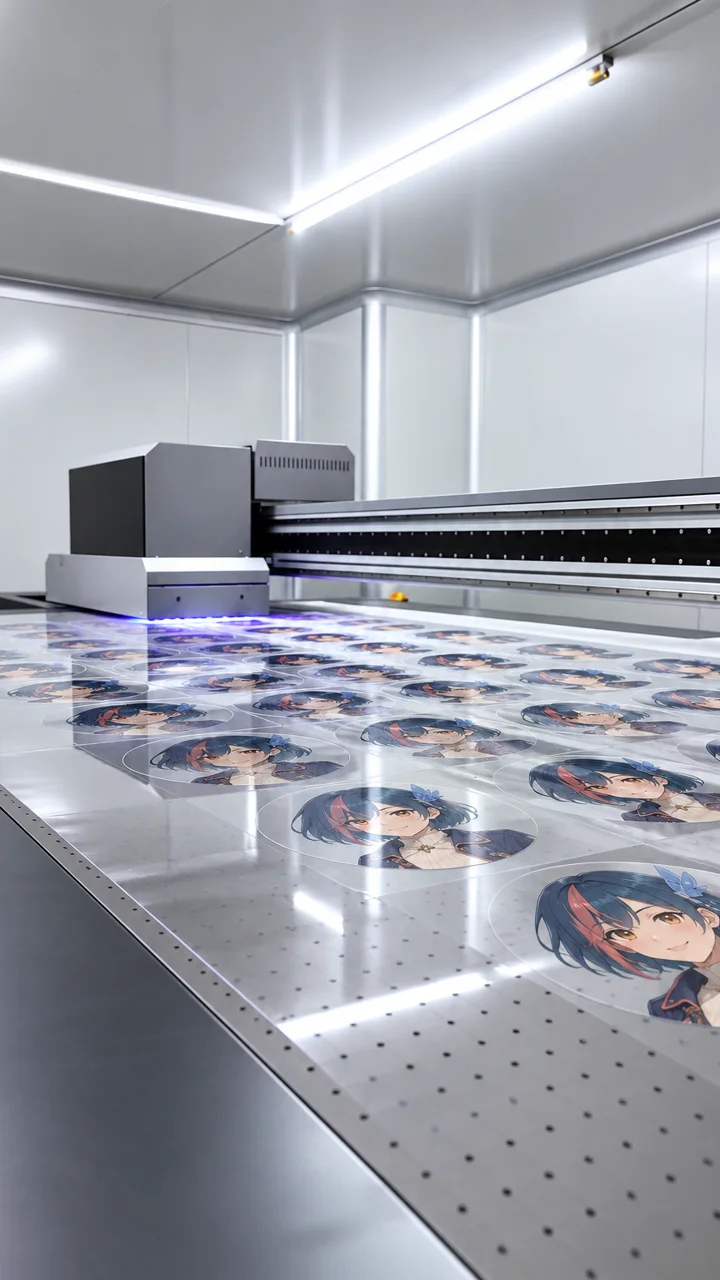
Arrange approved SKUs on the production sheet and print with the released output conditions.
RiskColor and gloss change with substrate and print process. Confirm the real layer stack and output proof, not only the process name.
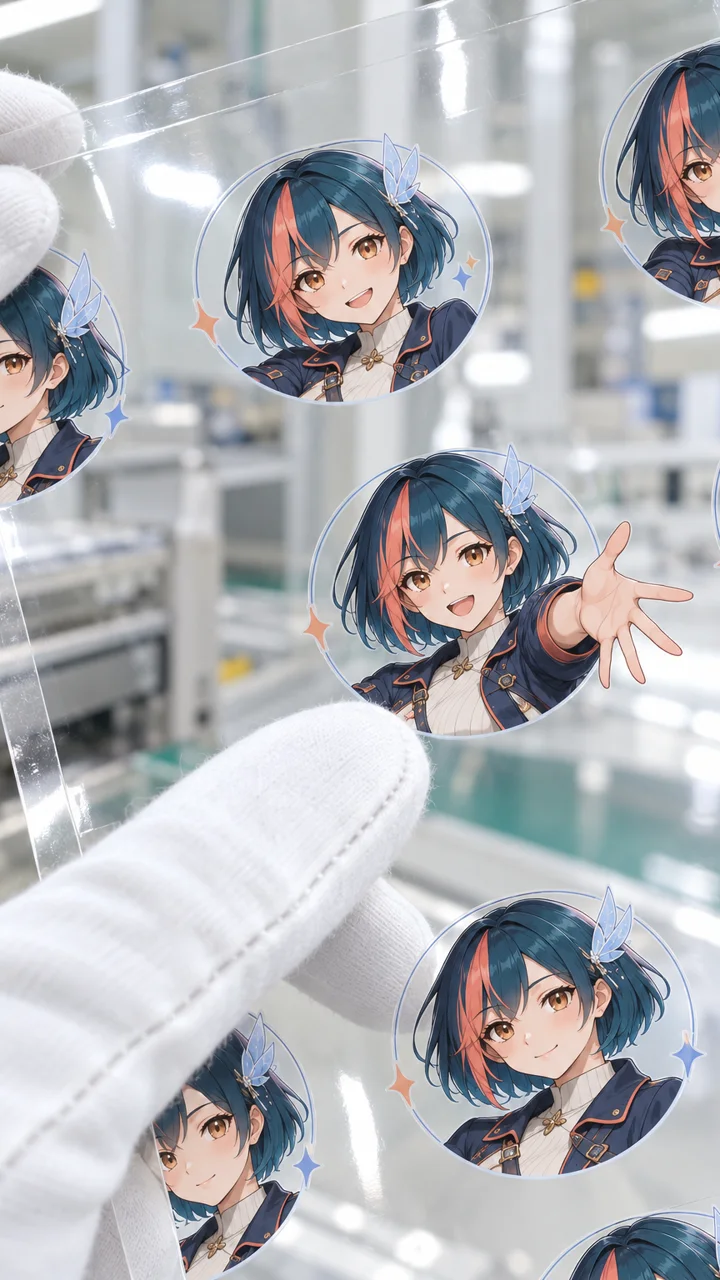
Compare physical output for color, density, fine lines, transparency and white-underprint behavior.
RiskA monitor is not a physical color standard. Approve under agreed lighting with the final substrate, white layer and finish.

Cut the printed sheet to the die profile and align the visible face with the wrap allowance.
RiskRegistration drift can move the design off-center or pull details into the wrapped edge. Use the actual tooling template.

Combine hologram or glitter layers and check reflection against artwork legibility from several angles.
RiskFine text, pale colors and small details can disappear into reflection. Approve the completed construction.
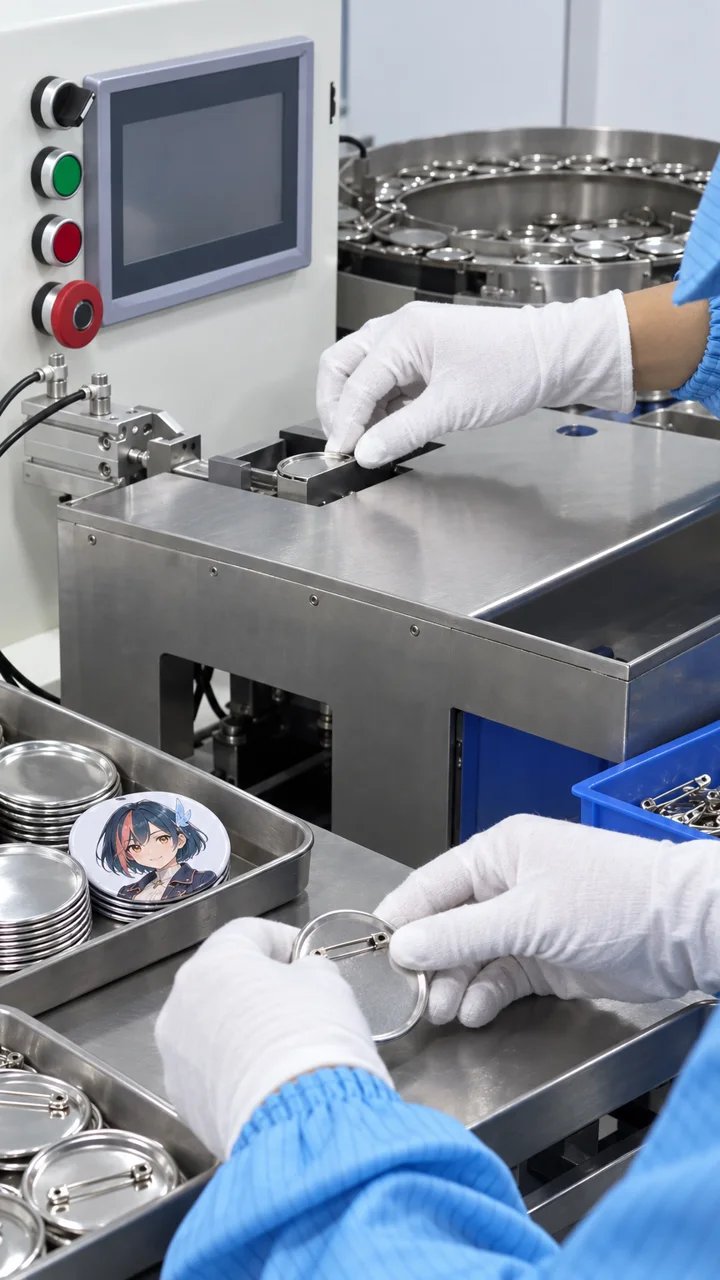
Stage the shell, print, protective film and correct back component by SKU.
RiskA wrong component or orientation is difficult to correct after pressing. Match the first set against the SKU instruction.

Load each layer into the tooling and press the shell and back into one assembly.
RiskIncorrect loading or pressure can cause shift, film wrinkles, dents, weak retention or over-crimping.
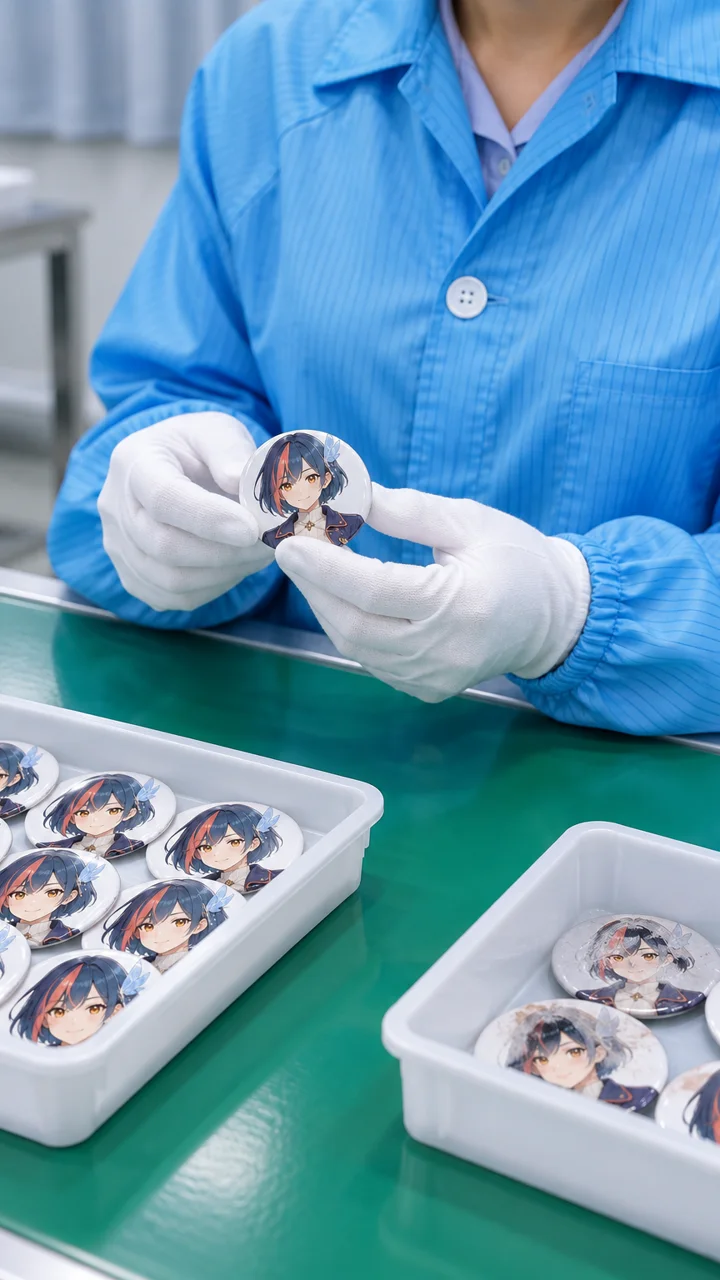
Inspect the finished face and edge against the approved sample and written quality criteria.
Risk“Looks good” is not a repeatable criterion. Define good samples, limit samples and inspection scope before production.
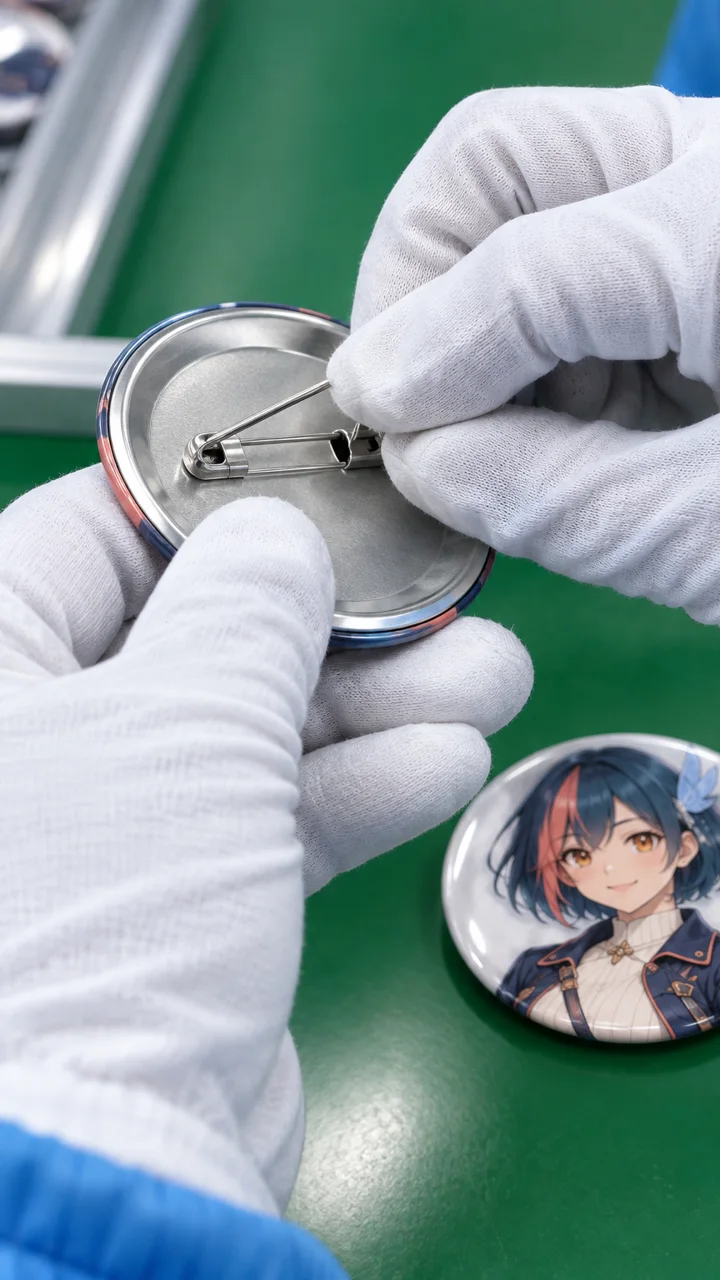
Check the back component, joint, pin opening, retention and direction.
RiskSharp hardware can scratch neighboring goods. Prevent contact during handling and packing even after functional inspection.
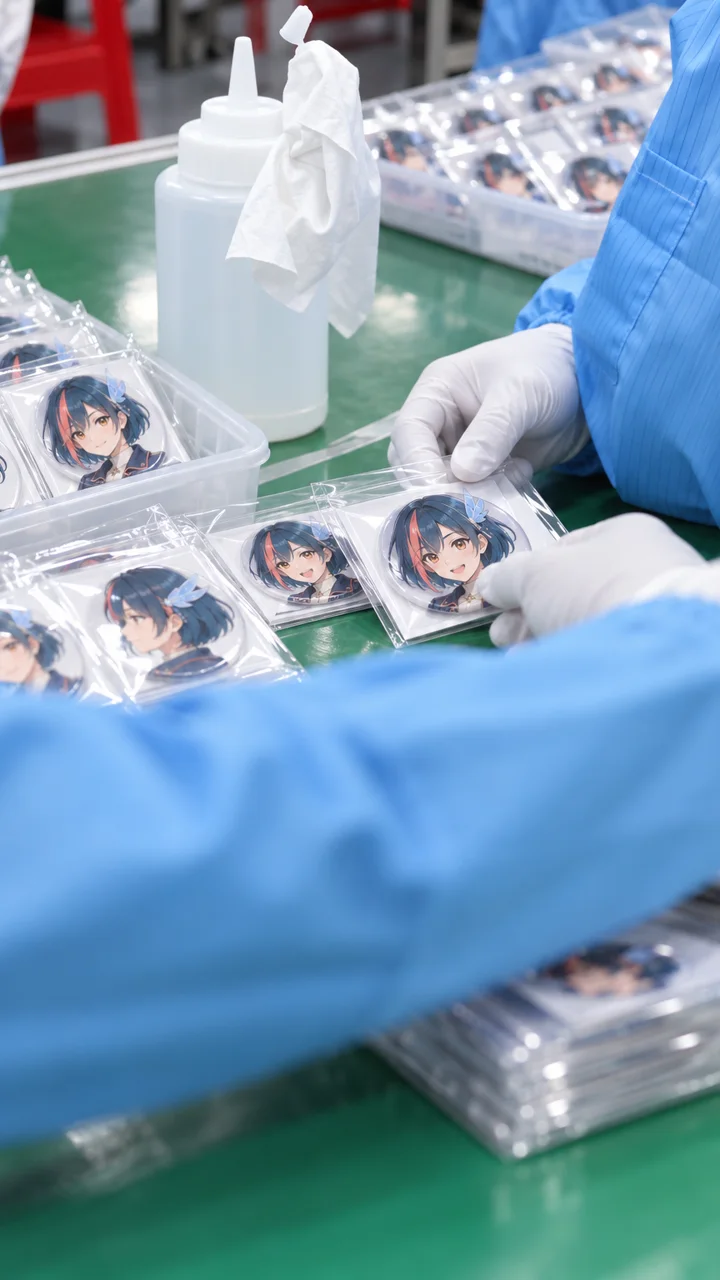
Pack accepted units for the sales model, then reconcile SKU, quantity, labels and destination cartons.
RiskPlan for movement inside the bag, mixed SKUs and shipping abrasion. Verify hidden items before sealing opaque packaging.
Bleed, safe area, white underprint, material thickness and press settings vary with size, tooling and layer stack. Use the factory template and approved sample instead of copying fixed numbers. See the button badge OEM specification page ↗ for product options.
PRE-PRODUCTION APPROVAL
Final file, color, size and wrap range
Physical color and intended finished appearance
Color, resolution and registration
Surface quality and cut line
Specification, retention and safety
Mass-production-equivalent total check
Individual pack, assortment ratio and identification
Carton, label and split-delivery schedule
Release mass production only after both the specification and the physical sample are approved.
Open the OEM specification checklist ↗PLANNING CHECK
QUALITY CONTROL
COLOR & FINISH
Approve skin tones and brand colors on the real material, then record the accepted reference for mass production.
Check white-underprint coverage, pattern density, faces and text from more than one angle.
ASSORTMENT & PACKAGING
Match individual bags, backing cards, labels, character SKUs and random-assortment ratios before cartons are released.
REPEAT ORDER
Keep front, back and packed-condition evidence with the approval date.
Version the size, layer stack, finish, back hardware and artwork top.
Keep per-design quantities, assortment ratios, cards, labels and carton counts.
Keep acceptance criteria, inspection scope, disposition, lot and destination.
RFQ PREPARATION
One concise brief helps the supplier quote the same product you intend to approve.
OEM order process ↗FREQUENTLY ASKED QUESTIONS
Oval, rounded rectangle, heart, star and polygon formats may be possible. Feasibility depends on size, tooling, back hardware and artwork, so send a dimensioned shape reference with the RFQ.
The source artwork can be shared, but white-underprint, foil, embroidery and legibility data usually need finish-specific adjustment. Embroidery should use flat color blocks, no gradients and four thread colors or fewer for this specification.
Quote the material category and sample number together with shape, size, artwork, quantity and required date. Availability and appearance can vary by supplier or lot, so approve a physical finished sample.
No. The reference process shows PET-film printing, while other constructions use printed paper plus a clear protective film or another layer stack. Confirm the construction in the quotation and approved sample.
For color-sensitive merchandise, approve a physical sample or another agreed physical reference. Substrate, white ink, reflective layers and lighting can change the finished appearance.
Inspection scope is project-specific. Confirm full versus sampling inspection, appearance and functional checks, acceptance criteria, and how nonconforming units are handled.
Yes, when the SKU master, quantity and mix ratio are fixed before packing. Define the verification method before opaque sealing and the lot, carton and destination traceability afterward.
Retain the approved sample, released specification, physical color reference, finish, back hardware, SKU and packing matrix, and QC record under one project number. Confirm changes before each reorder.
Send finished shape and size, design count, total and per-SKU quantities, face finish, back hardware, packing, required date and destination. Add color references, labels, mix ratios and split-delivery rules when applicable.
Not every specification needs to be final before the first discussion.