Quality control and inspection standards that ensure no failures in Chinese OEM of IP/anime goods
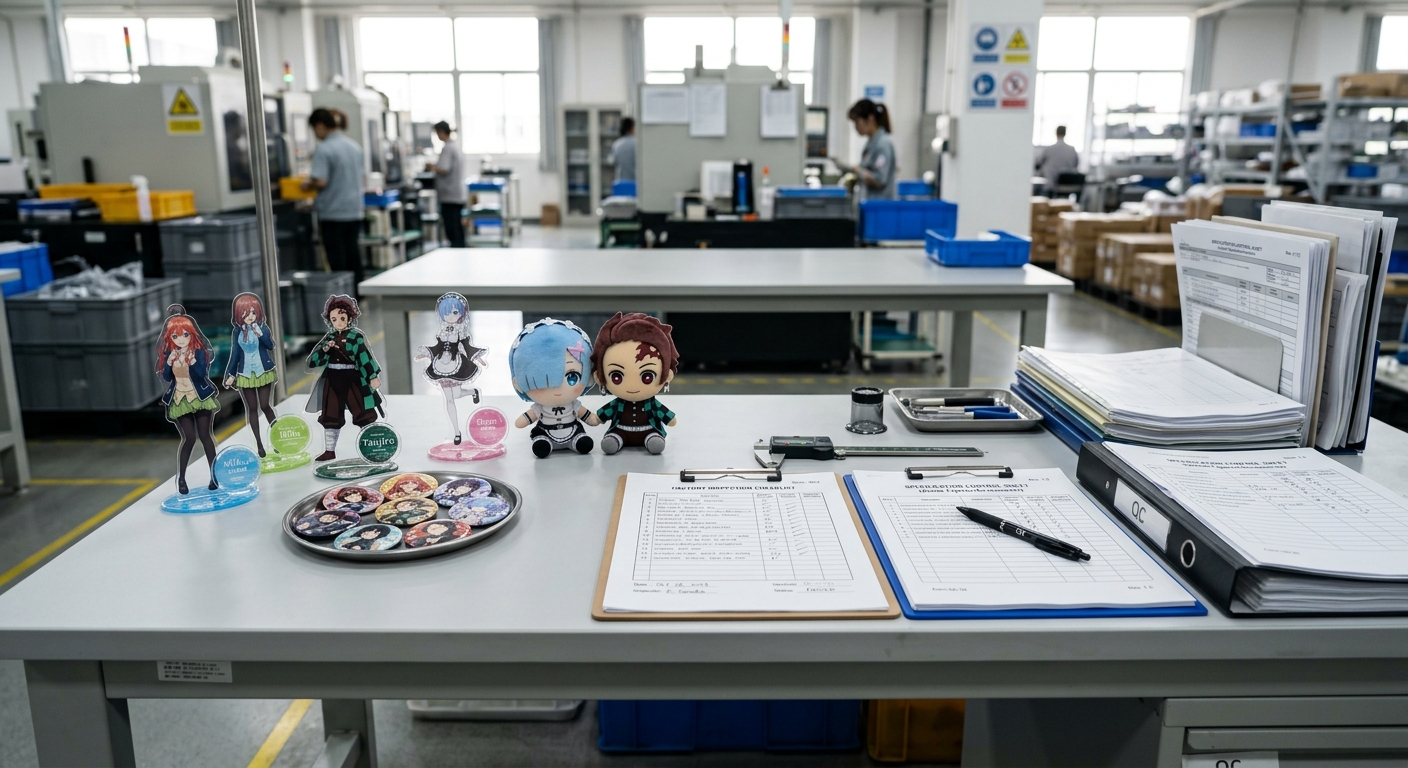
1. Why is quality control important for IP/anime goods OEM?
When mass producing IP/anime goods as a Chinese OEM, the most important thing is not only to make them cheaply. Since the product is sold in Japanese stores, events, EC, lottery prizes, and prizes, it is necessary to check the quality stability after mass production, SKU management, packaging accuracy, and delivery conditions.
Especially for IP products and licensed products, the color, facial expression, printing position, and size of the character are directly linked to the product value. Even if there are no problems with samples, if color differences, printing misalignment, surface scratches, poor sewing, packaging errors, or mixed SKUs occur during mass production, it may lead to re-inspection or delivery delays.
Therefore, it is important to organize ``what quality should be considered acceptable'', ``what is the acceptable range'', and ``which process should be checked'' from the estimation stage.
In this article, we will explain the quality control and inspection standards when mass producing anime goods at a Chinese OEM for IP companies, anime/game companies, goods planning companies, and lottery/prize companies.
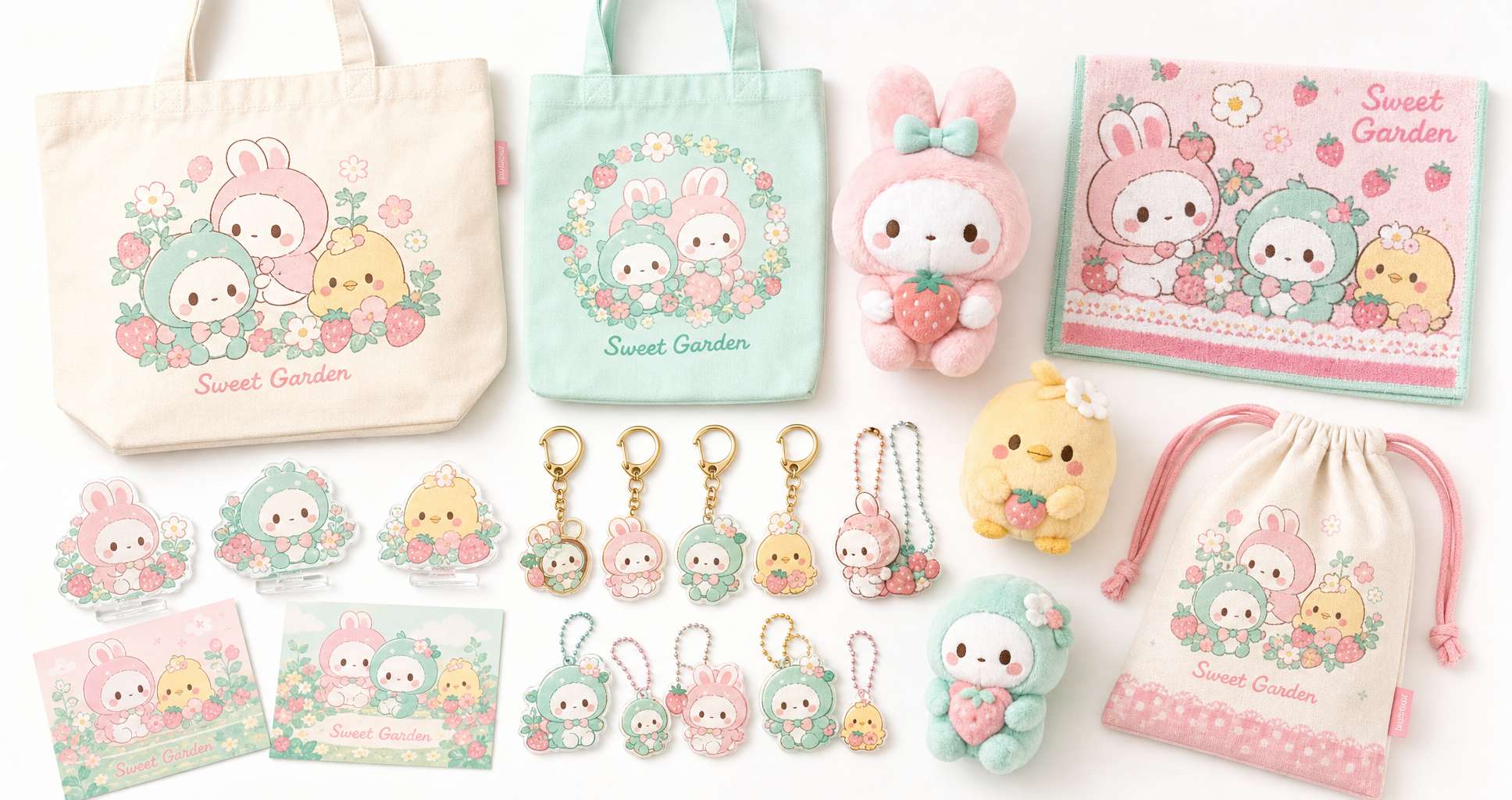
2. Quality problems that tend to occur with Chinese OEMs
When a Chinese OEM mass-produces anime goods, many of the problems arise from ``proceeding with vague specifications''. Typical examples are below.
- The color is different between the sample and the mass-produced product.
- Acrylic printing position is shifted
- Scratches are found after removing the protective film
- There are dents and imperfections on the badge surface.
- There are variations in the expression and cotton content of the stuffed animal.
- The blend ratio of blind packaging is off.
- There is a mistake in pasting the JAN sticker or mount
- Quantity by SKU and carton display do not match
- Confirmation of delivery location and DDP conditions will be delayed.
All of these can be reduced by organizing inspection standards, packaging specifications, SKU lists, and delivery conditions before mass production.
The key is to not end sample confirmation with just checking the appearance. If you decide on the items to be inspected during mass production at the sample stage, it will be easier for the factory, the inspection staff, and the ordering party to agree on the criteria for making decisions.
3. Inspection standards to be determined for samples before mass production
Pre-mass production samples are not just for checking the finished product, but are master samples for determining standards for mass-produced products.
When checking the sample, check the following items.
| Check items | Check contents |
|---|---|
| Color | Specified color, character color, print density, lot difference |
| size | Length/width, thickness, pedestal, parts position, tolerance range |
| printing | Printing misalignment, white plate, bleeding, peeling, detail reproduction |
| material | Acrylic thickness, fabric, metal, surface treatment, feel |
| exterior | Scratches, dirt, dents, chips, poor sewing |
| packaging | OPP bag, mount, JAN seal, blind packaging, set |
| display | SKU name, quantity, carton mark, delivery destination display |
| Inspection method | inspection based on the agreed QC checklist, sampling inspection, focused inspection, photo confirmation |
If everything is too strict, unit prices and delivery times will be affected. On the other hand, if the standards are too vague, it will be difficult to make decisions after mass production. It is important to determine realistic inspection standards according to the product category, sales price, delivery destination, and usage scenario.
4. Quality checkpoints for each item
Acrylic stand/acrylic key chain
For acrylic goods, the printing position, cut line, pedestal insertion, and surface scratches are important.
Check points:
- acrylic thickness
- Single-sided printing / double-sided printing
- Presence of white version
- Smoothness of cut line
- Pedestal insertion accuracy
- Presence of protective film
- Surface scratches, chips, printing misalignment
- Mounting paper, OPP packaging, JAN seal
In particular, acrylic stand is prone to problems such as not being able to insert it into the pedestal, tilting, looseness, or tightness, so it is necessary to check the combination of the pedestal and main body before mass production.
Tin badge/pin badge
While tin badges are easy to keep the unit price down and can be used as lottery prizes or random items, mixing ratio management and surface inspection are important.
Check points:
- size and shape
- Surface dents, scratches, dirt
- Holographic and matte finish
- Fixing the back metal fittings
- Blend ratio for blind packaging
- Quantity by pattern
- Box unit, carton display
For pin badges and metal badges, it is also necessary to check the plating color, coloring, epoxy, back parts, and fixing to the mount.
stuffed animals/mascots
Stuffed animals are a category where individual differences tend to emerge. The character's expression, roundness of the face, embroidery position, and amount of cotton greatly affect the impression.
Check points:
- Fabric type, pile, color
- Embroidery position, facial balance
- face/body shape
- Amount of cotton, softness, size
- sewing line
- Woven name, paper tag
- Needle reading, individual packaging
Determining a master sample before mass production and organizing how much individual variation is allowed will make it easier to make inspection decisions.
Bags, pouches, towels, stationery miscellaneous goods
For miscellaneous goods, appearance, packaging, display, and durability are important when sold in stores.
Check points:
- Print position, color, bleeding
- Thickness of fabric or material
- Sewing, fraying, dirt
- handle, zipper, metal fittings
- Hanging tag, JAN seal
- Individual packaging, set
- carton display
For retail products, we check not only the product itself, but also the ease of display and packaging as part of the quality.
5. Management items to pay attention to in multi-SKU/blind packaging
Anime goods, lottery prizes, and promotion goods are often mass-produced with multiple characters and multiple designs at the same time. In this case, SKU management is important as well as the quality of each item.
Items to check:
- Product name by SKU
- Quantity by pattern
- Blend ratio for blind packaging
- Contents included in each box
- Quantity per carton
- JAN sticker, mount, hang tag
- Sorting by delivery destination
- Handling of spare quantities and defective replacements
Particularly with blind products, errors in the mixing ratio of the designs can easily lead to complaints from the seller, so it is important to share the mixing ratio chart and the inclusion rules in advance.
Additionally, if the SKU name is long or there are many similar designs, creating a SKU table with images will reduce misunderstandings among the factory, inspection, and packaging sides.
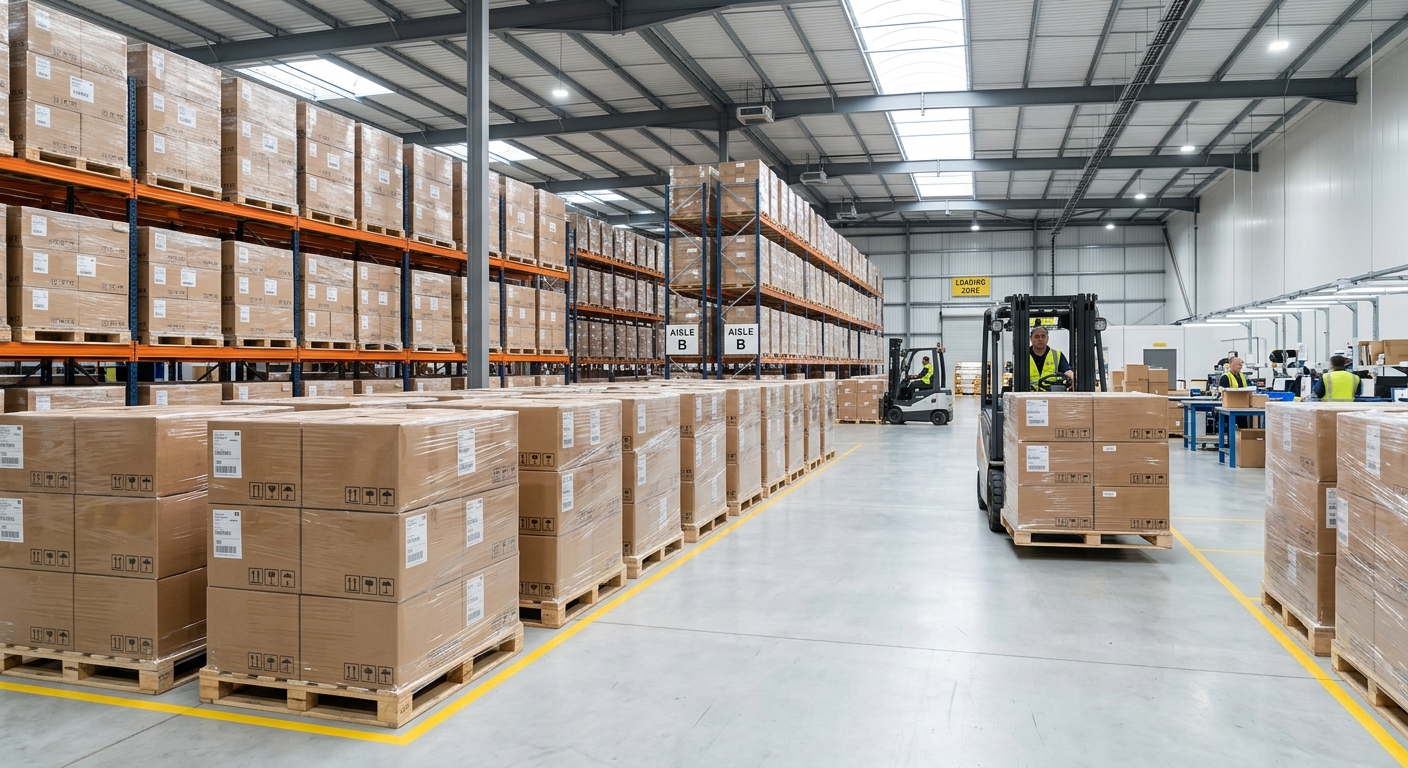
6. Packaging, carton, and DDP conditions to be confirmed for delivery to Japan
In BtoB projects for Japan, not only product quality but also delivery management is important.
Check items:
- Individual packaging specifications
- Pasting position of mount and JAN sticker
- Quantity per carton
- carton mark
- Sorting by delivery destination
- Photo confirmation after inspection
- Possibility of DDP delivery
- Handling customs clearance, tariffs, and international shipping charges
- Delivery conditions to event venues and designated warehouses
If you wish to use DDP delivery, you will need to share the delivery destination, quantity, carton size, and desired delivery date during the quotation stage. Changing conditions just before shipping may affect shipping costs and delivery times.
Need inspection or repacking outside the manufacturing supplier? See third-party inspection and repacking options.
7. Progress flow to reduce quality problems
In order to reduce quality problems, it is important not only to strengthen inspections, but also to manage the process from the initial specification arrangement to pre-shipment confirmation as a single process.
Recommended progression flow:
- Organizing specificationsOrganize product categories, quantities, SKUs, materials, packaging, and delivery conditions.
- estimateWe check not only the unit price, but also the sample cost, packaging cost, inspection method, and DDP conditions.
- Sample productionWe check the master sample that will serve as the standard for mass production.
- Determination of inspection standardsDetermine standards for color differences, print misalignment, scratches, packaging, and SKU management.
- mass productionWe mass produce based on confirmed specifications.
- Inspection/packagingCheck the product itself, packaging, quantity, SKU, and carton display.
- Pre-shipment confirmationWe will confirm photos, cartons, and delivery destinations as necessary.
- Delivery to JapanWe will ship according to the conditions of DDP delivery and designated warehouse delivery.
By sharing this flow in advance, it will reduce the difference in understanding between the ordering side and the factory side, making it easier to avoid corrections and re-inspections after mass production.
8. Frequently asked questions
QCan I consult with you even if I don't have an inspection standard?
yes. Once you know the product category, quantity, sales format, and desired delivery date, you can organize the necessary inspection items together.
QAt what stage do you check the color of anime goods?
The basic idea is to check it at the sample stage. We check the color, print density, and texture of the material before mass production, and make corrections as necessary.
QCan you handle blind packaging and random packaging?
It is possible. By arranging the quantity by design, mixing ratio, BOX unit, and carton display in advance, you can reduce the number of mistakes in packaging.
QIs it possible to deliver DDP to Japan?
Consultation is possible depending on the project conditions. After confirming the delivery destination, quantity, carton size, and desired delivery date, we will consider the DDP conditions.
QCan I inspect multiple categories at once?
It's possible. When proceeding with acrylic products, can badges, stuffed animals, bags, etc. as part of the same project, inspection items for each category and common packaging and delivery conditions will be managed separately.
9. Related product pages
Please contact us first to arrange mass production specifications.
If you send us information on the product category, quantity, number of SKUs, desired delivery date, and delivery destination, we will organize and guide you through the specifications, inspection, packaging, and delivery conditions that are easy to mass produce.
Click here for free estimate and specification consultation