
Acrylic Keychains
Confirm hole position, hardware color, ball chains, clasps and backing-card packaging.
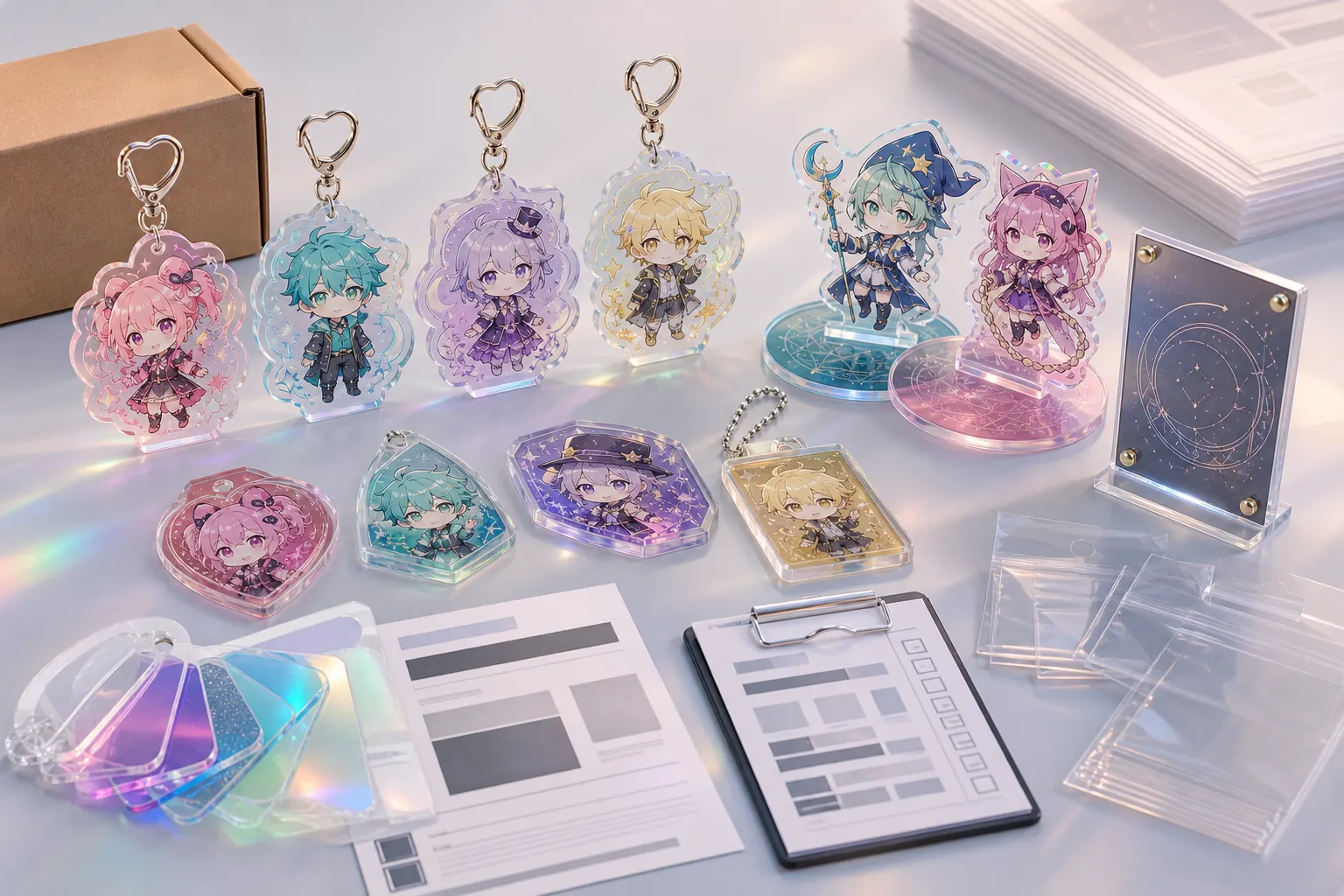
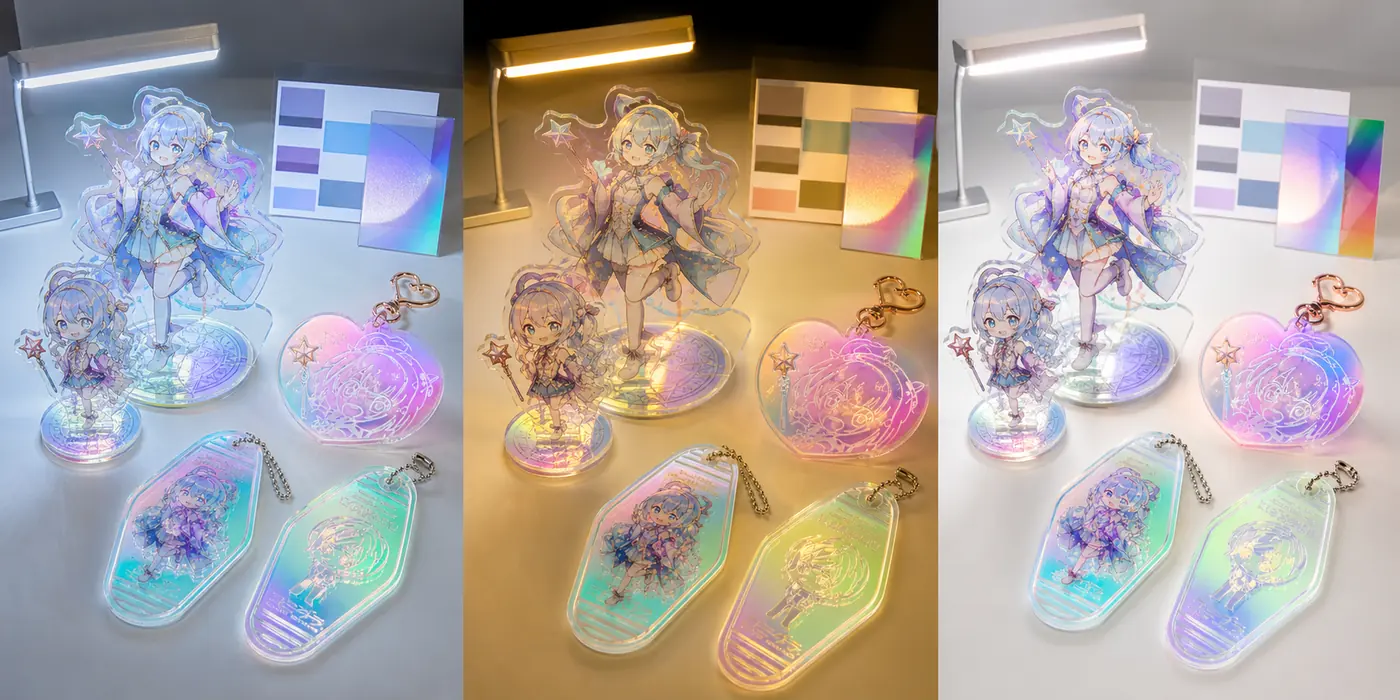
Iridescent and aurora acrylic changes by angle and lighting, so buyers need to confirm samples, white layers, packaging protection and SKU sorting before mass production. For IP, anime and event merchandise, we help organize the production conditions behind the visual effect.
Aurora acrylic usually describes the rainbow visual effect, while polarizing acrylic explains the way color shifts with light and angle. In English searches, buyers often call the same effect iridescent acrylic.
This page keeps the main topic as iridescent / aurora acrylic goods OEM and focuses on buyer-side checks: color appearance, white layer data, surface protection and SKU management.
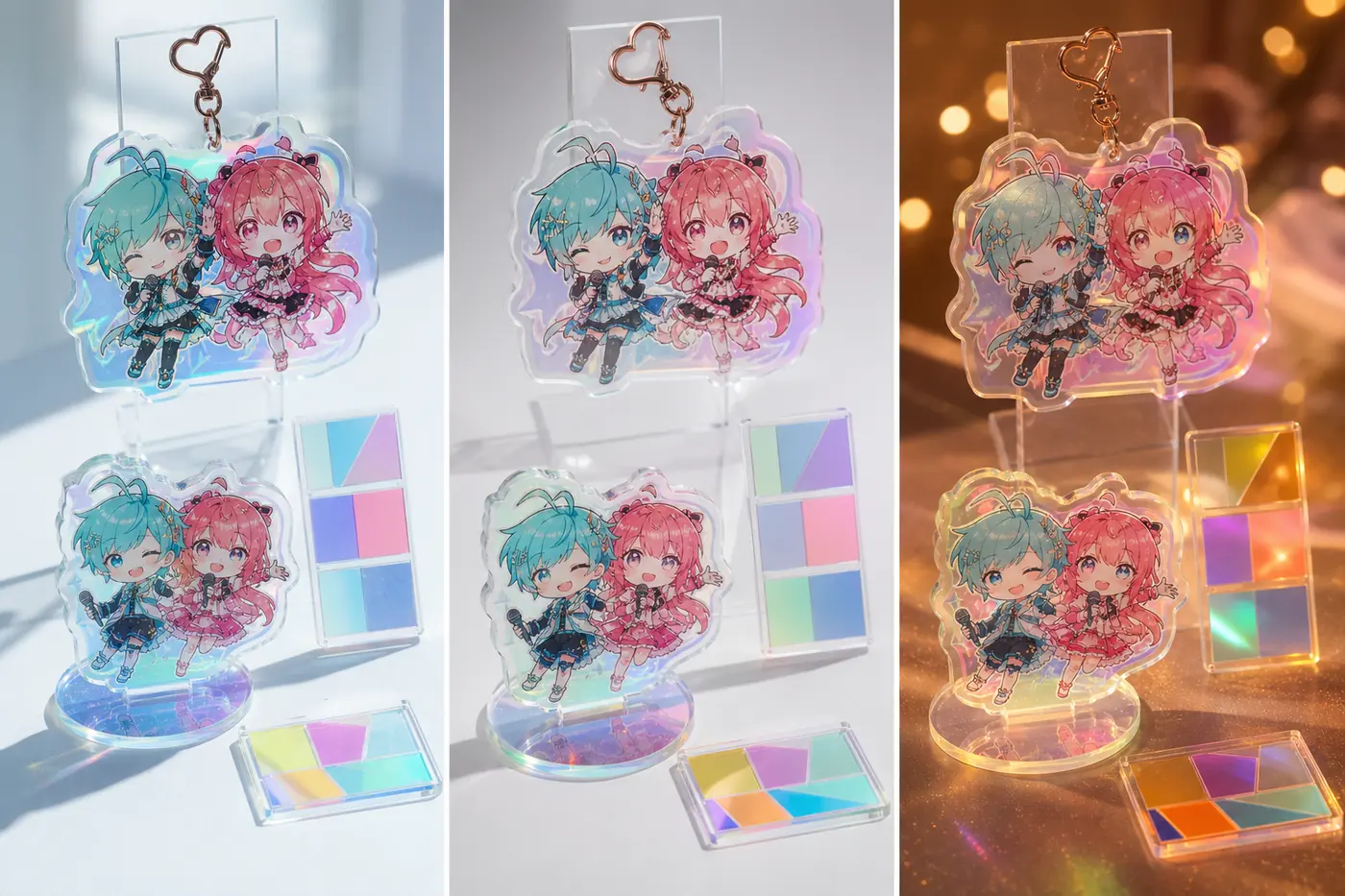
Iridescent acrylic looks premium, but it can also create misunderstandings during production approval. Defining the risks before quotation helps sampling and mass-production decisions move faster.
Do not judge only by shine. Confirm sales environment, lighting, packaging, SKU count and delivery conditions together with the product specification.
Acrylic keychains, acrylic stands, charms, plates, lottery prizes and novelty goods can use the same iridescent direction, but thickness, hardware, stand base and packaging vary by product form.
Confirm hole position, hardware color, ball chains, clasps and backing-card packaging.
Check body and base fit, reflective surface appearance and display stability.
Plan SKU and packaging units for small novelties, event merchandise and prize goods.
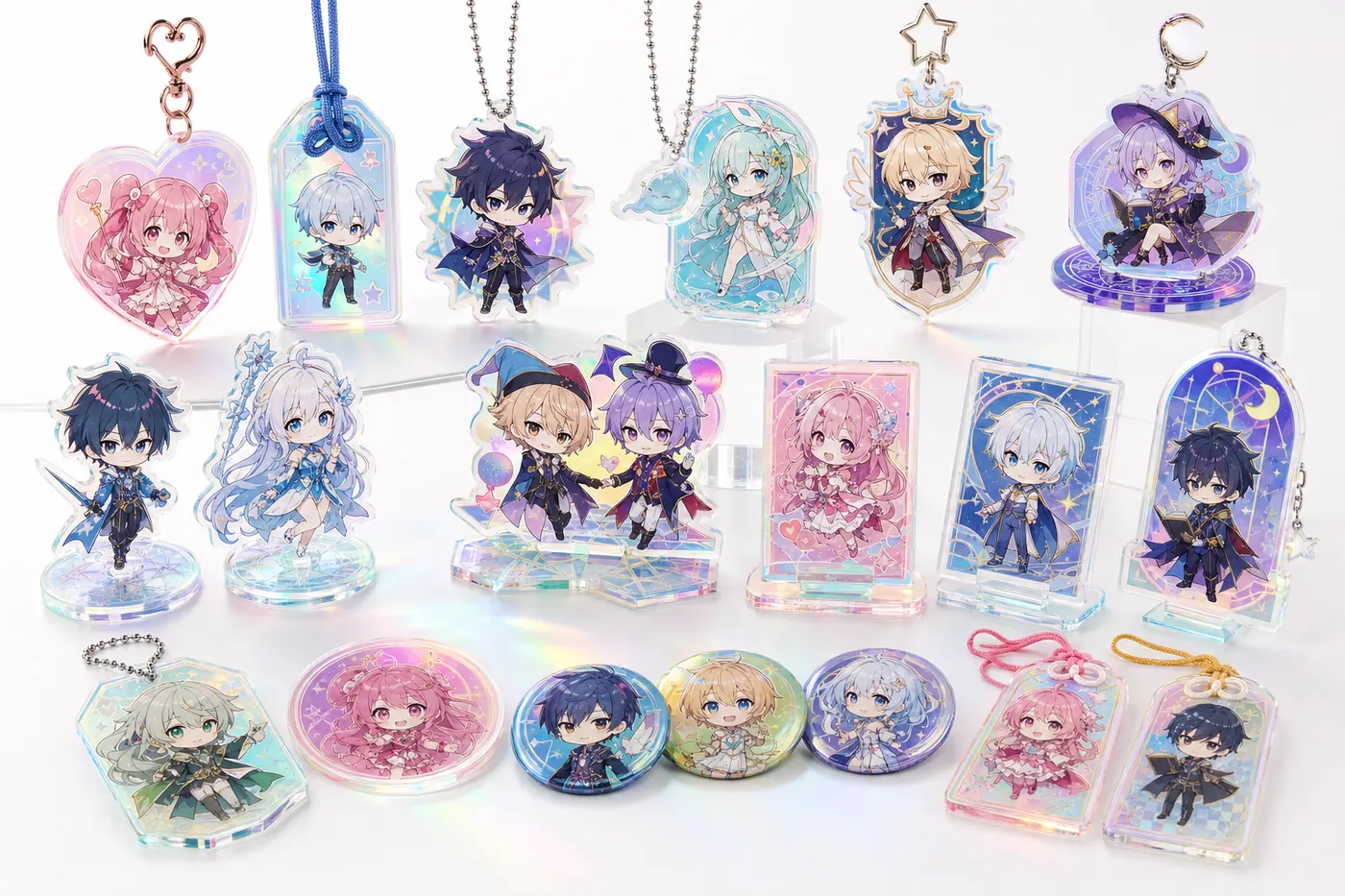
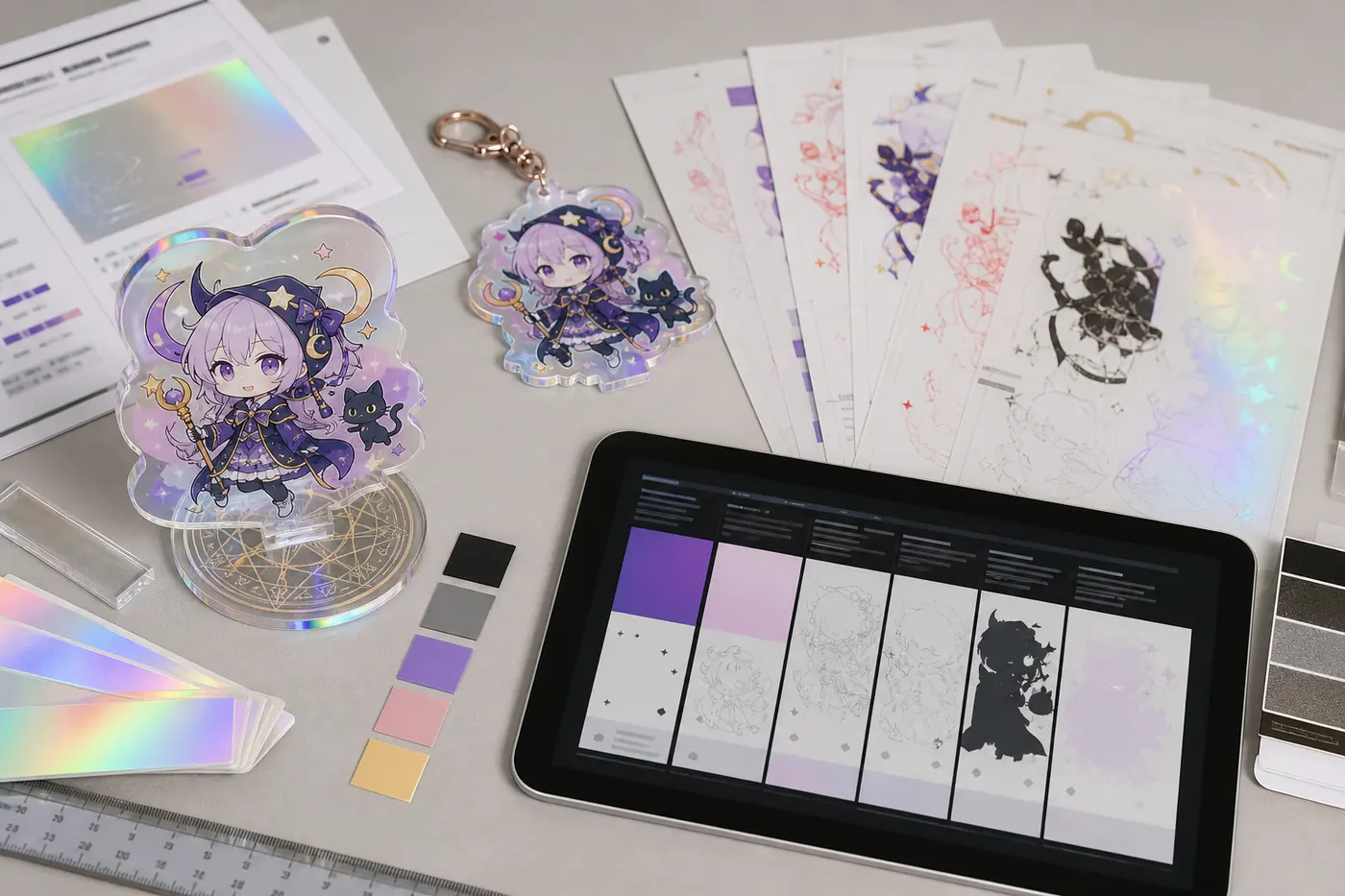
Instead of promising a fixed schedule first, we organize realistic conditions after checking material, printing, quantity, SKU count, packaging and delivery requirements.
Checking color behavior and packaging protection at the sample stage helps reduce misunderstandings after mass production.
Confirm use case, material feel, size, shape, hardware, SKU count and sales method.
Review white layer, print layer, cutline, hole position and stand-base fit.
Check lighting difference, reflection, transparency, edges, surface protection and packaging.
Organize inspection, individual packaging, SKU sorting, carton marking and Japan delivery conditions.
Iridescent acrylic can look different under indoor lighting, event lighting and smartphone photography. Sharing conditions close to the sales environment makes it easier to align expectations.
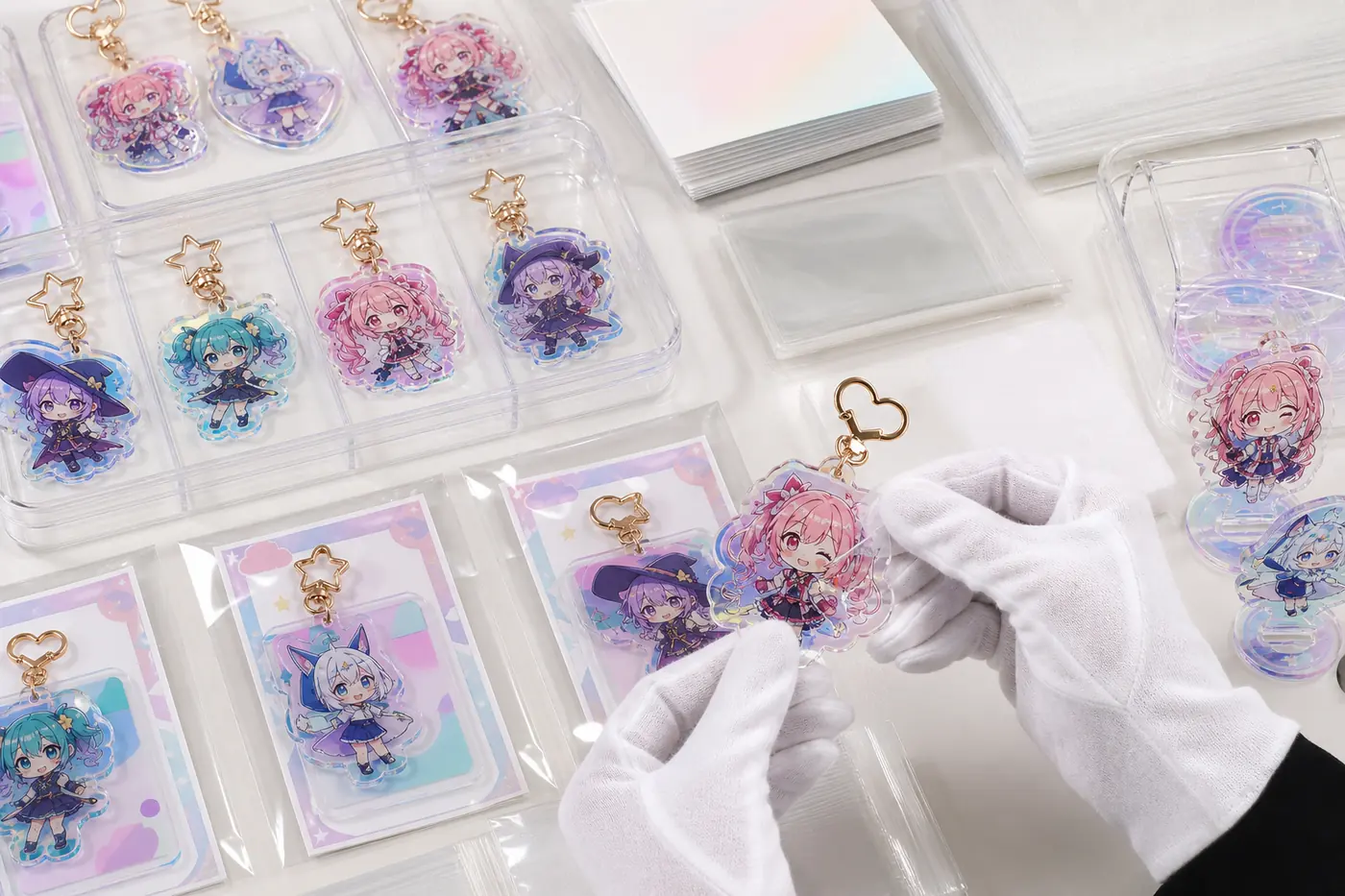
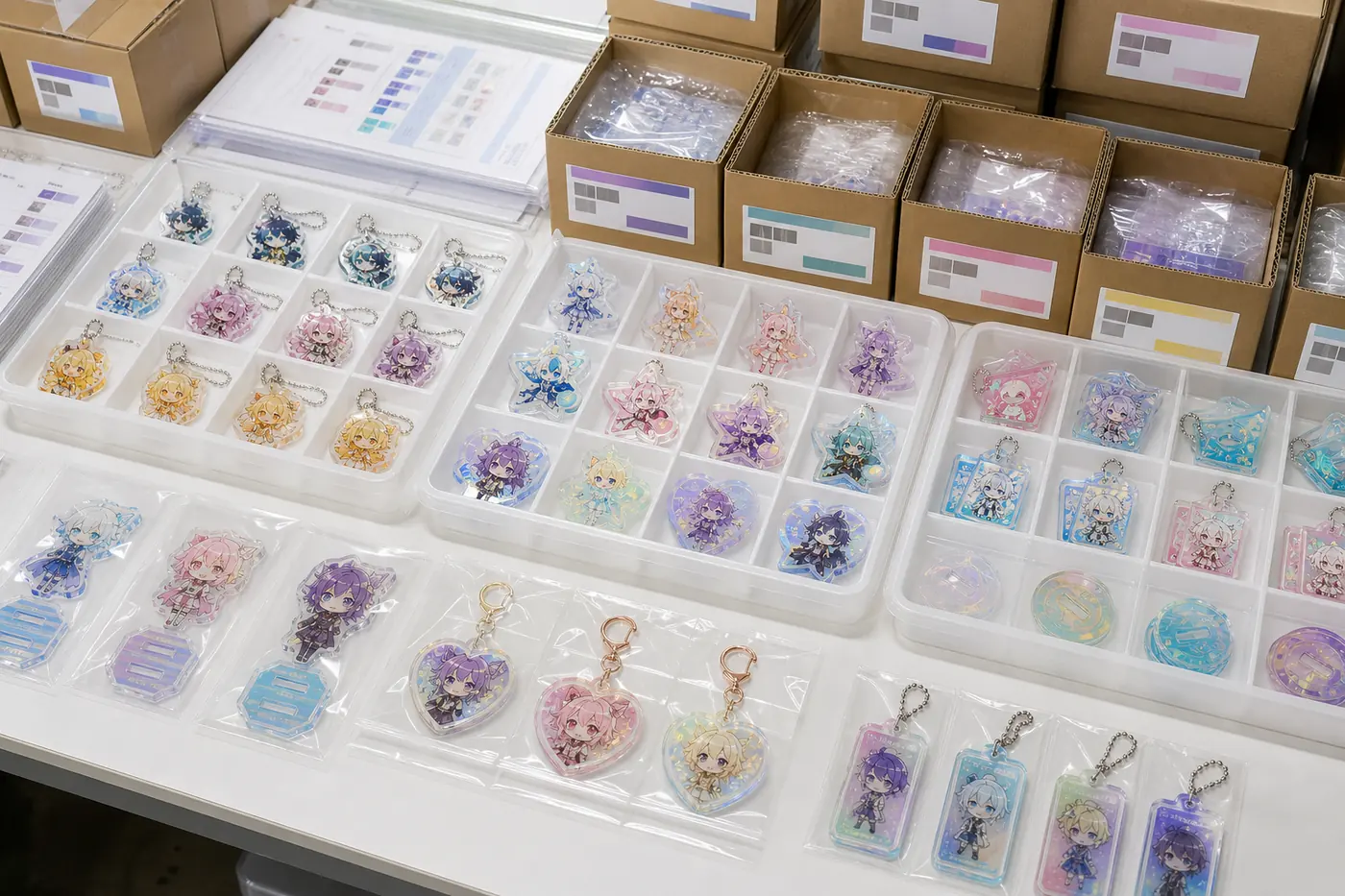
Protective film, backing cards, OPP bags, trays, dividers and carton units help reduce surface rubbing during transport and SKU mixing after delivery.
Organize quantities by character, color, hardware, backing card and sales destination. For lottery or random goods, assortment ratios and label conditions should be confirmed before quotation.
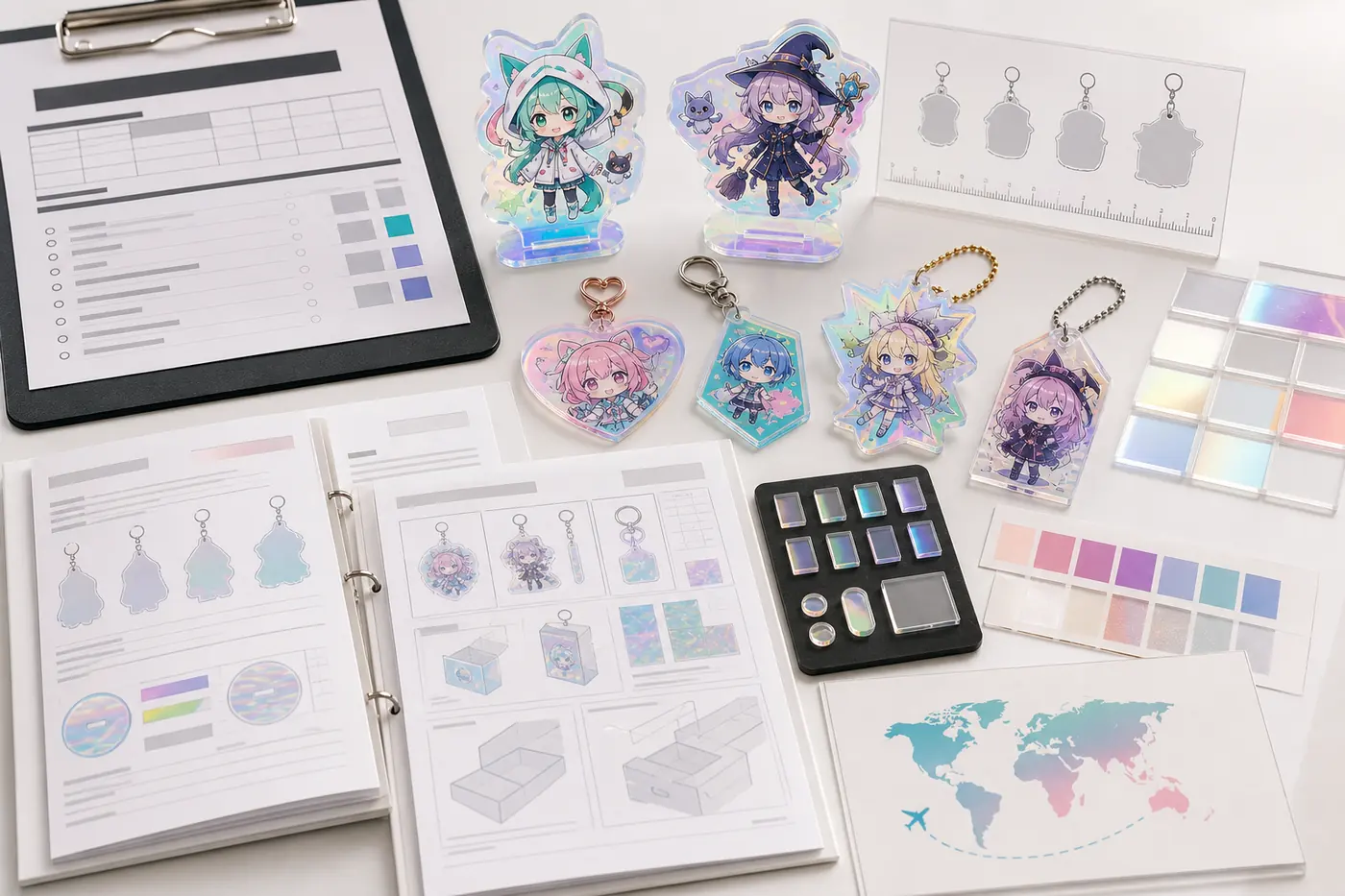
Questions procurement teams often ask before confirming iridescent acrylic goods OEM production.
They are often used for the same rainbow-reflective acrylic look, but buyers may use different search terms. This page groups aurora, polarizing and iridescent acrylic goods under one OEM production topic.
Yes. Iridescent acrylic changes by angle, lighting and camera conditions, so sample approval should include the expected retail, event or photo environment.
The white layer controls opacity and color clarity over the reflective material. Cutline, white layer and UV print layers should be checked before sampling.
They can often share a similar material direction, but thickness, hole position, hardware, stand base and packaging should be confirmed by product form.
Packaging options such as protective film, OPP bags, backing cards, separator sheets, trays and carton grouping can be discussed according to the project.
Multi-SKU projects can be organized by character, color, hardware, backing card, destination or sales channel when SKU tables and quantities are provided.
Small-lot or test-sale projects can be reviewed based on size, material, print data, SKU count, packaging and schedule requirements.
Useful quotation materials include artwork data, size, thickness, shape, hole position, hardware, quantity by SKU, packaging details and delivery destination.
When comparing nearby materials or acrylic product specifications, these related pages can be reviewed together.
Even if the design is still being finalized, buyers can share sales scenes, desired material feel, quantity, SKU count and packaging conditions so the OEM requirements can be organized before quotation.
Use iridescent acrylic goods only after the buyer has approved iridescent material orientation, viewing-angle color shift, print and white-ink coverage, batch and sheet consistency, multi-angle sample approval, and scratch-safe packaging. The finish must be reviewed on the intended acrylic, print and white-ink construction because a digital mockup cannot prove the physical viewing effect or surface durability.
Search intent boundary: This page owns the finish-selection intent for iridescent acrylic goods. General acrylic sourcing stays on the hub, while stand and keychain pages own their product-specific construction terms.
Approve the effect as a named material and process combination. Record the viewing face, sample lighting, acceptable variation and packaging rule so bulk production is compared with physical evidence rather than an image on screen. The six controls below should appear in the same quotation, sample record and inspection instruction.
| Decision | What the buyer must define | Acceptable approval evidence |
|---|---|---|
| Iridescent Material Orientation | Define iridescent material orientation by SKU before quotation and do not replace it with a vague good-quality instruction. | Keep an approved dimensioned specification or controlled reference that production and QC can identify during bulk release. |
| Viewing-Angle Color Shift | Define viewing-angle color shift by SKU before quotation and do not replace it with a vague good-quality instruction. | Keep an approved artwork proof and component record that production and QC can identify during bulk release. |
| Print and White-Ink Coverage | Define print and white-ink coverage by SKU before quotation and do not replace it with a vague good-quality instruction. | Keep an approved representative physical sample that production and QC can identify during bulk release. |
| Batch and Sheet Consistency | Define batch and sheet consistency by SKU before quotation and do not replace it with a vague good-quality instruction. | Keep an approved sellable pack or use-condition check that production and QC can identify during bulk release. |
| Multi-Angle Sample Approval | Define multi-angle sample approval by SKU before quotation and do not replace it with a vague good-quality instruction. | Keep an approved inspection photo and measured result that production and QC can identify during bulk release. |
| Scratch-Safe Packaging | Define scratch-safe packaging by SKU before quotation and do not replace it with a vague good-quality instruction. | Keep an approved SKU-linked bulk report and carton trace that production and QC can identify during bulk release. |
Approve a finished sample that represents the intended artwork, construction and sellable package. Record the sample date, revision, dimensions, material or component codes, visual limits and function checks. If a later change affects artwork, material, hardware, assembly or packaging, identify the impacted SKUs and obtain a new approval instead of relying on the earlier sample.
For bulk inspection, use the same viewing conditions, measurement points and pass/fail language used during approval. The report should identify the purchase order, SKU, batch, sampled quantity and result. Photographs are useful evidence only when they show the relevant scale, lighting, label or test condition and can be traced to the inspected lot.
When comparing quotations, separate confirmed specifications from assumptions. Ask each supplier to identify exclusions, proposed substitutes, sampling scope, packaging labor and delivery basis. A lower figure is not equivalent when it omits a component, uses a different inspection level or assumes that several designs can share one uncontrolled pack. Close those differences before price approval so the purchase decision remains auditable.