B2B OEM / GAME IP PROGRAMS
Game Merchandise Acrylic Goods
Translate a game roster and release milestone into a controlled acrylic merchandise program. Character variants, poses, costumes, legal lines, finish tiers, sample approvals, launch allocations and regional packs must remain linked from source asset to shipment.
This page owns game publisher, studio and game-IP merchandise planning. Individual stand, keychain and special-finish product terms remain on their dedicated pages; cross-industry licensing operations remain on the IP collaboration page.
DIRECT ANSWER
What buyers should know about game merchandise acrylic goods
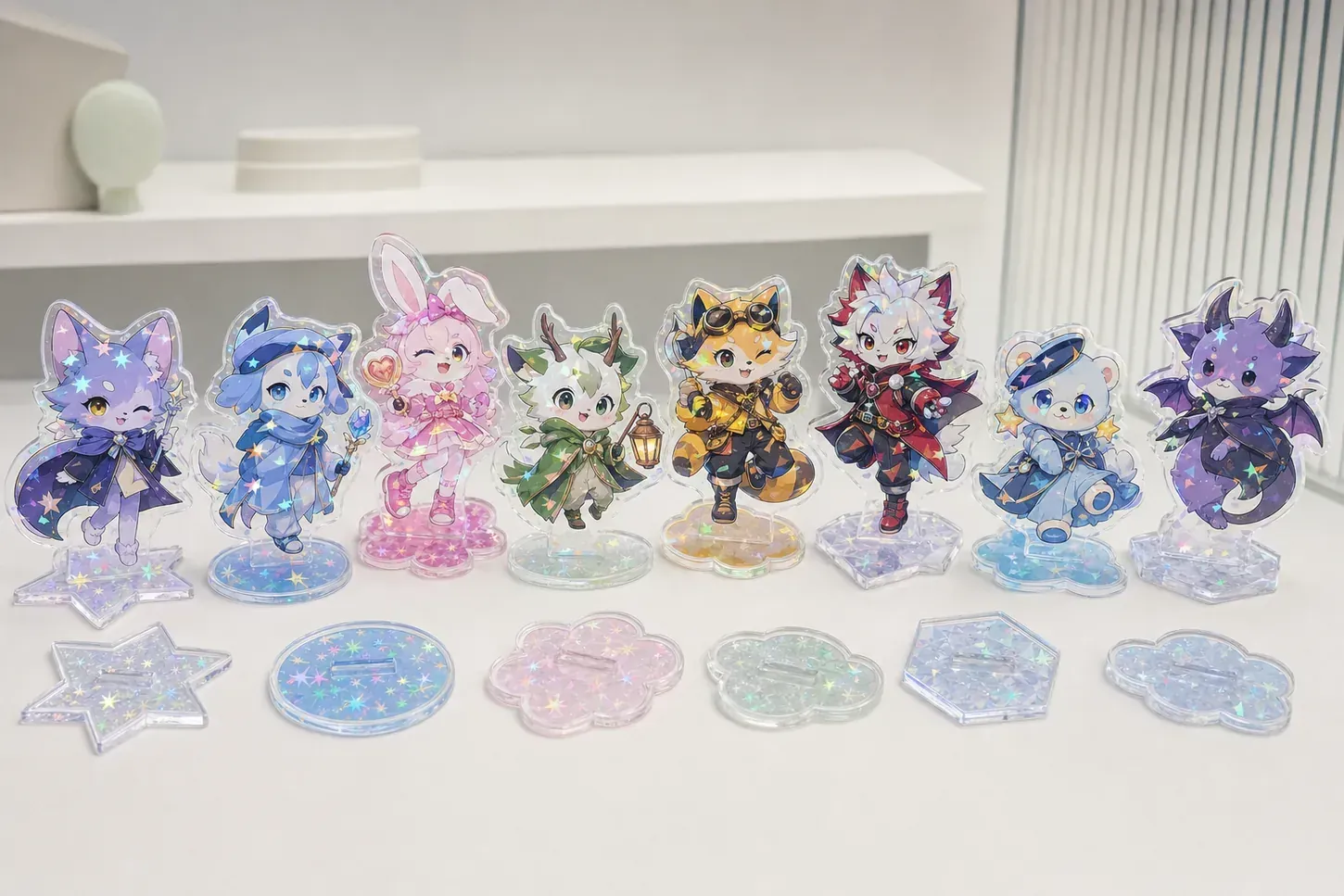
Game merchandise acrylic goods are character stands, keychains, charms and related products developed for publishers, studios, license teams and official merchandise programs. The source may include a large roster, multiple costumes, anniversary art, key visuals or event-specific variants. Production succeeds when those assets are converted into a clear SKU and approval system.
A game asset is not automatically a manufacturing file. Small facial details, effects, weapons, thin accessories and dark costumes may need cut-line, white-ink or scale decisions. Legal copy, logos and regional notices can also change the pack. Keep source art, production art and marketing art labeled separately so the wrong file is not used after a late release update.
The release plan should state where and when each SKU is sold. Event stock, ecommerce stock, platform promotions, regional distributors and replacement reserve may need different carton labels or pack copy. Quantity and destination decisions should be made before final packing rather than reconstructed from finished cartons.
For the complete product family, use the Acrylic Goods OEM hub. Keep the distinct page intent in this guide instead of repeating one broad acrylic goods description.
PROJECT DECISIONS
Lock the decisions that define this page intent
A product name or channel name is not a complete production instruction. Record the decisions below before artwork, samples and packaging are released.
Roster scope
List every character, pose, costume, expression and special variant included in the release.
Finish hierarchy
Assign clear, colored, holographic, glitter or aurora effects to defined SKUs rather than changing them informally.
Approval ownership
Identify who approves character accuracy, production data, legal copy and physical samples.
Release allocation
Split quantities by event, ecommerce, region, partner and reserve before carton preparation.
SPECIFICATION CONTRACT
Build one quote-ready control sheet
Connect the artwork, physical product, package, SKU and delivery data in one revision-controlled matrix. Mark undecided fields for recommendation rather than allowing different teams to assume different specifications.
| Release identity | Game title, campaign or event, release name, target date, regions and authorized marks. |
|---|---|
| Roster matrix | Character, asset ID, pose, costume, product, finish, size, quantity and approval status. |
| Production artwork | Cut line, color, white ink, transparency, front/reverse orientation and any protected critical detail. |
| Product components | Acrylic body, base, fitting, connector, magnet, card and other components by SKU. |
| Legal pack | Logo, copyright line, ratings or regional copy where provided, barcode and sellable-unit language. |
| Sample plan | Representative high-risk shapes, dark/light color ranges, special finishes and final packs. |
| QC evidence | Color proof, dimensions, assembly, surface, label, component count and assortment report. |
| Allocation | Quantity by channel, region, event, partner, reserve, inner quantity and carton mark. |
PROGRAM DESIGN
Build a game merchandise range without losing roster control
Product formats should support the release concept while retaining a unique specification. Use related product pages for physical engineering and this page for the game-program matrix.
Character stand series
Use consistent scale and base logic while preserving silhouette, weapon and effect details for each character.
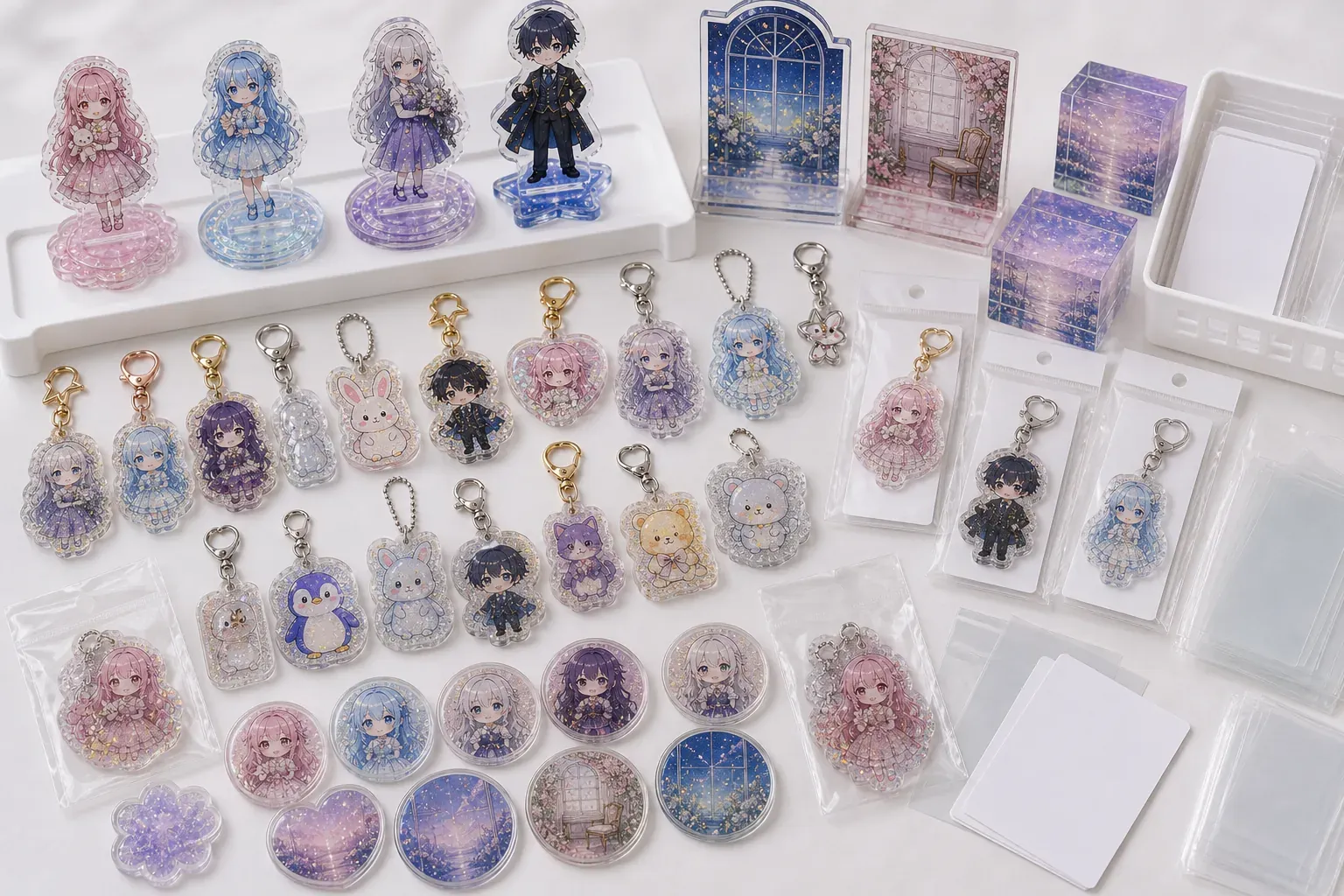
Keychain collection
Control front/reverse print, fitting color and blind or open assortment across the roster.
Special-finish tier
Assign holographic, glitter or aurora effects to specific release tiers and approve physical samples under multiple angles.
Anniversary bundle
Link the stand, keychain, card and package to one set code so components cannot be mixed across characters.
SAMPLE APPROVAL
Approve evidence that answers production questions
Use an approval matrix with separate columns for source asset, production artwork, digital proof, physical sample and final package. Record the approver and date for character accuracy, color, cut line, white ink, finish, components and legal copy. A marketing approval should not automatically release manufacturing data.
Choose physical samples that cover manufacturing risk, not only the lead character. Include the narrowest silhouette, darkest print, smallest facial detail, largest body, highest component count and every special material family. Review representative packs and blind assortment evidence before the bulk release.
- Authorized source asset
- Character and costume ID
- Cut and white-ink revision
- Physical color sample
- Special-finish sample
- Base or fitting assembly
- Legal package proof
- Channel allocation matrix
VISUAL EVIDENCE
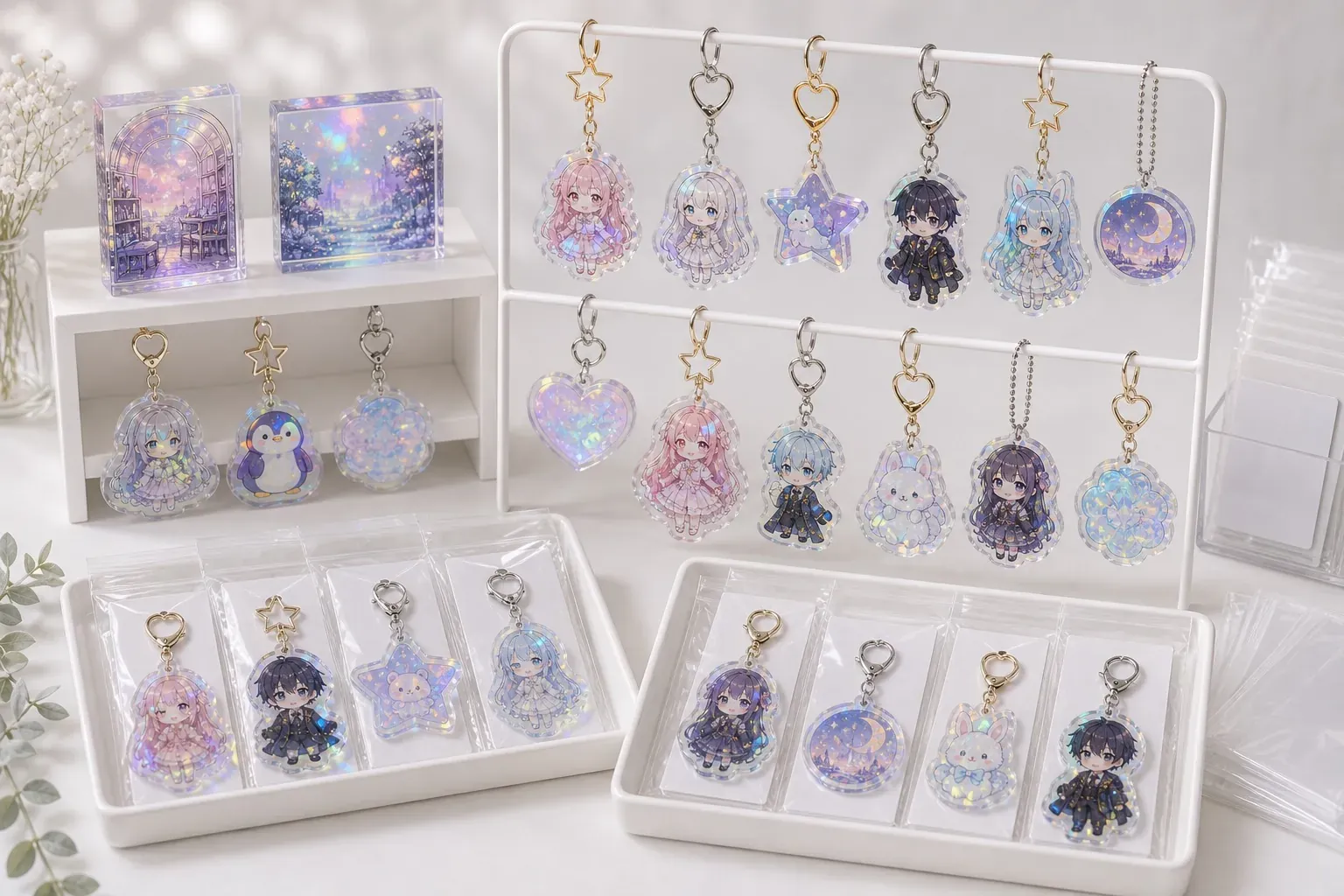
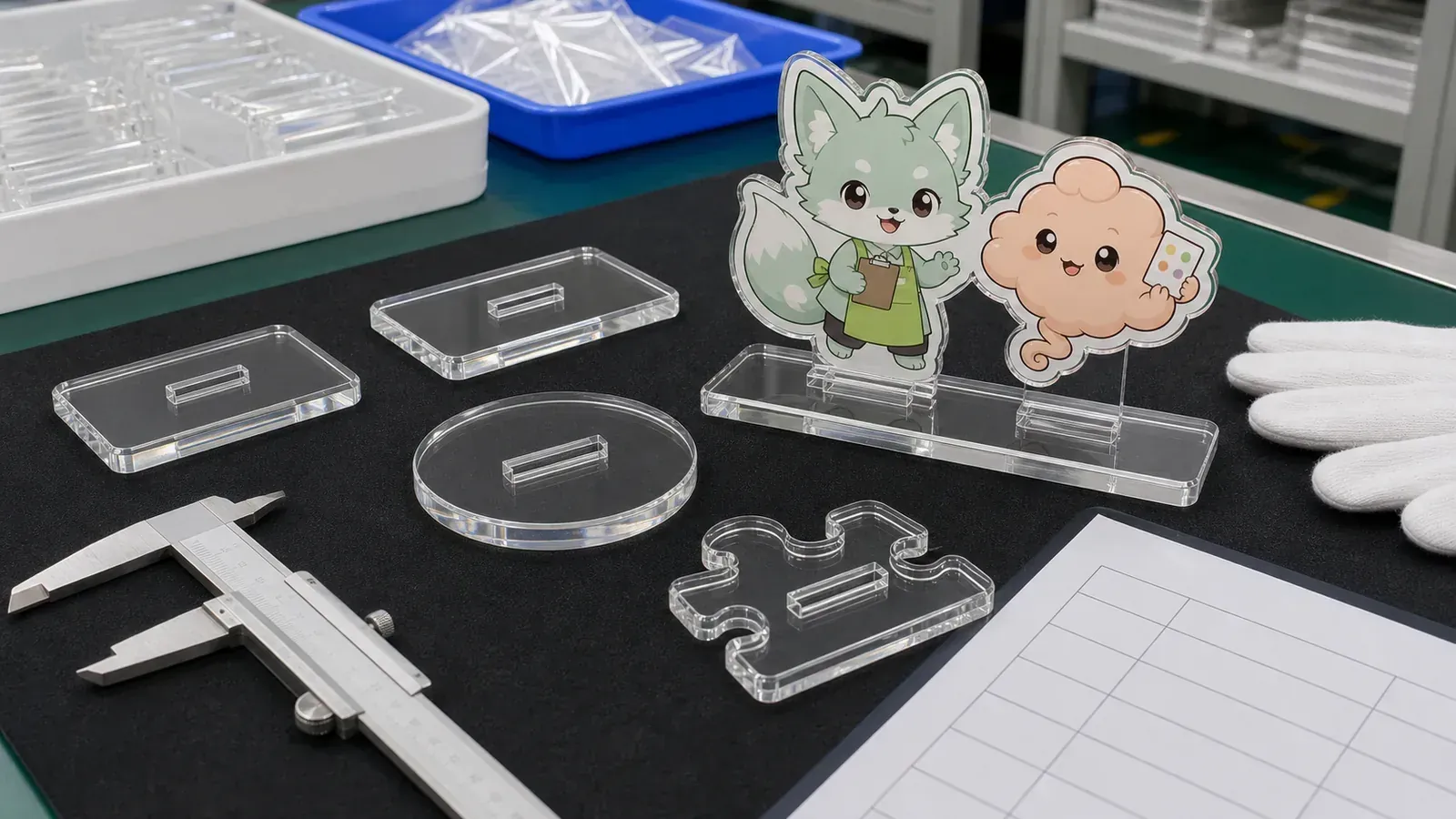
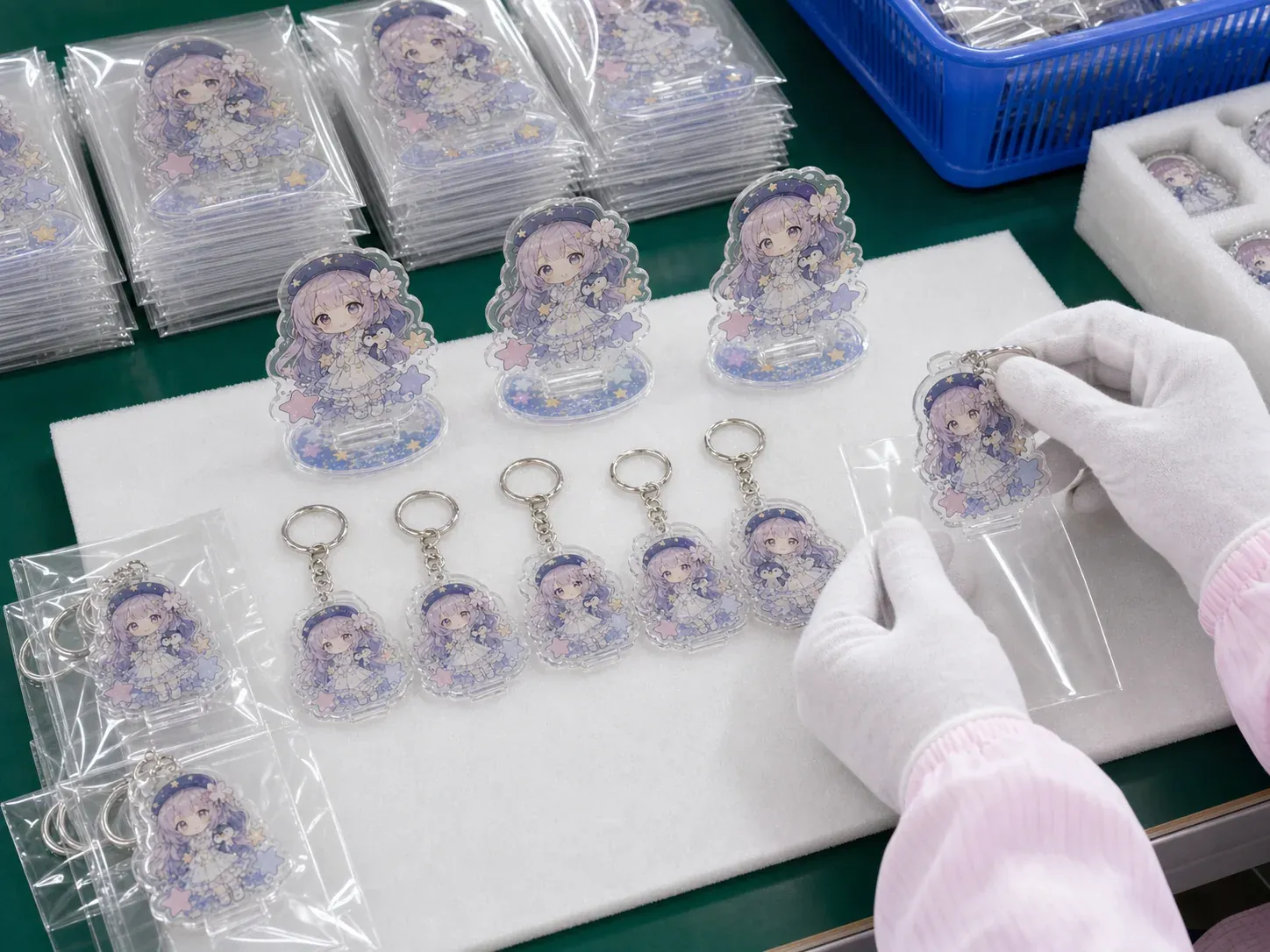
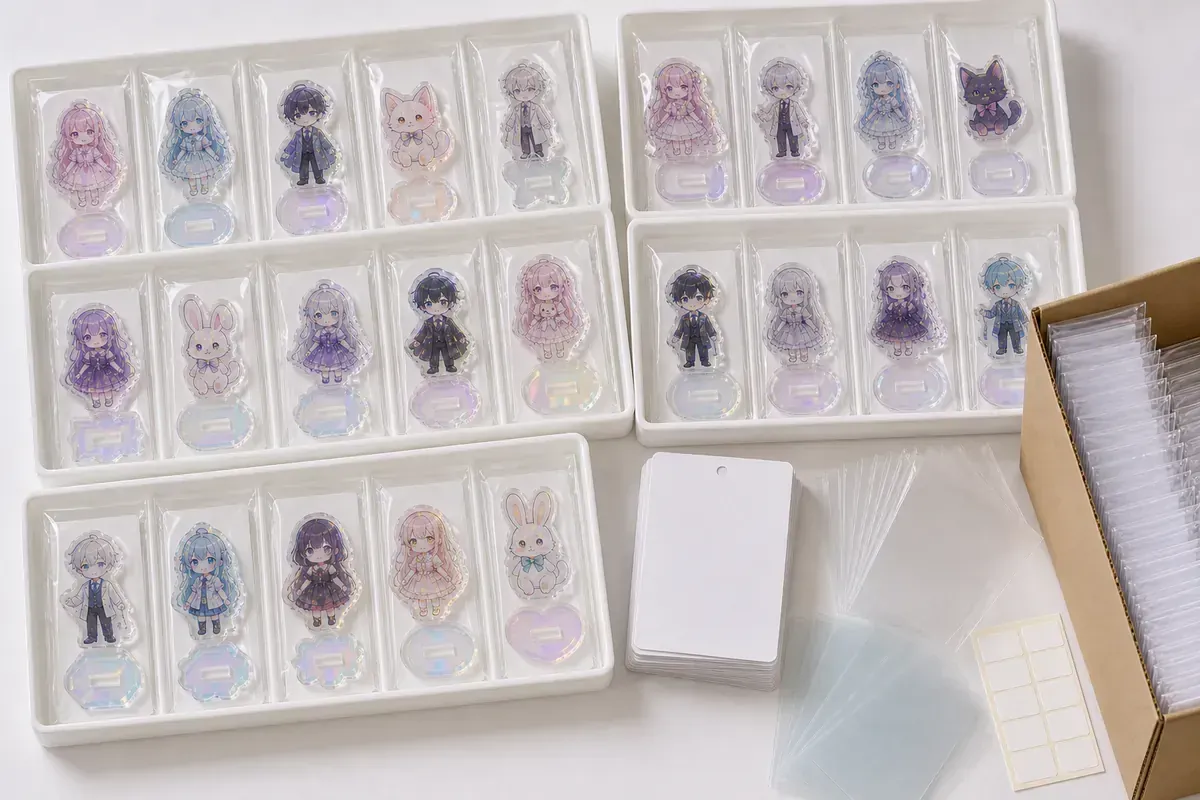
Use real product, packing and QC references
These references support product and process review. The approved physical sample and project-specific specification remain the production authority.
MASS-PRODUCTION RISK
Resolve the failure modes before the bulk release
Risk control is most useful when each failure is tied to a document, sample, inspection method or pack rule.
Character names are used instead of asset IDs
A revised pose or costume can be mistaken for the approved production file.
Only the lead character is sampled
Narrow, dark or highly detailed variants introduce untested cut and print risks.
Special finish is changed by visual preference
The release hierarchy becomes inconsistent and bulk material differs from approved marketing.
Legal copy is separate from the SKU matrix
Regional or product-specific packs receive the wrong mark or copyright line.
Blind assortment has no trace code
The team cannot prove design ratios or investigate a missing character.
Channel allocation is decided after production
Cartons must be reopened and resorted close to the release deadline.
QUALITY CONTROL
Inspect against the approved SKU and sample
Use the Acrylic Quality Inspection guide to plan the sample size and evidence set. The checkpoints below keep this page's distinct buyer intent visible in QA.
| Asset identity | Verify game, character, pose, costume, expression and SKU against the approved roster. |
|---|---|
| Print and detail | Inspect color, line detail, white ink, transparency, registration and protected facial areas. |
| Cut and assembly | Check silhouette, narrow parts, dimensions, edge, base or hardware and component count. |
| Finish | Compare special material code, viewing face and representative angle response. |
| Pack and legal | Confirm backing card, logo, copyright line, barcode, language and seal. |
| Assortment and allocation | Verify blind ratios, inner quantities, channel splits and destination carton marks. |
PACKAGING AND HANDLING
Protect the product and preserve SKU identity
Packaging is part of the sellable specification. Confirm the final unit before bulk packing and use the Acrylic Scratch-Prevention Packaging guide for surface-risk planning.
Open character SKU
Show the character clearly and keep the label, legal line and product orientation consistent.
Blind collection
Use concealed design codes, verified ratios and carton traceability without revealing the sellable design.
Regional pack
Control language, barcode, legal copy and destination as part of the SKU revision.
Release bundle
Use a set code and component checklist so stand, keychain and other items stay with the correct character.
OPERATIONAL HANDOFF
Control late game-asset changes without corrupting the release matrix
A late costume, logo or legal update should identify every affected production object: body artwork, base, hardware color, card, label, catalog image and carton allocation. The change owner should close or supersede the old revision so approved and obsolete assets cannot both appear in the production handoff.
When only selected regions or channels receive the update, create a new controlled SKU or pack code instead of relying on verbal sorting. The release matrix should show where the variants diverge and which physical evidence proves each one. This keeps event, ecommerce and partner inventory reconcilable after launch.
QUOTE CHECKLIST
Information needed for a useful production review
Send known inputs and mark open decisions. Quantity by design, the distinct page-specific decision, packaging and destination are required to compare a practical route.
- Game and release name
- Authorized asset IDs
- Character and variant roster
- Product formats
- Quantity per SKU
- Editable production artwork
- Special-finish assignments
- Base or fitting requirements
- Open, blind or set packaging
- Legal copy and barcode data
- Channel and region allocation
- Required arrival date
PRODUCTION WORKFLOW
From buyer brief to documented shipment
Timing is confirmed after artwork, specification, sample, packaging, inspection and destination conditions are known. Do not use an unsupported fixed lead-time claim for an unreviewed project.
- 01 BriefIntent, artwork, quantity and destination
- 02 ReviewProduct, SKU, pack and risk decisions
- 03 SamplePhysical evidence for the highest-risk points
- 04 ApprovalOne final controlled revision and matrix
- 05 ProductionManufacture, sort, pack and inspect by SKU
- 06 DeliveryCarton records and agreed destination split
See the complete OEM Order Process.
FAQ
Game Merchandise Acrylic Goods FAQ
What is the practical MOQ for game merchandise acrylic goods?
It depends on total quantity, roster size, quantity per SKU, product formats, finishes, packaging and allocation. Share the full release matrix for review.
Can a large character roster be produced together?
Yes. Use asset IDs, unique SKUs and representative sampling. Quantity, pack and carton data must remain linked to every character variant.
Which characters should receive physical samples?
Cover the highest-risk shapes, darkest and lightest art, smallest critical details, largest products, special finishes and final package types rather than sampling only the lead character.
How are special finishes approved?
Assign a named material code and viewing face, then review physical samples under several lighting angles with the final print and white ink.
Can event and ecommerce stock be split at the factory?
Yes. Provide the approved quantity by channel, region and destination before packing so inner boxes, carton marks and documents follow the release plan.
How should IP files be controlled?
Separate source assets, production artwork and marketing files; record revision, owner and approval date; and limit production release to the authorized data set.
RELATED RESOURCES
Continue the procurement review
PROJECT REVIEW
Prepare the Game Merchandise Acrylic Goods brief
Send the artwork, project-specific decisions, quantity by SKU, packaging, inspection needs and destination. Unconfirmed fields can be marked for recommendation.