B2B OEM / ONLINE MERCHANDISE CHANNEL
Acrylic Merchandise for Ecommerce
Prepare acrylic merchandise for ecommerce as both a physical product and a reliable catalog record. Product photography, variant naming, SKU labels, pick-pack protection, carton allocation and replacement evidence must be ready before the online launch.
This page owns ecommerce channel and fulfillment intent. Individual acrylic product specifications remain on their product pages; retail-store merchandising remains on the retail acrylic solution page.
DIRECT ANSWER
What buyers should know about acrylic merchandise for ecommerce
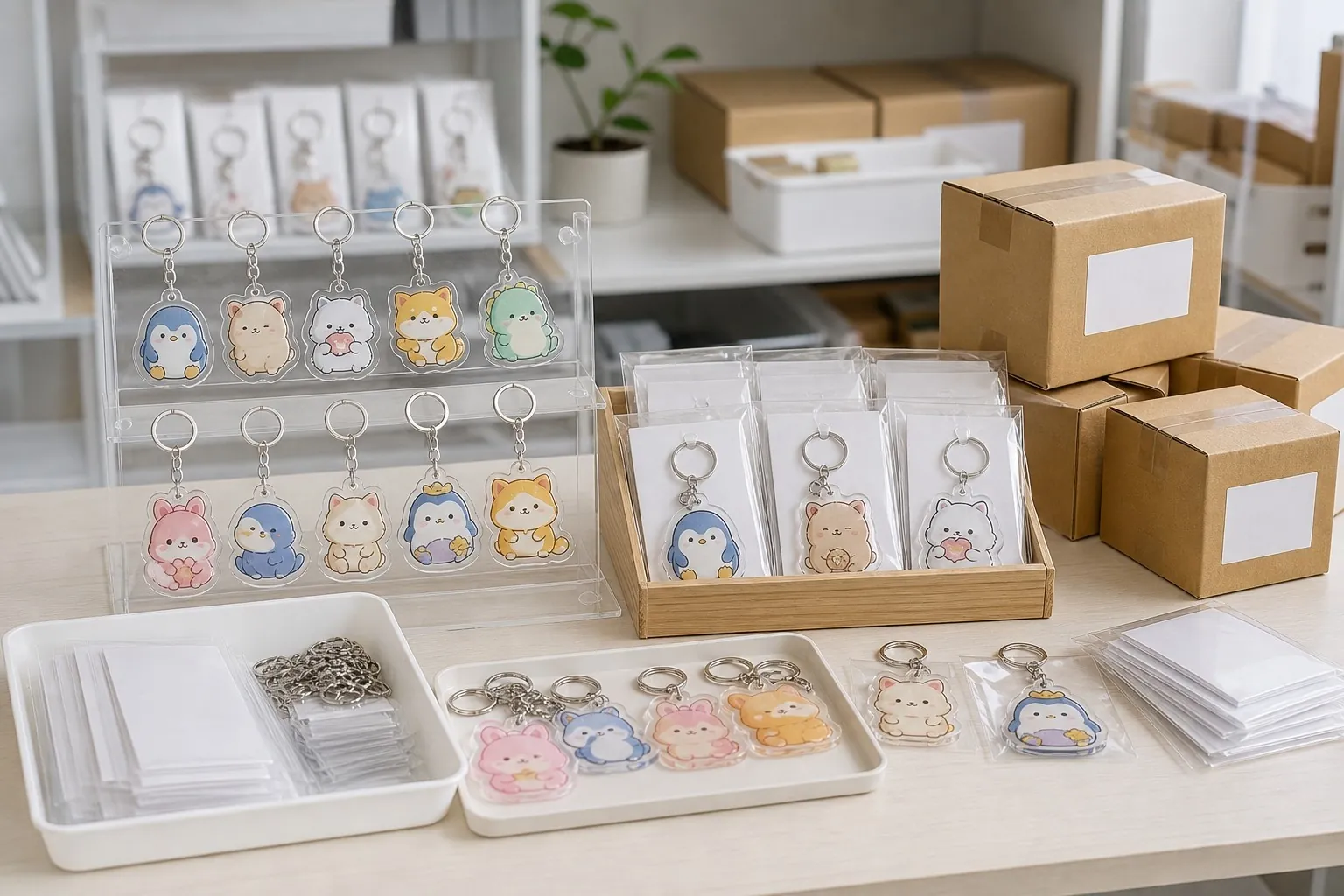
Acrylic merchandise for ecommerce includes stands, keychains, charms, magnets and related goods prepared for online sale and warehouse fulfillment. The channel adds requirements beyond manufacturing the acrylic piece: the sellable unit must photograph accurately, map to a unique variant, survive individual order handling and remain identifiable through storage, picking and customer delivery.
The approved sample should become the reference for both production and the online product page. Record dimensions, included components, protective film instructions, front and reverse appearance and package contents so listing copy does not promise a different item. Photography samples should use the same material, print, base, hardware and pack that customers receive.
Variant data is part of the production contract. A character name, pose, finish, size or set combination can create a separate SKU. The same code should appear in the buyer matrix, media filename, label, inner pack, carton record and warehouse import file where applicable.
For the complete product family, use the Acrylic Goods OEM hub. Keep the distinct page intent in this guide instead of repeating one broad acrylic goods description.
PROJECT DECISIONS
Lock the decisions that define this page intent
A product name or channel name is not a complete production instruction. Record the decisions below before artwork, samples and packaging are released.
Variant architecture
Define which artwork, finish, size or set combination creates a unique sellable SKU.
Photography sample
Choose the approved production-representative unit and record film-removal and display instructions.
Pick-pack protection
Design the retail pack for shelf storage, picking, parcel movement and customer opening.
Warehouse data
Align SKU, barcode or internal label, carton quantity, dimensions and destination allocation.
SPECIFICATION CONTRACT
Build one quote-ready control sheet
Connect the artwork, physical product, package, SKU and delivery data in one revision-controlled matrix. Mark undecided fields for recommendation rather than allowing different teams to assume different specifications.
| Catalog name | Customer-facing product and variant name linked to the internal production SKU. |
|---|---|
| Product contents | Acrylic body, base, hardware, protective film, card, accessories and quantity per sellable unit. |
| Artwork | Color, white ink, cut line, transparency, reverse view, logo and legal copy by variant. |
| Photography | Approved sample, front/reverse angles, scale reference, film status and color limitations. |
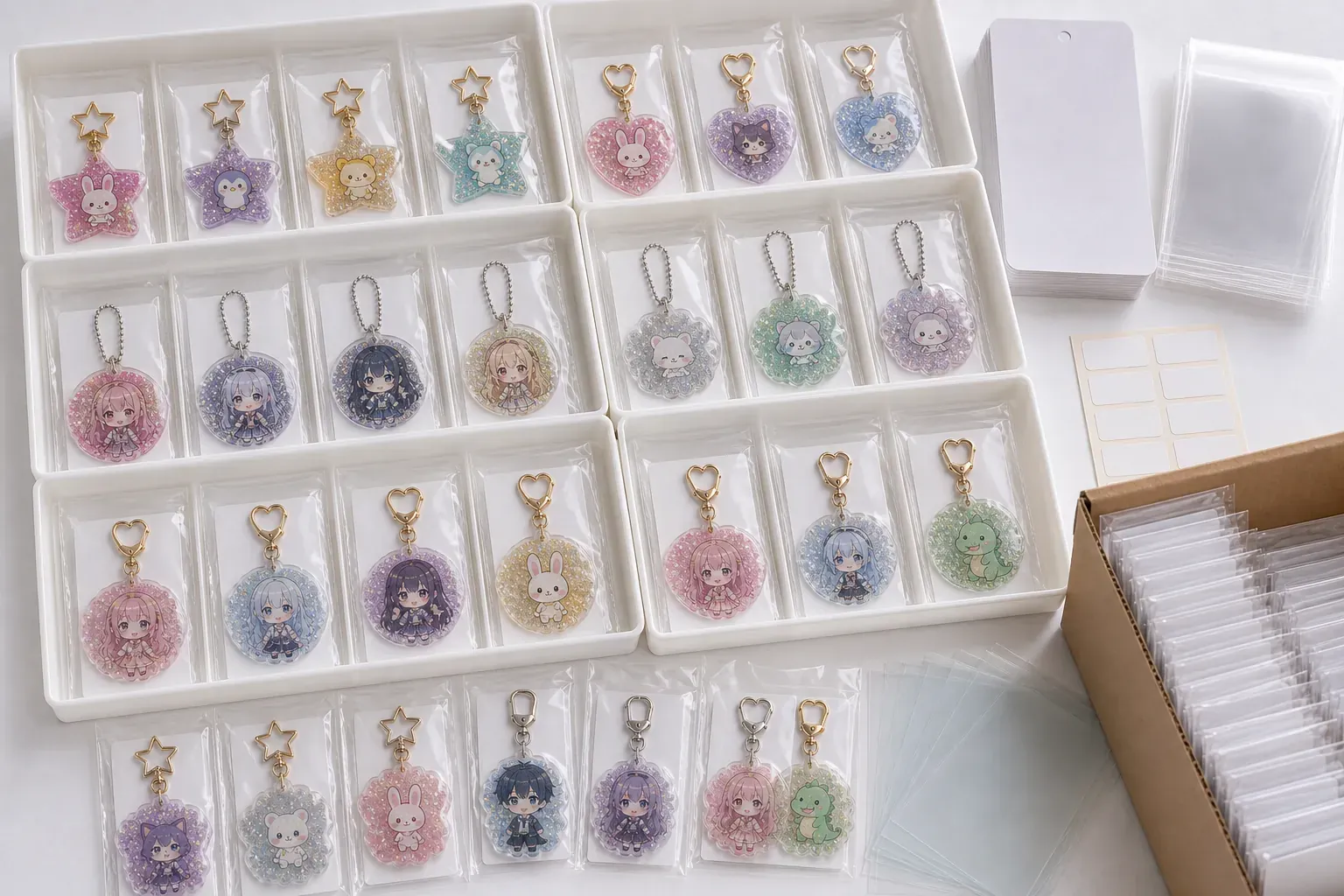
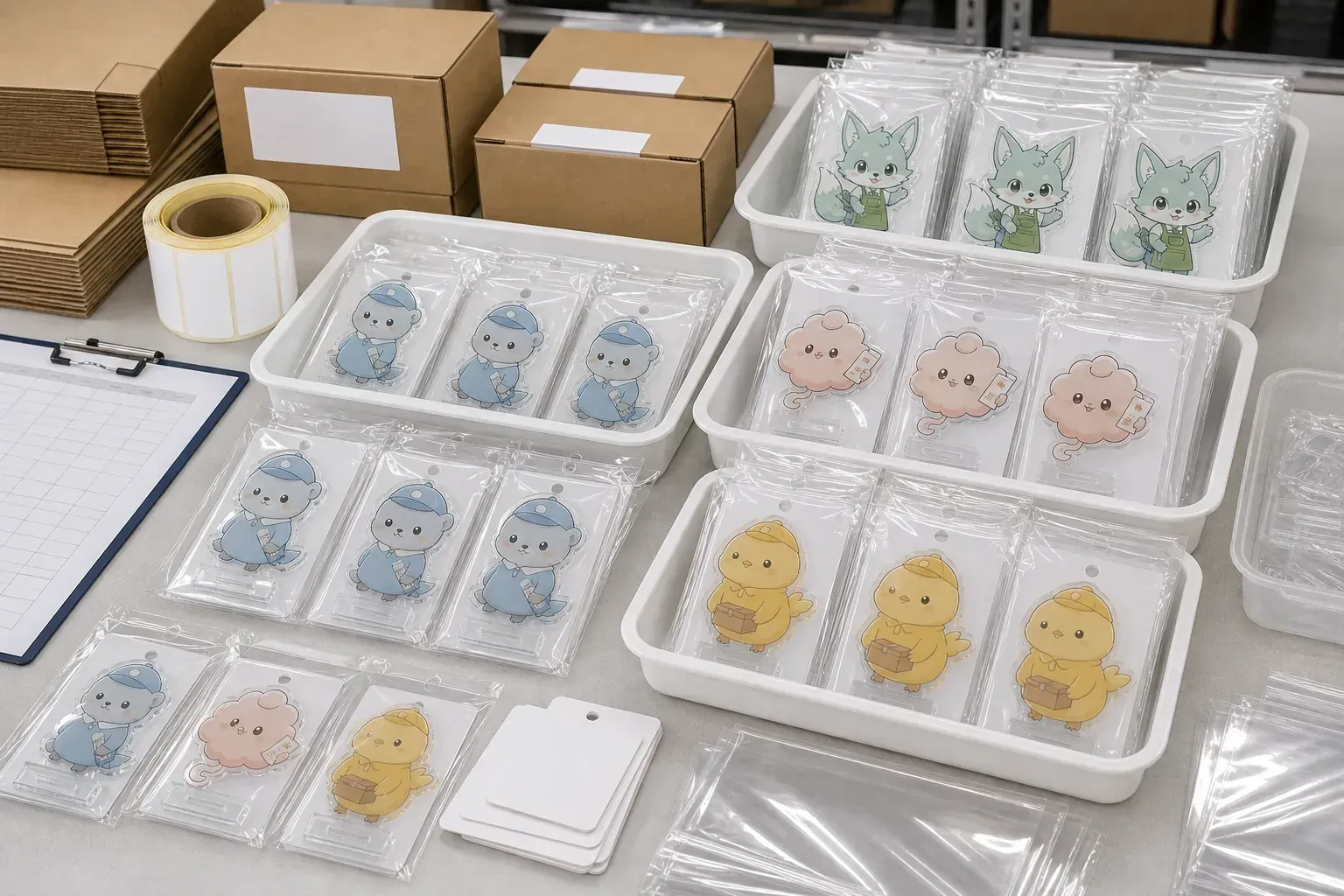
| Individual pack | Bag or box, backing support, scratch protection, seal, barcode or SKU label and opening instruction. |
| Warehouse data | SKU, dimensions, gross weight if needed, inner quantity, carton quantity and storage orientation. |
| QC evidence | Inspection record, sample images, label scan, component count and carton trace. |
| Allocation | Quantity by warehouse, launch batch, replacement reserve, region and required arrival date. |
PROGRAM DESIGN
Design the assortment around online buying and fulfillment
Use product pages to choose each physical acrylic format, then use this channel plan to control how customers see, select and receive the SKU.
Hero product
Acrylic stands can anchor a collection when assembled dimensions, base contents and photography instructions are explicit.
Compact variant
Keychains and charms fit broader price points but need hardware, reverse print and pack contents shown accurately.
Finish upgrade
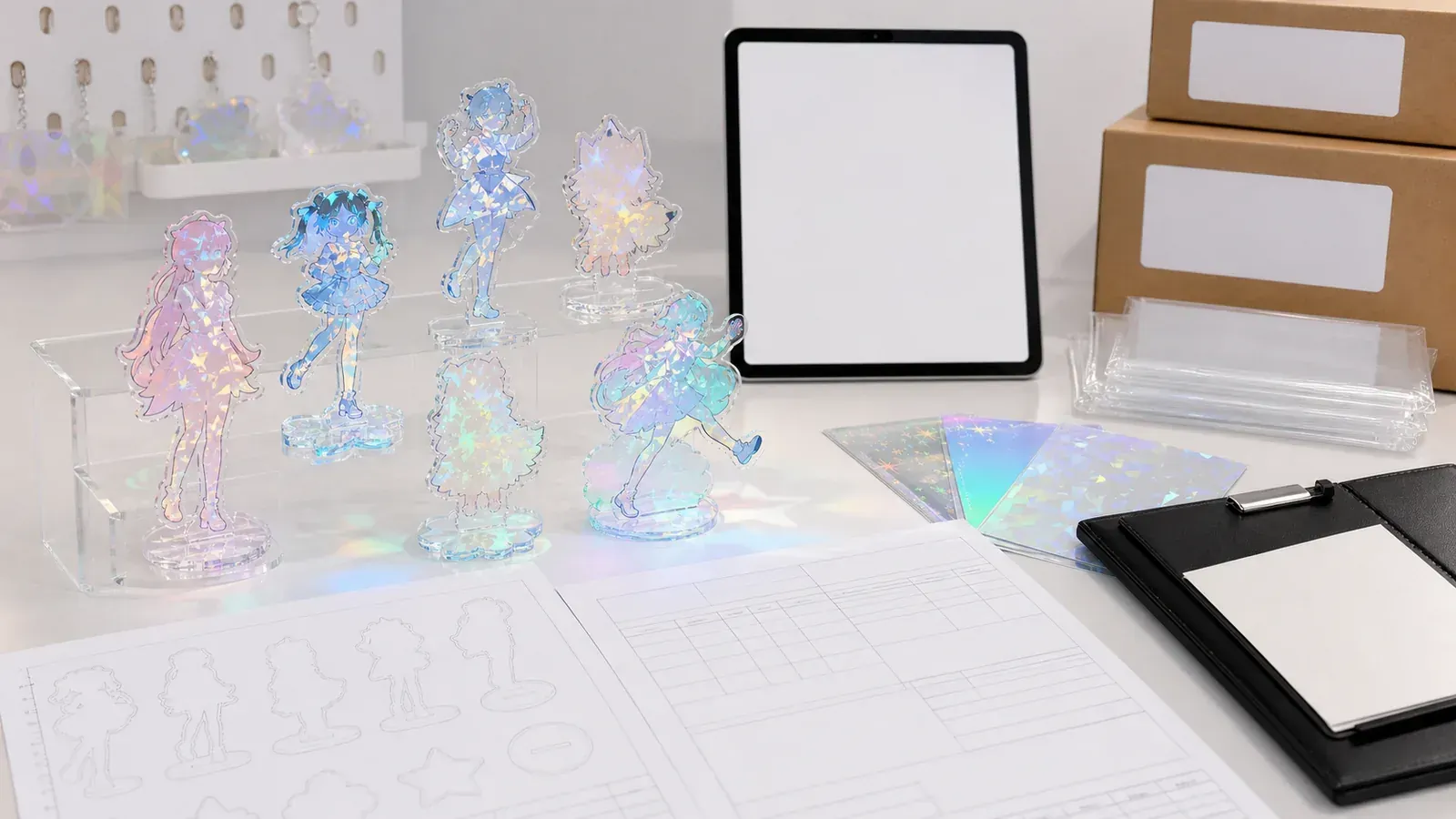
Holographic, glitter or aurora variants need physical sample photography because screens cannot reproduce every viewing angle.
Set architecture
Bundles need a fixed component list and set code so warehouse staff do not assemble different combinations at pick time.
SAMPLE APPROVAL
Approve evidence that answers production questions
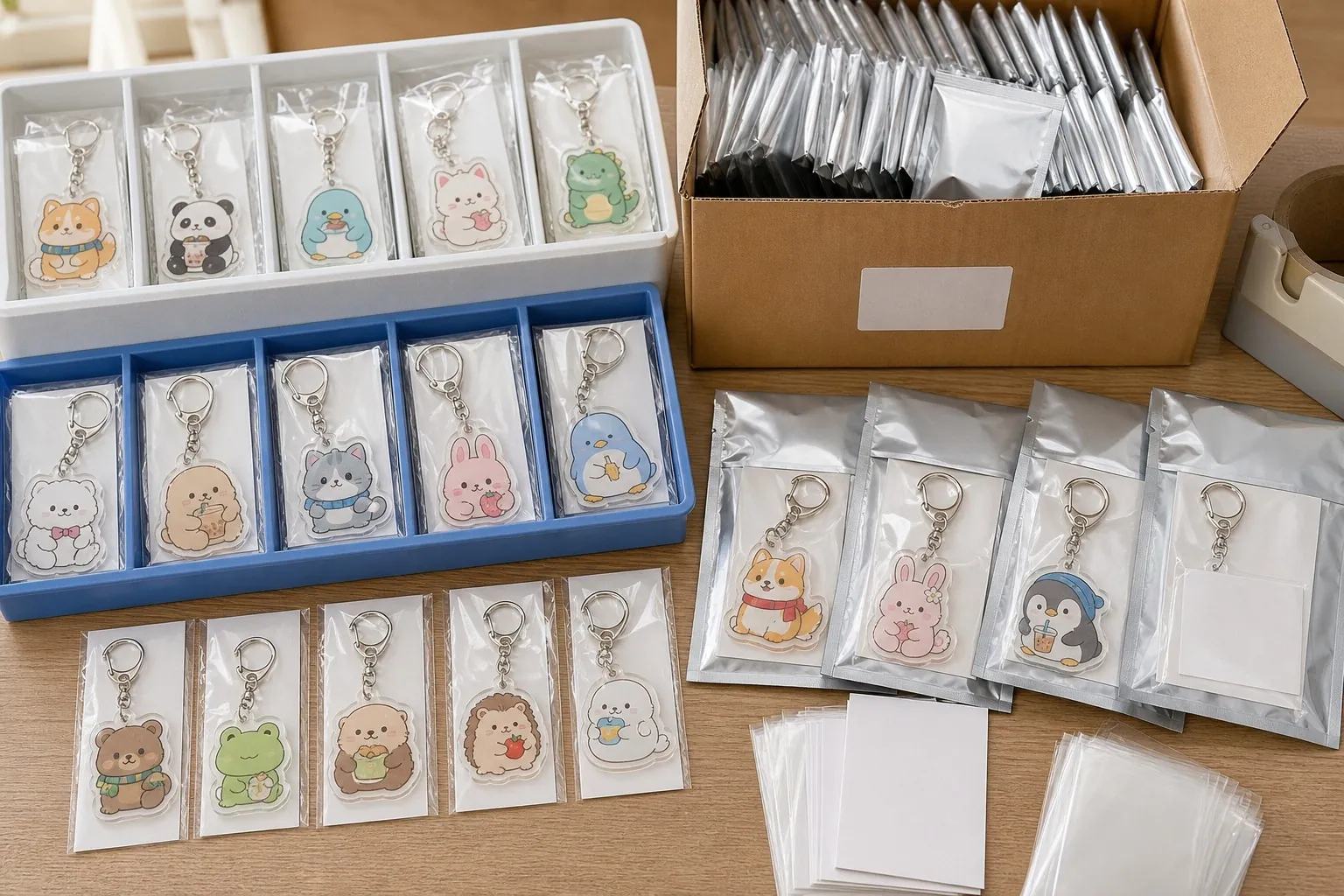
Approve one production-representative photography sample and a complete sellable pack. Confirm whether protective film is removed for photography, whether the base is assembled, which side is front and how transparent or optical finishes should be described. Store the approved images with the SKU code and revision date.
Test the package through the expected fulfillment path. The acrylic should not slide against another component, puncture the bag, lose a small base or hardware part, or arrive with the protective film mistaken for a defect. The label must remain visible and scannable without opening or bending the product.
- Catalog-to-SKU mapping
- Production-representative sample
- Front and reverse photos
- Film-removal instruction
- Component count
- Barcode or label scan
- Pick-pack movement test
- Warehouse allocation file
VISUAL EVIDENCE
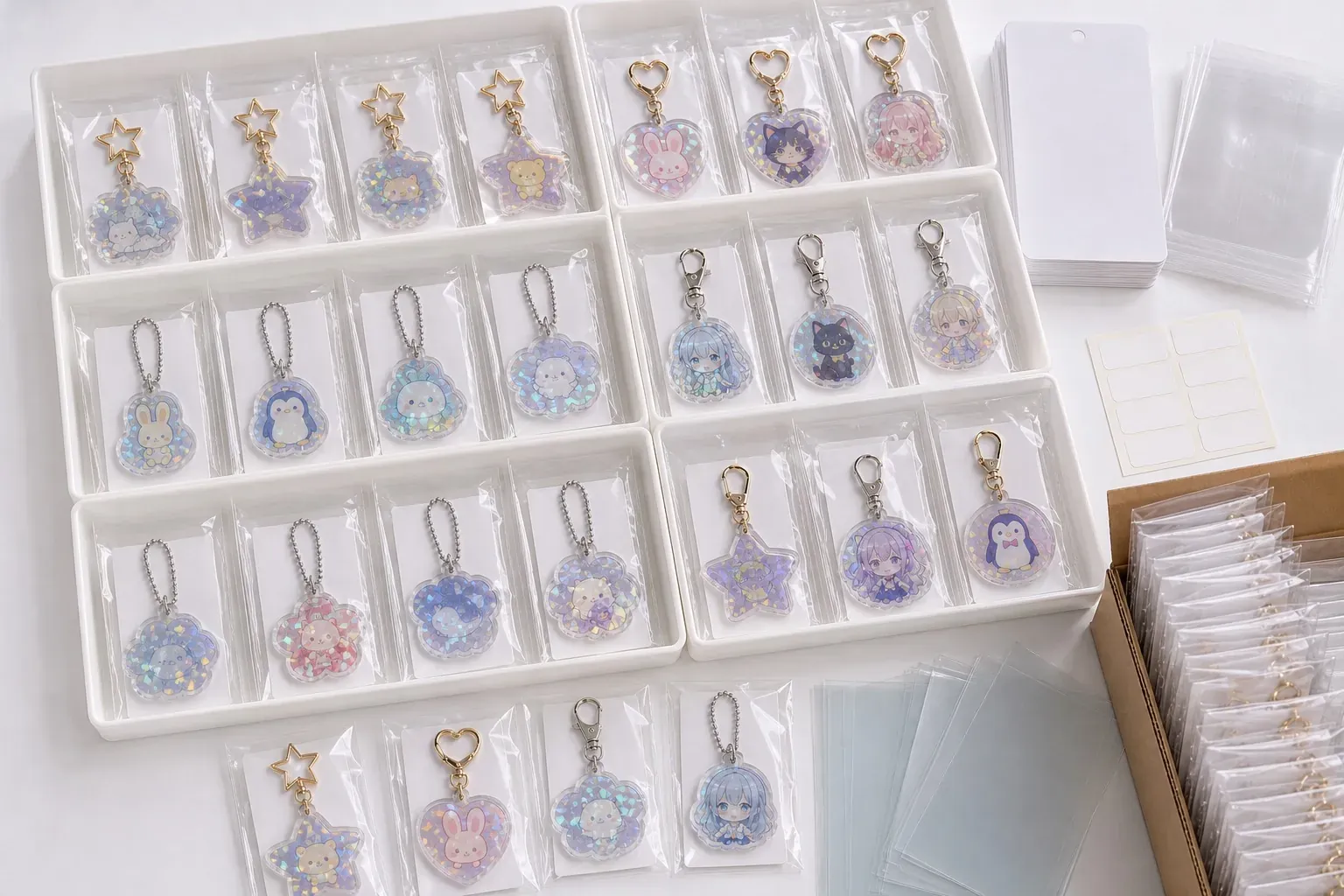
Use real product, packing and QC references
These references support product and process review. The approved physical sample and project-specific specification remain the production authority.
MASS-PRODUCTION RISK
Resolve the failure modes before the bulk release
Risk control is most useful when each failure is tied to a document, sample, inspection method or pack rule.
Listing images use a different sample
Customer expectations and production inspection are based on conflicting references.
Variant names are not unique
Warehouse and customer service teams cannot distinguish similar character or finish combinations.
Small components move freely
Bases or fittings scratch the acrylic or become separated during parcel handling.
Protective film is not explained
Customers may report haze or scratches before removing the intended film.
Carton and warehouse data are created late
Launch stock arrives without the identifiers needed for receiving and put-away.
No replacement reserve is defined
A small verified issue interrupts sales while responsibility and available stock are investigated.
QUALITY CONTROL
Inspect against the approved SKU and sample
Use the Acrylic Quality Inspection guide to plan the sample size and evidence set. The checkpoints below keep this page's distinct buyer intent visible in QA.
| Catalog match | Compare artwork, finish, dimensions and included components with the approved listing sample. |
|---|---|
| Variant identity | Verify SKU label, design, size, finish and set code on the sellable unit. |
| Surface | Inspect scratches, print, white ink, transparency, edge and protective film condition. |
| Pack function | Check component restraint, seal, label position, scannability and customer opening. |
| Carton data | Confirm inner and master quantities, carton mark and warehouse destination. |
| Evidence set | Retain inspection images, label scans, count records and representative packed samples. |
PACKAGING AND HANDLING
Protect the product and preserve SKU identity
Packaging is part of the sellable specification. Confirm the final unit before bulk packing and use the Acrylic Scratch-Prevention Packaging guide for surface-risk planning.
Single-item parcel
Restrain the acrylic and hard components so normal parcel movement does not create face abrasion.
Multi-item order
Use a retail pack that remains protected when combined with other merchandise in one shipment.
Barcode workflow
Place the label on a flat scannable area without covering required artwork or legal copy.
Returns and support
Keep the SKU visible and contents documented so customer service can identify missing or incorrect components.
OPERATIONAL HANDOFF
Connect factory evidence to the ecommerce catalog and warehouse record
Before launch, reconcile the production matrix with the ecommerce import file. Product name, variant name, SKU, barcode, included components, dimensions and approved photography should describe the same sellable unit. Keep obsolete draft codes out of the warehouse file so receiving does not create duplicate inventory records.
Define what evidence customer support can request when a buyer reports damage, a missing base or the wrong variant. A visible SKU label, order image, package photo and retained QC record help the team separate catalog, fulfillment and production issues without asking the customer to understand factory terminology.
QUOTE CHECKLIST
Information needed for a useful production review
Send known inputs and mark open decisions. Quantity by design, the distinct page-specific decision, packaging and destination are required to compare a practical route.
- Product and variant list
- Quantity per SKU
- Editable artwork
- Finished size and thickness
- Base or hardware specification
- Photography sample requirement
- Individual pack and component restraint
- Barcode or internal label data
- Inner and carton quantities
- Warehouse destination split
- Replacement reserve policy
- Required arrival date
PRODUCTION WORKFLOW
From buyer brief to documented shipment
Timing is confirmed after artwork, specification, sample, packaging, inspection and destination conditions are known. Do not use an unsupported fixed lead-time claim for an unreviewed project.
- 01 BriefIntent, artwork, quantity and destination
- 02 ReviewProduct, SKU, pack and risk decisions
- 03 SamplePhysical evidence for the highest-risk points
- 04 ApprovalOne final controlled revision and matrix
- 05 ProductionManufacture, sort, pack and inspect by SKU
- 06 DeliveryCarton records and agreed destination split
See the complete OEM Order Process.
FAQ
Acrylic Merchandise for Ecommerce FAQ
What is the practical MOQ for ecommerce acrylic merchandise?
It depends on product format, number of variants, quantity per SKU, packaging, labels and allocation. Provide the catalog-to-SKU matrix for a useful production review.
Can several designs be combined in one order?
Yes. Each design still needs a unique SKU or controlled internal code, quantity, approved artwork and packing rule.
Should the photography sample come before bulk production?
Yes. Approve a production-representative sample so listing images, dimensions, included components and finish descriptions match the sellable unit.
Can barcode or warehouse labels be applied during production?
They can be reviewed as part of the pack. Provide the data, size, placement, scan requirement and mapping to each SKU before label printing.
How should optical finishes be shown online?
Use several angles or a short video from the physical sample, explain that appearance changes with light and angle, and avoid promising one fixed reflected color.
What evidence helps resolve fulfillment issues?
SKU-linked inspection photos, component counts, label scans, inner quantities, carton marks and retained packed samples create a traceable record.
RELATED RESOURCES
Continue the procurement review
PROJECT REVIEW
Prepare the Acrylic Merchandise for Ecommerce brief
Send the artwork, project-specific decisions, quantity by SKU, packaging, inspection needs and destination. Unconfirmed fields can be marked for recommendation.