
CUSTOM ENAMEL PIN · B2B MANUFACTURING GUIDE
How Custom Enamel Pins Are Made:Factory Process from Design to Delivery
Follow the factory process from manufacturing artwork and tooling through forming, polishing, plating, color filling, backing, inspection and packing—plus nine approval checks that help B2B buyers reduce ordering mistakes.
- DESIGN
- Closed color cells
- FINISH
- Defined surface height
- APPROVAL
- Physical sample
PROCESS & APPROVAL
Nine manufacturing and approval gates
Each step pairs visible factory work with the decision a buyer should release before production moves forward.
Approve the outline, fine lines, cutouts, closed color cells, artwork orientation and backing position before tooling.
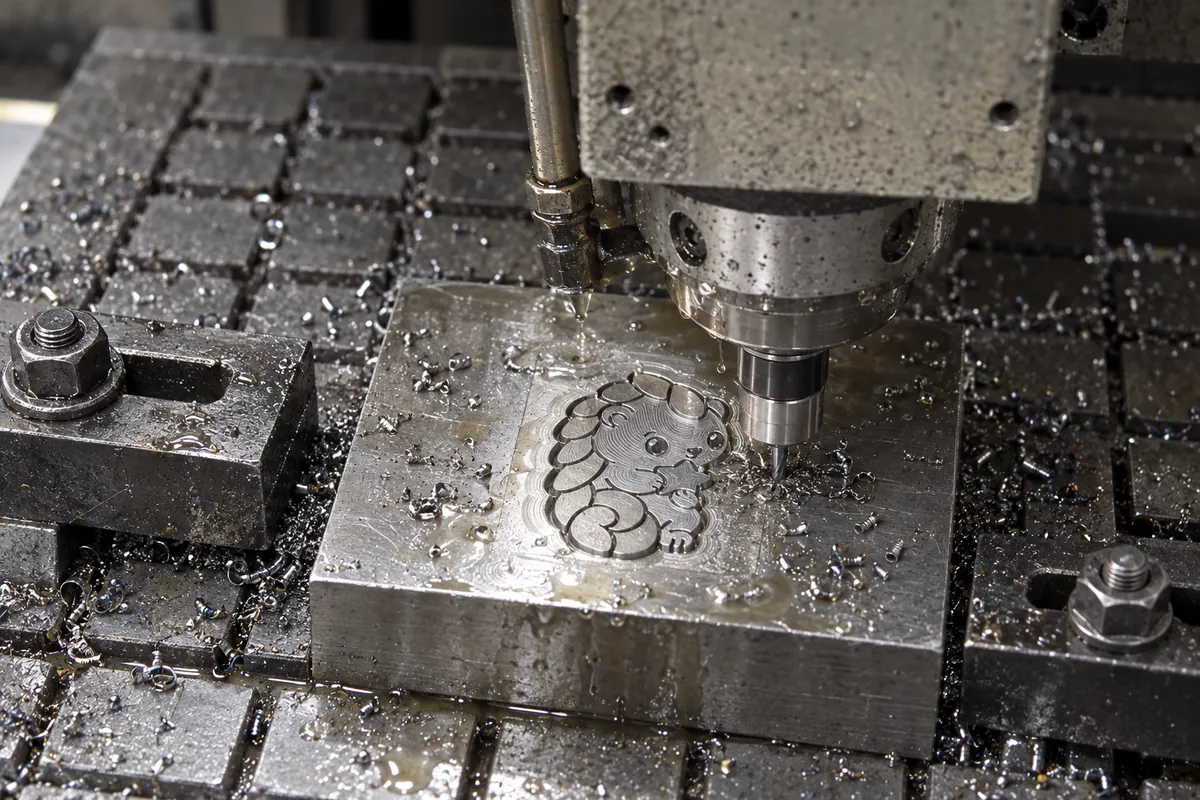
QUALITY BEGINS WITH ACCURATE TOOLS
Approve geometry before decoration.
The tool defines the outline, recesses and raised dividers. There is no color fill at this stage, so it is the clearest time to check geometry.
PRE-PRODUCTION SAMPLE
Five points to release before mass production
Size, outline, thickness direction and metal lines
Color, gloss, face, edge and recess coverage
Physical color, fill height and cured surface
Type, position, orientation and retention
Bag, card, barcode and carton unit
FRONT / BACK CONSTRUCTION
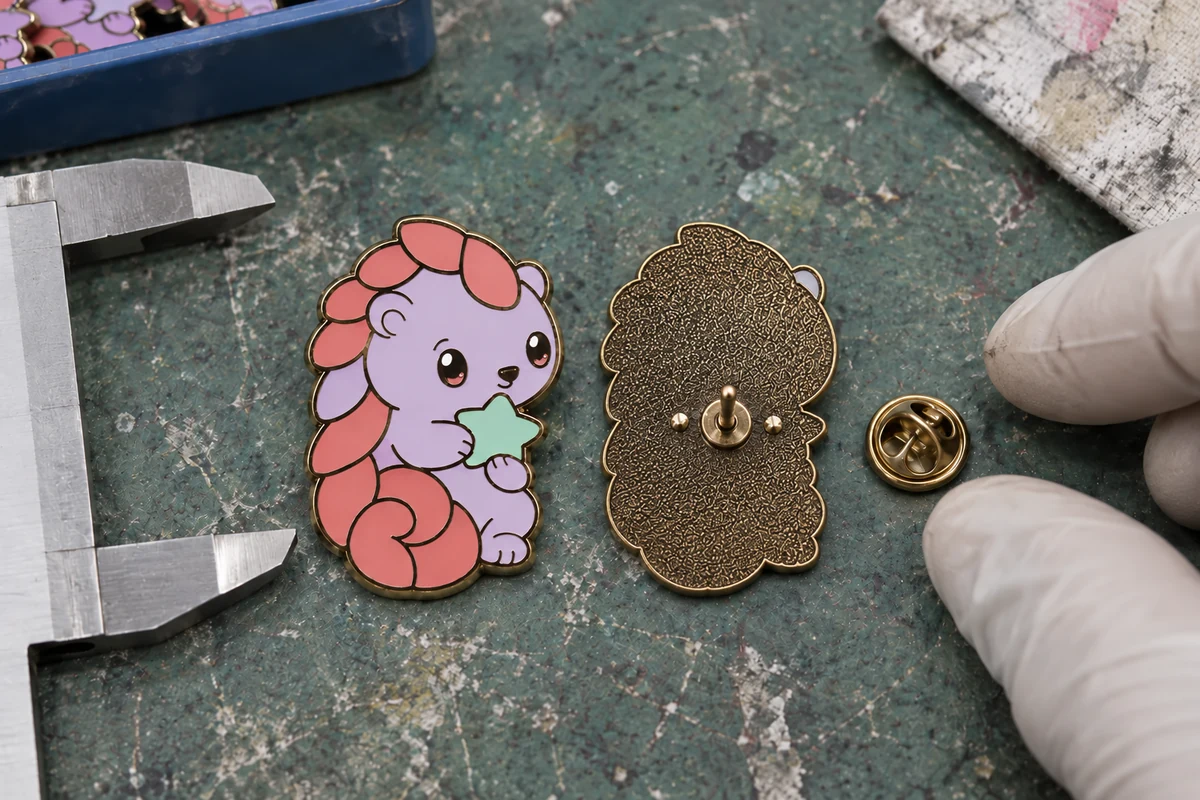
Color fill and bare metal have different jobs.
Only closed recessed cells receive color. The outline, internal raised lines, side edge, matching-silhouette back, post, stabilizer nubs and clutch remain metal.
- Color fill: lavender body
- Color fill: dusty-rose scales and curled tail
- Color fill: mint star and small eye details
- Metal: outline, raised dividers, edge, back and hardware
SAMPLE REVIEW
Five views that reduce production misunderstandings
A physical sample is useful only when the review records the decisions that matter to production and packing.
Rights & artwork release
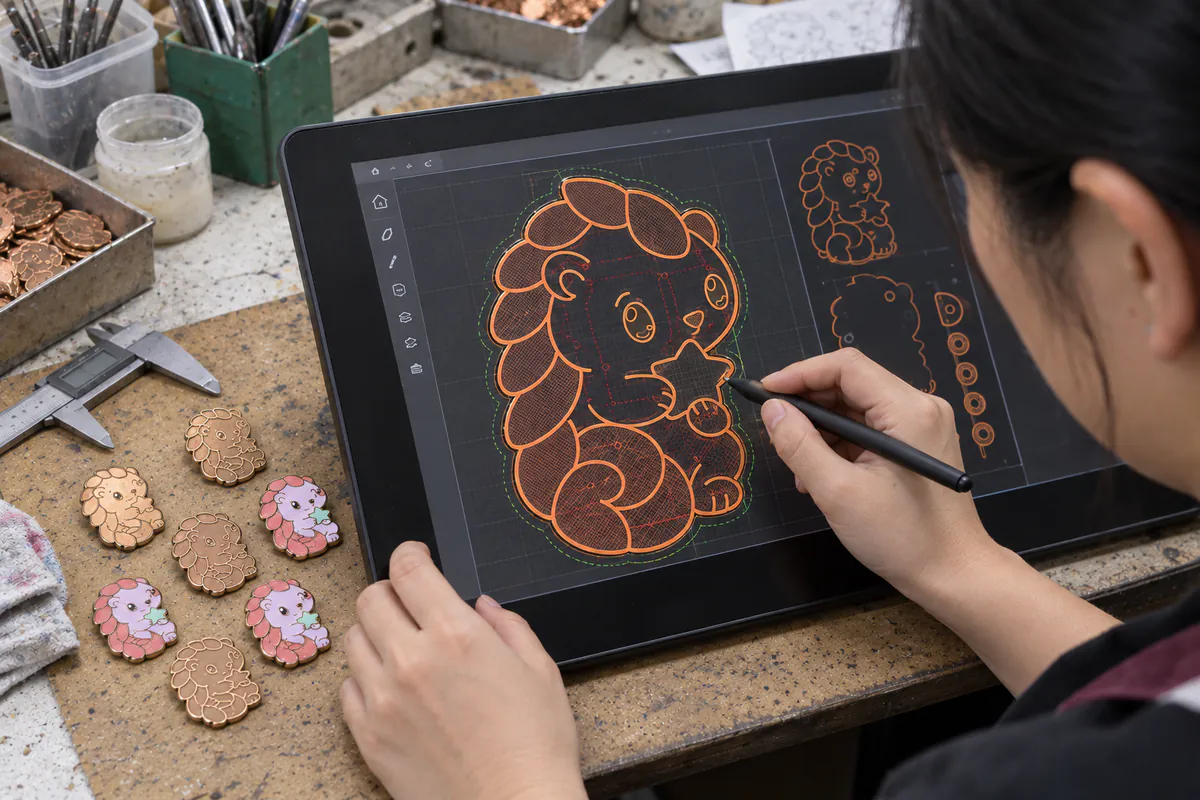
Record the rights owner, use, revision and production-release date.
Front, edge & back
Review the same physical sample from all sides, not only a front photo.
Physical color approval
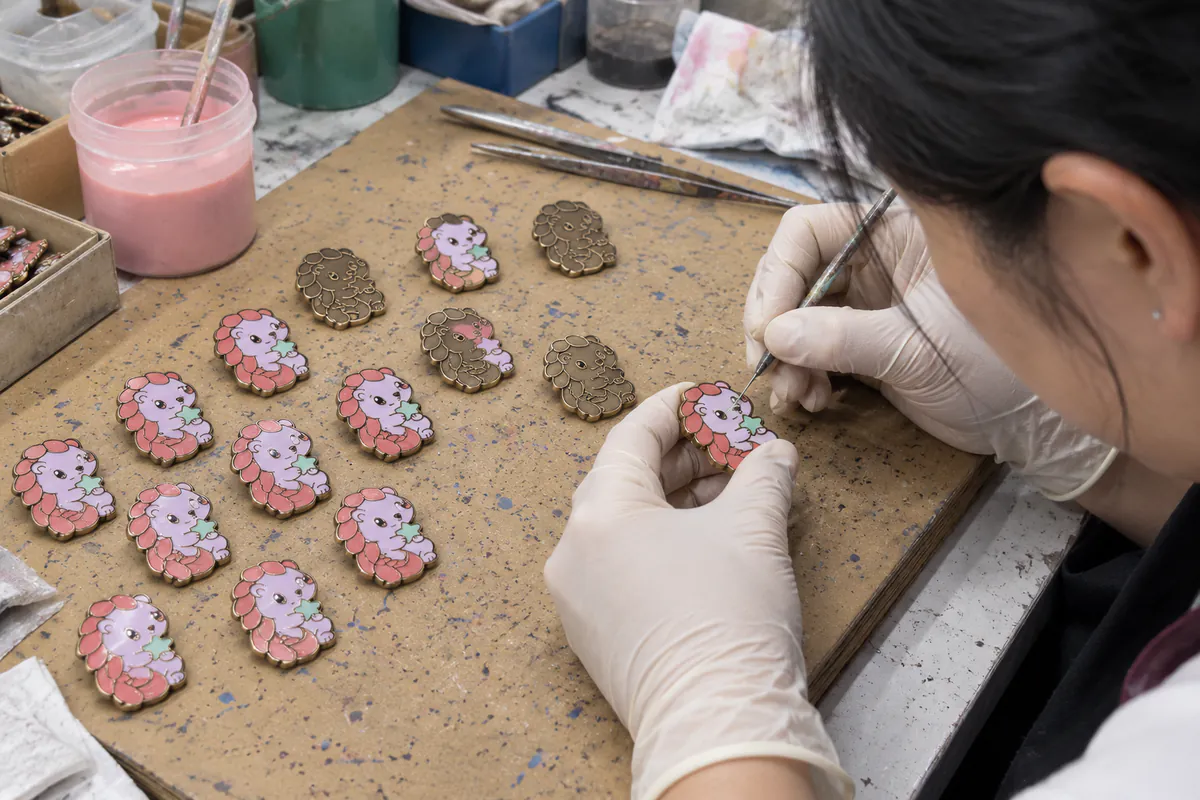
Approve finished color and surface height after curing, not only a color code.
Backing construction
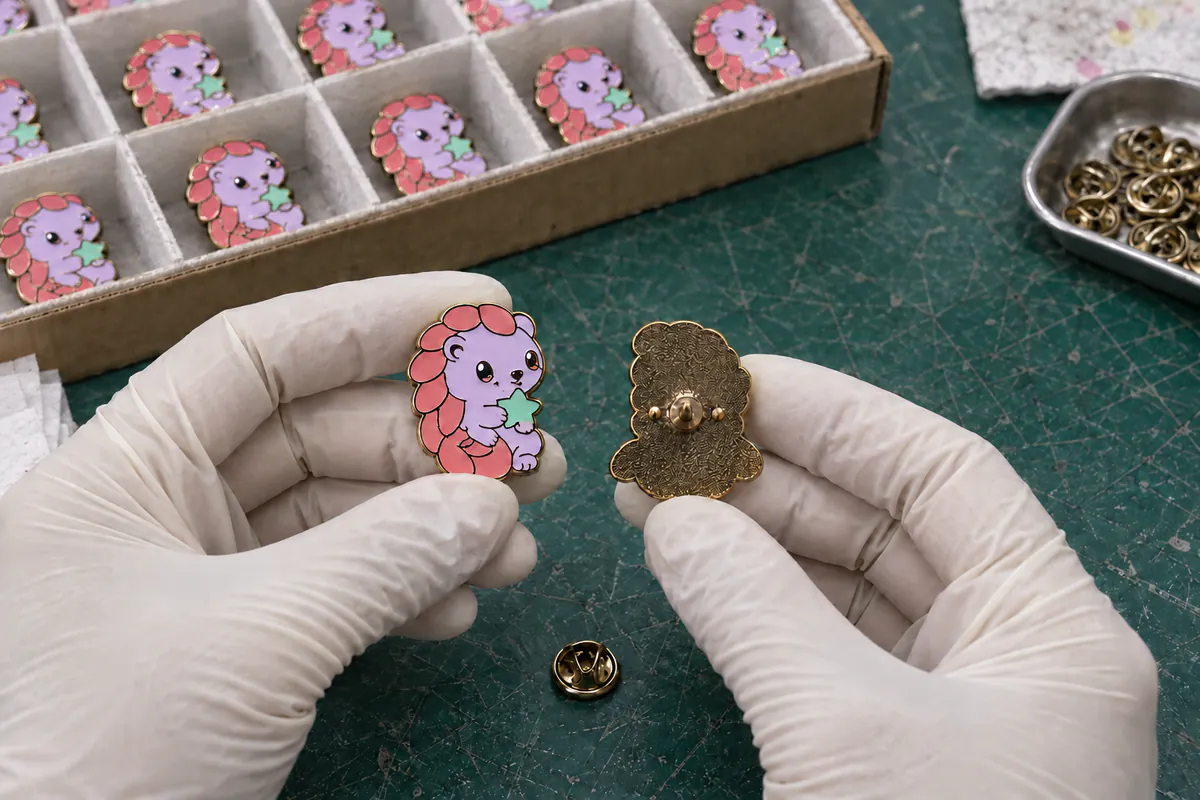
Choose hardware and anti-rotation control for the pin's size and balance.
SKU & packaging
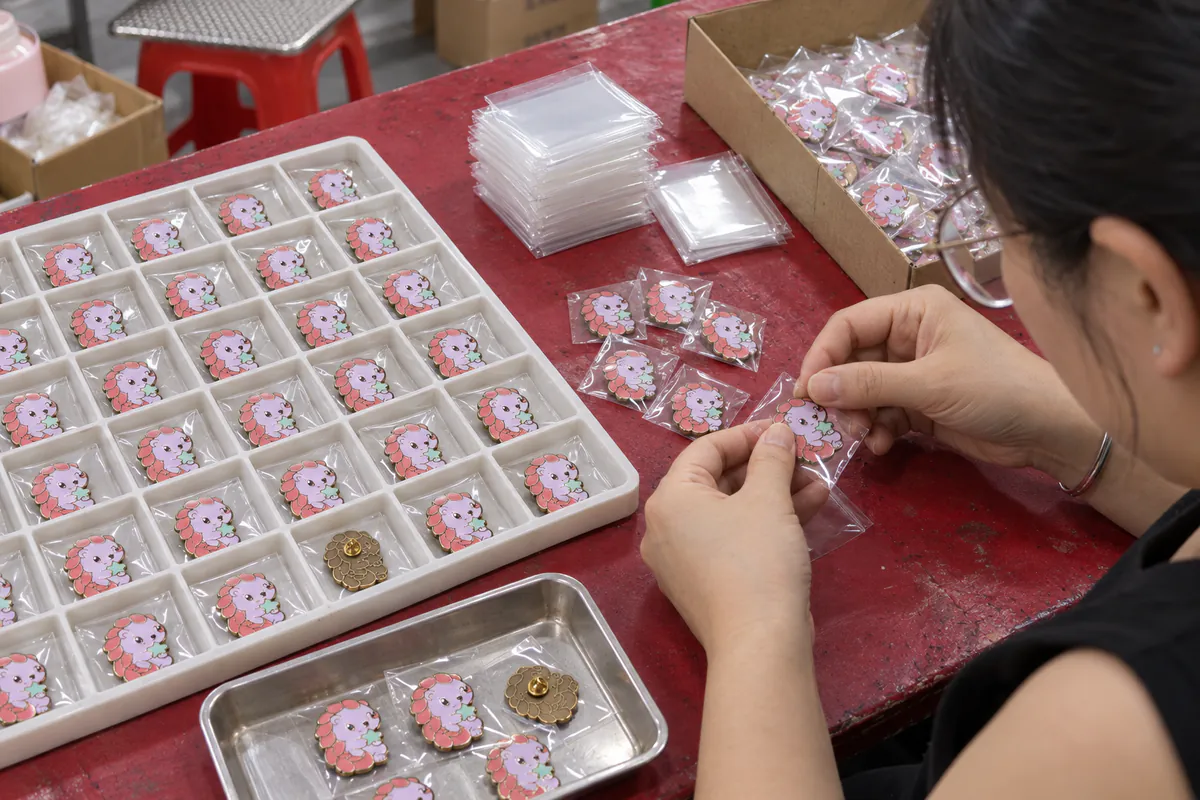
Verify colorway, quantity, card, label, barcode and assortment.
PROCESS ROUTES
Choose the process from the finished surface
"Metal badge" can describe several forming and finishing routes. Define the intended appearance before comparing quotes.
| Route | Useful for | Buyer checks |
|---|---|---|
| Stamped metal | Flatter forms and crisp raised metal lines | Line width, relief, warping and cut outline |
| Die-cast metal | Thicker parts, deep relief and complex outlines | Weight, corners, shrink marks and gate removal |
| Soft enamel | Color sits below raised metal lines | Fill height, bubbles, overflow and texture |
| Polished enamel-style | Smoother face with color near line height | Curing, polishing allowance and flatness |
| UV printing | Gradients or detail without separate color cells | White layer, registration, proof and protection |
B2B SOURCING NOTES
Turn supplier options into a released specification
Marketplace pages often list material, plating, enamel style, resin, backing and packing together. An option list is not the approved construction for your project.
- Define forming, plating, color system and final surface separately—not just the material name.
- Approve front, edge, back, mounted and packed views on the same physical sample.
- Choose one post, two posts, stabilizer nubs, clutch or magnet from geometry and use.
- Re-confirm listing claims such as MOQ, price, lead time and certificates in project documents.
RFQ CHECKLIST
Information needed for comparable quotes
MOQ, price, tooling cost, sample terms and lead time depend on the final construction. Send the same decision set to every candidate supplier.
Open the character-goods OEM specification checklist- 01Use case and sales model
- 02Finished size, outline and thickness
- 03Vector artwork and SKU count
- 04Total and per-SKU quantity
- 05Recessed, flat, relief or printed face
- 06Plating and physical color reference
- 07Backing type, position and orientation
- 08Bag, card, label and barcode
- 09Sample approval and QC scope
- 10Required date and destination
FAQ
Custom enamel pin manufacturing questions
How many stages are in the custom enamel pin manufacturing process?
For buyer control, use nine checkpoints: artwork, tooling, forming, deburring, polishing and cleaning, plating, color filling and curing, backing hardware, and QC and packing. A factory may split, combine or reorder operations for the selected process.
Are stamped and die-cast pins the same?
No. Stamping forms metal sheet with dies, while die casting fills a mold and is often used for thicker or more three-dimensional parts. Geometry, thickness, quantity and finish determine the suitable route.
What is the practical difference between soft and hard enamel?
Soft enamel commonly leaves color below the raised metal lines. Polished enamel-style finishes cure and polish the face toward a smoother surface. Supplier terminology varies, so approve the intended surface rather than the label alone.
Does plating happen before or after color filling?
It depends on the construction. Many soft-enamel routes plate before filling, while other routes can arrange color, curing, polishing and plating differently. Ask for the quoted process map.
Is a Pantone or DIC color enough for approval?
It is a useful communication reference, but the finished physical sample is safer because metal, plating, paint, resin and lighting all affect appearance.
What is commonly missed in sample approval?
Edges, the back, post orientation, retention, color height, recess coverage, rotation on a backing card and abrasion after packing are often missed when only a front photo is reviewed.
Is every pin inspected?
Inspection scope is project-specific. Agree on full or sampling checks, appearance and function criteria, packing checks, and how nonconforming units will be handled.
What information is needed for a quote?
Provide size, outline, artwork and SKU count, total and per-SKU quantity, desired surface, plating, color count, backing, packing, required date and destination.
FROM SPECIFICATION TO MASS PRODUCTION
Release the decisions, not only the appearance.
Send the finished size, SKU count, quantities, surface direction, plating, backing, packing and required date for a production review.