100% Inspection vs AQL Sampling for Custom Plush Toys: How to Choose
A practical decision guide for brands, licensing teams, merchandise planners, and procurement buyers defining inspection requirements before a custom plush order ships.
100% inspection, AQL sampling, and hybrid QC are different tools
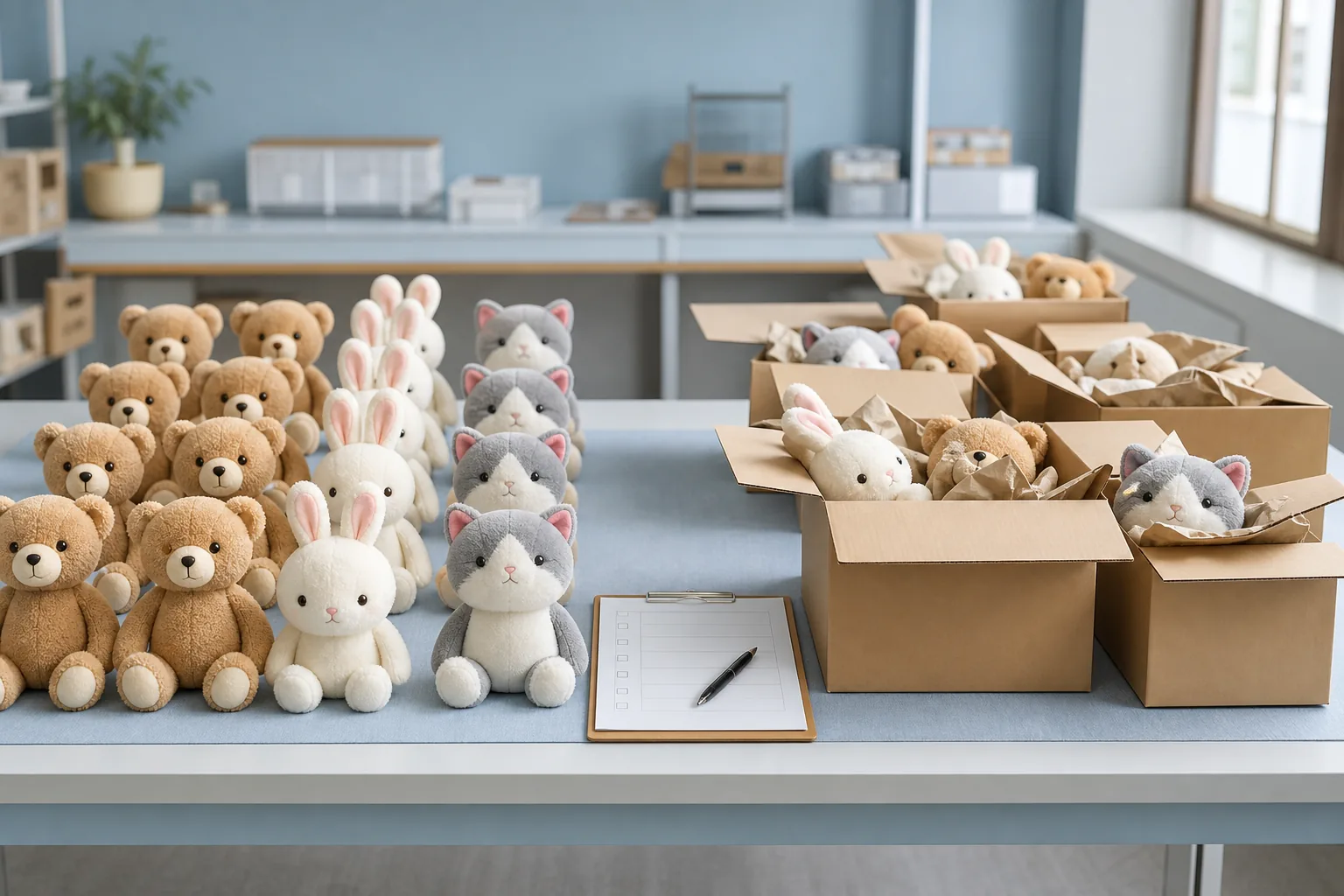
100% inspection means checking every unit for a defined characteristic. It is useful for sorting individual nonconforming pieces, but it increases inspection time and can suffer from fatigue or inconsistent judgement.
AQL acceptance sampling means selecting a random sample from a defined lot and deciding whether to accept that lot under an agreed sampling standard, inspection level, plan, and acceptance/rejection numbers. It does not prove that every uninspected unit conforms.
A hybrid plan assigns different methods to different characteristics: unit-by-unit checks for selected high-impact visible items, AQL sampling for general workmanship and packaging, and separate samples for destructive or degrading tests.
| Comparison | 100% inspection | AQL sampling | Hybrid plan |
|---|---|---|---|
| Primary purpose | Sort individual units | Accept or reject a defined lot | Match risk and effort by characteristic |
| Quantity checked | Every unit for the stated scope | Sample defined by the adopted plan | Different for each check |
| Best fit | Repeatable, non-destructive, high-impact checks | Stable lots and general countable defects | Plush projects mixing appearance, dimensions, packaging, and tests |
| Main caution | Not a zero-defect guarantee | Random selection and lot definition are essential | The inspection sheet must state each method clearly |
Classify defects before choosing the inspection method
Choose the method from the consequence of a defect, not only its name. A loose thread on the back that can be trimmed may be handled differently from a similar thread crossing the face and changing the approved expression.
Critical
A potential safety hazard, serious contractual or regulatory nonconformity, or another condition that requires the lot to be held and investigated.
Major
A defect that materially affects normal use, saleability, character reproduction, or packaging function, such as an open seam or seriously misaligned face.
Minor
A limited cosmetic variation with little functional effect that can be judged against an agreed limit sample or photo standard.
When to consider 100% inspection
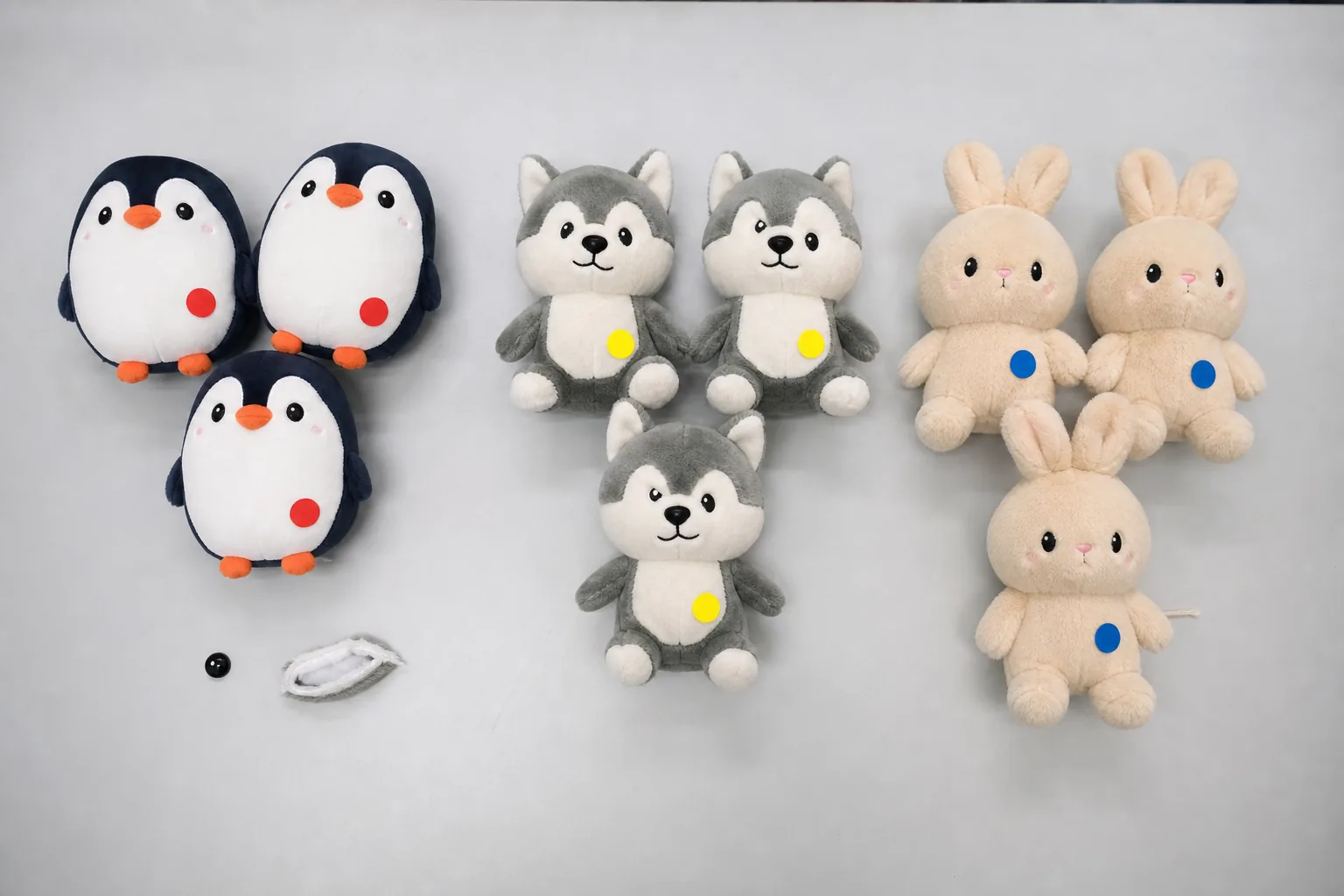
Consider unit-by-unit inspection when the check is quick, repeatable, non-destructive, and the consequence of an escape is high. Define the inspected surfaces and characteristics: “100% inspected” without a scope does not explain what was checked.
| Characteristic | Why unit-by-unit inspection may help | What to define |
|---|---|---|
| Face and focal appearance | Eye, eyebrow, mouth, and embroidery positions directly affect character recognition | Approved sample, viewing angle, measurement points, limit samples |
| Open seams or exposed filling | Individual pieces can be sorted before packing | Surfaces, seam ends, repair method, recheck |
| Missing or wrong accessories | Presence, orientation, and assembly can be checked per unit | Bill of materials, location, function, protective packing |
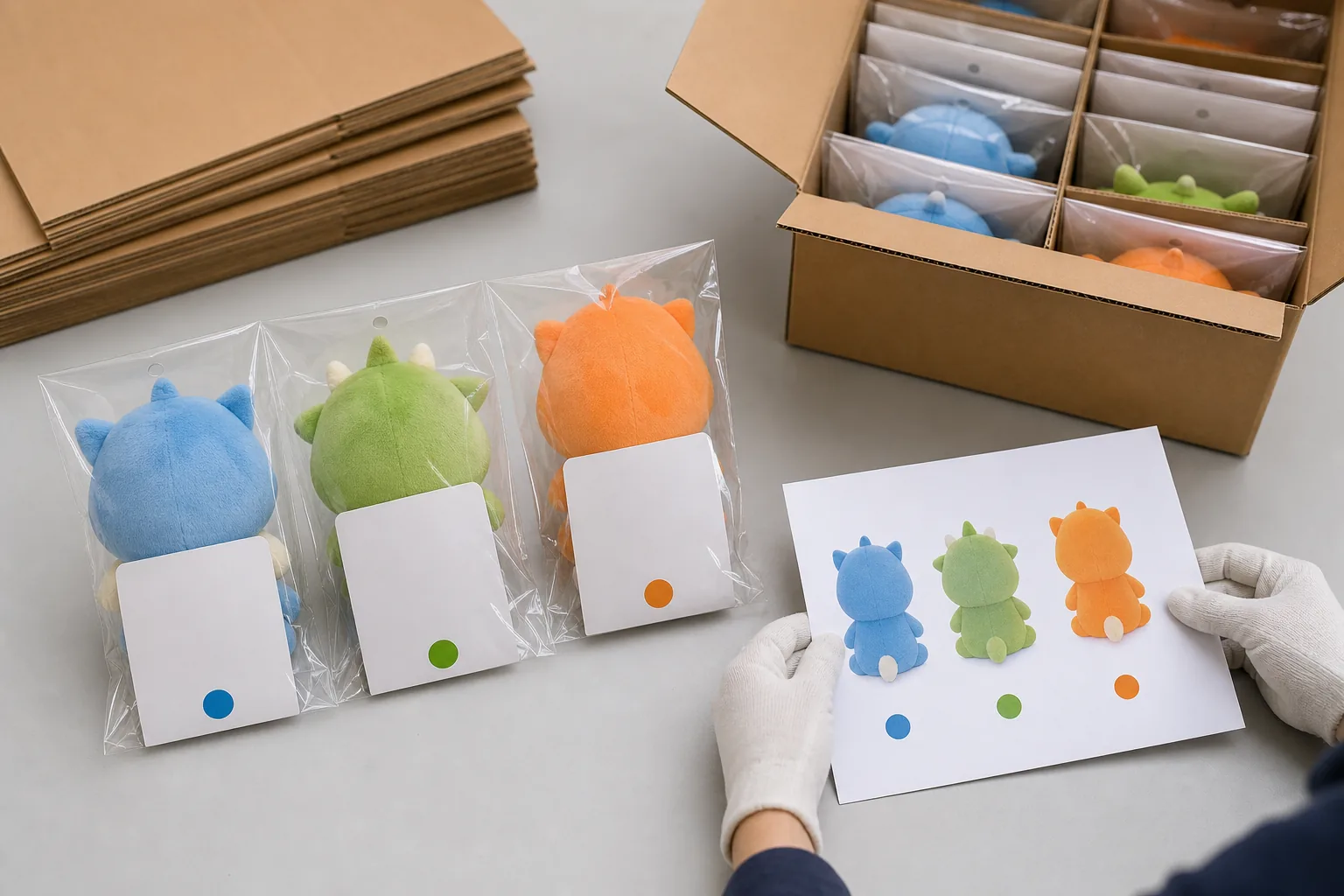
| SKU and individual packaging | Wrong character, tag, or bag can cause selling and fulfilment errors | SKU master, label match, pack count, resealing rule |
Why 100% manual inspection is not foolproof
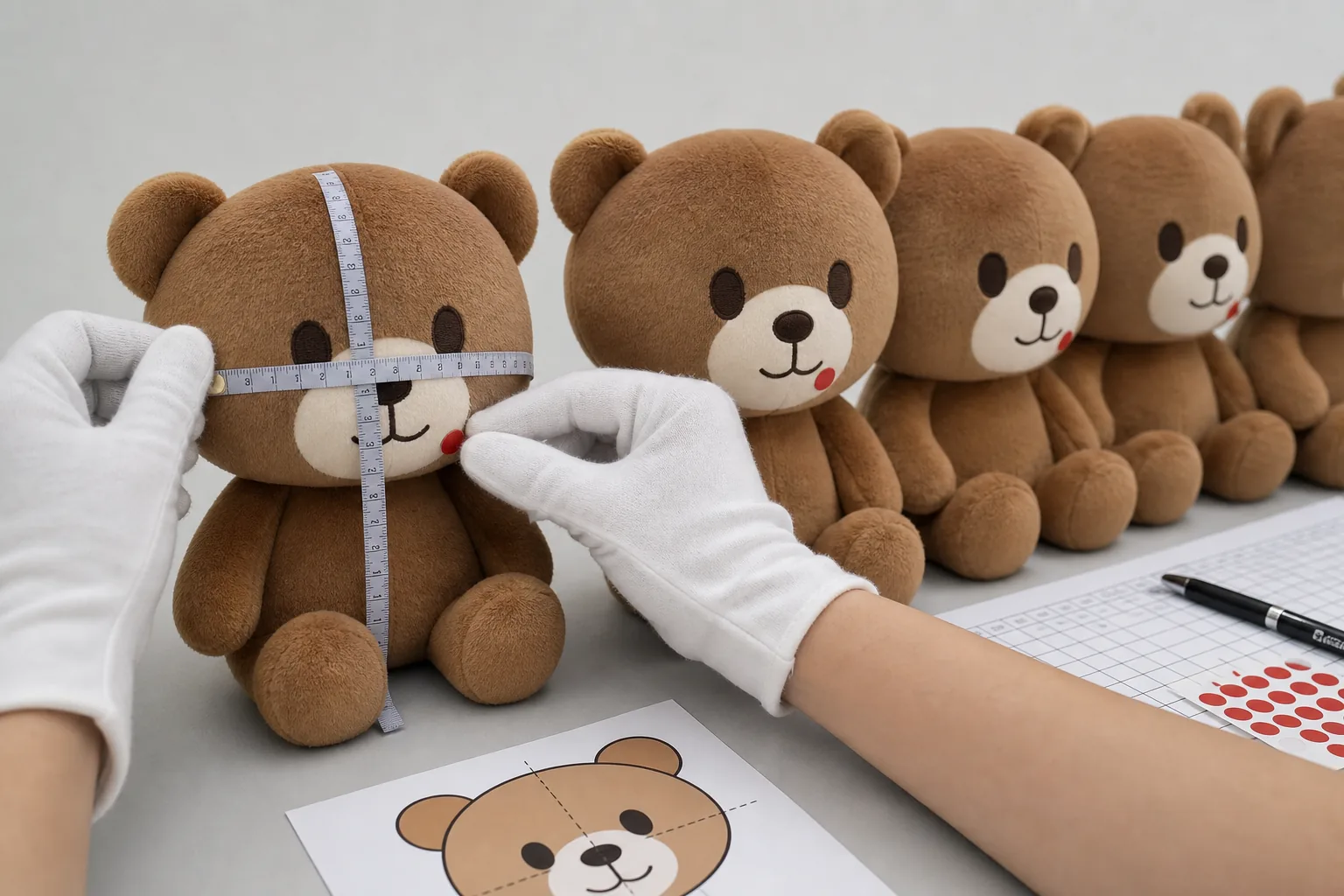
- Unclear criteria produce different decisions between inspectors.
- Long repetitive checks increase fatigue and missed defects.
- Internal conditions, material properties, and durability may not be visible.
- Pull, wash, and durability tests cannot normally be applied to every saleable unit.
- Sorting finished goods does not replace process correction.
When AQL acceptance sampling fits
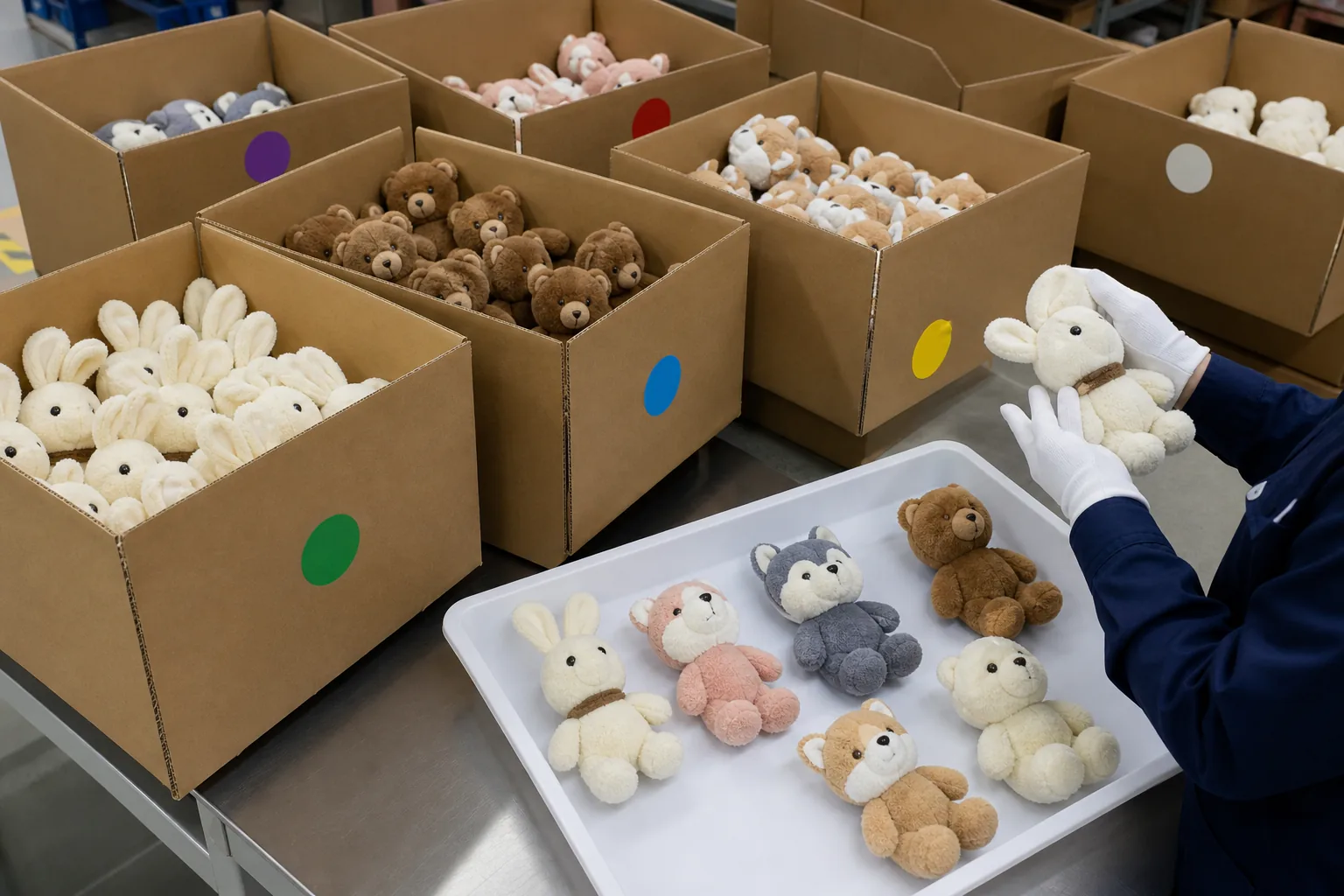
AQL sampling is designed for a traceable lot produced under comparable conditions. It can efficiently evaluate general appearance, dimensions, sewing finish, and packaging against countable acceptance criteria. Its purpose is lot acceptance, not removing every defective piece.
Conditions needed before using AQL
- The lot is defined by specification, SKU, process, production period, and traceable carton numbers.
- Approved samples, specifications, defect classes, and limit samples are available.
- Samples can be selected randomly across cartons and production positions.
- The counting unit is clear: nonconforming units, individual defects, or another defined measure.
- The purchase order states what happens after rejection: hold, sorting, repair, corrective action, reinspection, or refusal.
A plush-specific hybrid inspection matrix
The following is a planning starting point, not a fixed CCG guarantee. The correct scope depends on the product, target market, buyer standard, sales channel, SKU structure, hardware, and contract.
| Check | Method to consider | Reason | Contract detail |
|---|---|---|---|
| Face and focal appearance | 100% or focused 100% | Small shifts can materially change the character | Zones, viewing angle, points, limit sample |
| General dimensions and weight | AQL or fixed sample | Measurement takes time and is used to assess lot consistency | Tool, position, tolerance, sample, unit |
| Open seams and missing parts | In-process control plus unit-by-unit final check to consider | Non-destructive and high-impact | Surfaces, repair, recheck |
| General cosmetic workmanship | AQL | Countable lot acceptance against limit samples | Classes, escalation, Ac/Re |
| SKU and packaging match | Process verification plus focused 100% check to consider | Mix-ups affect retail and fulfilment | Matching unit, carton count, sealing rule |
| Pull, durability, wash, or other degrading tests | Defined test samples | Testing can damage or change the product | Method, sample count, lot action |
| Needle or metal detection | Separate project-specific control | Not the same as visual AQL inspection | Product scope, equipment, hardware, alarm handling, records |
How to build an AQL sampling plan
- Define the lotGroup traceable units by specification, SKU, materials, process, production period, and carton numbers.
- Classify defectsAgree critical, major, and minor examples with photos and limit samples.
- Name the standardRecord the standard, edition, inspection level, and single/double or other scheme.
- Select randomlySample across cartons and production positions rather than the easiest units to reach.
- Apply Ac/ReCompare the count for each defect class with the agreed acceptance and rejection numbers.
- Control a failed lotHold, sort, repair, correct the cause, reinspect, or reject under the agreed responsibility.
Do not rely on a copied table without its edition, arrows, inspection level, and switching rules. Confirm sample size and Ac/Re values using the purchased standard or the formal plan agreed with the inspection body.
10 inspection items to define before ordering
| # | Item | Record |
|---|---|---|
| 1 | Product use | Sales market, target age, channel, intended use |
| 2 | Reference set | Specification, approved sample, limit samples, defect photos |
| 3 | Lot definition | SKU, quantity, production period, material lot, carton numbers |
| 4 | Defect classes | Critical, major, minor, and escalation for multiple defects |
| 5 | 100% scope | Characteristics, surfaces, lighting, measurement, repair and recheck |
| 6 | AQL plan | Standard and edition, level, scheme, Ac/Re |
| 7 | Sample selection | Cartons, positions, units, and selection photos |
| 8 | Tests | Pull, durability, needle detection, or other method and sample |
| 9 | Records | Lot, sample, photos, quantities, measurements, result, corrections |
| 10 | Failed-lot action | Hold, sorting, repair, reinspection, cost and schedule communication |
Using a third-party inspection company
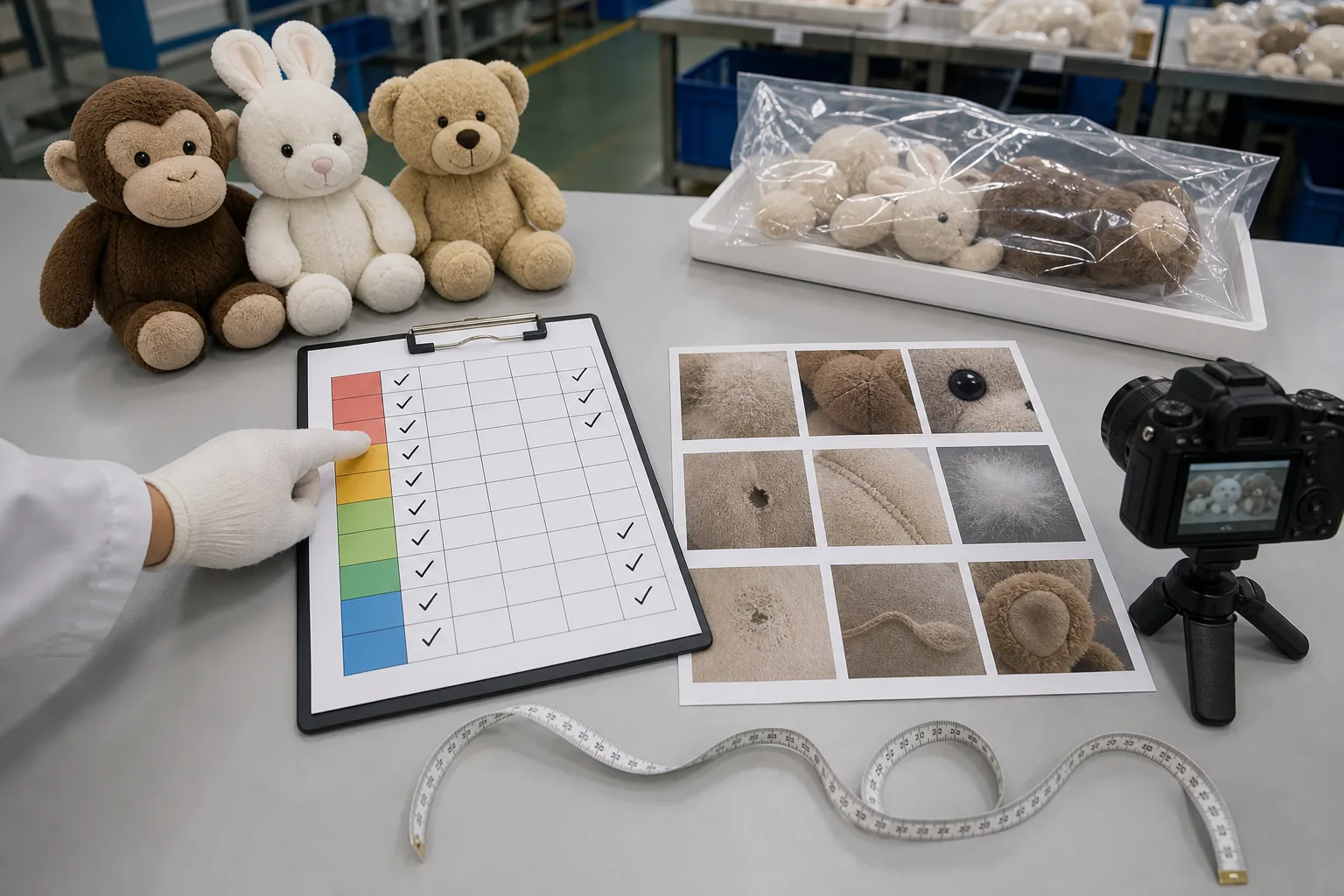
A third-party inspection can provide an independent factory-floor view and pre-shipment evidence. However, a request that only says “inspect plush toys by AQL” will not communicate character-specific priorities such as facial alignment, SKU mix, or approved limit samples.
- Provide the latest specification, approved-sample photos, and defect classification.
- Confirm production completion, packing status, and access to the full lot.
- Require the inspector to select samples randomly rather than accepting preselected pieces.
- Receive lot and carton numbers, defect photos, measurements, Ac/Re counts, and overall disposition.
- Recheck sorting or repair against the same criteria after a failed result.
For broader plush specifications, quotation inputs, and production flow, see our Custom Plush Toy OEM Overview.
Related custom plush production Guides
Frequently asked questions
Does 100% inspection guarantee a defect-free plush shipment?
No. Manual 100% inspection can still miss defects because of unclear criteria, inspector fatigue, hidden conditions, or inconsistent viewing and measurement methods. Use approved samples, limit samples, defined conditions, records, and rechecks.
What AQL should be used for custom plush toys?
There is no universal AQL for every plush order. The parties should define the adopted standard and edition, inspection level, sampling plan, defect classes, Ac/Re numbers, and failed-lot action based on the product, market, buyer requirements, and process history.
Should every critical defect be checked on every unit?
Consider unit-by-unit checks when a critical characteristic can be verified non-destructively. Pull, durability, material, and other destructive or degrading tests require defined samples plus a lot-hold and corrective-action rule.
Can AQL sampling be used for a small plush order?
It can, but the sample may represent a large share of a small lot, so the time difference from 100% inspection can narrow. Compare inspection effort, escape impact, repeatability, and whether the check is destructive.
Are plush inspection and needle detection the same control?
No. Product inspection checks appearance, dimensions, sewing, accessories, SKU and packaging. Needle or metal detection is a separate control whose equipment, sensitivity, product scope, metal hardware, alarm handling, and records must be defined by project.
Standards referenced
Define the inspection scope before quotation
Share the product use, quantity, SKU count, packaging, focal appearance zones, target market, and required evidence. We can organize the project-specific scope for unit checks, AQL sampling, tests, and records.
Discuss inspection requirements and quotation