
PVC Product Odor, Plasticizers, and Phthalates: OEM Controls and Testing Guide

1. Key Answer: Odor Alone Cannot Identify Phthalates
A “non-phthalate plasticizer” declaration also does not automatically prove compliance in every market or product category. Define the sales market, intended use, age group, mouthing potential, and food-contact status before selecting requirements and tests.
Odor
A sensory and volatile-component issue requiring formula, process, and packaging review.
Tackiness
May involve additive migration, material compatibility, heat history, or contact materials.
Phthalates
Must be evaluated by analysis of specified substances, not smell or touch.
2. Where PVC Product Odor Can Come From
Flexible PVC contains PVC resin plus plasticizers, heat stabilizers, pigments, lubricants, and other additives. Opening odor may reflect the formulation, processing, storage, and packaging together.
| Factor | Check | Control direction |
|---|---|---|
| Raw materials | Plasticizer, stabilizer, pigment, recycled content, and lot | Low-odor grades, fixed formula, change control |
| Processing heat | Overheating, residence time, degradation, equipment residue | Standardize temperature, time, and venting |
| Post-molding time | Whether products are sealed immediately | Controlled clean-air aging |
| Packaging | Bag, print, adhesive, foam, or backing-card odor | Evaluate the complete sealed pack |
| Storage and transport | Heat, long sealing, and mixed-load odor | Control temperature, duration, and cartons |
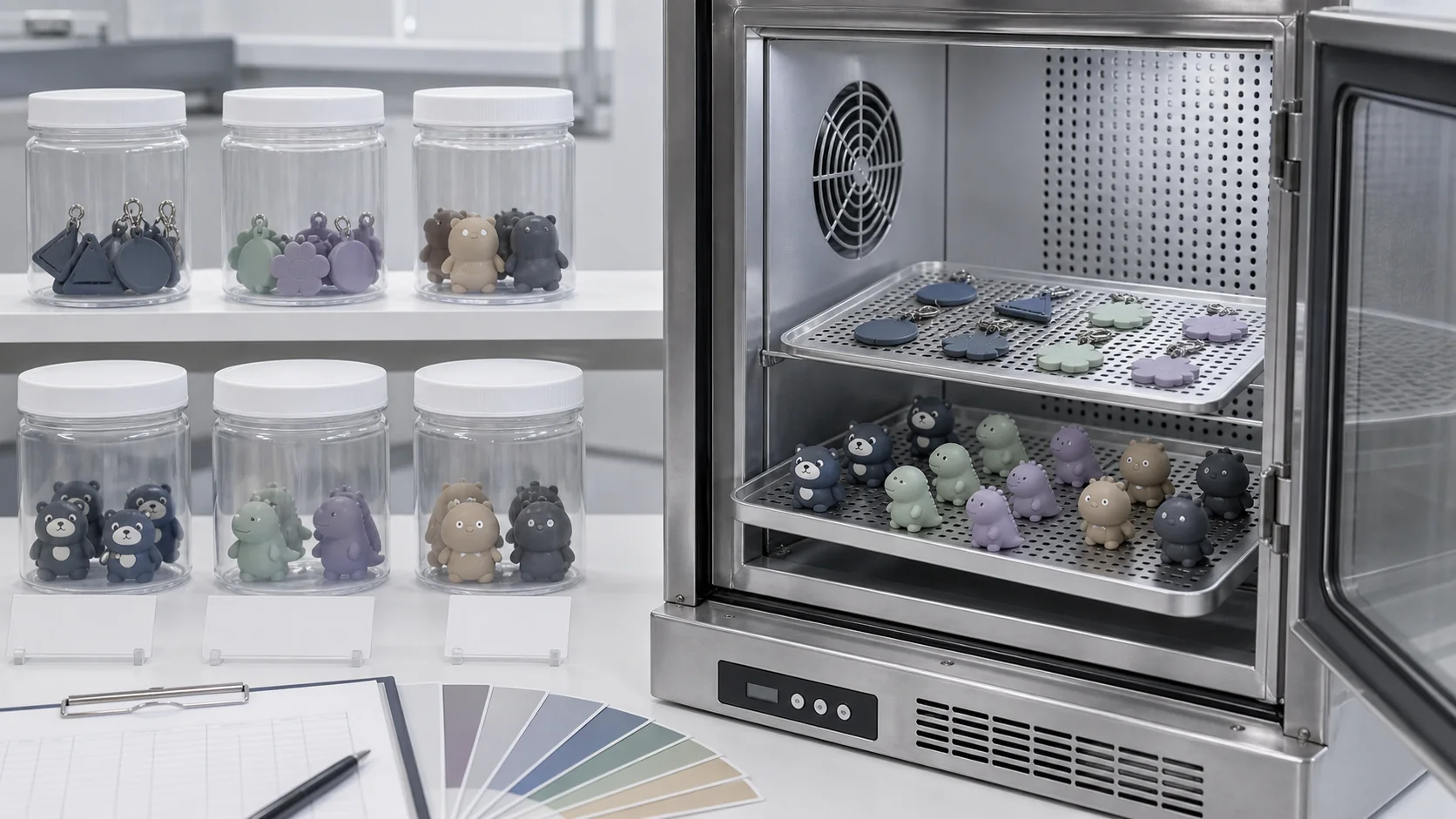
3. Plasticizer Function, Migration, and Tackiness
Plasticizers give PVC flexibility. Because they are not covalently bonded to the PVC polymer, migration can depend on formula, molecular weight, compatibility, temperature, contact material, and time.
- Oily or tacky surface and dust pickup
- Transfer to print, coating, bags, or backing cards
- Changes in softness, gloss, or color after heat storage
- Tackiness limited to contact with another resin or coating
The answer is not simply to reduce plasticizer. Balance hardness, low-temperature behavior, durability, printability, and product function, then evaluate the finished item.
4. Phthalate Requirements Depend on Market and Product Use
| Market | Practical question | Important distinction |
|---|---|---|
| Japan | Does the product fall within designated toys or food-contact articles under the Food Sanitation Act? | One toy rule does not automatically apply to every character-goods item |
| European Union | Which REACH Annex XVII substances and plasticised materials are in scope? | Some restrictions extend broadly beyond toys and childcare articles |
| United States | Is it a children's toy or childcare article, and are components accessible? | CPSC restricts eight phthalates above 0.1% in covered products/components |
Do not write only “phthalate free.” Specify market, classification, substances, concentration limit, test method, and sample scope. Verify the current rule at the time of production.
5. Design Odor Evaluation and Phthalate Testing Separately
Odor and sensory evaluation
- Separate immediate opening odor from odor after airing
- Check product, bag, print, and backing card separately
- Fix reference sample, assessors, and environment
- Repeat after sealed or heated storage
Chemical analysis
- Name the target phthalates
- Separate homogeneous materials
- Use a suitable accredited or qualified laboratory
- Review method, reporting limit, and units
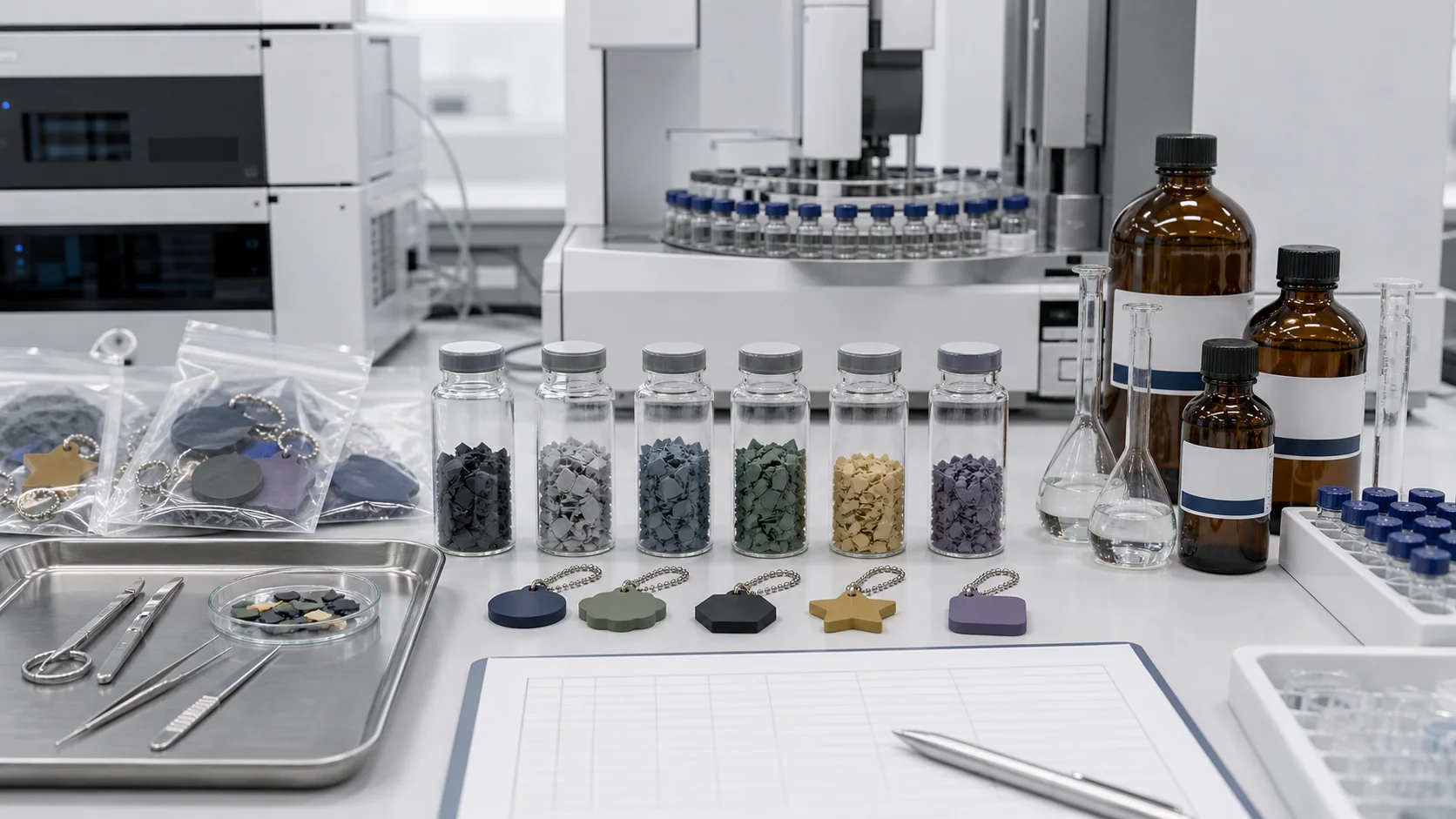
A low-odor product may still contain a restricted substance, while a strong odor is not necessarily caused by phthalates. Manage sensory evaluation and chemical testing as different controls.
6. Raw-Material, Contamination, and Lot Control
- Define requirementsConfirm market, use, age group, and contact conditions.
- Approve materialsReview resin, plasticizer, stabilizer, pigment, and printing materials.
- Control changesApprove supplier, formula, color, hardness, and equipment changes.
- Prevent contaminationSeparate weighing, mixing, molding, storage, and recycled materials.
- Evaluate samplesCheck odor, tackiness, migration, hardness, appearance, and packaging.
- Release production lotsLink records and required third-party reports to shipment approval.
7. Why a Certificate Alone May Not Be Enough
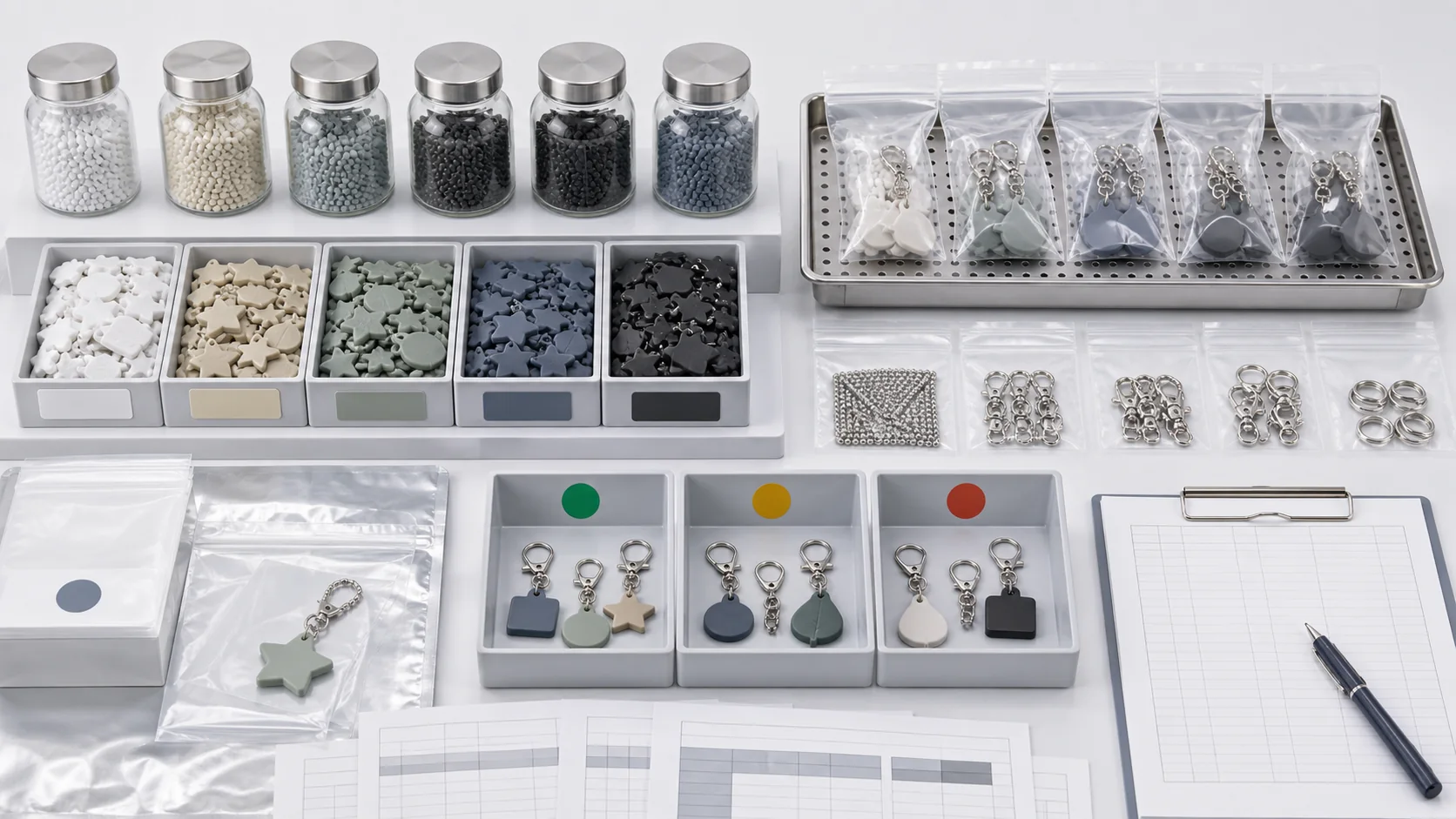
- The report sample, color, material, and component match the product
- The substances match the target market requirement
- The test date is traceable to raw-material and production lots
- Multiple colors, materials, prints, and coatings have a clear scope
- The laboratory, method, reporting limit, and units are identifiable
SDS documents and supplier declarations support formulation review, but they are not the same as third-party finished-product testing. Use each according to project risk.
8. PVC OEM Pre-Order Checklist
- Confirm market, classification, age group, and use
- Control suppliers for PVC, plasticizer, stabilizer, and pigments
- Specify target phthalates and concentration limits
- Define recycled-material allowance and traceability
- Set odor timing, sealed condition, and limit sample
- Check tackiness, migration, and discoloration after heat storage
- Evaluate odor and migration with the final packaging
- Link test specimens to the production lot
- Define reapproval after material, formula, or factory changes
- Confirm timing and format of third-party reports
9. Frequently Asked Questions
QDoes a strong PVC odor mean high phthalate content?
No. Odor has multiple possible causes. Confirm phthalates by substance-specific chemical analysis.
QDoes a non-phthalate plasticizer make the product legal everywhere?
No. Review chemical, toy, food-contact, and product-safety rules for the market and classification.
QCan airing solve an odor issue?
It may reduce odor, but investigate the cause and recurrence after sealing or heat transport. Formula, process, or packaging correction may be necessary.
QIs raw-material testing enough?
It helps, but colorants, prints, coatings, contamination, and changes may require finished-product or homogeneous-material testing.
10. Official References
- Japan MHLW: Utensils, Containers and Packaging, Toys, and Cleansing Agents
- EUR-Lex: Regulation (EU) 2018/2005
- U.S. CPSC: Phthalates Business Guidance
This article provides general OEM quality-management information. Confirm legal applicability for the specific market, intended use, age group, and material construction.
Related Products and Services
Define PVC Materials and Testing for the Target Market Before Production
Share the target market, use, age group, and product construction. We can organize material declarations, odor evaluation, migration controls, and phthalate testing.
Request a Free Quote or Material Review