Confidential IP Approval Guide
Custom Plush NDA and Approval Workflow
For unreleased characters and pre-launch merchandise, we manage the NDA, artwork approval, physical sample review, and mass-production sign-off as one traceable approval workflow.
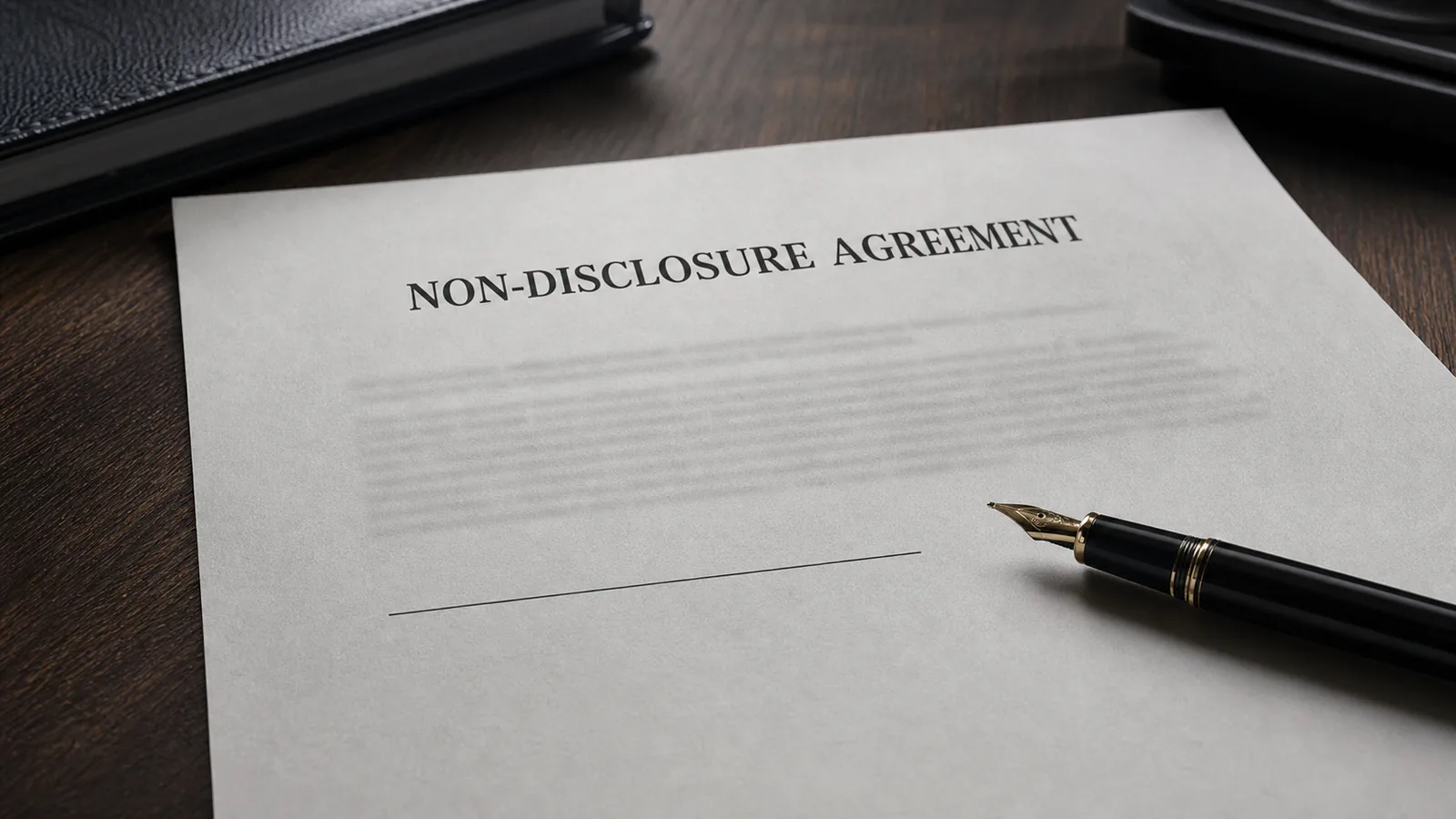
NDA and approval rules to set before sharing unreleased IP
For Japan-facing anime, game, character licensing, and local mascot projects, define the plush toy NDA, sample approval workflow, file access, photography rules, rejected-sample handling, and production sign-off before confidential artwork is distributed.
- Confirm the protected IP, disclosed files, authorized contacts, subcontracting scope, retention period, and return or deletion terms.
- Decide where licensor approval is needed: 2D artwork, specification sheet, prototype photos, physical samples, or mass-production standard.
- Document operational controls such as no-photo areas, social posting restrictions, rejected-sample disposal, and master sample storage for each project.
- Before production, lock the approver, revision number, signed master sample, and inspection criteria.
See the four approval stages in order
The image sequence makes the approval owner and deliverable clear without relying on long explanations.
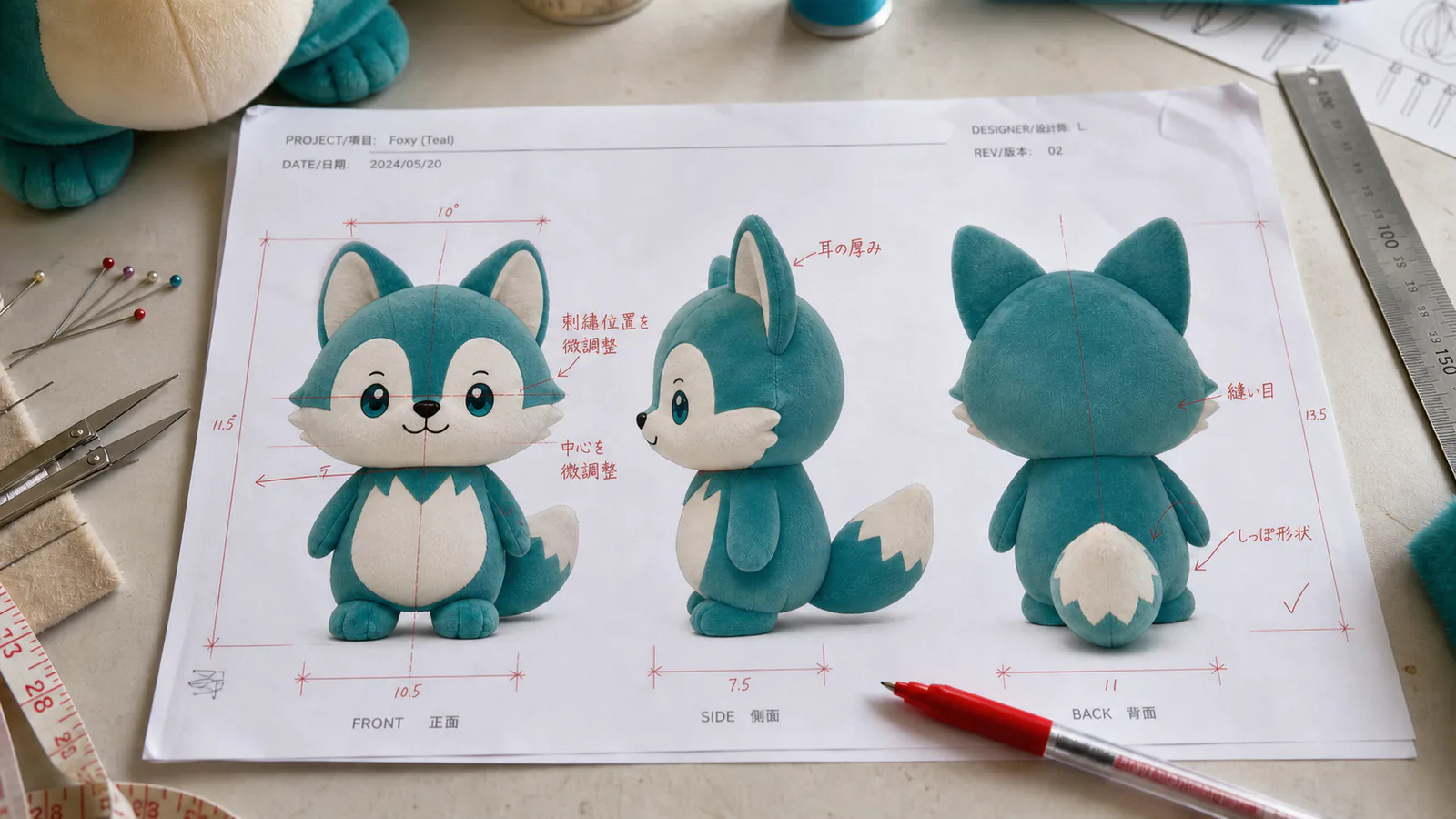
Approve the 2D artwork and specification
Collect embroidery-position, silhouette, component-dimension, and construction comments on the front, side, and back views, then lock the current revision number.
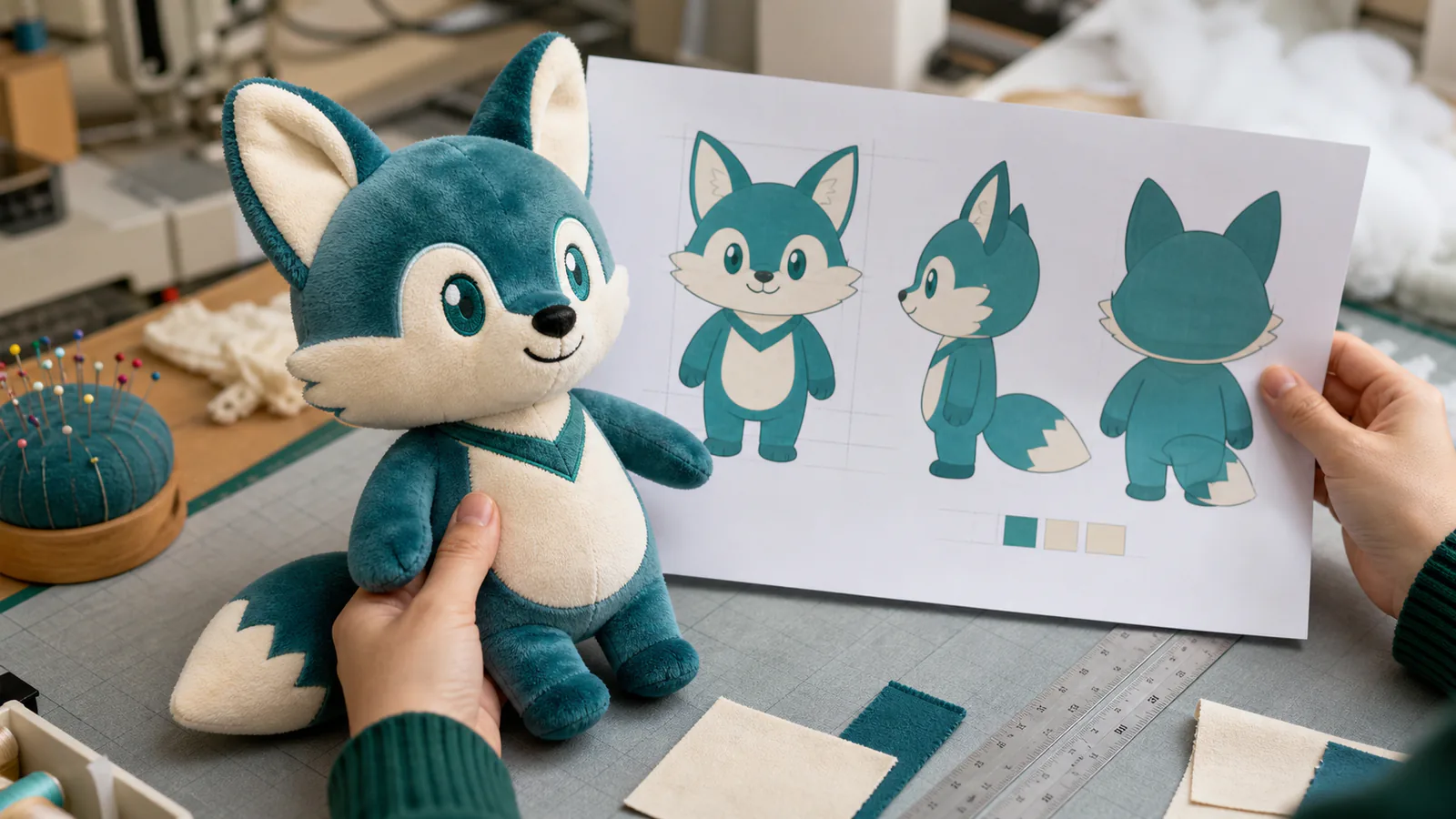
Review the physical sample and issue corrections
Compare the finished 3D sample with the artwork and check the expression, embroidery placement, silhouette, measurements, and material feel.
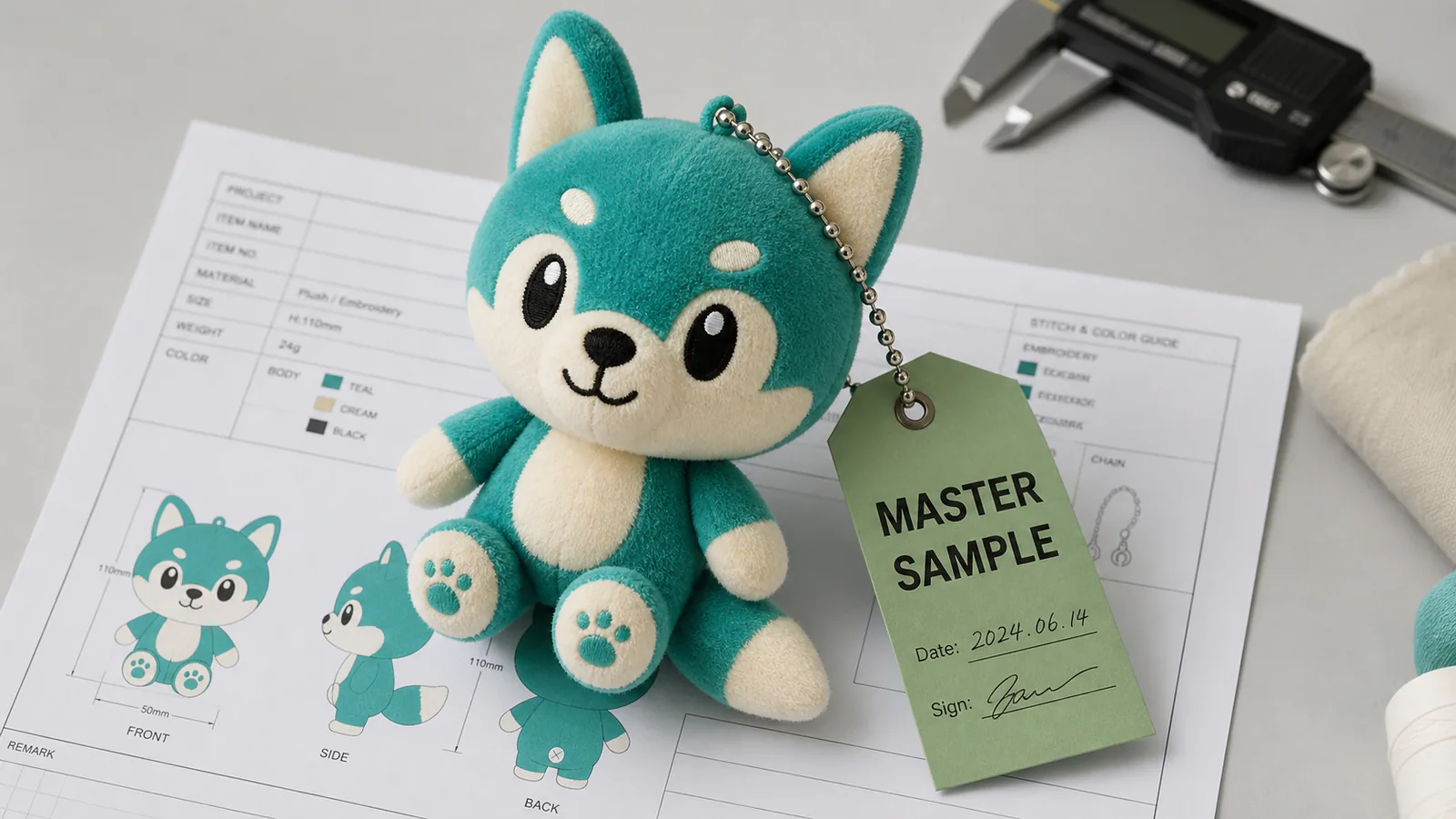
Final approval and production sign-off
Link the MASTER SAMPLE to the approval date, authorized signer, and revision number, then use it for production and pre-shipment inspection.
Physical and digital confidentiality controls
The NDA must be supported by operating rules for access, photography, and disposal.
Store 2D and 3D files in a controlled internal environment and limit access to the designers, pattern makers, and project staff who need them. Record the retention period and deletion method agreed for the project.
For confidential prototype rooms and production lines, restrict camera phones and unauthorized photography. Any required production records should be captured only by approved staff using approved equipment.
Keep rejected samples and logo or character-printed offcuts separate from general waste, record quantities, and render them unusable by cutting or shredding under the agreed project procedure. If incineration is required, confirm local regulations and facility conditions.
Reduce international shipping delays with a digital preview
Before shipping the sample, review high-resolution photos from the front, back, left, right, top, and bottom, plus a short video.
Use two approval stages to prevent rework
Approve shape first, then material and color, so the cause and scope of each correction remain clear.
Use plain or provisional fabric to approve facial volume, proportions, silhouette, ear and limb positions, stuffing, and the 3D pattern.
After shape approval, apply the production fabric, thread colors, embroidery, printing, and accessories for final appearance approval.
Sign and retain matching master samples on both sides
At final approval, prepare two equivalent-quality reference samples and record the approval date, revision number, and signatures.
The client keeps one sample as the reference for incoming inspection and internal acceptance.
The factory keeps one sample at production and pre-shipment inspection so operators can compare the goods with the approved physical standard.
Confidential IP risks before plush sampling
For new characters, Tokyo anime studios, game companies, and municipal mascot programs, the practical risk is not only the legal NDA. The manufacturing team also needs a clear approval record and operating rules before sampling starts.
| Control point | Risk without a defined NDA workflow | Control with NDA and approval rules |
|---|---|---|
| File sharing | Unreleased artwork, character settings, or launch plans may reach people outside the approved project team. | Set the disclosure scope, authorized viewers, storage location, retention period, and deletion terms at kickoff. |
| Prototype photos | Factory photos or early samples may be shared outside the project, posted publicly, or reused in another context. | Define who can photograph, where files are stored, who can receive them, and whether watermarks or file naming are required. |
| Sample approval | Shape, color, and specification comments can conflict if the latest approved version is unclear. | Track artwork approval, prototype review, and production sign-off with revision numbers. |
| Rejected samples | Failed samples or branded offcuts may be reused, mixed with general waste, or lost from the project record. | Record quantities, storage locations, and the agreed cutting, shredding, or other disposal method. |
Japan-facing IP controls to confirm
When a licensor provides a required NDA format or approval procedure, convert it into practical manufacturing controls. Terms that require legal interpretation should be reviewed by the buyer's legal or licensing team.
- NDA and disclosure scope: protected materials, approved viewers, subcontracting scope, storage, and deletion terms.
- Artwork and specification review: turnaround sheets, embroidery placement, fabrics, accessories, and revision numbers.
- Sample approval: digital pre-review, physical sample review, and consolidated correction comments.
- Production sign-off: authorized approver, approval date, master sample, and limit samples or tolerances.
- Restrict prototype-room or production-line photography when the project requires it.
- Connect shared files with a revision number, date, and reviewer.
- Limit licensor review photos to the agreed purpose and recipients.
- Consolidate correction comments into one current record instead of scattered messages.
- Use the signed master sample as the production and pre-shipment inspection reference.
- Confirm return, deletion, or retention terms at project close.
Pre-checklist for confidential IP projects
Preparing these points before inquiry helps shorten NDA confirmation, quoting, sampling, and licensor review.
- IP type: anime, game, VTuber, idol, municipal mascot, or corporate character
- Disclosed files: turnaround art, color references, character settings, launch timing, and license conditions
- Approval owners: licensor, agency, merchandise planning, QA, and final signer
- Restrictions: no-photo rules, social posting restrictions, overseas factory access, rejected-sample handling, and retention period
- Manufacturing scope: quantity, SKU count, lead time, inspection standard, delivery destination, and import document needs
Related production guides
Frequently asked questions about NDA and approvals
When should the NDA be signed?
Sign it before sharing unreleased designs, character settings, or launch plans, after confirming the protected project, disclosure scope, authorized contacts, retention, and deletion terms.
Can we approve a sample from photos and video only?
A digital pre-review is useful, but color, hand feel, stitching, and stuffing can be difficult to judge remotely. Decide whether a physical review is required after the digital preview.
How are rejected samples and printed offcuts handled?
Track their quantity and storage location, then render them unusable by cutting, shredding, or another agreed method that complies with local rules and facility conditions.
Can the design change after shape approval?
Yes, but a change may require a new pattern and another prototype. Confirm the effect on cost and schedule before approving the change.
How many master samples are prepared?
We normally prepare two equivalent-quality reference samples, one for the client and one for the factory, with the approval date, revision number, and signer recorded. Final handling depends on the project.
What is the difference between a master sample and a limit sample?
The master sample represents the intended production standard. A limit sample or documented tolerance defines the pass/fail boundary for specific dimensions, positions, colors, or workmanship.
Can we review NDA clauses required by an anime studio or licensor?
If the buyer provides a required format, we review the operational points for manufacturing, such as disclosure scope, subcontracting, photography, retention period, and return or deletion terms. Any legal interpretation should be confirmed by the buyer's legal or licensing team.
Can confidentiality records be prepared for licensor review?
Within the agreed project scope, we can organize records such as revision numbers, approval dates, authorized contacts, sample retention, and rejected-sample handling. The required format and retention period should be confirmed at kickoff.
Can prototype photos for a municipal mascot be kept off social media?
Yes. When no-photo or no-social-posting rules are required, define the approved photographer, recipients, storage location, and allowed use of review photos before sample work begins.
What happens to drawings and samples after the license term ends?
Handling depends on the contract terms. Confirm whether data should be deleted, returned, retained for a defined period, or destroyed, and clarify whether any master sample must remain for production or quality records.
Set the approval rules before sharing unreleased IP
We can organize the protected files, responsible contacts, digital review, physical sample approval, and signed production standard for your project.