
Matte Acrylic OEM / Custom Character Goods
Matte Acrylic Goods
We manufacture custom matte acrylic goods such as acrylic stands, keychains, charms, tags, and bonus parts for original IP, event merchandise, and e-commerce product lines. Before mass production, we help confirm the matte surface, print appearance, hardware, packaging, SKU sorting, and inspection points.
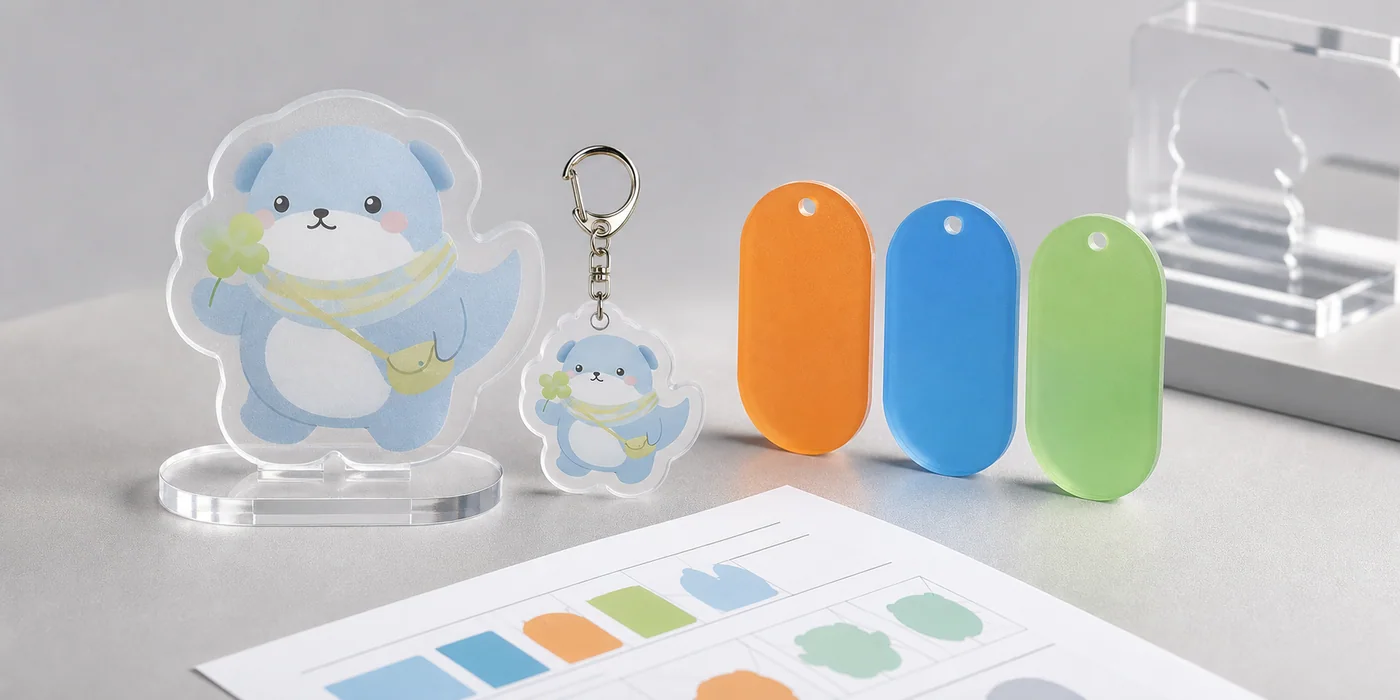
Check matte and glossy surface differences before mass production
A matte acrylic finish softens reflected light and helps products look calmer under event, store, or photo lighting. Because the surface can change how color, transparent areas, and fine lines appear, buyers should approve a physical sample instead of relying only on artwork data.
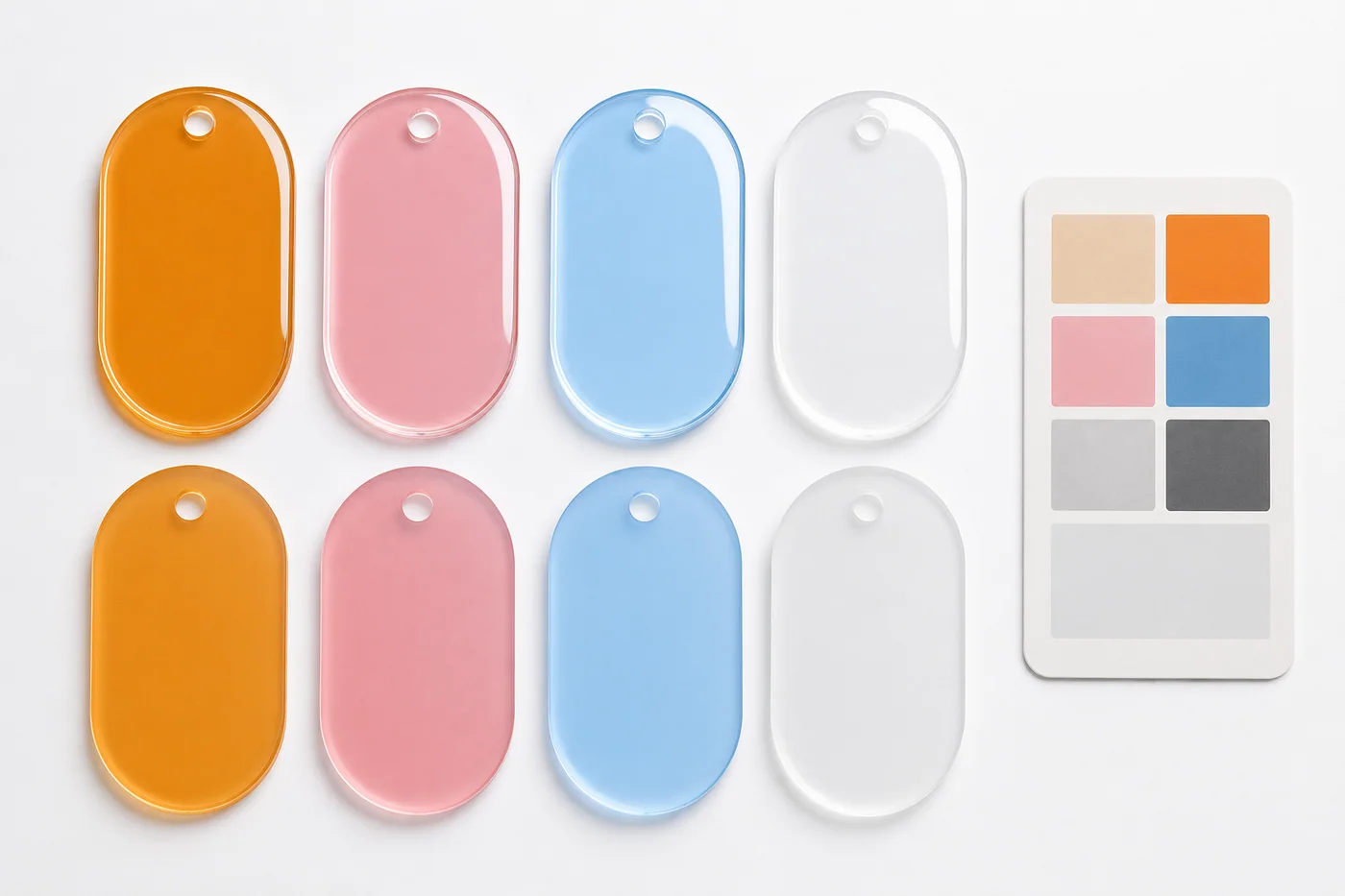
Suitable for original IP acrylic stands and keychains
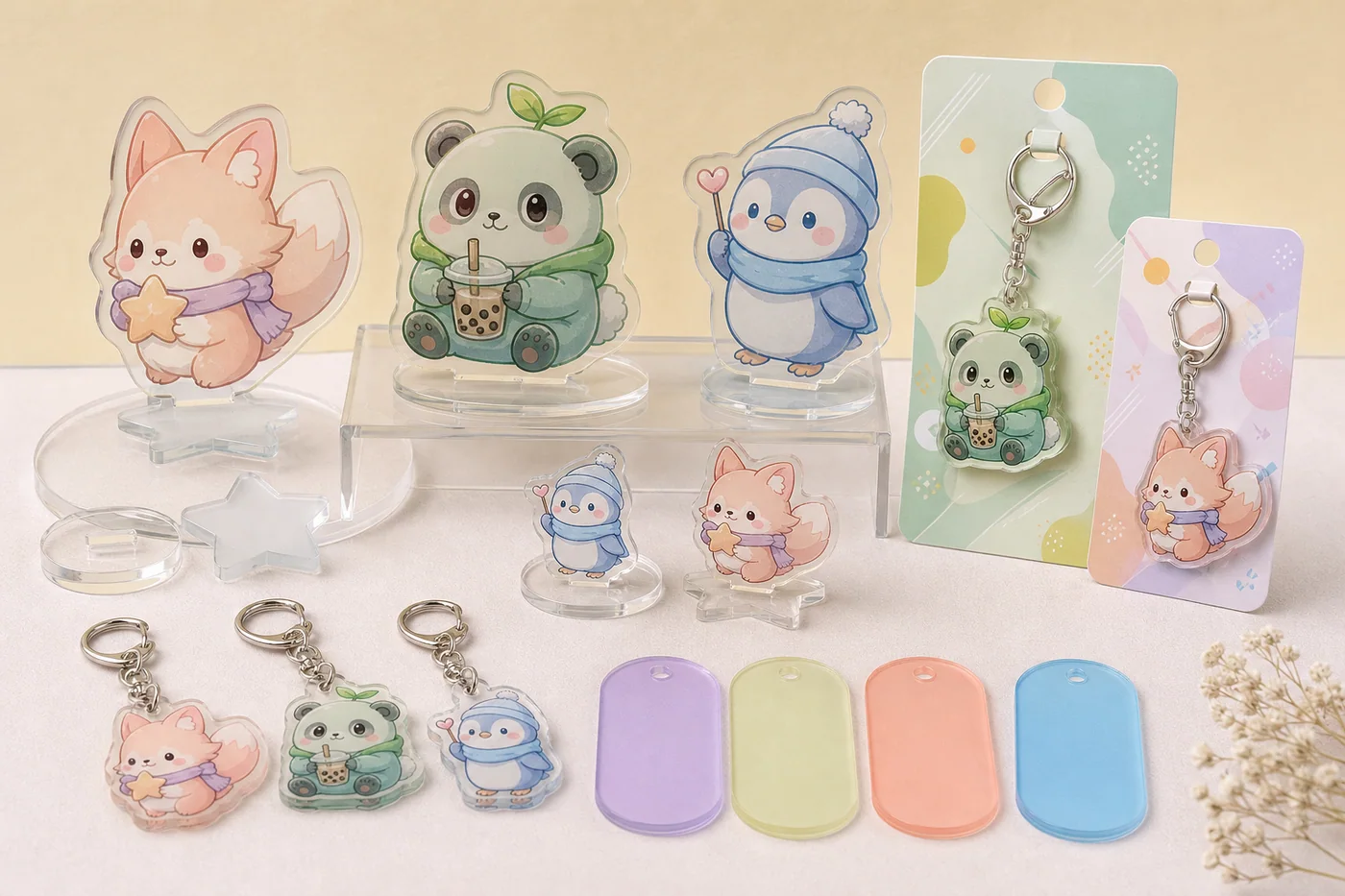
For character goods and fan merchandise, one IP is often expanded into acrylic stands, mini stands, keychains, charms, and colored tags. When using a matte finish, we check base fitting, metal holes, clear areas, white ink range, and packaging rules separately for each product format.
- Acrylic stands: base slot, thickness, print side, surface reflection
- Acrylic keychains: hole position, hardware, surface marks, individual packaging
- Bonus tags and charms: colored material, transparency, SKU-based sorting

Plan metal fittings and acrylic charms together
For keychains and charms, the matte surface is only one part of the specification. Hardware type, hole position, edge treatment, OPP bag rubbing, and backing-card fixation should be checked before mass production. For multi-SKU projects, matching artwork numbers with packaging numbers helps reduce mixing mistakes.

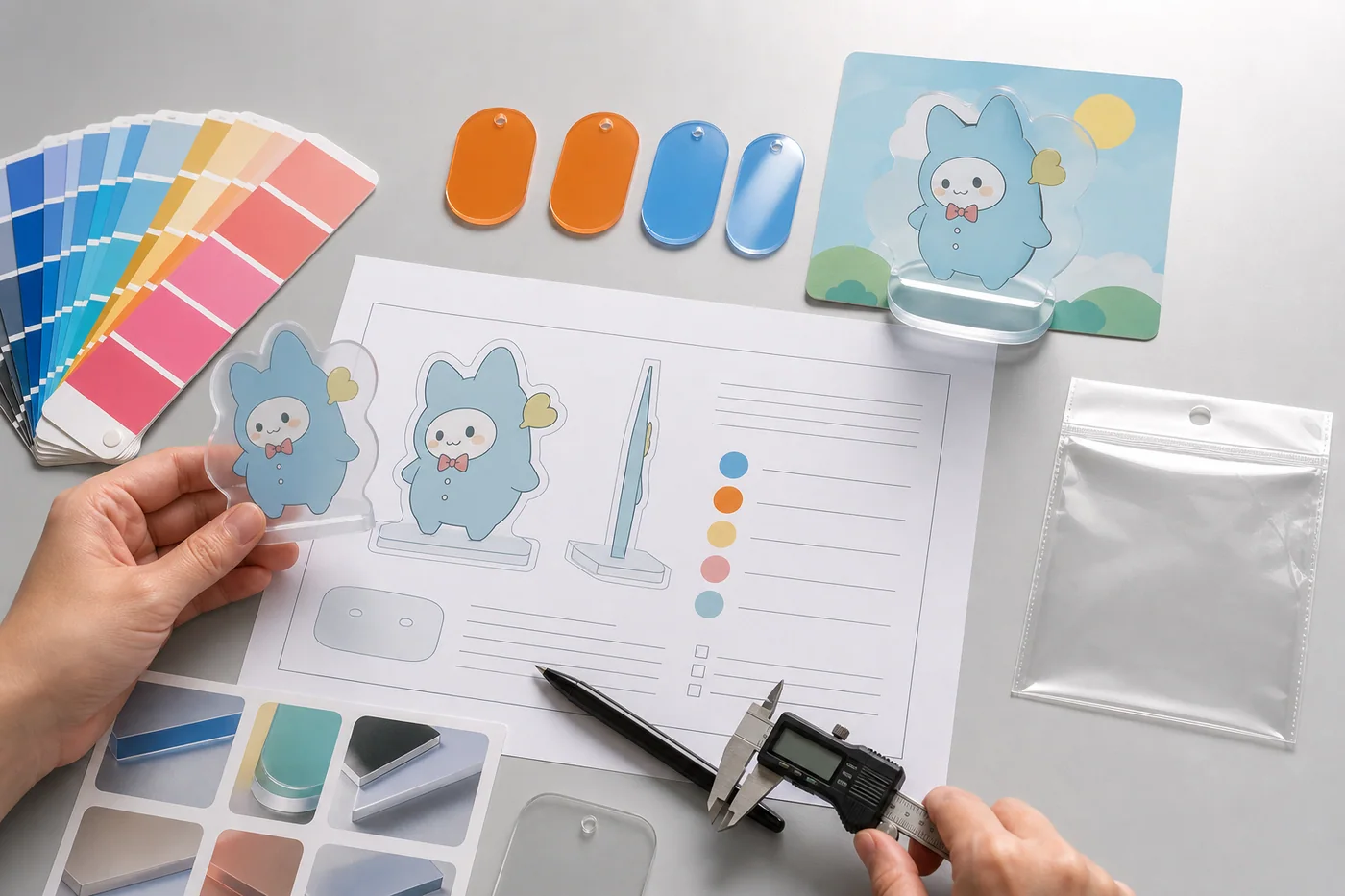
Sample approval points before mass production
Matte processing directly affects the final impression, so approval criteria should be documented at the sample stage. Keeping photos and a specification sheet for color, white ink, transparent areas, hole position, base fit, thickness, and packaging makes mass-production decisions more stable.
| Print and white ink | Check white ink range, transparent areas, fine lines, pale colors, and dark-color visibility. |
|---|---|
| Surface finish | Confirm matte reflection, touch feel, visible rubbing marks, and protective film requirements. |
| Shape and holes | Review cutting line, rounded corners, hardware holes, base slots, and material thickness. |
| Packaging and sorting | Confirm OPP bags, backing cards, JAN labels, random packaging, SKU sorting, and carton labels. |
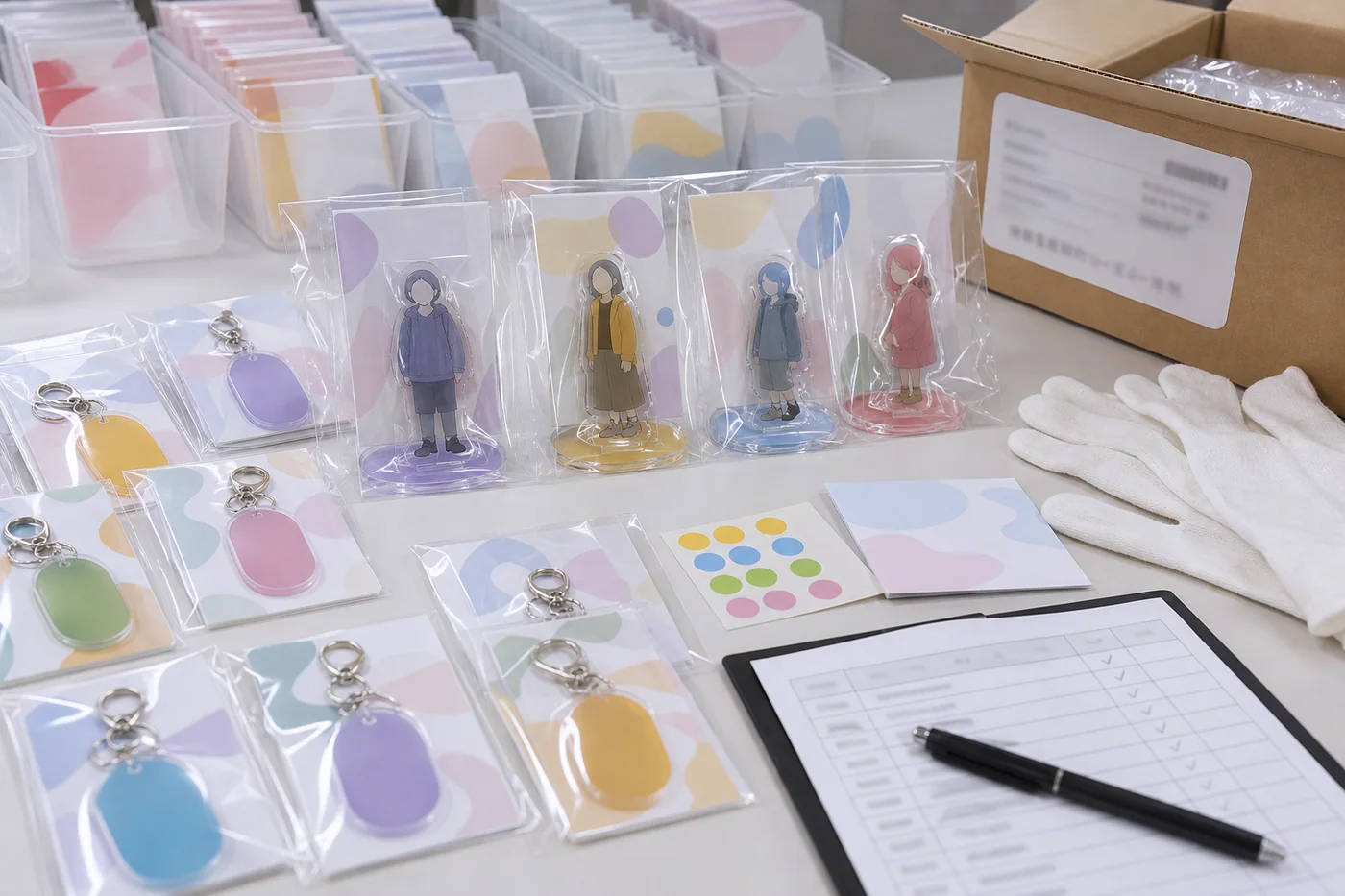
Packaging, inspection, and SKU management
A finished matte acrylic surface can be affected by rubbing during packaging and transportation. Before production starts, define individual packaging, backing-card fixation, SKU stickers, carton labels, and QC photo scope to reduce trouble for event delivery or e-commerce fulfillment.
Product combinations for event sales and online stores
Matte acrylic can be used for a single item or for a coordinated product line that includes stands, keychains, colored tags, and bonus parts. For first production runs, keeping a reproducible specification and packaging rule makes reorders easier after you confirm the best-selling SKUs.
Related Pages
FAQ
Which acrylic products are suitable for a matte finish?
Matte finishing works well for acrylic stands, acrylic keychains, charms, tags, bonus parts, and display bases. It is useful when you want softer reflections and a calmer surface under store or event lighting.
Will the colors look different from glossy acrylic?
Matte surfaces reduce reflection, so colors may appear slightly softer than on glossy acrylic. We recommend checking color, white ink, transparent areas, and fine lines on a physical sample before mass production.
Can you support small-lot production?
The conditions depend on product shape, size, print method, packaging, and SKU count. Share the target quantity, size, artwork count, packaging method, and deadline so we can confirm the feasible route.
What should be checked before mass production?
Check surface reflection, print appearance, hole position, metal fittings, stand-base fit, protective film, individual packaging, SKU sorting, and the scope of QC photos before production starts.
Confirm your matte acrylic goods specification before production.
Send your artwork, size, quantity, material color, packaging method, and target delivery date. We will review the sample and mass-production conditions for your project.
How to specify Matte Acrylic Goods
Use matte acrylic goods only after the buyer has approved matte effect reference, print and white-ink setup, material or coating compatibility, color-shift sample review, scratch and fingerprint limit, and surface-safe packaging. The finish must be reviewed on the intended acrylic, print and white-ink construction because a digital mockup cannot prove the physical viewing effect or surface durability.
Search intent boundary: This page owns the finish-selection intent for matte acrylic goods. General acrylic sourcing stays on the hub, while stand and keychain pages own their product-specific construction terms.
What to lock before approval
Approve the effect as a named material and process combination. Record the viewing face, sample lighting, acceptable variation and packaging rule so bulk production is compared with physical evidence rather than an image on screen. The six controls below should appear in the same quotation, sample record and inspection instruction.
| Decision | What the buyer must define | Acceptable approval evidence |
|---|---|---|
| Matte Effect Reference | Define matte effect reference by SKU before quotation and do not replace it with a vague good-quality instruction. | Keep an approved dimensioned specification or controlled reference that production and QC can identify during bulk release. |
| Print and White-Ink Setup | Define print and white-ink setup by SKU before quotation and do not replace it with a vague good-quality instruction. | Keep an approved artwork proof and component record that production and QC can identify during bulk release. |
| Material or Coating Compatibility | Define material or coating compatibility by SKU before quotation and do not replace it with a vague good-quality instruction. | Keep an approved representative physical sample that production and QC can identify during bulk release. |
| Color-Shift Sample Review | Define color-shift sample review by SKU before quotation and do not replace it with a vague good-quality instruction. | Keep an approved sellable pack or use-condition check that production and QC can identify during bulk release. |
| Scratch and Fingerprint Limit | Define scratch and fingerprint limit by SKU before quotation and do not replace it with a vague good-quality instruction. | Keep an approved inspection photo and measured result that production and QC can identify during bulk release. |
| Surface-Safe Packaging | Define surface-safe packaging by SKU before quotation and do not replace it with a vague good-quality instruction. | Keep an approved SKU-linked bulk report and carton trace that production and QC can identify during bulk release. |
Failure risks to close
- Matte Effect Reference is not controlled: suppliers can interpret the same request differently and the quotation is not comparable.
- Print and White-Ink Setup is not controlled: the physical sample can pass while the wrong revision enters bulk production.
- Material or Coating Compatibility is not controlled: packing or use conditions reveal a failure that a loose visual sample did not show.
- Color-Shift Sample Review is not controlled: the buyer cannot separate an isolated defect from a repeated batch or SKU problem.
Quote inputs
- project name and target market for Matte Acrylic Goods
- editable artwork and the latest revision code
- finished dimensions and quantity for every design
- matte effect reference
- print and white-ink setup
- material or coating compatibility
- individual packaging, label and barcode requirements
- inspection evidence and acceptance criteria
- delivery destination and required arrival date
Sample-to-bulk control
Approve a finished sample that represents the intended artwork, construction and sellable package. Record the sample date, revision, dimensions, material or component codes, visual limits and function checks. If a later change affects artwork, material, hardware, assembly or packaging, identify the impacted SKUs and obtain a new approval instead of relying on the earlier sample.
For bulk inspection, use the same viewing conditions, measurement points and pass/fail language used during approval. The report should identify the purchase order, SKU, batch, sampled quantity and result. Photographs are useful evidence only when they show the relevant scale, lighting, label or test condition and can be traced to the inspected lot.
When comparing quotations, separate confirmed specifications from assumptions. Ask each supplier to identify exclusions, proposed substitutes, sampling scope, packaging labor and delivery basis. A lower figure is not equivalent when it omits a component, uses a different inspection level or assumes that several designs can share one uncontrolled pack. Close those differences before price approval so the purchase decision remains auditable.