B2B OEMGLOBAL B2B
Laser-Cut
Acrylic Goods
Plan acrylic standees, keychains, charms and display parts as one controlled specification—from artwork review and sampling through bulk production, inspection, multiple-SKU packing and delivery.
- UV printing + laser cutting
- Approval sample + bulk QC
- Packaging + SKU + delivery
When laser cutting is a strong fit
You need custom contours
Use vector cut lines to define character outlines, logos, stand bases, holes and internal cutouts.
You need clear acrylic and full color
Combine clear or colored acrylic with UV printing and a controlled white-ink layer.
You need multi-SKU control
Map SKU names, quantities, identification, assortment ratios and labels to both product and packaging.
You need packaging and delivery support
Review individual bags, backing cards, barcodes, carton marks and delivery terms with the product specification.
Very tight internal corners, thin necks, thick sheets, critical fits, optical uses and unusual surface requirements should be validated with the intended material, not approved from artwork alone.
Each product format has different approval decisions
Review components, strength, presentation and packaging—not just the outer shape.
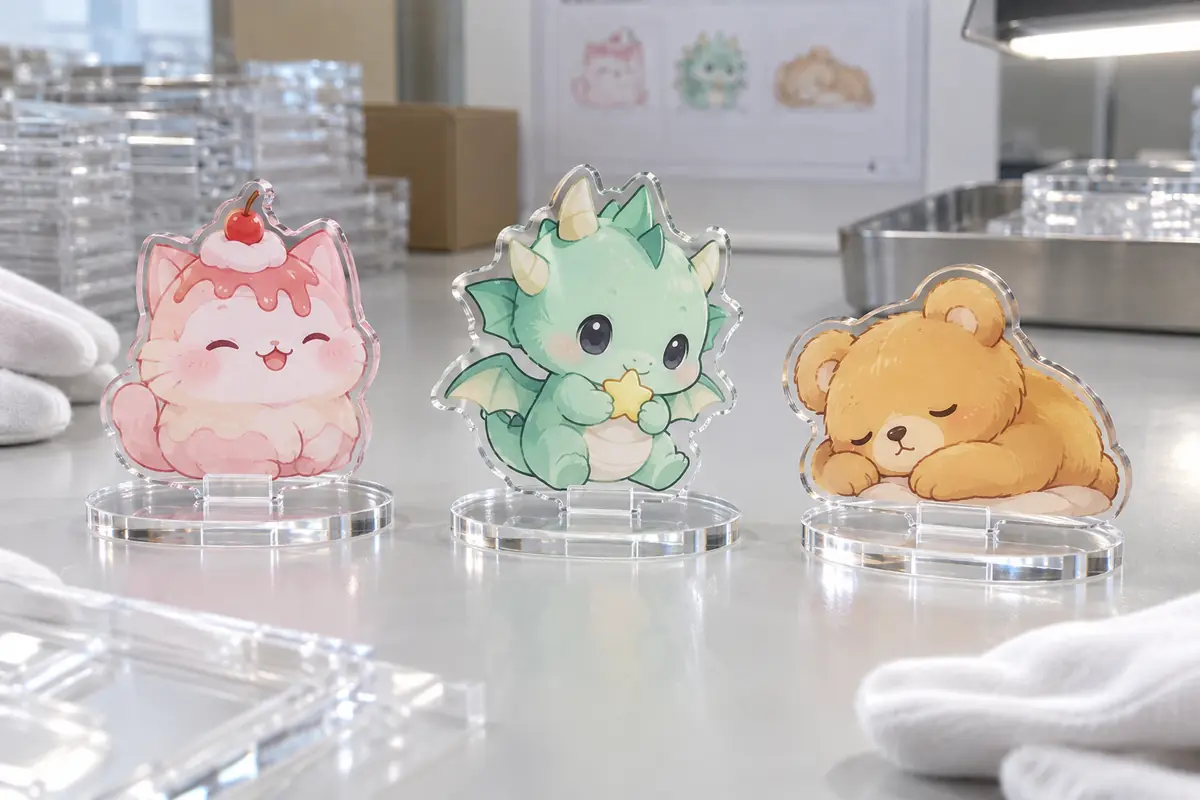
Acrylic standees
For tabletop display and collectibles, standing stability and assembly are part of the product specification.
- Best-fit projects
- Standees, layered scenes and multi-part displays
- Lock before bulk
- Body and base, insertion direction, printed face and protective film
- Acceptance check
- Fit, upright position, lean, base stability, print position and scratches
- Provide for RFQ
- Body/base files, assembled view, dimensions, SKUs and packaging
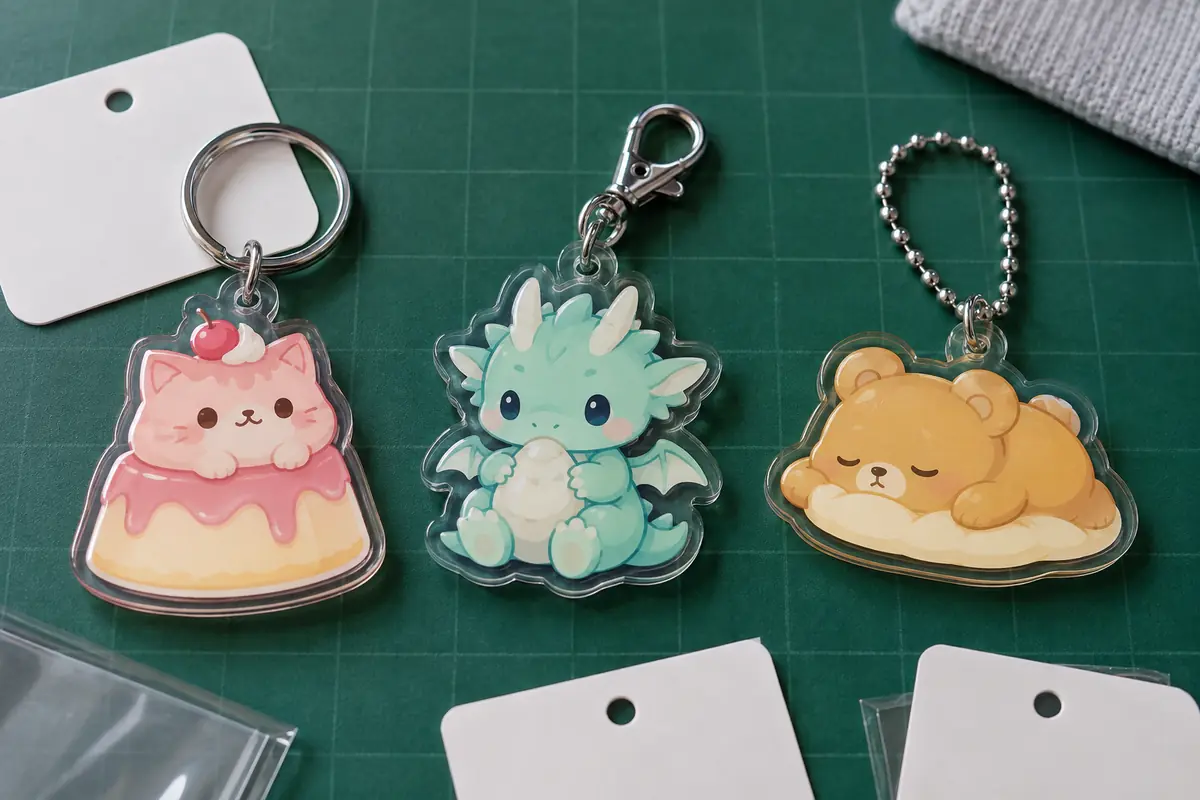
Acrylic keychains and charms
When holes sit close to the outline, review the finished orientation and hardware operation together.
- Best-fit projects
- Bag accessories, event merchandise and multiple SKUs
- Lock before bulk
- Hole position, hardware type/color/direction, one- or two-sided print and backing card
- Acceptance check
- Chipping around the hole, contour strength, hardware operation, white-ink alignment and abrasion
- Provide for RFQ
- Cut/hole file, hardware reference, finished orientation, SKUs and packaging
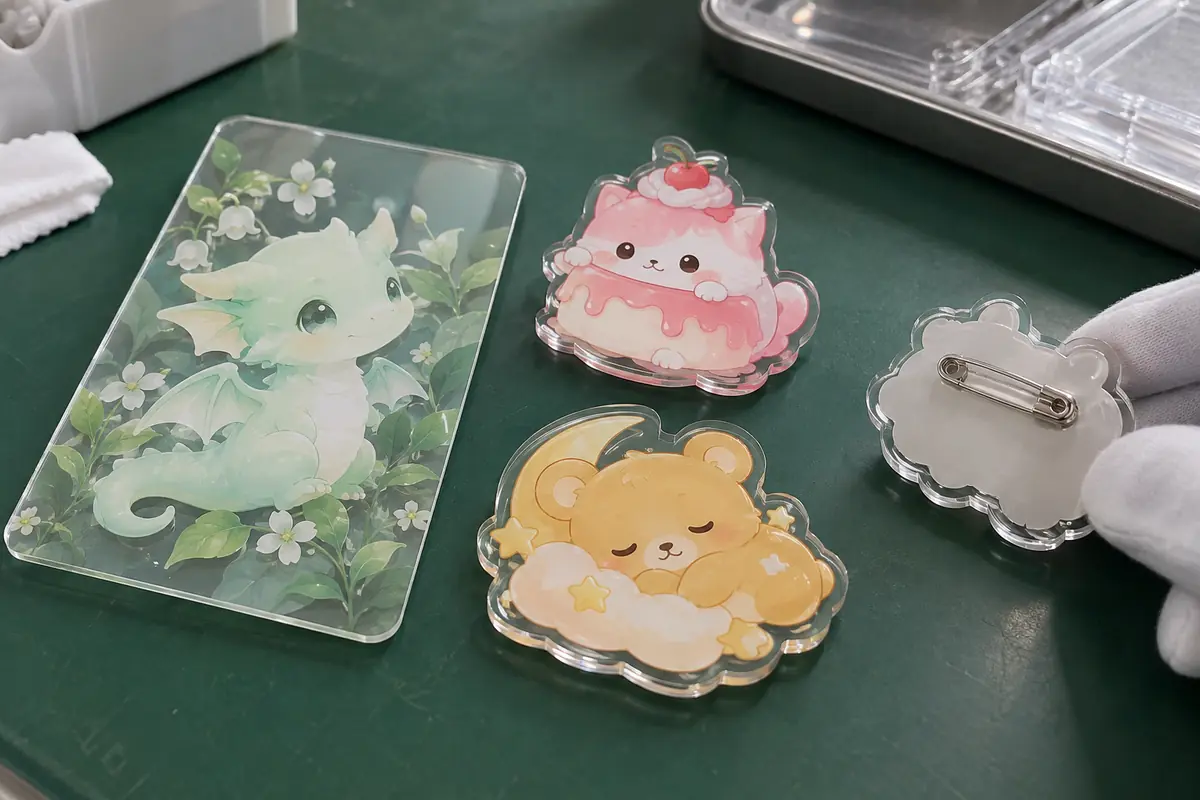
Cards and badge-style pieces
Evaluate card outline and flatness separately from badge hardware direction and holding strength.
- Best-fit projects
- Card goods, numbered sets and apparel or bag attachment
- Lock before bulk
- Card: corner radius, hole and faces; badge: rear hardware and direction
- Acceptance check
- Outline, flatness, white-ink position, identification and hardware retention
- Provide for RFQ
- Product type, front/back files, rear components, SKU sheet and backing card
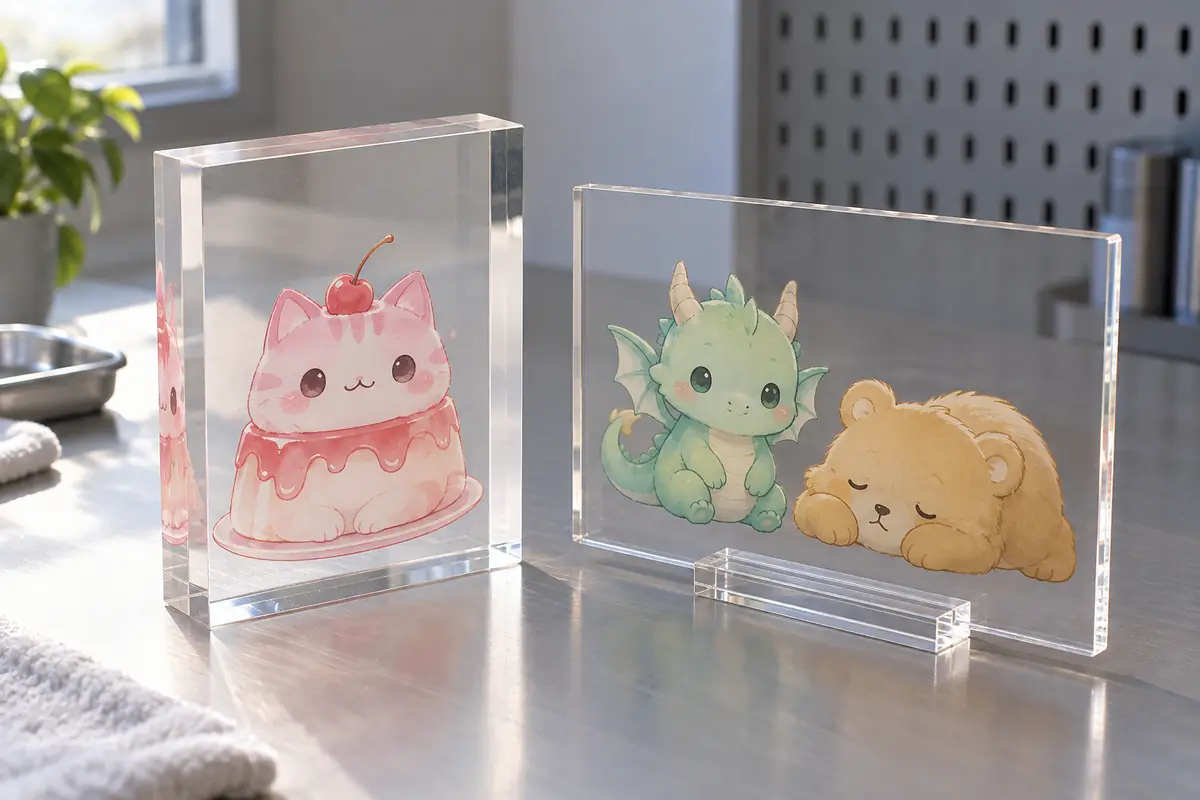
Panels and blocks
For products that feature material thickness, approve the installed condition and transit protection—not the sheet alone.
- Best-fit projects
- Self-standing displays, awards, large graphics and thickness-led products
- Lock before bulk
- Material, thickness, support, standing condition, print direction and face protection
- Acceptance check
- Warping, wobble, edges, chips, scratches and bubbles
- Provide for RFQ
- Outline/thickness, installed condition, support parts and transit packaging
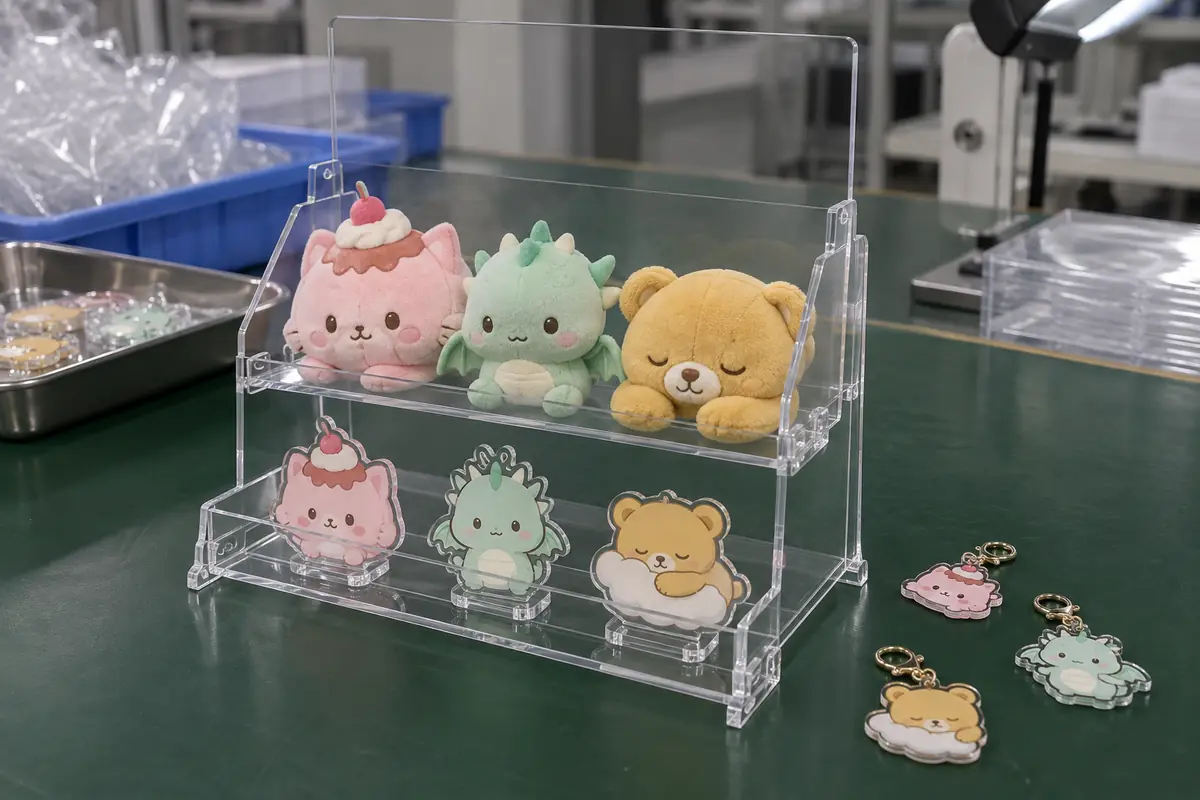
POP and display parts
Approve load, support and product-replacement steps in the fully assembled display.
- Best-fit projects
- Retail POP, trade shows, replaceable signs and small fixtures
- Lock before bulk
- Installation dimensions, displayed item, support spacing, assembly and replacement method
- Acceptance check
- Actual load, wobble, deflection, insertion and component count
- Provide for RFQ
- Installation site, item size/weight, assembled drawing and delivery constraints
Start from the use case—even if the format is not fixed
For formats not shown here, share the use condition and finished state so we can map the process, components, inspection and packaging decisions.
- Use environment
- Product size
- Quantity / SKUs
- Display item / hardware
- Packaging
- Target date
Six specifications to define before quotation
Not every item has to be final. Mark what is fixed and what needs a recommendation.
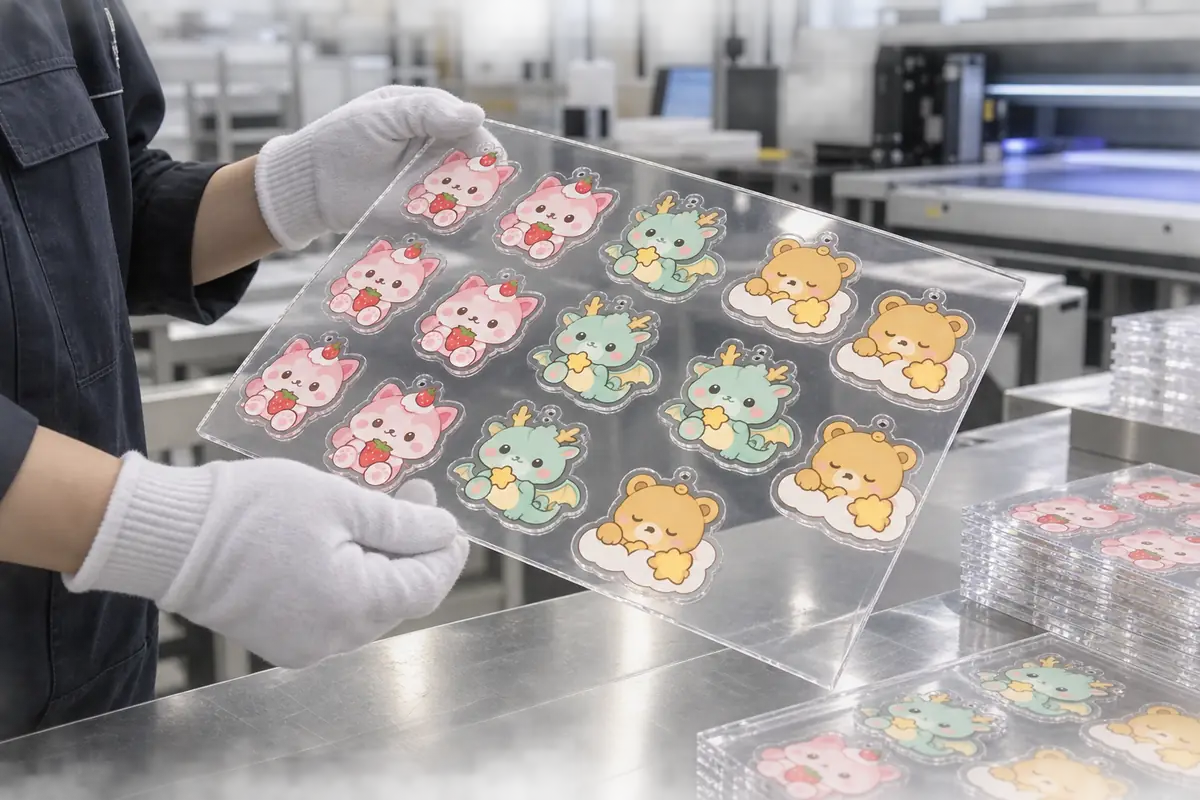
Product, size and shape
Finished dimensions, outline, holes, base, small features and assembly.
Material, color and thickness
Clear, colored, mirror or other acrylic options and sheet thickness; state any specified grade.
Printing, white ink and faces
Printed face, white-ink coverage, transparent effects, reading direction and protective layer.
Cut line, holes and base
Vector paths, bleed, outline clearance, hardware holes and intended fit.
Components, individual packing and labels
Hardware, chains, backing cards, OPP or foil bags, barcodes, warnings and SKU labels.
Quantity, SKUs and delivery terms
Quantity by SKU, random ratio, spares, target date, destination and trade terms.
Align printing and cutting to one approval standard
Artwork review
Review artwork, white ink, cut lines, holes and stand bases by layer.
Sample specification
Record material, thickness, printed face, components and packaging for the sample.
Printing and registration
Check white ink, color, outline and hole registration.
Laser cutting
Cut outlines, holes and bases, then review visible edges, corners and both faces.
Approval and bulk production
Freeze the approved sample and inspection criteria before bulk production and packing.
Choose laser cutting or CNC by product requirement
Choose by contour, depth, fit, edge appearance, quantity and secondary finishing—not by a claim that one machine is always better.
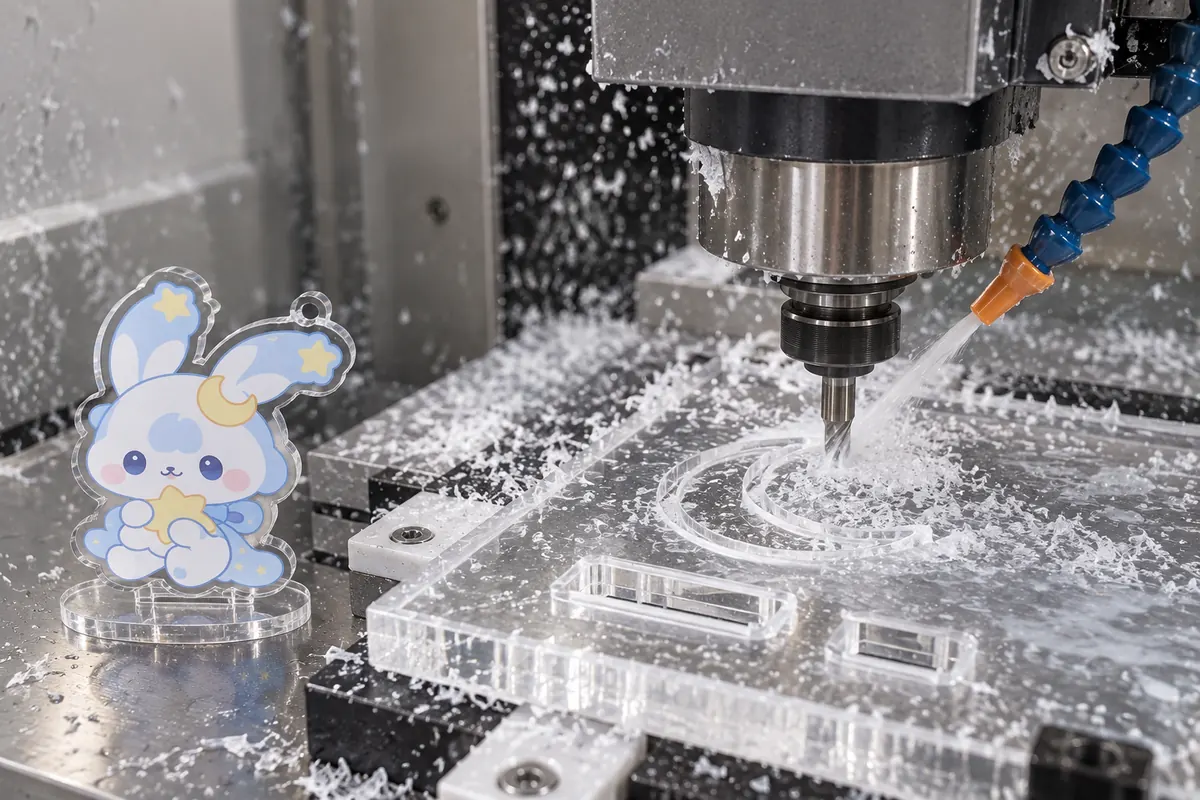
Decision: laser cutting is a strong candidate for complex 2D profiles and short-run printed goods. CNC is a candidate for structural parts with controlled grooves, steps, chamfers, pockets or fits. Some products combine both.
Laser cutting
The beam cuts a profile without a physical tool. Under suitable material and process conditions, clear acrylic can develop a glossy edge, making the method useful for detailed outlines and short multi-design runs.
- Complex 2D profiles and internal cutouts
- Keychains, charms and standees
- Approve edge appearance and heat effects on the sample
CNC machining
A cutting tool physically removes material. Beyond the outline, it can create controlled grooves, steps, chamfers and pockets.
- Fitting and assembly components
- Grooves and steps with controlled depth
- Approve tool marks and secondary finishing on the sample
Read the process-selection notes
With suitable material and settings, laser cutting can produce a clear-looking edge and is often practical for complex contours in thinner printed goods. CNC uses a physical tool and is useful for dimensional shapes, grooves, steps and fitting structures. Polishing, accuracy and cost are project-specific and should be decided with a sample made from the intended material.
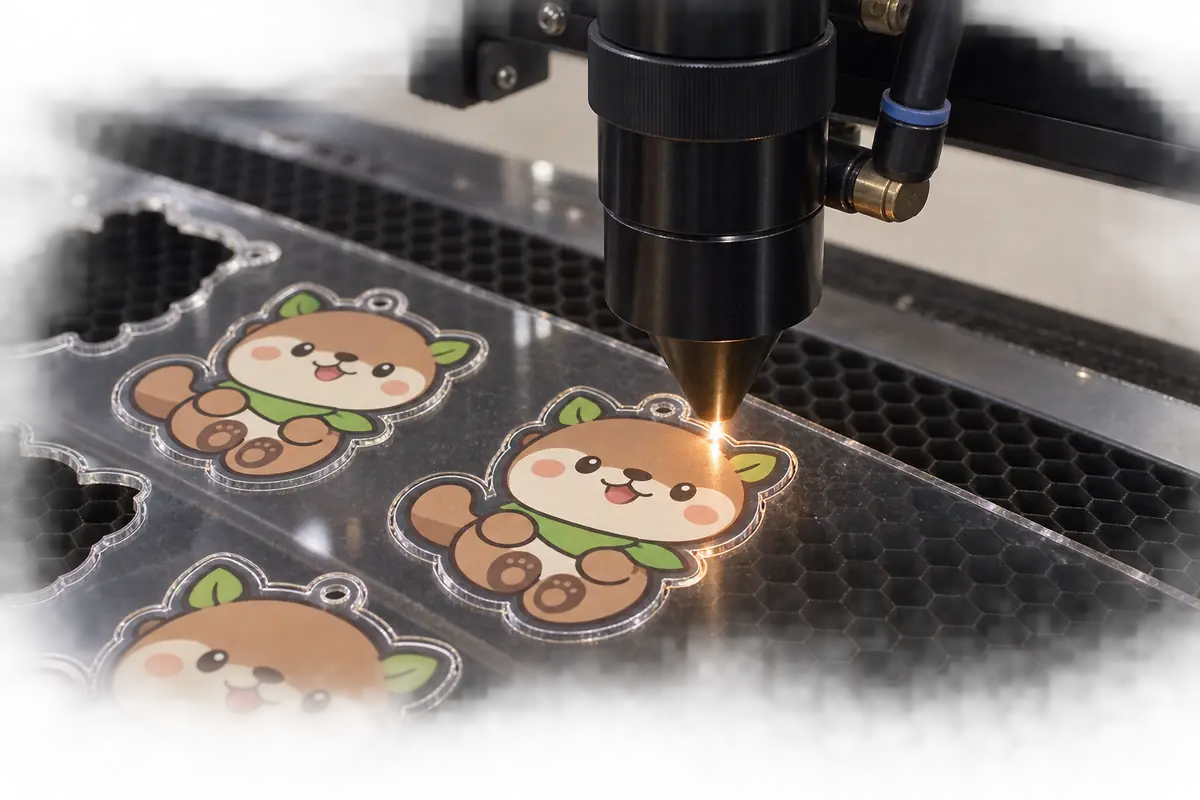
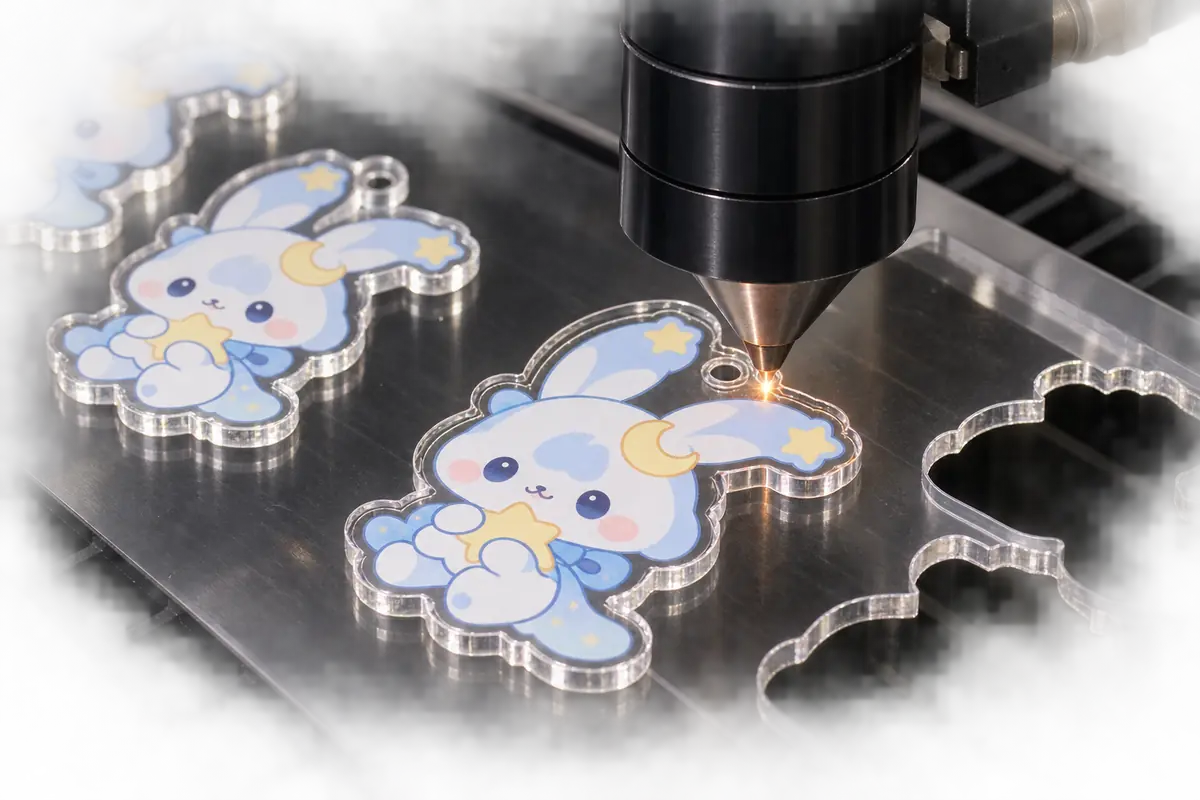
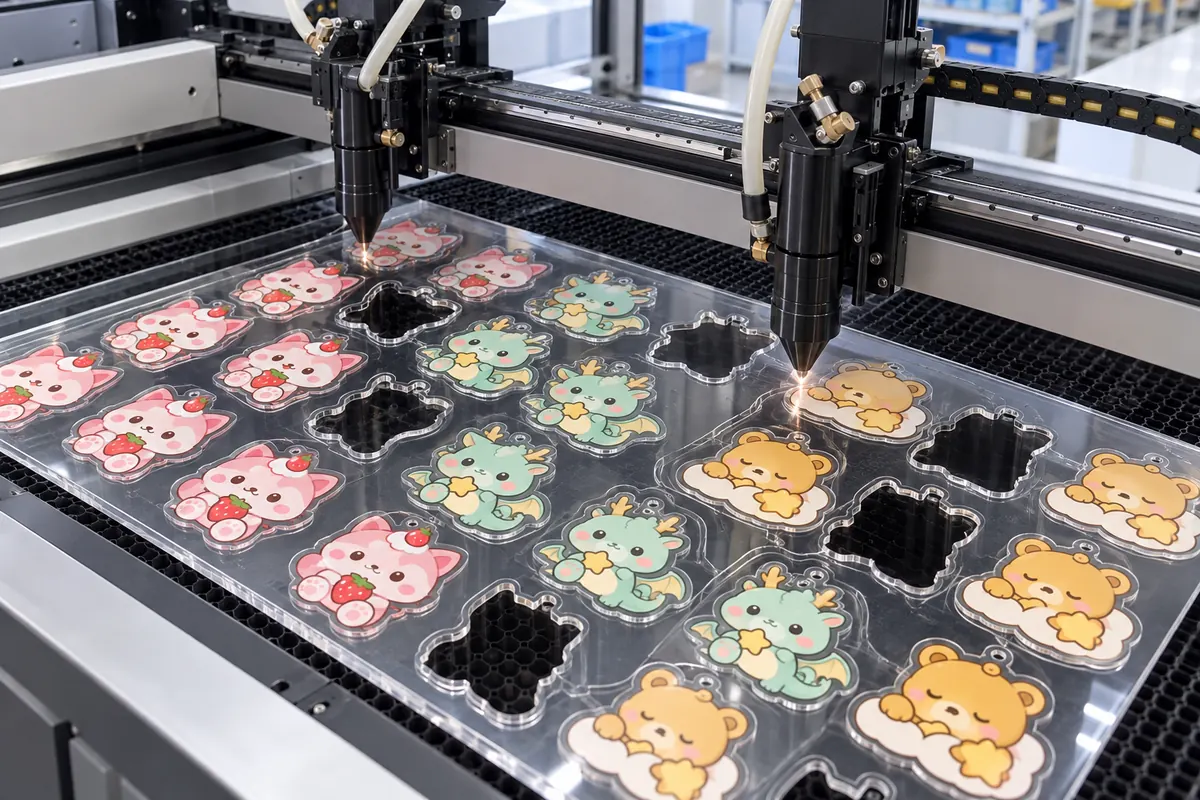
Turning original-IP outlines into cut-ready data
These recreated process images use original characters only. They illustrate decision points and do not guarantee machine capability or bulk results.
Define acceptance with a pre-production sample
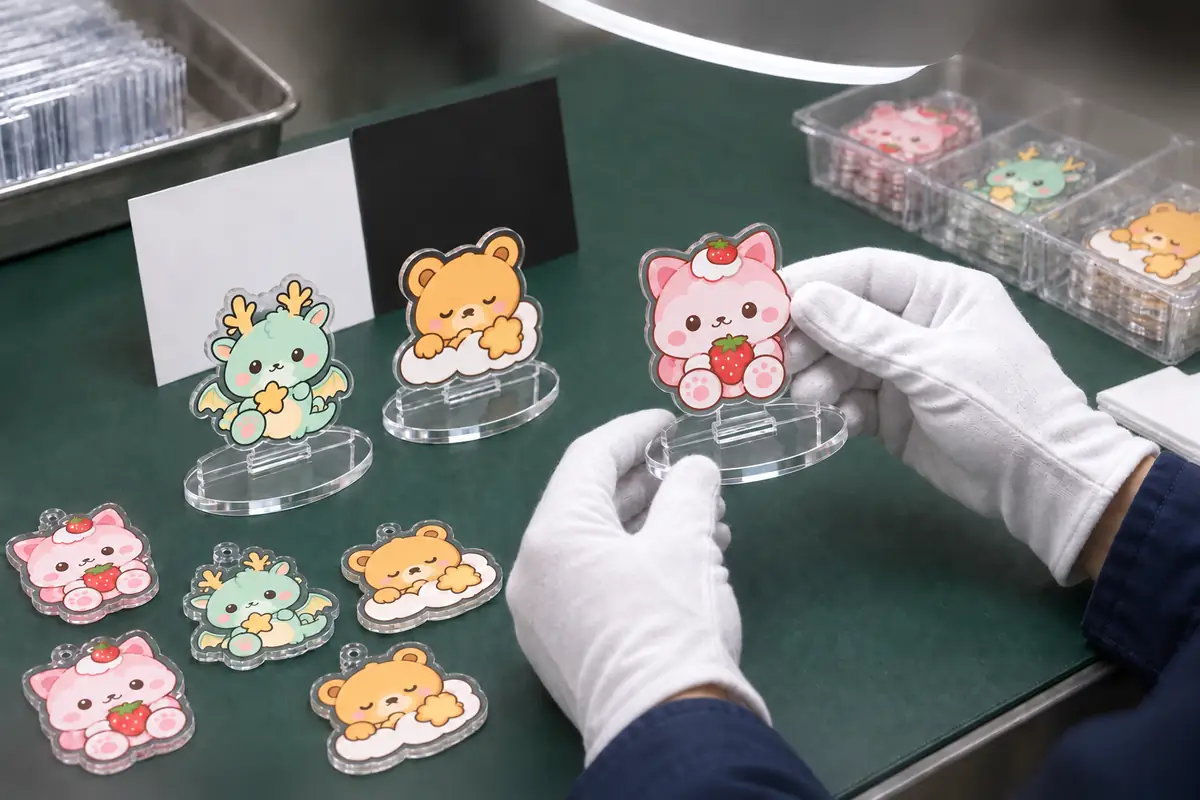
“Looks good” is not a measurable bulk standard. Approve the intended material, production artwork, components and sellable pack, then record where to inspect and what visual limits apply.
Printing
Color, white ink, transparency, position, faces, fine lines and small text.
Cutting
Outline, holes, corners, visible edges and acceptable heat marks, whitening or scratches.
Function
Stand fit, hardware direction, assembly, movement and in-use stability.
Packaging
Protective film, abrasion, backing-card direction, pack contents and labels.
Design SKU control and packaging with the product
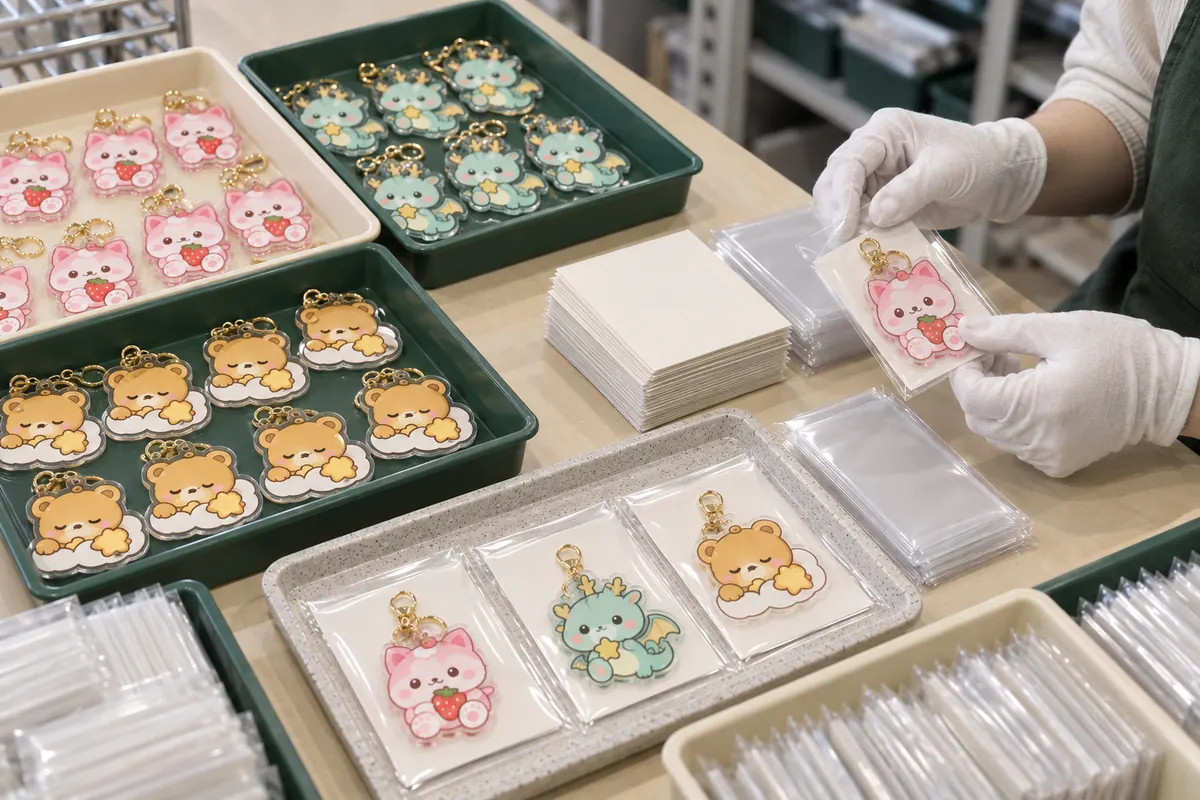
SKU master
List item code, name, design, quantity, spares and identification position.
Random packing
State assortment ratio, box composition, duplicate rules and whether the outer pack may reveal the design.
Individual packing and labels
OPP or foil bag, backing card, barcode, warnings, seal and protective-film handling.
International delivery
Confirm inner/outer cartons, carton marks, destination, split delivery and trade terms including DDP when applicable.
What changes MOQ, cost and lead time
Comparable specifications are more useful than an unsupported fixed number.
Product specification
Size, thickness, shape, printed faces, white ink and component count.
Quantity and SKUs
Quantity by SKU, low-volume designs and spares—not total quantity alone.
Sampling and approval
Sample rounds, color proofing, assembly checks and revisions.
Quality requirements
Viewing conditions, function tests, unit inspection and records.
Packaging and kitting
Backing cards, bags, barcodes, random assortment, sets and boxing.
Delivery terms
Required date, destination, split delivery, transport mode and trade terms.
MOQ, unit price, sampling time and production time vary with these conditions. We confirm project-specific figures after reviewing the RFQ instead of publishing unverified fixed values.
Ten inputs make your quotation more specific
Not every item must be final. Mark any open point as “recommendation requested.”
- 01Product typeStandee, keychain, charm, card, panel or display part
- 02Size and shapeFinished dimensions, holes, stand base and assembly drawing
- 03Quantity and SKUsTotal quantity, quantity by design, assortment ratio and spares
- 04ArtworkDesign, white ink, cut line and bleed
- 05MaterialColor, thickness and specified grade if any
- 06ComponentsHardware, chain, stand base and accessories
- 07PackagingBag, backing card, barcode, warnings and kitting
- 08QualityColor, appearance and function to approve; physical reference if available
- 09ScheduleSample review date, production target and in-market date
- 10DeliveryDestination, split delivery, freight and trade terms
Frequently asked questions about laser-cut acrylic goods
What laser-cut acrylic goods can you manufacture?
We can review acrylic standees, keychains, charms, cards, badge-style items, panels, blocks and display parts. Feasibility and quotation conditions are confirmed project by project after reviewing the shape, thickness, printing, holes or bases, hardware and packaging.
What information do you need for a quote?
Please share the product type, finished size, quantity, number of SKUs, target date, artwork, white-ink layer, cut line, material and thickness, hardware, base, individual packaging, barcode or random-packing rules, delivery destination and trade terms. Items that are not yet fixed can be reviewed with us.
Can you support prototypes or small production runs?
Yes, depending on the project. Minimum quantity and prototype cost vary with product shape, material, printing, components, SKU count and packaging, so we confirm them after reviewing the specification instead of publishing one fixed number.
Do I need a white-ink layer and a cut line?
For printing on clear acrylic, a white-ink layer helps control color density and transparency, while a vector cut line defines the outer shape. Print position, bleed, holes and stand-base fit should be reviewed together.
What should be approved before bulk production?
Use a sample made with the intended material and production artwork to approve color, white ink, print position, outline, holes, stand fit, visible edges, scratches on both faces, hardware, individual packaging and labeling. The approved evidence then becomes the reference for bulk inspection.
Can you manage multiple SKUs and random packing?
Yes, when the SKU list, quantities, identification method, assortment ratio, outer-pack markings, barcodes, spare quantities and reconciliation method are fixed in advance. Sorting, packing and records should be included in the quotation, not treated as an afterthought.
What changes the price and lead time?
Size, thickness, contour complexity, number of printed faces, white ink, quantity, SKU count, hardware or bases, number of sample rounds, inspection criteria, individual packaging, random packing and delivery terms all affect the quotation and schedule.
Can you arrange packaging and international delivery?
Individual bags, backing cards, foil bags, caution labels, barcodes, SKU sorting, carton marks and international delivery can be reviewed. DDP or other trade terms are confirmed against the destination and project conditions during quotation.
When should I choose laser cutting instead of CNC machining?
Laser cutting is usually considered for complex 2D profiles and small-batch printed merchandise. CNC machining is a candidate for grooves, steps, chamfers, pockets and fitting parts where depth must be controlled. Some products use both methods after material, thickness, edge, fit, quantity and secondary finishing are reviewed.
Turn your concept into a manufacturable specification
Send the product type, size, quantity, SKUs, target date and artwork. We will identify open decisions for material, components, packaging and delivery before quotation.