
B2B OEM / Acrylic Stand Base Design
Acrylic Stand Base Design
Base shape, thickness, slot dimensions and packaging method affect more than the appearance of an acrylic stand. They directly influence production cost, assembly work, breakage risk during shipping and SKU control.
This page organizes the base-design decisions that planning companies, lottery operators and IP merchandise teams should confirm before mass production. Dimensions and inspection methods are not fixed guarantees; they are checked project by project according to stand size, center of gravity, sales method and delivery conditions.
Short Answer
Base conditions to decide before mass production
When stand height, center of gravity, acrylic thickness, slot width, movement after packaging and SKU count are reviewed together, sampling rework is easier to reduce.
Height, width, center of gravity and front-facing appearance.
Sheet thickness, slot width, insertion depth and tightness.
Standard shapes, themed shapes and whether one base can be shared.
Standard retail, lottery prizes, blind packs and set products.
OPP bag, backing card, foil bag and movement inside the package.
Warehouse delivery, event delivery, split shipment and DDP conditions.
Note: fit, stability and appearance are confirmed through samples and mass-production conditions instead of being treated as fixed guarantees.
Mass Production Risks
Base problems that can appear even after a good sample
The common issues below are organized as cause, impact and pre-production checks. The goal is to make them usable for quoting and sampling without turning project-dependent values into absolute promises.
| Common issue | Main cause | How to check before production |
|---|---|---|
| The stand tips over easily | The base is too small for the stand body, the center of gravity is high, or the slot is too shallow. | Review stand size and center of gravity, then test base width, depth and insertion depth with samples. |
| The slot is too tight or too loose | Sheet thickness, protective film, laser-cutting conditions or slot-width instructions do not match. | Check insertion feel on physical samples and record slot width and insertion depth in the specification sheet. |
| Corner chips or cracks appear | Sharp corners, thin protrusions, insufficient thickness or contact inside packaging. | Review corner radius, thickness, individual packaging, cushioning and empty space inside the carton. |
| SKU mixing or wrong bases | The stand body, base, backing card, JAN and outer-carton label are not tied together clearly. | Create a SKU list that connects body, base, packaging, JAN and quantity, then check before and after packing. |
| Cost rises after quotation | Complex shapes, larger print areas, special materials or packaging conditions are added later. | Quote standard and custom bases together, including packaging, inspection and shipping requirements. |
| Base printing rubs or looks unclear | The print side, white ink layer, protective film or contact conditions are not confirmed. | Check print position, white ink, protection method and visibility with the backing card during sampling. |
Base Shape
Choose the base shape by balancing theme, stability and management efficiency
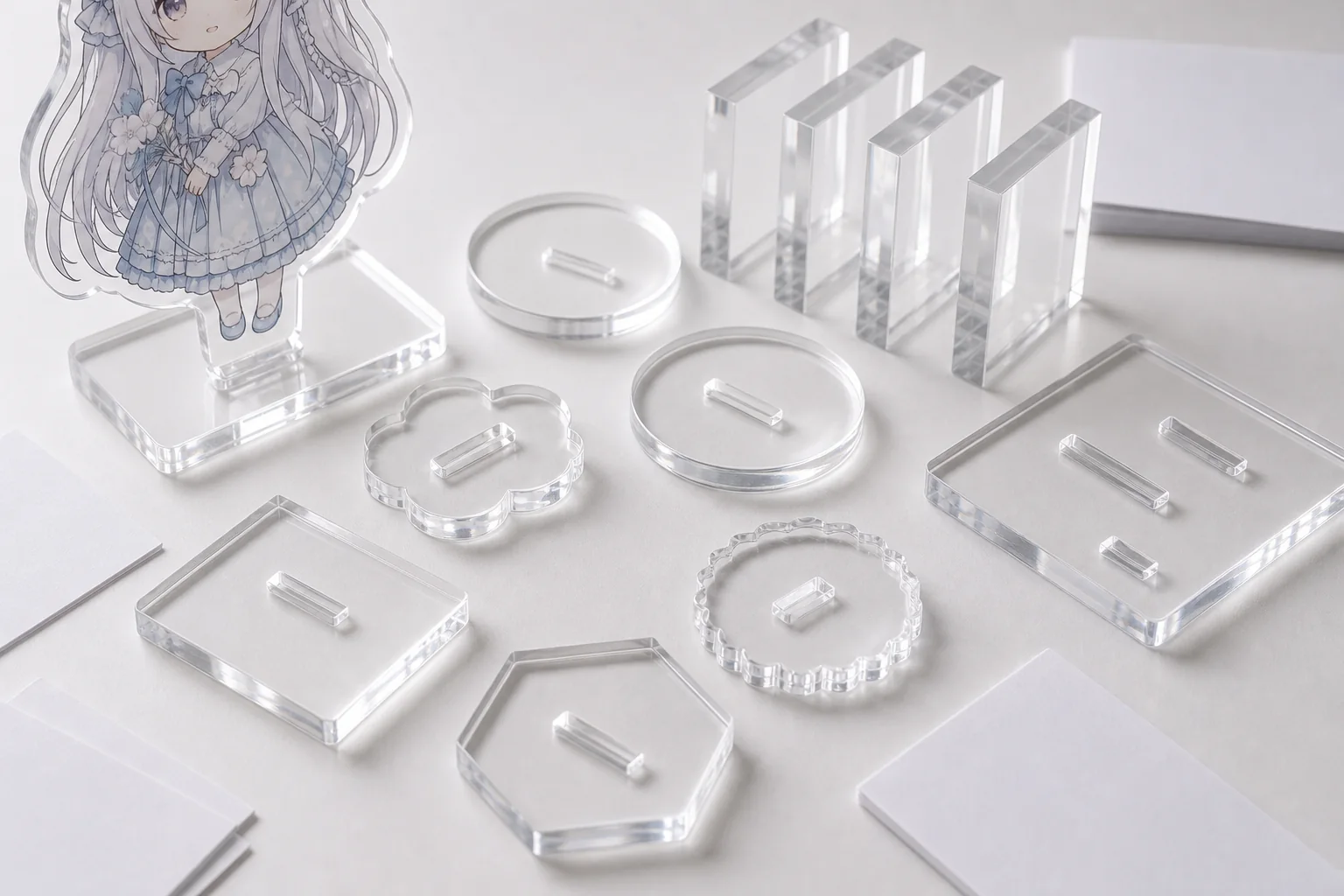
Heart, star, cloud and mascot-inspired bases can strengthen the character theme, but the more complex the outline becomes, the more it can affect processing cost, crack risk and SKU control. For first mass production, it is important to compare visual impact and production stability at the same time.
Standard shapes
Round, rounded-square and oval bases are easier to manage for high-volume runs, lottery prizes and short-lead-time projects.
Themed shapes
Themed outlines improve the product story, but sharp corners and thin parts should be checked together with corner radius, thickness and packaging method.
Design Options
How to think about base design by use case
Cost-focused mass production
Start from a standard shape and check whether the same base can be shared across SKUs. Shared bases simplify packing control and repeat orders.
IP and character expression
Consider motif shapes, colored acrylic and base printing that match the character world. Copyright text and backing-card visibility should be reviewed at the same time.
Large stands and display use
For taller bodies, prioritize base depth, thickness, insertion depth and center of gravity. The decision may differ between photo use and retail display.
Lottery prizes and blind products
Shared bases or color-coded bases can make sorting, insertion and JAN control easier. Mix-rate sheets and outer-carton labels are also important.
Diorama and multi-slot bases
When multiple parts stand on one base, confirm slot spacing, direction, front-back relationship and whether assembly instructions are needed.
E-commerce and event merchandise
Work backward from the unboxing experience, backing card, OPP bag, carton movement and receiving rules at the destination warehouse.
Insertion Fit
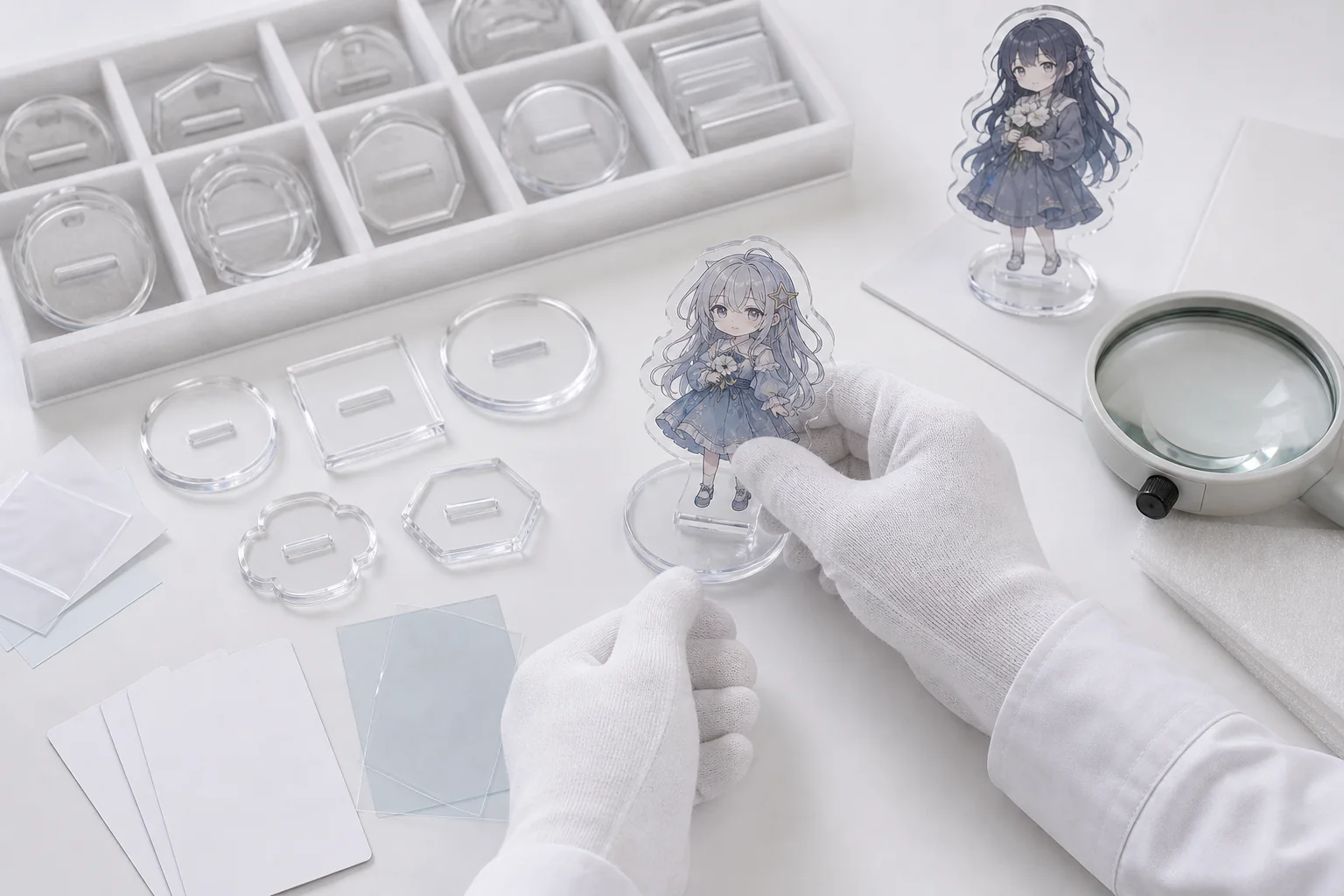
Check the slot as sheet thickness, assembly feel and shipping risk together
If the slot is too tight, the stand may crack during assembly. If it is too loose, the body may come out during shipping or lean during display. Slot width should not be judged alone; acrylic thickness, protective film, print side, insertion depth and the user's assembly scenario should be reviewed together.
- Confirm slot width based on sheet thickness, protective film and cutting conditions.
- Test insertion feel on several samples and keep the result in the specification sheet.
- For blind packaging, check whether the body and base rub inside the bag.
- Connect approved samples with final production files for repeat orders.
SKU & Packaging
For multiple SKUs, include the base in the product control sheet
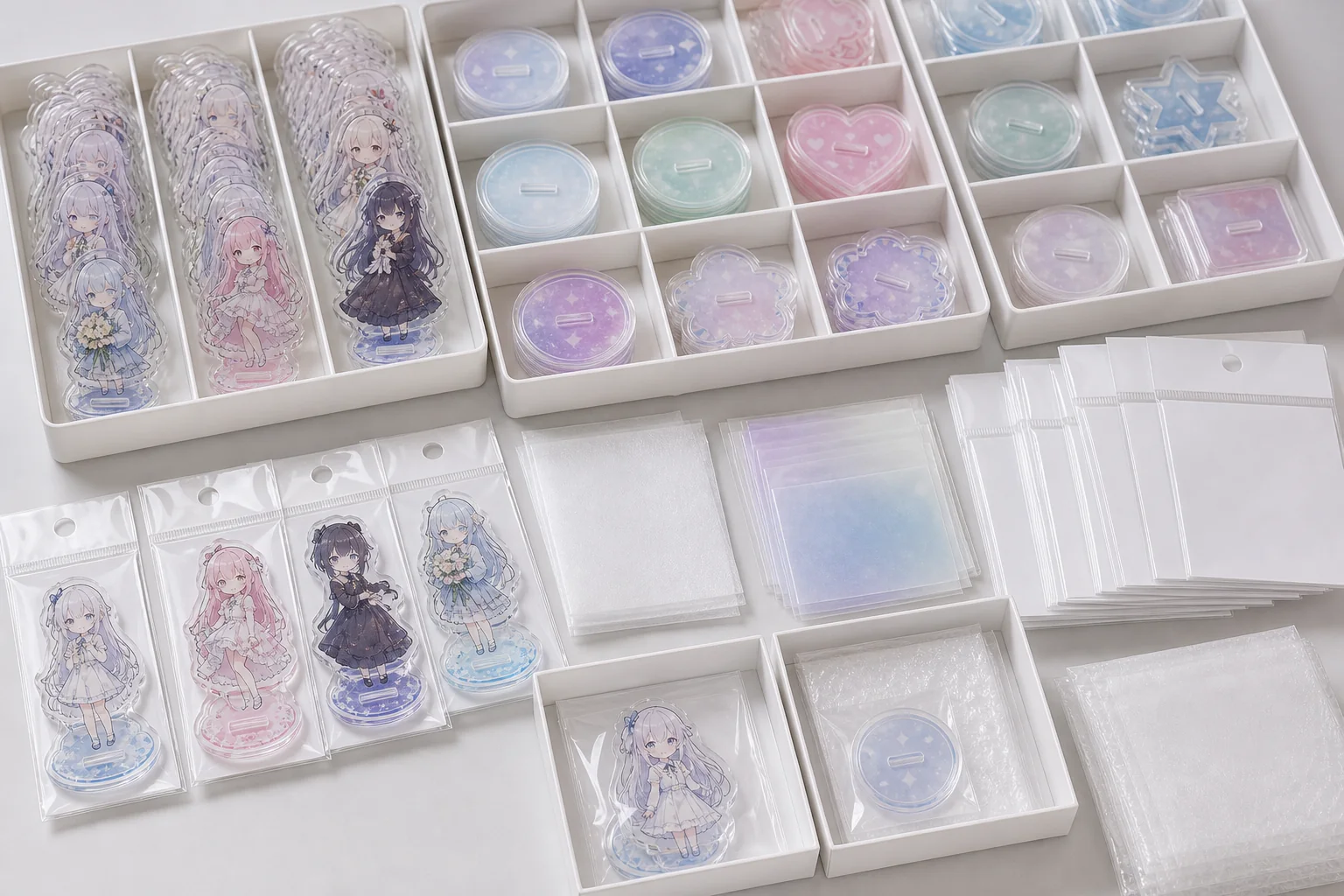
For lottery prizes and random products, the base is not just an accessory; it is part of SKU control. If the body, base, backing card, JAN, bag and outer-carton label are managed separately, packing mistakes and delivery-check mistakes become more likely.
Shared base
When the same slot width and shape can be used, first production and repeat production are easier to manage.
SKU-specific base
When color or shape changes by SKU, link the SKU sheet, packing instruction and carton label together.
Specifications
Main specifications to confirm for quotation
| Item | What to confirm | Why it matters for base design |
|---|---|---|
| Stand size | Height, width, depth, center of gravity and slot position. | These affect base width, depth, thickness and insertion depth. |
| Material and thickness | Clear acrylic, colored acrylic, special material and sheet thickness. | They change slot width, processing conditions, crack risk and visual impression. |
| Printing | Single-sided, double-sided, white ink, base printing and surface protection. | They help check rubbing risk, transparency and backing-card visibility. |
| Packaging | OPP, backing card, foil bag, blind pack and set box. | They affect whether the body and base rub, and whether insertion mistakes are easy to avoid. |
| Inspection | Scratches, chips, print misalignment, insertion feel and SKU matching. | Appearance and base function can be checked separately. |
| Delivery | Japan warehouse, event venue, split delivery and DDP conditions. | Outer cartons, labels, quantity sheets and shipping documents can be prepared in advance. |
Quote Materials
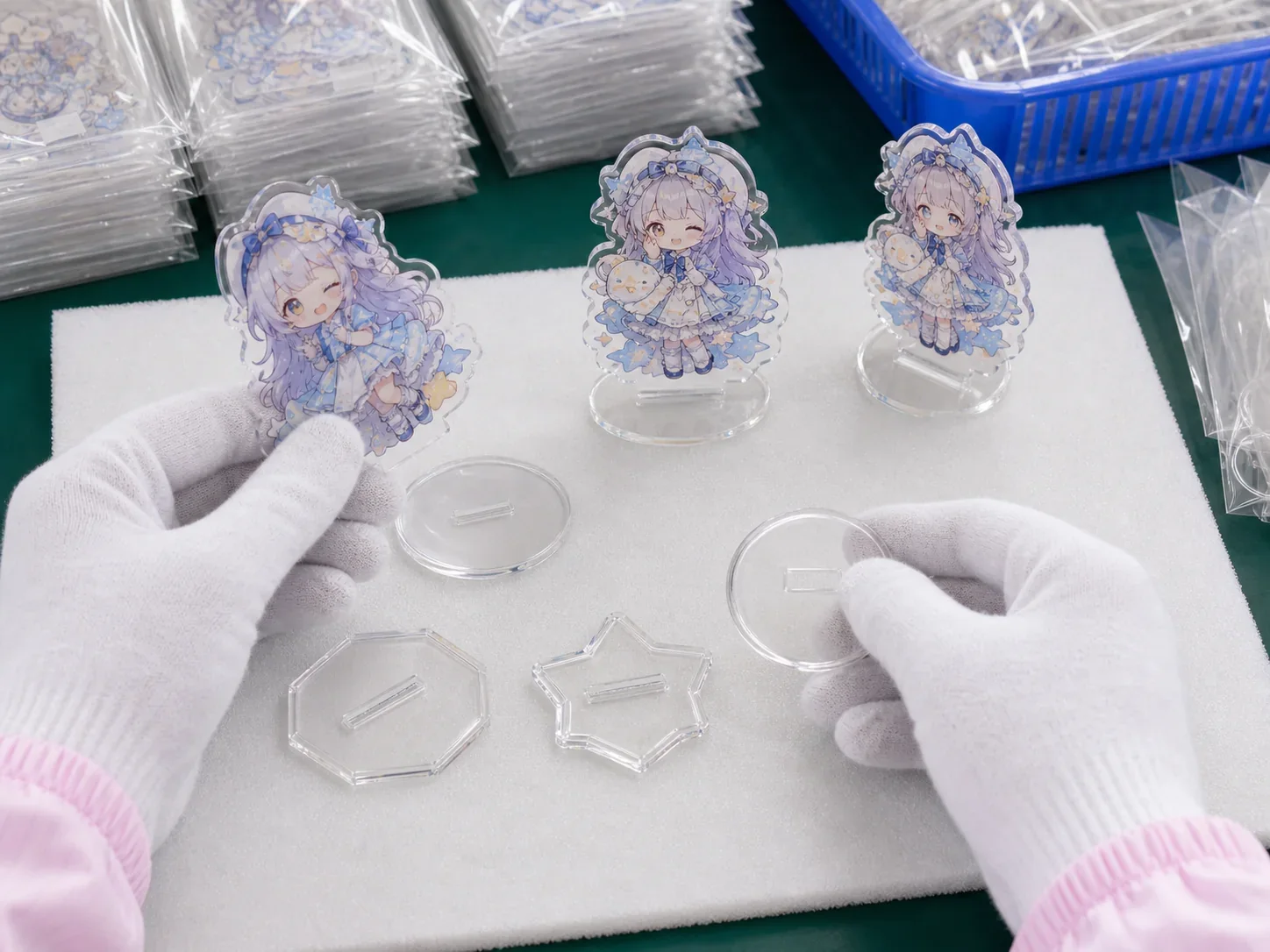
Materials to share before quotation
- Body artwork, cut line, white ink layer and preferred base shape.
- Body size, preferred thickness, base size and slot position.
- Quantity, SKU count, assortment ratio and repeat-production plan.
- Sales method, backing card, JAN, OPP bag, foil bag and carton label.
- Delivery destination, target timing, split-shipment terms and whether DDP support is needed.
- Sampling points, acceptable range and whether inspection records are required.
Workflow
Production flow including base design
Organize stand size, base shape, SKUs and sales method.
Compare standard bases, custom bases and packaging conditions.
Review white ink, cut line, slot width, backing card and JAN.
Check insertion feel, stability, print and packaged appearance.
Check appearance, slot fit, SKUs, packaging and carton labels.
Confirm destination, shipping documents, split delivery and DDP terms.
Quality & Delivery
Before shipment, separate appearance, function, packaging and shipping information
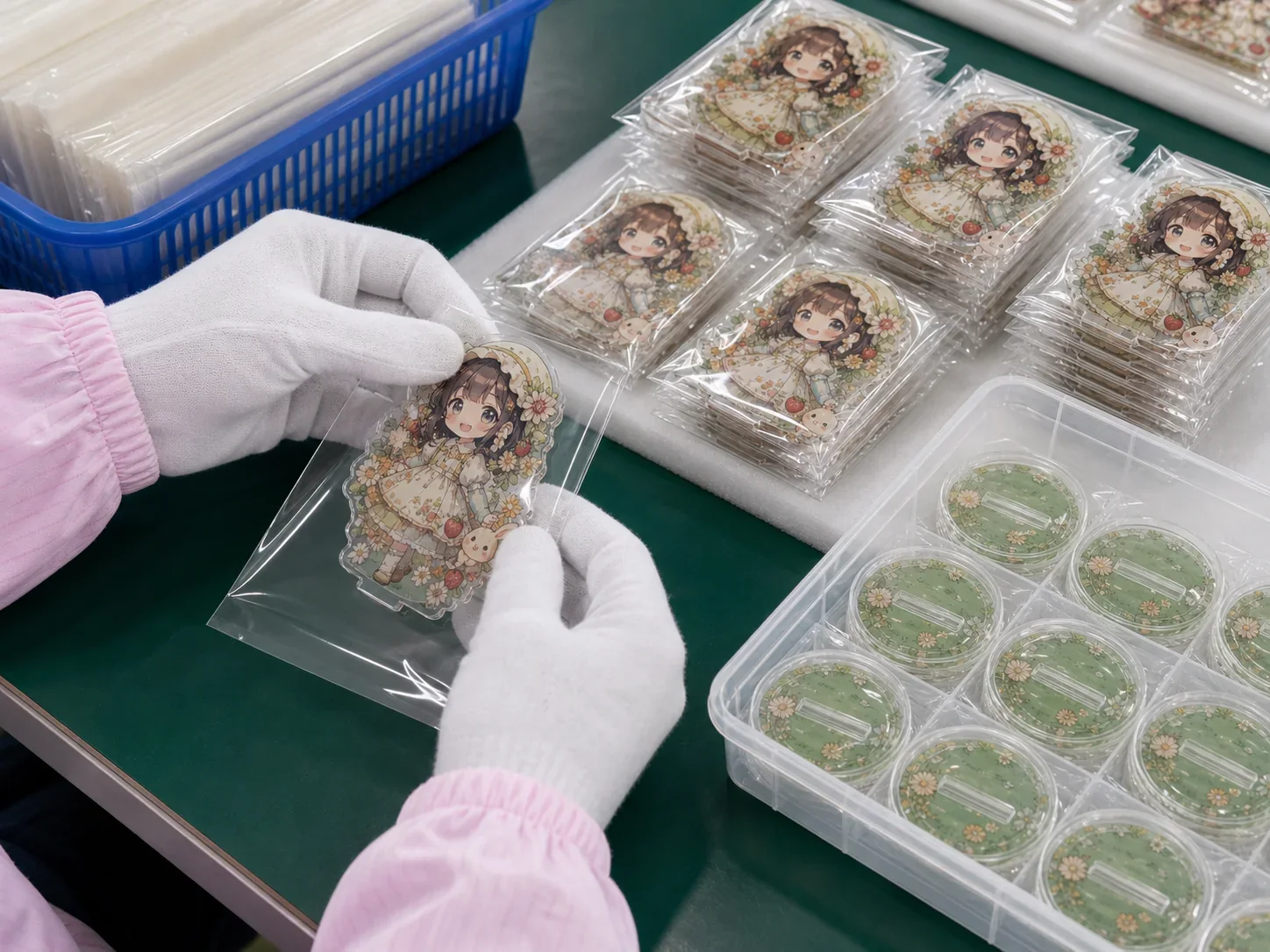
For base design, the review includes not only product appearance but also slot function and delivery-control information. The necessary inspection level depends on quantity, sales method and destination conditions, so checkpoints are set project by project.
Product side
Scratches, chips, print shift, base printing, slot width, insertion feel and leaning after assembly.
Shipping side
SKU mixing, JAN mismatch, quantity, carton label, delivery destination and shipping documents.
FAQ
Frequently Asked Questions
Can the base shape be fully customized?
Yes. However, complex shapes can affect processing cost, crack risk and packaging method. We recommend comparing standard and custom shapes, then checking the result with samples.
Can a stand become unstable in mass production even if the sample looked fine?
Yes. Stand size, center of gravity, slot width, individual variation and packaged condition can all affect stability, so insertion feel and standing performance should be checked with multiple samples before production.
How do you decide base thickness and size?
We review body height, center of gravity, use scene, packaging and shipping conditions. The decision is project-specific rather than a fixed value.
Can a tight or loose slot be adjusted?
During sampling, we check slot width, insertion depth, sheet thickness and the effect of protective film, then adjust the production data if needed.
Can one base be shared across multiple SKUs?
When the insertion conditions are close enough, shared-base design can be considered. If bases cannot be shared, the SKU sheet should connect body, base, packaging, JAN and quantity.
Can the base use printing or colored acrylic?
Yes. Base printing, white ink, colored acrylic and special materials should be checked with samples because they affect appearance, rubbing risk, cost and lead time.
Can you support lottery prizes and blind packaging?
Yes. Assortment ratio, quantity by SKU, backing card, foil bag, JAN, carton label and packing method should be organized before production.
What should I send for quotation?
Please share artwork data, preferred size, quantity, SKU count, base shape, packaging specifications, delivery destination and target timing. These help us confirm the project more efficiently.
Acrylic stand base design specification check and quotation
If body files, preferred size, SKU count, base concept, sales method and packaging specifications are available, sharing them together makes confirmation faster. If some items are still undecided, we can also organize the requirements by working backward from the sales method.
Related Pages