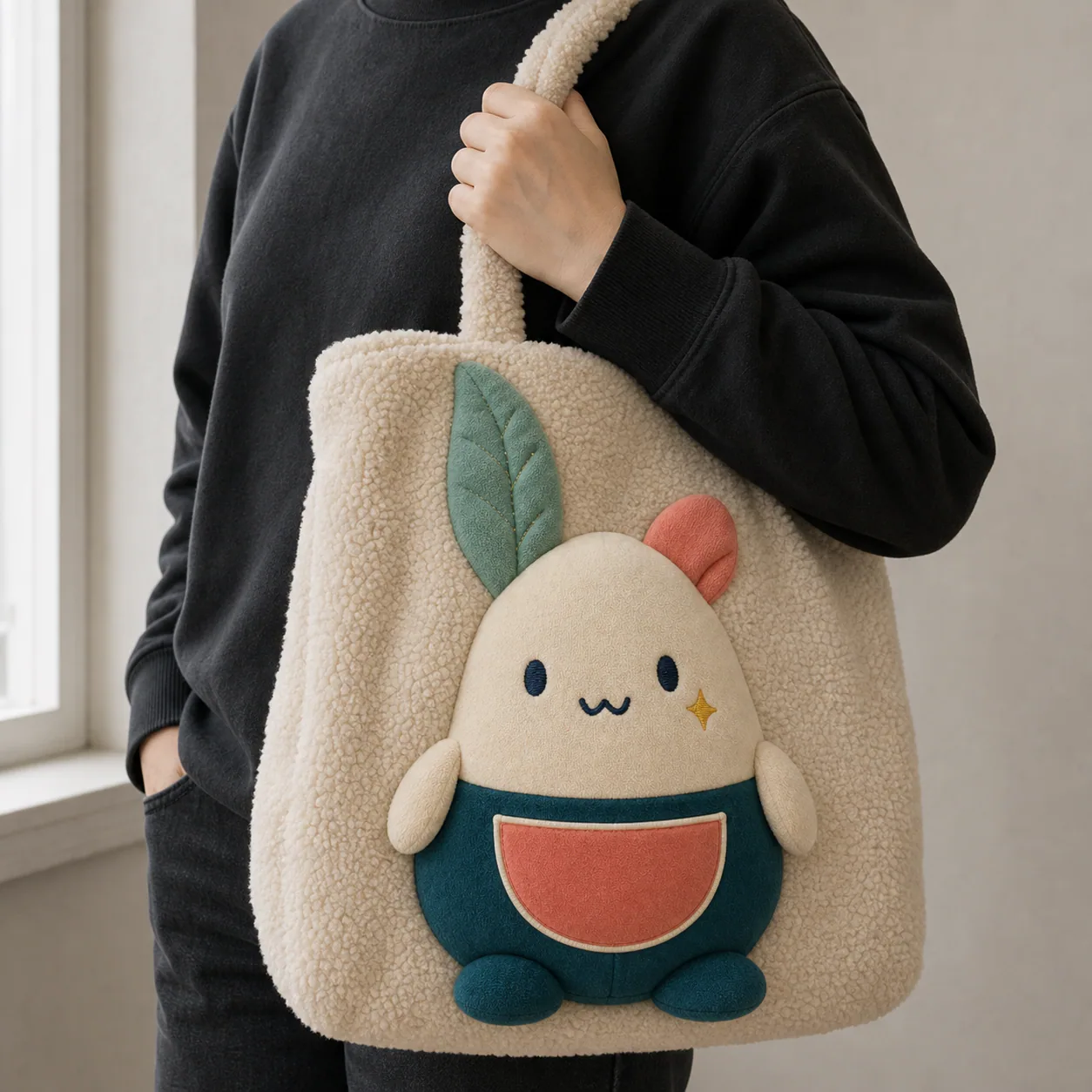
Full die-cut silhouette
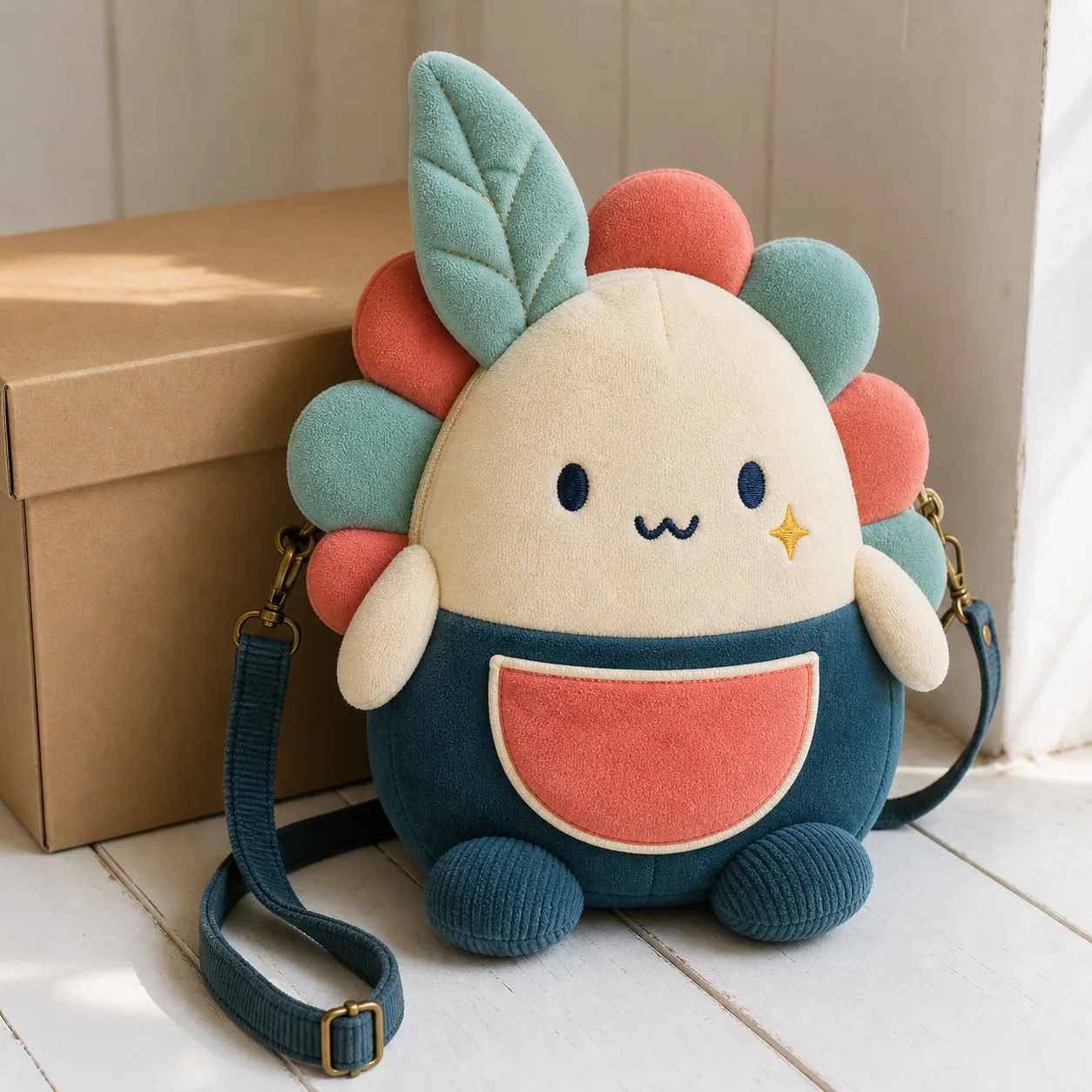
Ears, leaves, hair, or other recognizable contours become the product shape. Narrow projections, sharp corners, and the zipper opening must be adjusted for sewing.
CHARACTERCRAFT GIFT / CHARACTER BAG OEM
Translate a recognizable character silhouette into a sewable, functional, and repeatable bag specification.
We organize the pattern outline, face placement, dimensional parts, zipper opening, straps, sample approval, bulk QC, SKU packing, and quotation inputs as one manufacturing brief.
A custom character-shaped bag should begin with a sewable outline, not only a front-facing illustration. Lock the zipper opening, gusset, handles, face reference points, and dimensional parts on the same pattern, then approve a full-size sample for silhouette, expression, capacity, and deformation under normal carrying conditions before bulk production.
PROCUREMENT FACTS
MOQ and lead time should not be treated as universal values. Pattern complexity, materials, decoration, SKU count, packing, inspection, and delivery terms need to be reviewed before quotation.
| Minimum order | Confirmed per project after reviewing size, pattern, material, decoration, SKU count, and packing |
|---|---|
| Material options | Sweatshirt fabric, sherpa, faux fur, canvas, patent-look PVC, and project-specific combinations |
| IP and approvals | NDA and approval workflows can be discussed for rights owners or projects with verifiable authorization |
| Lead time | Sampling, bulk production, inspection, and delivery timing are quoted after specifications are reviewed |
| Japan-market support | Specification review, pre-shipment inspection, barcode/SKU and carton marking, and DDP delivery terms can be discussed |
FIRST DECISION
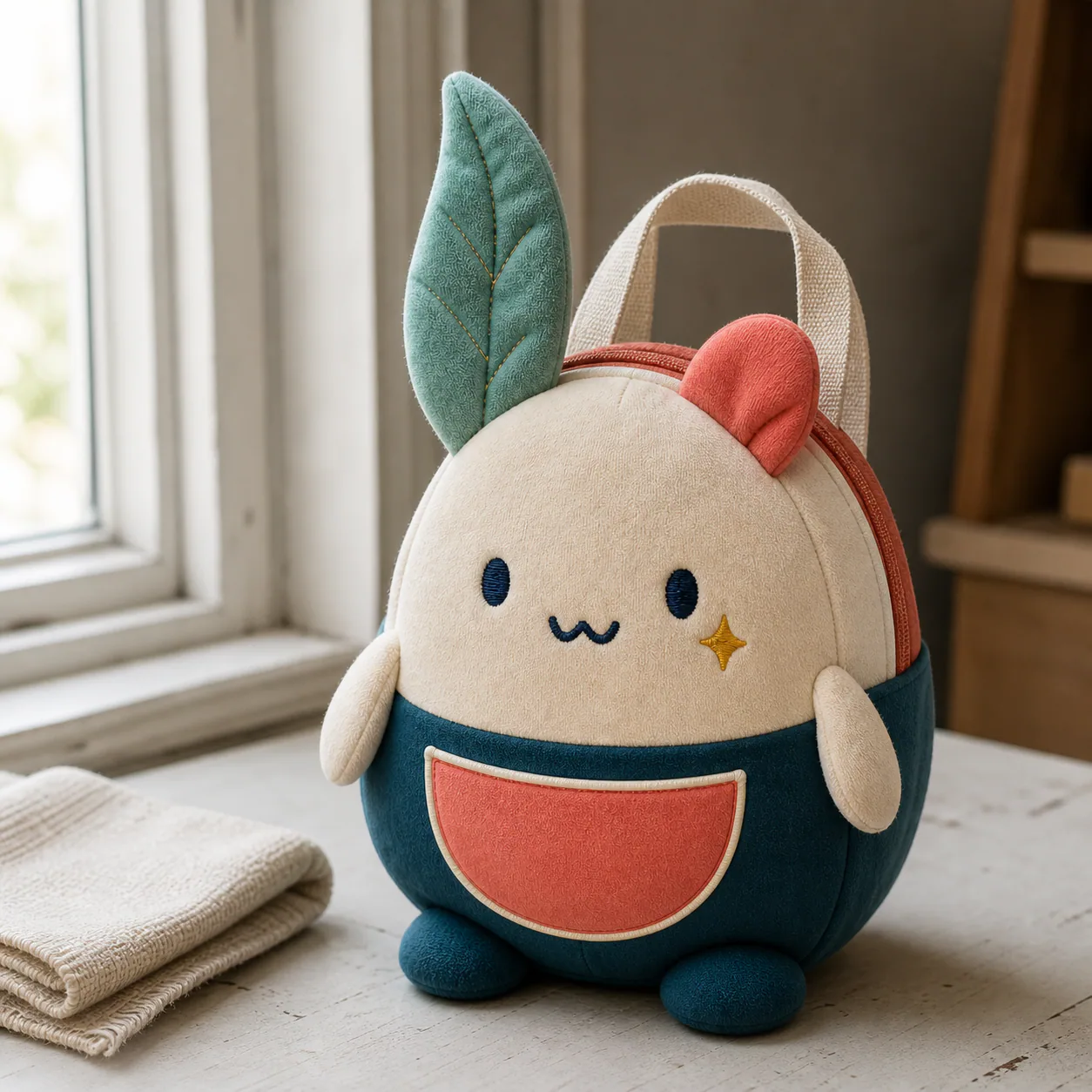
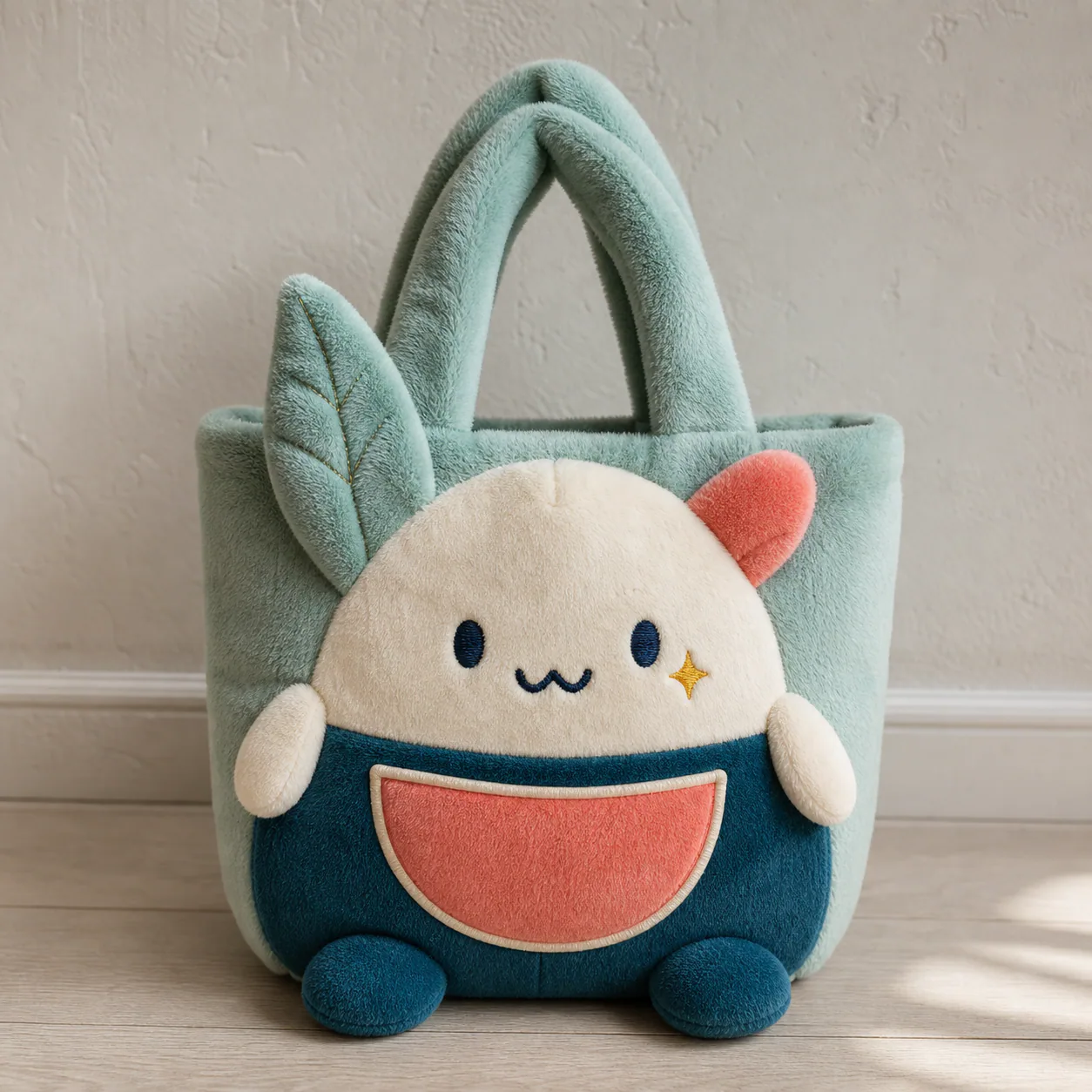
A full die-cut silhouette, a stable bag body with applique, and a plush integrated construction have different pattern counts, sewing complexity, capacity, and quotation drivers.
Ears, leaves, hair, or other recognizable contours become the product shape. Narrow projections, sharp corners, and the zipper opening must be adjusted for sewing.
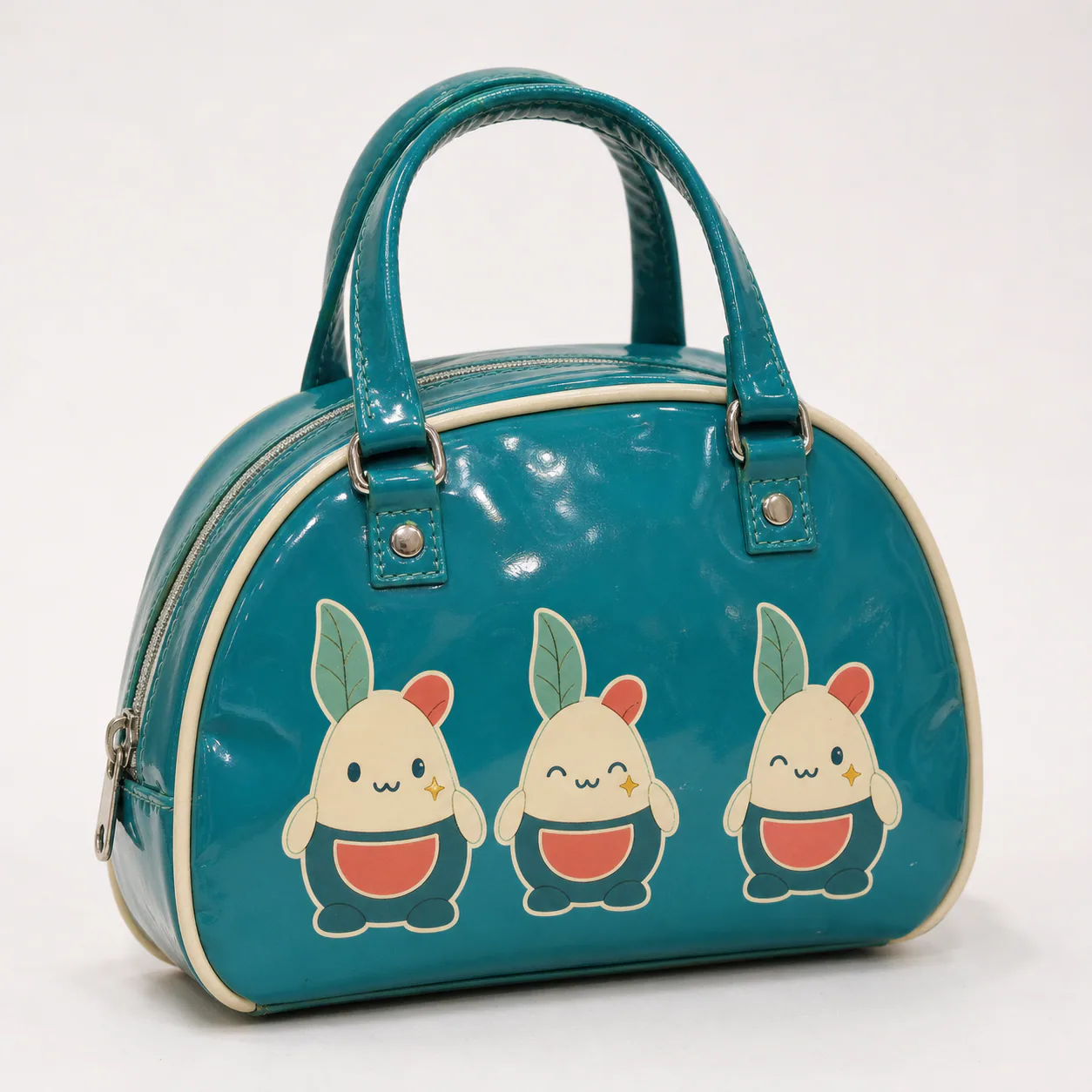
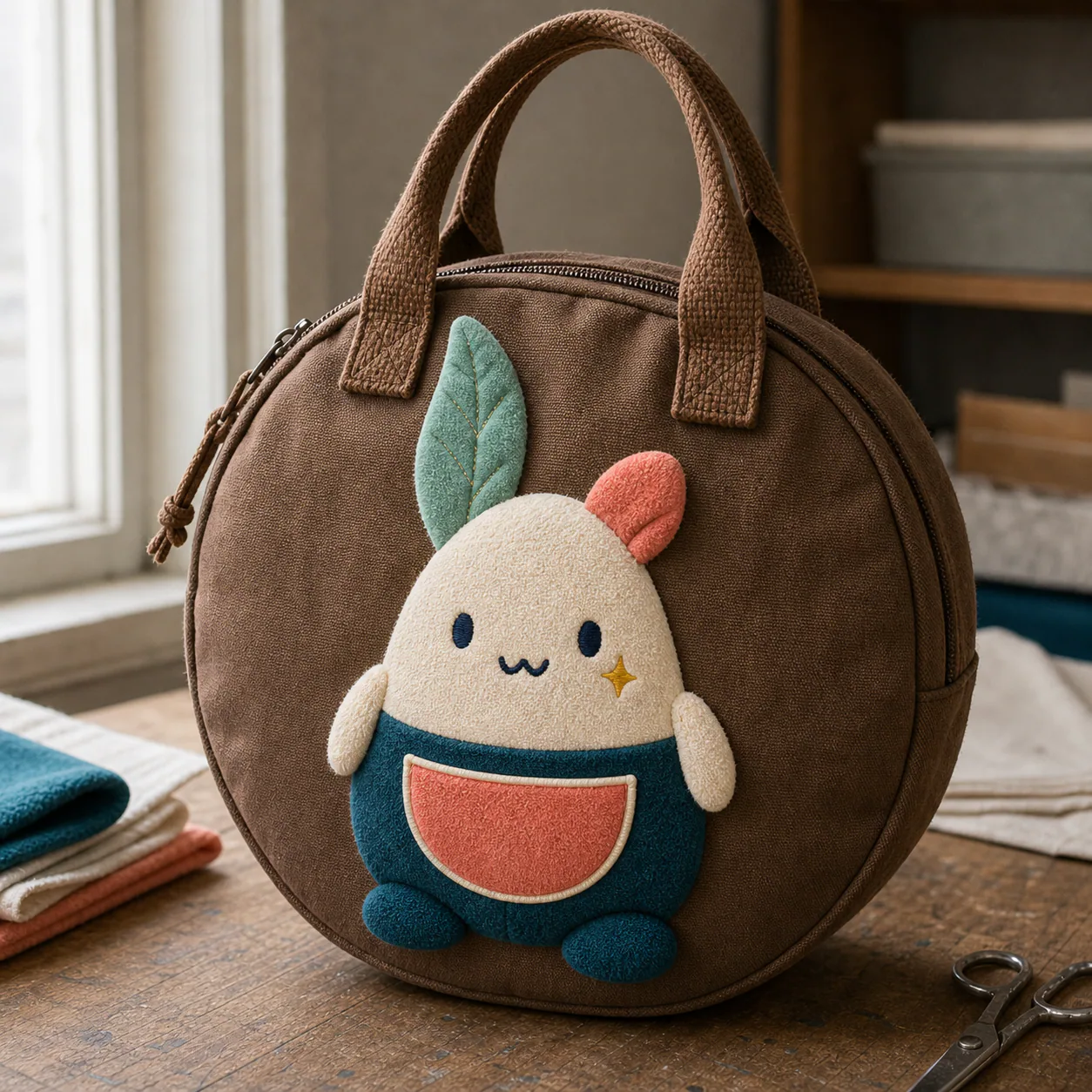
A round bag, tote, or pouch carries the functional volume while the face and dimensional parts create the character identity. This route can simplify SKU expansion.
Pile fabric and filling create a toy-like appearance. Pile direction, seam bulk, compression, shape recovery, and packing need sample confirmation.
PRODUCT ROUTES
This page owns the sourcing intent for character-shaped bags. Use the custom bags and pouches hub for broad category selection, and the IP character goods service for rights-data and multi-item planning.
PATTERN ENGINEERING
Thin lines and sharp corners that work in artwork may not hold the same shape in fabric and filling. Pattern engineering preserves the front-view identity while making room for seam allowance, turning, gussets, openings, and reinforcement.
FACE PLACEMENT
A small movement in the eyes or mouth can change the expression. Link each pattern version to embroidery files, centerlines, and distances from stable panel edges so bulk pieces can be checked against the approved sample.
| Control area | Specification input | Sample approval | Bulk QC |
|---|---|---|---|
| Eyes, mouth, cheek | Centerline, vertical position, spacing, angle, thread color | Expression, left-right balance, embroidery density | Position, tilt, skipped stitches, thread consistency |
| Ears, leaves, hair | Attachment line, orientation, side marking, filling amount | Front and side appearance, natural fall | Reversal, twisting, thickness variation, trapped pile |
| Applique | Outline, stitch width, overlap sequence, edge finish | Smooth contour, lifting, placement | Missed edge, puckering, adhesive marks, fraying |
| Print area, registration mark, color reference, material face | Color, bleeding, appearance on curved panels | Registration, color difference, abrasion, stains |
MATERIAL AND CONSTRUCTION
| Material or process | Useful expression | Construction check | Bulk risk |
|---|---|---|---|
| Sweatshirt or short-pile fabric | Smooth faces, embroidery, die-cut outlines | Stabilizer, interfacing, seam allowance, shape retention | Waviness, embroidery shrinkage, side-to-side difference |
| Sherpa or faux fur | Plush appearance, dimensional parts, soft outlines | Pile direction, pile length, trapped fibers, filling | Pile variation, compression, exposed seams |
| Canvas | Stable body, applique, embroidered patches | Thickness, needle density, turned corners, handle reinforcement | Rigid deformation and bulky seam stacks |
| Patent PVC | Retro graphics, printing, coordinated series | Folding, piping, print adhesion, protective packing | Scuffs, reflection variation, blocking, surface marks |
SAMPLE AND QC
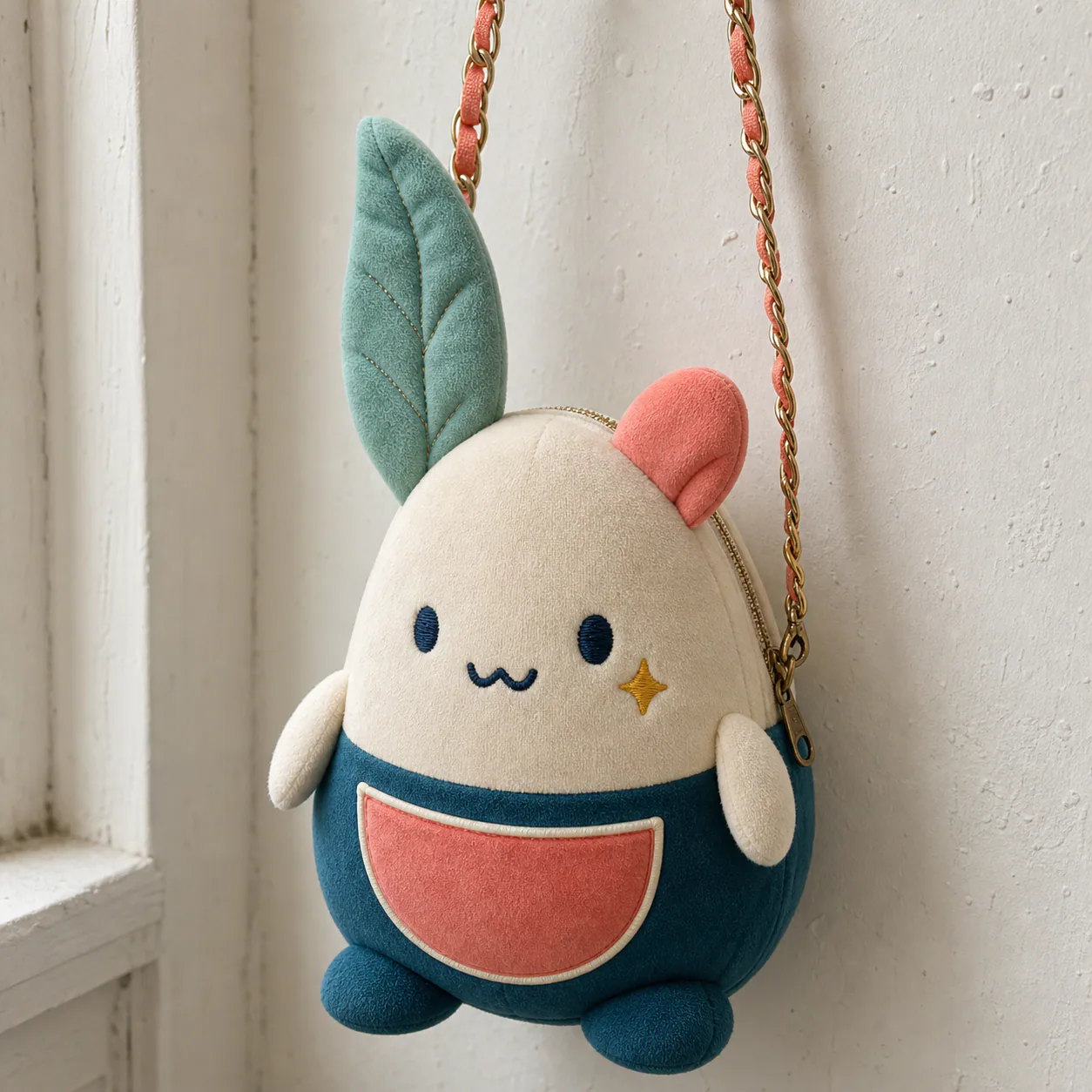
A front-view photo does not show zipper operation, lining, hardware reinforcement, gusset deformation, or part interference during use. Review the bag flat, filled, hand-carried, and shoulder-carried where applicable.
PROJECT SUPPORT
Define responsibilities and approval records from artwork intake through sampling, bulk approval, pre-shipment inspection, packing, and delivery.
Artwork, patterns, face placement, sample revisions, and packing instructions are separated into open decisions and approved references.
For rights owners or authorized projects, the team can define confidential file access, sample review, revision instructions, and bulk approval steps.
Pre-shipment inspection, barcode and SKU labels, individual packing, carton marks, split delivery, and DDP terms are reviewed against the project brief.
SAMPLE APPROVAL AND SKU
For several characters, colors, or expressions, separate shared pattern components from variation-specific parts. Map embroidery files, fabric colors, hardware, hang tags, barcode labels, individual packing, and carton marks to each SKU.
RFQ INPUTS
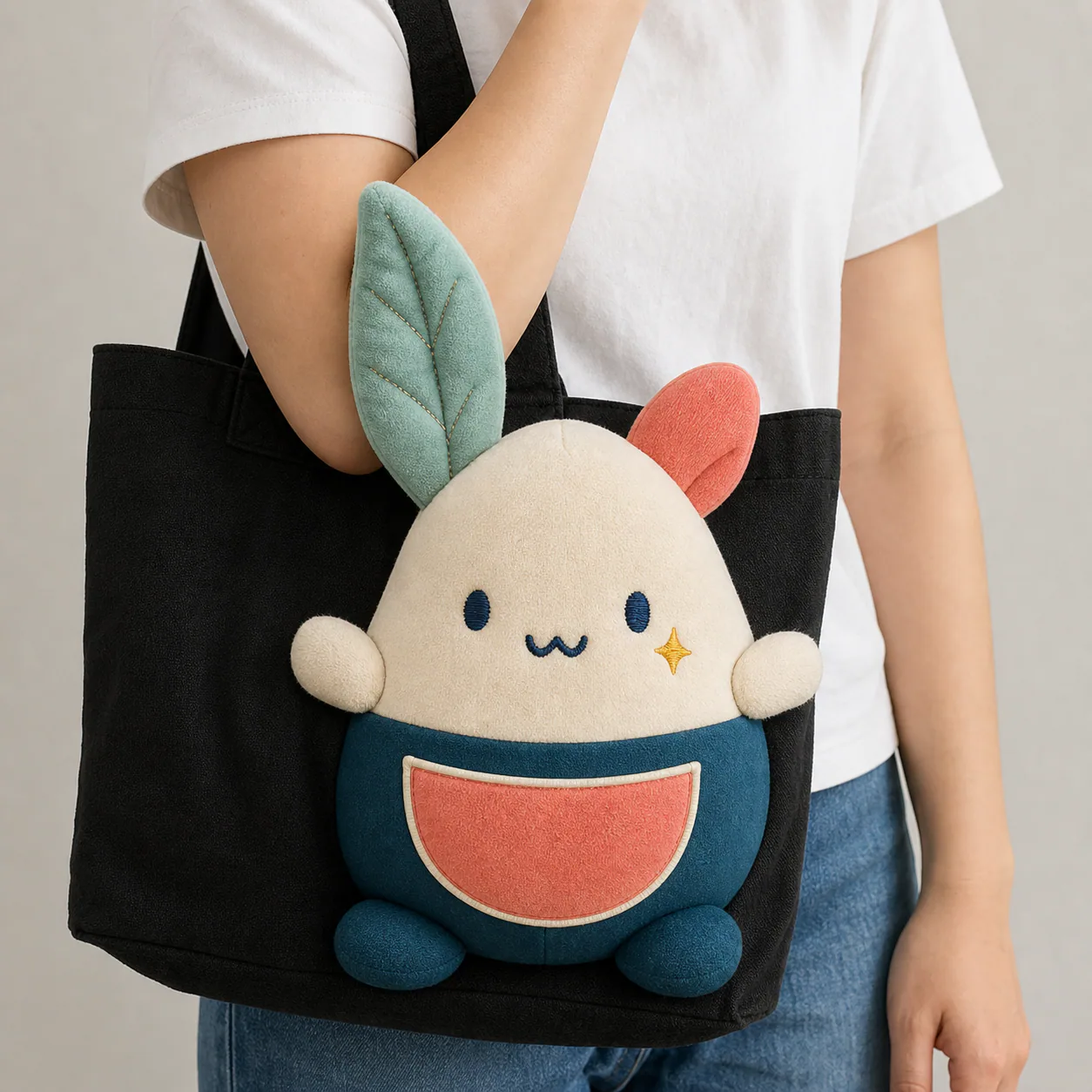
Quantity alone is not enough to compare character-shaped bag quotations. Outline complexity, size, contents, materials, decoration, SKU structure, and packing should be reviewed together.
RELATED ROUTES
Compare broad bag types, materials, decoration, and manufacturing routes.
View the bag and pouch hubReview rights-data handling, NDA support, and coordinated merchandise planning.
View IP character goods OEMPlan launch dates, venues, SKU allocation, packing, and delivery for fan merchandise.
View event merchandise OEMReview pile direction, filling, compression packing, and plush-specific QC.
View custom plush bagsSee how specification review, samples, bulk production, inspection, and delivery connect.
View the OEM processStart with artwork, quantity, dimensions, material direction, and delivery requirements.
Contact the OEM teamFAQ
Yes, subject to project review. We map the front, back, side depth, opening, handle, and functional space, then simplify narrow projections or sharp corners enough to allow seam allowance, turning, and stable sewing while retaining the recognizable silhouette.
We establish centerlines and placement reference points on the pattern. The approved sample then becomes the visual reference for checking left-right balance, angle, embroidery density, thread color, and acceptable placement variation in bulk production.
A die-cut silhouette is useful when the character outline is the main selling point. Applique on a standard bag can make capacity, construction, and cost easier to control. The choice should follow the use case and target retail position.
They can be considered depending on the construction. Thickness, stretch, pile direction, fold allowance, and decoration compatibility differ, so junctions and visible bulk-production appearance should be approved on a physical sample.
Yes, subject to the design. The zipper opening, pull position, D-rings, swivel hooks, reinforcement tabs, and strap width should be engineered together with the main pattern.
Bag size, pattern complexity, material, embroidery area, dimensional parts, hardware, color count, SKU count, packing, inspection scope, and delivery terms all affect the quotation. They should be confirmed per project rather than treated as fixed values.
Yes, subject to quantity and construction. We separate shared pattern components from character-specific pieces, then map embroidery files, SKU labels, individual packing, and carton marks to each variation.
Send front-facing character artwork, target dimensions, intended use, expected contents, material direction, quantity, design count, hardware, packing, destination, and required delivery date. Reference photos and priority requirements are enough to start a specification review.
REQUEST A QUOTE
Send reference artwork, target size, quantity, material direction, design count, packing, destination, and required date. We can identify the pattern and sample decisions even when some specifications are still open.