Custom Plush Production Timeline | Plan Backward from Your Delivery Date
When a launch date, retail window or event cannot move, asking only “How many days does production take?” is not enough. A workable custom plush production timeline needs a decision deadline for quotation, specification review, sample feedback, final approval, bulk production, inspection, packing, freight, customs and warehouse receiving.
Plan backward from the date the finished goods must be accepted at the warehouse or venue. Subtract freight and customs, final QC and packing, bulk production, pre-production approval, sample revisions, and quotation/specification review. Add a buffer to the stages that carry real uncertainty, and assign an owner and release condition to every approval gate.
What to lock first
- Required warehouse receipt or venue delivery date
- Quantity and number of SKUs or character designs
- Sample approval method and internal decision-makers
- Individual packing, backing card, barcode and assortment needs
- Delivery destination, split-delivery plan and preferred freight route
Ask us to review your target date and project conditions
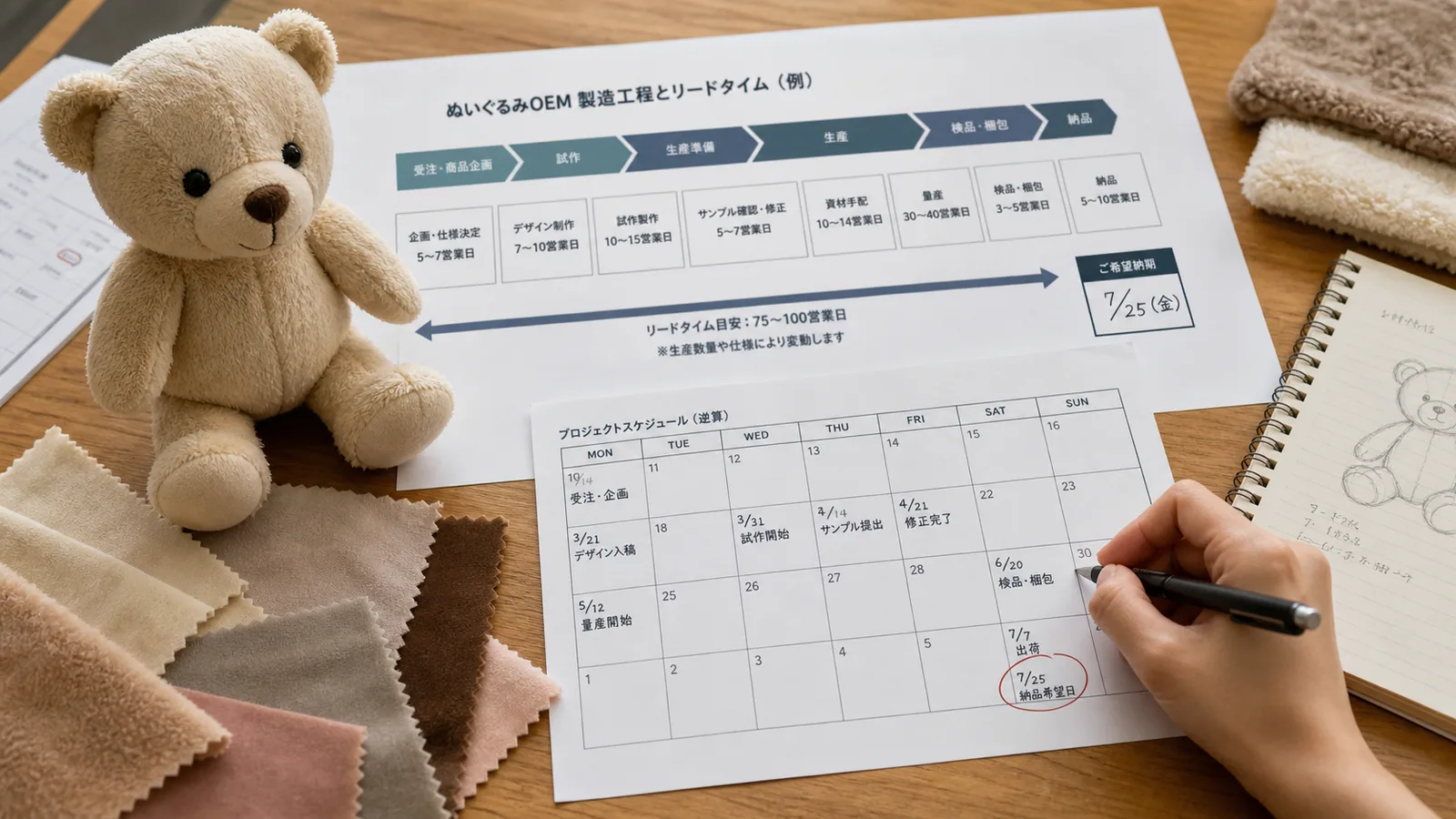
Start with the date the goods must be received
The event date and the factory ship date are not the same deadline. Goods may still need customs clearance, domestic delivery, warehouse booking, receiving checks, allocation by SKU and venue dispatch after they leave the factory.
| Date | What it means | What to confirm |
|---|---|---|
| Launch or event date | The day the product is sold, distributed or displayed | Setup, sales preparation and e-commerce release timing |
| Venue delivery date | The date the venue or event operator receives the cartons | Booking window, time slot, vehicle and carton rules |
| Warehouse receipt date | The date receiving and stock checks can begin | Receiving days, labels, SKU quantities and intake conditions |
| Factory dispatch date | The date export cartons leave the factory | Freight method, documents, carton list and split delivery |
Use the latest acceptable receipt date as the planning anchor. If receiving, allocation or venue transfer happens after warehouse delivery, reserve that time before the public launch date.
Use release gates instead of one total lead-time number
The reverse-planning formula is simple, but each block must be confirmed for the actual project.
Inquiry deadline = required receipt date − freight/customs − final QC/packing − bulk production − pre-production approval − sampling/revisions − quotation/specification review − stage buffers
Do not replace these blocks with one universal number. Size, construction, fabric sourcing, order quantity, SKU count, accessories, packaging, revision scope, factory capacity, holiday closures and freight method can change different parts of the timeline.
| Reverse order | Release gate | What must be complete | Owner | Common source of delay |
|---|---|---|---|---|
| 0 | Warehouse or venue receipt | Goods accepted at the required destination | Buyer / logistics | Booking windows and receiving rules |
| 1 | Freight, customs and domestic delivery | Route, documents, destination and split quantities | OEM / logistics | Congestion, customs questions and destination changes |
| 2 | Final QC and packing | Inspection scope, quantities, SKU labels, packing and carton marks | OEM / QC | Recheck, rework or packaging corrections |
| 3 | Bulk production | Goods made to the approved specification | Factory / OEM | Materials, complexity, SKU count and capacity |
| 4 | Pre-production approval | Master sample and specification locked for production | Buyer / OEM | Open comments or late specification changes |
| 5 | Samples and revisions | First sample, consolidated feedback and approved revision | Buyer / OEM | Structural revisions and physical sample transit |
| 6 | Quote and specification review | Size, material, quantity, SKU, packing and delivery scope | Buyer / OEM | Missing artwork or undecided requirements |
For every gate, record the deliverable, the person who prepares it, the person who approves it, the final response date and what happens if approval is late.
Quotation and specification review: define the schedule inputs
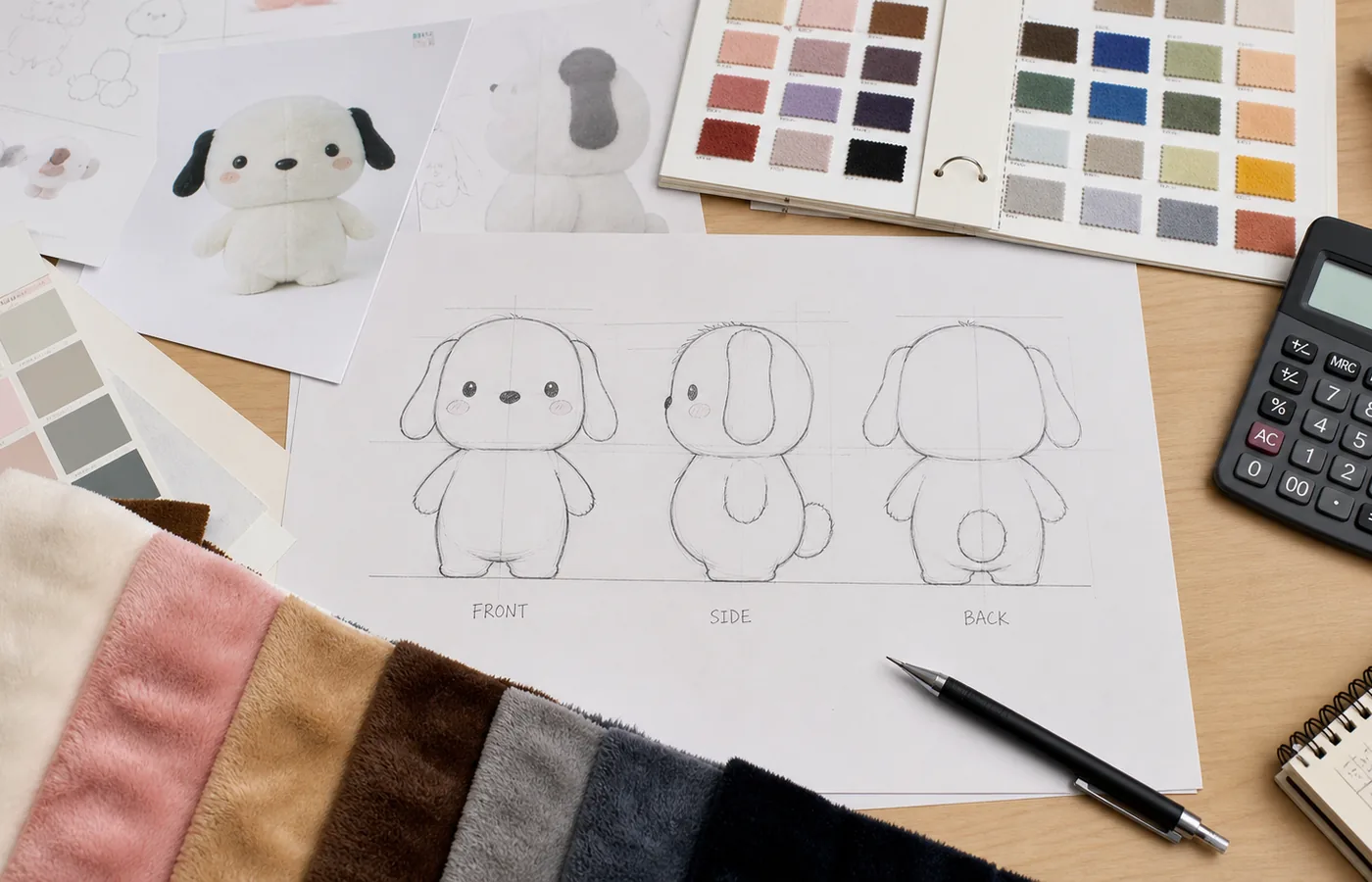
The first quotation is not only a price check. It is also the point where the supplier checks whether the proposed design, quantity, packaging and delivery conditions can fit the requested window.
Information that makes the first schedule more useful
- Product type and intended use
- Front, side and back artwork or character references
- Approximate size, pose and construction
- Planned quantity and number of SKUs
- Fabric, embroidery, print, clothing and accessory ideas
- Individual packing, backing card, barcode, assortment and carton needs
- Target market and any project-specific document or test needs
- Required receipt date and delivery destination
- One destination or split delivery
- Photo approval or physical sample approval
- Open items and the dates when they will be decided
Items can still be marked as open, but major unknowns such as size, material, quantity, SKU count or packaging may keep the quote and timeline provisional.
Check what to send for a custom plush quotation
Sampling and revisions: budget for decisions, not only sewing time
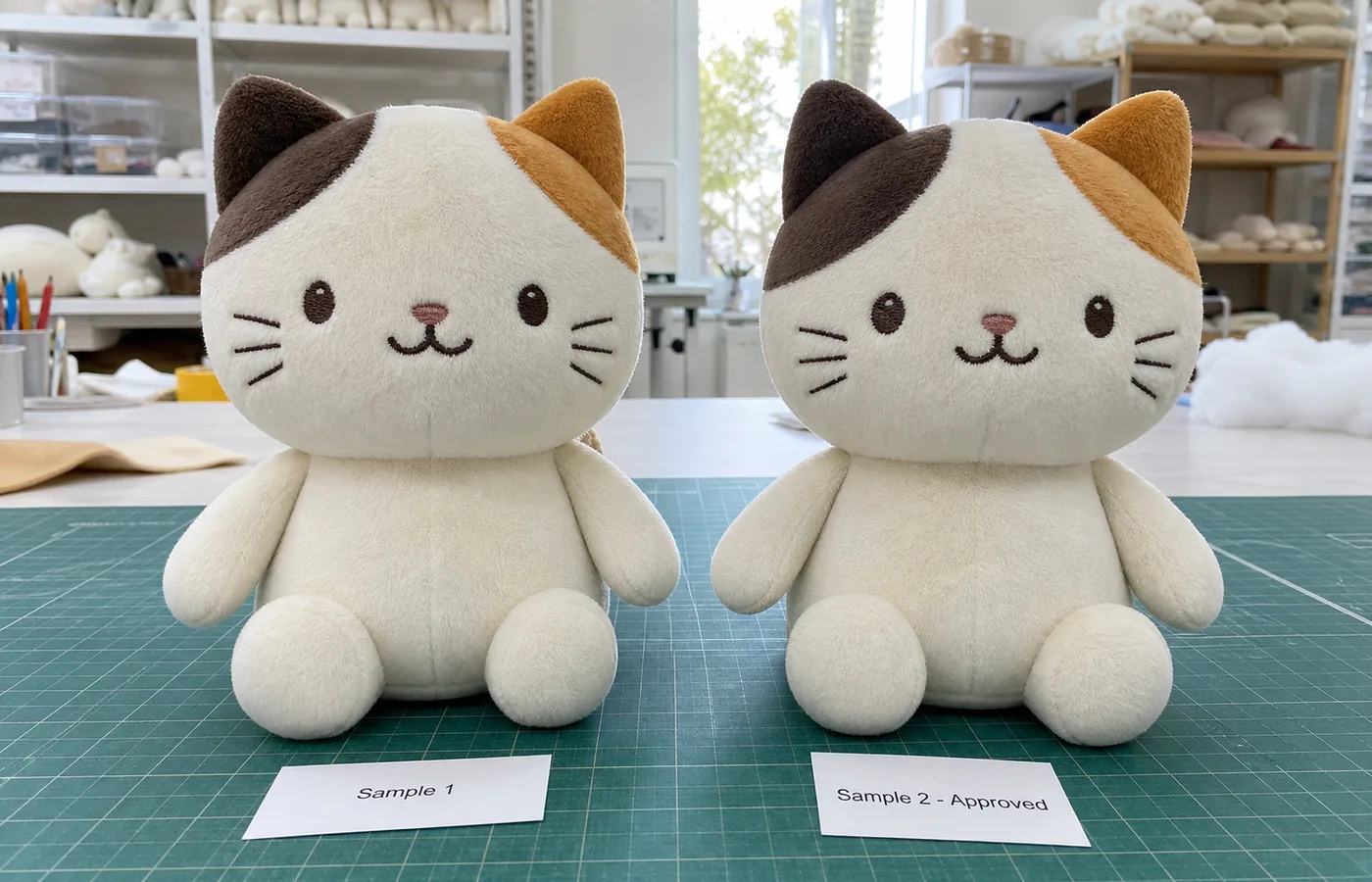
A plush sample converts flat artwork into a three-dimensional sewn product. The review should cover overall proportions, face and embroidery placement, thickness, sitting or standing balance, pile direction, clothing, accessories, stuffing and how parts are attached.
| Sample gate | Review focus | Release condition |
|---|---|---|
| First sample | Pattern, shape, size, expression, materials and attachments | Feedback consolidated with annotated photos and measurements |
| Revision | Shape, embroidery position, colors, parts and stuffing | Differences from the previous sample are clear |
| Recheck | Revised photos/video or a physical sample | Any remaining open items are listed |
| Final approval | Production master sample and specification | Approval date, approver and reference documents recorded |
Separate minor adjustments from structural changes. Moving an embroidery position is different from rebuilding the pattern, changing the fabric or adding an accessory. The schedule should also include sample shipment, internal circulation and licensing review when a physical sample must be approved.
Read the custom plush sample revision and approval guide
Lock the production master before bulk manufacturing
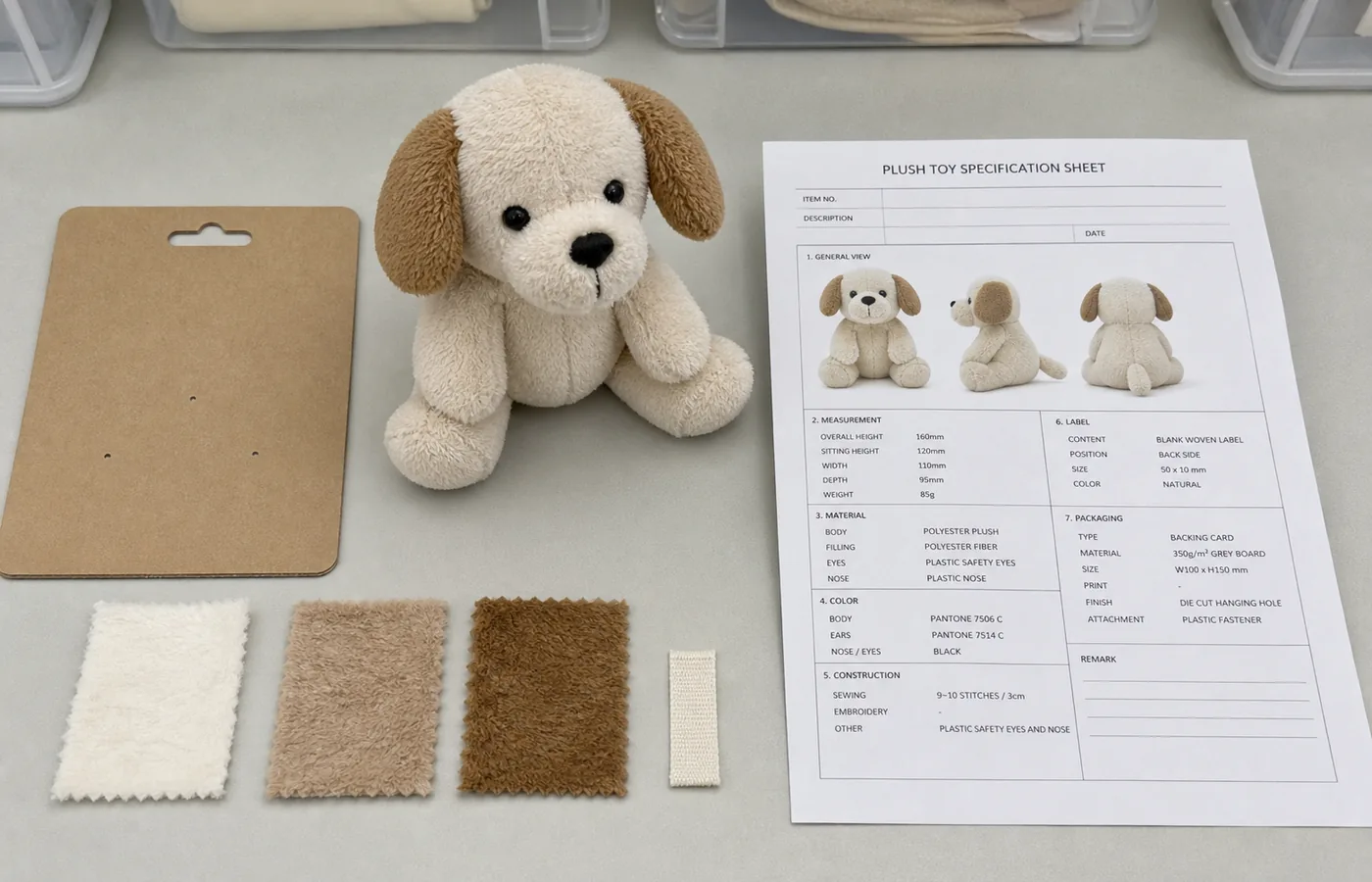
Bulk production should start from an approved production standard, not from a purchase order alone. Changes made after materials, embroidery data, sewn parts or packaging components are released may affect cost, completed quantities and the delivery plan.
Lock these items before production release:
- Approved master sample and revision history
- Finished dimensions and agreed tolerances
- Fabric reference, color standard, embroidery thread and print conditions
- Face, clothing, accessory position and attachment method
- SKU codes and quantity by SKU
- Individual packing, backing card, barcode and assortment rules
- Inspection points and reporting method
- Carton quantity, marks and split-delivery allocation
- Required pre-shipment photos or records
Use the custom plush pre-production checklist
Keep final QC and packing as a separate schedule block
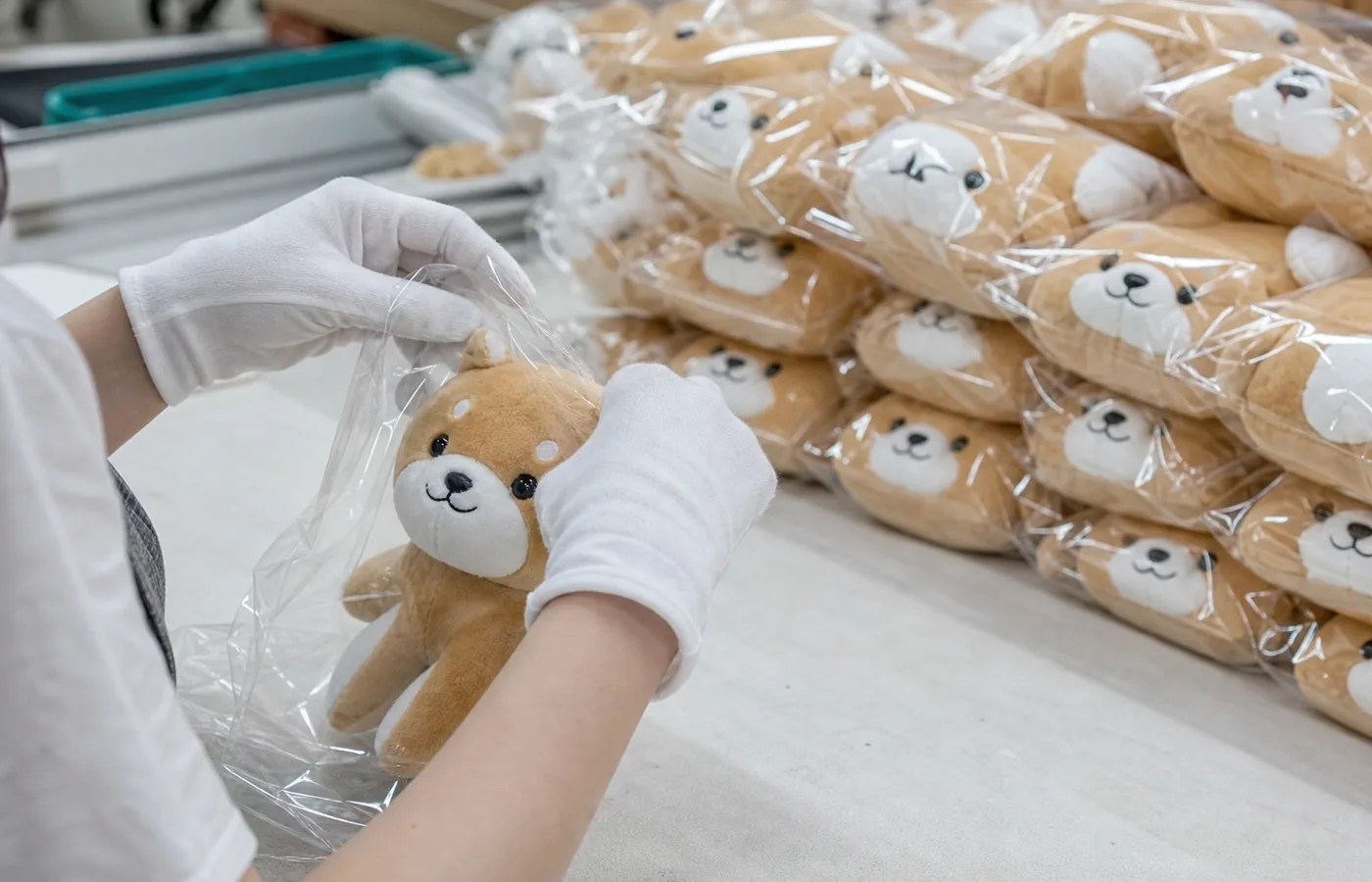
Bulk completion is not the same as factory dispatch. The final schedule may still need appearance and measurement checks, repair or recheck, quantity reconciliation, individual packing, SKU verification, carton packing, carton marks and shipping-document review.
Define the inspection and documentation scope by product, quantity, contract and destination. Do not assume the same inspection method fits every order, and do not make bulk completion and dispatch the same milestone when rework or packaging correction is still possible.
Plan freight, customs and receiving before production ends

Freight decisions can affect cost, carton size, documents and the latest acceptable factory dispatch date. Review the likely route during quotation or before bulk production, not after the goods are packed.
| Logistics input | What to confirm |
|---|---|
| Freight method | Air, sea or another project-appropriate route |
| Trade terms | What the quote includes and who handles duty, tax, customs and domestic delivery |
| Destination | Address, contact, receiving hours, booking and vehicle conditions |
| Split delivery | Quantity by warehouse or venue, carton number and arrival priority |
| Cartons | Quantity per carton, dimensions, weight, marks and SKU identification |
| Documents | Invoice, packing list and project-specific supporting documents |
DDP and split-delivery scope should be confirmed in the quotation, contract and destination conditions for the project.
Review DDP and split-delivery planning for custom plush
Review the risks that change each stage
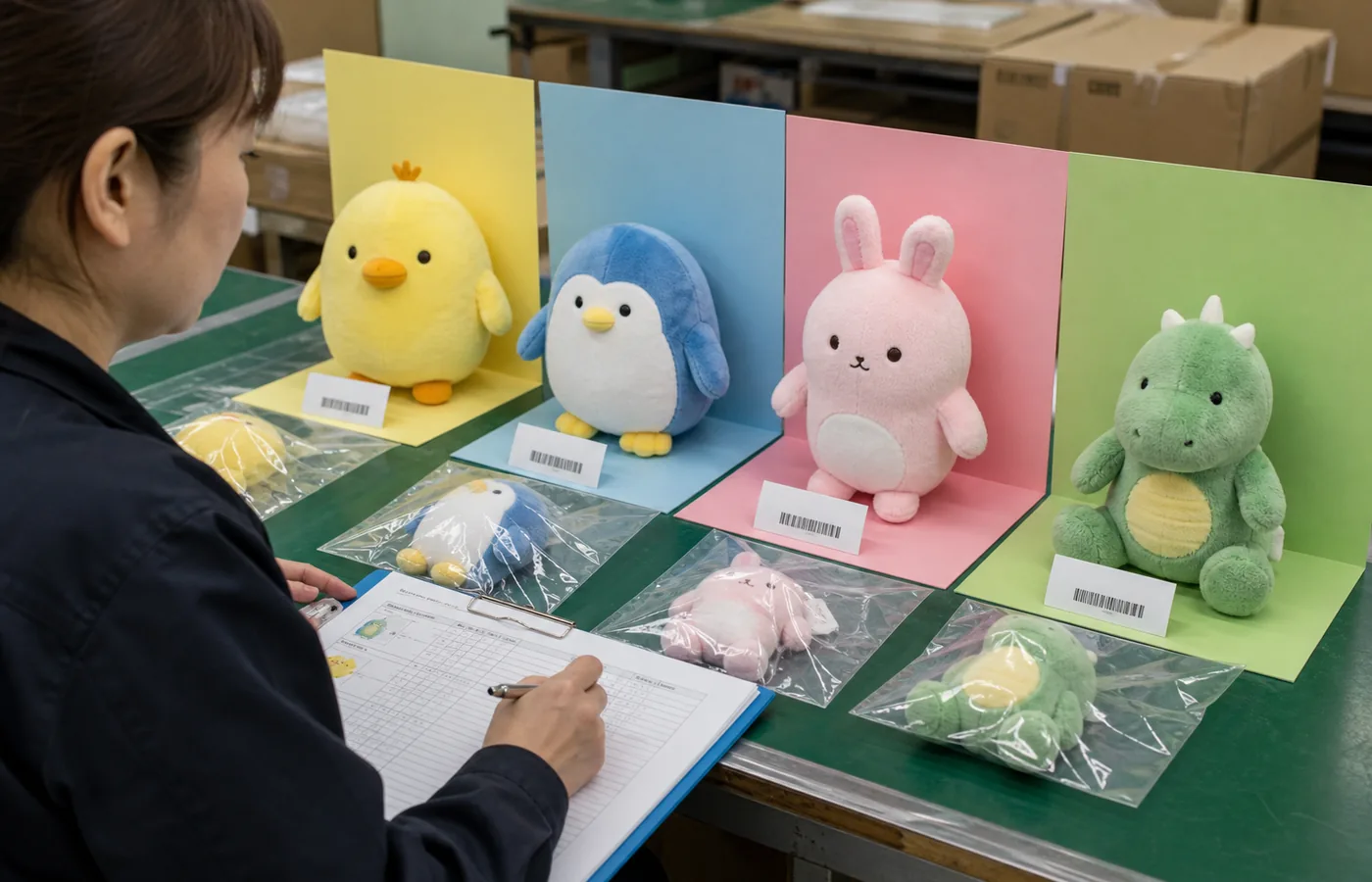
Shortening a schedule should focus on reducing waiting and rework, not removing necessary checks.
| Variable | Stages affected | Planning response |
|---|---|---|
| Multiple SKUs or characters | Specifications, samples, materials, packing and quantities | Create one SKU master and a difference table early |
| Custom fabric or custom colors | Sourcing, color review and samples | Compare stock and custom options with separate approval dates |
| Complex hair, outfits or accessories | Pattern, samples, sewing and inspection | Identify difficult three-dimensional details before sampling |
| Structural sample changes | Resampling, quotation and approval | Separate minor correction from pattern or material change |
| Multiple approvers | Sample and packaging approval | Appoint one person to consolidate comments |
| Backing cards, barcodes or blind packing | Printed materials, assortment and cartons | Run product and packaging approvals in parallel |
| Peak season or factory/logistics closure | Materials, production and freight | Put closure dates and stage-specific buffers in the plan |
| Multiple delivery destinations | Packing, carton allocation and domestic delivery | Lock destination quantities and carton IDs before production |
If the available window is tight, consider simplifying the specification, reducing SKU variation, reviewing stock material options, limiting the approval group and defining what can be approved by photos versus a physical sample.
Adjust the reverse plan to the project type
One standard SKU
A single SKU still needs approval for size, expression, material, packing and the production master. Keep production, QC/packing and freight as separate gates so the schedule shows what is actually finished.
A multi-character collection
Each design may carry a different face, clothing, color, accessory, quantity, barcode or backing card. Separate common specifications from SKU differences and decide whether production waits for every SKU or can release only the approved designs.
A fixed launch or event date
Treat warehouse receipt, venue delivery and sales preparation as fixed downstream gates. Lock the latest sample-approval and production-release dates. Also decide in advance which variables could be reconsidered if a delay occurs, such as freight, SKU scope, packing, destination allocation or sales timing.
Quote-ready timeline checklist
If some information is still open, share the target date and mark each item as undecided, under review or due by a specific date. This makes it possible to separate a provisional schedule from the confirmed production plan.
Frequently asked questions
How far in advance should I start a custom plush project?
There is no universal number. Size, construction, materials, quantity, SKU count, revision rounds, packaging, inspection scope, freight method, capacity and seasonal closures affect different stages. Work backward from the required receipt date and confirm the duration and buffer for each project stage.
How do sample revisions affect the production lead time?
The impact depends on whether the change is a minor adjustment or a structural revision. Pattern rebuilding, fabric changes and new accessories may require another sample and quote review. Include the time to make, ship, circulate and approve the revised sample.
Is photo approval faster than approving a physical sample?
Photos and video can support quick checks of appearance, position and proportion. Hand feel, pile, thickness, stuffing, actual color difference, hardware operation and packed condition may require a physical sample. Add courier and internal review time when physical approval is required.
Which stages take longer for multiple SKUs?
Multi-SKU projects usually add work to specification control, sample approval, material allocation, packing, barcode checks, assortment, quantity reconciliation and carton allocation. Use one common specification plus a controlled difference list for every SKU.
When should air or sea freight be selected?
Review likely freight options during quotation or before production release. Quantity, volume, weight, destination, target date, cost, customs and domestic-delivery conditions determine the practical route. A late change can affect both cost and carton planning.
Where should schedule buffers be placed for an event deadline?
Place buffers beside the stages with their own uncertainty: revisions, bulk production, QC/packing, freight/customs and warehouse receiving. A single buffer at the end makes it harder to see which delay consumed the available time.
What should I send to request a timeline review?
Send the artwork, approximate size, quantity, SKU count, packaging, required receipt date, destination, approval method and delivery conditions. For any open item, include the expected decision date so the provisional and confirmed parts of the schedule are clear.
Build the schedule backward before the first sample
For a launch- or event-led project, share the required receipt date together with quantity, SKU count, packaging, approval route, destination and open decisions. We can review which gates must be completed before sampling, production, final QC and freight.
Request a custom plush timeline and quotation review
See custom plush toy OEM capabilities