Sample Revision Schedule Guide
Custom Plush Sample Revision and Lead Time Guide
B2B guide to custom plush prototype revisions and lead time: buyer inputs, samples, MOQ, production risks, quality checks, lead time, and quote preparation.
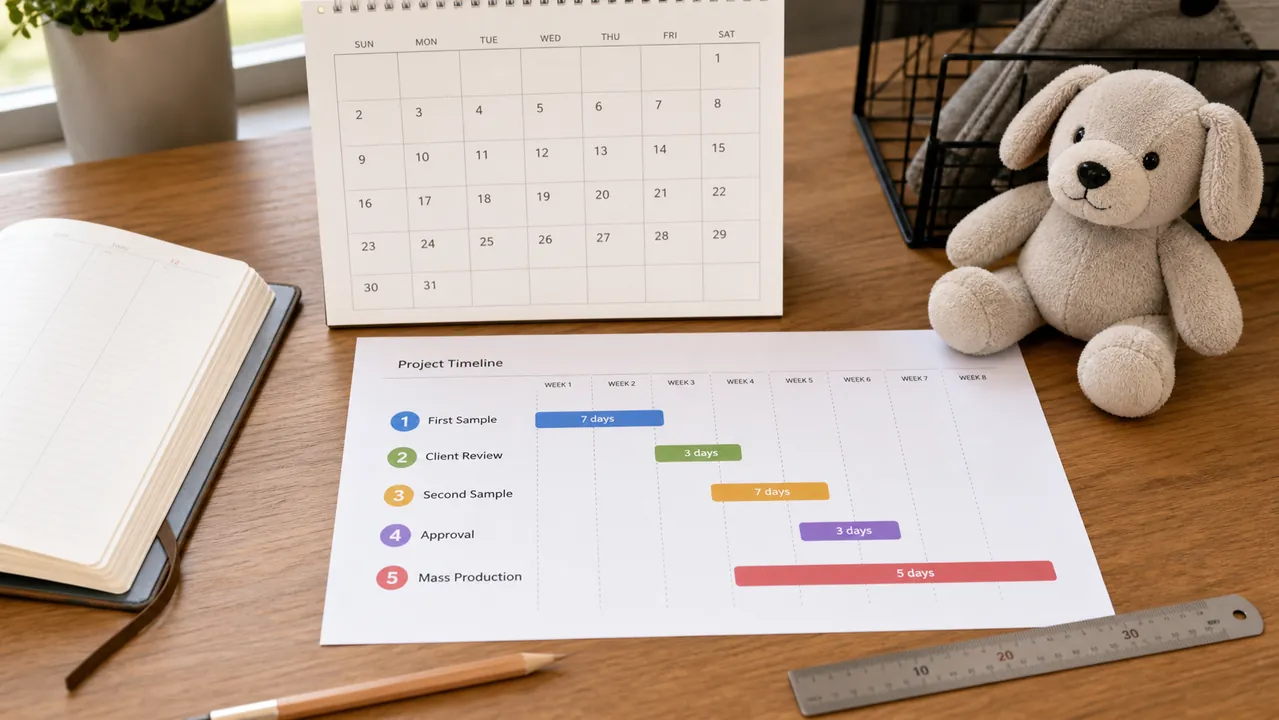
A custom plush schedule depends on more than the first-sample build. Plan artwork readiness, approval comments, revised samples, pre-production approval, packaging, production and delivery backward from the required date.
Six inputs to define before building the schedule
Include buyer and licensor review dates as well as factory work in the project timeline.
Confirm launch, event, photography or warehouse-receipt dates that are difficult to move.
Prepare front, side and back views, size, colors, embroidery, accessories and restrictions.
Define whether body, clothing, hardware, tags and packaging are reviewed together.
Separate required changes, discussion items and production-adjustment items.
Name the review contact, final approver and comment-consolidation date.
Confirm quantity, SKUs, QC, packaging, cartons, split delivery and transport.
Backward plan from first sample to production
Track the input, review evidence, variable factors and next approval gate at every stage.
| Stage | Input required | What to review | Timing variable | Gate to proceed |
|---|---|---|---|---|
| Artwork freeze | Design, size, quantity, SKU and use | Missing views, color, material, accessories and packaging | File replacement, added SKUs, open specifications | Gate Confirm the sample specification |
| First sample | Reviewed specification and references | Shape, expression, dimensions, color, sewing and accessories | New pattern, complex structure, special material, multi-SKU | Gate Share sample number, photos and dimensions |
| First review | Photos or physical sample | Required changes, discussion and approved items | Scattered comments, missing comparison, unavailable approver | Gate Issue one valid revision brief |
| Revised sample | Numbered comments and priorities | Changed, unchanged and affected areas | Structural or material change, additional evidence | Gate Record open and approved items |
| Pre-production approval | Final sample, specification, color and packaging | Production reference, tolerance, labels and cartons | Late packaging or display changes | Gate Freeze approver, date and version |
| Production and delivery | Approved version, quantity, QC and destination | Production, inspection, packing, shipping and warehouse rules | Quantity, season, QC, transport and customs | Gate Report progress at agreed milestones |
Original Backward Plan: From Required Delivery to Artwork Freeze
Work backward from the delivery condition, placing approval deadlines and required inputs at each gate.
Warehouse, event and transport
Approved sample and QC
Compare the requested changes
Review shape, face and color
Fix specification and approver
Why a “small revision” can require 3-5 business days
Moving an eye or mouth by a few millimeters is not only a screen edit. A physical rebuild is required, so a normal revision cycle typically reserves 3-5 business days.
Edit eye, brow and mouth punching data at millimeter level, including stitch order and density.
Run the machine on equivalent fabric to check distortion, puckering, thread sink and line clarity.
Cut the revised face panel, adjust the paper pattern when needed, and sew the physical sample again.
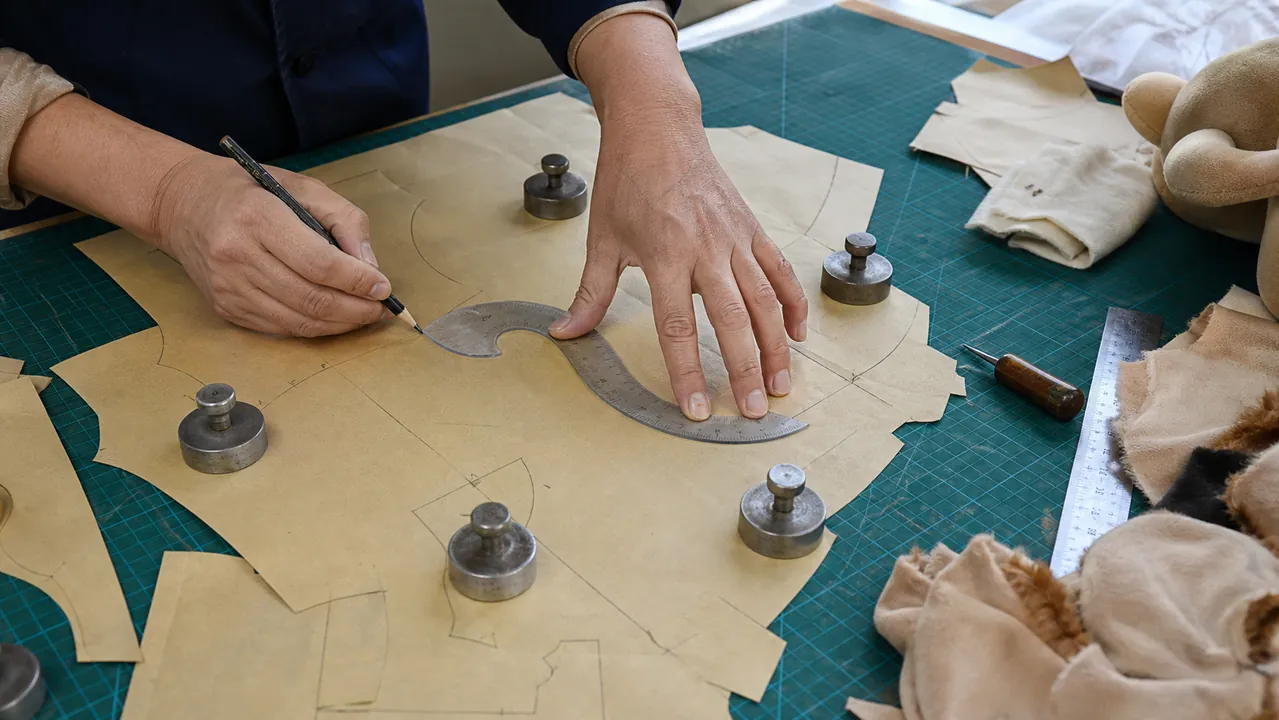
Changes to silhouette or volume require new curves, seam allowance checks and another physical assembly.
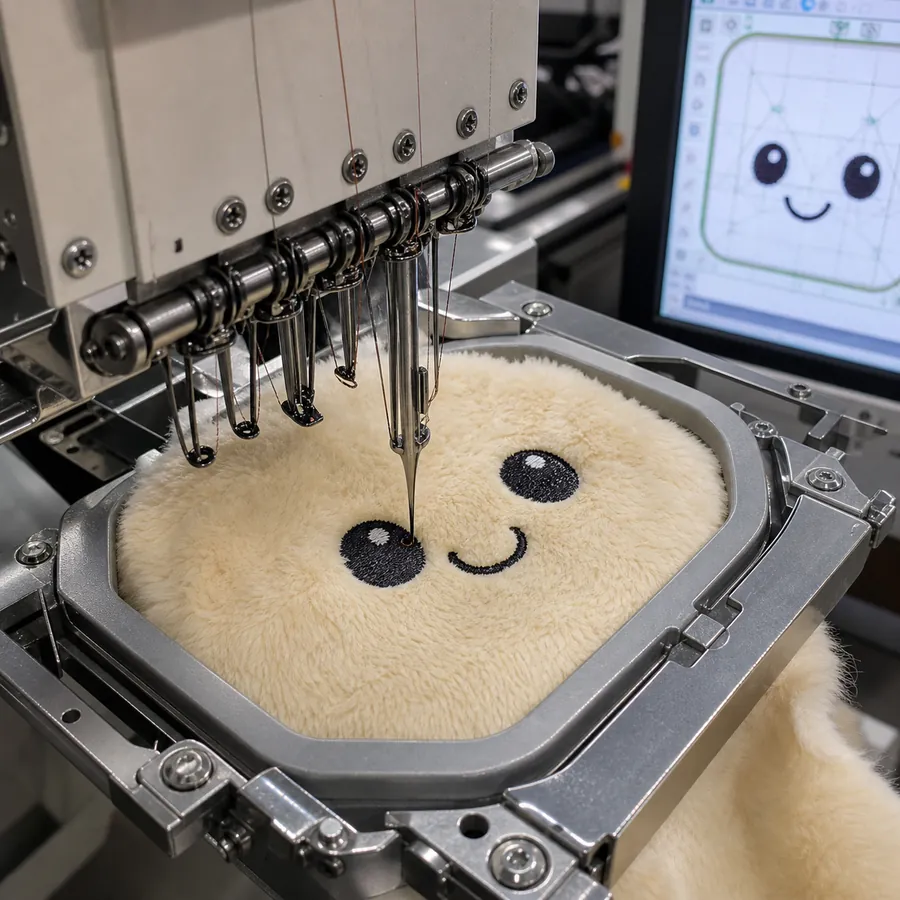
After the digital edit, production-equivalent fabric is stitched to confirm position, tension and distortion.
Use quantified redlines to reduce revision rounds
Subjective comments increase interpretation. Mark arrows, dimensions, percentages and comment IDs directly on the sample photo, showing current and requested conditions together.
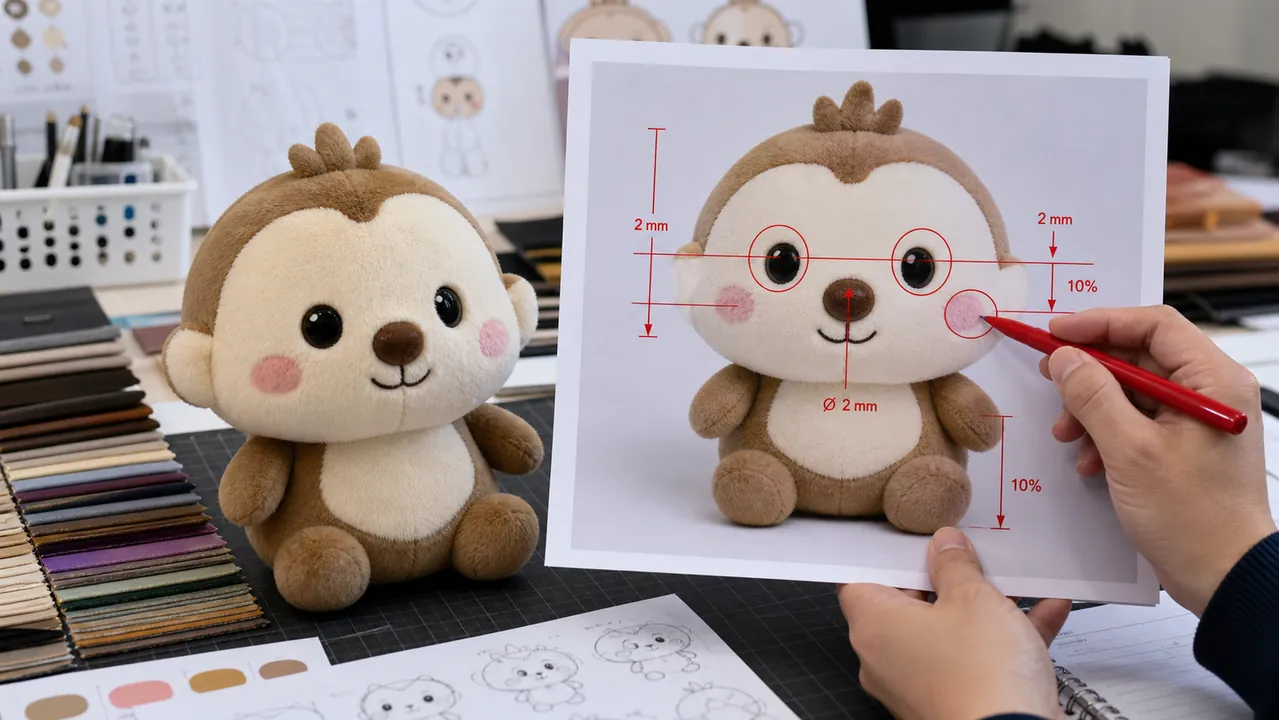
“Make the eyes cuter” or “make the whole body softer and fuller.”
“Move each eye 2 mm inward and increase eye size by 10%.” “Reduce approximately 10 g of filling below the chin.”
Mark already approved areas as “no change” and consolidate all comments into one controlled redline file.
The recommended two-round rule for staying on schedule
For projects with a fixed launch or event date, we strongly recommend planning a standard maximum of two sample revision rounds.
Review overall shape, facial outline, eye and mouth embroidery positions, major colors and attachments together.
Confirm millimeter-level placement, filling, thread color, sewing finish and packaging consistency before production approval.
Fabric sourcing and extra lead time for custom dyeing
Choosing the closest color from factory-stock boa or velboa can keep revision material available. Fully custom-dyed fabric may add approximately 7-10 days for color matching, trial dyeing, dyeing and approval.
- Select from coded stock-fabric swatches
- Approve fabric and embroidery thread together
- Compare photos and physical samples under controlled light
- Define the color reference and tolerance
- Add trial-dye approval to the timeline
- Confirm material, quantity and lot variation per project
Four fields that make revision comments actionable
Use one identifier for the location, current state, requested state and priority.
Track photo, response and recheck under the same number.
Show the current appearance beside the target or reference.
Mark measurement points, color references and embroidery positions.
Separate required change, discussion, approved and next-review items.
Three revision points to support with photos and records
Use the same sample and revision identifiers when comparing three-dimensional expression, physical color and change history.
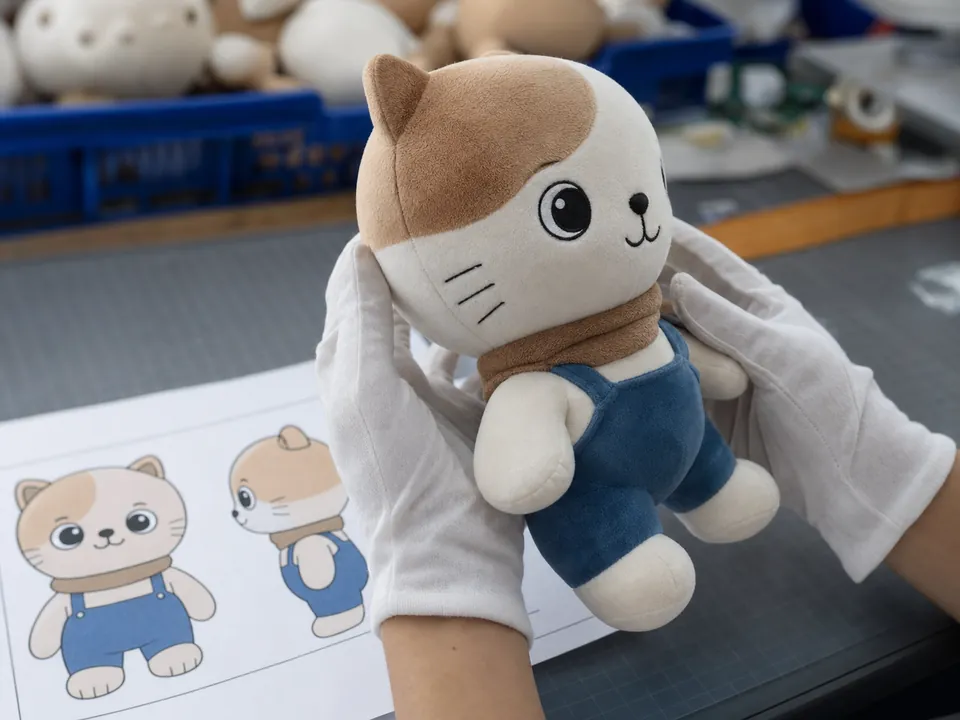
Review cheek, eyes, mouth and profile relationships from front, 45-degree and side views.
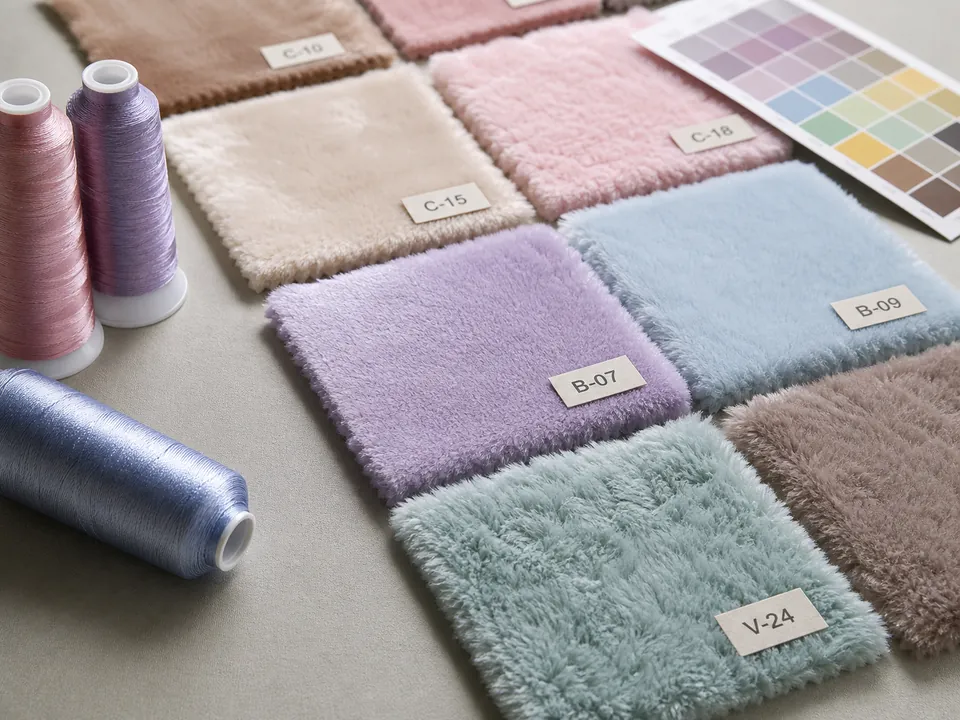
Match coded physical swatches and thread spools under the same controlled light instead of relying on color names.
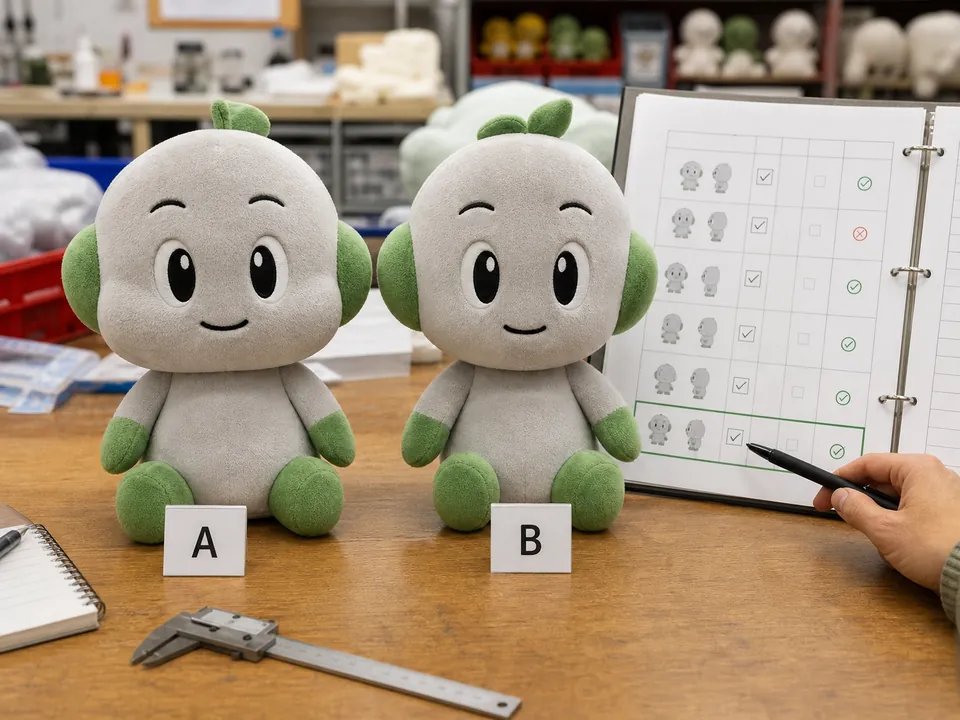
Track previous, current, completed, open and approved items in one controlled log.
Information to prepare before inquiry
Even without a complete specification, the key date, design, quantity and approval setup help build a workable plan.
- Launch, event or warehouse date
- Photography and approval deadlines
- Movable and fixed dates
- Design and target size
- SKU count, quantity and use
- Materials, embroidery and accessories
- Review contact and final approver
- Comment-consolidation method
- Physical sample requirement
- Packaging, labels and cartons
- QC requirements
- Destination, split delivery and transport
Related pages
Sample scheduling connects to quote files, approvals, fabric, embroidery, inspection and delivery planning.
FAQ
Why can a small eye or mouth revision take 3-5 business days?
The embroidery program is edited at millimeter level, test-stitched on production-equivalent fabric, and the revised face panel is cut, sewn and rebuilt into a physical sample. A typical revision cycle is 3-5 business days, subject to pattern work, materials, SKU count and factory load.
How many sample revision rounds are recommended?
For projects planned backward from a launch or event date, we recommend a standard maximum of two revision rounds: major shape and embroidery placement in round one, then fine adjustment and finishing in round two. A third round or structural change requires schedule and cost review.
How should revision feedback be written?
Replace subjective requests such as “make it cuter” with quantified redlines such as “move the eyes 2 mm inward” or “increase eye size by 10%.” Use arrows, dimensions, percentages and comment IDs on the sample photo, and mark already approved items.
Can a revision be approved from photos only?
Position and appearance may sometimes be reviewed from photos, while hand feel, thickness, volume, color difference or moving parts may require a physical sample.
Does custom-dyed fabric add lead time?
Stock fabric colors can usually move faster. Fully custom-dyed fabric may add approximately 7-10 days for color matching, trial dyeing, dyeing and approval. The actual period varies by material, quantity and factory conditions and is confirmed per project.
How should a fixed event date be handled?
Work backward through transport, production, pre-production approval, revised sample, first review and artwork freeze. Name the approver and response deadline early, and reserve two planned revision rounds plus project-specific buffer.
What is needed for an inquiry?
Share design, size, SKU count, quantity, use, packaging, required delivery period, approval setup, physical-sample requirement and destination.
Plan approval deadlines backward from the required date, then place sample-revision decisions before production
Share the design, size, SKU count, quantity, packaging, target timing and approval setup so project-specific review milestones can be organized.