
Start with clear acrylic, then add one visual behavior
Clear acrylic is the baseline for print color, white ink and transparent windows. Specialty sheets add angle-dependent reflection, a tinted base, surface relief or embedded particles. Approve an actual material code and sample instead of ordering by nickname alone.
| Sheet type | Visual behavior | Best-fit projects | Confirm before quotation |
|---|---|---|---|
| Clear | Clean transparency | Standard charms, keychains and standees | Thickness, print side, white underbase, transparent windows |
| Holographic | Rainbow reflection changes with angle | Limited editions and reflective themes | Pattern code, direction, print interference, front/back appearance |
| Pearlescent / cloud | Soft luster and milky base tint | Elegant, dreamy or pastel artwork | Supplier name, sample code, base tint, translucency, pattern variation |
| Cracked-glass effect | Angular prismatic highlights | Gem, ice, beam and geometric concepts | Pattern scale, density and overlap with faces or fine lines |
| Water ripple | Surface relief refracts image and background | Water, ice, rain and transparent concepts | Smooth/textured faces, printable side, depth and handling feel |
| Glitter | Embedded particles sparkle as points | Festive, cute, night-sky and celebratory designs | Particle color, size, density and overlap with printing |
What buyers should approve for each sheet
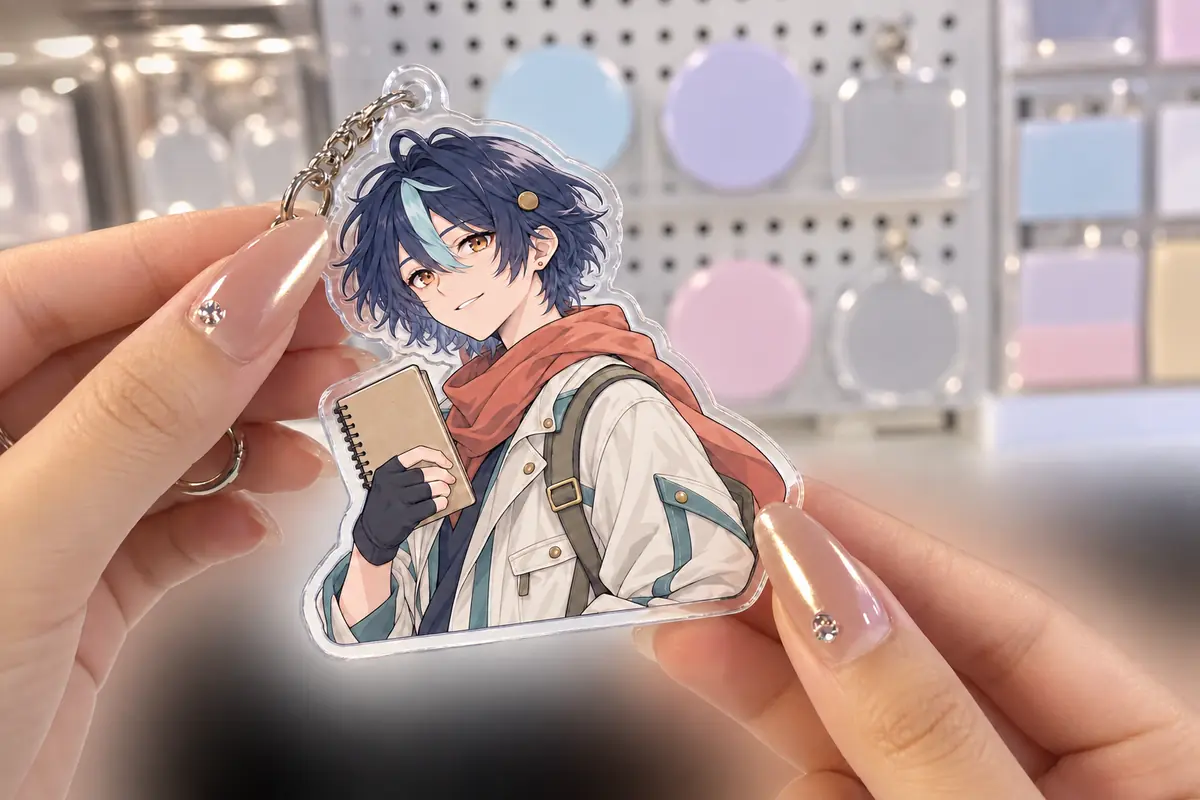
Clear acrylic - establish the print baseline
Use clear acrylic to judge printed color, white ink, transparent areas and the cut shape before adding a decorative sheet effect.
- Finished size and thickness candidate
- Single- or double-sided printing
- Full, spot or no white underbase
- Cut path, hole position and hardware clearance
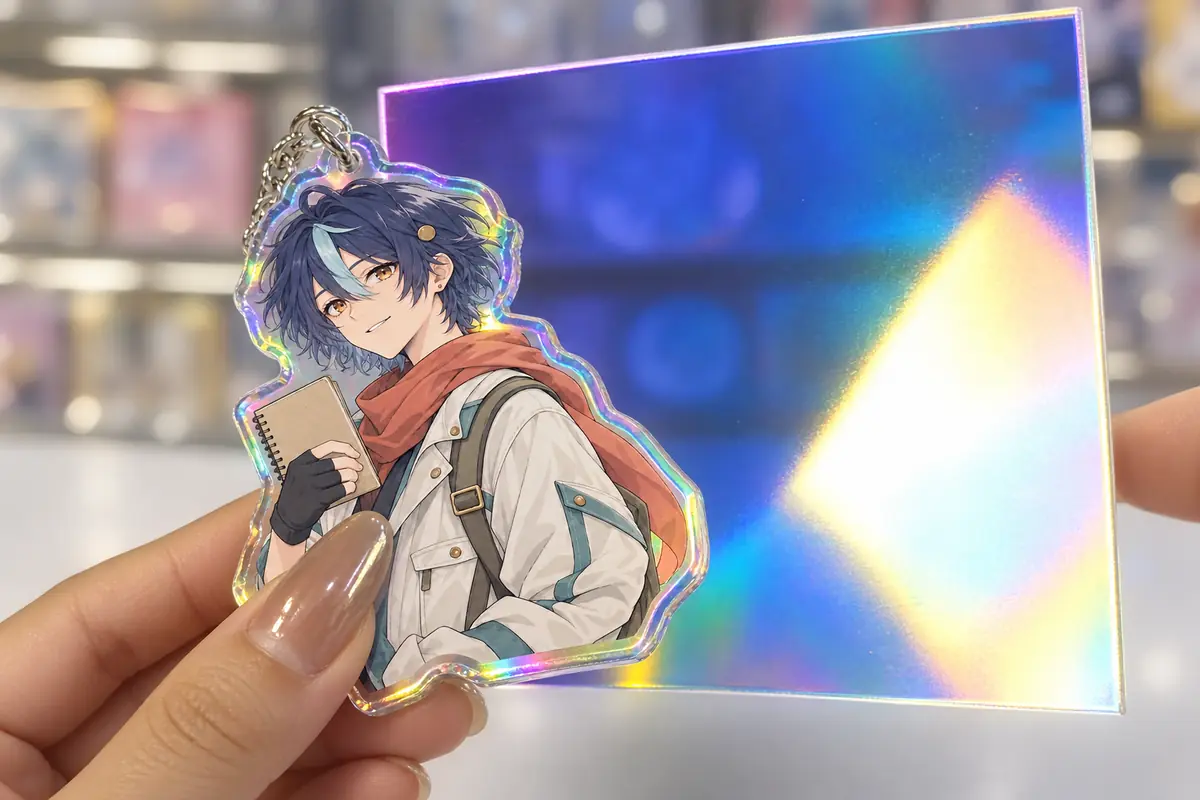
Holographic acrylic - approve it while moving
A straight-on image cannot show the full effect. Tilt the sample under neutral, warm and natural light and check whether reflection competes with faces, fine lines or small copy.
- Pattern and reflection direction
- Transparent versus white-backed areas
- Appearance from both faces
- Acceptable pattern-position variation
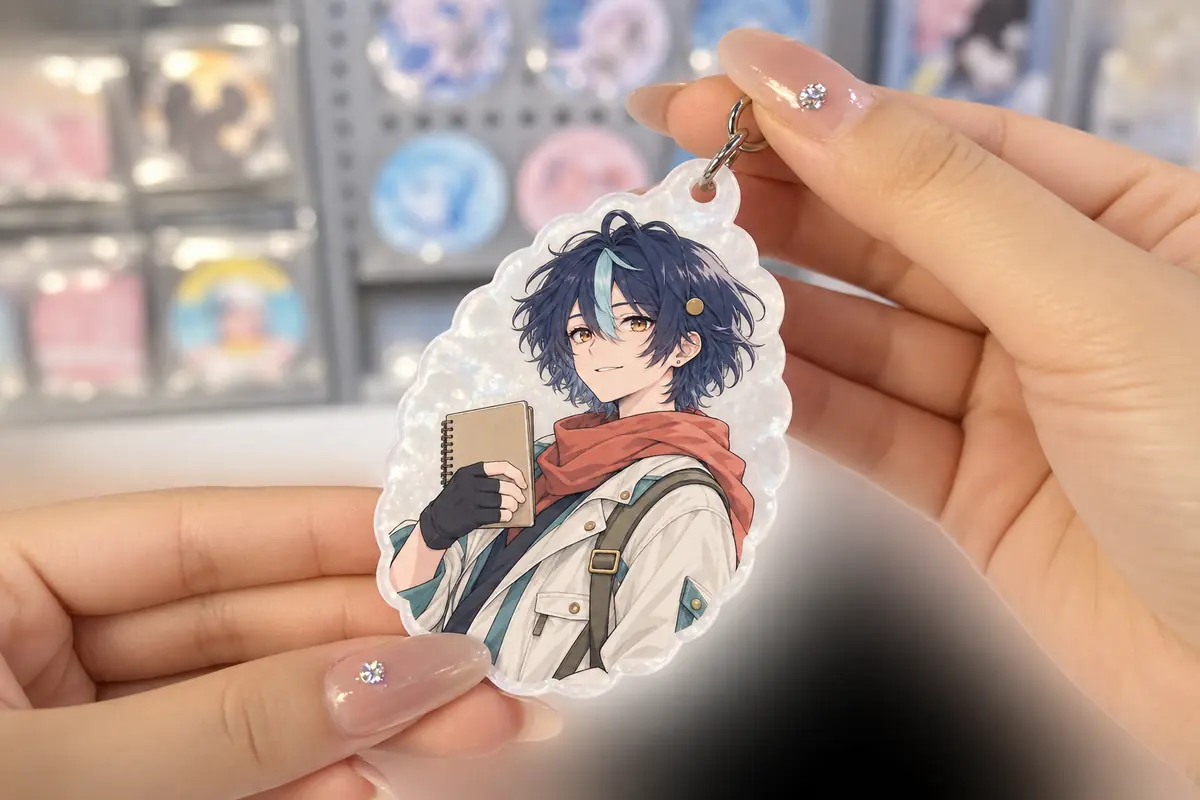
Pearlescent or cloud-pattern acrylic - lock the sample code
Names such as pearl, cloud or mica-look are not standardized. The base tint may shift printed colors, so quotation and approval records should identify the supplier material and sample code.
- Material name and sample code
- Base tint and translucency
- Pattern variation within one lot
- Effect on pale colors and skin tones
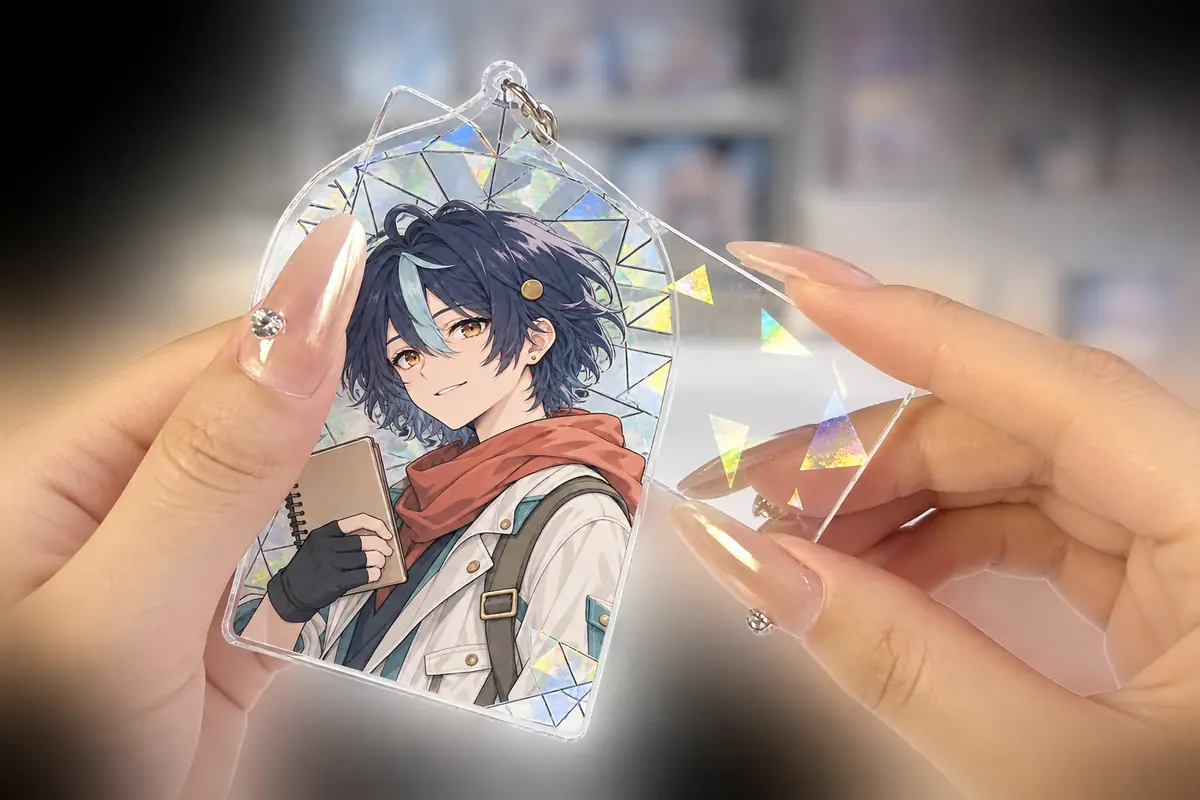
Cracked-glass effect - keep the pattern away from critical art
The name normally describes a broken-glass-like prism pattern; do not assume the sheet contains real glass. Review several pieces because pattern placement can vary.
- Pattern scale and density
- Reflected colors under different lights
- Overlap with faces, text and thin outlines
- Acceptable placement variation
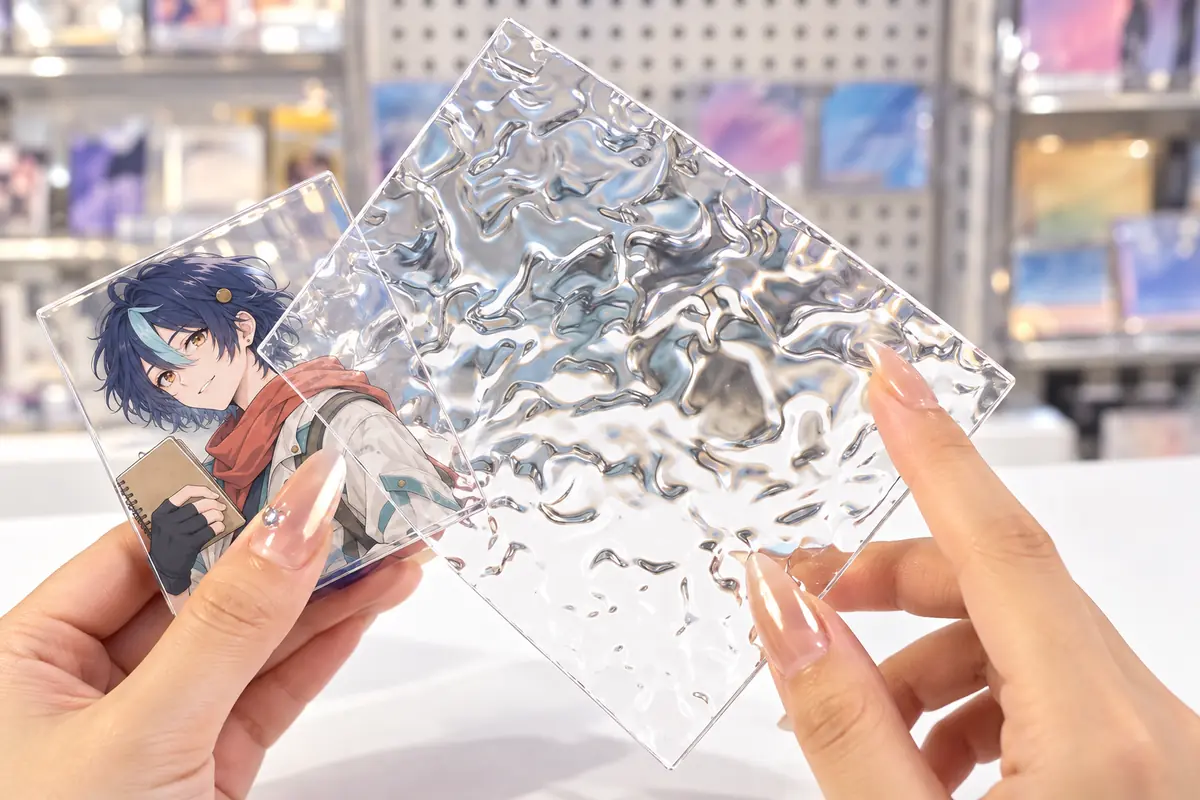
Water-ripple acrylic - distinguish the smooth and textured faces
The relief changes refraction, handling and sometimes printability. Ask the supplier which face can be printed and confirm the viewing side in the artwork specification.
- Smooth and textured faces
- Printable face and viewing direction
- Relief depth and tactile feel
- Distortion around fine lines and transparent color
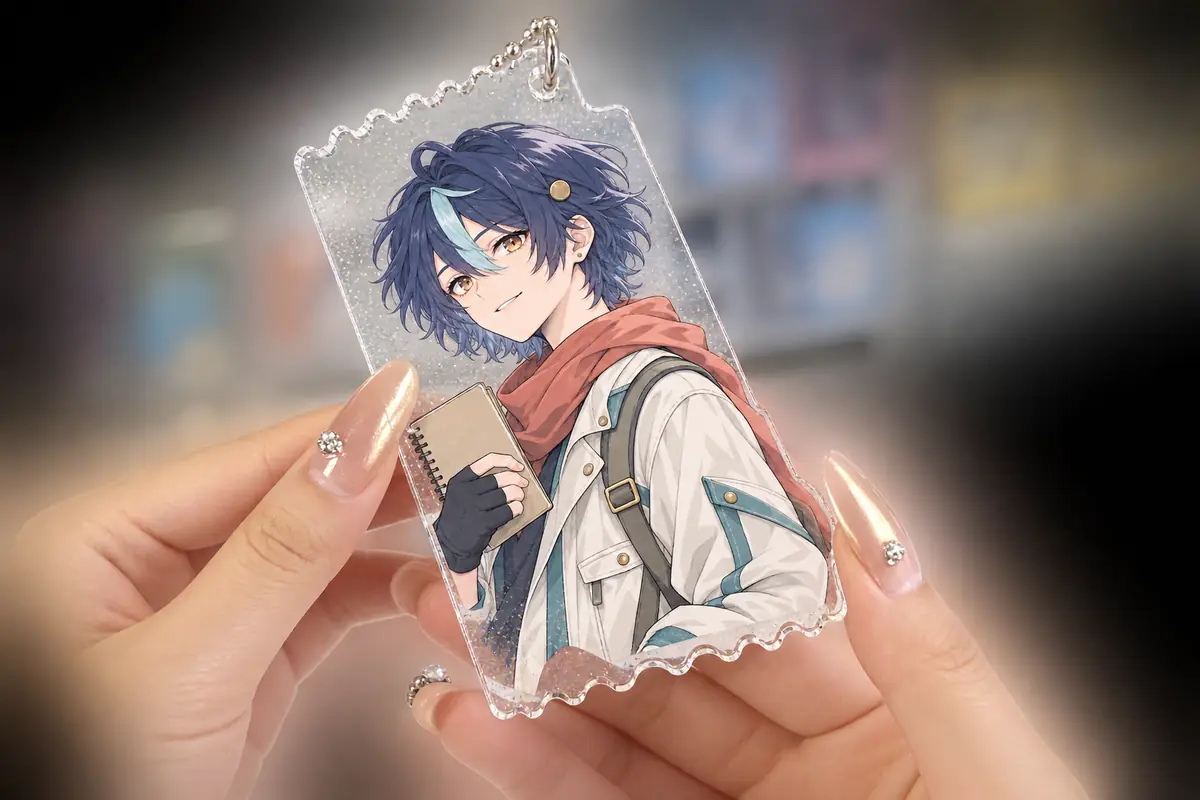
Glitter acrylic - approve particle density and open space
Holographic effects reflect as a surface or pattern; glitter appears as individual points. Compare every SKU because the visible glitter area changes with print coverage.
- Particle color, size and density
- Visibility through transparent areas
- Readability of pale colors and fine lines
- Print-coverage differences between SKUs
Raised foil and stained-glass printing are not sheet categories
Choose the substrate first. Then specify foil artwork, white ink, transparent color, process position and production tolerance as separate finishing requirements.
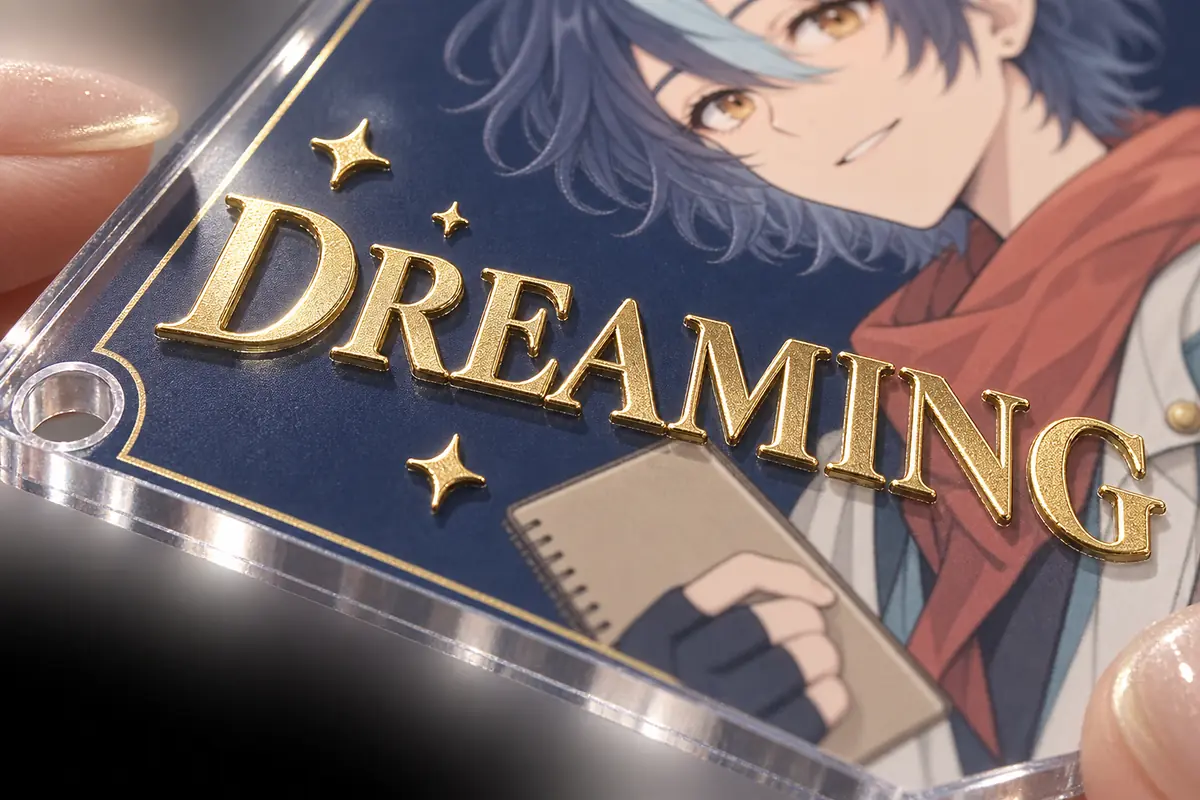
Raised foil or embossed metallic lettering
The name may refer to different equipment and methods. Use a separate single-color foil layer and approve the real process sample.
- Foil color, gloss, side and target area
- Raised height, minimum line and minimum gap
- Registration against printed artwork
- Distance from holes, cut edges and hardware
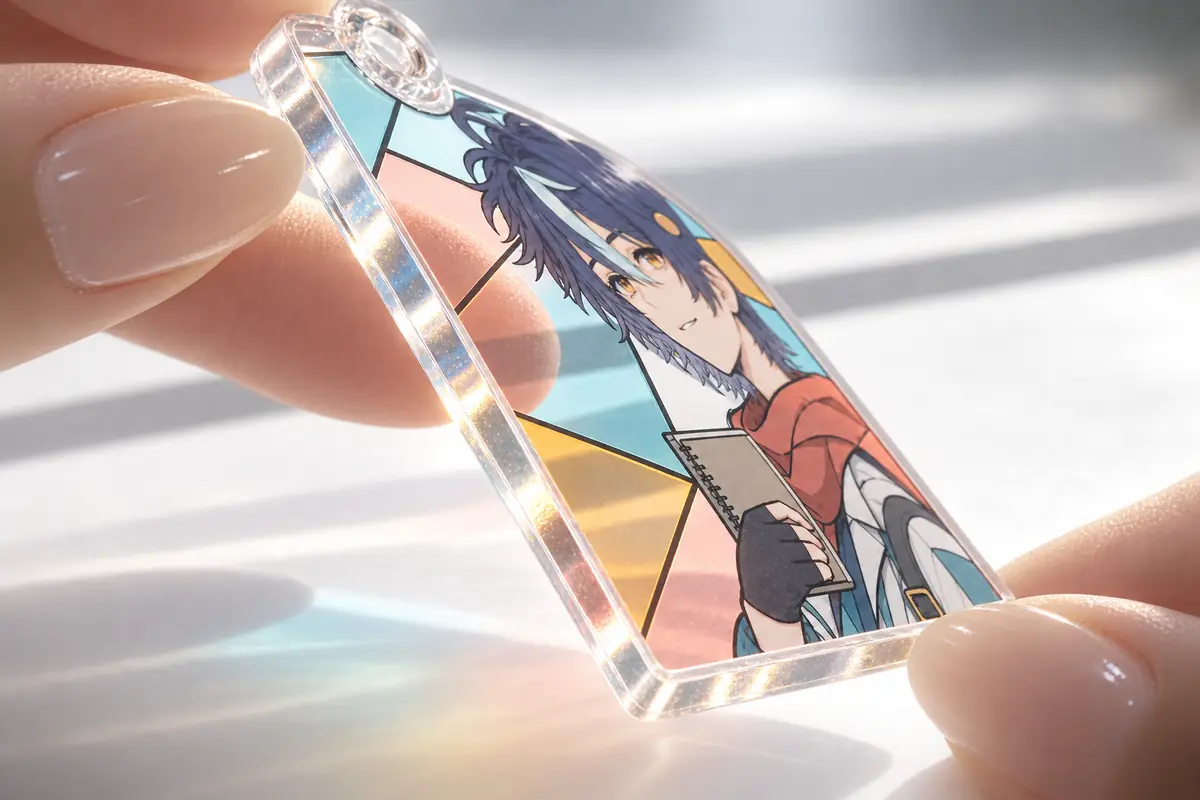
Stained-glass-style transparent color
Separate transparent-color regions from white-backed opaque regions. Approve the sample against white, dark and backlit backgrounds.
- Transparent color, white ink and opaque areas on separate layers
- Front/reverse printing and viewing side
- Material code and white-mask version
- Color behavior against changing backgrounds
Four substrates supported by the supplied stained-glass specification
For the supplier specification provided with this project, the effect is available on clear, glitter, cracked-glass and water-ripple acrylic. This is not a universal rule; reconfirm the material code, ink, white underbase and equipment for every quotation.
| Sheet | Status | Approval focus |
|---|---|---|
| Clear | Supported | Transparent color, white ink and background |
| Glitter | Supported | Particle overlap with transparent color and fine lines |
| Cracked glass | Supported | Competition between prism pattern and color areas |
| Water ripple | Supported | Textured face, print face and transmitted distortion |
| Holographic | Not listed | Excluded from this supplier specification |
| Pearlescent / cloud | Not listed | Excluded from this supplier specification |
Select the substrate from the design goal
| Design goal | First candidate | Compare against | Key risk |
|---|---|---|---|
| Prioritize print color and outlines | Clear | Pearlescent | Design the white underbase and windows first |
| Strong movement-dependent reflection | Holographic | Cracked glass | Check interference with faces and text |
| Soft premium luster | Pearlescent | Fine glitter | Base tint may shift printed color |
| Ice, gem or light-beam concept | Cracked glass | Holographic | Approve pattern density on real material |
| Water or refracted-transparency concept | Water ripple | Clear plus transparent color | Lock print face and viewing side |
| Add point-like sparkle | Glitter | Holographic | Control particle density and readability |
Professional checks before mass production
Convert the visual material choice into one controlled specification shared by merchandising, artwork, sourcing and quality teams.
Standardize quotation inputs
Keep product format, size, thickness, quantity, SKU split, material code, print sides, white ink, hardware, unit packing and delivery terms identical across alternatives.
Separate production layers
Keep color, white underbase, cut path, hole, reverse print and foil artwork identifiable. Use the factory template and project-specific minimum-line rules.
Make the approved sample the reference
Record material code, color, transparent areas, registration, dimensions, edge quality, holes, hardware and packaging with photos and comments.
Separate appearance, dimensions, function and packing
Define checks for scratches, bubbles, chips, edge haze or scorch, print/white registration, hole position, hardware, protective film, SKU labels and carton marks.
Eight items to lock before mass production
Keep the physical sample and signed approval photos together. For multiple SKUs, list the material code on the SKU sheet so a substitute sheet is not mixed into the run.
Sample approval checklist
Information a supplier needs to quote
To compare only the material difference, keep size, quantity, printing, hardware, packing and inspection conditions consistent.
Download the material selection worksheet
The English PDF combines the six-sheet comparison, raised foil, the supplier-specific four-sheet stained-glass compatibility table, artwork layers, sample approval, RFQ inputs, QC and packaging notes.
- Material and finish decision table
- Pre-production sample approval checklist
- RFQ, inspection and packing worksheet
Frequently asked questions
Which acrylic sheet is the standard option?
Clear acrylic is the most useful visual baseline, but thickness, clarity, cast/extruded construction and printable faces still vary by supplier.
Are specialty sheets always more expensive than clear acrylic?
Not necessarily. Compare material, availability, quantity, SKU mix, yield, print sides, white ink, finishing, packing and inspection under the same RFQ conditions.
What is the difference between holographic and glitter acrylic?
Holographic material reflects as a surface or pattern that changes with angle. Glitter acrylic shows embedded particles as individual sparkling points.
Does "mica acrylic" always contain natural mica?
No conclusion can be made from the trade name alone. Ask for the supplier material description and sample code.
Does cracked-glass acrylic contain real glass fragments?
The term usually describes a prism or holographic pattern that looks like broken glass. Confirm the material specification instead of assuming glass is present.
Which side of water-ripple acrylic is printed?
It depends on the sheet and equipment. Identify the smooth face, textured face, printable face and intended viewing side in the approved sample.
Which sheets support the stained-glass-style effect?
Under the supplier specification provided for this project, clear, glitter, cracked-glass and water-ripple sheets are supported. Reconfirm material code, ink, white underbase and equipment for each supplier.
Is raised foil the same process at every factory?
No. Hot transfer, digital foil, raised coating and tooling-based embossing can have different artwork and tolerance rules. Approve the actual process sample.
What is the minimum information needed for a quotation?
Provide finished size, thickness candidate, quantity and SKU split, material code, color/white/cut/hole/foil layers, hardware, packing, destination, timing and inspection expectations.
Review the real material and artwork before choosing a sheet
Send the product format, size, quantity, SKU count, candidate materials, artwork and packing requirements. We can organize the sample and comparison-quotation questions around two or three material options, including clear acrylic.
Request a material and artwork review