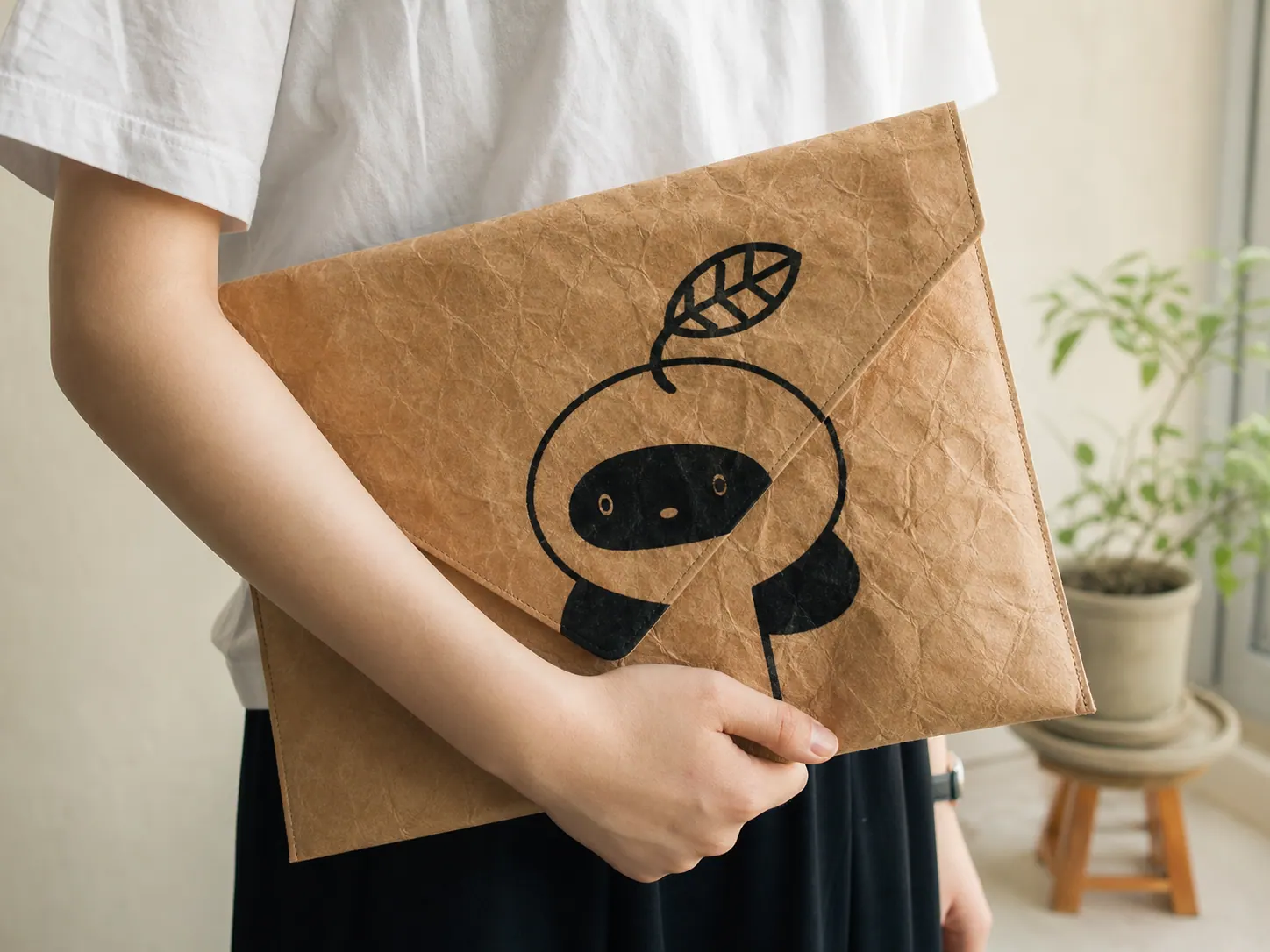
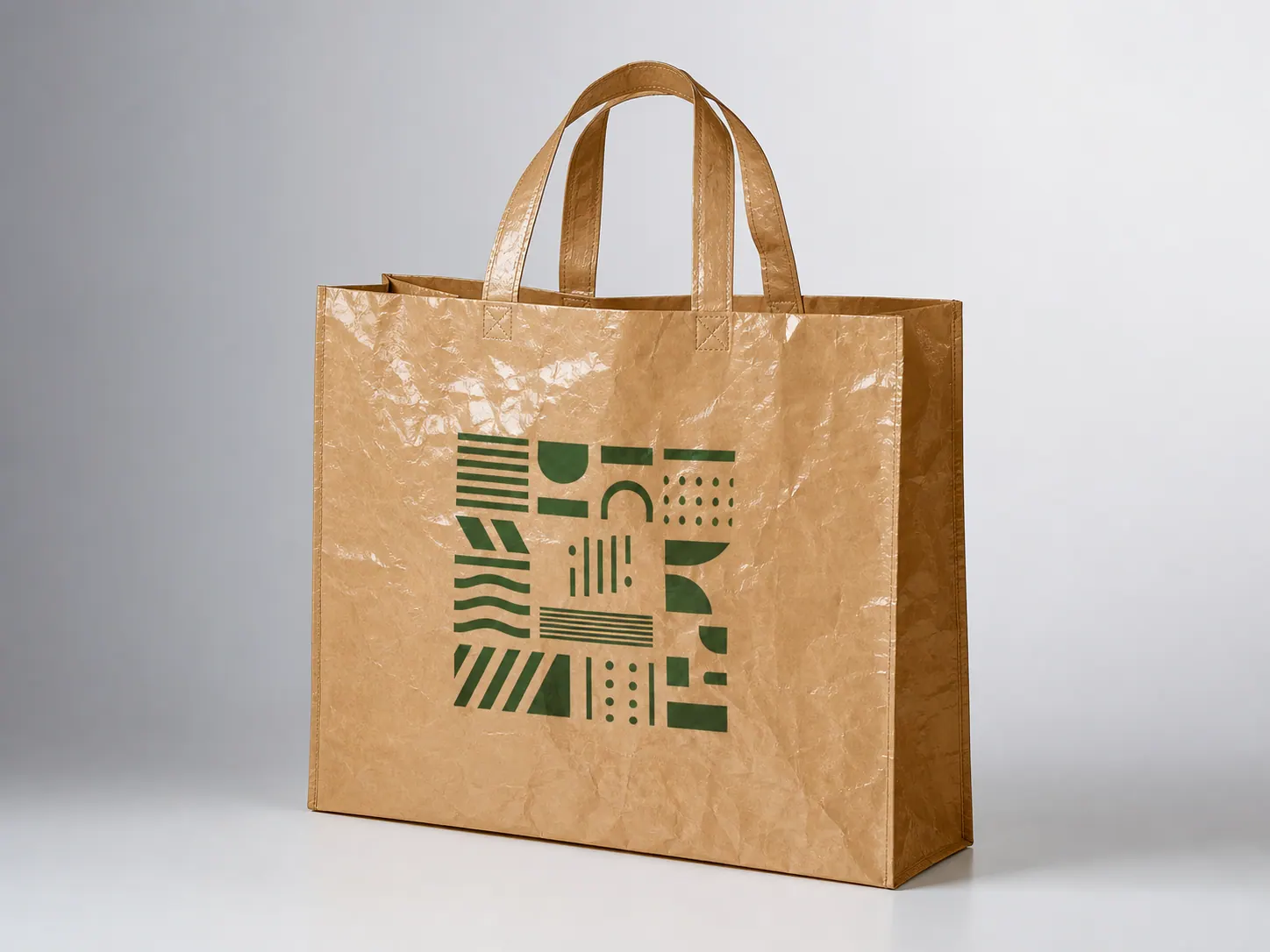
One-color artwork
Bold original artwork should be checked for ink hold, line fill, and rubbing on a wrinkled face.
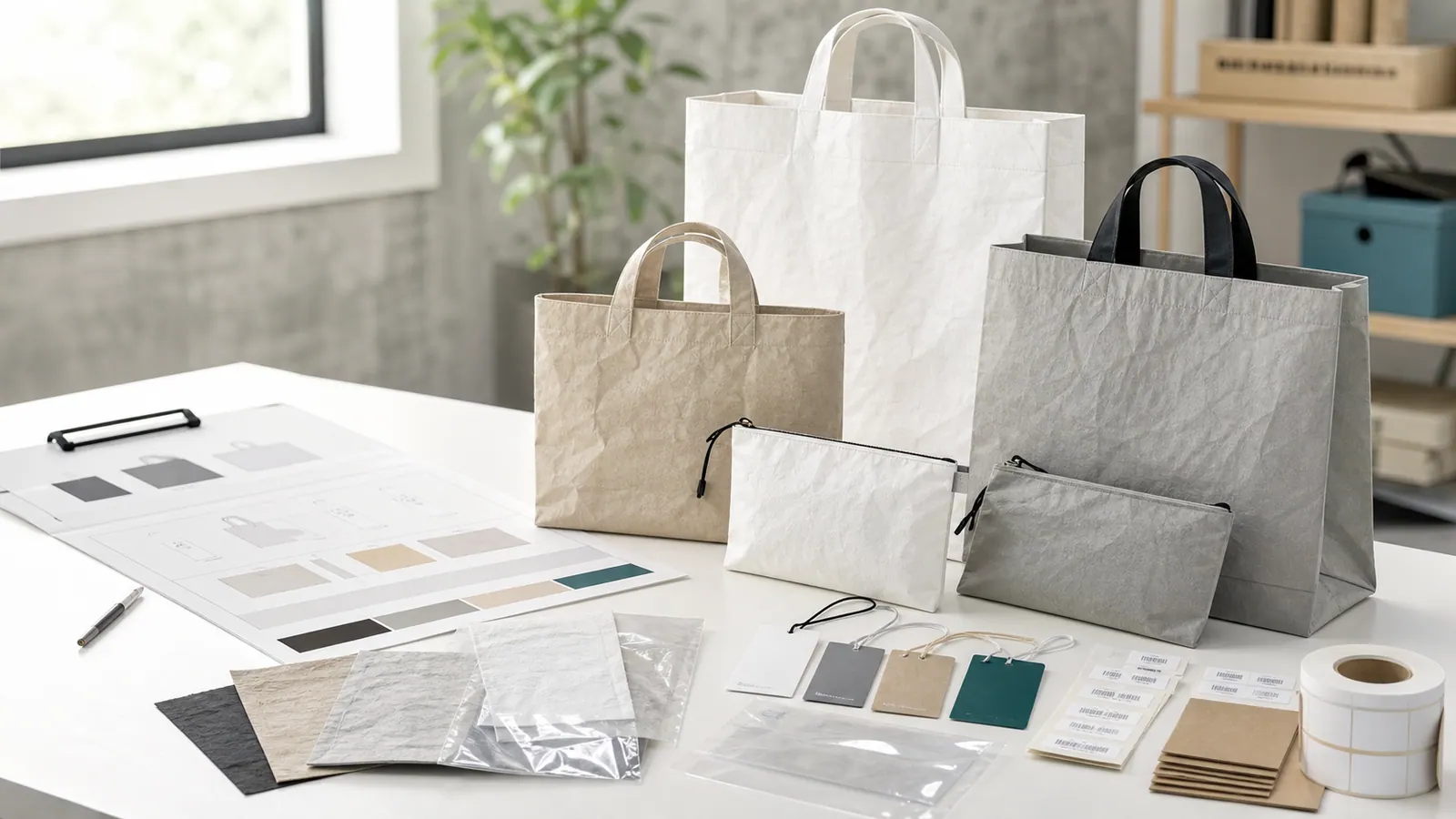
Custom Tyvek-style bags should be sourced by first separating genuine DuPont™ Tyvek® projects from paper-look alternatives. Material evidence, composition, printing method, bag shape, claim wording, labels, and packing rules need to be aligned before sampling and bulk production.
A Tyvek-style bag RFQ should not start with shape alone. First decide whether genuine DuPont™ Tyvek® is required, or whether a paper-look material is acceptable. Then confirm the material sheet, composition, thickness, coating, print method, seam or sealing method, permitted claim wording, labels, packing, SKU split, and delivery conditions.
Tyvek® is a DuPont brand material. If the material is not genuine Tyvek®, use wording such as Tyvek-style, paper-look, washable paper, or HDPE-based sheet. Final product pages, tags, and cartons should use the actual material evidence rather than appearance alone.
English buyers often search for custom Tyvek bags, paper-look totes, washable paper bags, and lightweight promotional bags in the same session. The sourcing route changes when the project needs verified Tyvek® material, a paper-like HDPE sheet, washable kraft paper, or a lower-cost nonwoven substitute.
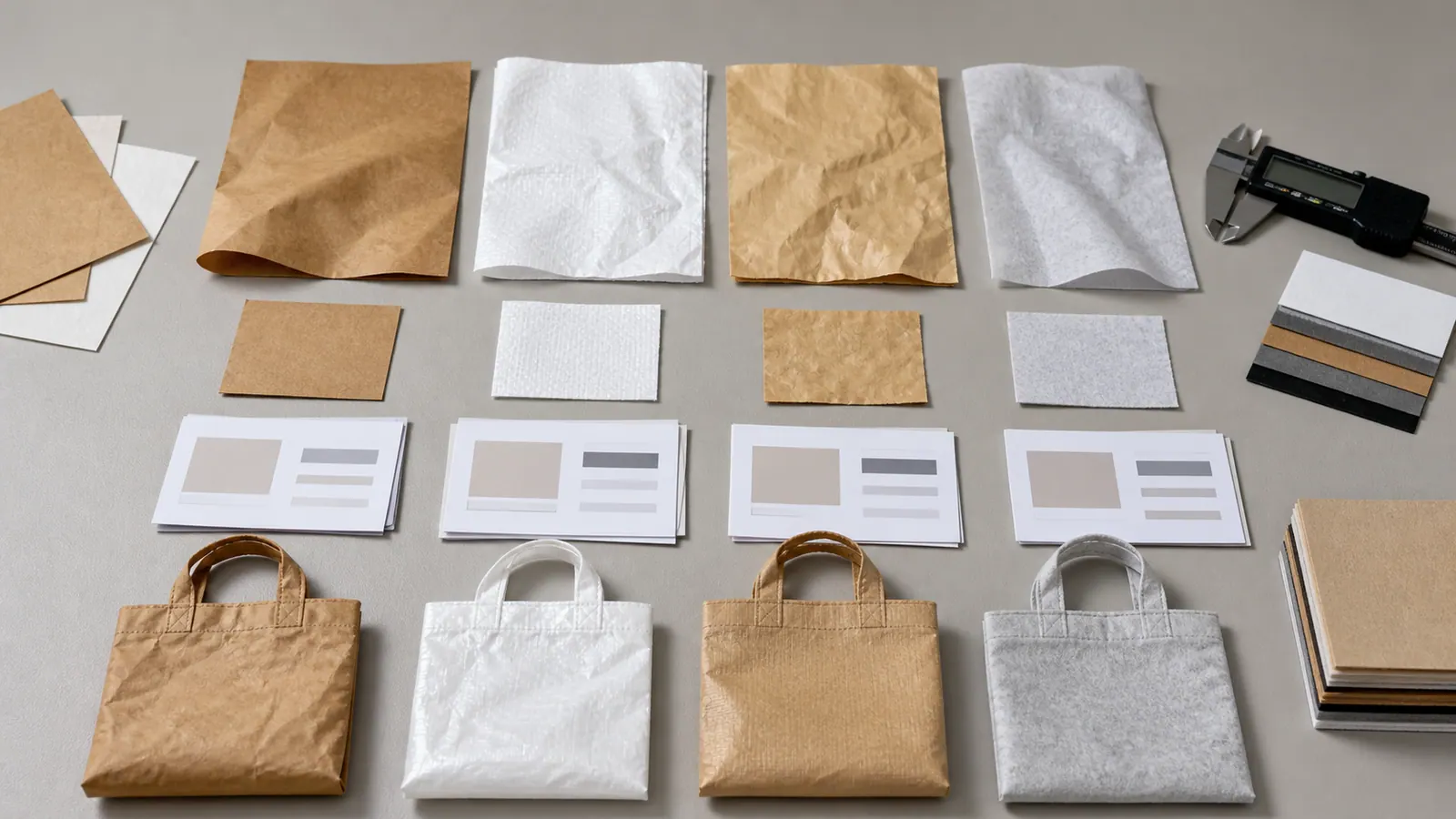
The same artwork can behave differently on smooth Tyvek®, crinkled paper-look sheet, coated washable paper, and laminated structures. Confirm the material route before locking color, layout, and public wording.
| Material route | Useful for | Must confirm | Wording boundary |
|---|---|---|---|
| Genuine DuPont™ Tyvek® | Premium paper-look novelty, retail goods, special promotional projects | Supplier evidence, grade/type, composition, color, thickness, processing method | Use Tyvek® only when true and with correct trademark notation |
| Tyvek-style HDPE sheet | Lightweight paper-look bags when genuine Tyvek® is not required | Composition, hand feel, tear behavior, print test, sewing or sealing method | Use Tyvek-style or paper-look wording; do not state official Tyvek® material |
| Washable kraft / paper-look material | Kraft visual, cafe collaborations, retail texture, lifestyle packaging | Water resistance, fold marks, edge behavior, print absorption, label wording | Do not call it Tyvek®; avoid paper wording unless composition supports it |
| Nonwoven / PP alternative | Budget promotional bags or broad giveaway routes | Color stock, print area, handle strength, quantity and packing conditions | Keep ordinary bag selection on the promotional bag parent page |
| Paper-look insulated bag | Cafe, food novelty, lunch, bakery-style merchandise | Insulation layer, closure, condensation, document needs | Do not promise cold-retention time or food suitability without evidence |
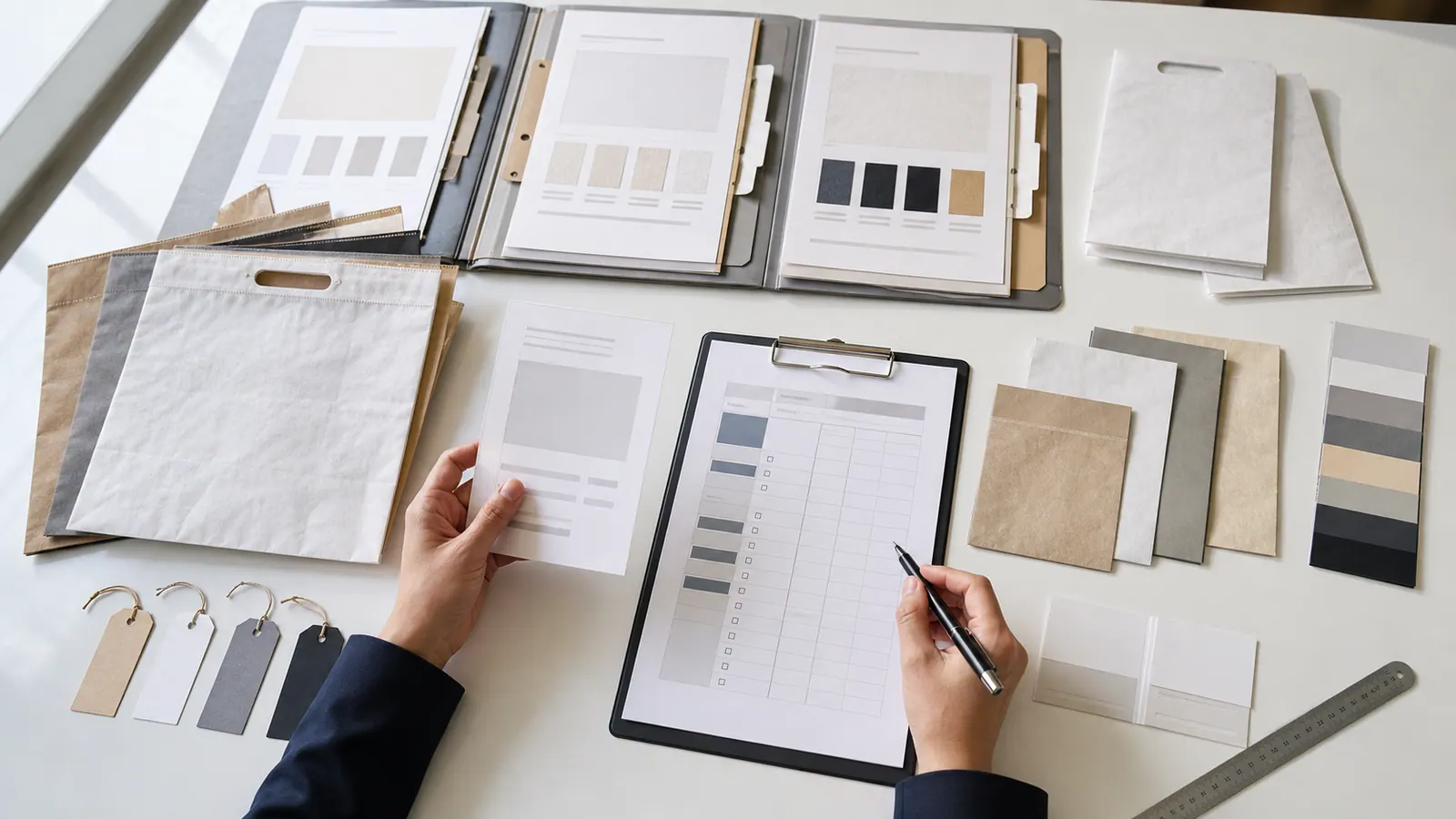
Public product descriptions, hang tags, material labels, and cartons should not be written after production as an afterthought. Decide what the buyer wants to say, then confirm whether the material and finished structure support that wording.
Needs genuine material evidence and correct trademark usage.
Useful for visual intent when the material is not paper.
Depends on composition, coating, contamination, and local routes.
RFQ documents should separate the wording buyers want from the wording the product can support. This prevents late-stage changes to packaging, labels, and online descriptions.
| Claim or wording | Evidence needed before publication or packaging |
|---|---|
| Tyvek® / DuPont™ Tyvek® | Genuine material evidence, source confirmation, and approved trademark notation. |
| Tyvek-style | Clear copy that it is a paper-like or Tyvek-style alternative when not genuine Tyvek®. |
| Recyclable | Material composition, coating or lamination status, contamination assumptions, and route wording. |
| Water resistant / water repellent | Sample test condition, usage limits, and whether seams or closures are included. |
| Eco or sustainable wording | A specific basis such as material reduction, reuse, recyclable material, or documented program. |
| Paper / kraft paper | Composition evidence; do not use for HDPE, PE, PP, or nonwoven material that only looks like paper. |
Tyvek® printing guidance and market examples show that ink, surface treatment, drying, heat, and fold marks matter. Tyvek-style material and washable paper cannot be assumed to behave the same way, so test on the actual material before approving artwork.
Confirm smooth or rough face, coating, and ink compatibility.
Check small text, solid areas, registration, and color visibility.
Review heat exposure, drying, folding, rubbing, and seam stress.
Lock sewing, sealing, handle reinforcement, zipper, and packing rules.
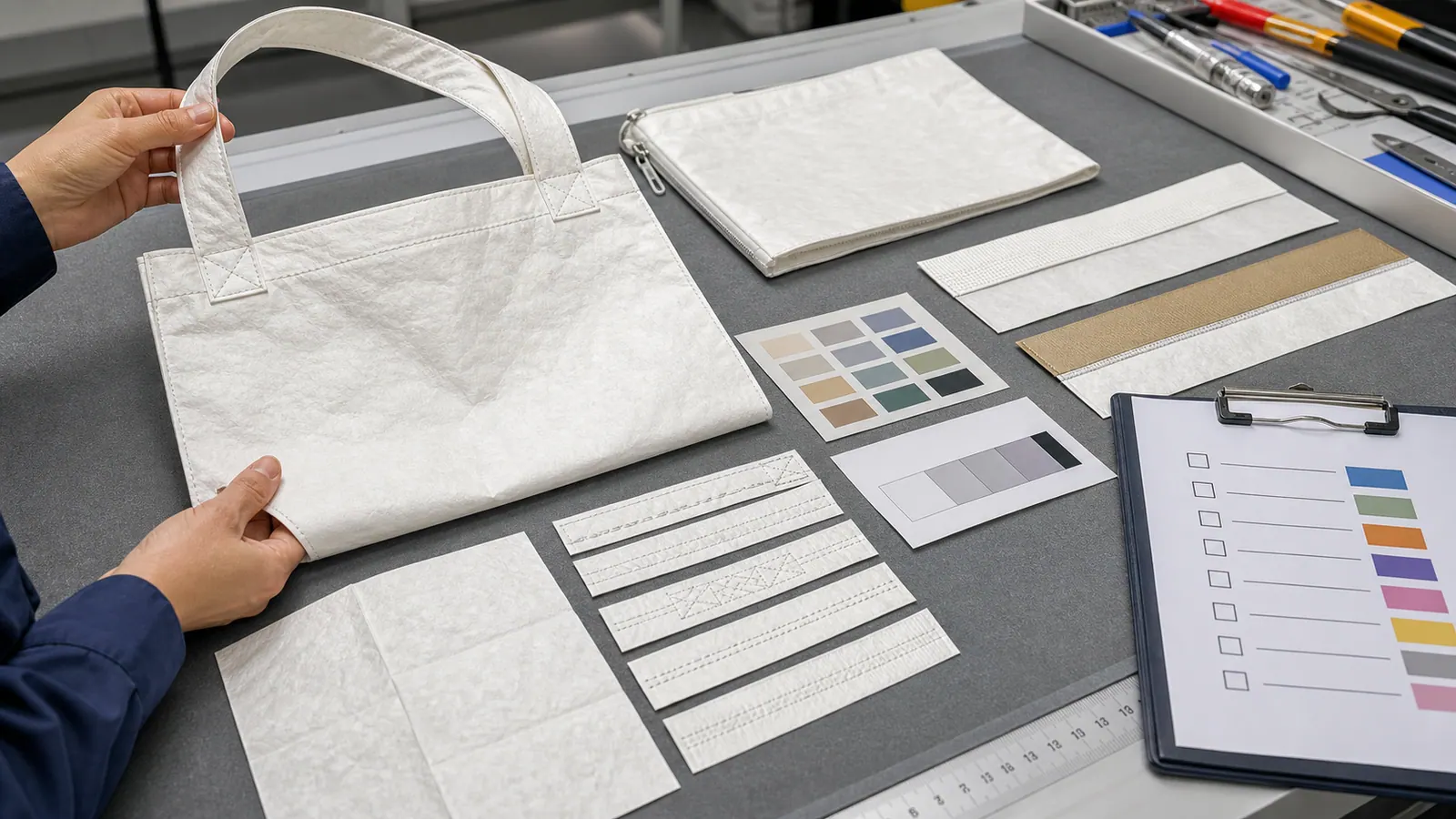
Paper-look bags are often selected because the texture is visible. That texture also changes how lines, small letters, full-color artwork, and surface coating appear after folding and handling.
Bold original artwork should be checked for ink hold, line fill, and rubbing on a wrinkled face.
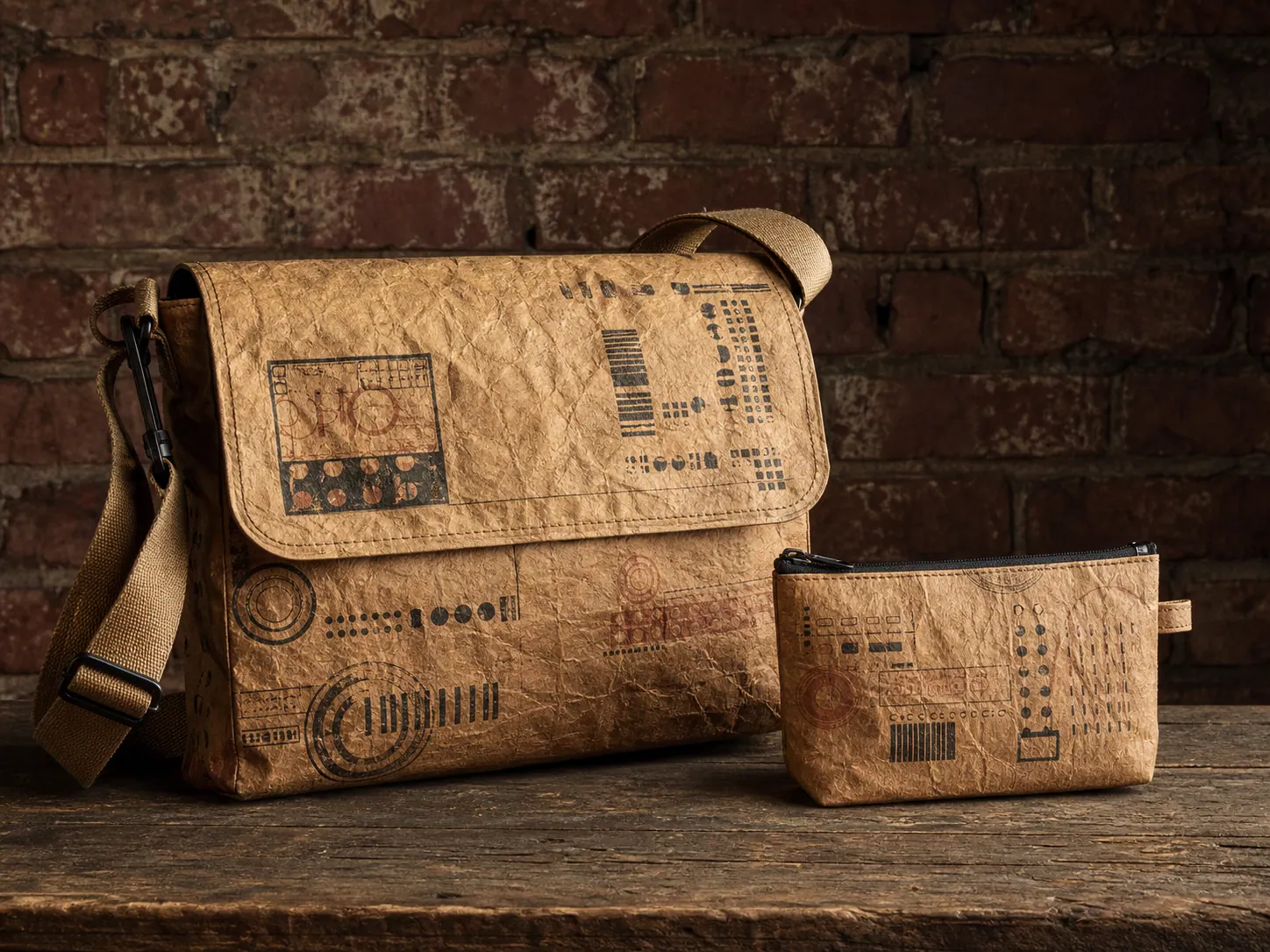
Detailed ticket-like layouts need registration, drying, and heat checks before approval.
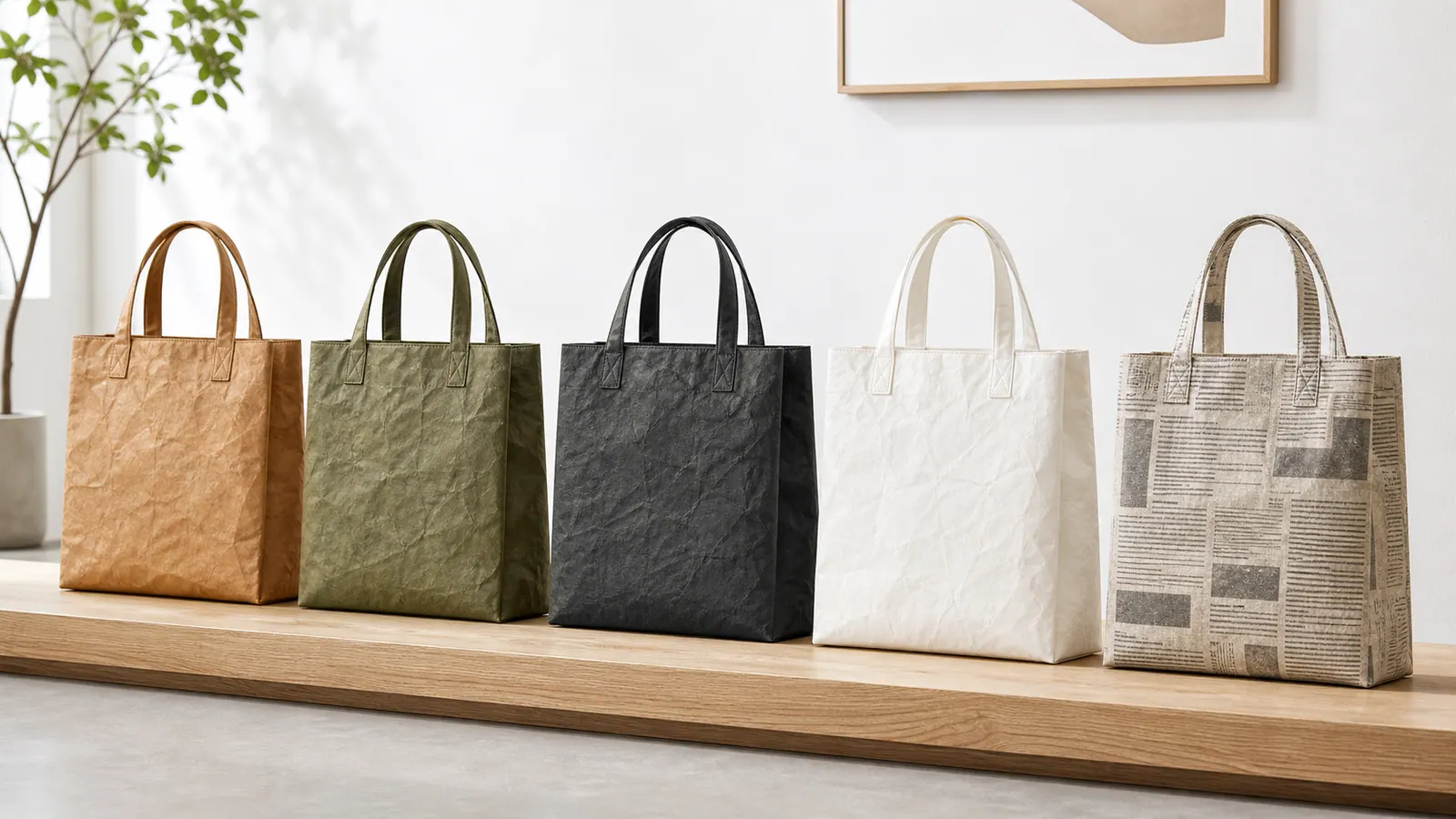
Kraft, olive, black, white, and newspaper-style bases need separate readability checks.
Glossy or water-resistant faces need UV ink, drying, fold, and handle stress checks.
Useful for one- or two-color logos and bold line art. Check texture, rough face, line width, and rubbing.
A candidate for full color and detailed artwork. Confirm UV exposure, drying, registration, and cracking after folding.
Reviewed for roll material or larger production routes. Confirm material tension, surface treatment, and density control.
Equipment and coating dependent. Do not assume general laser or copier suitability without material testing.
Published Tyvek® print guidance treats the material as an HDPE-based sheet rather than ordinary paper. For Tyvek-style materials and washable paper, test the exact material instead of transferring conditions from a different sheet.
Tyvek-style bag sourcing should not stop at a tote request. Totes, flat pouches, drawstring backpacks, messenger bags, roll-top backpacks, zipper bags, lunch bags, and cooler-like structures require different reinforcement, lining, closure, and packing decisions.
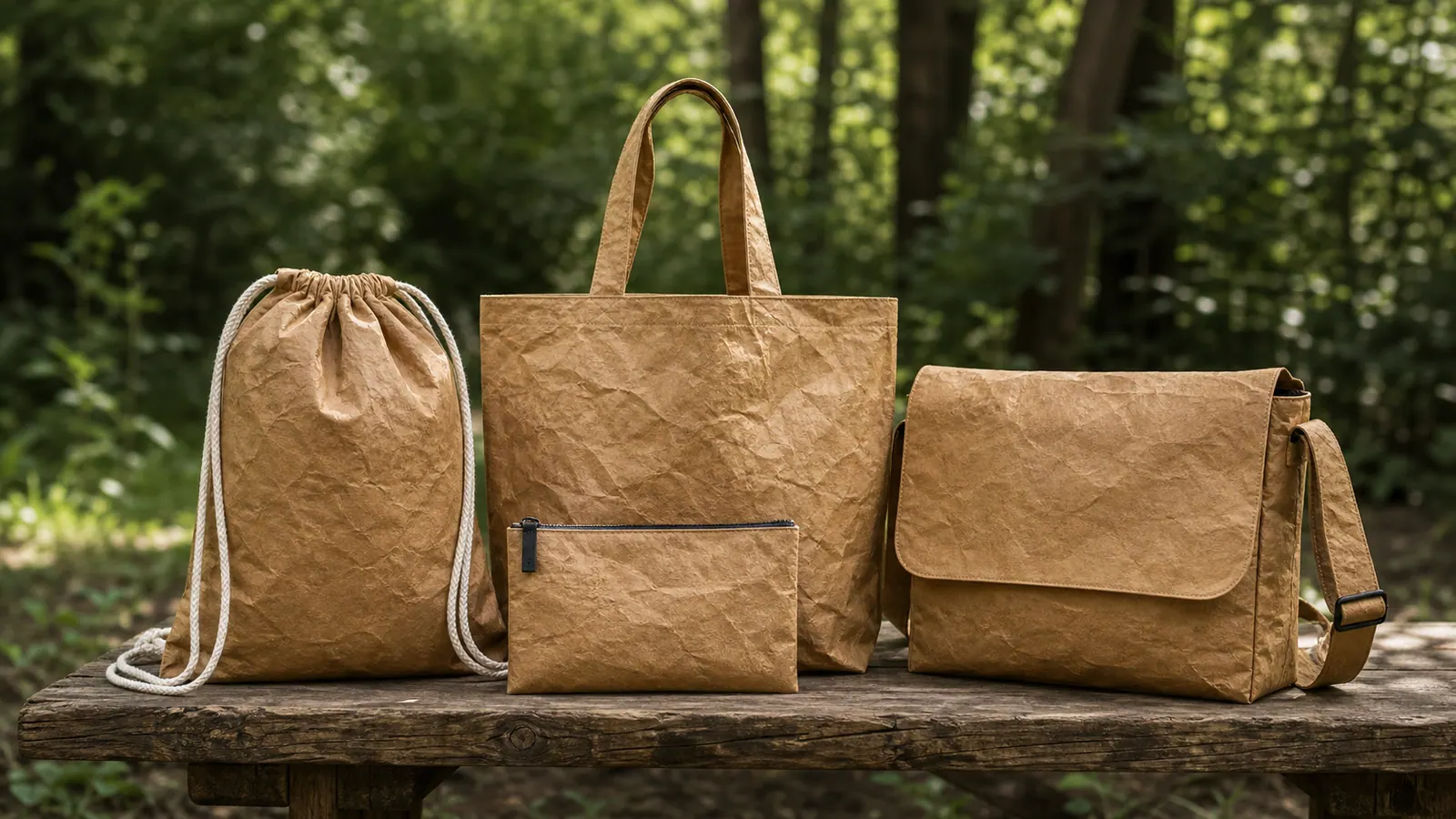
When one material family covers several SKUs, size and sewing specifications should be separated for each shape.
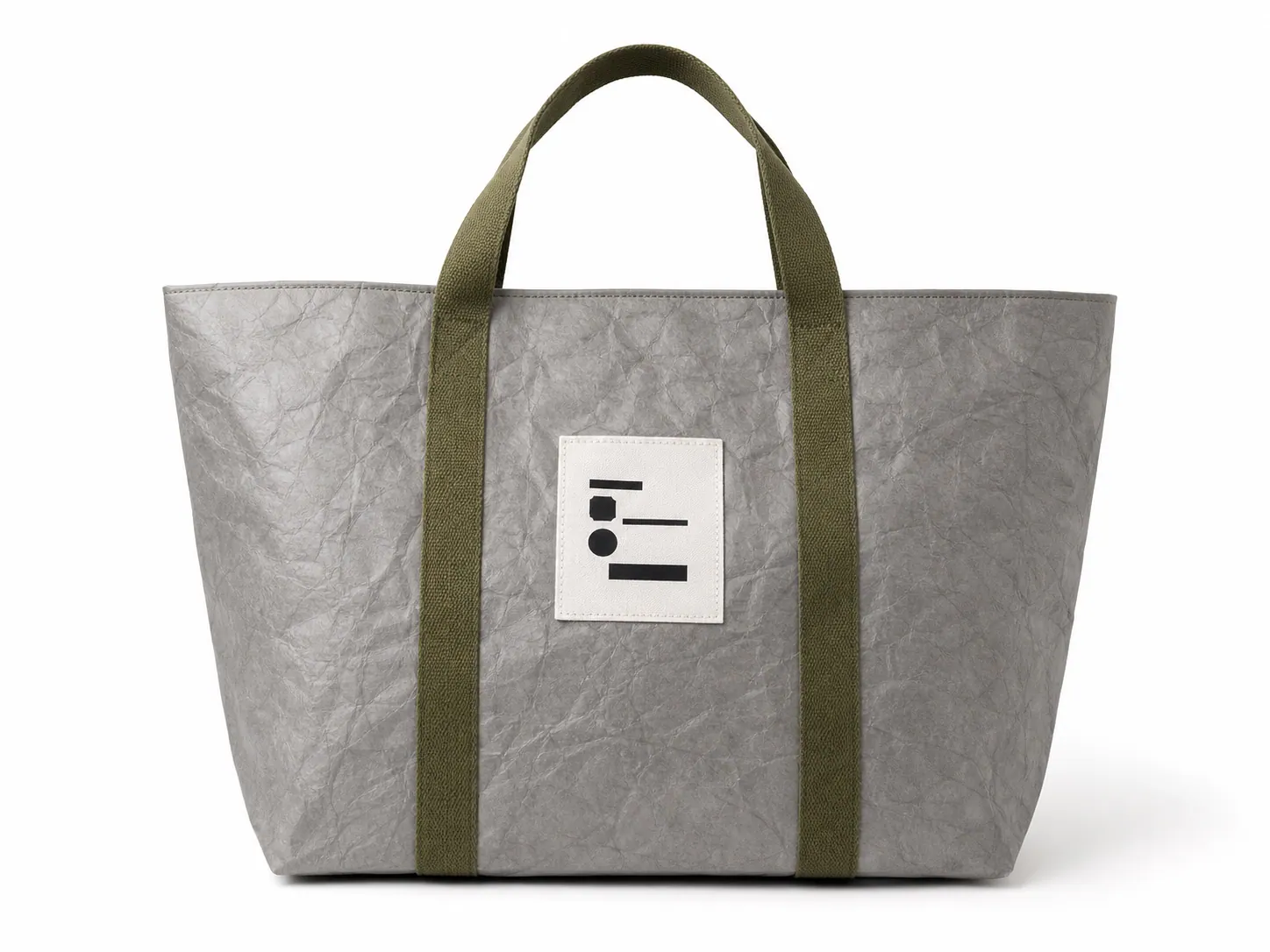
For A4 documents, retail goods, and shopper routes, confirm bottom gusset, shoulder drop, handle reinforcement, and front print area.
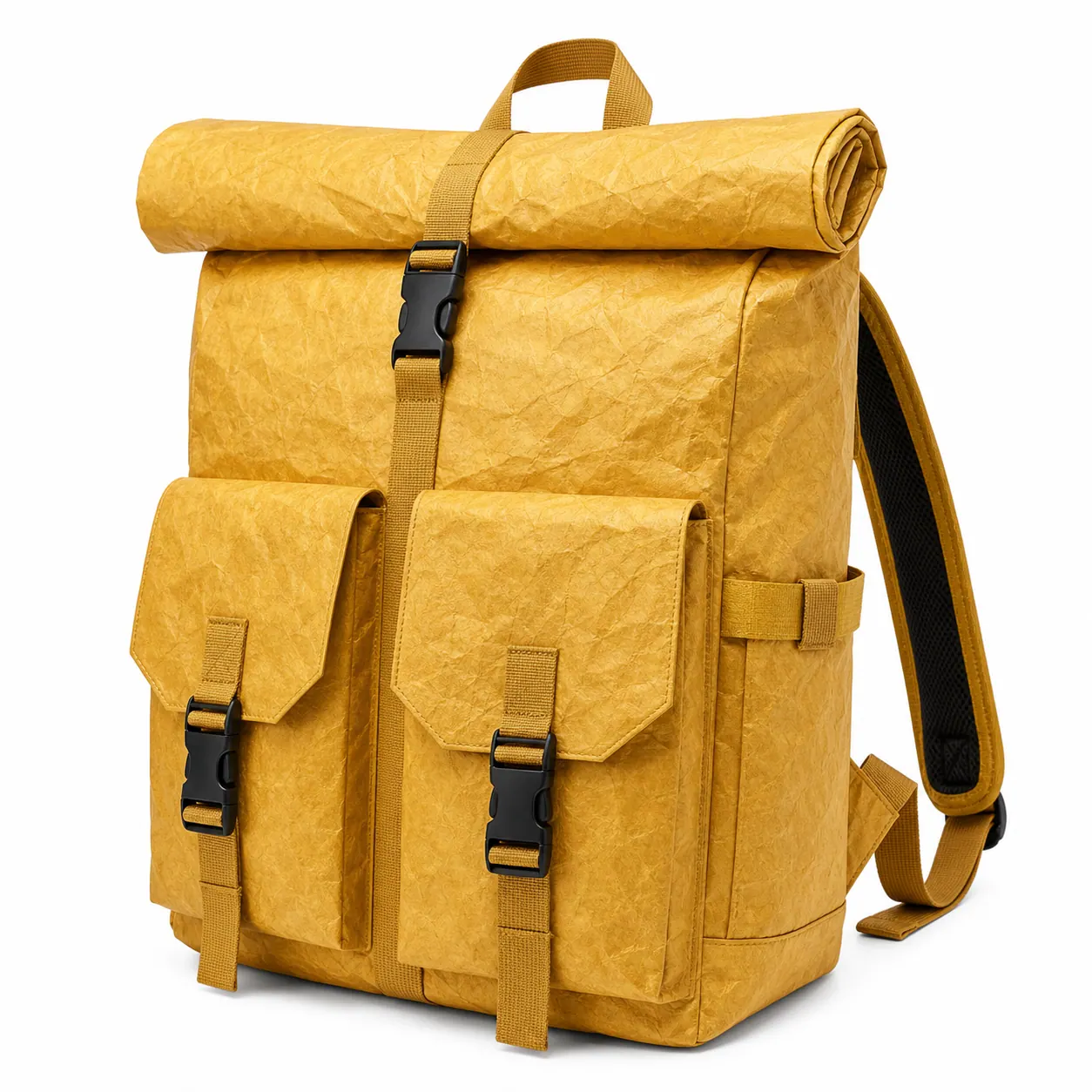
Capacity adjustment, backpack load, pockets, buckles, and shoulder straps add sample checkpoints beyond a tote.
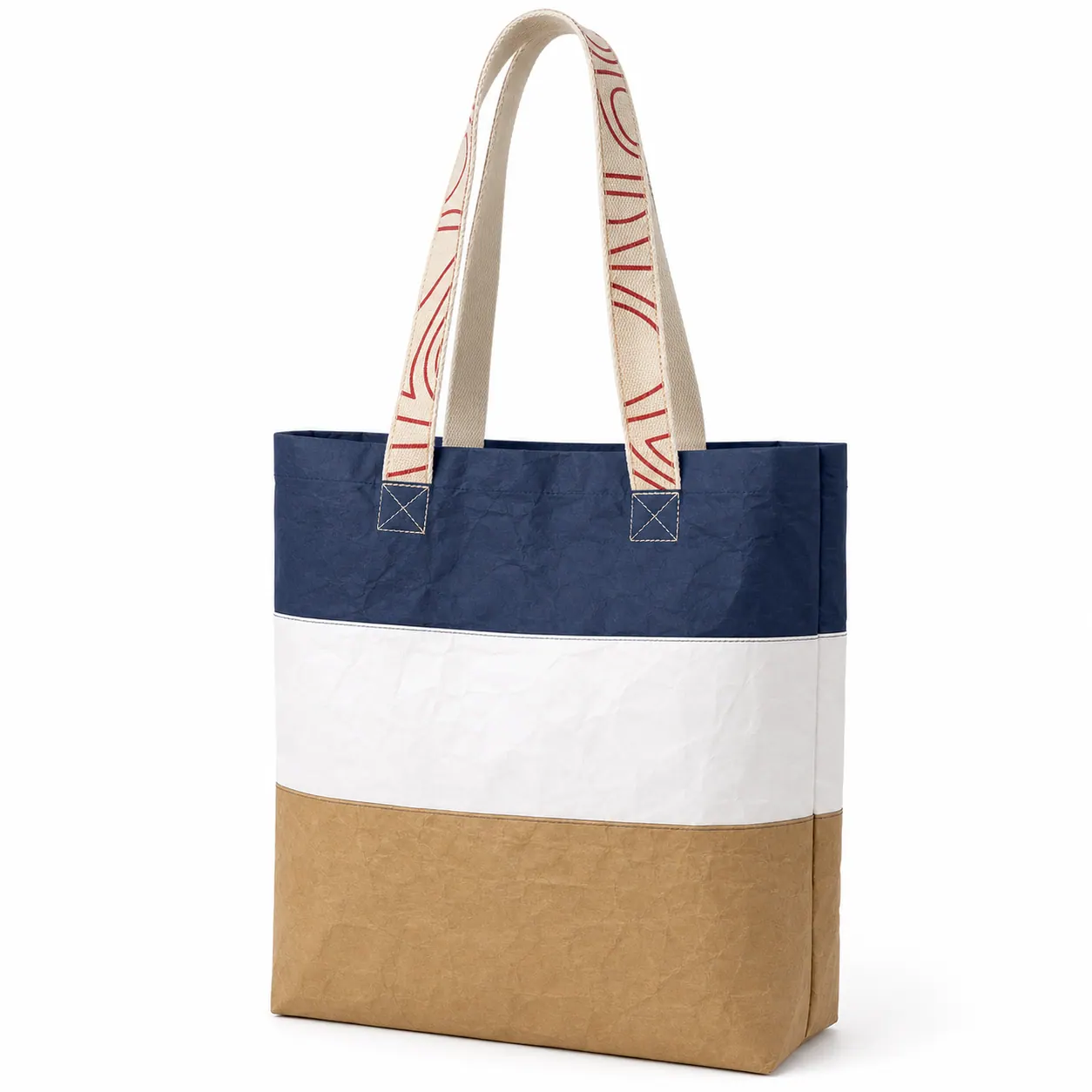
Color-block panels and printed webbing handles need seam allowance, color difference, print position, and stock color checks.
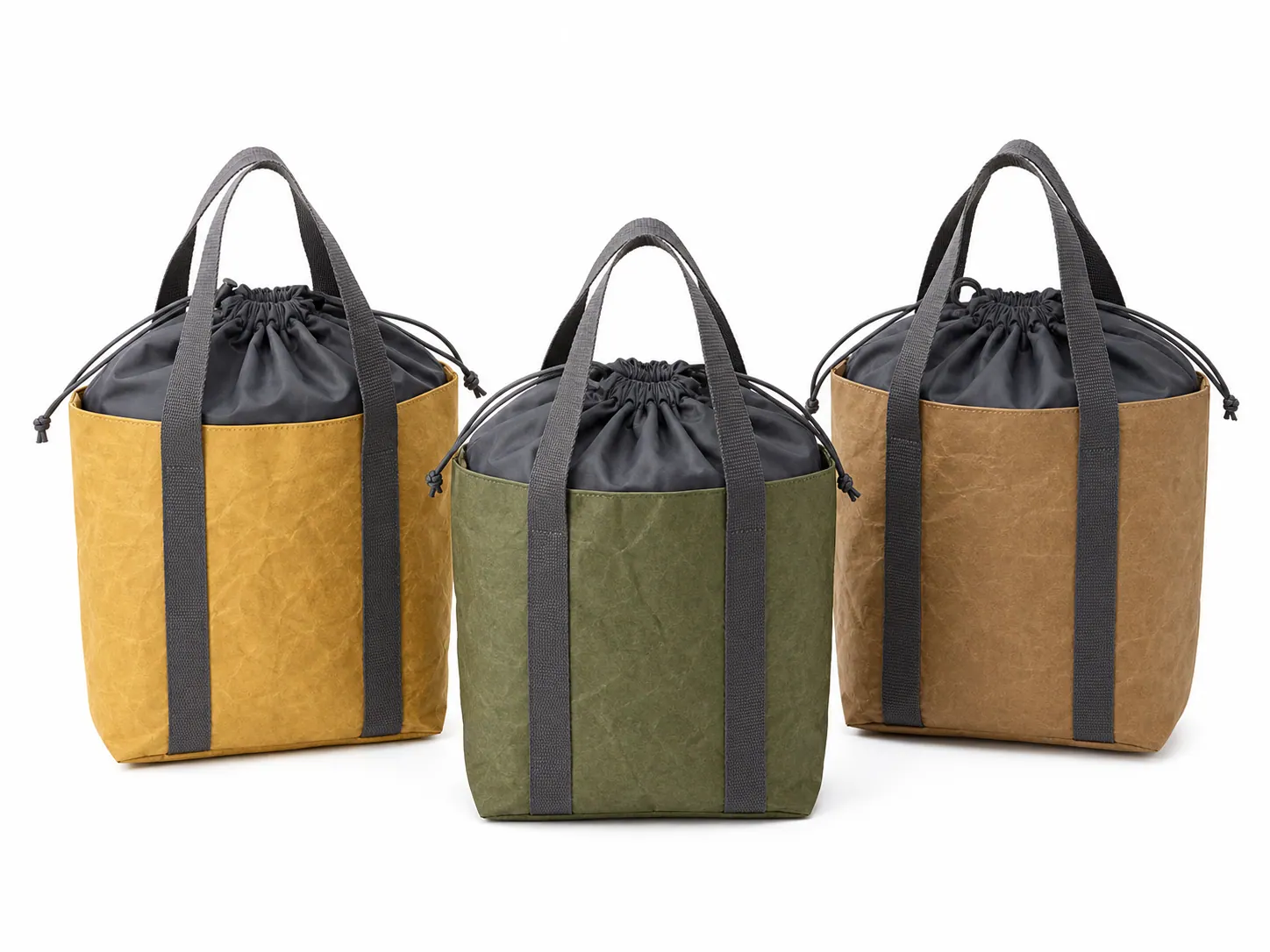
For concealed openings, confirm lining fabric, cord channel, capacity after closing, and handle interference.
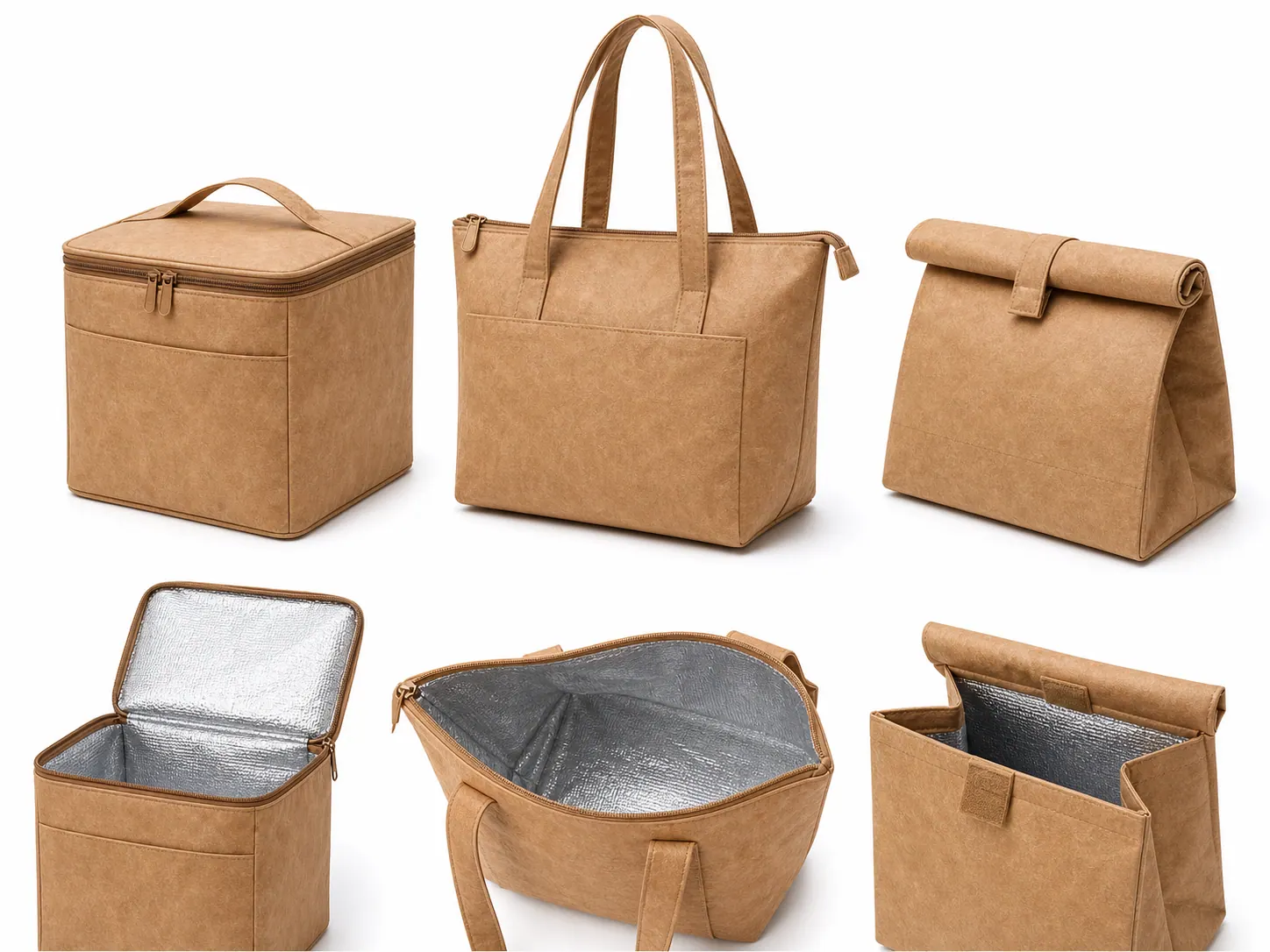
Insulated lining, zipper, roll-top, and hook-and-loop options should be defined as structure conditions, not performance promises.
Use the width, height, thickness, and weight of contents to choose flat, gusseted, square-bottom, or 3D shapes.
Hand carry, shoulder carry, crossbody, and backpack use change strap length, webbing, X-stitching, and stress points.
Zipper, drawstring, roll-top, snap, and hook-and-loop closures change usability and print visibility.
Insulation, pockets, dividers, OPP, folded delivery, hang tag position, and carton marks should be fixed with the shape.
Market examples show Tyvek® and paper-look materials used across totes, drawstring bags, pouches, messenger bags, backpacks, and cooler-style bags. Payload, water performance, cold-retention time, and food suitability still need project evidence.
Paper-look lightweight bags are used for trade shows, cafe collaborations, limited merchandise, food sets, IP goods, and retail packaging. Each route changes the shape, packing, and label work.
Set handle and gusset from A4 documents, samples, and brochure weight.
Review square bottom, insulated lining, zipper, material label, and document needs.
Plan material feel, tags, SKU labels, individual packing, and retail display.
Prioritize unit route, print face, inserted contents, delivery date, and carton marks.
Coordinate size difference, closure, OPP, hang tag, and insert card.
Confirm paper-look texture, light weight, reuse story, and evidence-backed wording.
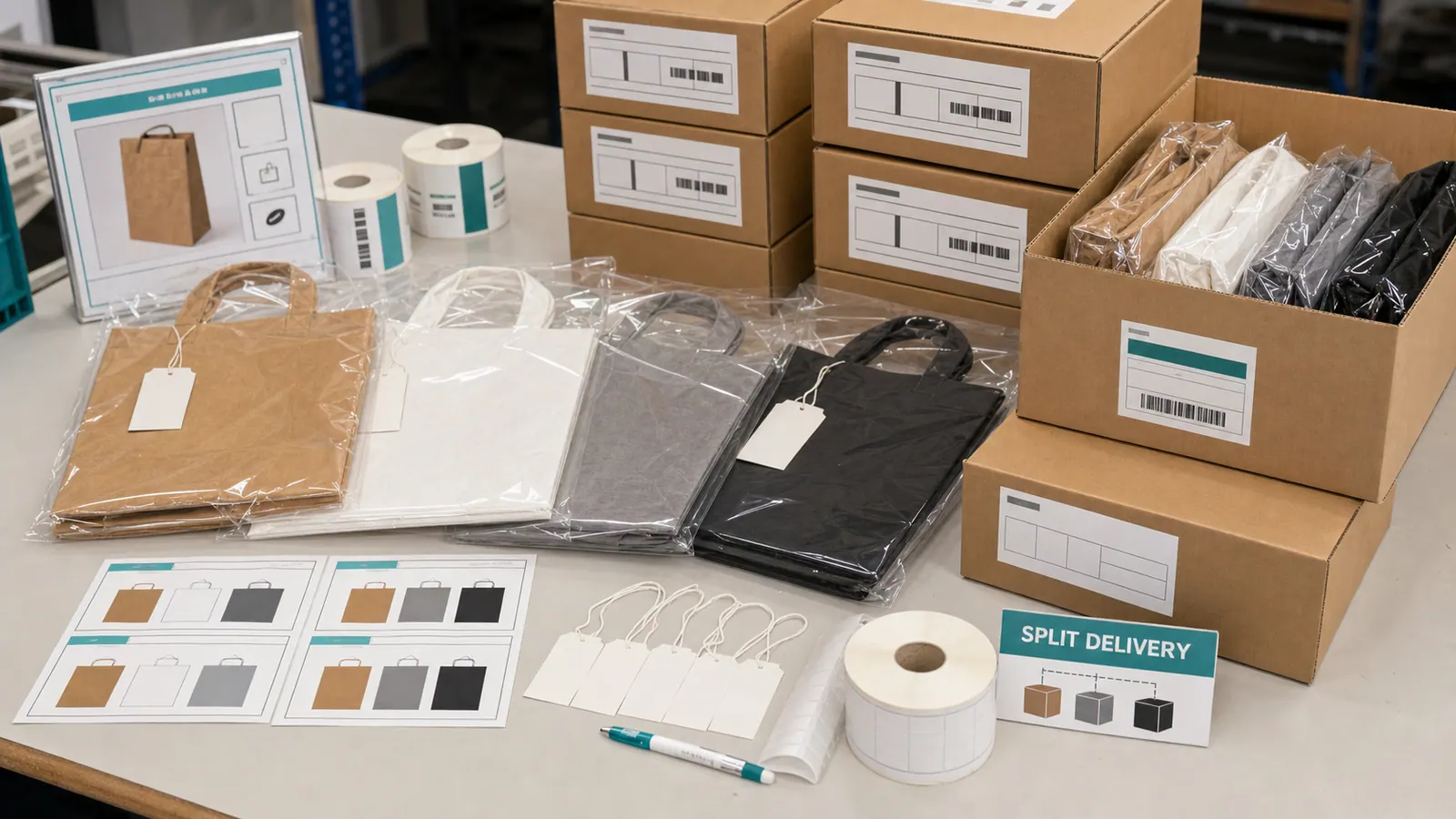
Shape and quantity are not enough for a reliable Tyvek-style bag quote. Material route, desired wording, print area, packing, and SKU split should be shared together.
This page owns Tyvek-style and paper-look material decisions. Broader promotional bag selection and all bag or pouch category choices should stay on the parent routes.
Tyvek® is a DuPont brand material. Genuine-material projects and paper-look alternative projects need different evidence and wording.
Material names and claims should be clarified before sampling so the quotation, label, and final product page stay aligned.
A genuine Tyvek® bag uses DuPont™ Tyvek® material and needs material evidence, grade confirmation, and correct trademark wording. A Tyvek-style bag may use a paper-look HDPE sheet, washable paper, or another material, so the material name, composition, and claim wording must be separated before quotation.
Yes, the request can be reviewed as a genuine-material route. The quotation still needs supplier evidence, grade or type, color, thickness, processing method, and approved trademark wording before the finished item is described as Tyvek®.
Only when the composition supports that wording. If the material is HDPE, PE, PP, nonwoven, coated sheet, or another paper-look material, the page copy, hang tag, and carton text should avoid saying that it is paper.
Common routes include screen printing, UV printing, transfer, offset, flexo, and other equipment-dependent methods. The actual route depends on material face, coating, ink, heat, drying, fold marks, and the artwork detail, so sample printing is needed.
Totes, flat pouches, drawstring bags, messenger bags, roll-top backpacks, zip bags, lunch bags, and cooler-style structures can be discussed. Size, payload, closure, lining, reinforcement, and packing method should be confirmed by sample.
Those claims need evidence. Confirm the material composition, coating or lamination, seam and closure scope, test condition, local recycling assumptions, and the exact wording before using the claim in product pages or packaging.
The shape and insulated lining can be reviewed, but food-contact suitability, condensation, cold-retention wording, and safety documents are conditional. Do not publish fixed performance values before the material and structure are verified.
Share the use case, target contents, required material route, size, gusset, handle, closure, lining, artwork, print colors, claim wording, quantity, SKU split, packing, labels, delivery destination, and required arrival date.
Share whether the project needs genuine Tyvek®, a Tyvek-style paper-look material, washable kraft texture, insulated lining, printed artwork, packing, and SKU labels. We can organize the quotation inputs around the actual evidence required.