
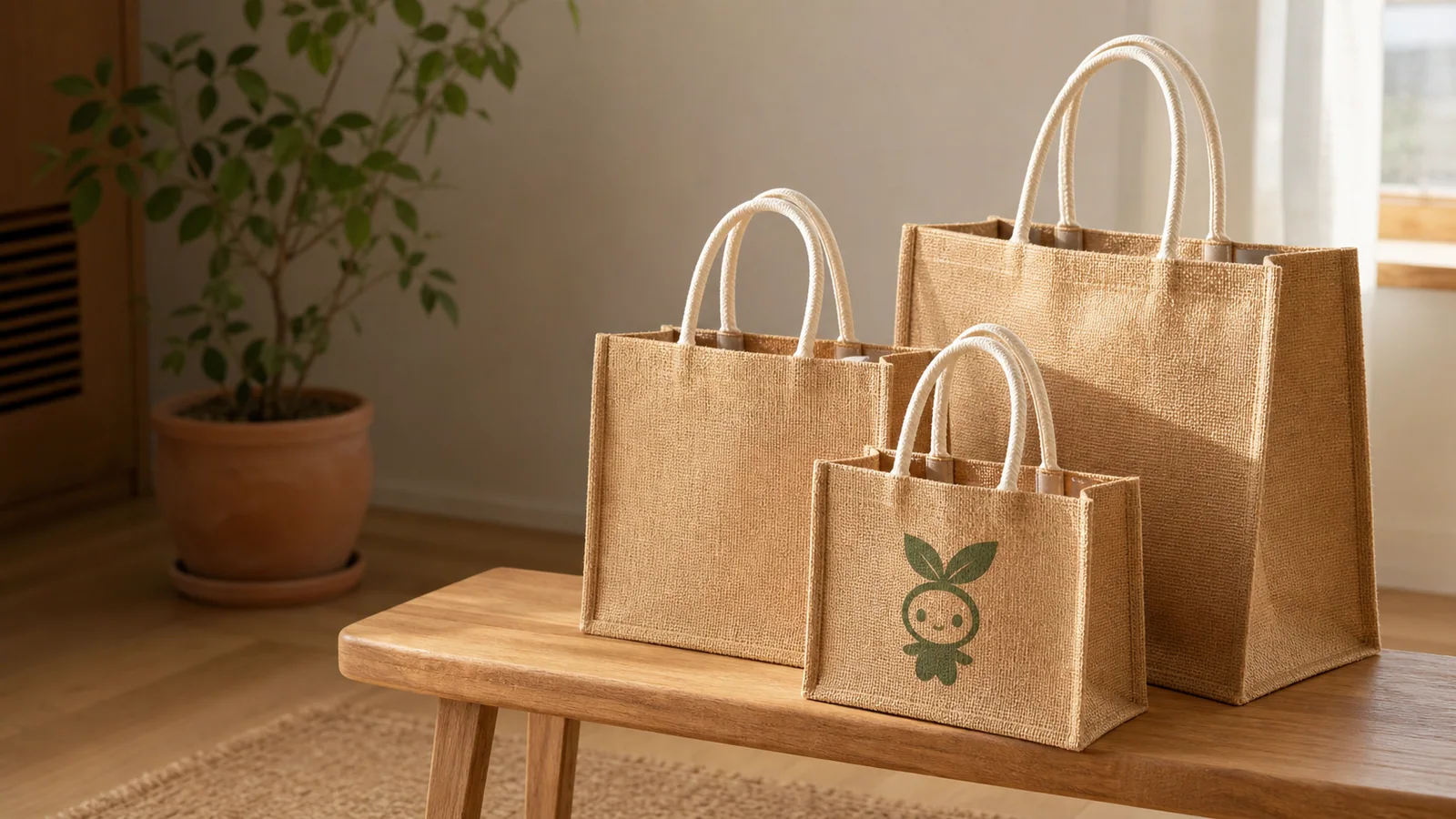
Custom Jute Bag Manufacturer
Control Natural Fiber Variation
And Print Reproduction
Custom jute bag projects need more than a price per bag. Before sampling, define natural fiber tone, slubs, logo line width, solid ink coverage, white underbase, PP lamination or inner lining, handle construction, packaging, SKU labels, and inspection criteria so the quote and production sample describe the same product.
Natural jute needs tolerance control before artwork approval
Jute is selected for its visible natural texture, but that same surface affects print clarity and inspection. A usable custom jute bag specification separates acceptable fiber variation from true defects, then connects that tolerance to artwork, construction, packing, and delivery rules.
Material sample
Approve fabric tone, weave density, stiffness, slubs, lamination, odor, and hand feel on physical samples.
Artwork proof
Check line width, text size, print area, white underbase, solid coverage, and color tolerance on the actual surface.
Production controls
Define handle sewing, gusset shape, packing unit, SKU labels, carton marks, inspection photos, and delivery split.
Match the jute bag structure to the buying scenario
A trade show handout, a cafe gift set, and a retail merchandise bag can all use jute, but the construction risks are different. The fastest RFQ route is to define the contents and sales or distribution context first.
| Use case | Contents | Useful construction | Risk to confirm |
|---|---|---|---|
| Trade show or corporate giveaway | Catalogs, samples, handouts | Flat or bottom-gusset jute tote | Logo visibility, event date, carton split |
| Eco retail campaign | Daily goods, shopper use | Reusable body with reinforced handles | Natural tone range, handle comfort, shelf appearance |
| Cafe or food gift set | Bottles, baked goods, small kits | Bottom gusset, inner bag, lamination option | Odor, shedding, contact requirements, shape retention |
| Retail or brand packaging | Gift sets, lifestyle goods, apparel accessories | Thicker body, hang tag, woven label | Rustic texture versus premium brand presentation |
| Character or IP merchandise | Acrylic stands, cards, small plush goods | Patch, label, kraft band, SKU packing | Artwork detail, color shift, SKU mixing |
How fiber variation affects print and inspection
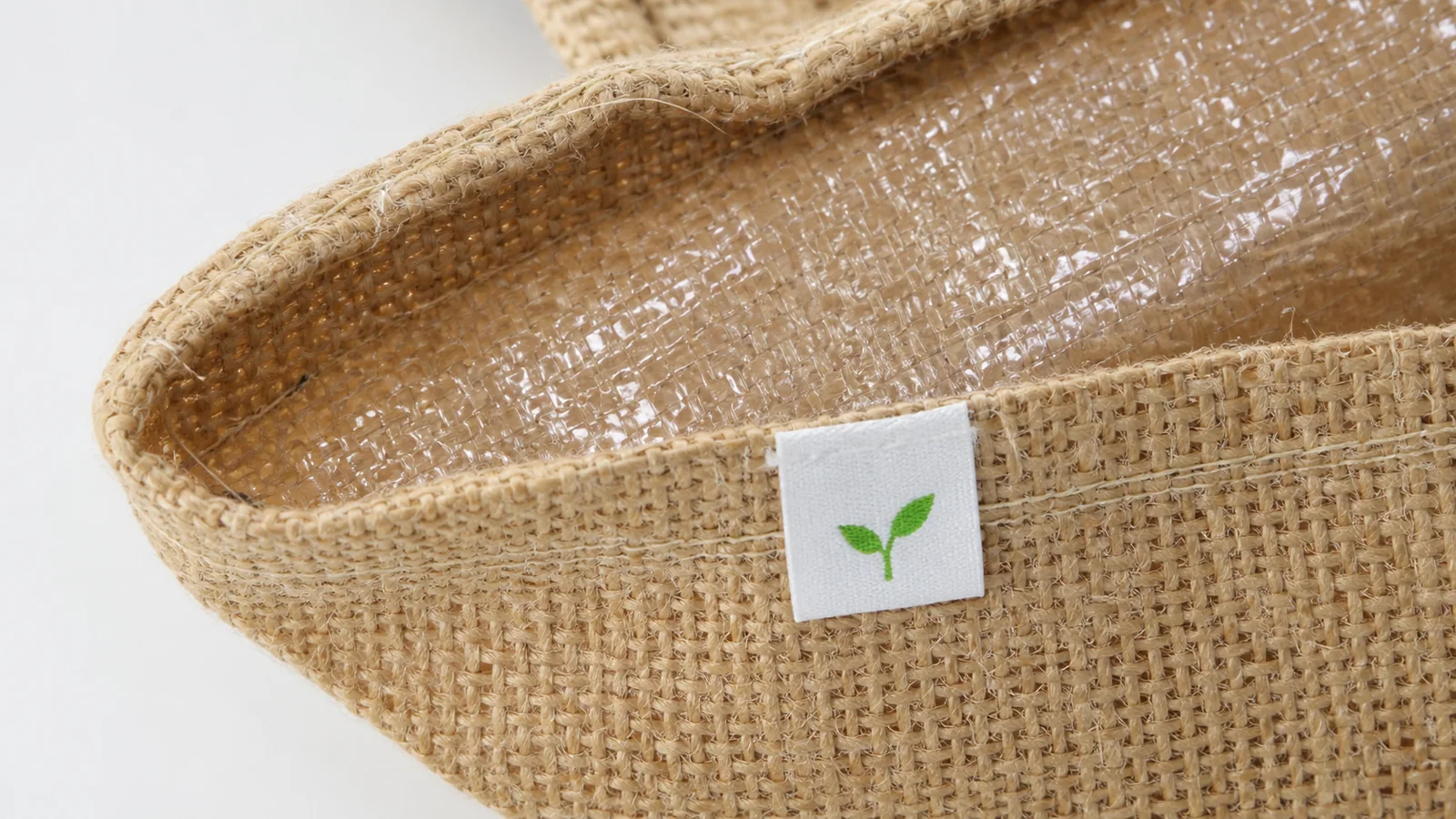
Jute fibers do not create a perfectly smooth and uniform canvas. Tone variation, slubs, uneven weave, and small raised fibers can interrupt fine lines or make a large solid area look textured. These effects should be approved as part of the material character, while stains, large damage, or severe print loss are handled as separate defects.
- Approve jute tone and weave from physical samples, not only a digital mockup.
- Record acceptable slubs and unacceptable contamination with reference photos.
- Review print placement together with fabric roughness before freezing artwork.
Logo printing decisions for a rough jute surface
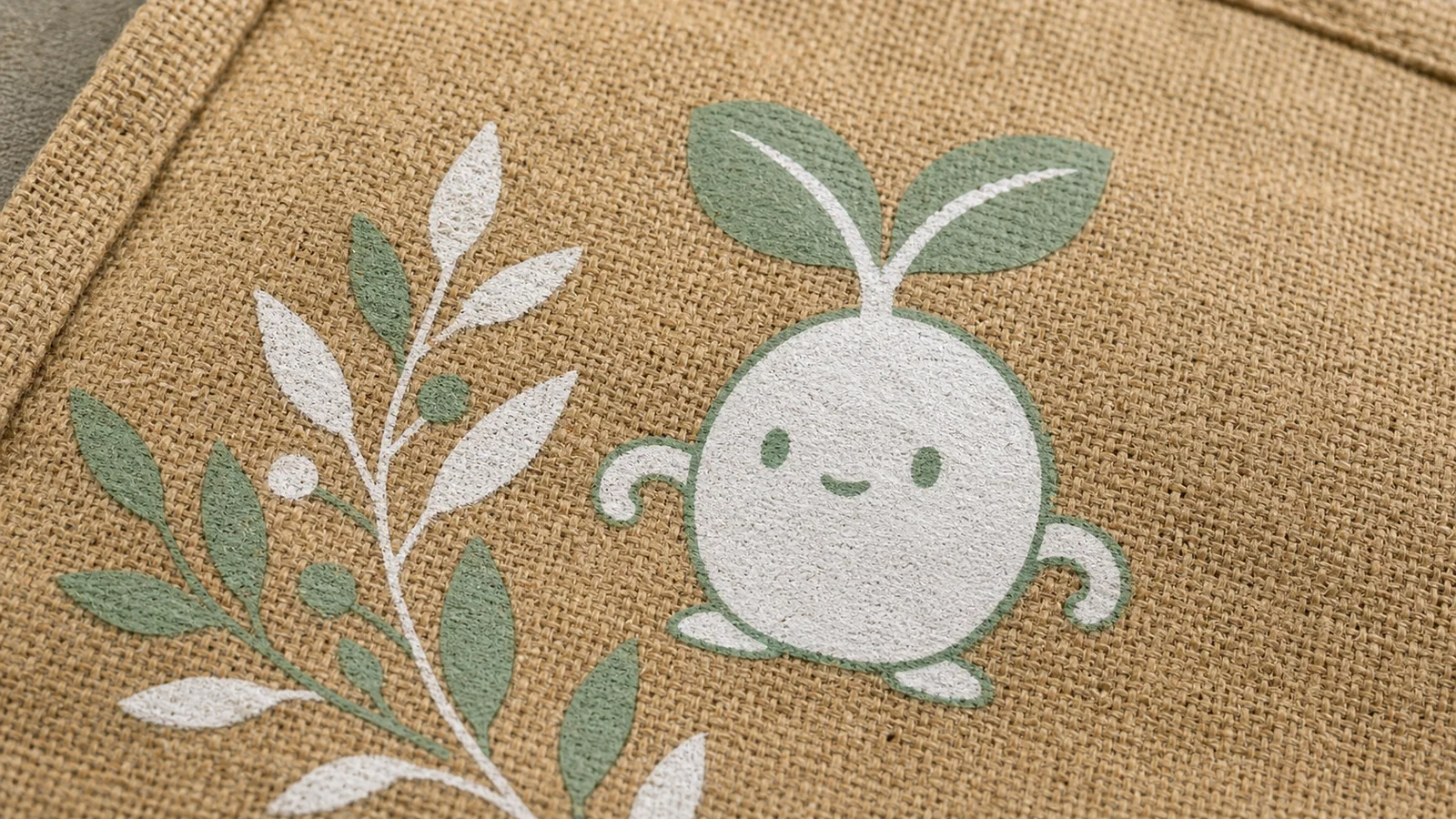
Fine text, gradients, strict brand colors, and large solid shapes need early testing on jute. Depending on the artwork, screen printing, heat transfer, embroidery, woven labels, or patches may be more reliable than forcing a detailed print onto a coarse weave.
| Decision | Buyer input | Sample check |
|---|---|---|
| Logo and print | Vector artwork, color count, line width, print area | Missing edges, ink spread, white underbase, readability |
| Material look | Target tone, thickness, stiffness, reference texture | Slubs, tone range, front/back weave difference |
| Alternative branding | Patch, tag, woven label, embroidery option | Logo visibility, attachment position, cost driver |
Lamination, lining, gusset and handle construction
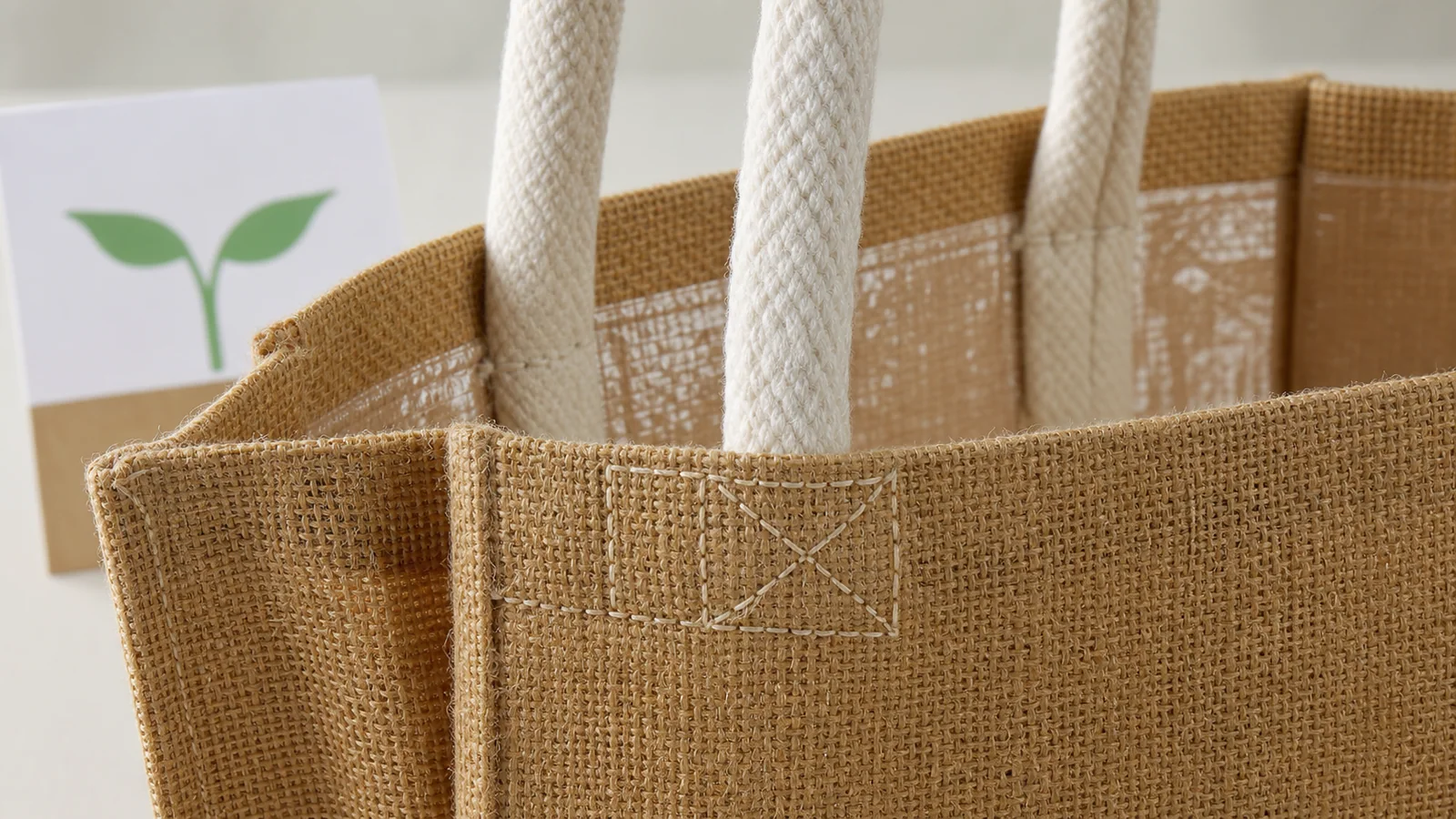
Some jute bag programs keep the raw natural surface visible, while others need PP lamination, an inner bag, a stiffer mouth, or stronger handles. Decide this from the contents, handling style, sales channel, and any food or cosmetic packaging condition rather than treating lamination as a default upgrade.
- Lamination can improve structure and reduce shedding, but it changes feel and sustainability positioning.
- Handle material, handle drop, and reinforcement stitch should be checked with realistic loaded contents.
- Bottom gusset, opening width, and inner finish need sample approval when the bag holds bottles or gift sets.
SKU packaging, carton marks and delivery control
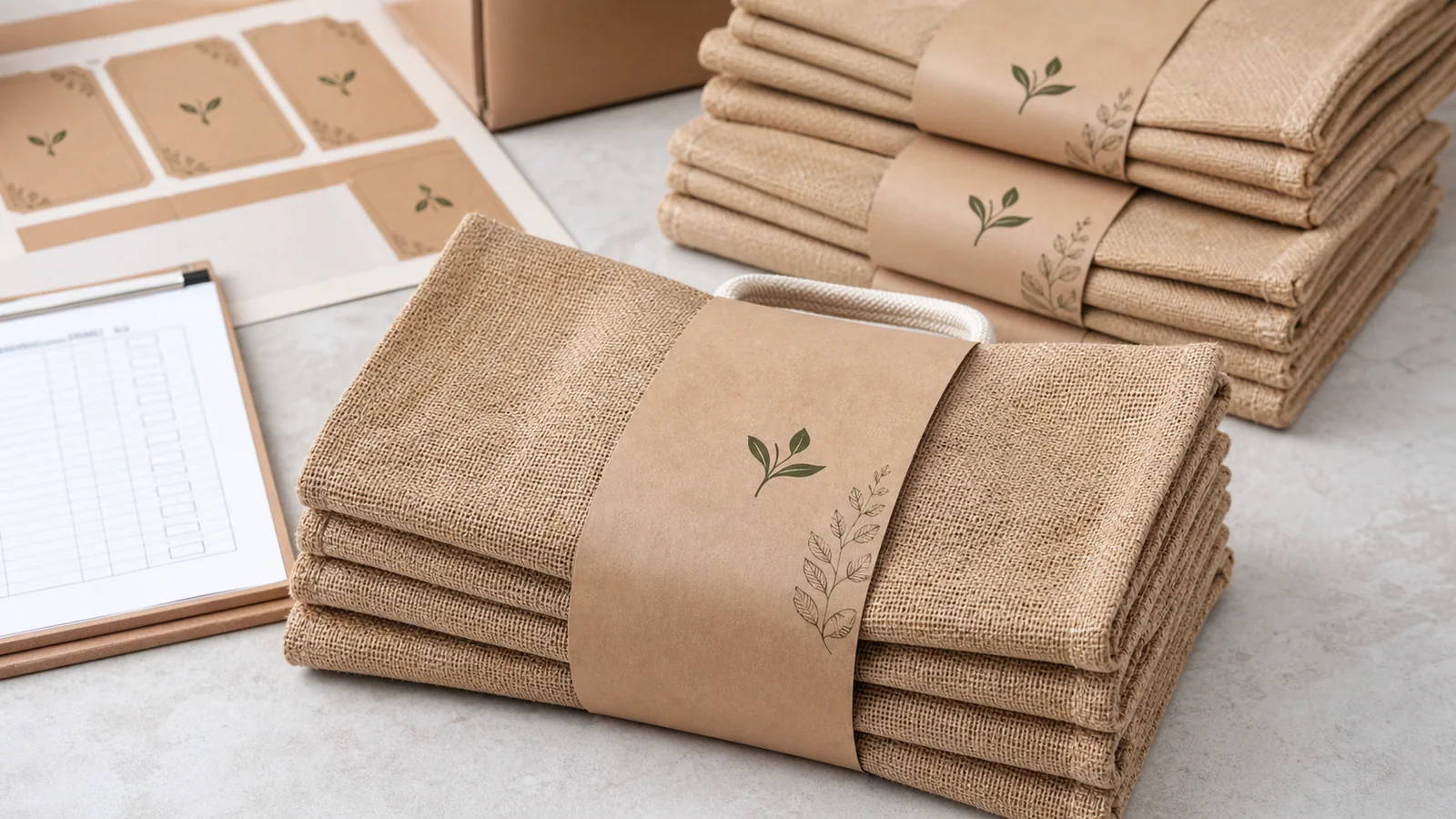
For promotional campaigns and retail merchandise, the bag itself is only one part of the order. Hang tags, kraft bands, OPP bags, barcode labels, carton marks, and split delivery can prevent sorting mistakes when multiple designs or destinations are involved.
- Share quantity by design, color, destination, and backup stock before pricing.
- Confirm whether the bag is a giveaway, a retail item, or part of a boxed set.
- Define carton labels by event, SKU, quantity, destination, and delivery deadline.
What to prepare before requesting a quote
A useful quote needs comparable conditions. If the material, print, packing, and inspection scope are vague, the lowest price can describe a different bag from the one your team actually needs.
Bag specification
Outer size, gusset, handle length, fabric tone, weave, lamination, lining, mouth structure, expected contents.
Artwork specification
Logo file, color count, target color, print area, minimum line width, small text, white underbase decision.
Delivery specification
Quantity, SKU split, packaging, hang tag, label, carton mark, destination, required date, sample approval plan.
Related English pages for bag specification routing
This page owns the custom jute bag manufacturing intent. Use the related pages when the project is broader promotional-bag planning, canvas tote comparison, or general bag and pouch routing.
FAQ
Common sourcing questions focus on material tolerance, print reproduction, construction, packaging, and quote inputs.
What should a custom jute bag RFQ include?
Share the bag size, gusset, handle type, fabric tone, lamination or lining needs, logo artwork, color count, print area, quantity by SKU, packaging, carton marks, delivery address, and target schedule. If food, cosmetics, or environmental claims are involved, state those requirements before sampling.
How is natural fiber variation handled in jute bag production?
Jute is a natural fiber, so tone variation, slubs, weave thickness, and small surface irregularities need agreed tolerance samples. The practical route is to approve reference photos, define unacceptable stains or damage separately, and inspect production against those examples instead of expecting a perfectly uniform fabric surface.
Can detailed logos or small text be printed on jute bags?
Some detailed artwork can be printed, but coarse jute weave can break fine lines, soften edges, and create uneven solid areas. Before bulk production, review vector artwork, minimum line width, clear space, print area, color count, and whether a white underbase, heat transfer, patch, or woven label is better.
Which printing methods can be considered for custom jute bags?
Screen printing, heat transfer, digital transfer, embroidery, woven labels, and patches may be discussed depending on the artwork, jute surface, color count, durability target, and budget. The final method should be approved on the actual material or a closely matched sample.
Do custom jute bags need PP lamination or an inner lining?
It depends on the use case. Lamination or lining can improve structure, reduce shedding, and protect contents, but it changes hand feel, appearance, cost, and sustainability positioning. Gift sets, cafe programs, food-adjacent packaging, and retail use often need this decision made early.
How should handle strength and gusset size be checked?
Use the expected contents and carry style to define handle material, handle drop, reinforcement stitch, gusset depth, and opening width. Samples should be loaded with representative items so the team can review shape, comfort, seam stress, and packing fit.
Can custom jute bags be prepared for retail or event distribution?
Yes. Hang tags, kraft bands, OPP bags, SKU labels, barcode or JAN labels, carton marks, and split delivery can be planned as part of the OEM scope. For multi-design projects, quantity by design and packing rules should be fixed before mass production.
Is a jute bag always the best eco promotional bag option?
Not always. Jute works well when a natural, rustic, reusable look is important. If very fine print, strict color matching, ultra-light folding, waterproof use, or a smooth surface is more important, canvas, non-woven, rPET, or foldable eco bag pages may be a better route.
Turn a natural jute look into a controllable OEM specification
Send the size, contents, artwork, color count, quantity, SKU split, packaging, destination, and target schedule. We will organize the jute material tolerance, print method, construction choices, sample checks, and quote conditions before production.