
Body fabric
Confirm recycled PET source, content range, weight, color, coating, and available document scope.

Plan recycled PET material scope, certificate needs, claim wording, printing, folding, and packaging in one OEM specification.
Custom RPET bags should be quoted after the recycled PET scope, covered components, document issuer, lot coverage, and approved claim wording are clear. For promotional or retail eco bags, confirm what can be proven before using broad recycled-content wording on hangtags, product pages, or packaging.
RPET wording is only useful when buyers know which part it describes. Body fabric, handles, piping, woven labels, storage pouches, hangtags, and packing can follow different material routes, so the RFQ should separate each component before a claim is printed.
Confirm recycled PET source, content range, weight, color, coating, and available document scope.
Check handles, trims, pouches, labels, and packing separately instead of assuming all parts are RPET.
Use wording such as “RPET body fabric” only when the verified evidence supports that scope.
If a certificate or transaction proof is required, specify it before quotation. Adding proof requirements after sampling can change the fabric source, supplier route, and production lot.
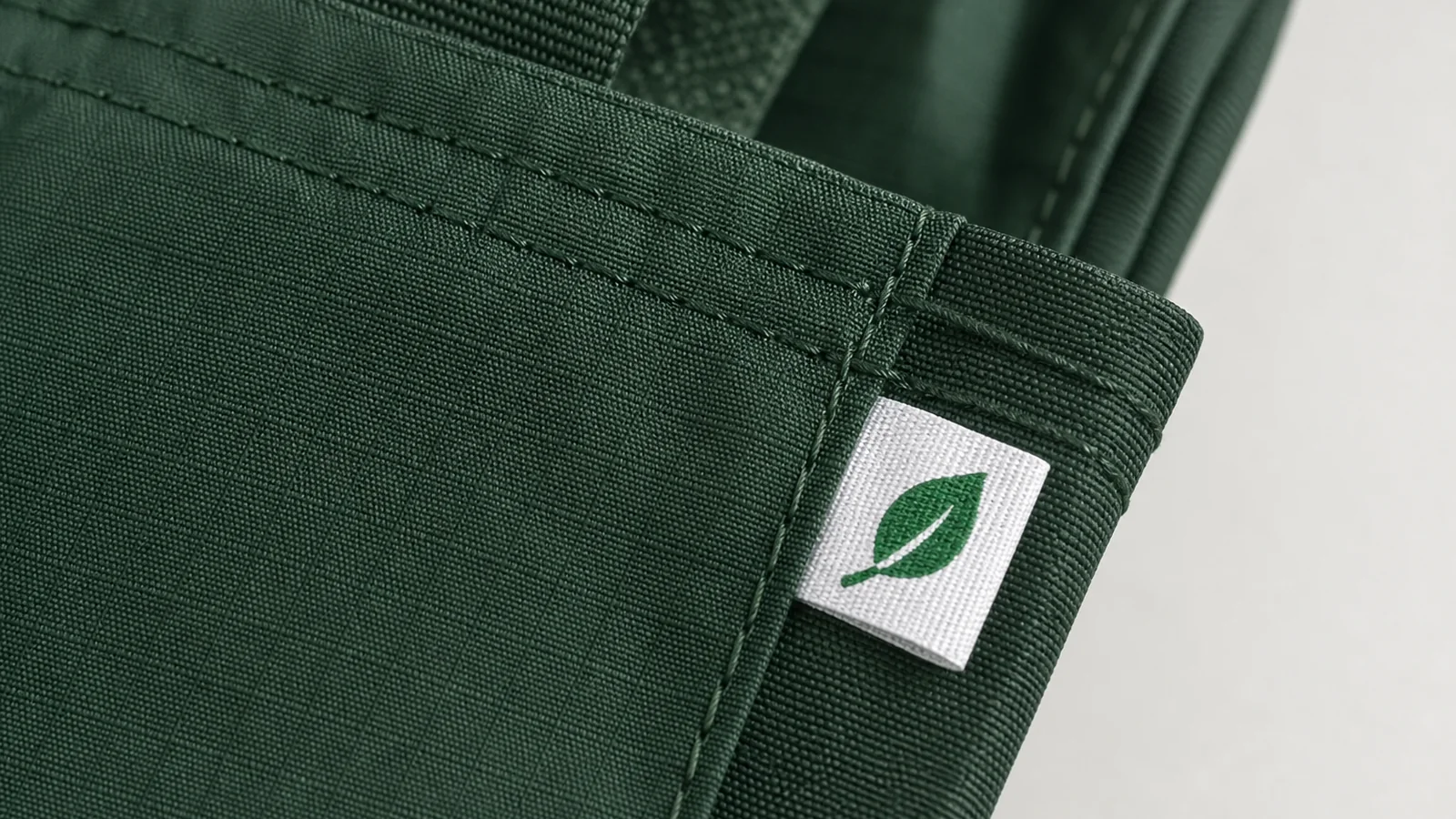
For B2B sourcing, decide the proof and claim conditions before choosing colors, artwork, and packing.
| Check area | Define before quotation | Risk to avoid |
|---|---|---|
| Material scope | Body only, handle included, pouch included, label included | Claim wording covers parts that are not documented |
| Fabric and content | Recycled PET content target, denier or weight, color, coating | Requested color or thickness cannot support the proof route |
| Documents | GRS, RCS, supplier certificate, transaction proof, recipient language | A document exists but does not cover the order lot or component |
| Printed claim | Hangtag, product page, carton mark, care label wording | Unsupported environmental wording appears in sales materials |
| Printing | Screen, transfer, DTF, sublimation candidate, number of colors | Heat, folding, or fabric texture changes print appearance |
| Packing and SKU | OPP, hangtag, barcode or JAN, carton label, split delivery | SKU labels and proof records do not match the packed goods |
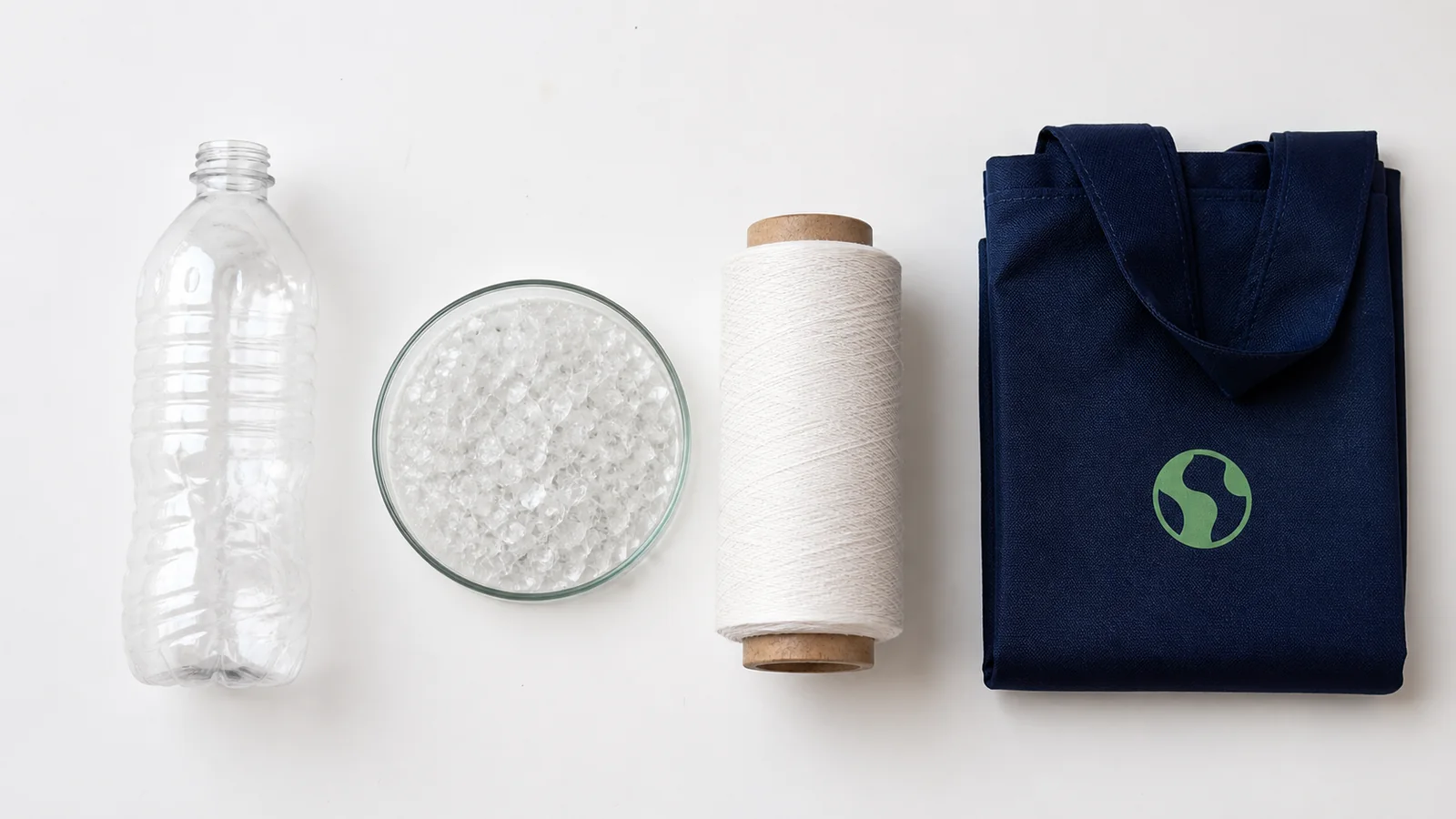
RPET can be reviewed for lightweight totes, foldable shopping bags, drawstring routes, pouch-packed grocery bags, and selected polyester structures. Similar-looking bags may require different proof, sewing, print, and packing decisions.
Good for campaign handouts, retail gifts, and corporate novelty bags where logo area matters.
Review folded size, elastic loop, pouch, pocket position, and print marks at fold lines.
Confirm polyester suitability, color shift, panel layout, and sample approval before bulk production.
Align RPET wording, care text, barcode or JAN label, and document records by SKU.
Environmental wording should not be broader than the evidence. A safer RFQ separates “body fabric uses RPET,” “selected parts use recycled polyester,” and “certificate required for this lot” before hangtag or product-page copy is approved.
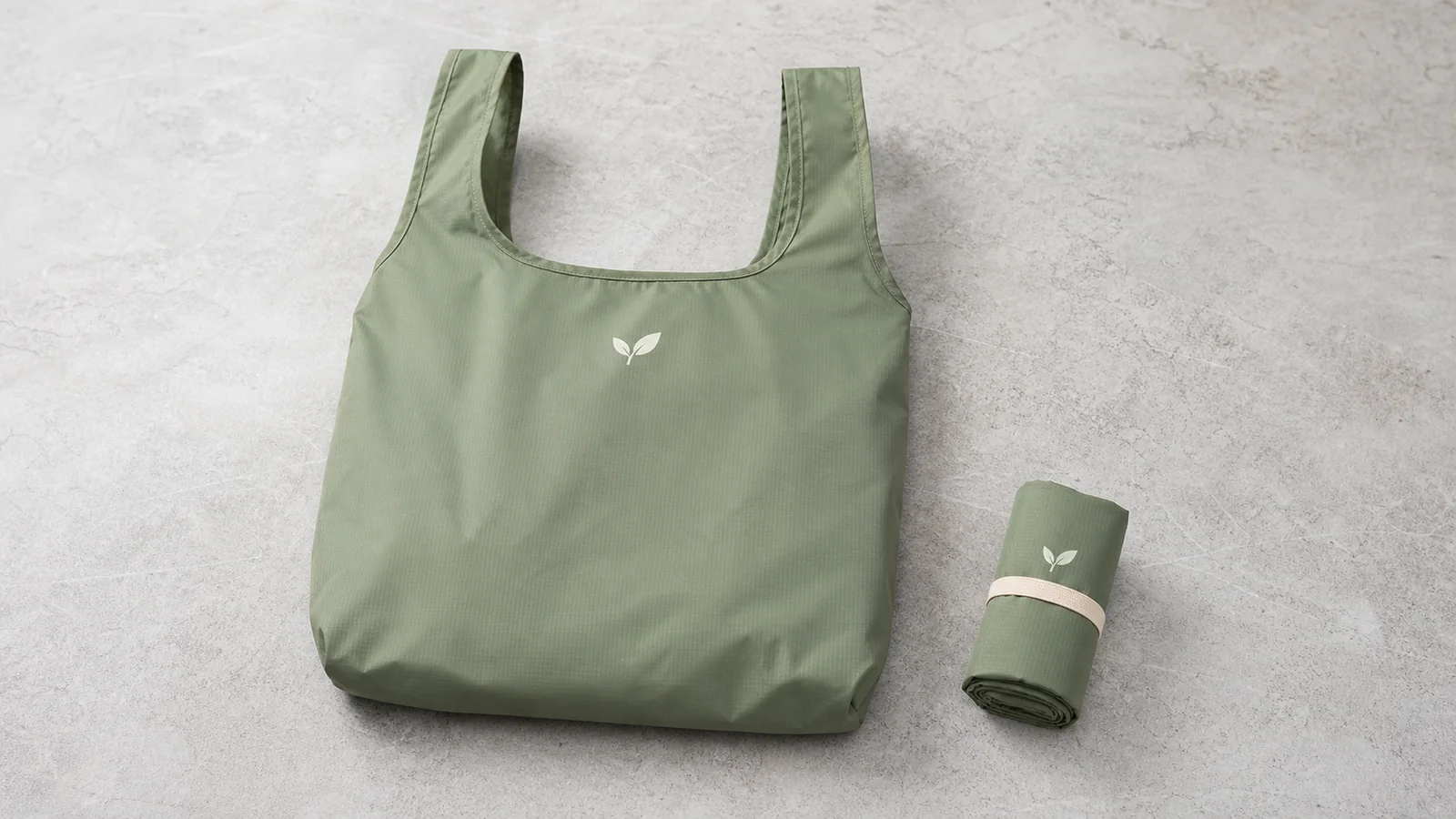
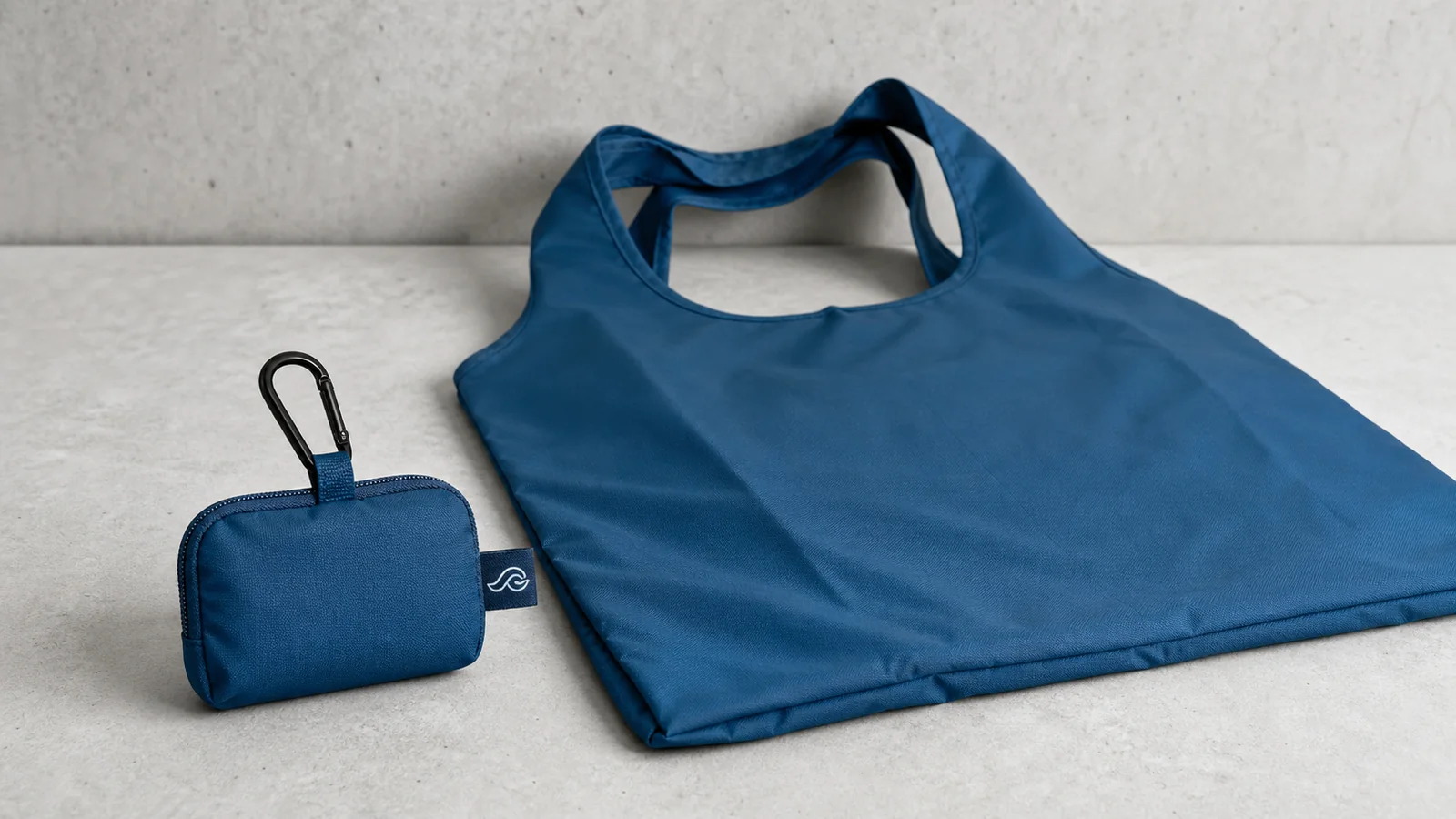
When custom RPET bags have multiple colors, artwork versions, or destination splits, proof records and packing labels need the same SKU structure. Confirm carton marks, individual packing, hangtags, and inspection criteria before production starts.
Track color, artwork, quantity, tag type, and packing rule line by line.
Match recycled-material wording, care notes, and proof scope before printing.
Confirm item code, color, quantity, destination, and split-delivery rules per carton.
Check sewing, print, folding, tag, and packing against the approved sample standard.
Even when some specifications are undecided, the use case and required proof scope help narrow realistic options.
Material proof is only one part of the sourcing decision. Capacity, logo visibility, print behavior, and final packing all affect whether the custom RPET bag works in the campaign.



This page owns the custom RPET bags manufacturer intent, especially recycled PET proof, claim wording, printing, and packing checks. Broader promotional bag selection and general bag routes stay with their parent pages.
Answers below follow the same project-conditional claim policy used in the visible specification table.
Conclusion: verify which parts are actually made with recycled PET before using RPET wording. Condition: body fabric, handles, trims, labels, pouch, and packaging can use different materials. Confirm the recycled-content scope, document issuer, covered lot, wording for product pages or hangtags, and whether transaction proof is required.
Conclusion: certification documents should be treated as a project condition, not a blanket promise. Condition: availability depends on the selected fabric, supplier, factory route, order lot, and document chain. Confirm whether GRS, RCS, or another proof is required, who must receive it, and which components it must cover.
Conclusion: recycled PET content can be reviewed as part of material selection. Condition: requested content, fabric weight, color, coating, stock availability, and certificate scope may limit options. Confirm the target claim wording first, then select a fabric route that can support it.
Conclusion: common routes include lightweight totes, foldable shopping bags, grocery bags, pouch-packed bags, drawstring styles, and selected polyester bag structures. Condition: each route changes fabric weight, sewing, print area, packing size, and claim wording. Confirm capacity, folded size, handle length, and distribution scene.
Conclusion: the print method follows the fabric and artwork. Condition: screen printing suits solid logos, transfer or DTF suits multicolor artwork, and sublimation may suit selected polyester concepts. Confirm Pantone colors, print size, folding position, heat marks, friction risk, and sample approval needs.
Conclusion: the same concept can be reviewed for both uses, but the packing and labeling standard may differ. Condition: retail projects often need stronger SKU control, hangtags, barcode or JAN labels, individual packing, and carton marks. Confirm sales channel, distribution method, packing, and inspection criteria.
Conclusion: no fixed universal MOQ or price is published here. Condition: material source, bag structure, print method, certificate needs, sample route, packing, inspection, and delivery terms change the quotation. Confirm target quantity bands, artwork, document requirements, and acceptable alternatives.
Conclusion: include quantity, bag style, size, gusset, fabric color, target RPET scope, document need, claim wording, print data, SKU count, packing, destination, and deadline. Condition: undecided items can be compared as options. Confirm distribution or retail use, approval route, and required evidence before bulk production.
RFQ support
Share the quantity, bag style, target claim wording, certificate needs, artwork, packing rule, destination, and deadline. We can help compare realistic RPET bag routes before sample approval.