
Plush Print vs Embroidery Guide
Print vs Embroidery for Custom Plush
B2B guide to printing vs embroidery on plush toys: buyer inputs, samples, MOQ, production risks, quality checks, lead time, and quote preparation.
Printing and embroidery are not ranked by one universal winner. Choose by line, color, area, fabric, hand feel, quantity and review conditions. One plush can combine multiple decoration methods.
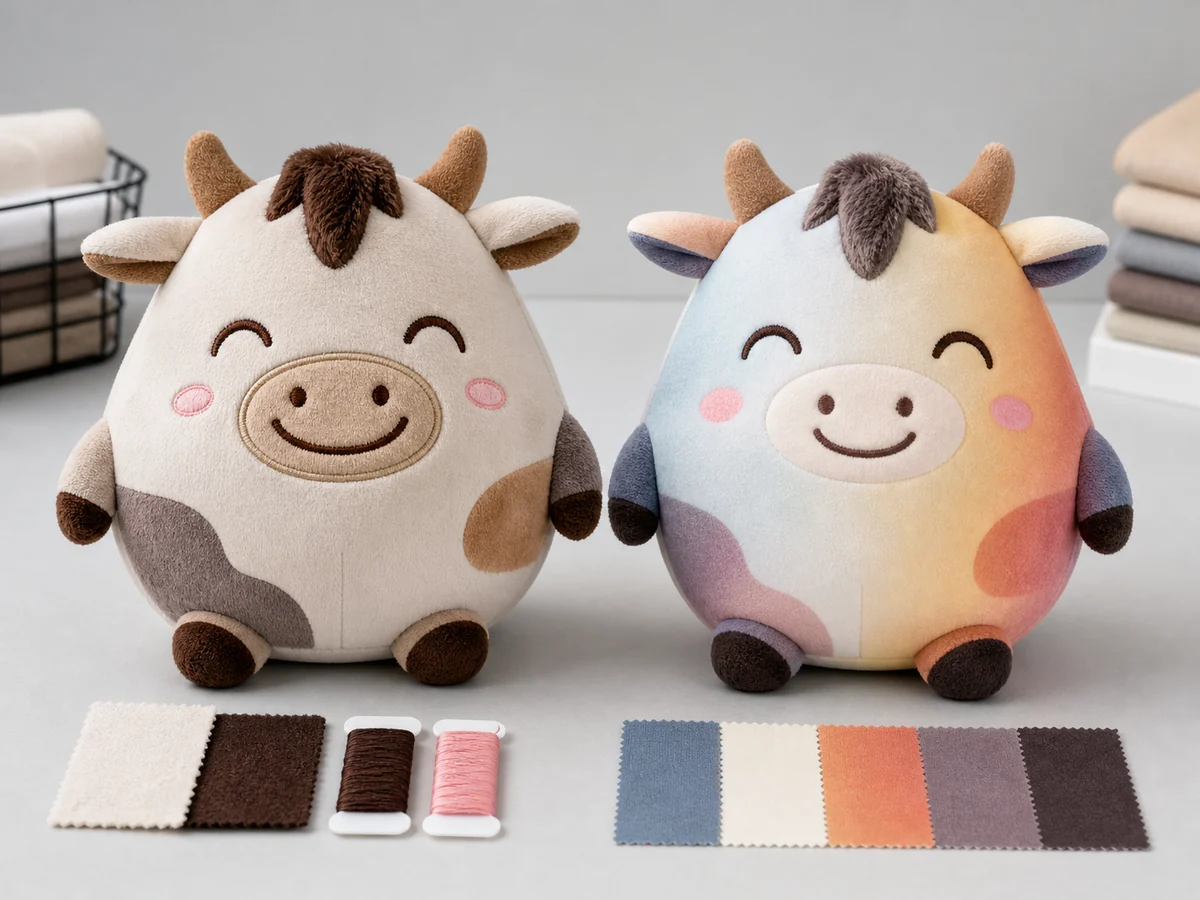
Six checks for choosing print or embroidery
Review design, area, use and quotation variables together rather than relying on a process name.
Separate fine outlines, solid fills, gradients and photographic detail.
Review flatness and sewing order for faces, clothing, inner ears, feet or full cushions.
Pile, texture, stretch, absorbency and heat response change the available methods.
Check whether raised stitches, stiffness or printed surface feel suits the product.
Review color and appearance for expected friction, washing, light and compression.
Estimate stitch area and count, colors, print area, setup, pretreatment and material count.
Embroidery, sublimation and localized print comparison
Results vary by equipment and material. Confirm the actual fabric at finished scale.
| Method | Best-suited output | Typical area or item | Quotation variables | Sample review |
|---|---|---|---|---|
| Embroidery | Outlines, text, eyes, mouth, small fills and raised detail | Face, logo, accents and short-pile panels | Area, stitch count, thread colors, data and backing | Gate Closed lines, color, placement, stiffness and waviness |
| Sublimation | Multicolor, gradients, photographic detail and broad areas | Compatible polyester fabrics, cushions and all-over patterns | Print area, color, paper, transfer and cutting alignment | Gate Color, edge, left-right alignment and seam mismatch |
| Localized printing | Logos, motifs and relatively flat color areas | Clothing, contrast panels, feet and smooth short-pile areas | Setup, colors, area, pretreatment and drying | Gate Adhesion, migration, cracking and stretch distortion |
| Embroidery plus print | Stitched outline with multicolor printed interior | Faces, clothing and complex character artwork | Process count, registration, material and inspection | Gate Overlap, step, registration and hand feel |
| Applique combination | A large color area in contrast fabric with stitched edge | Inner ears, markings, clothing and larger panels | Fabric, cutting, sewing, embroidery and edge finish | Gate Edge lift, thickness, bending and fuzzing |
Original Flow: From Artwork to Decoration Specification Freeze
Separate the intended output, then approve the method on actual fabric and use conditions.
Lines, fills and gradients
Pile, stretch and flatness
Embroidery, sublimation or print
Color, placement, feel and use
Data, colors and inspection criteria
Four issues to check before freezing the method
Include sewing, use and repeat orders instead of judging appearance alone.
Registration changes depending on whether fabric is printed before cutting or a panel is embroidered before sewing.
Compare thread sheen, ink output and base-fabric color using physical references.
Review stretch, friction, washing, light and post-compression appearance as relevant.
Record thread code, print data, fabric code, color reference and tolerance for later runs.
Three physical references for comparing decoration methods
Control finished samples, process details and specification sheets under one revision number.
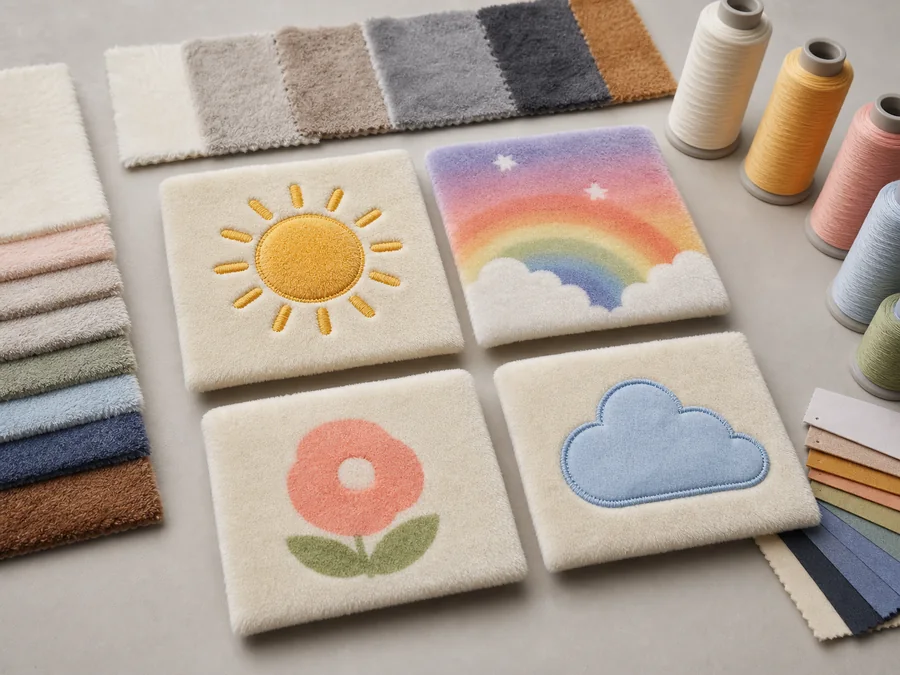
Compare multicolor areas, gradients, defined outlines and raised embroidery across use-specific samples.
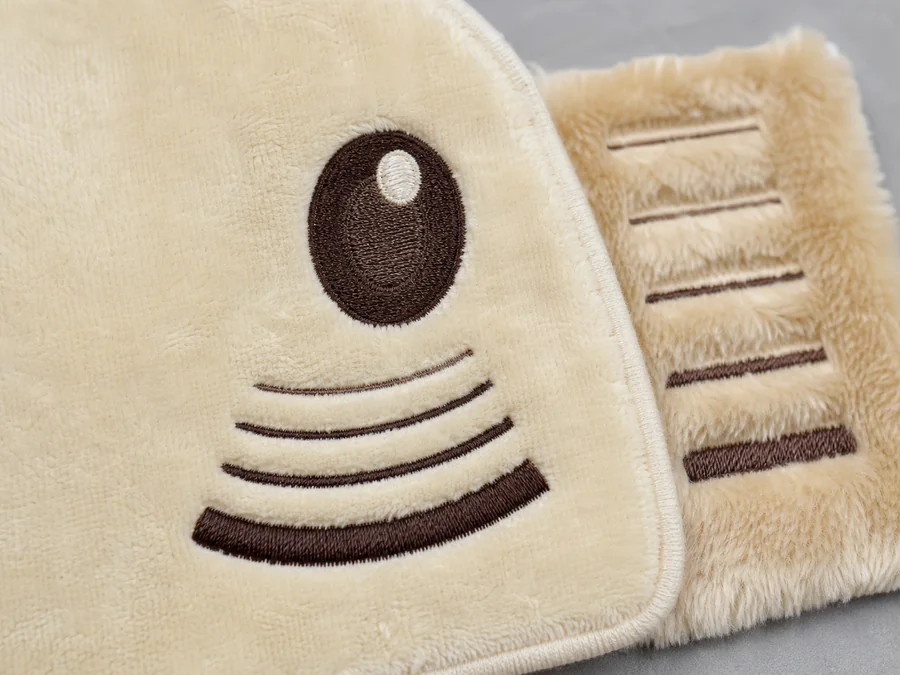
Review facial line width, thread color, pile visibility and waviness around filled embroidery.
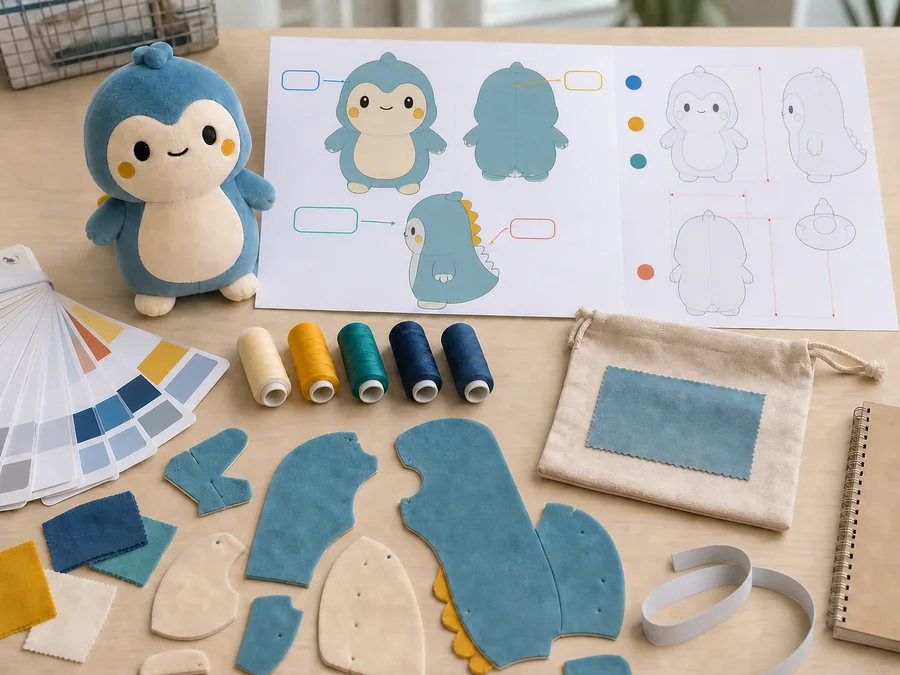
List print area, embroidery area, color codes, reference points, application area and quantity in the quotation brief.
Information to prepare before a decoration quotation
Provide fabric, finished size, use and quantity together with process artwork.
- Front, back and panel files
- Lines, fills and gradients separated
- Process area at actual size
- Finished size and SKU count
- Fabric and base color
- Quantity and repeat-order plan
- Audience and sales channel
- Expected washing, friction and light
- Compression packaging
- Thread and physical color references
- Process test and finished sample
- Revision, tolerance and approver
Related pages
Decoration selection connects to fabric, expression embroidery, cushions, fan plush, quotation, samples and pre-production approval.
FAQ
Is embroidery always more durable than printing on plush?
Not in every project. Thread, ink, fabric, area, pretreatment, washing and friction conditions affect the result, so review use-specific process samples.
Can gradients be embroidered?
Thread colors and stitch density may approximate a gradient, but printing is often a candidate for fine tonal or photographic detail. Compare at finished size.
Can long-pile fabric be printed?
Pile can disrupt edges and hide color. Test alternatives such as a printed short-pile panel, embroidery or applique.
Can sublimation be used on every fabric?
No. Confirm fiber content, base color, heat response, stretch and equipment conditions for the selected fabric.
Can print and embroidery be combined in one area?
It may be possible. Review process order, registration, thickness, hand feel and overlap on a sample.
What is needed for a quotation?
Share artwork, actual process area, colors, finished size, fabric, quantity, SKUs, use or washing conditions and the required sample checks.
Share artwork, fabric, finished size and use conditions to compare print and embroidery options
Provide lines, color areas, gradients, application area, finished size, fabric, quantity and use conditions so decoration specifications can be organized for quotation and sampling.