
Random Assortment Guide
Custom Plush Random Assortment and Blind Packaging Management
B2B guide to blind bag plush assortment packaging: buyer inputs, samples, MOQ, production risks, quality checks, lead time, and quote preparation.
Prize, gacha and event-merch plush programs need one connected plan for blind packaging, assortment ratios, SKU matching, carton packing, labels and split delivery.
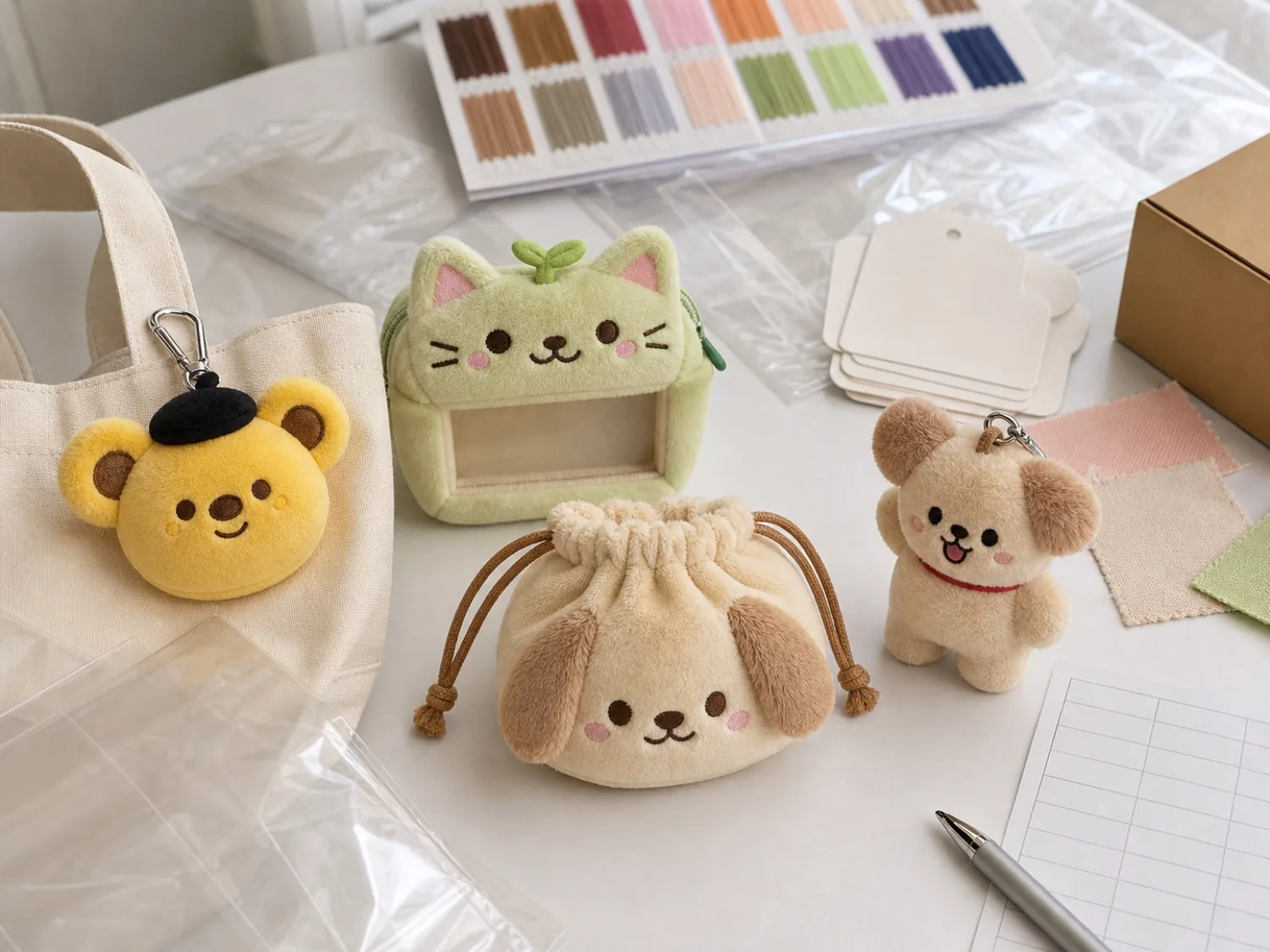
Six assortment conditions to define before production
Manage SKU count, carton-level combinations and destination-level quantities in one specification.
Keep character name, color, item code, image and total quantity in one table.
Define equal, weighted or rare-item targets and the checking unit.
Review opacity, package direction, sealing and visible label information.
Set total pieces, quantity by SKU, mixed-carton rules and case numbers.
Define what is matched before packing, after packing and after carton loading.
Organize destination quantities, carton labels, delivery sequence and spare units.
Random assortment checks and common packing issues
The program sheet, packing instruction and carton label need to carry the same SKU information.
| Control item | Define in advance | In-process check | Common issue |
|---|---|---|---|
| SKU table | Name, code, image, color and total quantity | Match the item and code before packing | Example Similar colors or names assigned to the wrong SKU |
| Assortment ratio | Target by SKU, carton composition and spare quantity | Match actual count to the carton instruction | Example Carton composition differs from the ratio sheet |
| Blind package | Material, opacity, sealing and visible information | Check that the character cannot be identified outside | Example Label or transparent area reveals the item |
| SKU check | Checking unit, matching point and record method | Match before packing, after packing and after carton loading | Example A different SKU enters the packing stream |
| Carton label | Case number, composition, quantity and destination | Match carton contents to the outer label | Example Carton label does not match the contents |
| Split delivery | Quantity, carton count and sequence by destination | Final match against shipping instructions | Example Carton or quantity sent to the wrong destination |
Original Flow: From SKU Table to Split-Delivery Check
Match each step against the preceding instruction to reduce repacking and re-sorting later.
Fix item codes, images and quantities.
Define carton-level composition.
Pack by SKU and manage identification.
Match cartons to the composition sheet.
Check labels and destination quantities.
Management priorities by program type
The sales method changes the priority of randomness, outer-package information, carton composition and split delivery.
Connect prize tier, SKU, delivery unit and venue quantity to carton labels.
Confirm loading unit, SKU mix, refill unit and hidden-item requirements.
Organize package opacity, JAN/SKU display and display-box composition.
Define venue quantities, case numbers, delivery sequence and spare stock.
Three points that are easier to confirm with photos
Record the SKU sheet, packed unit and pre-shipment carton check to keep the team aligned.
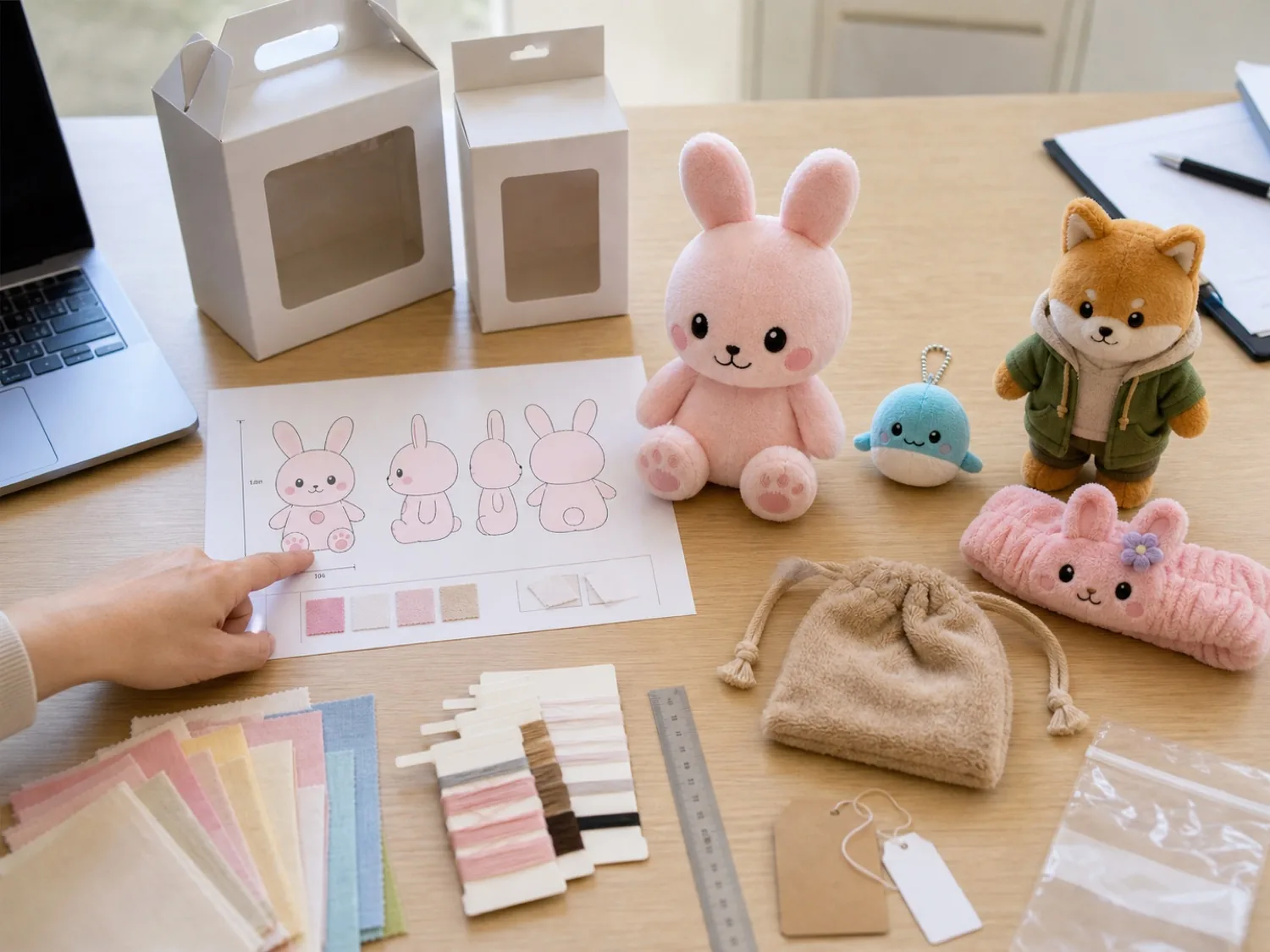
Combine character images, item codes, totals and carton composition.

Keep the item hidden while defining an internal identification method.

Check carton composition, outer labels and split-delivery destinations.
Materials to prepare before inquiry
Even when some details are open, the SKU list and sales method are enough to begin defining quote conditions.
- Character images and names
- SKU codes and color variants
- Production quantity by SKU
- Equal, weighted or rare-item target
- Composition per carton
- Spare quantity and tolerance
- Blind bag, box or capsule
- JAN/SKU display position
- Item-concealment requirement
- Quantity by destination
- Carton quantity and label fields
- Delivery sequence and split rules
Related pages
Random assortment planning connects to prize and gacha programs, retail packaging, inspection, MOQ and quotation materials.
FAQ
What is the difference between random packing and assortment packing?
Random packing keeps the character hidden from the buyer. Assortment packing controls the SKU quantity and combination within each carton or delivery unit. Many prize and gacha programs use both.
When should the assortment ratio be decided?
Define the SKU count, quantity by SKU, carton composition, spare quantity and split-delivery destinations before quotation. Finalize the packing rule alongside sample approval to avoid repacking or label changes later.
Can the assortment ratio be fully guaranteed?
Ratios are managed through the SKU table, packing instruction, labels and in-process matching, but the process should not be treated as an unconditional guarantee. Agree on tolerance, checking unit and sampling method for each project.
What matters for blind packaging?
Confirm that the outer package does not reveal the character, SKU packing streams remain separated, and carton labels provide enough information to match the carton composition and delivery destination.
Can assortments be split across several delivery destinations?
Share the destination list, quantity by destination, carton quantity, label fields and delivery order. Feasibility and cost depend on the packing and logistics conditions for the project.
What should we provide for a quotation?
Share the character list, SKU codes, production quantity, target assortment ratio, packaging reference, quantity per carton, carton-label fields and quantity by delivery destination.
Prepare the SKU table and split-delivery conditions before quotation to make random assortment planning more workable
Share the SKU list, target ratio, packaging method, carton composition and destination quantities so the project-specific checks can be defined.