
B2B OEM / FLAT-BACK MAGNETS
Custom Acrylic Magnets
Plan custom acrylic magnets as controlled merchandise SKUs, not as an acrylic shape with an unspecified magnet attached. Approve the printed acrylic body, magnet construction, bonding method, holding performance, polarity, surface protection, packaging and inspection evidence before bulk production.
This page owns general custom acrylic magnet engineering for character merchandise, promotional kits and branded goods. The separate refrigerator magnet page owns refrigerator-specific retail, tourism and home-display intent; the acrylic hub owns the broad category term.
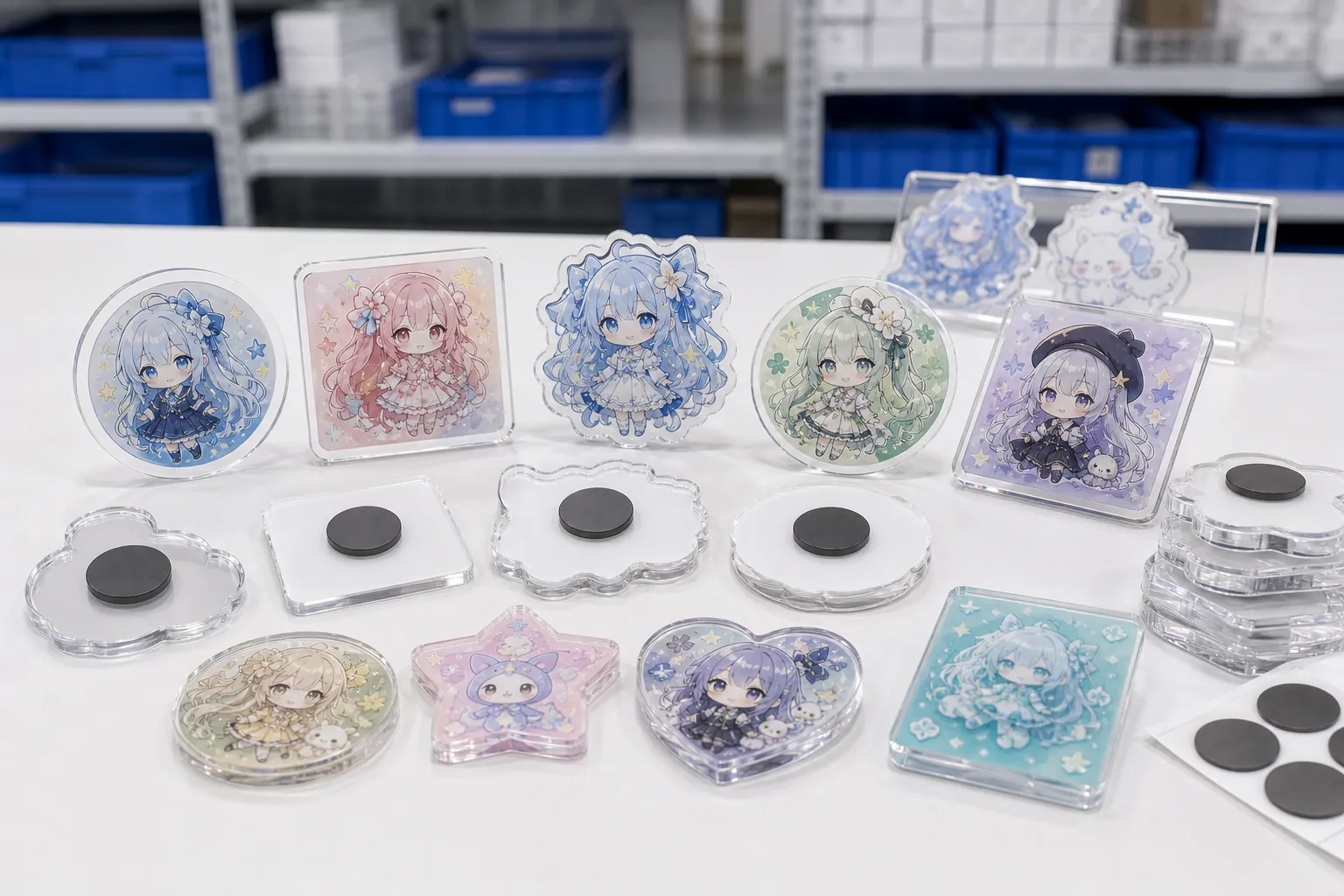
DIRECT ANSWER
What buyers should know about custom acrylic magnets
Custom acrylic magnets are printed and contour-cut acrylic pieces fitted with a magnetic component on the reverse. The acrylic controls artwork visibility, shape and surface quality; the magnet controls attachment behavior. Both components must be specified because two products with the same front artwork can perform differently when magnet grade, diameter, thickness, contact area or bonding method changes.
A useful specification names the reference surface and the expected use. Holding force on a clean flat steel plate is not identical to performance on a painted, curved, thin or non-ferrous surface. Instead of relying on a vague strong-magnet statement, buyers should approve a finished sample, record the magnet construction and compare repeatable pull or slide behavior on the agreed reference.
The magnetic backing may be a round disc, a larger flat sheet or another approved construction. Its position must balance the acrylic body, remain concealed where required and avoid creating a rocking point. The backing should not detach, rotate or print through the front during normal handling and packed transport.
For the complete product family, use the Acrylic Goods OEM hub. Keep the distinct page intent in this guide instead of repeating one broad acrylic goods description.
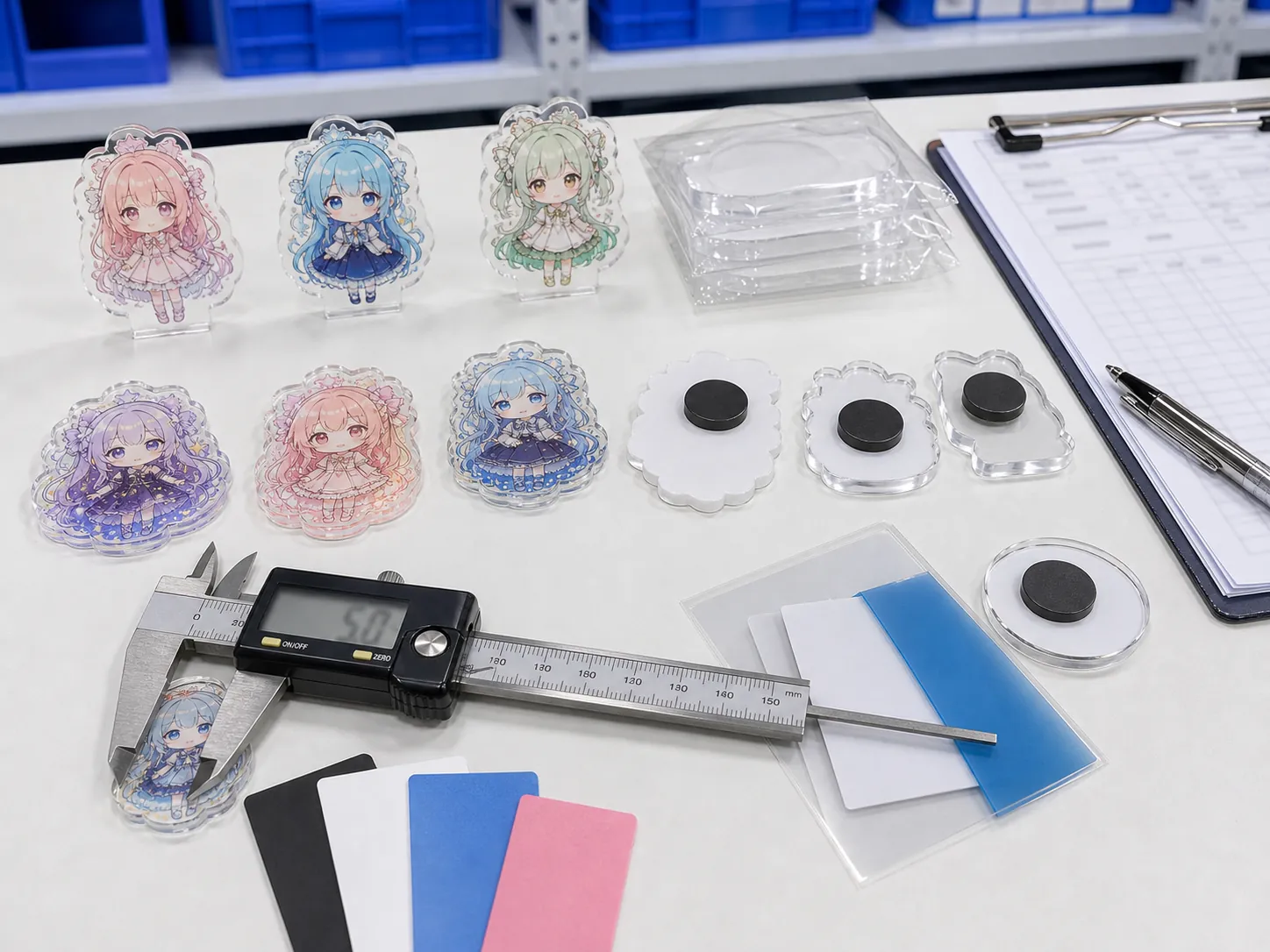
PROJECT DECISIONS
Lock the decisions that define this page intent
A product name or channel name is not a complete production instruction. Record the decisions below before artwork, samples and packaging are released.
Magnet construction
Choose disc, sheet or project-specific backing and record size, thickness, grade or supplier code.
Position and balance
Place the magnetic area around the center of mass so the piece sits flat without rotating.
Bonding method
Approve adhesive coverage, curing condition, peel resistance and visible glue allowance.
Surface protection
Define protective film removal, scratch standard and separators for the printed acrylic face.
SPECIFICATION CONTRACT
Build one quote-ready control sheet
Connect the artwork, physical product, package, SKU and delivery data in one revision-controlled matrix. Mark undecided fields for recommendation rather than allowing different teams to assume different specifications.
| Acrylic body | Finished width and height, nominal thickness, cut contour, narrow points, edge condition and front orientation. |
|---|---|
| Print layers | Editable color artwork, white ink, transparent areas, reverse visibility and registration tolerance. |
| Magnet | Construction, material or grade, diameter or footprint, thickness, finish and approved supplier reference. |
| Position | Back-view drawing with magnet center, edge clearance, orientation and any anti-rotation requirement. |
| Holding test | Named steel reference, clean surface condition, sample orientation and accepted pull or slide behavior. |
| Bonding | Adhesive type, coverage, cure, peel check, exposed residue and replacement rule for failed pieces. |
| Packaging | Individual sleeve, backing card, face separator, warning if relevant, SKU label and inner quantity. |
| Order matrix | Quantity by artwork, body size, magnet code, pack code, carton mark and delivery destination. |
PROGRAM DESIGN
Match the magnet construction to the merchandise program
Select the construction from the finished body, intended display surface and pack, not from artwork alone. Larger acrylic does not automatically require the largest magnet; balance, contact area and product weight must be reviewed together.
Compact character pieces
A centered disc magnet can keep a small balanced body flat when edge clearance and adhesive area are sufficient.
Wide logo shapes
A wider magnetic footprint or two controlled points may reduce rotation, but both points must contact the surface evenly.
Layered or thick bodies
Additional weight and an uneven back may change holding and require a revised backing construction.
Set and blind merchandise
Use a controlled design code and pack rule so visually similar shapes do not become mixed SKUs.
SAMPLE APPROVAL
Approve evidence that answers production questions
Approve the physical sample on the exact front artwork, acrylic thickness, magnet and adhesive intended for production. Check the piece immediately after application, after a defined dwell period and after repeated removal. Record whether the product slides, rotates, rocks, marks the surface or leaves the magnet behind.
The sample should also be reviewed inside the final-style package. A loose magnetic component can attract neighboring products, shift inside the pack or cause pieces to stack in an uncontrolled direction. Separators, backing cards and inner-box orientation should keep printed faces from rubbing and allow the buyer to count each SKU reliably.
- Approved magnet code
- Back-view position drawing
- Reference steel surface
- Pull or slide behavior
- Repeated removal check
- Bond peel inspection
- Front scratch review
- Final pack orientation
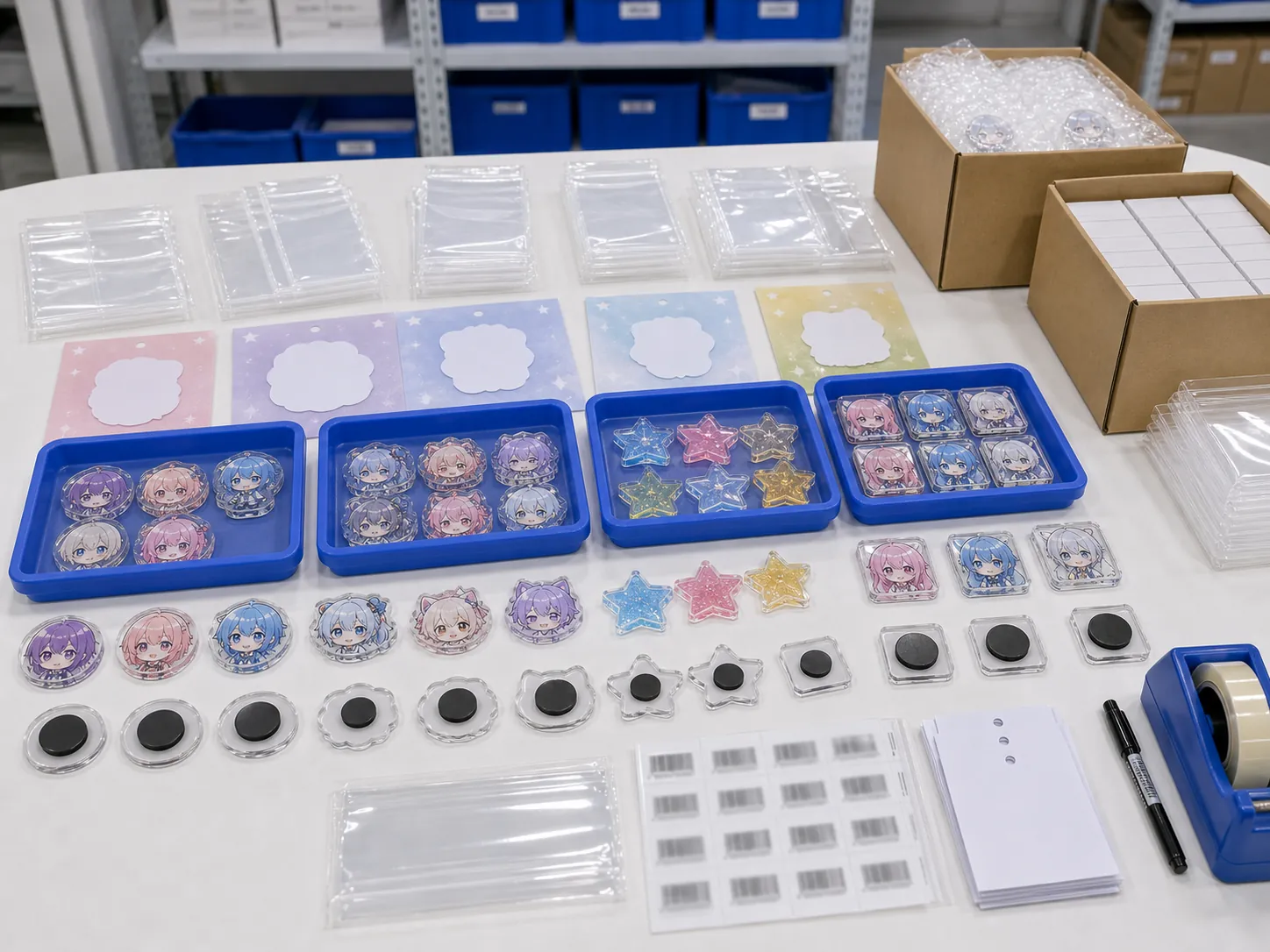
VISUAL EVIDENCE
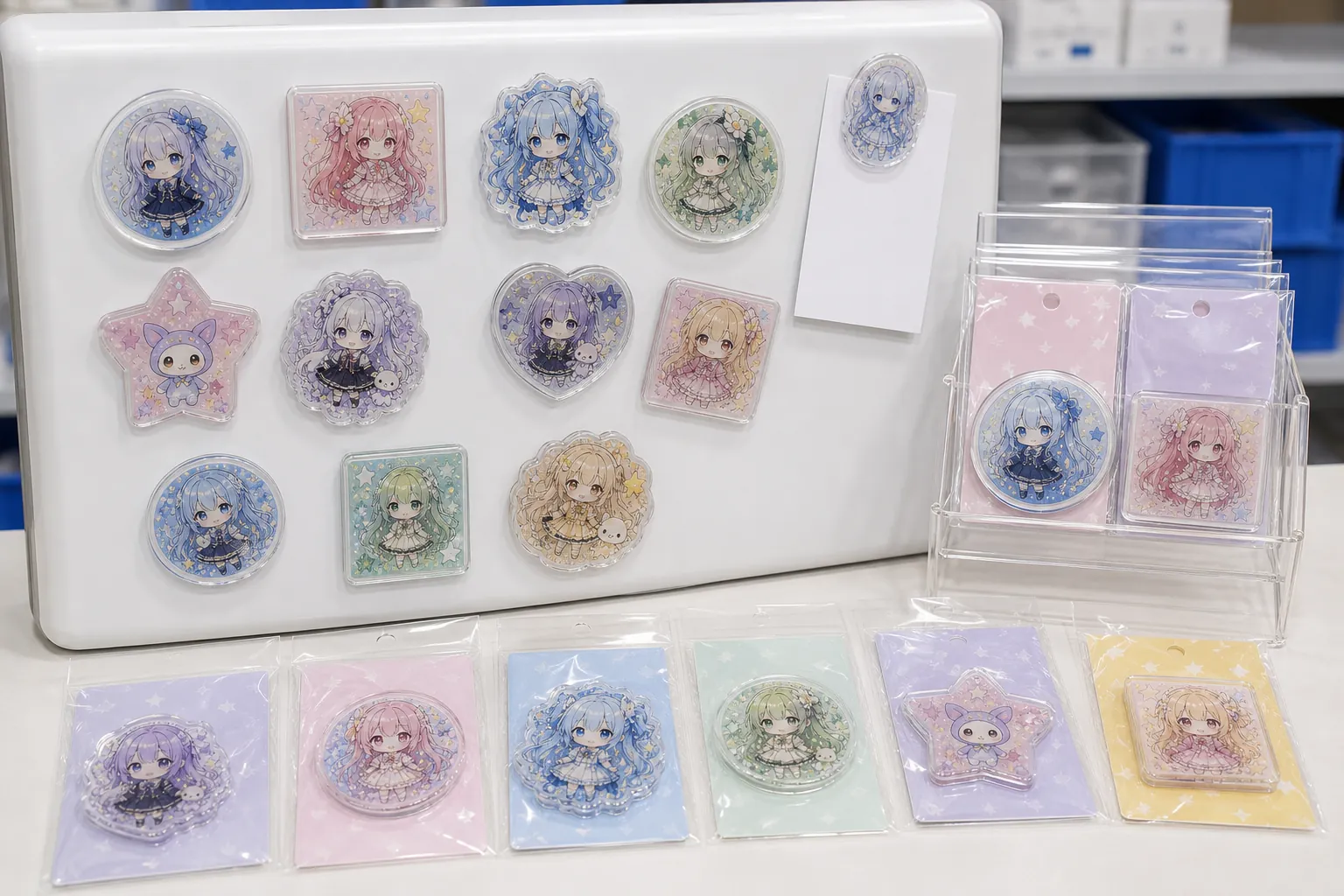
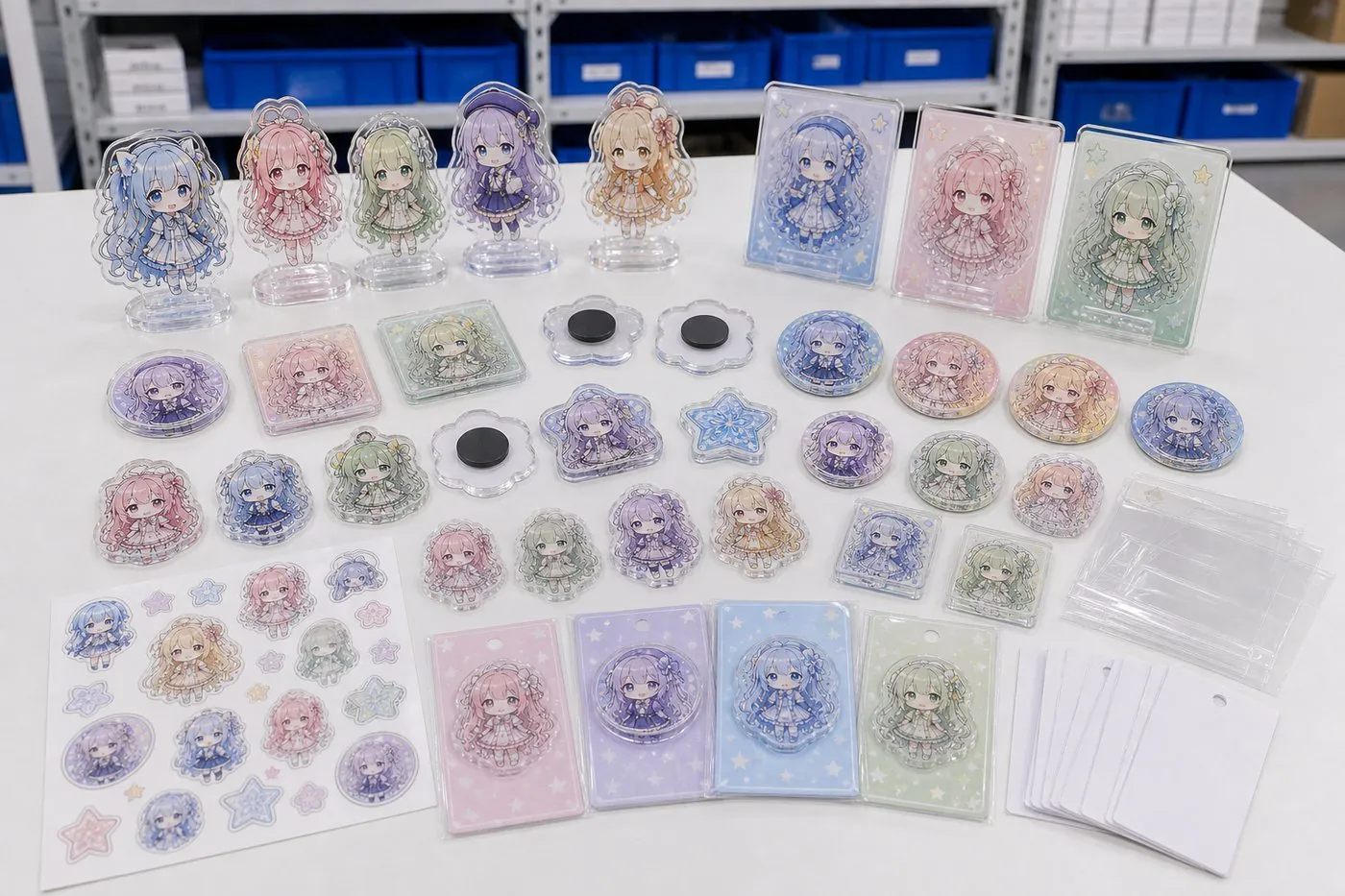
Use real product, packing and QC references
These references support product and process review. The approved physical sample and project-specific specification remain the production authority.
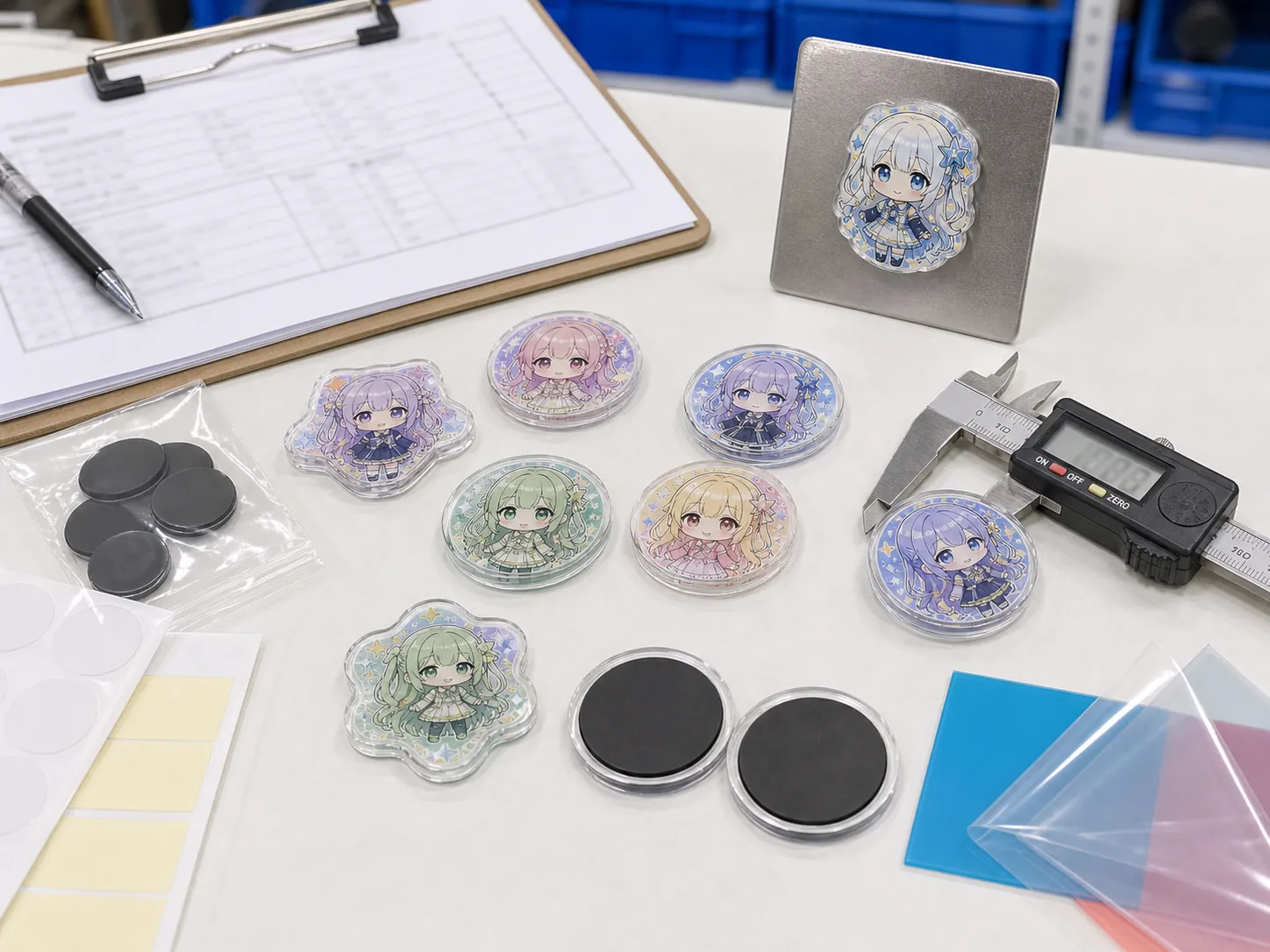
MASS-PRODUCTION RISK
Resolve the failure modes before the bulk release
Risk control is most useful when each failure is tied to a document, sample, inspection method or pack rule.
Magnet strength is described only with an adjective
A substitute backing can pass appearance review but fail the intended holding behavior.
Position ignores the center of mass
The acrylic body rotates, leans or exposes the backing around the edge.
Adhesive is approved before full cure
Early pieces appear secure while later handling reveals peel or rotation.
Holding is tested on one convenient surface
Performance changes on the buyer's actual coated, curved or thin steel display.
Backings touch in bulk packs
Magnetic attraction shifts parts and creates face-to-face abrasion during transport.
SKU code is missing from blind packs
Design counts and assortment ratios cannot be reconciled before shipment.
QUALITY CONTROL
Inspect against the approved SKU and sample
Use the Acrylic Quality Inspection guide to plan the sample size and evidence set. The checkpoints below keep this page's distinct buyer intent visible in QA.
| Body dimensions | Check cut contour, thickness, edge quality, chips and narrow points against the approved sample. |
|---|---|
| Inspect color, white ink, registration, opacity, transparent zones and surface scratches. | |
| Magnet identity | Verify backing size, position, finish and construction by SKU. |
| Bond | Check full contact, visible residue, rotation and peel on the agreed sampling plan. |
| Holding behavior | Compare representative pieces on the named steel reference after film removal. |
| Pack accuracy | Confirm design, quantity, separators, backing card, label, inner pack and carton count. |
PACKAGING AND HANDLING
Protect the product and preserve SKU identity
Packaging is part of the sellable specification. Confirm the final unit before bulk packing and use the Acrylic Scratch-Prevention Packaging guide for surface-risk planning.
Individual retail
Use a sleeve or bag with a card that limits movement and keeps the magnet from rubbing the printed face.
Blind assortment
Control the concealed design code, randomization rule, inner ratio and carton traceability.
Multi-piece set
Separate magnetic pieces so they do not snap together or scratch one another.
Promotional allocation
Label destination splits and carton quantities when the same artwork has several campaign deliveries.
OPERATIONAL HANDOFF
Keep the approved magnet system traceable after sample sign-off
The final approval record should include a front image, back-view position drawing, magnet code, adhesive reference, finished dimensions and the accepted holding check. Link those items to the SKU so purchasing, assembly and inspection teams do not treat the backing as an interchangeable accessory.
When an alternative magnet or adhesive is proposed, route it through a documented change review. Compare contact area, balance, bond and holding behavior on the same reference surface before use. A visually identical substitute is still a functional change and should not enter bulk production through an informal packing or procurement decision.
QUOTE CHECKLIST
Information needed for a useful production review
Send known inputs and mark open decisions. Quantity by design, the distinct page-specific decision, packaging and destination are required to compare a practical route.
- Editable artwork for every design
- Finished width and height
- Acrylic thickness
- Magnet construction or reference
- Expected display surface
- Quantity per design
- Single or double-sided print
- Individual, blind or set packaging
- Backing card and label requirements
- Inspection evidence required
- Delivery destination
- Required arrival date
PRODUCTION WORKFLOW
From buyer brief to documented shipment
Timing is confirmed after artwork, specification, sample, packaging, inspection and destination conditions are known. Do not use an unsupported fixed lead-time claim for an unreviewed project.
- 01 BriefIntent, artwork, quantity and destination
- 02 ReviewProduct, SKU, pack and risk decisions
- 03 SamplePhysical evidence for the highest-risk points
- 04 ApprovalOne final controlled revision and matrix
- 05 ProductionManufacture, sort, pack and inspect by SKU
- 06 DeliveryCarton records and agreed destination split
See the complete OEM Order Process.
FAQ
Custom Acrylic Magnets FAQ
What determines the practical MOQ for custom acrylic magnets?
The practical route depends on total quantity, quantity per design, body size, print, magnet construction, packaging and delivery conditions. Share the SKU split so material and assembly can be reviewed together.
How should magnet strength be specified?
Approve a named magnet construction and finished sample on an agreed steel reference. Record the orientation and expected pull or slide behavior instead of using only a strong or weak label.
Can several character designs share one production order?
Yes. List quantity by artwork, body size, magnet code and packaging code. Multi-design orders still need clear SKU identification through packing and carton allocation.
Can the magnetic backing be hidden behind the artwork?
It can be positioned within the body outline when size, balance and edge clearance permit. A back-view drawing should show the approved location and any visible allowance.
What artwork files are needed?
Provide editable vector or layered artwork with the cut line, color layer, white ink, transparent areas and front orientation separated. Review the Acrylic Artwork Data Guide before sample release.
Is a physical sample required before bulk production?
A physical sample is strongly recommended because a screen proof cannot prove magnet position, bonding, holding behavior, surface contact or final-pack interaction.
RELATED RESOURCES
Continue the procurement review
PROJECT REVIEW
Prepare the Custom Acrylic Magnets brief
Send the artwork, project-specific decisions, quantity by SKU, packaging, inspection needs and destination. Unconfirmed fields can be marked for recommendation.