Inspection Standards Guide
Custom Plush Inspection Standards and Defect Examples
B2B guide to plush toy quality control inspection: buyer inputs, samples, MOQ, production risks, quality checks, lead time, and quote preparation.
Custom plush inspection standards are used to judge expression reproduction, sewing quality, safety-related conditions, attachments, packaging and SKU control as one production specification.
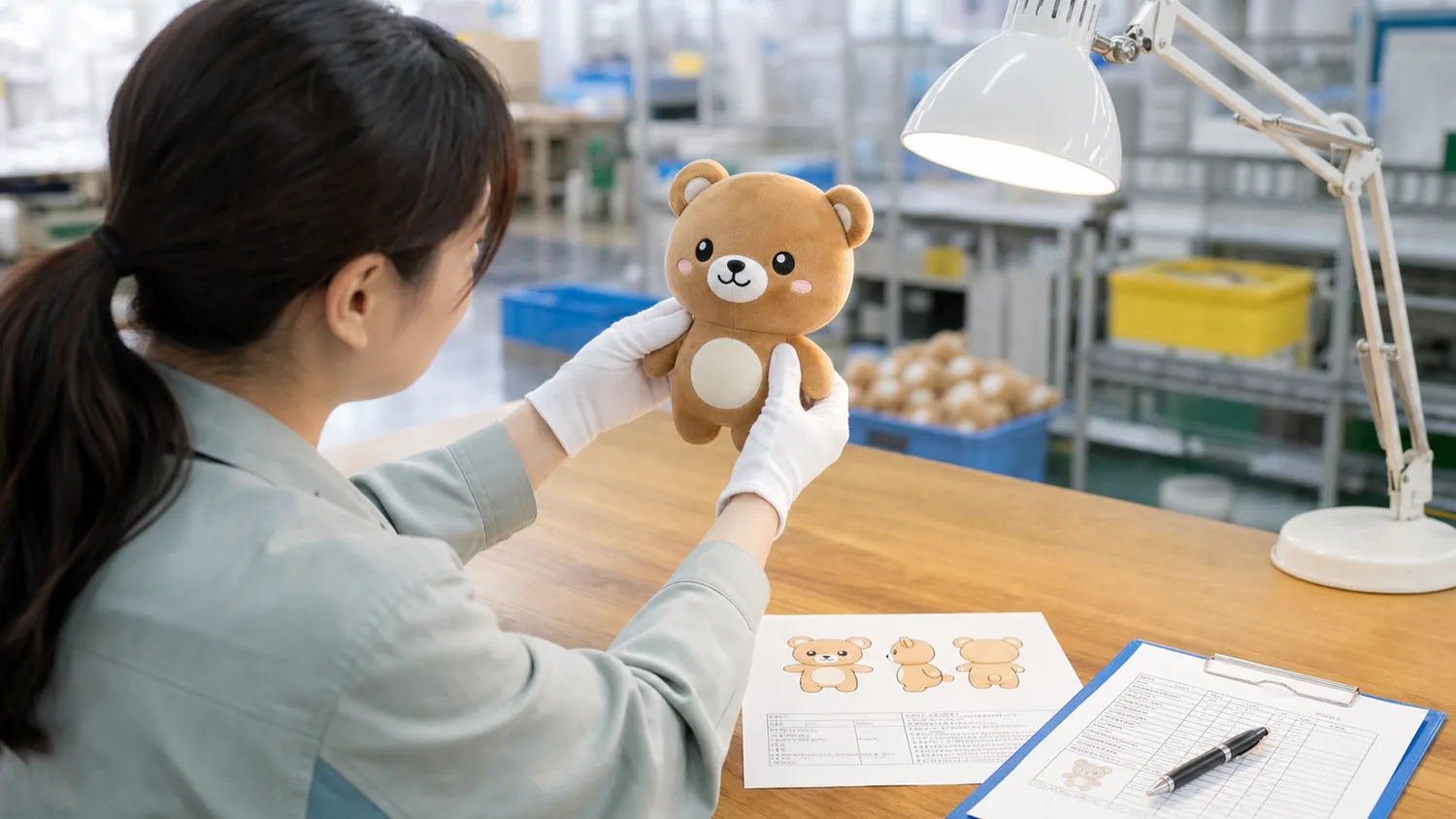
Main points checked during plush inspection
For OEM plush, inspection should connect the approved sample, specification sheet, production records and final packaging. These six groups make the criteria easier to share before quotation and sampling.
Shape, balance, symmetry, stuffing feel, body distortion and approved-sample likeness.
Eye distance, nose and mouth placement, embroidery tension, line clarity and color accuracy.
Open seams, skipped stitches, loose thread ends, exposed filling and uneven firmness.
Ball chain, lobster clasp, strap cord, jump ring position, opening and pull condition.
Body detection timing, intended metal parts, hold rules and shipment record requirements.
OPP bag direction, hang tag, JAN barcode, carton label, SKU mixing and retail display readiness.
Shop-floor inspection process photos
These photos show realistic inspection work rather than laboratory props: specification sheets, hand tools, measurement, conveyor needle detection, pull testing and final packaging checks.
Shape, balance, symmetry and approved-sample details are checked under clear workbench lighting.
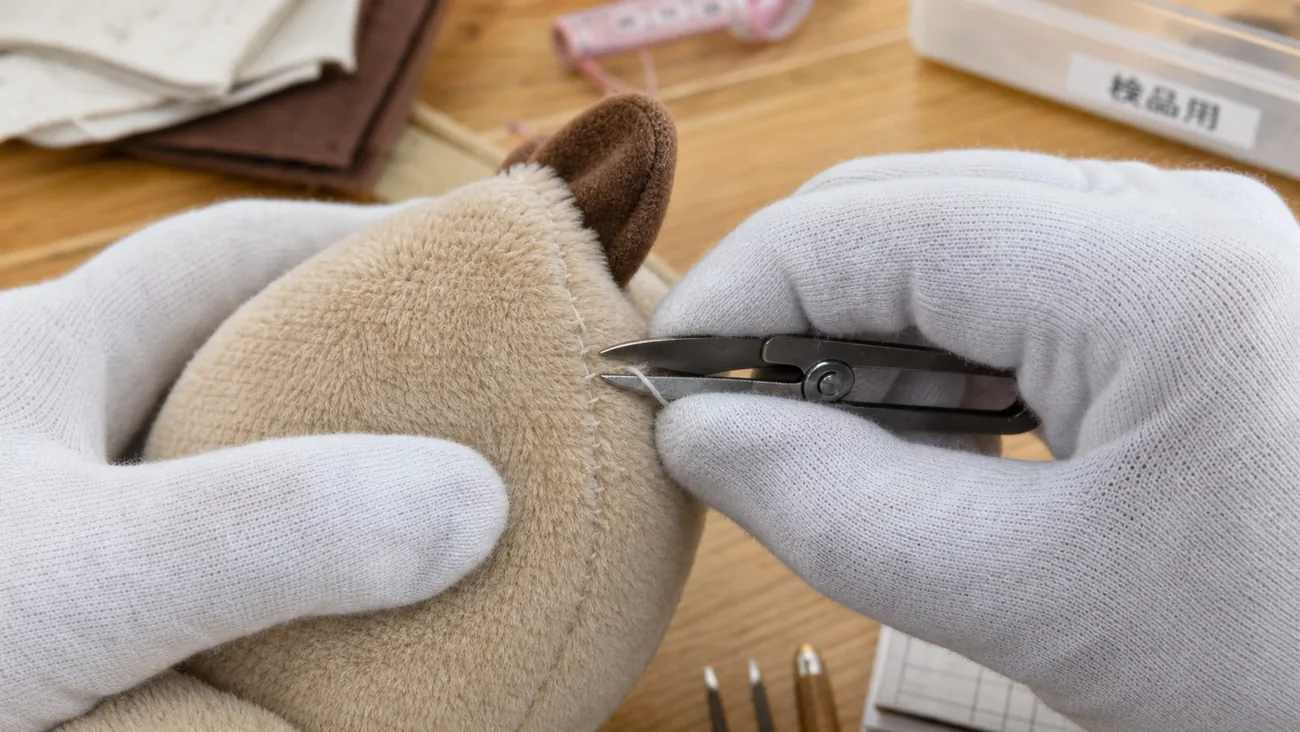
Loose ends, seam finish and stitch stops are reviewed before the item moves forward.
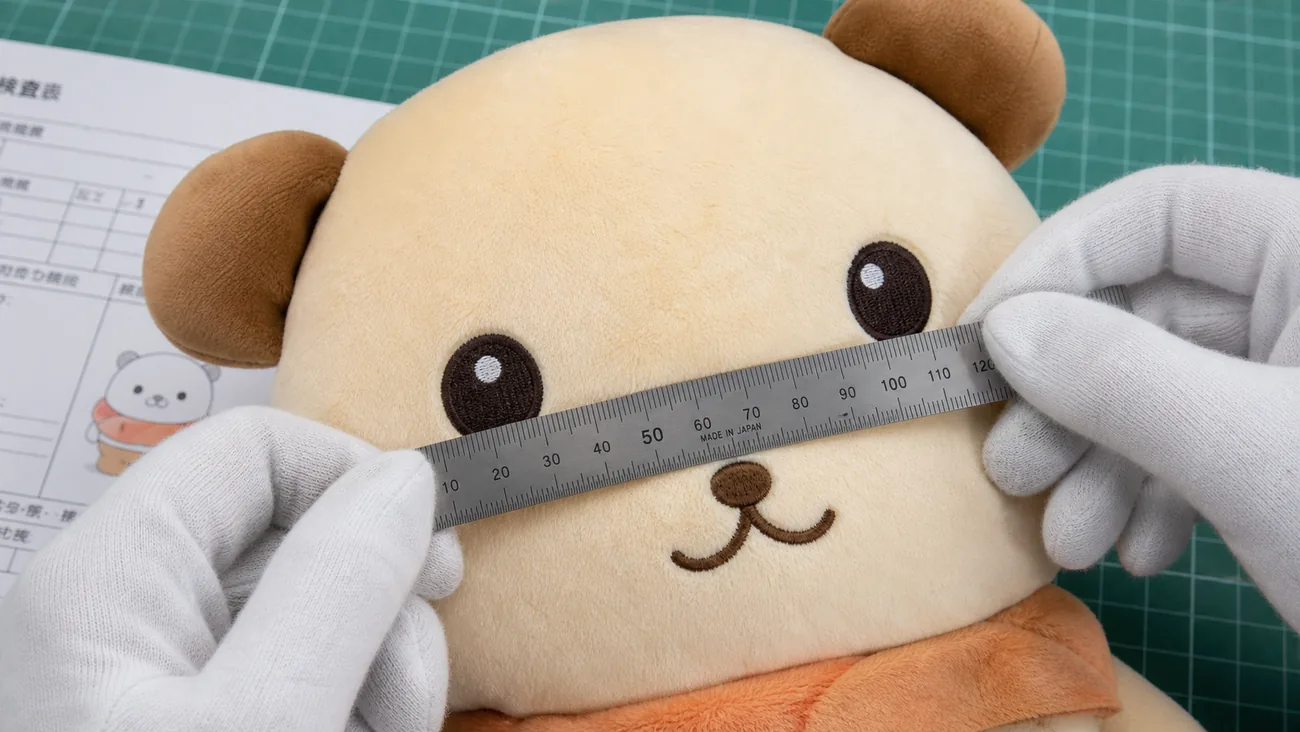
Eye, nose, mouth and embroidery placement are compared with the approved sample.
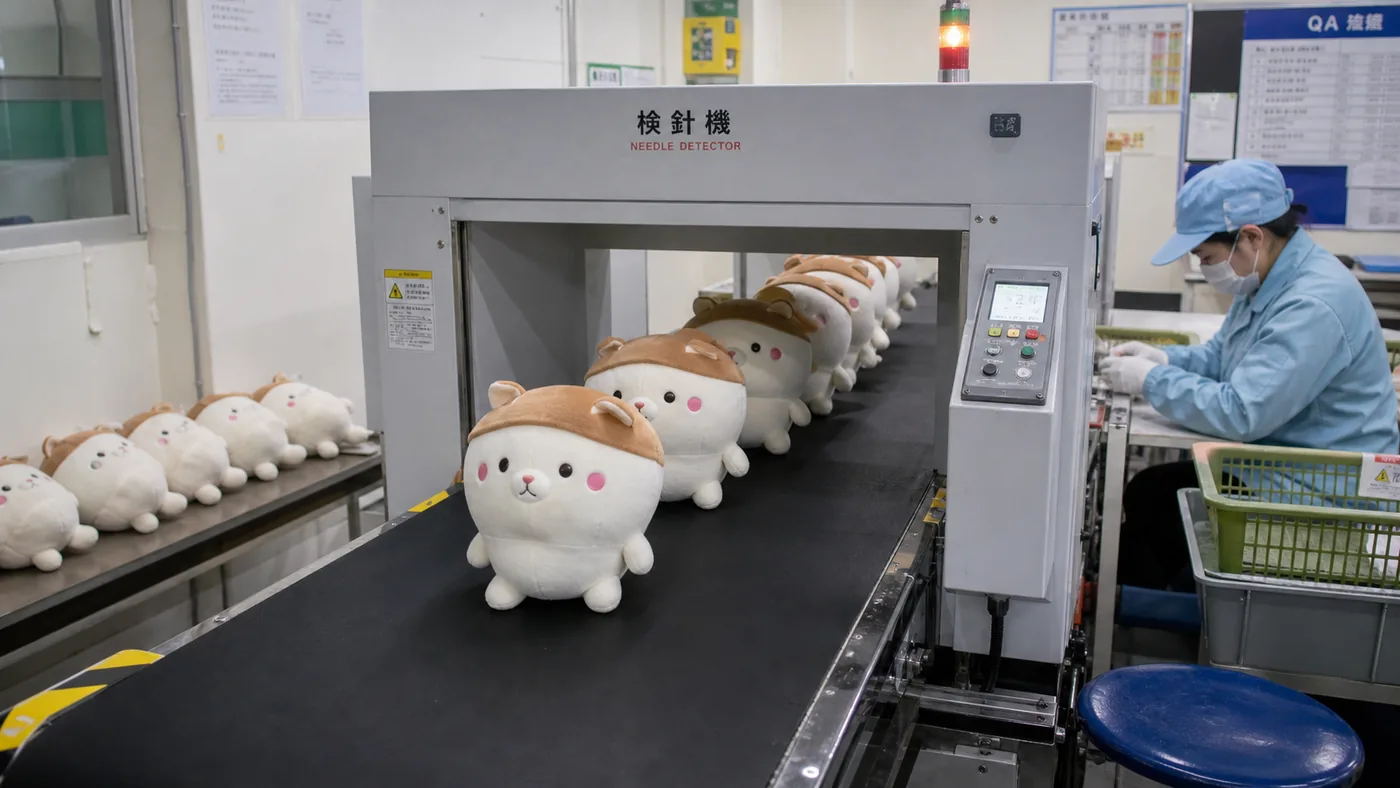
Detection timing is planned around sewing, hardware attachment and project requirements.
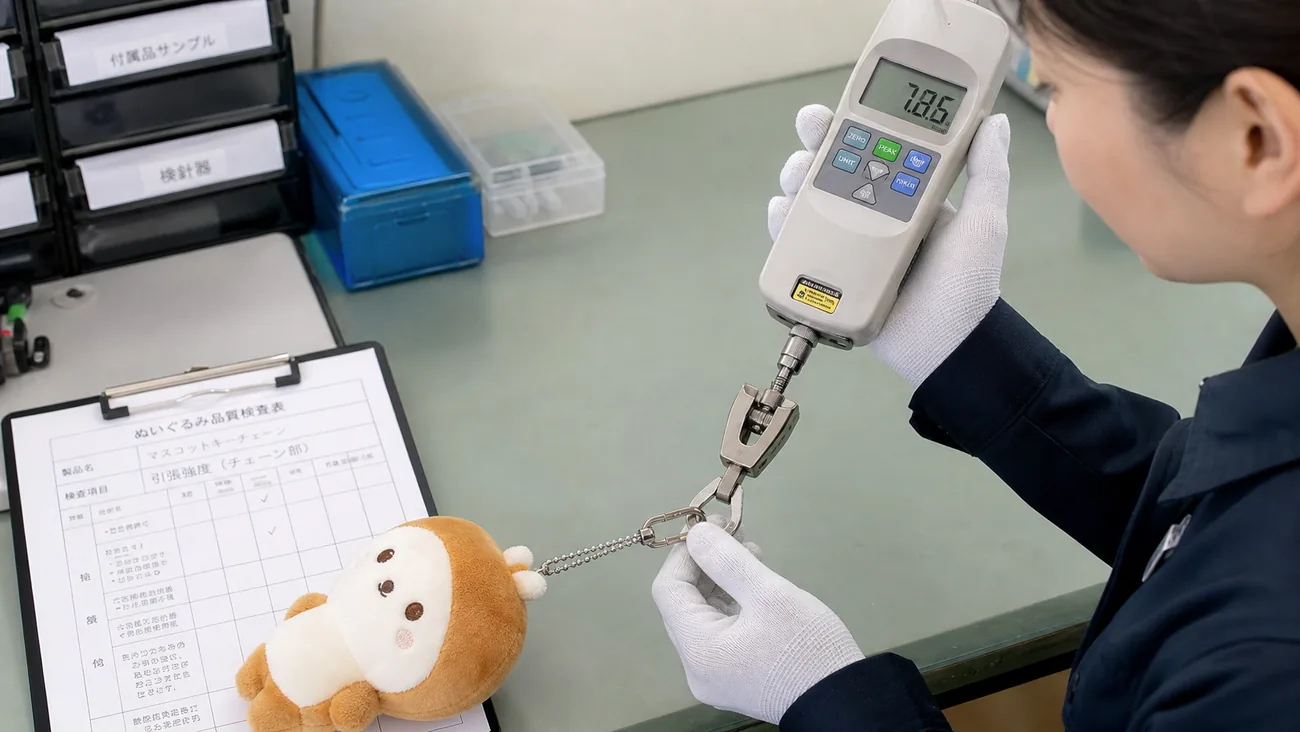
Chains, clasps and attachment points are checked under agreed load conditions.
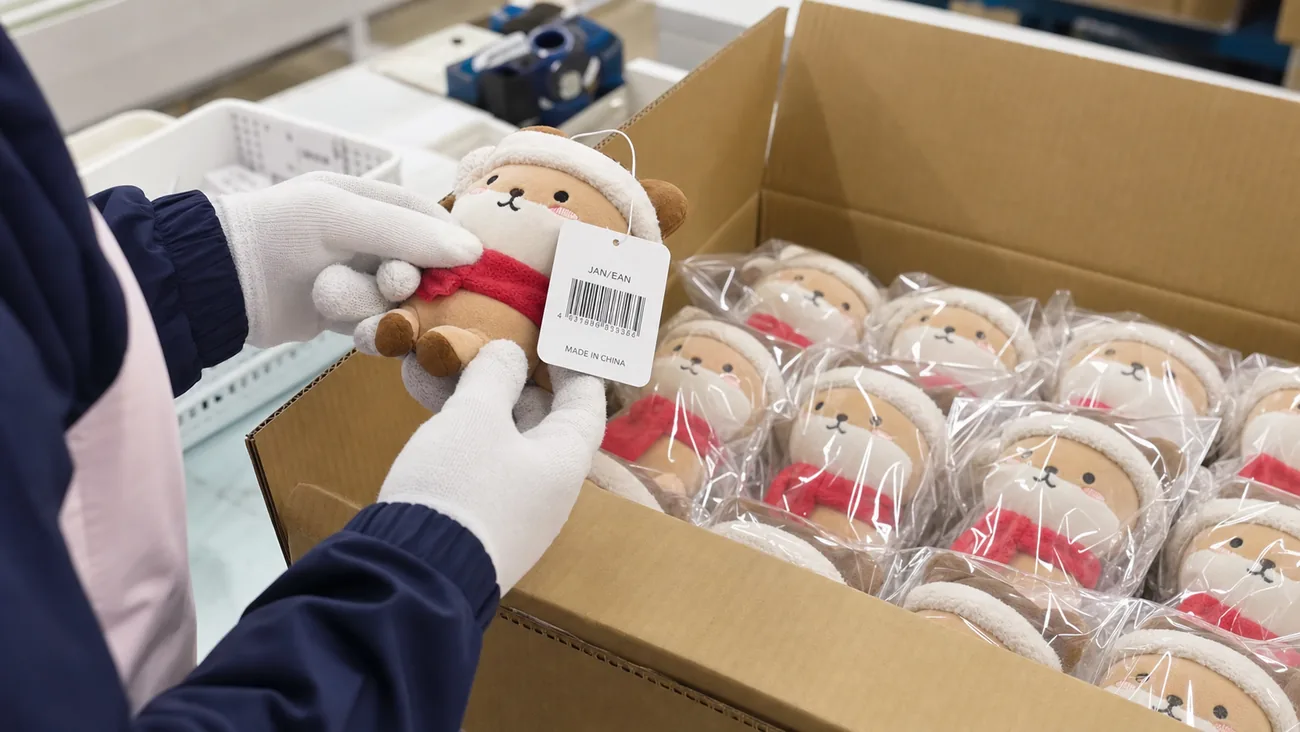
Hang tags, barcodes, bag direction, carton quantity and SKU mixing are checked before shipment.
Align dimensional tolerance, embroidery position and packaging labels before inspection
Mass-production inspection should not rely only on overall appearance. The same judgment sheet needs to cover measurement points, embroidery placement, stitching, hardware attachment, packaging labels and SKU control. The actual tolerance is adjusted by item size, material, sales market and buyer standard.
| Inspection item | Standard to agree before production | How it is checked | Examples often held for review |
|---|---|---|---|
| Dimensional tolerance | Measurement points such as height, width, depth and sitting height, plus the accepted range. | Compare the same pose against the approved sample, dimension drawing and measurement photos. | Different inspectors measure different points, or stuffing volume changes the height. |
| Embroidery position | Eyes, eyebrows, mouth, outlines, thread color, line width and left-right balance. | Compare front photos, angled photos and embroidery files with the approved version. | Eye direction or eyebrow position changes the character expression. |
| Stitching and stuffing | Seams, turning openings, part joints, stuffing volume and pile direction. | Check appearance, touch, light pull condition and the sewing finish on reverse-side areas. | Open seams, thread ends, uneven stuffing or inconsistent pile direction. |
| Hardware attachment | Lobster clasps, ball chains, jump rings and straps, including type, direction and location. | Check attachment position, opening and closing, gaps, pull condition and rubbing inside packaging. | Wrong hardware direction, jump-ring gap, or scratches caused by hardware in the bag. |
| Packaging and SKU | OPP bag, header card, JAN/barcode, warning text, assortment ratio and carton label version. | Match SKU lists, approved packaging samples, carton quantities and label artwork before shipment. | Crooked barcode labels, old label versions, mixed SKUs or carton label mismatch. |
How AQL and safety-related conditions are planned
AQL and safety checkpoints should be agreed before mass production. Critical risks, attachment strength and metal detection rules need separate handling from ordinary appearance defects.
| Item | Major check | Example defect | Decision rule |
|---|---|---|---|
| Expression | Approved sample, photo guide, measurement where needed | NG Eye position changes the character impression | Hold for review or sorting when outside the approved tolerance. |
| Embroidery | Thread tension, line clarity, color and edge finish | NG Loose loops, fraying or crushed mouth lines | Separate visible defects on the face and customer-facing areas. |
| Sewing | Seam closure, stitch spacing, filling containment | NG Open seam with fiberfill visible | Repair, remake or hold depending on location and size. |
| Hardware | Opening, pull strength, ring closure and orientation | NG Clasp stuck open or chain not secured | Hold items that can detach or fail during normal use. |
| Needle detection | Machine condition, timing and intended metal parts | NG Metal-chain and no-chain items mixed before detection | Define whether body detection, post-attachment check or both are required. |
| Packaging | Bag, hang tag, JAN label, carton and SKU | NG Crooked barcode covering the character face | Correct label position and verify scanability before packing. |
Packaging and retail display checks
For retail, event merchandise and blind-package programs, packaging inspection is part of quality control. Barcode placement, warning text, hang-tag direction and shelf presentation affect both compliance workflow and sell-through appearance.
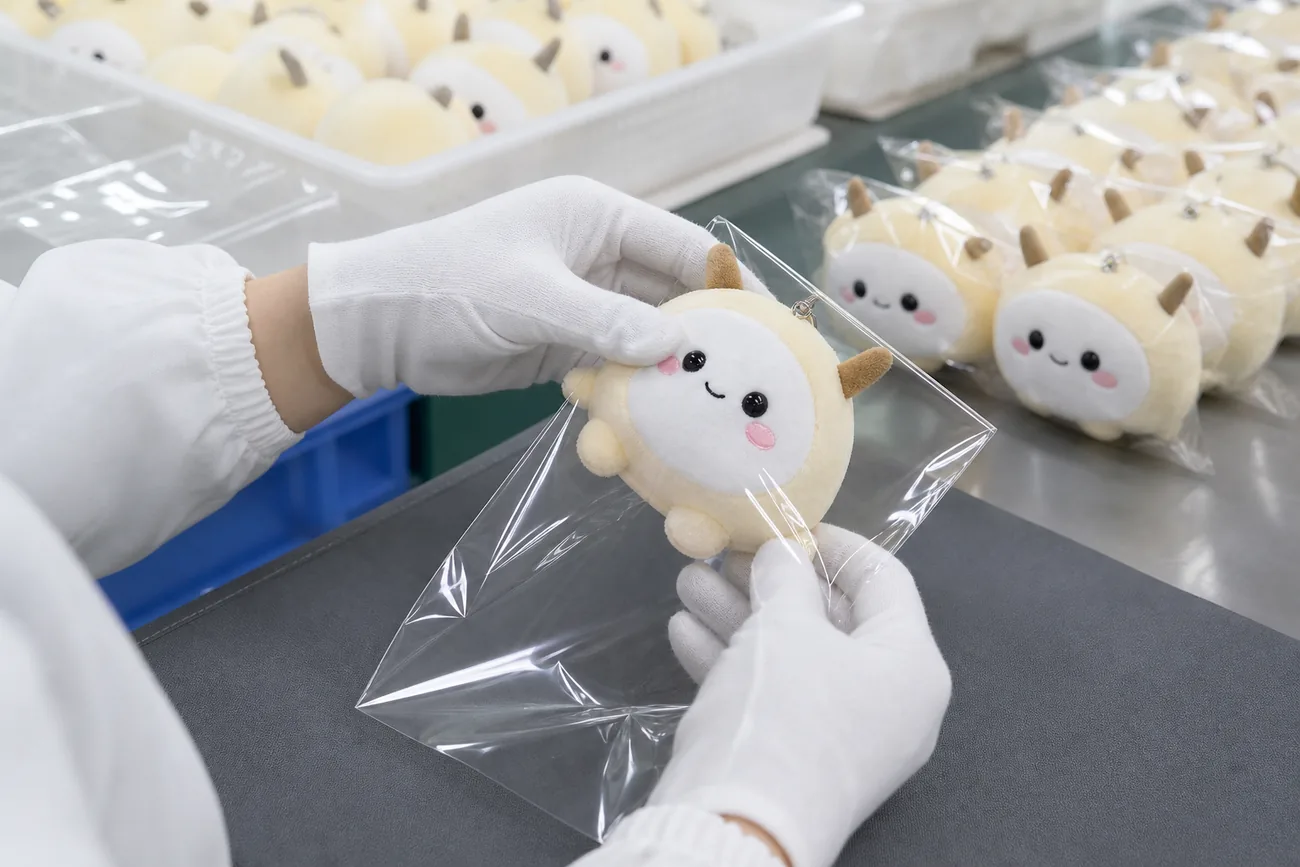
Confirm bag size, wrinkles, product direction, chain position and tag placement before carton packing.
Use header bags, window boxes or blind boxes depending on channel, display plan and barcode rules.
Check barcode, warning text, origin marking and any license sticker placement before shipment.
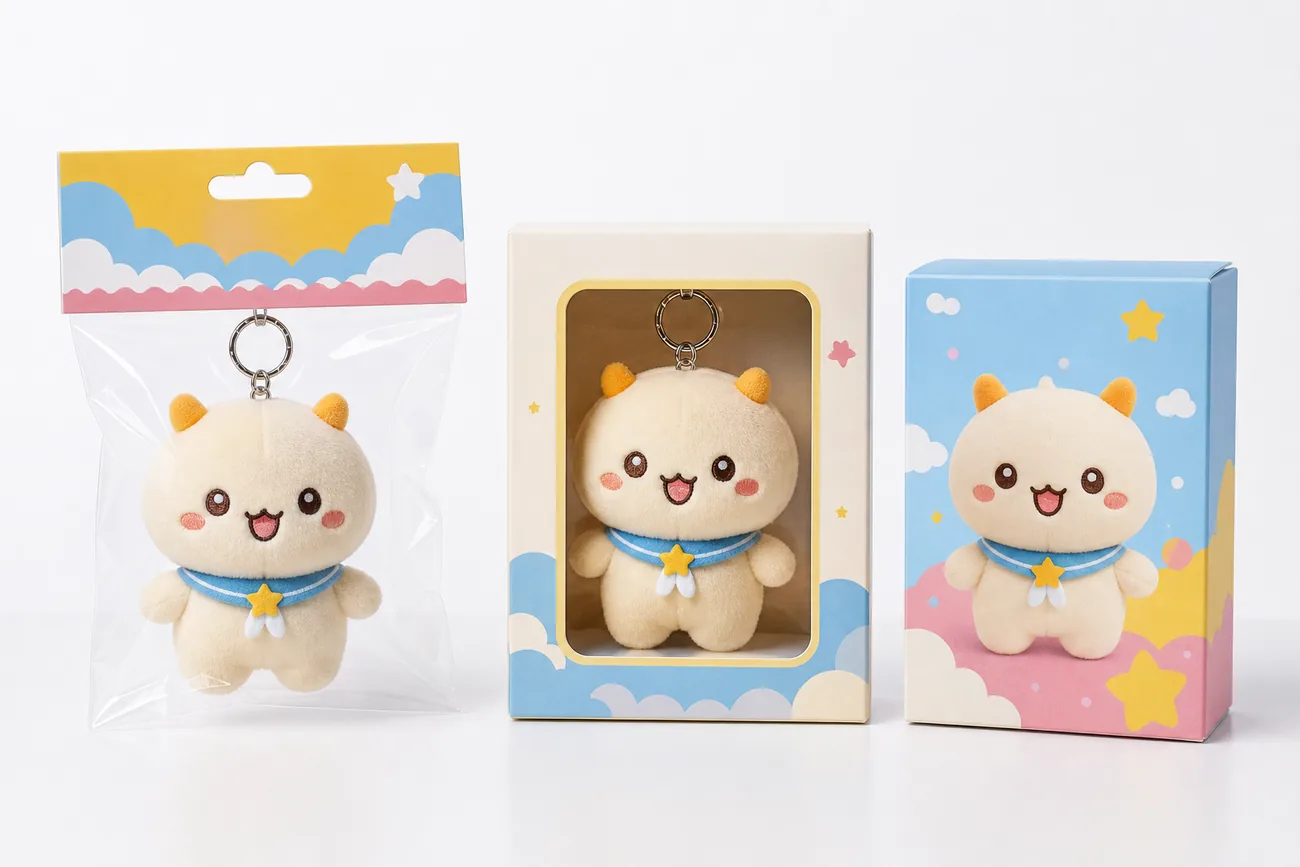
Header bags, window boxes and blind boxes can be selected by channel and shelf plan.
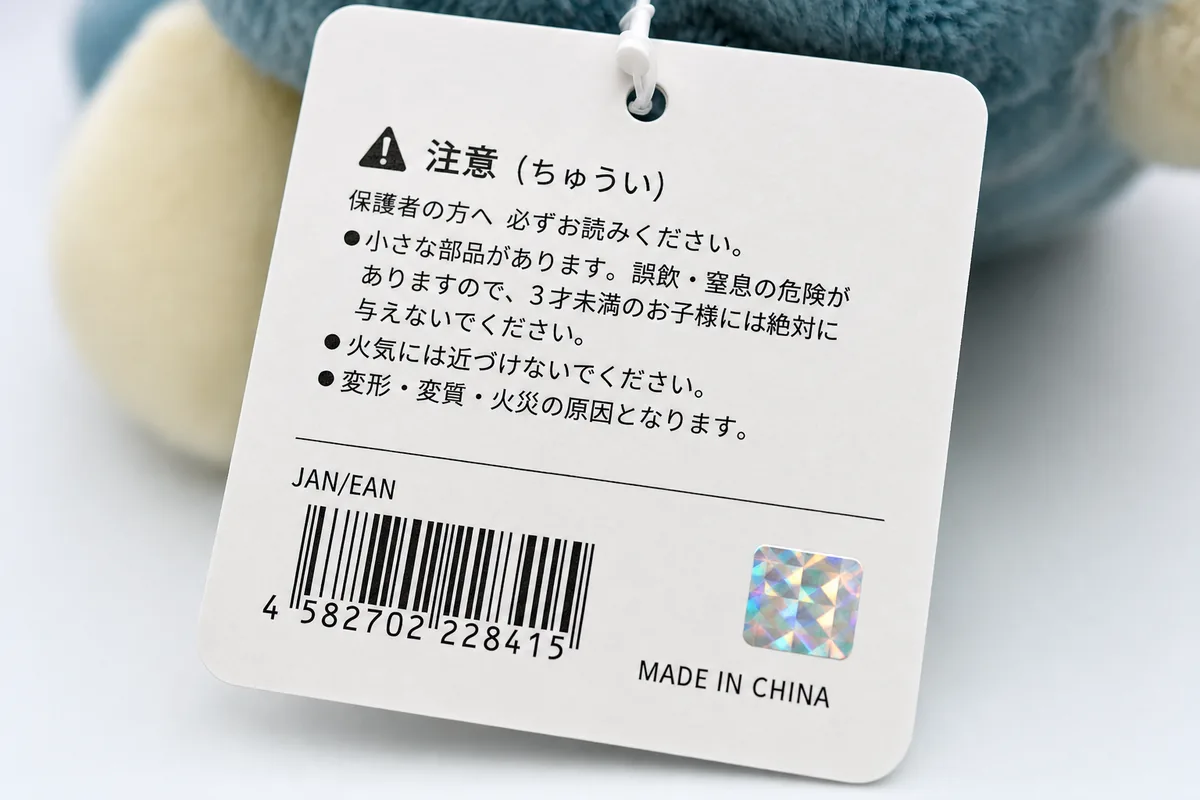
JAN, warning text, origin marking and license label position are reviewed for retail readiness.
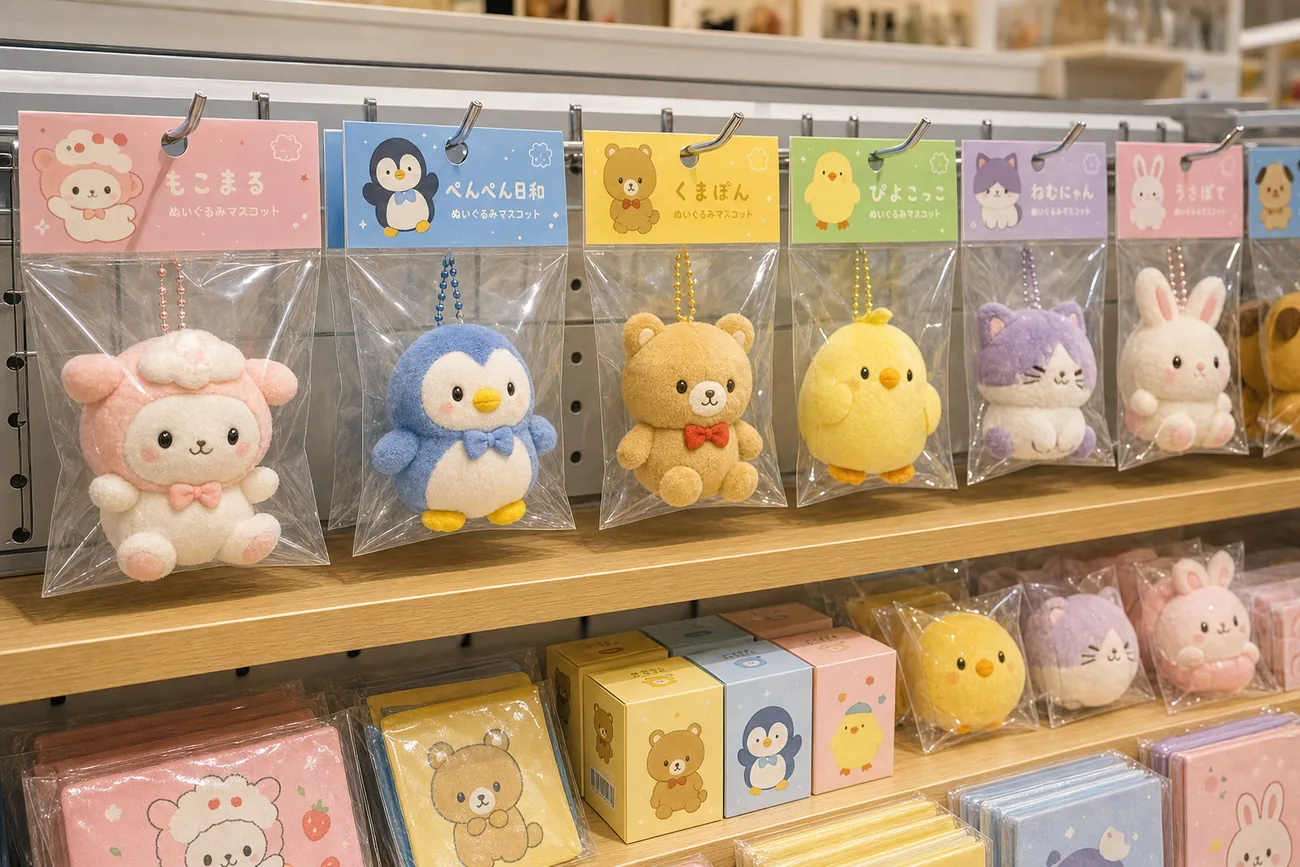
Header holes, hook display, shelf visibility and package face direction are confirmed.
Custom plush inspection defect examples
Defect examples help buyers, designers and the factory align expectations. Use them to define what should pass, what needs review and what must be held before shipment.
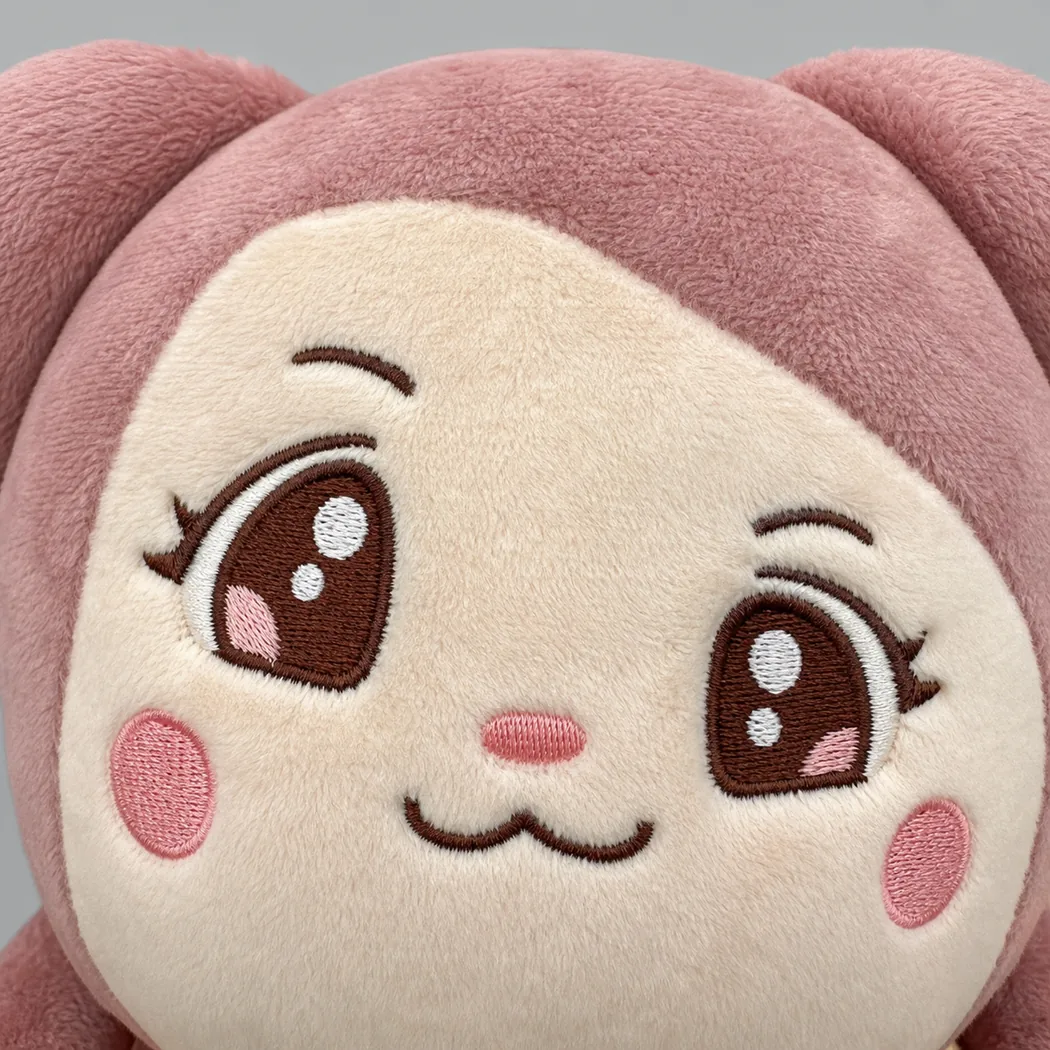
A shifted eye or tilted facial part can change the character impression and should be separated.
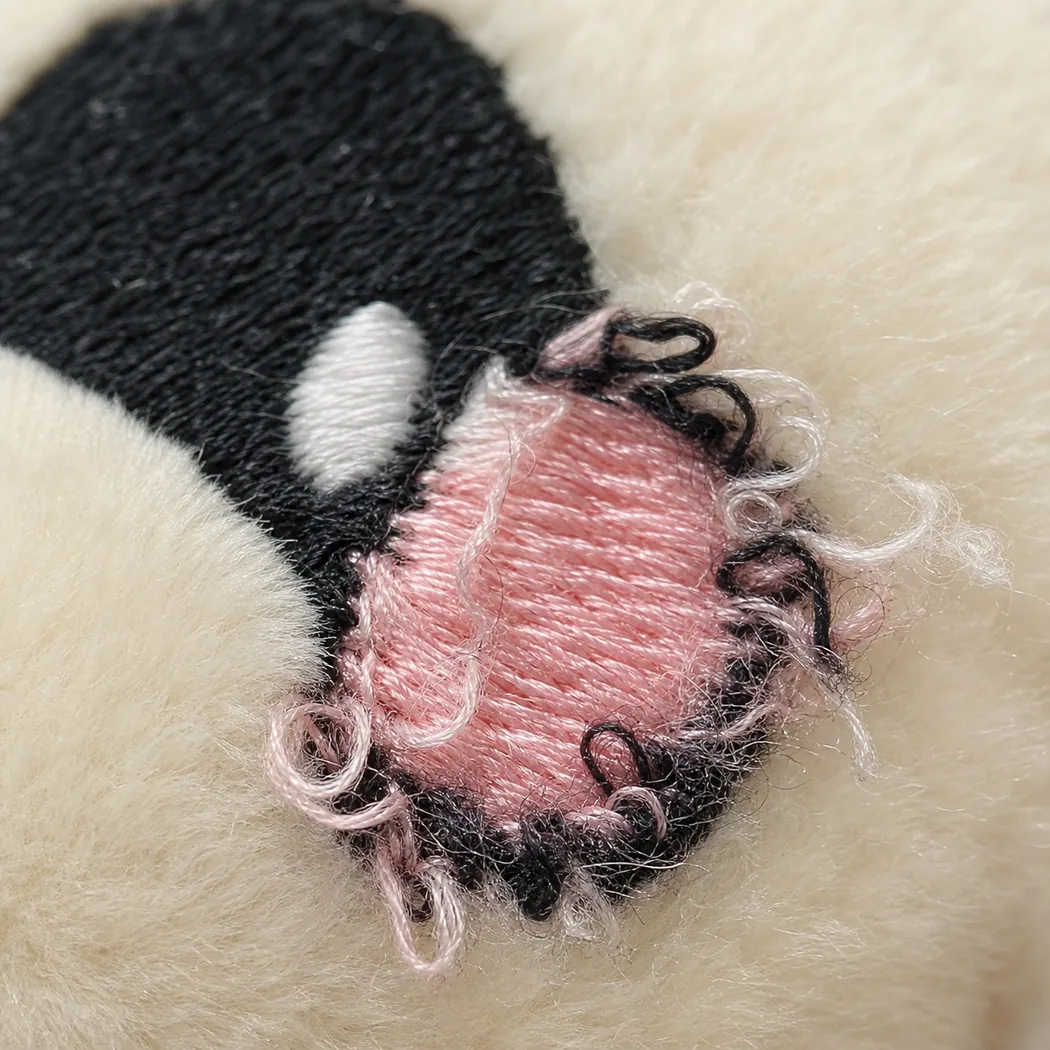
Loose loops, fraying and crushed fine lines are checked because they affect facial quality.
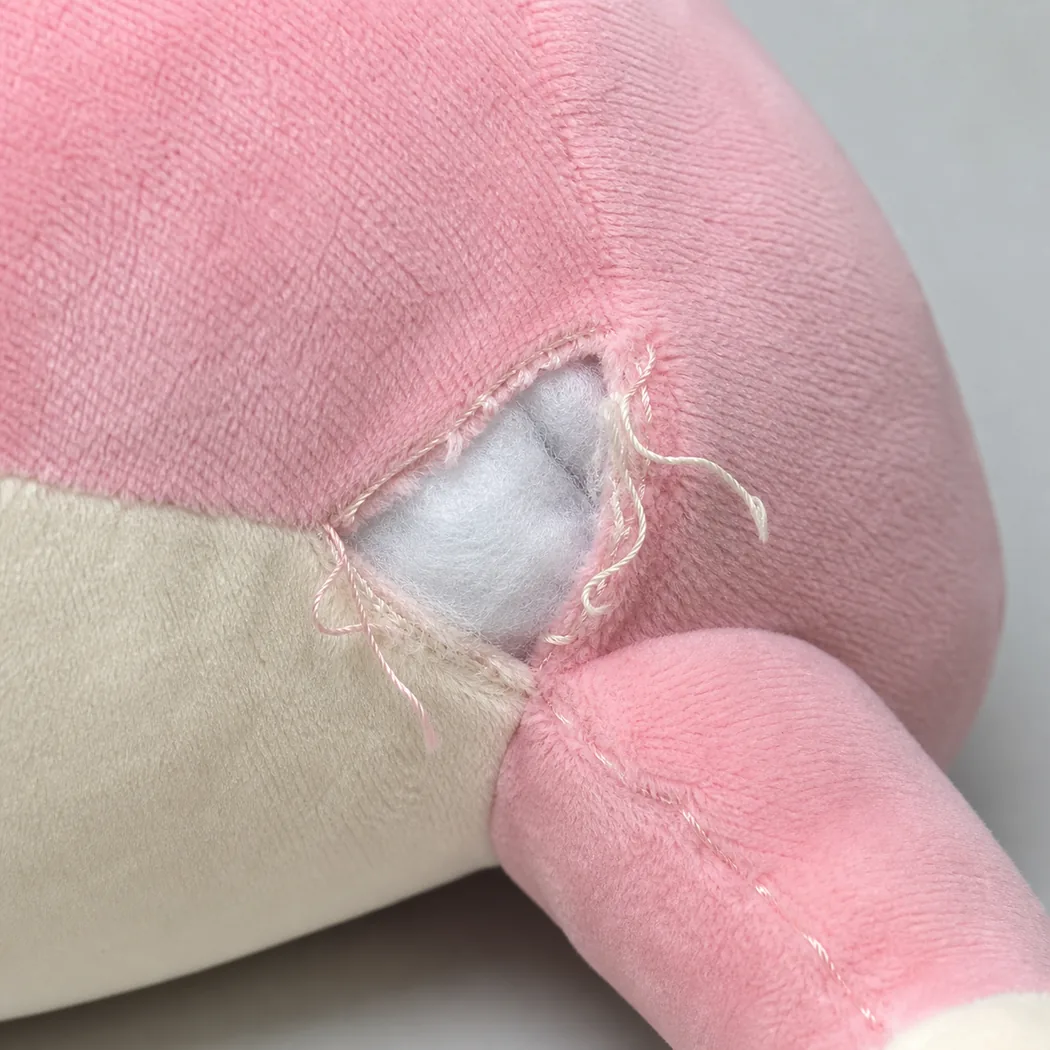
Split seams and exposed filling create appearance and durability risks during use.
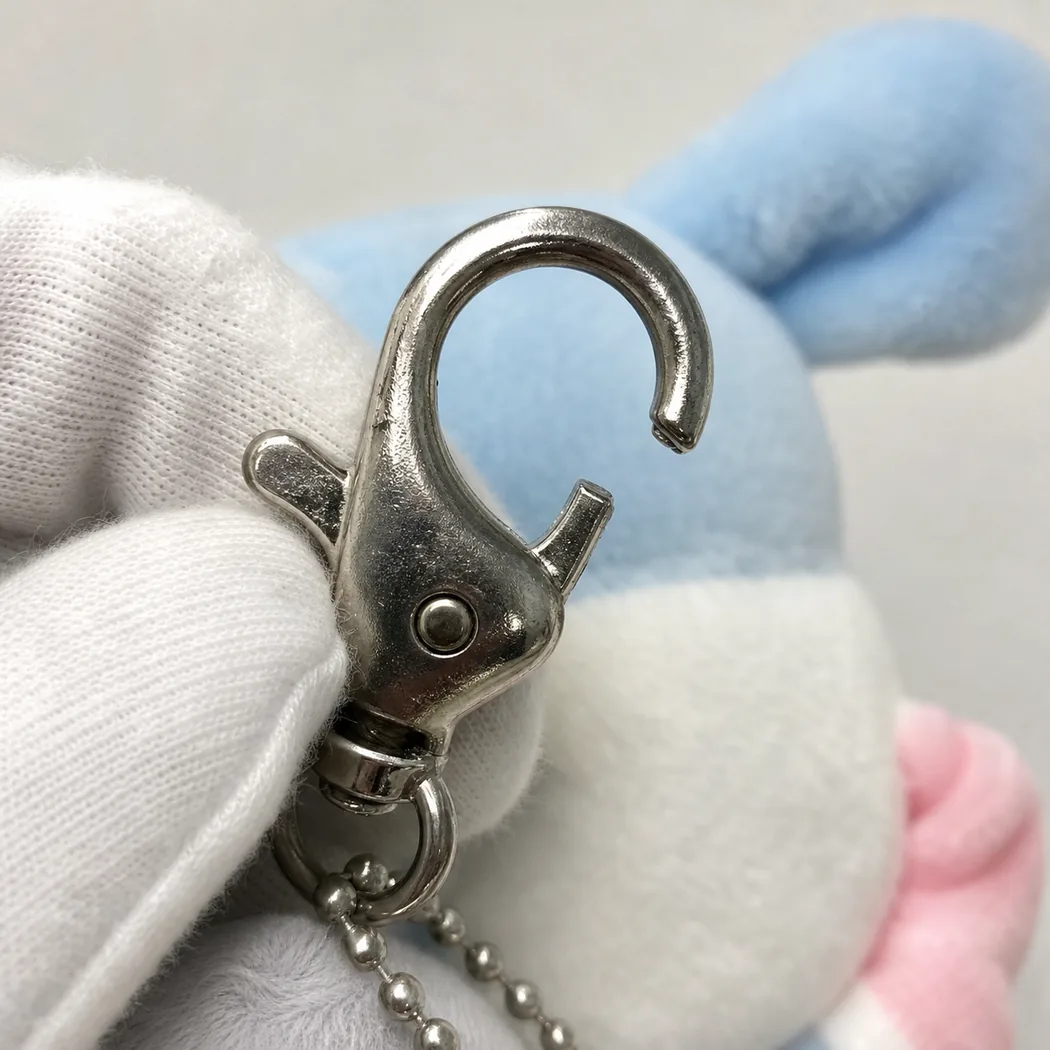
A clasp that does not close, points the wrong way or leaves a visible gap is held before shipment.
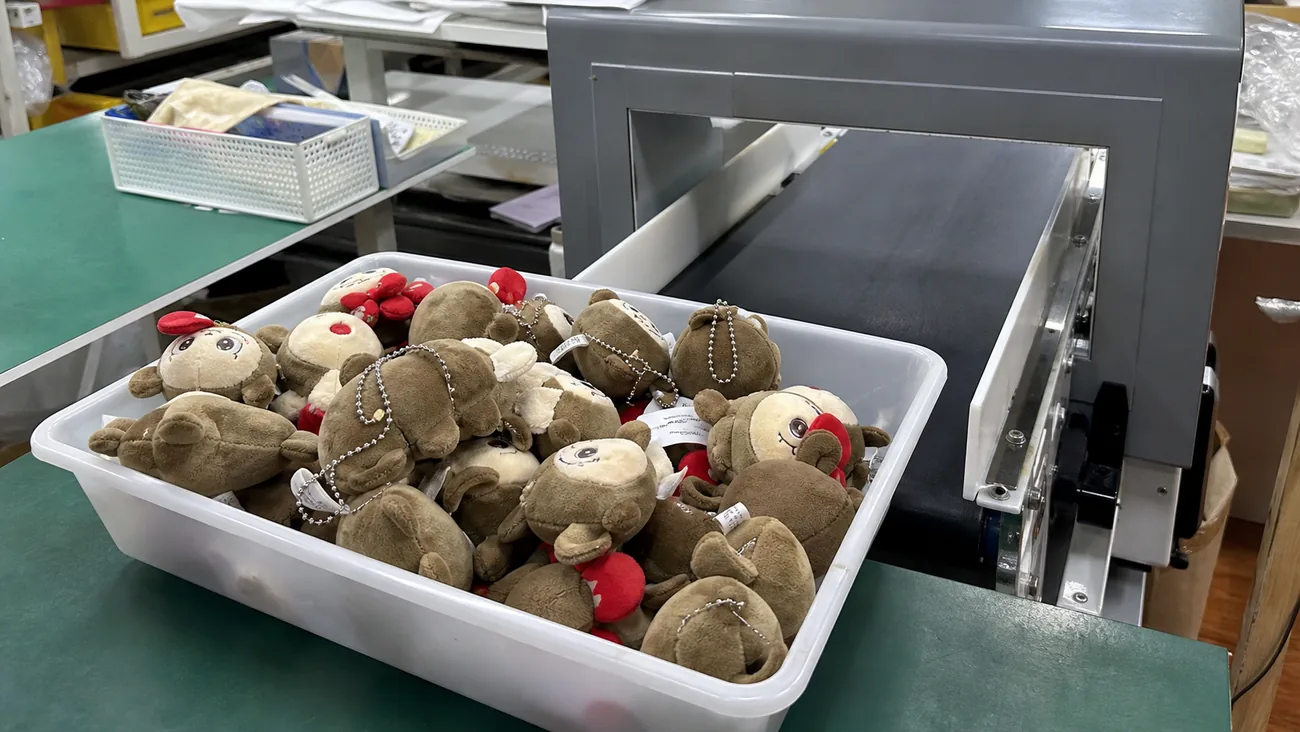
Mixing items with and without metal parts makes detection rules and records unclear.
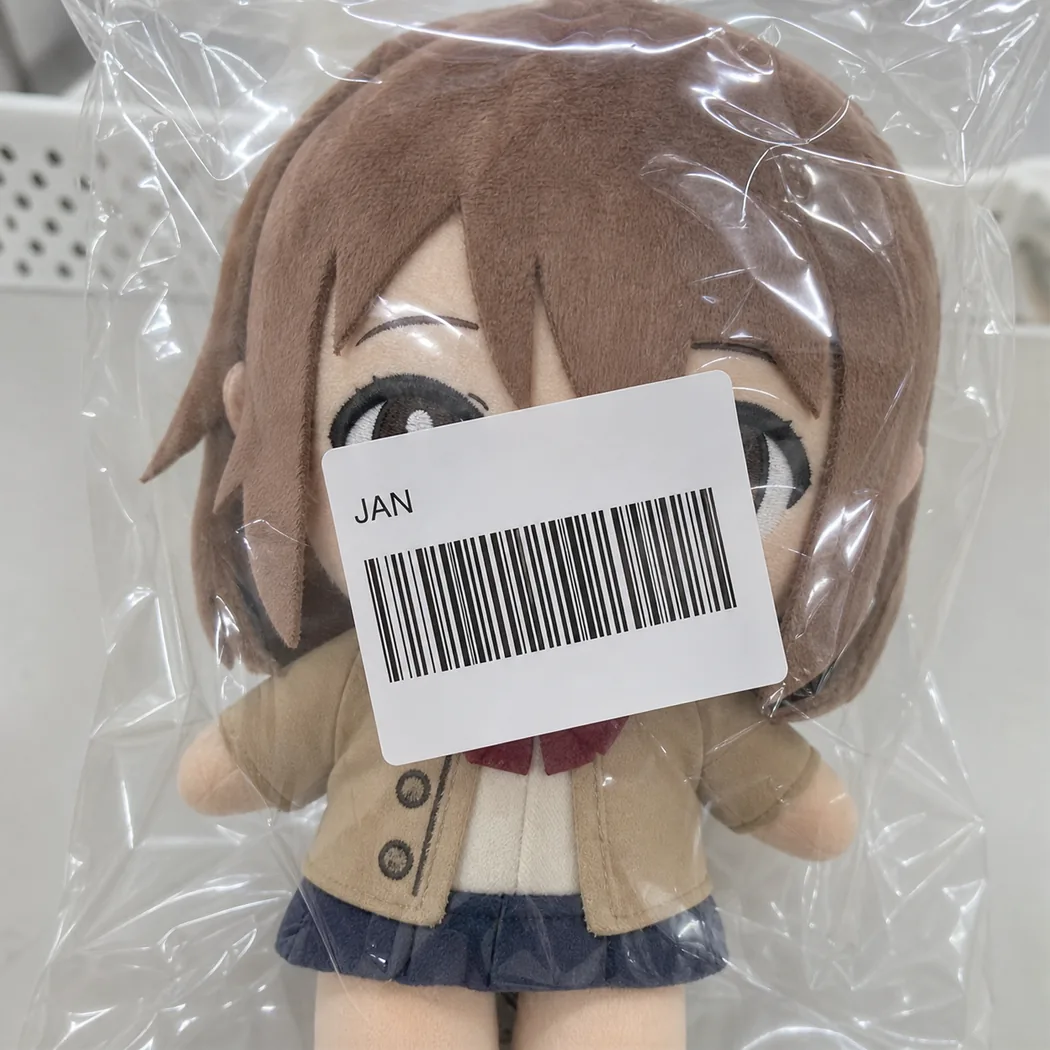
Crooked labels, off-center labels and labels covering the character face should be corrected.
QC workflow: from inspection planning to shipment
The workflow below keeps visual inspection, detector rules and packaging checks connected to the approved sample and order data.
Freeze photos, dimensions, expression criteria, material notes and package direction.
Agree on AQL level, critical items, sampling method and record format.
Review sewing, filling, embroidery and thread trimming before final assembly.
Control metal parts, pull checks and needle detector timing according to the project.
Check hang tags, barcode labels, OPP bags, carton labels and SKU mixing.
Keep photos, check sheets, hold notes and carton information with the order file.
Separate pass, review and hold items
Not every finding has the same impact. Sorting the decision level in advance prevents last-minute arguments and keeps shipment decisions traceable.
Minor variation within the approved sample range, no visible customer-facing defect and no safety-related concern.
Appearance or packaging variation that may be acceptable only after buyer confirmation or sorting.
Open seams, loose small parts, detector issues, wrong SKU, missing labels or any issue outside agreed critical rules.
Inspection materials to share before production
Share these materials before quotation or sample approval so the inspection scope is realistic for your product, market and schedule.
- Front, side and back artwork
- Approved sample photos
- Key dimensions and tolerance notes
- Quantity and SKU table
- Fabric, color and embroidery specs
- Special parts and attachment map
- OPP bag, header card, box or blind box
- JAN barcode and warning text
- Carton label and destination split
- AQL or customer standard
- Critical defect list
- Photos, videos or report format
Related pages
Inspection standards are easier to define together with quotation materials, sample revision, pre-production checks, embroidery rules and needle-detection workflow.
FAQ
When should plush inspection standards be decided?
Set the standards during sample approval for expression, size, sewing, accessories, tags and packaging. If standards are decided only before shipment, the correction scope can become wider.
How is expression misalignment judged?
Eye, eyebrow and mouth position are checked carefully because they change the character impression. The acceptable range depends on the design, size and embroidery line width, so the approved sample should be the reference.
What should be checked for plush with attachments?
Check ball chains, clasps, straps and jump rings for position, direction, opening, pull condition and rubbing inside the package. Some projects may need additional checks depending on use.
Is needle detection the same for every project?
No. The method depends on use case, sales channel, attachments and magnetic components. Required conditions should be shared before quotation. It should be treated as project-specific pre-shipment checking, not an unconditional guarantee.
What are common packaging defect examples?
Examples include torn OPP bags, wrong backing-card direction, misplaced barcode labels, SKU mixing, carton label mismatch and quantity differences. A packaging specification sheet helps confirm these before shipment.
What should we prepare before inquiry?
Share artwork, target size, quantity, SKU table, attachments, packaging, barcode or label requirements, and inspection points that matter most. If there are defect examples you want to avoid, images or notes make judgment faster.
Share defect examples before quotation to make inspection criteria clearer
Send artwork, target size, SKU plan, attachments, package rules and the defects you want to avoid. We will help turn them into practical sample and mass-production checks.