
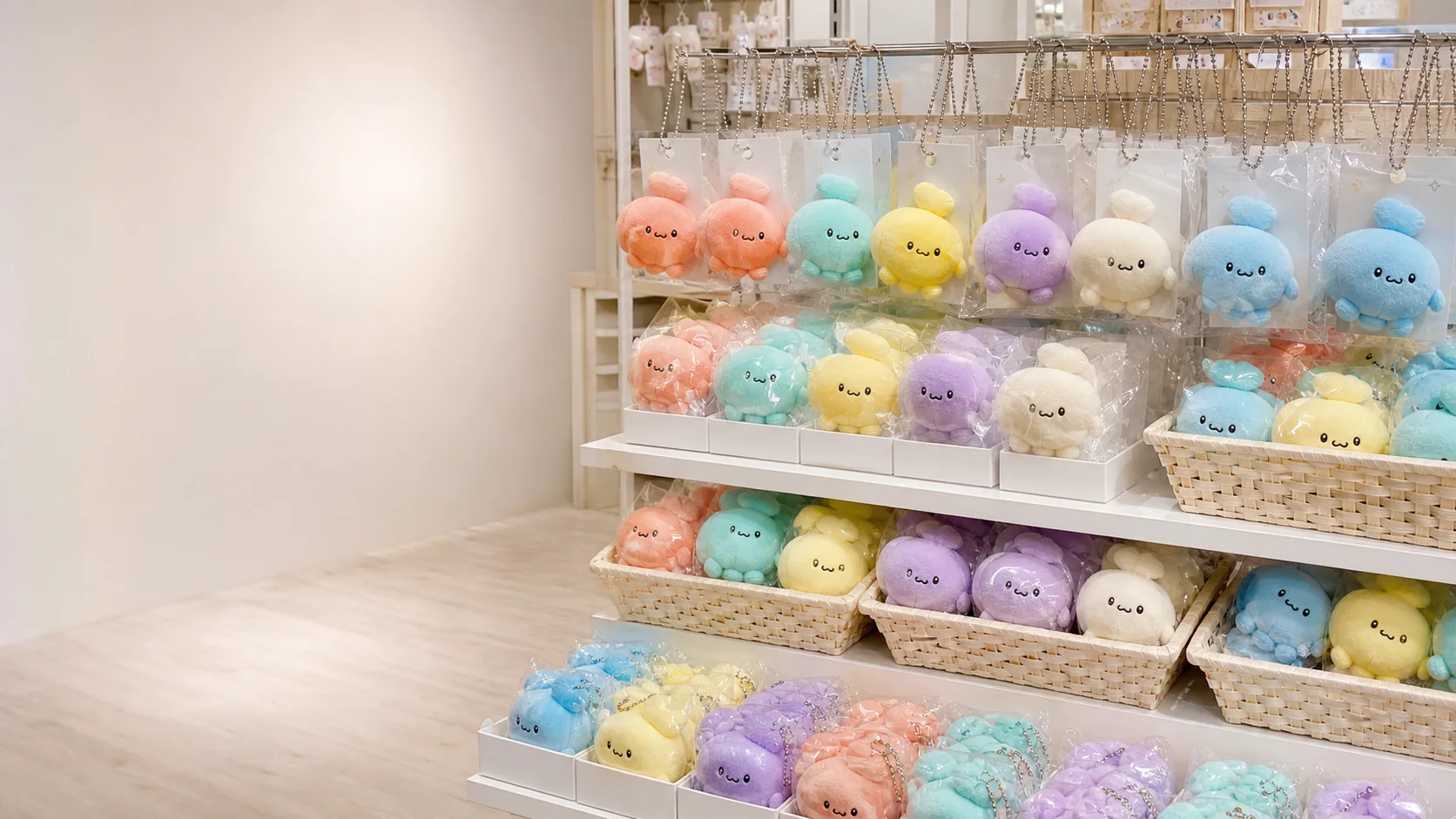
Limited Retail Merchandise
Custom Pop-Up StorePlush OEM
Plan custom plush for pop-up stores for official merchandise, including approvals, MOQ per SKU, packaging, QC, launch timing, and delivery.
Short retail launches require limited SKUs, visible display packaging, backing cards, OPP bags, barcode data, initial delivery, and replenishment to be planned together. We support small-lot, multi-SKU projects from early planning.
This page covers sellable limited plush merchandise for a short retail store, not free promotional giveaways. It organizes SKUs, display, packaging, barcodes, replenishment, and safety review without using real store or IP names.
What makes pop-up store plush sellable in-store
Results depend not only on exclusivity, but also on whether shoppers can find each item, staff can identify SKUs correctly, and stock can be replenished on time.
Organize limited colors, venue editions, and sets around inventory units.
Match backing cards, OPP bags, and tag placement to each fixture.
Set initial stock, reserve stock, refill points, and reorder dates before opening.
Plan appearance, part-strength, needle detection, and AQL conditions by use case.
Four conditions to define before quotation
The shorter the sales period, the more important it is to connect SKU, display, packaging, and replenishment in one sales plan.
Organize event-only colors, outfit variants, location-limited items, and sets in the SKU sheet.
Define backing cards, OPP bags, tag placement, and hanging method for shelves, hooks, baskets, or cashier areas.
Separate barcode, backing card, OPP bag, and carton label data by SKU for store registration and QC.
Plan first delivery, refill stock, reserve units, and EC inventory during the short sales window.
Manage limited SKUs and store stock in one table
The SKU sheet becomes the shared reference for quotation, sampling, packaging, production, cartons, and store replenishment.
| SKU plan | Typical specification | Before quotation | Our response |
|---|---|---|---|
| Limited-color SKU | Store-period color, outfit, and tag variants | Fix color name, barcode, backing card, quantity, and replenishment status by SKU. | Manage color approval and packaging data in one SKU sheet. |
| Set-sales SKU | Single item, pair set, full set, or bonus set | Confirm set assembly, outer packaging, barcode, and inventory registration name. | Define matching rules to prevent single-item and set mixing. |
| Display SKU | Hook hanging, shelf display, basket display, cashier area | Confirm hang hole, backing card size, OPP thickness, and visible label side. | Use fixture photos to plan packaging dimensions and facings. |
| Replenishment SKU | First delivery, refill delivery, EC stock, reserve stock | Organize arrival date, storage location, refill deadline, and carton label. | Separate initial, reserve, and refill stock by carton. |
Share the display image before production
Store photos or fixture drawings help fix SKU order, facings, package front, refill position, backing card dimensions, and packaging conditions early.
- Show color, outfit, and size variants as a coherent series
- Match barcode and registration name to the SKU sheet
- Reserve refill space for faster-moving SKUs
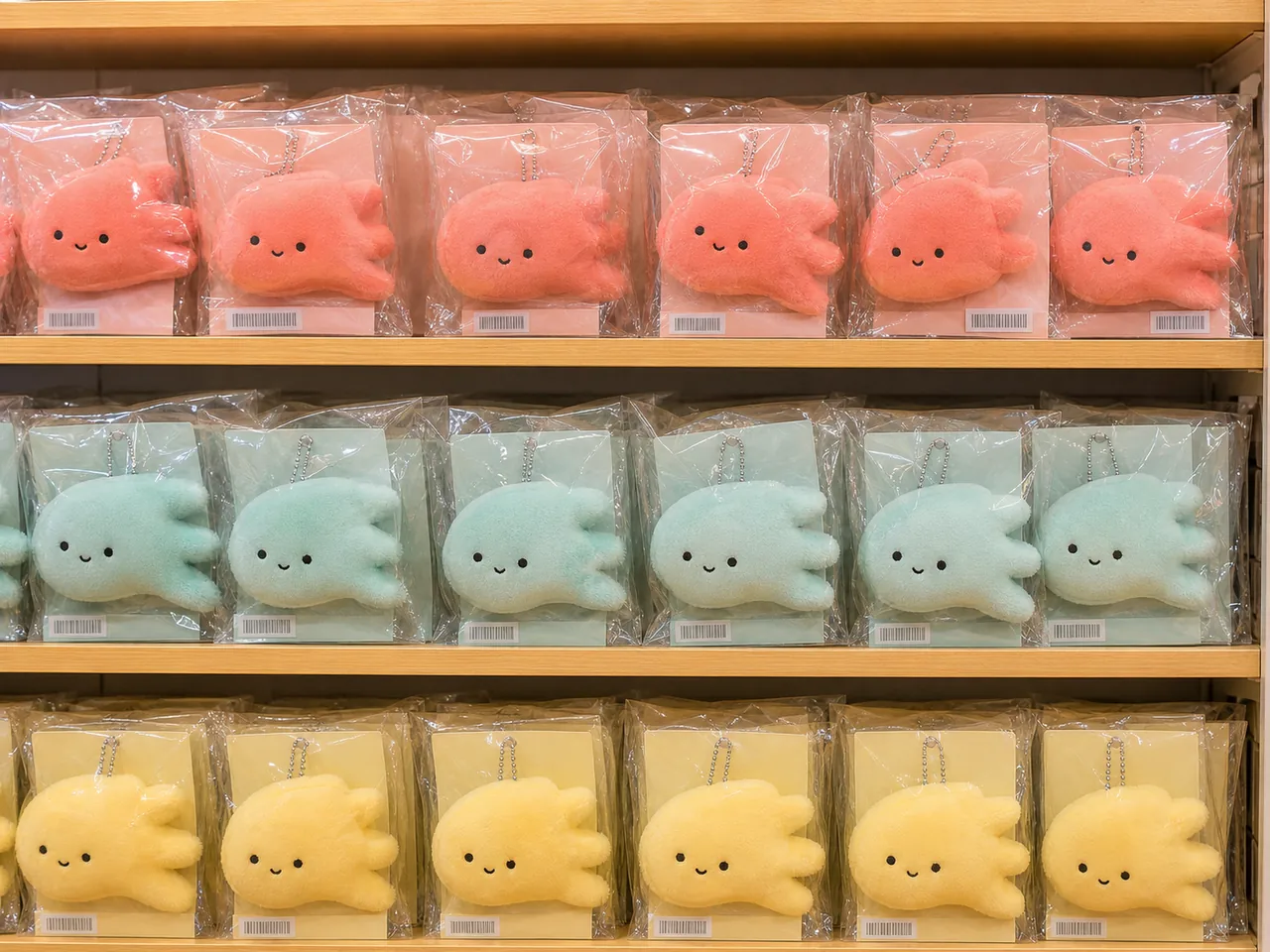
Choose packaging for the actual retail fixture
Shelf, hook, and cashier displays have different visible surfaces, pickup behavior, and refill needs. Fixture photos and dimensions improve packaging decisions.
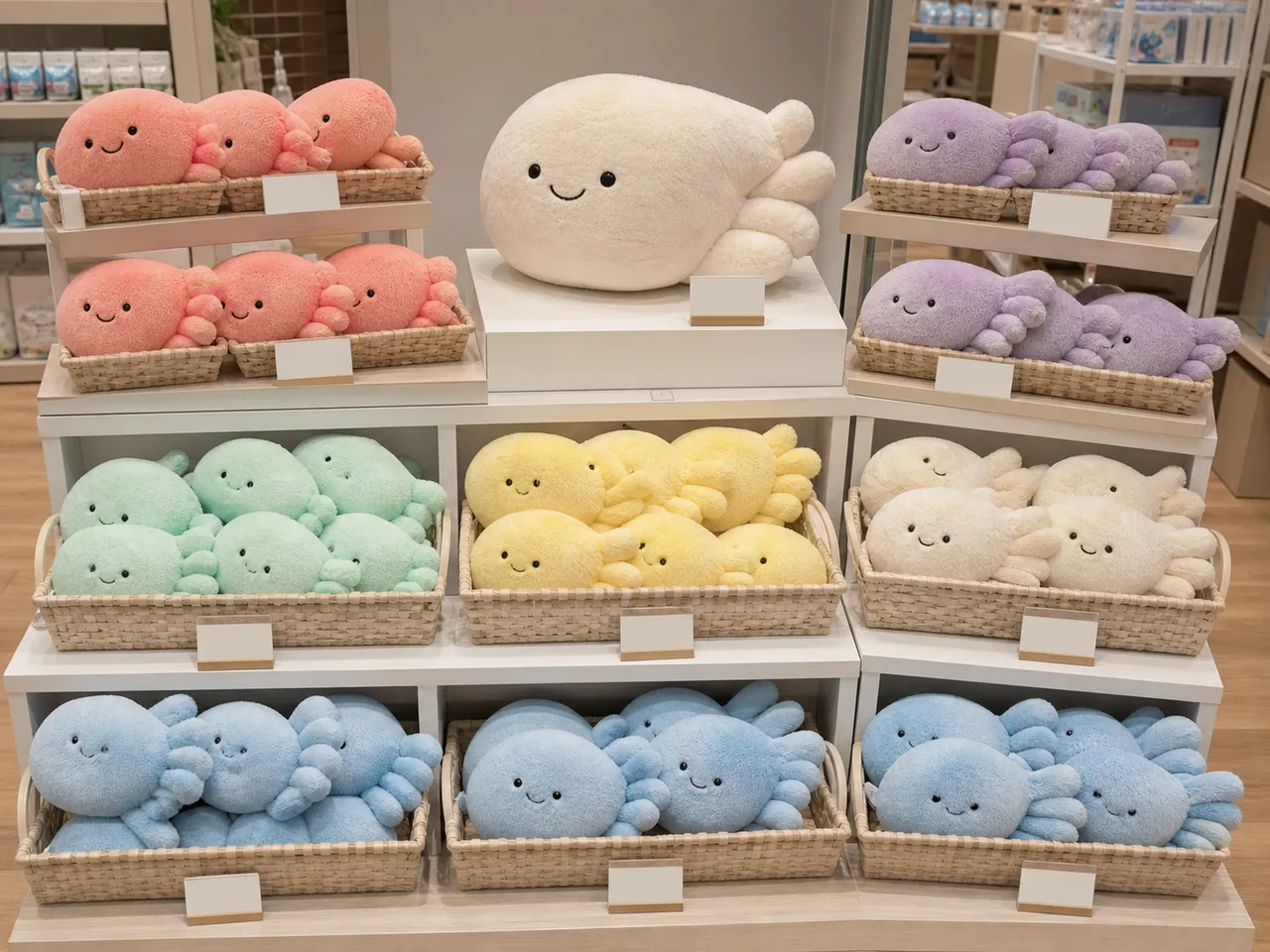
Separate SKUs for faster refill and stock checks.
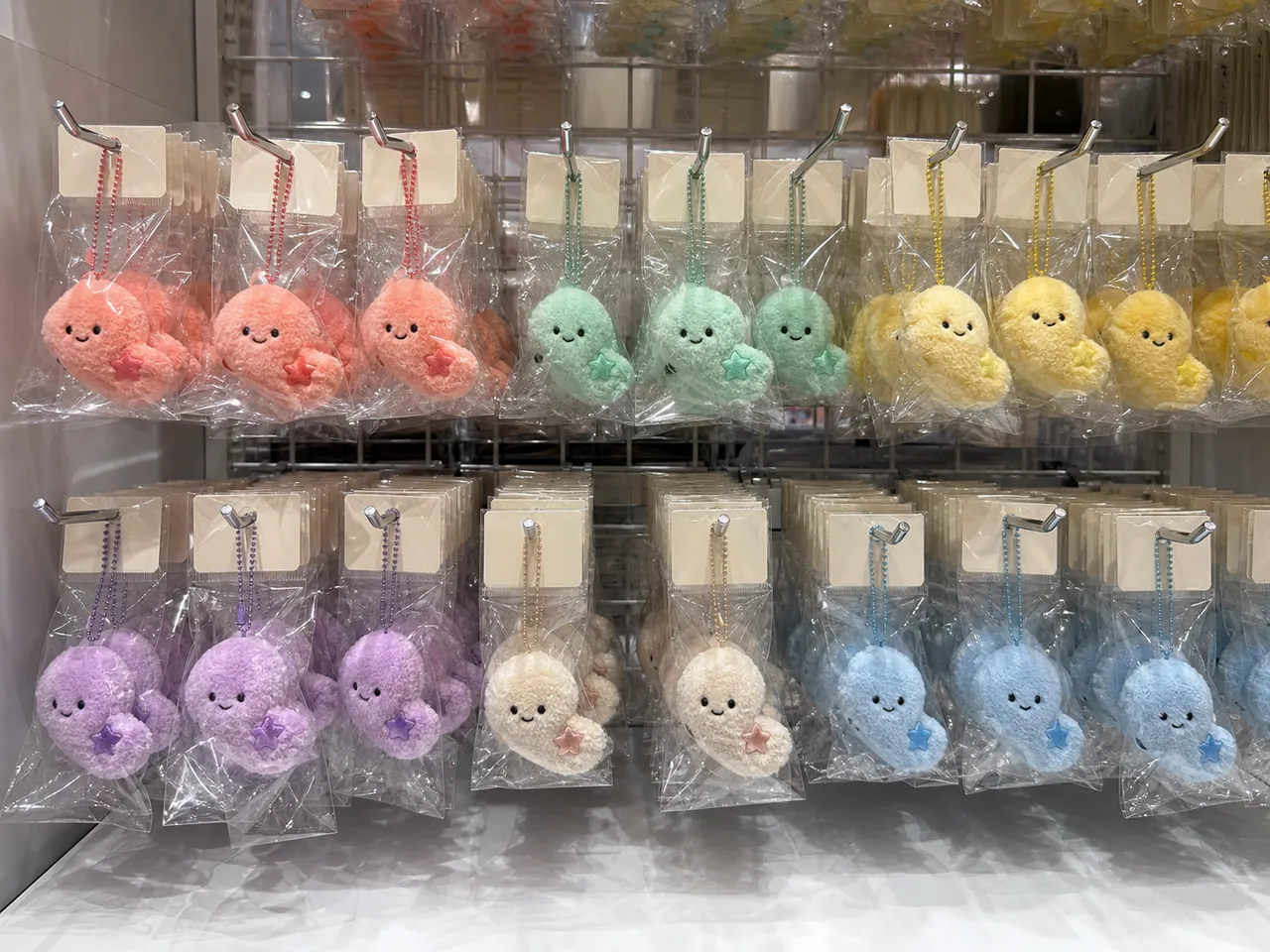
Match hang hole, backing card, OPP, and hardware to the fixture.
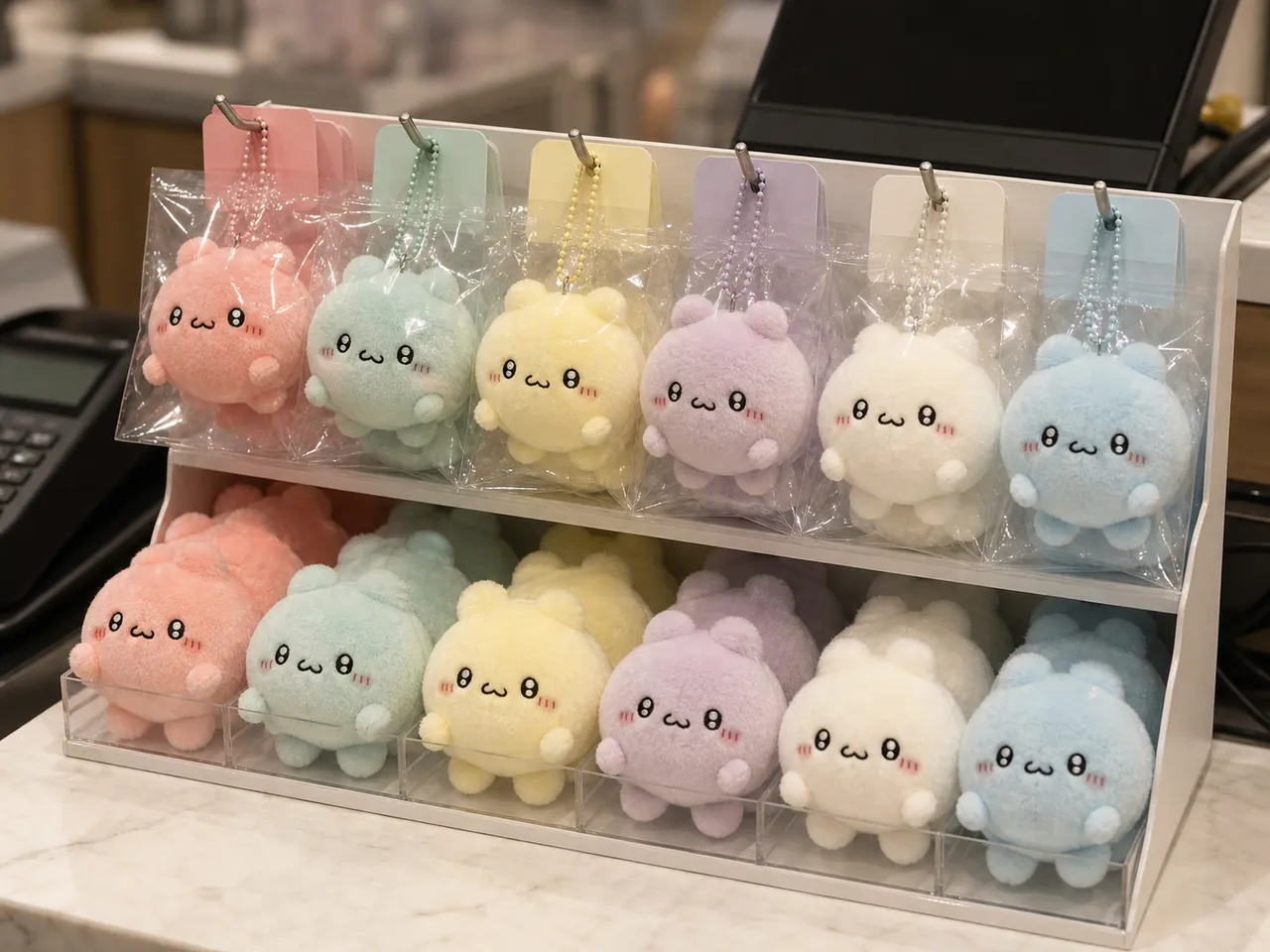
Make color and SKU immediately identifiable in a compact footprint.
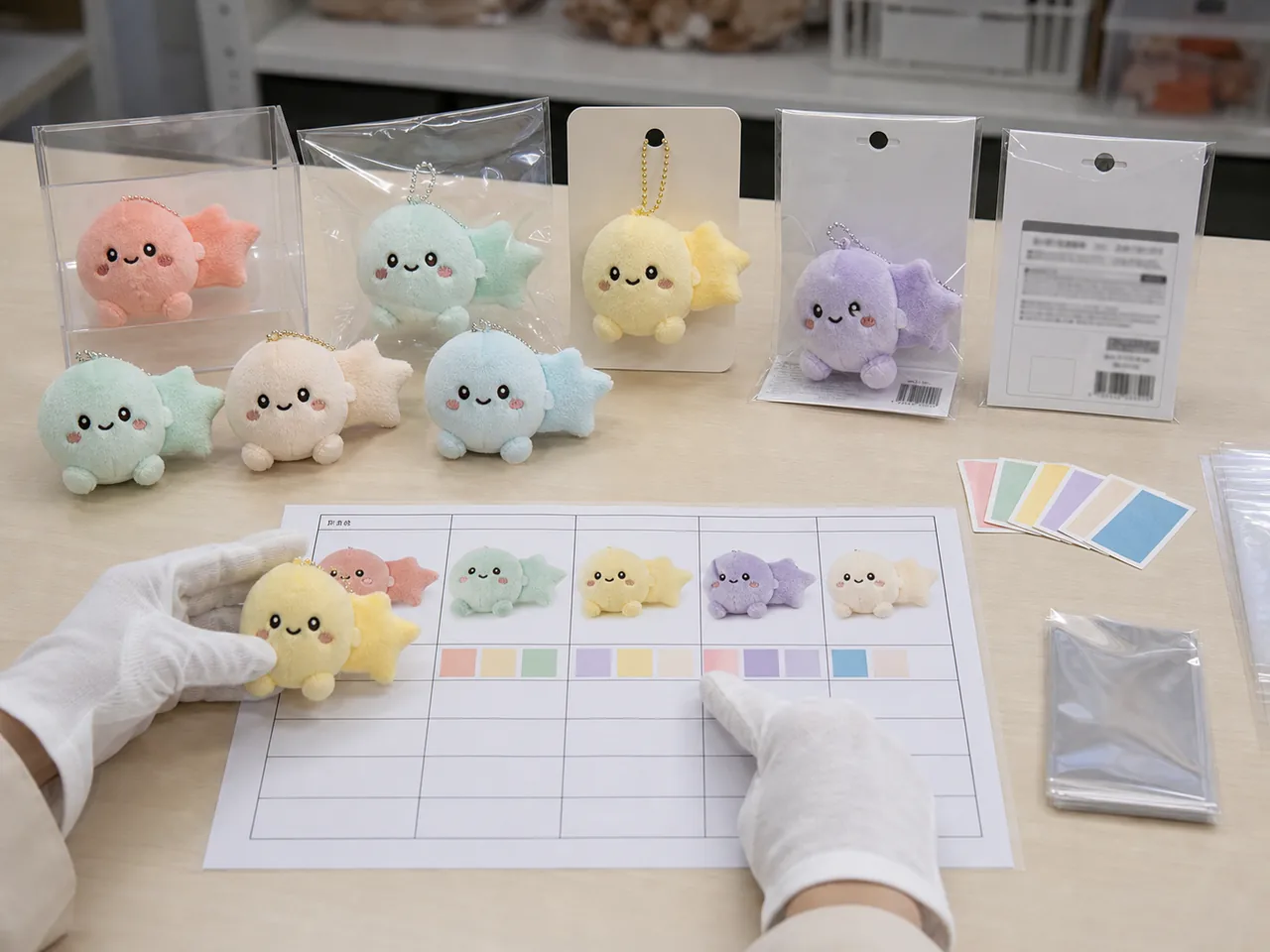
Review the plush, OPP bag, backing card, and barcode together
Approving only the plush can leave packaging problems. Review front, back, and hanging presentation together before mass production.
- Expression, sewing, color, accessories
- Backing card, OPP thickness, hang hole
- Barcode, product name, notices, carton data
Safety and inspection planning
In-store sales should account for shoppers, including children, handling the product. Production is managed through our own sewing factory, with appearance, part-strength, needle detection, and AQL conditions set for each project.
Match expression, sewing, stains, accessories, and packaging to the approved standard.
Review hardware, ribbons, small parts, and attachment points by use case.
Plan metal-detector stages and records when required.
Agree sampling conditions by use, quantity, and client standard.
Plan replenishment to reduce stockout risk
Simply increasing first delivery does not address fast and slow sellers. Set reserve stock, refill points, reorder dates, and destinations by SKU.
- Separate initial and reserve stock
- Use remaining stock and sell-through for refill decisions
- Separate store, warehouse, and EC inventory
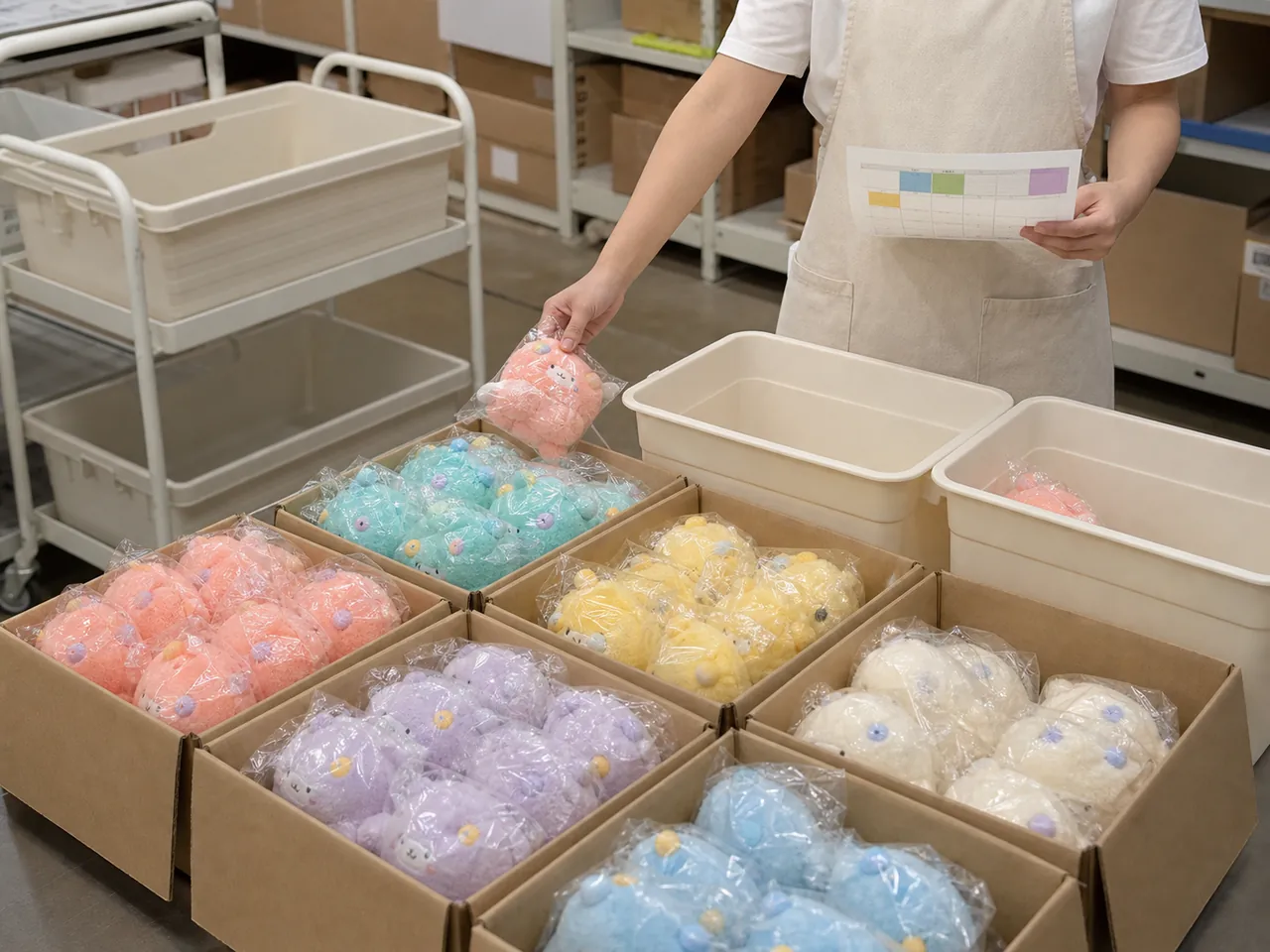
Workflow planned backward from the opening date
Include setup, move-in, initial delivery, and refill decision dates in the same schedule as the opening date.
Confirm sales period, display method, and channels.
List limited SKUs, sets, and replenishment targets.
Fix backing card, OPP bag, barcode, and carton label.
Check expression, embroidery, color tone, and tag placement.
Check SKU matching, barcode matching, appearance, and packaging.
Manage first delivery, reserve stock, and replenishment.
Risks to control before production
In a short sales window, small mismatches in packaging, SKUs, replenishment, or safety directly affect store operation.
If backing card size or hang holes do not match the fixture, the item is hard to display well.
Similar SKUs need barcode, backing card, and carton label matching rules.
Short events can lose sales or create leftover stock when refill decisions are delayed.
If children may handle the item in-store, late decisions on needle detection and part-strength checks can create avoidable risk.
This page focuses on sales operation, packaging, stock, and store registration, not generic event promotion.
Free planning checklist
Use the bilingual checklist to organize limited SKUs, fixture conditions, packaging, replenishment, and safety review in one file.
Materials to prepare before quotation
Undecided items are acceptable. Required details can be organized from the sales period and store conditions.
Sales period, move-in date, setup date, closing date, and sales channels.
Limited SKUs, color variants, sets, quantity differences, and replenishment SKUs.
Shelf, hook, basket, cashier area, and required backing card size.
Backing card, OPP bag, barcode, hang tag, box, and carton label.
First delivery quantity, reserve stock, refill deadline, and storage location.
Appearance, sewing, SKU matching, barcode matching, packaging matching, and carton labels.
Related pages
Review adjacent pages by sales purpose, product format, and supplier-selection stage.
FAQ
Can multiple limited SKUs be produced for a pop-up store?
Yes. Color variants, outfit variants, store-limited items, and sets can be organized in a SKU sheet with barcode, backing card, OPP bag, quantity, and replenishment conditions.
Can packaging be planned around retail display?
Yes. Backing card size, hang holes, OPP bags, and tag placement can be planned around shelf display, hook hanging, basket display, or cashier-area placement.
Can barcode and carton label requirements be included?
Depending on the project conditions, barcode data, backing cards, OPP bags, carton labels, and SKU matching rules can be organized before quotation.
Can replenishment during a short store period be planned?
Depending on specification, quantity, and sales period, first delivery, reserve stock, refill deadline, and storage location can be discussed.
How is this different from promotional novelty plush?
This page is for sellable limited merchandise in a short retail store, not free giveaways. It covers display, barcode packaging, SKUs, replenishment, and product registration names.
What should we send for quotation?
Please share design references, target size, SKU count, quantity, sales period, display method, packaging, barcode requirement, delivery address, replenishment plan, and requested timing. Undecided details can be organized from the use case.
Is needle detection always required?
Not every project uses the same conditions, but it should be considered for children's products and in-store sales. The process and records depend on metal hardware, target age, and client standards.
Can production or replenishment continue during the store period?
This may be discussed depending on specification, quantity, event period, and material availability. Set initial stock, reserve stock, a reorder decision date, and refill lead time before opening.
Start from the sales period and store conditions
We can organize limited SKUs, display method, packaging, and replenishment together. Store photos and fixture information enable a more precise proposal, even when the full specification is not final.