PVC Goods Pre-Production Checklist
Use this checklist to reduce mass-production trouble and align quality, lead time, and cost before starting PVC goods production with a Chinese factory. It covers the key points from quotation request to inspection and delivery.
Pre-Production Checklist
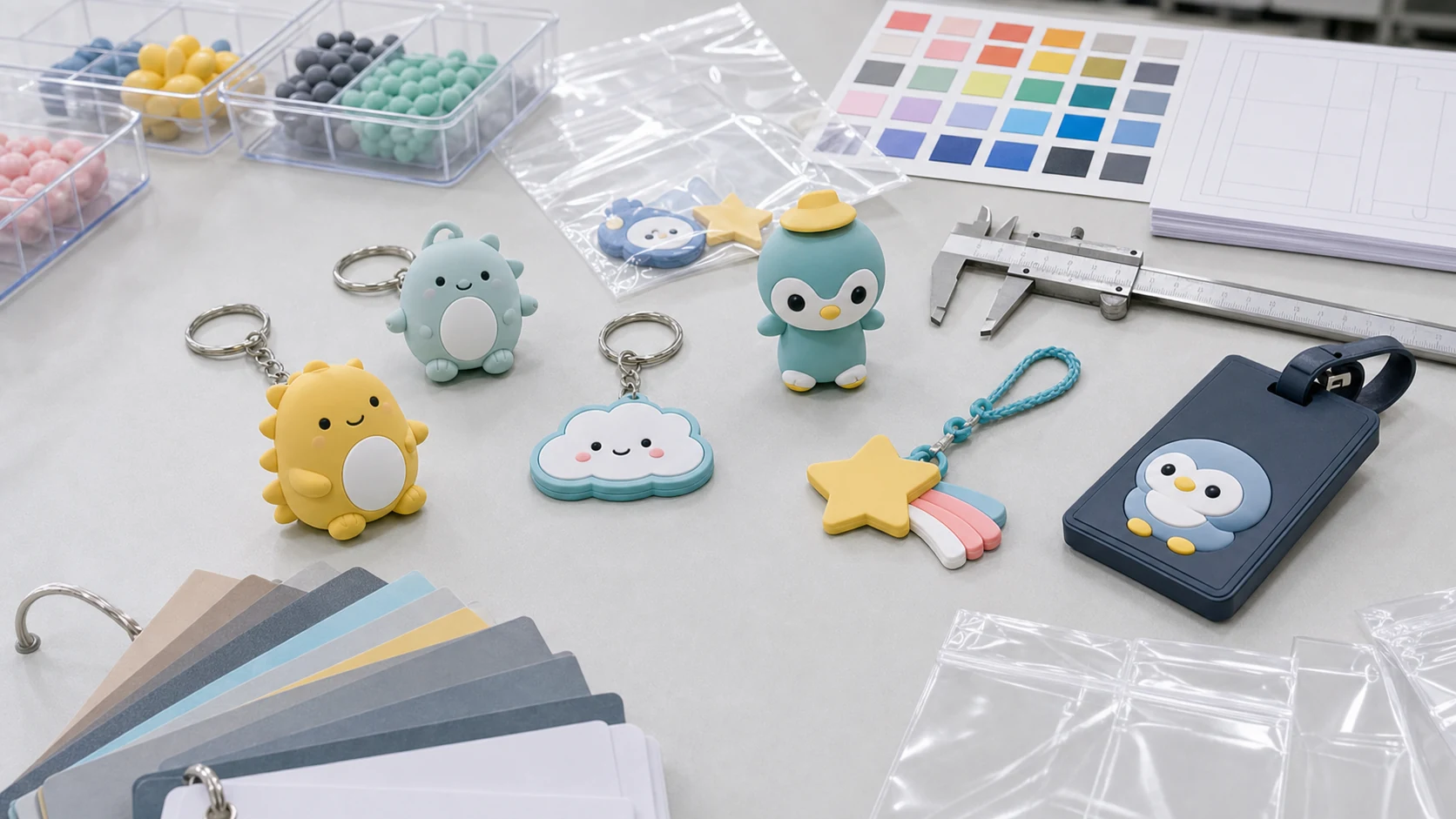
Share each item internally and prepare for mass production without missing key checkpoints.
Design Materials
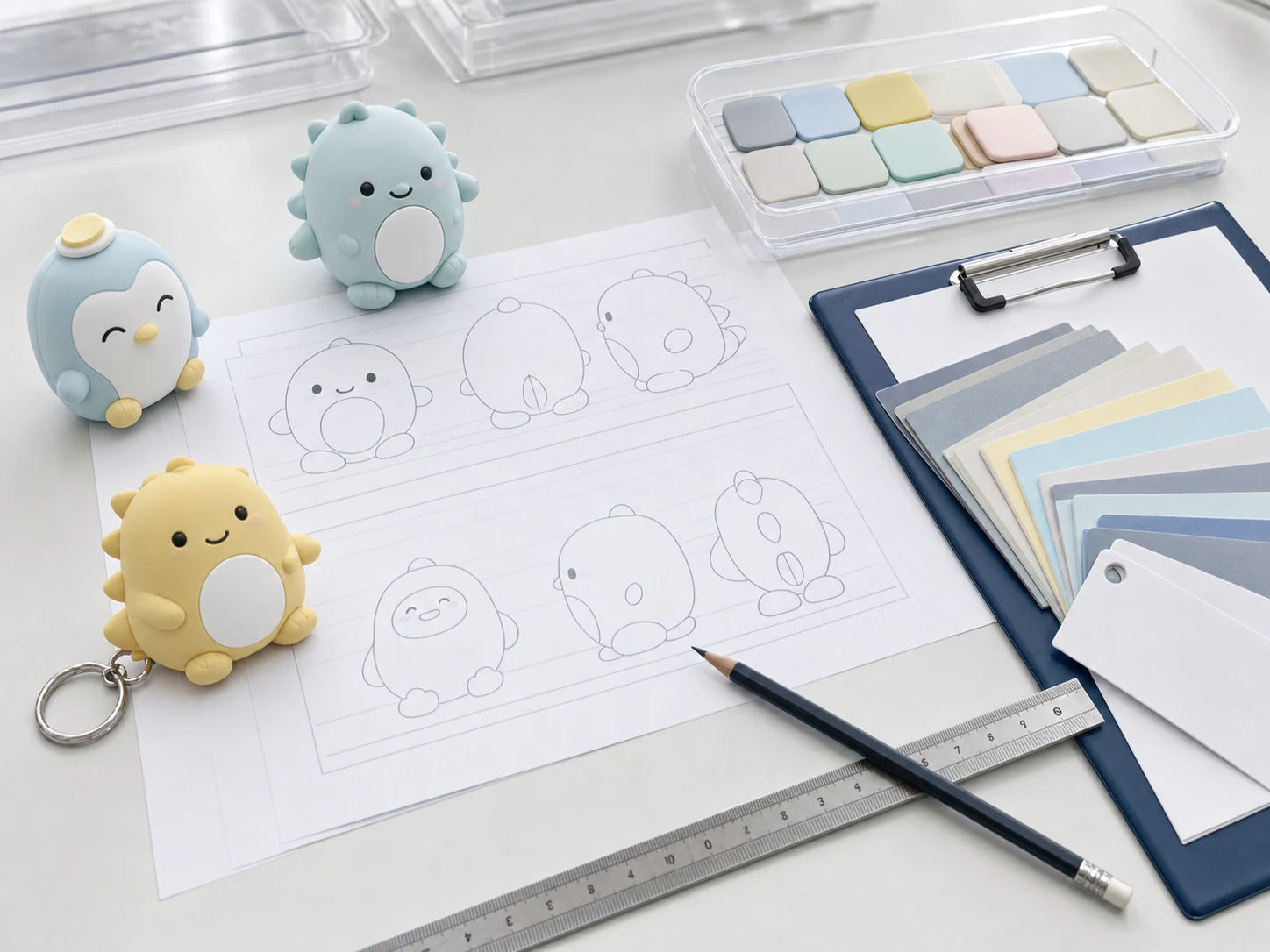
Materials sent to the factory should work not only as visual references, but also as production instructions that can guide decisions during mass production.
- Prepare multiple formats such as PDF, AI, and CDR
- State size, material, packaging, and lead time in Chinese-English bilingual notes
- Share PANTONE / DIC codes and physical color samples
- Prepare front, back, side, and close-up reference images
Avoid vague wording. Instead of saying "slightly rounded," specify measurable details such as "R=3mm" to reduce misunderstanding.
Specification Conditions
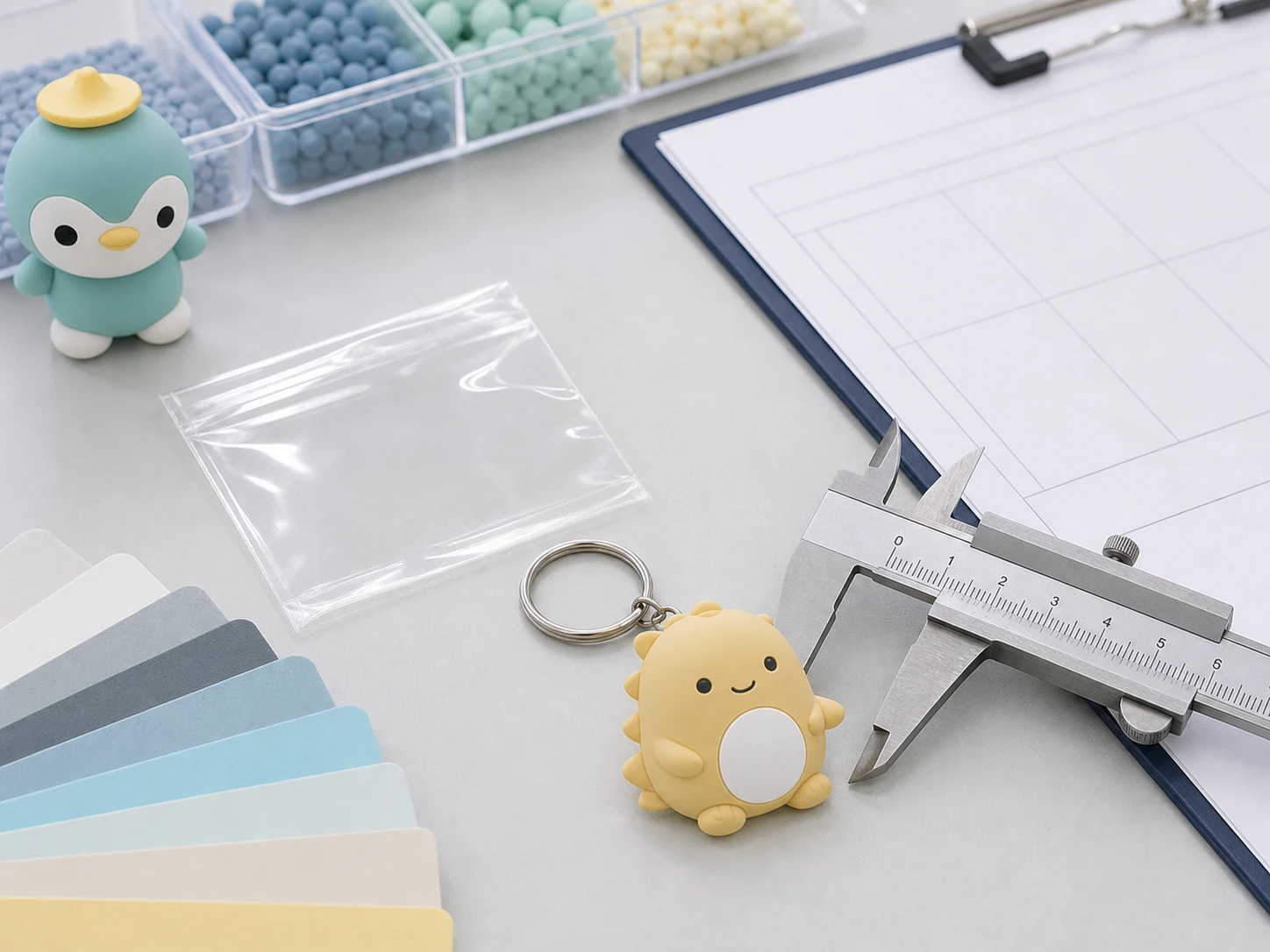
Because these details become the decision standard during production, define product size, thickness, PVC hardness, color separation, surface finish, and attachments in advance.
- Specify width, height, thickness, and tolerance
- Confirm PVC hardness, flexibility, and environmental requirements
- Share finish samples for matte, gloss, coating, and printing
- Specify metal fitting material, plating, strength, and attachment position
"As specified" and "as imagined" are not always the same. For important colors and textures, physical samples are the safest way to align expectations.
Supplier Evaluation
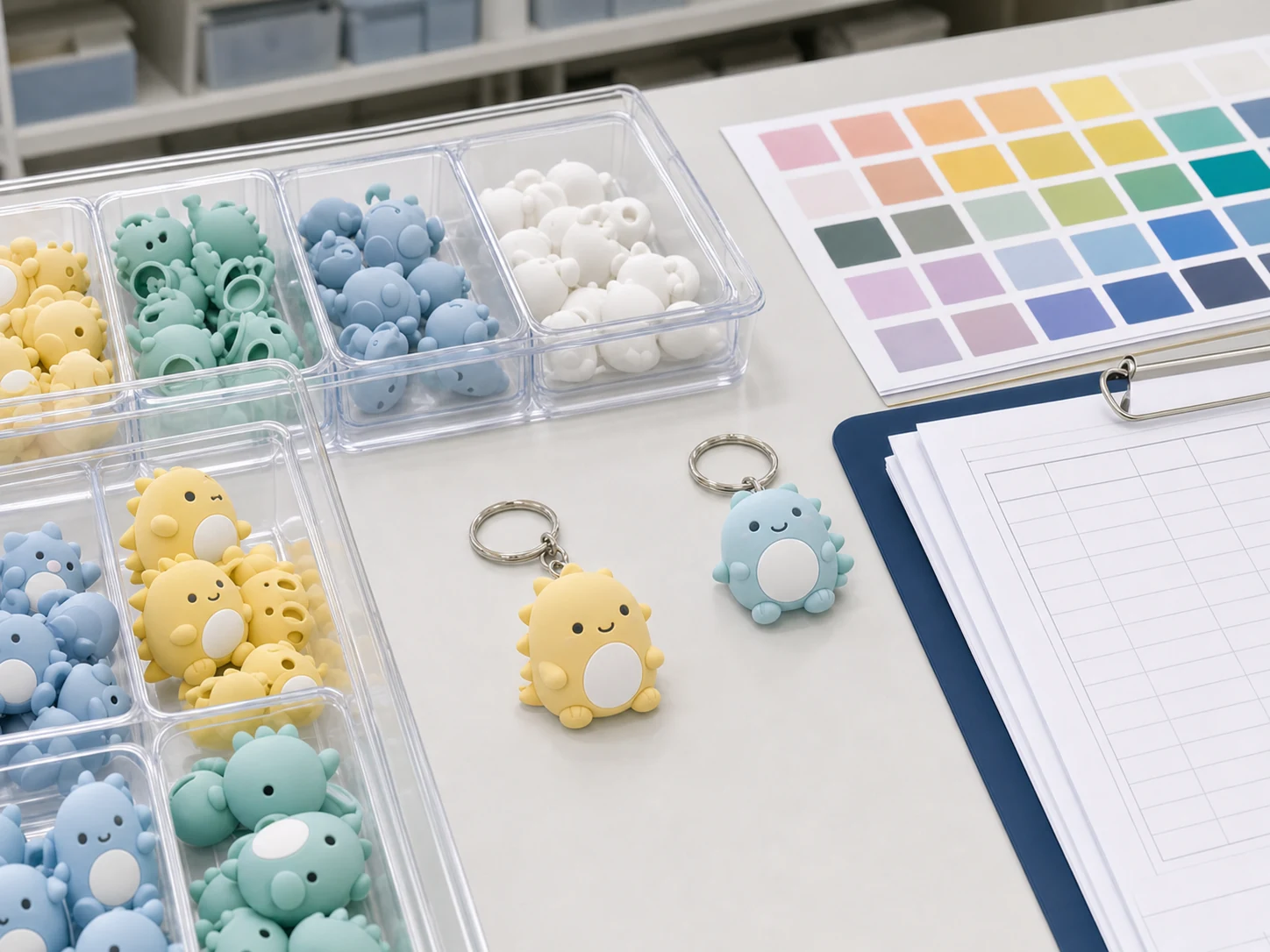
Before placing a mass-production order, check the factory's quality system and similar PVC goods experience. Choosing only by price often increases rework later.
- Business license, ISO certificates, and whether an independent quality team exists
- Molding machines, mold equipment, and maintenance condition
- Similar product experience and defect-rate trends
- Response speed, specificity of answers, and how records are kept
When possible, evaluate the supplier in three steps: qualification check, site check, and production-record review. This makes post-production risks easier to spot.
Materials Needed Before Quotation
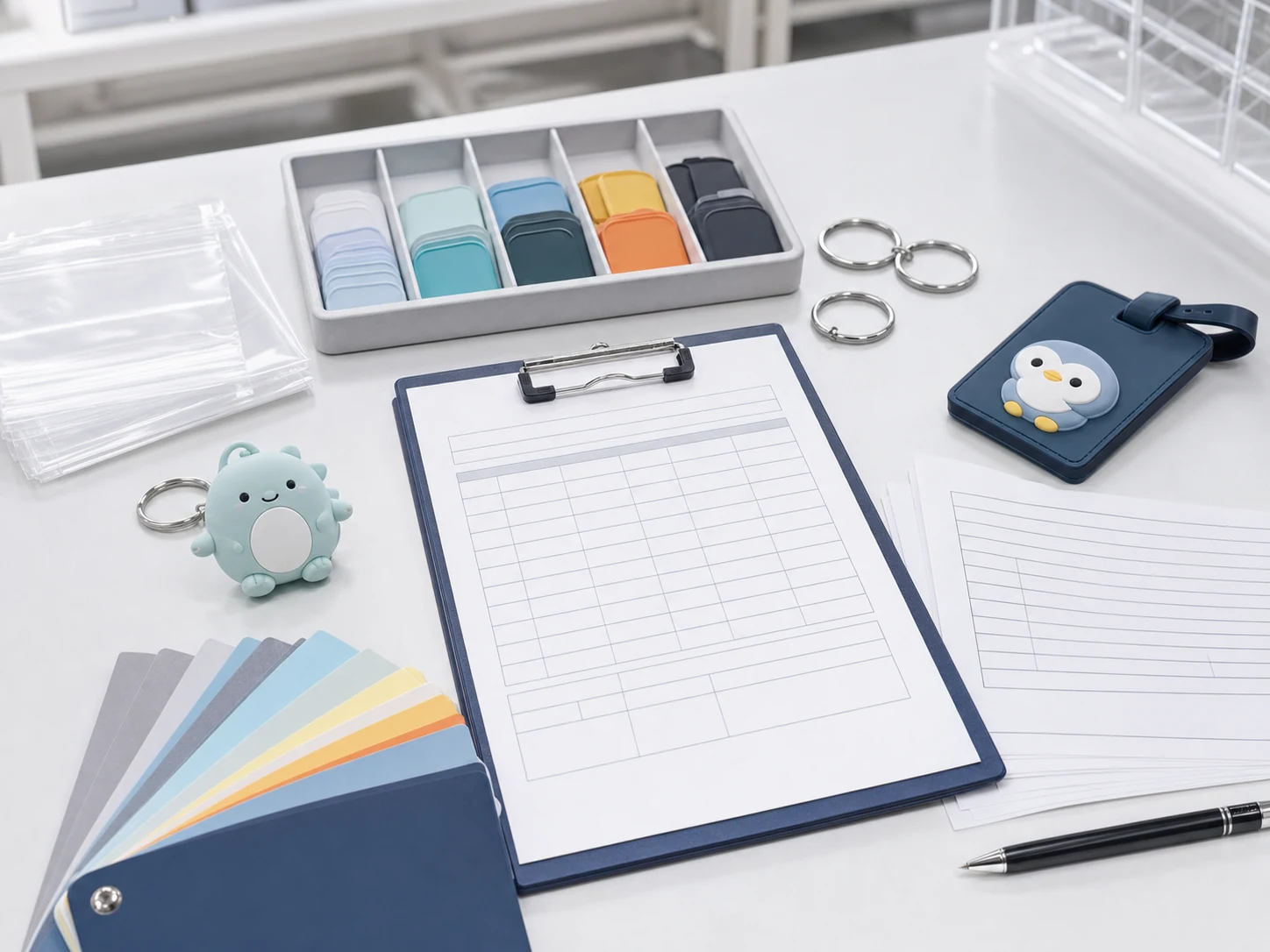
For an accurate quotation, reduce missing specification details as much as possible. Checking price tiers by quantity also helps with sales and procurement planning.
- Artwork files and a Chinese-English bilingual specification sheet
- PANTONE / DIC codes and physical samples
- Attachment fittings, individual packaging, and carton specifications
- Quantity-based quotations such as 1,000, 5,000, and 10,000 pcs
If you request quotes from three or more suppliers, compare not only price but also response quality and how carefully they confirm specifications.
View Points 05-14
Mold and Sample Confirmation
Check shape, dimensions, color, and function with trial samples before deciding whether mass production can proceed.
- Discuss the mold method according to product shape
- Make samples with the same material and process planned for mass production
- Check burrs, parting lines, color variation, and fitting strength
- Approve the final sample in writing
Pre-Production Quality Meeting
Before mass production starts, confirm specifications, process risks, inspection standards, and trouble-response rules with the factory.
- Include the production manager, quality manager, and sales/contact person
- Review each specification item one by one
- Agree on AQL, inspection items, and acceptance criteria
- Keep meeting minutes and change records
Small-Lot Trial Production
Before full production, run a small batch to check process stability and quality variation.
- Run a quantity that goes through all processes, such as 50-200 pcs
- Check process stability, yield, and production cycle time
- Full inspection is recommended for trial-production pieces
- Decide mass-production GO only after issues are improved
Multi-SKU Control and Mix-Up Prevention
When colors, shapes, or attachments differ by SKU, use a control method that workers can identify at a glance.
- Create a SKU list
- List item codes, barcode/JAN data, colors, and attachments
- Prevent mix-ups by separating storage areas, production timing, or packaging color
- Set inspection standards for each SKU
Packaging Specifications
Design packaging by balancing protection, appearance, workability, and shipping cost.
- Define individual packaging such as OPP bags, backing cards, or blister packs
- Confirm carton size, weight, and stacking limits
- Confirm item code, barcode/JAN, and country-of-origin labeling
- Run packaging tests when needed
Pre-Shipment Inspection
Include PVC-specific defects in the inspection criteria so products can ship with stable quality.
- Inspection standard for appearance, color, dimensions, and function
- Focus on yellowing, brittleness, burrs, surface scratches, and print misalignment
- Agree on AQL level and defect judgment in advance
- Consider third-party inspection when needed
Delivery
Clarify delivery format, shipping documents, and logistics before mass production.
- Packing units, pallet specifications, and carton markings
- Production completion date, shipping date, and estimated arrival date
- Delivery note, inspection report, MSDS, and certificate of origin
- Emergency contact and responsible person
Compliance
Required compliance checks vary by sales region, use case, and target age group.
- Check RoHS, REACH, SVHC, and China RoHS requirements
- Check market-specific standards such as CPSIA, EN71, and food-contact regulations when relevant
- Specify an environmentally compliant PVC grade when required
- Confirm third-party test reports when needed
PVC Quality Issues and Countermeasures
For PVC goods, defects often relate to raw-material formulation, molding conditions, printing process, or fitting attachment.
| Issue | Main Causes | Countermeasures |
|---|---|---|
| Yellowing | Insufficient heat stabilizer, processing temperature, residence time | Confirm formulation and processing conditions |
| Brittleness | Excess filler, formulation changes | Specify material supplier, grade, and rules for formulation changes |
| Burrs / Parting Lines | Mold condition, molding time, temperature settings | Standardize mold maintenance and molding conditions |
| Color Variation / Print Misalignment | Pigment dispersion, unstable printing process | Approve color samples, print samples, and process tolerances |
| Insufficient Fitting Strength | Poor material quality, attachment process issues | Specify fitting material and run pull-strength tests |
Communication with Chinese Factories
Do not rely only on verbal approval. Keep specifications, changes, and approvals in written records with photos when possible.
- Keep important items in Chinese-English bilingual records
- Do not overload one confirmation message with too many questions
- Use photos, videos, and physical-sample comparisons to align understanding
- Keep one fixed contact person and confirm handover when the contact changes
Packaging, Inspection, and Shipment Checks
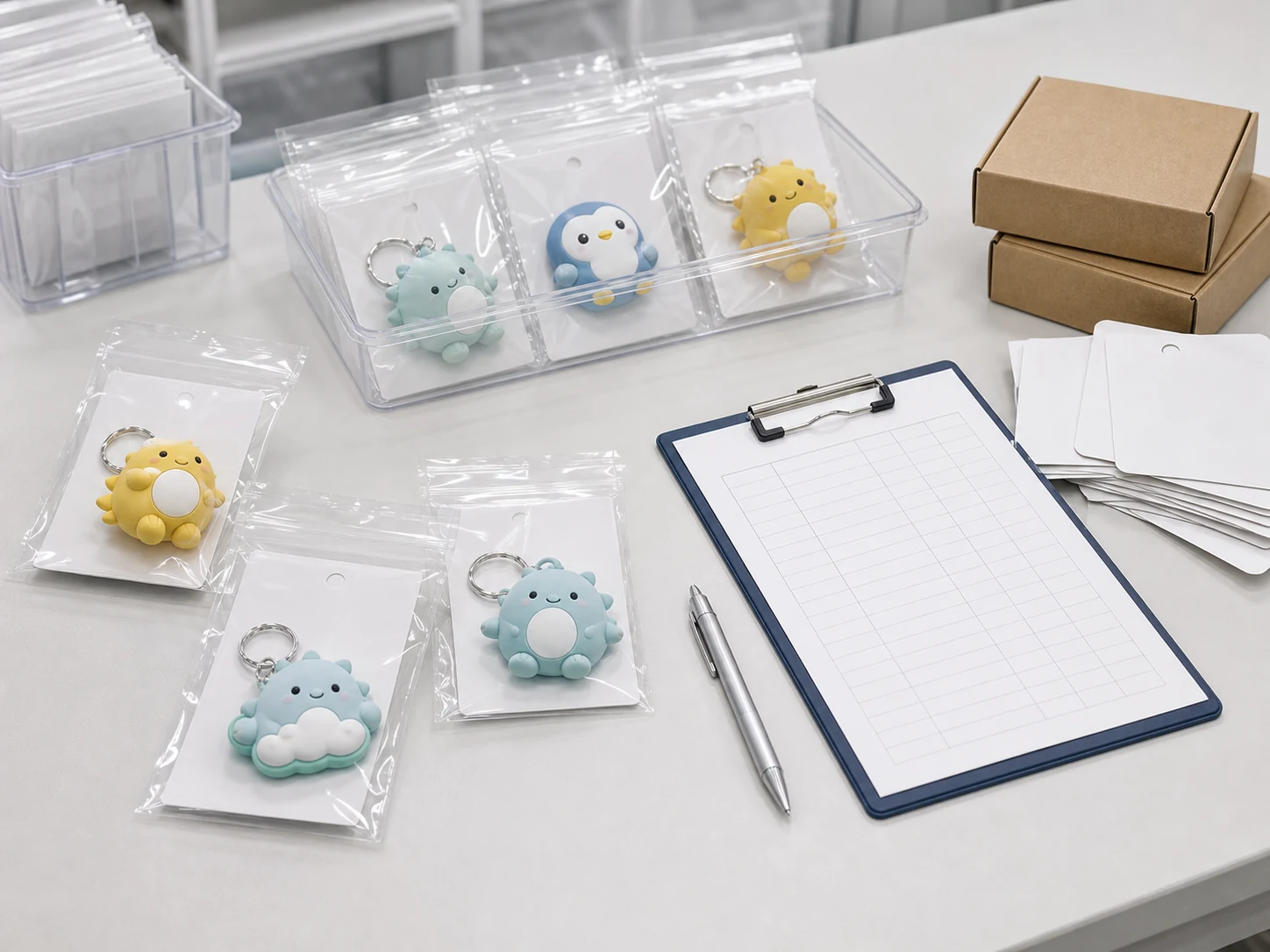
Deciding individual packaging, backing cards, cartons, inspection standards, and shipping documents early helps reduce rework after mass production.
- Confirm packaging specifications and labeling
- Agree on inspection standards and AQL
- Keep pre-shipment photos and inspection records
- Confirm lead time, split delivery, and logistics documents
Sample Approval and Mold Confirmation
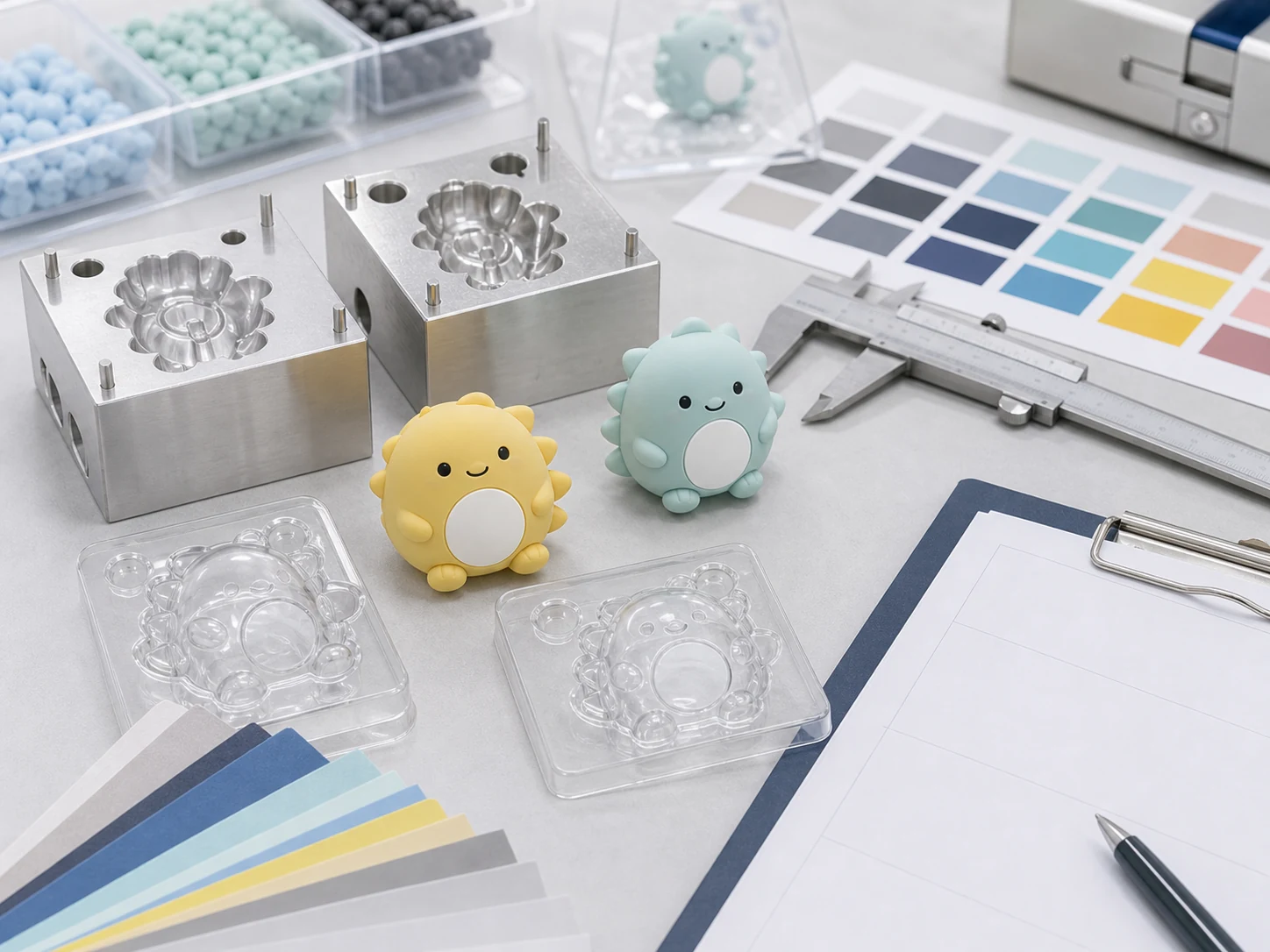
Before mass production, confirm the mold, color, and shape samples, then keep the approved sample as the production reference.
- Store approved samples by item code
- Use identification rules workers can understand at a glance
- Keep records for each production lot
- Control storage areas to prevent mix-ups
Final Checklist
Before mass production starts, confirm the following items with the factory and use mutual sign-off when needed.
Need Help Preparing a PVC Goods Quotation or Production Checklist?
Share your artwork, specifications, sample status, packaging needs, and inspection requirements. We can help organize the key checkpoints for OEM mass production.