
Custom Canvas Tote Bag OEM Manufacturing
Choose canvas weight, bag shape, gussets and handles from the intended contents and use case, then match the decoration process to the artwork. MOQ, unit price and schedule are confirmed per project from quantity, process, SKU count, packing, inspection and delivery conditions.
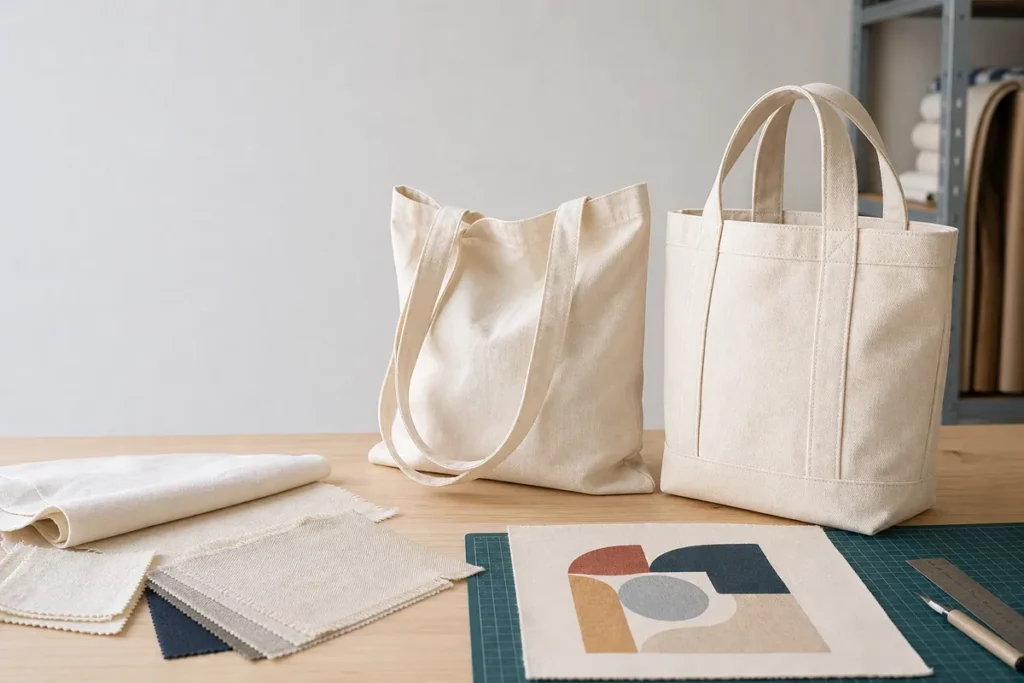
Custom canvas tote OEM specification summary
| Item | Options and confirmation | Quotation note |
|---|---|---|
| MOQ | Confirmed by bag structure, material, process and SKU | Share total quantity and quantity per design |
| Canvas weight | Select lighter, standard or heavier canvas by use | Approve oz/GSM, weave density and hand on a swatch |
| Decoration | Screen printing, transfer, direct inkjet, embroidery and related options | Confirm fabric color, color count, area and reproduction |
| Sewing | Gussets, handles, pockets, zipper, snap and other parts | Lock dimensions and attachment positions in the specification |
| Sample | Fabric swatch, print proof and sewn sample as required | Method, cost and timing follow specification review |
| Production & delivery | Calculated from quantity, season, packing, inspection and freight | Share destination and requested delivery date |
Narrow the material and construction from the use case
Giveaways, retail merchandise and corporate gifts prioritize different fabric, color, sewing and packing conditions.
Prioritize carried weight, distribution quantity, print area and individual packing.
Prioritize fabric presentation, color, pockets, labels and SKU control.
Prioritize weight, sewing, handles, hardware, packing and inspection criteria.
Choose a custom canvas tote by shape, opening and function
Bottom construction, gussets, closures, handles and added features change both use and quotation requirements. Start with the closest bag form, then specify its dimensions and components.
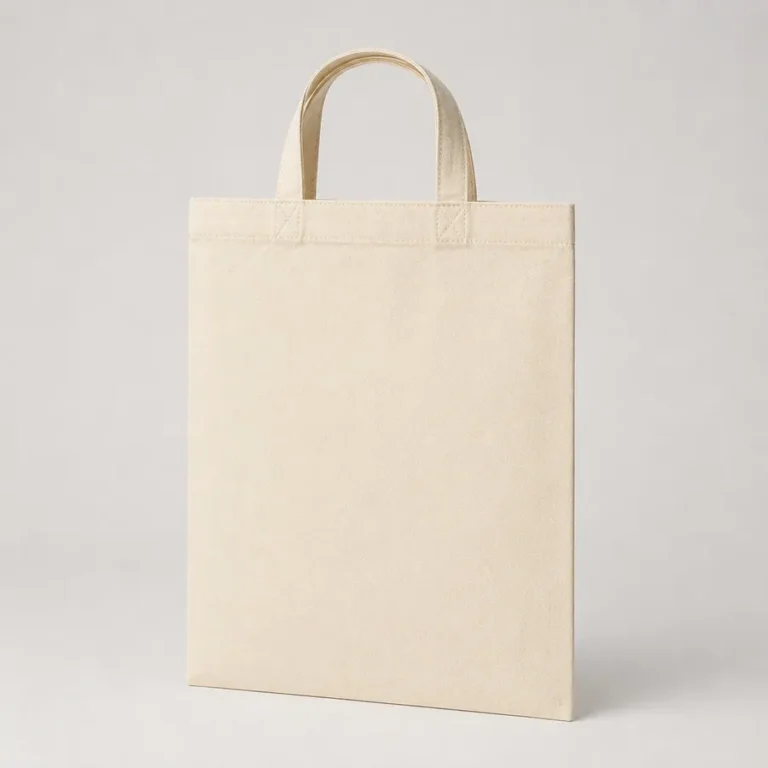
A4 Flat Tote
No gusset and a broad flat print area for documents, exhibitions and giveaways.
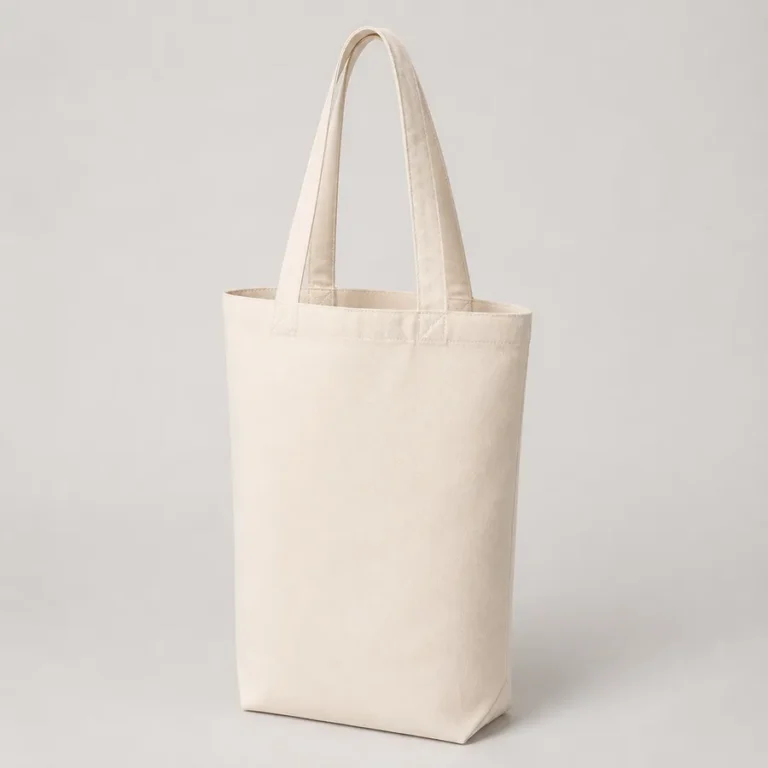
Vertical Shoulder Tote
Sized for A4 documents or a tablet, with handle drop and bottom depth set for the intended load.
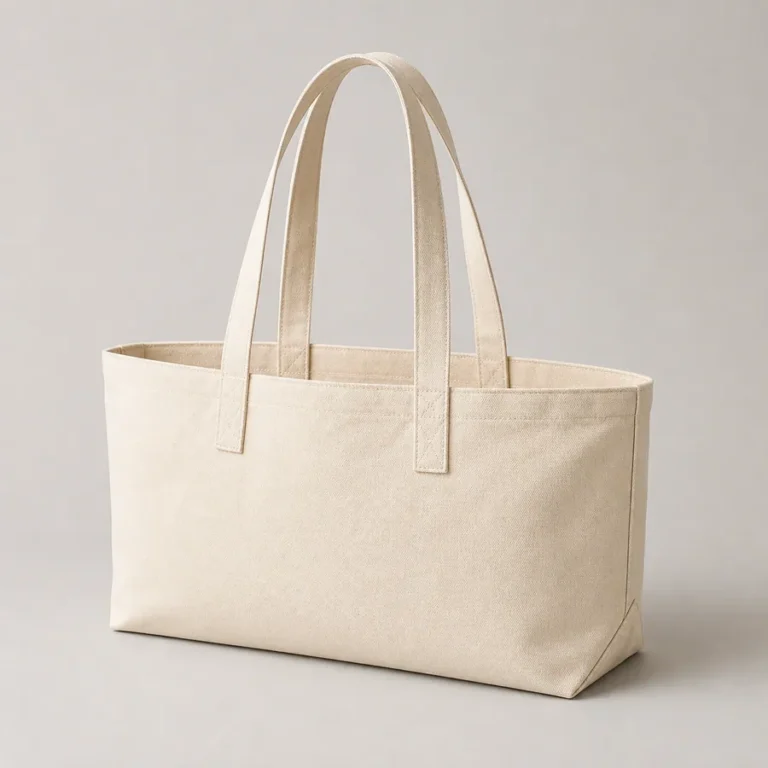
Wide Town Tote
A wide opening that supports easy access for retail merchandise and daily use.
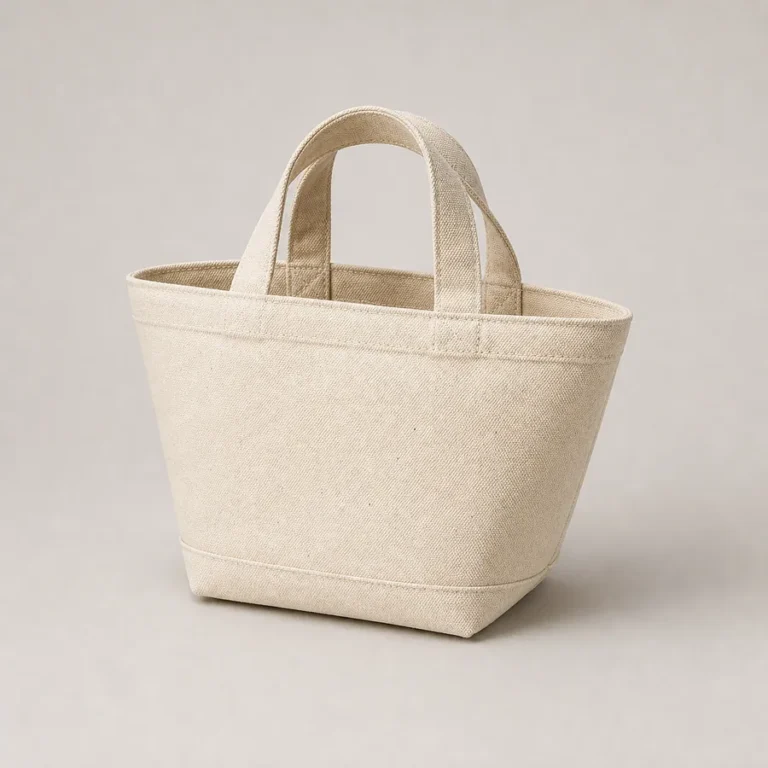
Boat-Bottom Lunch Tote
A compact body that widens toward the base; confirm the footprint of lunch boxes or boxed goods.
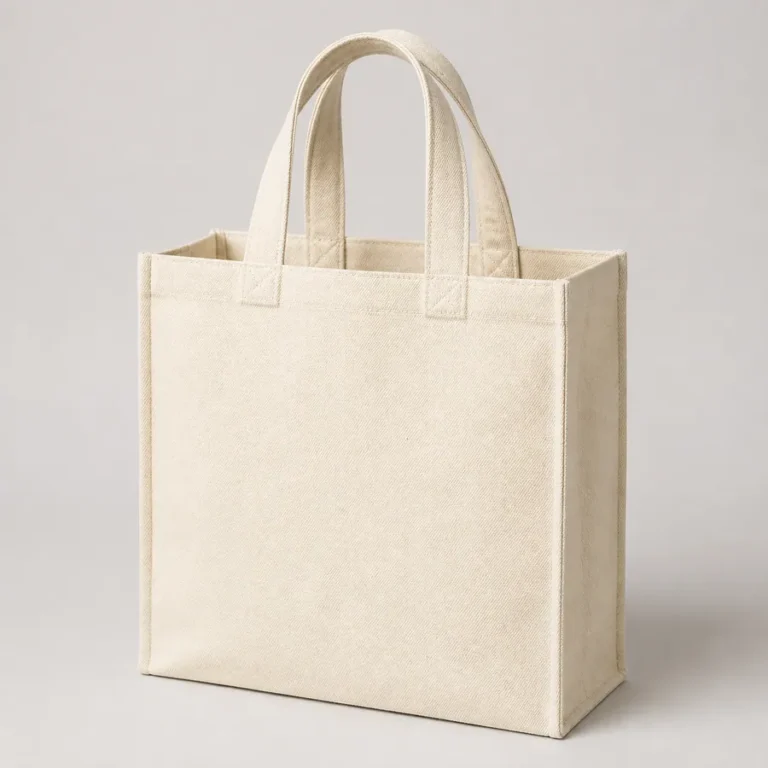
Box-Gusset Tote
Side and bottom gussets create capacity and a more structured presentation.
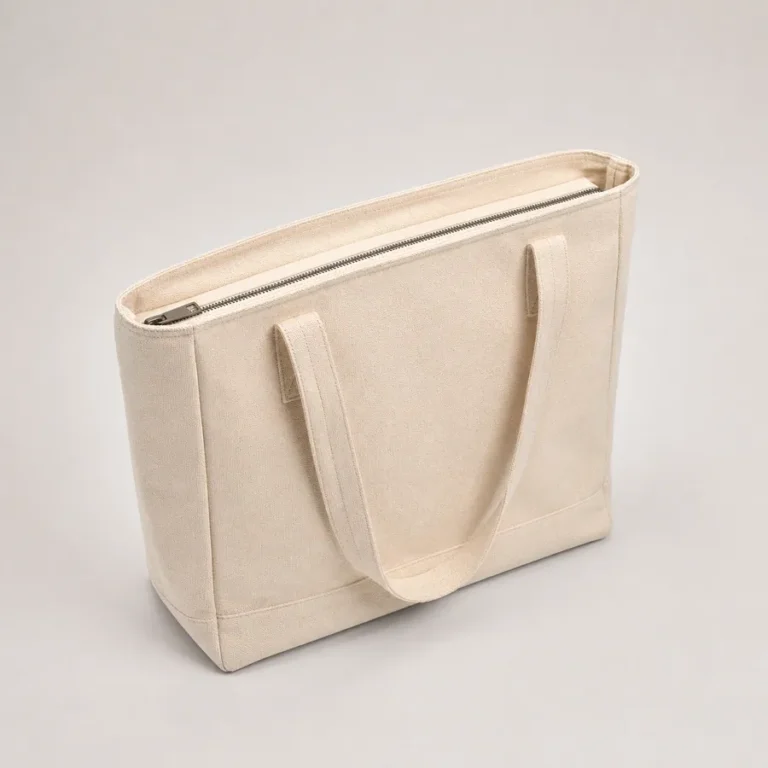
Zip-Top Tote
A full-width closure helps retain contents; specify opening width, zipper type and puller.
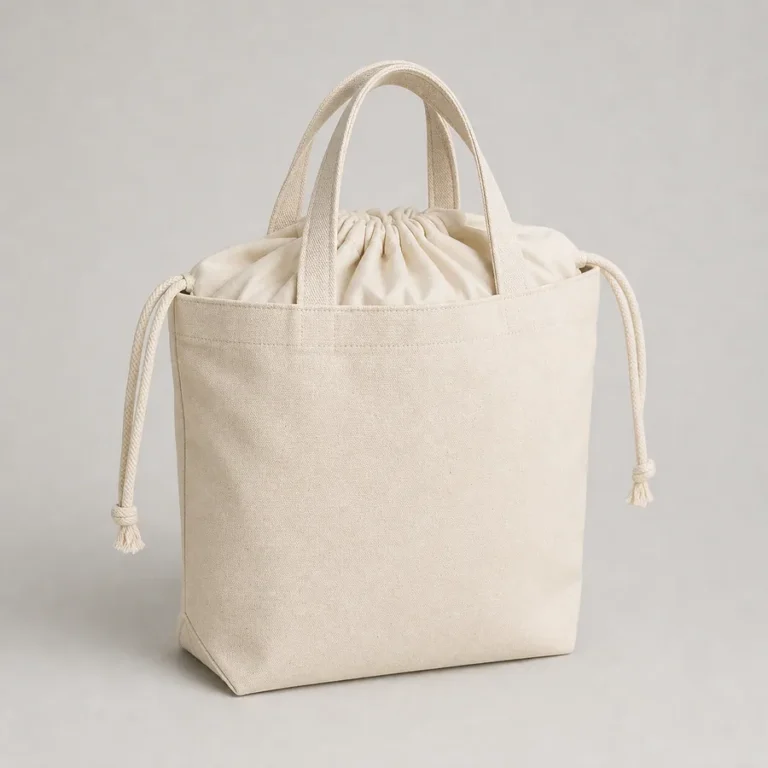
Drawstring-Top Tote
A fabric collar hides the contents; coordinate the cord path and print position.
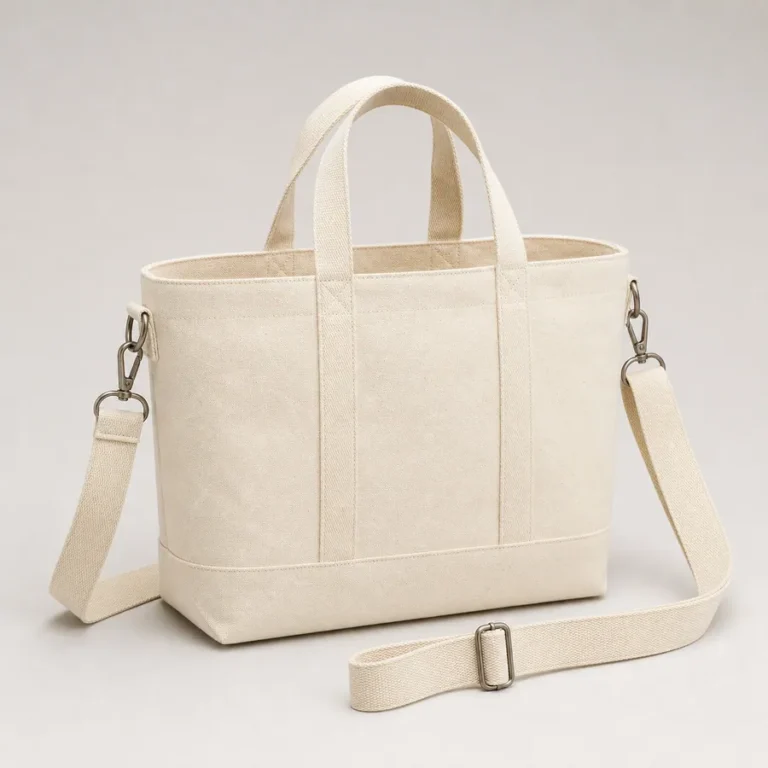
Two-Way Shoulder Tote
Combines hand carry and crossbody use with D-rings, a removable strap and reinforced attachment points.
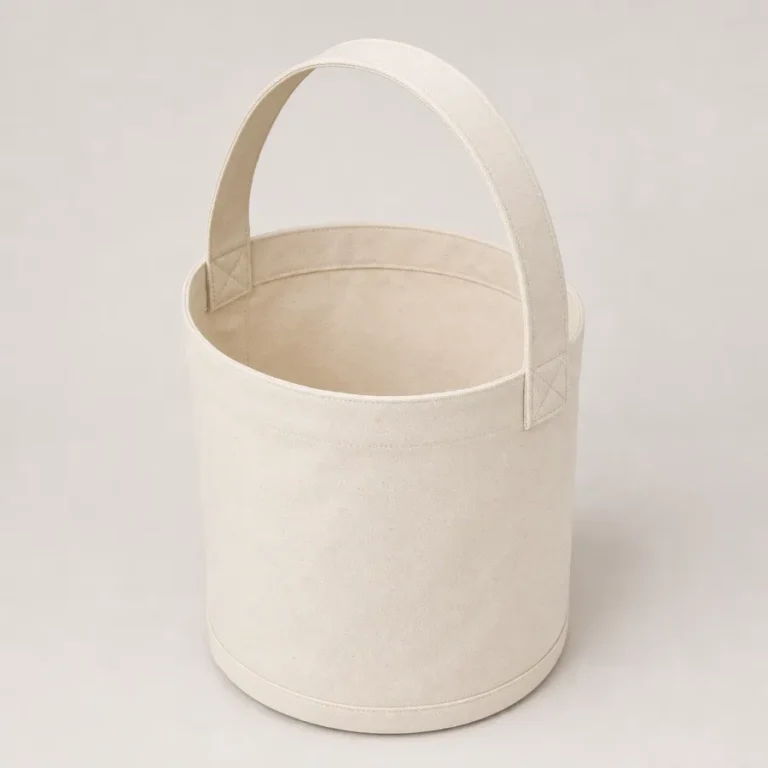
Round-Bottom Bucket Tote
A cylindrical silhouette defined by base diameter, opening stability and seam construction.
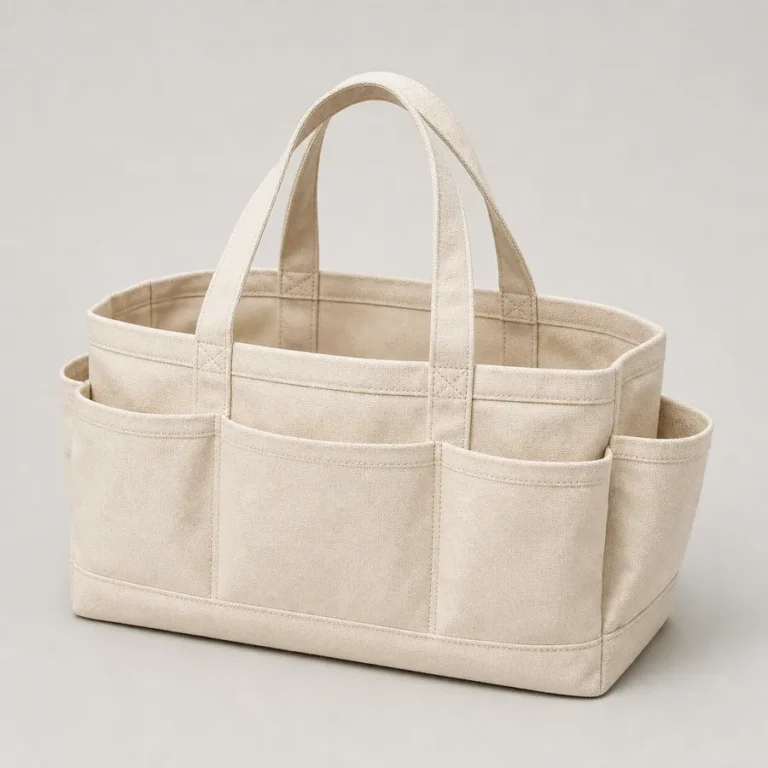
Multi-Pocket Tool Tote
External pockets separate smaller items; specify pocket positions, loads and base reinforcement.
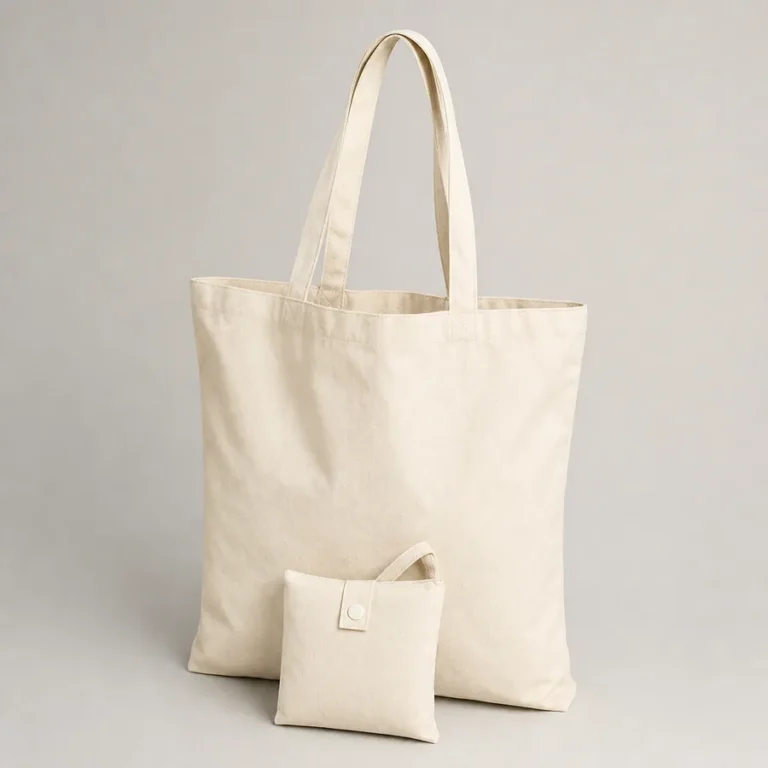
Foldable Eco Tote
A lighter fabric and defined folding method support compact storage.
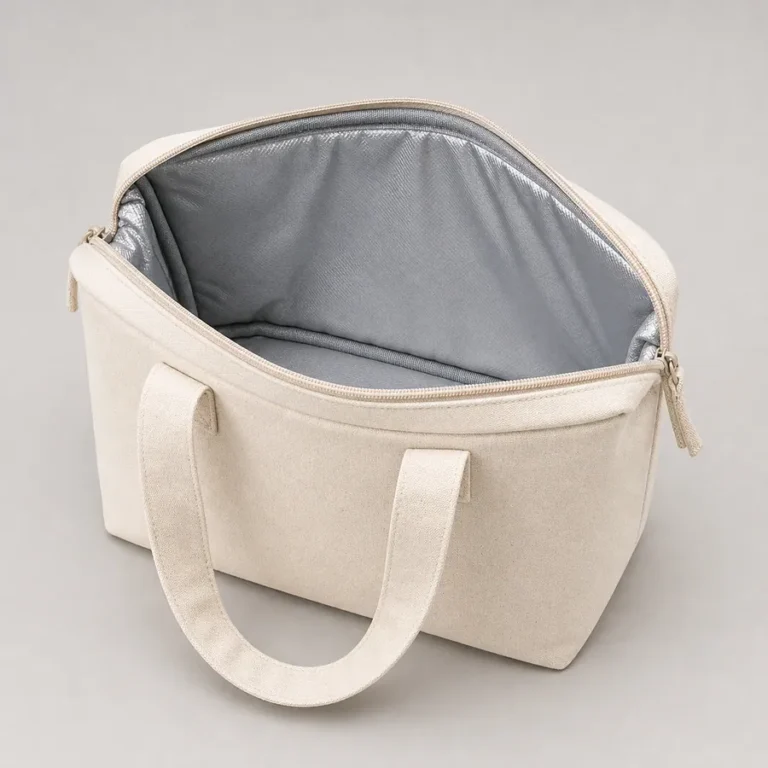
Insulated Canvas Tote
A canvas outer shell combined with an insulated lining; confirm the lining, seam and closure specification.
Common reference sizes for custom canvas tote bags
Labels such as S, M and L are not standardized. Compare finished W × H × D dimensions together with handle width and handle length.
| Reference format | Body size | Handle reference | Capacity reference | Typical use |
|---|---|---|---|---|
| A4 flat | W260 × H330mm No gusset | W25 × L280mm | — | A4 handouts, conferences, exhibitions |
| S / lunch | W300 × H200 × D100mm | W25 × L290mm | Approx. 4L | Lunch boxes, small goods, compact merchandise |
| SM | W340 × H260 × D100mm | W25 × L470mm | Approx. 6L | 500ml bottle, tablet, daily accessories |
| M / A4 | W360 × H370 × D110mm | W25 × L560mm | Approx. 10L | A4 documents, shoulder carry, event merchandise |
| ML | W420 × H380 × D130mm | W30 × L550mm | Approx. 14L | Large merchandise, shopping, main daily bag |
| L | W480 × H400 × D150mm | W30 × L600mm | Approx. 19L | A3-class documents, travel, high-capacity events |
These are reference dimensions from common market formats, not fixed production standards. Effective capacity changes with boat or box gussets, drawstring collars, insulated linings and pockets. Approve a dimension drawing and physical sample before mass production.
Select canvas weight and material from the use case
Fabric weight is one input—not a stand-alone guarantee of stiffness or load capacity. Confirm weave density, surface, color, print compatibility and the sewn sample on the actual material.
| Weight | Typical characteristics | Common use |
|---|---|---|
| 4–5oz | Light and foldable; may show through depending on color | High-volume giveaways and simple eco totes |
| 6oz | Lightweight but easier to handle than very thin cloth | Promotions and lightweight secondary bags |
| 8oz | Balanced light-to-medium canvas feel | Shop bags, event goods and daily sub-bags |
| 10oz | More body and shape retention | Character merchandise and everyday totes |
| 12oz | A substantial presentation for retail-quality goods | Brand merchandise, commemorative goods and gifts |
| 14oz | Heavier and stiffer; sewing range and cost need review | Premium merchandise and structure-led designs |
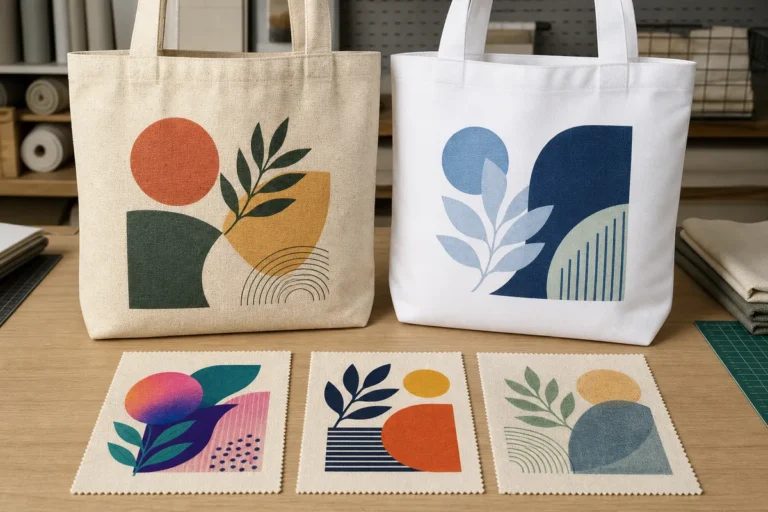
Material and finishing options
Cotton canvas
Natural texture with broad printing and sewing options.
Retail merchandise and daily-use bagsOrganic cotton option
Suitable when environmental sourcing is part of the brief; confirm the certificate scope per project.
Corporate gifts and brand programsRecycled cotton blend
Confirm blend ratio, shade variation and hand feel by lot.
Campaign and themed collectionsPolyester canvas
A candidate for functional construction and selected full-color processes; test color and heat response.
Full-color and functional bagsCotton-linen canvas
Natural slubs and texture require agreement on print variation and shrinkage.
Cafés and lifestyle goodsWashed canvas
A softer casual finish with controlled shade and dimension variation.
Fashion and vintage-style projectsWaxed finish
Adds water resistance and a worn-in appearance; do not treat it as waterproof.
Outdoor and tool-oriented goodsMixed panels
Combine canvas with printed cotton, synthetic leather or jute after checking thickness, shrinkage and color transfer.
Limited-edition color-block designs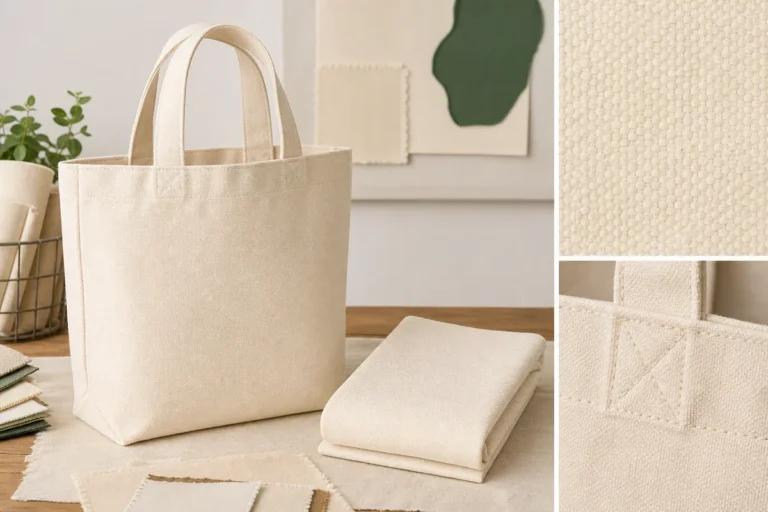
Common starting point: 12oz 100% cotton canvas
For A4-size, gusseted merchandise and daily-use totes, 12oz cotton canvas is a common substantial option. The weight indicates fabric mass; it does not by itself guarantee stiffness, load capacity or final shape.
Two fabrics labeled 12oz can differ in weave density, dyeing, finishing and hand. Lock the final material with a real sample.
How should canvas weight, gussets and handles be specified?
Evaluate the carried item, finished bag size, weave density, print surface, shape retention and carrying method together.
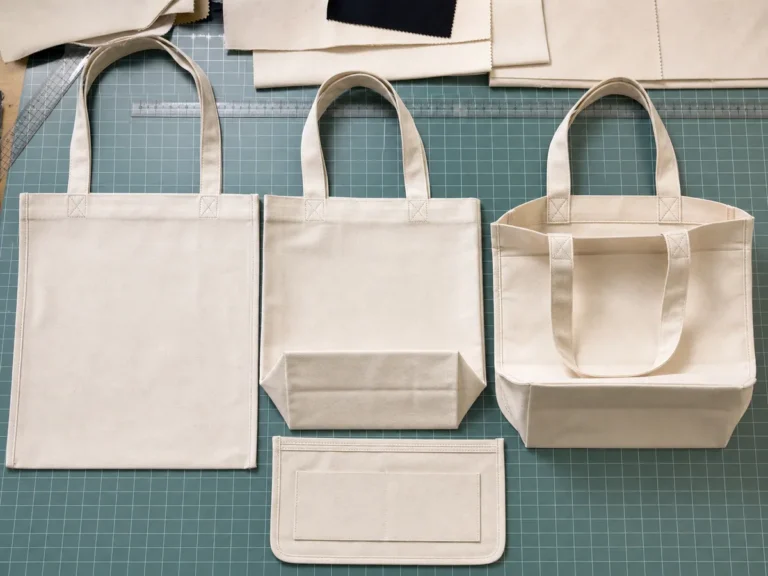
Printing and embroidery options for character merchandise
Select from quantity, color count, fabric color, decoration area, use frequency and target cost.
Screen printing
For spot-color logos and clear illustration shapes; confirm color count, position and area.
Heat transfer
For photos, gradients and multicolor artwork; approve the surface hand and edges.
Direct inkjet
For multicolor artwork; confirm pretreatment and color on dark fabric.
Embroidery and patches
Adds dimension; coordinate stitch count, thread color and fine-detail reproduction.
Choose DTF, screen printing or direct inkjet for canvas
For cotton canvas, DTF is often considered for multicolor artwork, smaller runs or many designs; screen printing for repeated 1C–4C spot-color artwork; and direct inkjet for a softer print hand. Final color and durability depend on fabric color, weave, white ink, pretreatment and heat conditions.
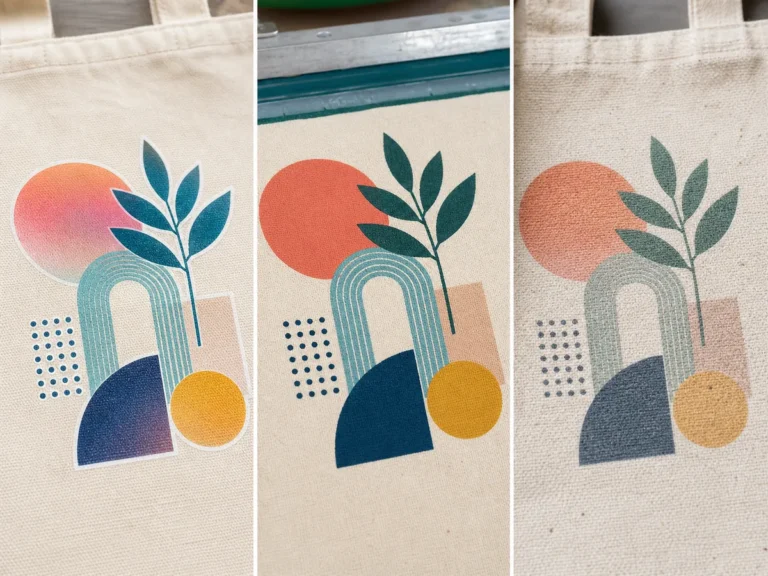
Cotton canvas
Natural weave and hand. Test fine lines, white underbase and color on natural, white or dark fabric.
Polyester canvas
Confirm coating, base shade and heat resistance. Sublimation may be considered separately on suitable light high-polyester fabric.
DTF heat transfer
CMYK plus white is printed to film and heat-pressed to the fabric.
- No color-by-color screen setup
- Fits photos, gradients and multiple SKUs
- Check transfer hand, edges, folds and adhesion
- Approve temperature, time and pressure on real fabric
Screen printing
Each spot color generally needs its own screen and registration step.
- Strong candidate for clear logos and solid artwork
- More colors add screens and registration work
- Setup cost weighs more heavily on small multicolor orders
- Larger repeated runs can spread screen cost
Direct inkjet
Full-color ink is printed directly into the fabric surface without screens.
- Supports photos and gradients
- Natural canvas may produce a softer, less vivid result
- White ink and pretreatment change dark-fabric results
- Test fine lines and color on coarse weaves
Quote and sample checklist
| Input | Information for quotation | What to approve on the sample |
|---|---|---|
| Fabric | Cotton/polyester, blend, oz or GSM, color and coating | Weave, lint, pretreatment marks, heat deformation and color migration |
| Artwork | Color count, spot-color reference, gradients, white layer, print size and position | Color, fine lines, text, gradients, white edge and registration |
| Quantity | Total units, SKU count, quantity per design, one/two-sided or multiple positions | Color and position consistency, screen/data control |
| Durability condition | Use case, washing expectation, rubbing and folding conditions | Adhesion, cracking, peeling, crocking and fold marks |
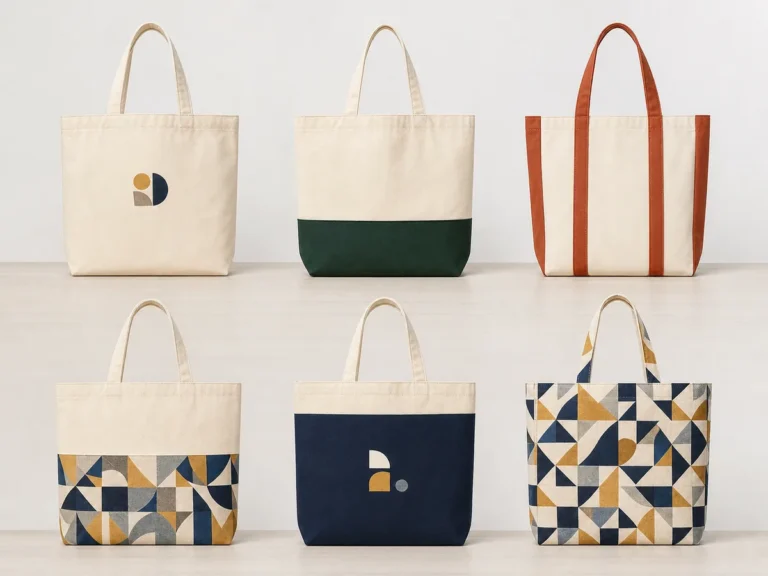
Combine color blocking, fabric panels and printed artwork
Panel lines affect printable area, seam allowance, handle reinforcement and gusset folds. Build the bag parts first, then fit the artwork to the approved flat pattern.
Solid body + center print
Keep artwork on the flat front panel and clear of handle attachment points.
Standard decorationContrast bottom panel
Use a different color at the base while retaining a broad front print area.
Specify seam and color breakContrast handles or gussets
Coordinate reinforcement thread and color by SKU.
Brand color variationsPatterned fabric panel
Check thickness, shrinkage and color transfer between materials.
Mixed fabric constructionPanel + localized print
Reserve safe space from seams inside the separate panel.
Printed contrast panelPrint before cut-and-sew
For artwork crossing seams, establish pattern-matching references and tolerance on a sample.
Full custom constructionBuild more value into character-merchandise canvas totes
Character-goods totes can combine front/back artwork, embroidery, patches, dimensional fabric parts, patterned panels, zippers and inner pockets. Treat every published example as design inspiration—not proof of one universal material or process.
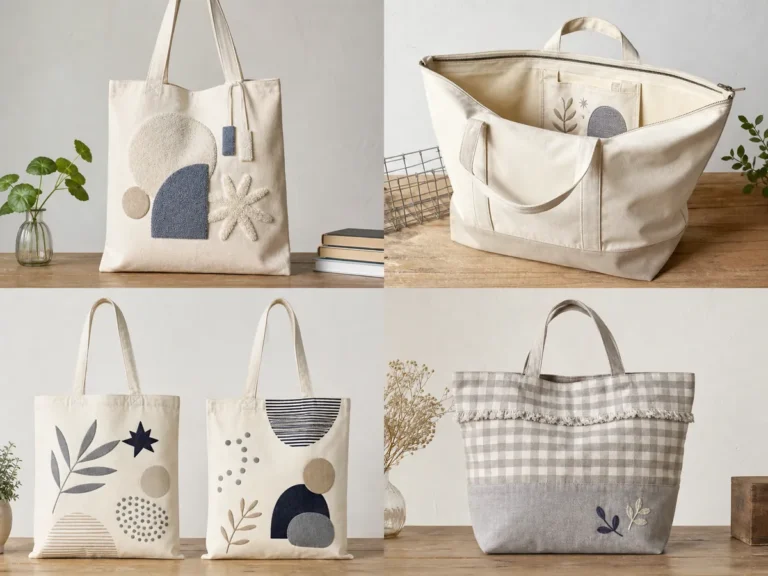
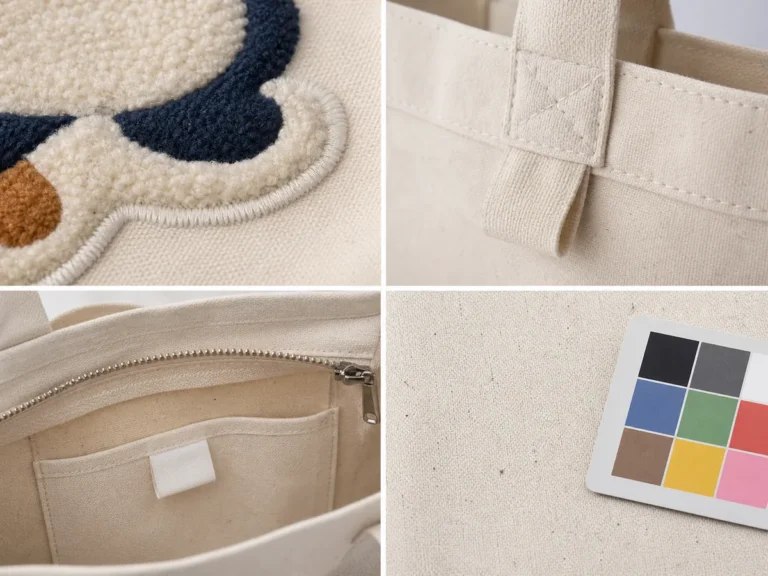
| Design direction | Material/process approach | Items to lock before production |
|---|---|---|
| A4 + dimensional patch | Cotton or blend body with pile patch or separate fabric part | Patch dimensions, edge finish, sewing position and reinforcement |
| Large capacity + zipper | Gusseted body with top zipper, inner pocket and woven label | W × H × D, opening width, puller, pocket size and load |
| Different front/back artwork | Two display faces within one SKU | File naming, orientation, print area, color reference and quantity per design |
| Patterned fabric + embroidery | Printed cotton or blend with embroidery, trim or ruffle | Composition, shrinkage, stitch density, thickness difference and color transfer |
| Natural canvas appearance | Slubs, weave variation and seed-fiber flecks may occur as material characteristics | Acceptable limit, stain distinction, transfer conditions and inspection photos |
This module converts public market patterns into original OEM decision evidence. It does not reuse third-party characters, logos, color schemes or product photography, and it does not infer an unlisted print method or fabric weight.
Add zippers, pockets and brand identification
Define the position and purpose of zippers, snaps and D-rings.
Lock the dimensions of inner pockets, outer pockets and bottle holders.
Confirm artwork and placement for woven labels, hangtags, care labels and management labels.
Conditions that change MOQ, unit cost and schedule
These are calculated from the approved project conditions rather than a universal fixed value.
Adding SKUs, packing steps or decoration area after quotation can change cost and schedule.
Lock packing, SKU and inspection conditions before mass production
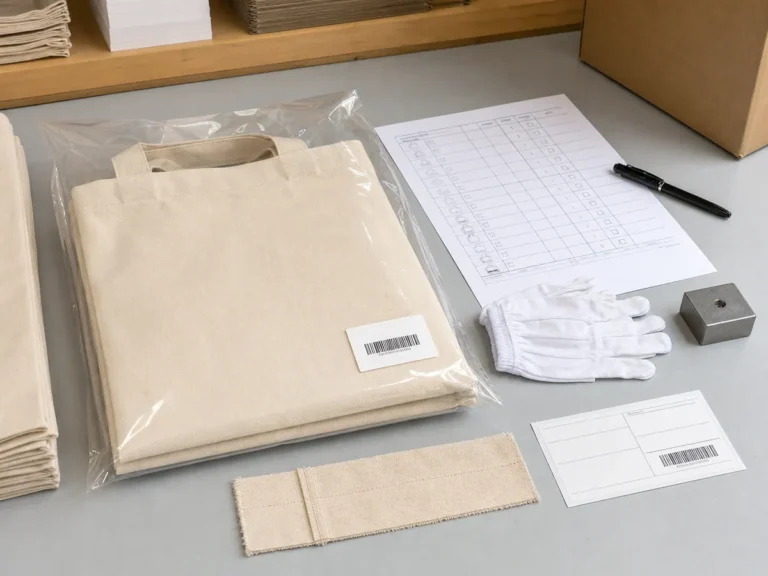
Put packing format, quantity by design, labels and inspection points into the same approved specification.
Packing
Confirm individual OPP bags, backing cards, hangtags and units per export carton.
SKU control
Confirm quantities by artwork/color, management labels and mixed-carton rules.
Sewing checks
Check thread trimming, handle positions, attachments and quantities.
Print checks
Check position, color difference, contamination and final packed condition.
Packing, SKU labeling, display information and inspection criteria are agreed per project rather than treated as universal guarantees.
Information to share before quotation
If an item is undecided, we can organize options from the use case and priorities.
- Target quantity and number of designs
- Finished size, bag shape and gusset
- Preferred canvas weight and color
- Handles, pockets, zipper and other parts
- Artwork and decoration dimensions
- Individual packing, cards, tags and labels
- Inspection conditions and quantity per SKU
- Delivery destination and requested date
Custom canvas tote bag OEM frequently asked questions
What is the minimum order quantity?
MOQ varies with bag construction, fabric, printing or embroidery, parts and quantity per SKU. We confirm the project minimum after reviewing the requested quantity and specification.
How long does sample making take?
Timing varies with fabric sourcing, bag form, decoration and parts. We provide the confirmation method, cost and sample schedule after the specification is fixed.
Can you deliver directly to an event venue?
We review the venue, organizer and designated carrier rules before confirming. Please share the delivery guide, carton count and requested arrival date.
Can you add care labels or custom brand tags?
Woven labels, printed labels, hangtags and management labels can be specified by content, material, size and attachment position.
Can international delivery terms such as DDP be discussed?
We review the destination, quantity, freight method and customs conditions, then define the available delivery terms and responsibility split in the quotation.
Related bag OEM pages
Organize quotation conditions from your specification and target date
Even when quantity or process is undecided, start from the use case and priorities.