Tote Bag OEM / Small-Lot Planning
Custom Tote Bag OEM
Small-Lot Production
For character merchandise, fan events, corporate novelty programs, and ecommerce products, we help define tote bag shape, material, printing, embroidery, packaging, and SKU handling by project. From printing on stock bags to modifying existing patterns or developing a fully sewn custom bag, the specification is checked against your quantity and use case.
Short Answer
Start with the right production route, not only the quantity
In tote bag OEM, the same design can require very different planning depending on whether you print on a ready-made bag, modify an existing pattern, change materials, add pockets, or start from a fully custom sewing pattern. Confirming use case, retail price range, what the bag needs to hold, usage scene, and preferred material first makes the final specification more realistic.
Printing on stock bags.Best for fast event and novelty projects. The bag body is selected from existing formats, then print position and color are checked.
Existing-pattern customization.Handle color, pockets, tags, embroidery, and clear PVC pockets can add a stronger merchandise feel.
Fully custom sewing.Useful when the bag shape, plush fabric, satin, PU, foldable structure, or special gusset needs to be designed from the pattern stage.
Bag Type Library
All referenced bag forms are organized as production-ready options
The public page uses original non-infringing sample visuals rather than real IP or marketplace images. Each bag type is shown separately so buyers can compare material, handle shape, gusset, pockets, sewing details, and decoration methods.
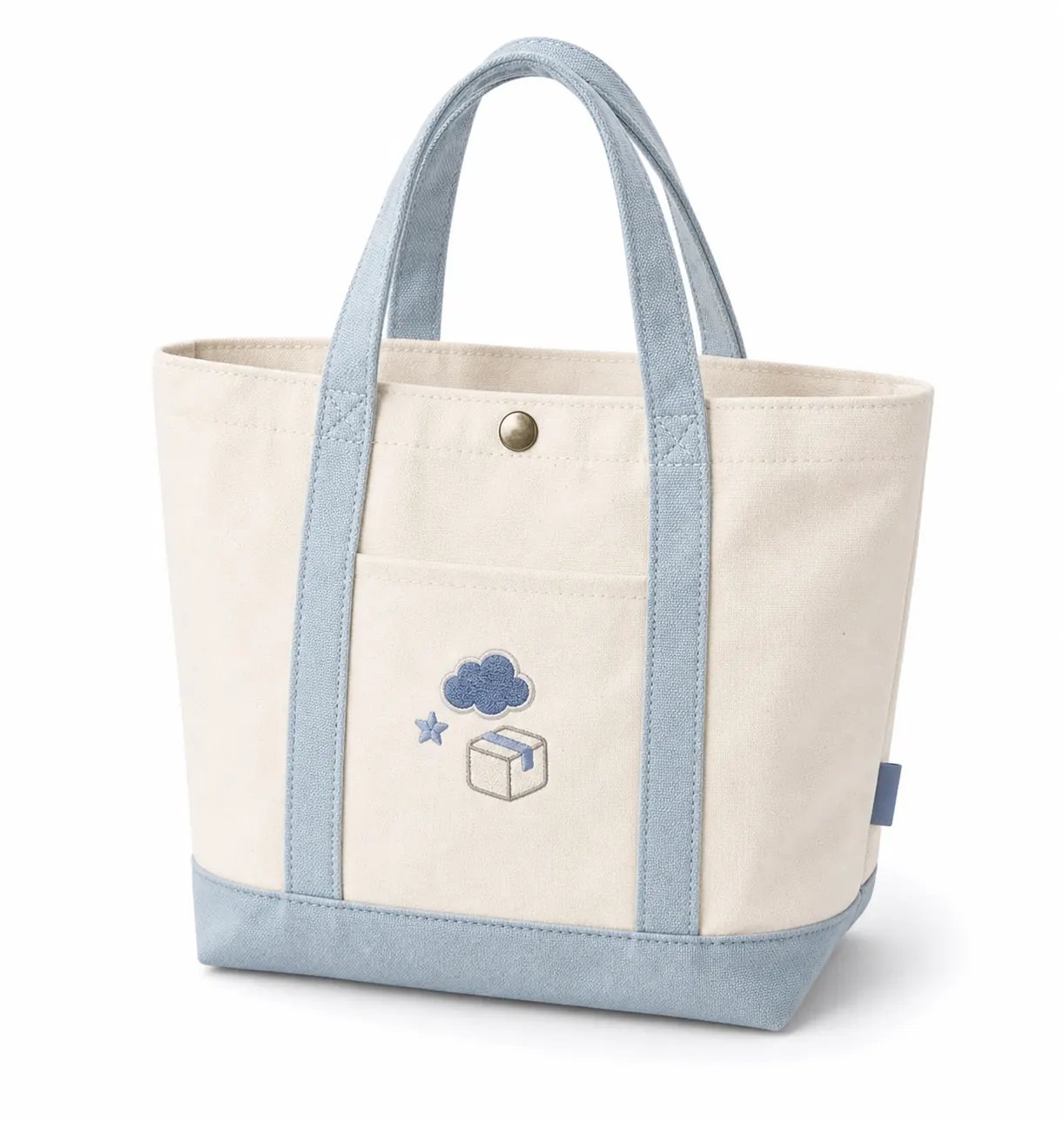
Canvas Tote
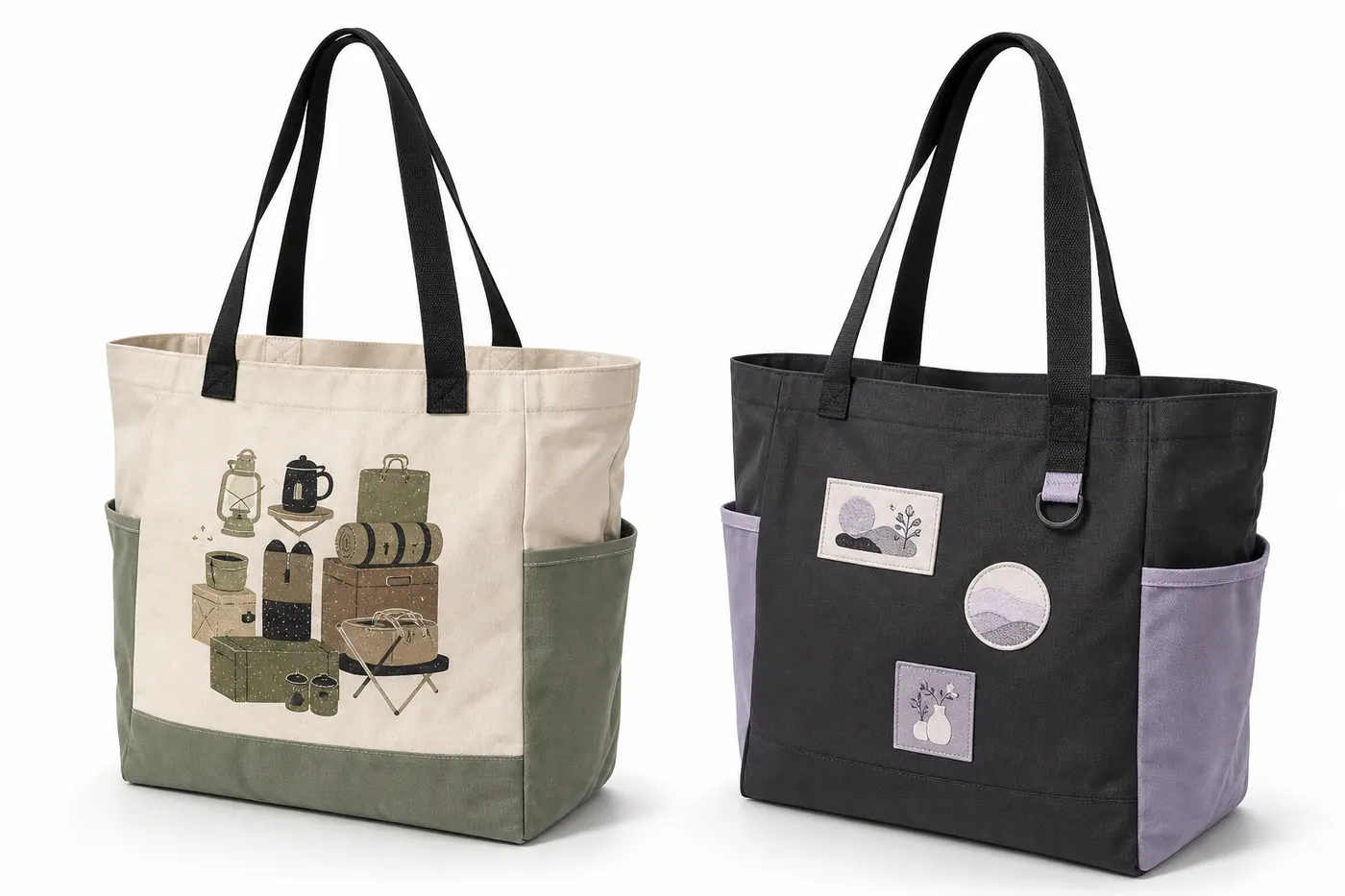
For event merchandise, novelty goods, and lunch bag projects. Handle color, front pocket, bottom gusset, and embroidered patch position can be checked.
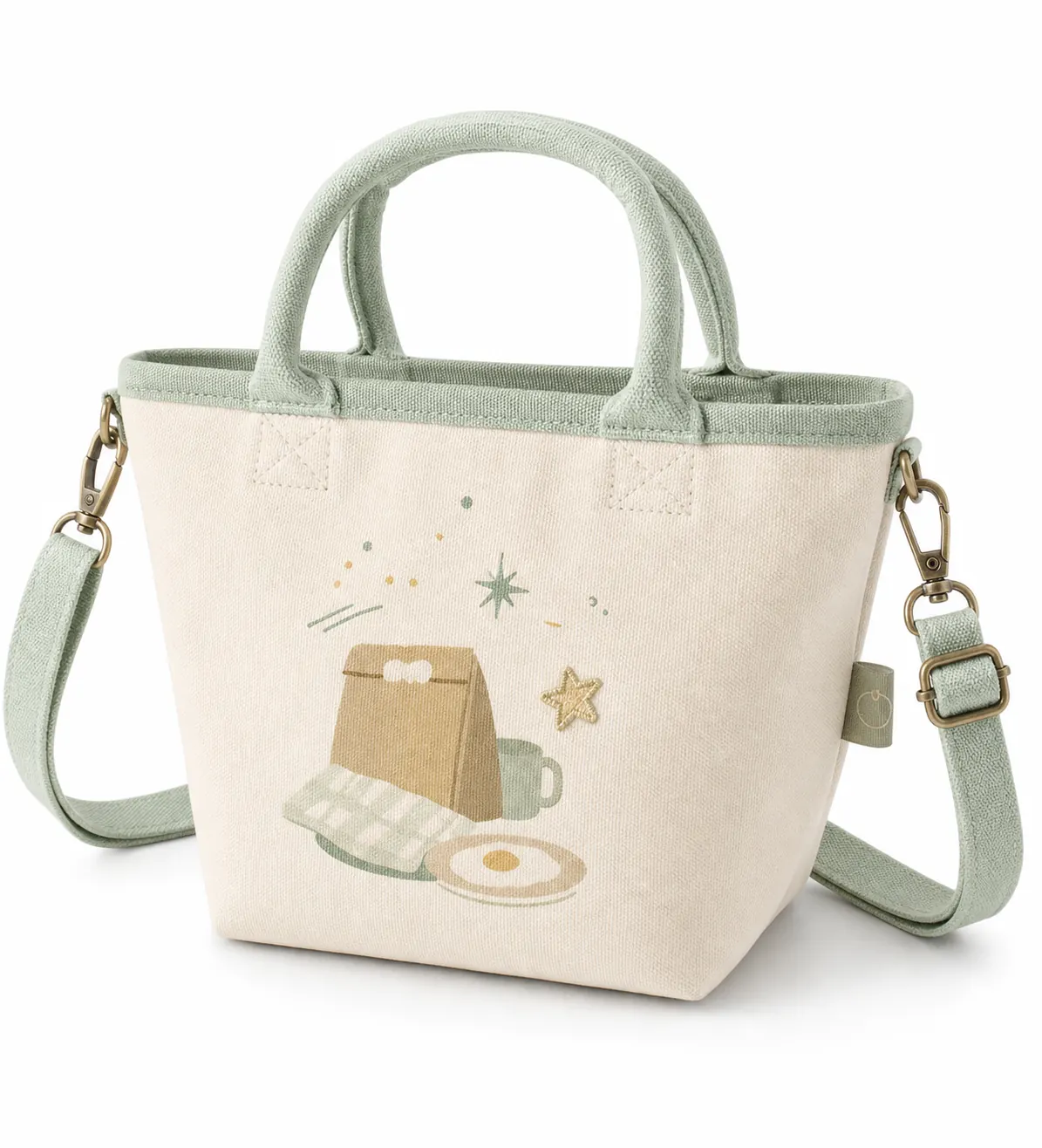
Mini Lunch Tote
Suitable for lottery prizes, retail sets, and cafe-style novelty items. Even small bags need tag, hardware, and print-position planning.
Large Event Tote
A large-capacity format for fans, brochures, A4 folders, and event purchases. Side pockets and bottom reinforcement can be specified.
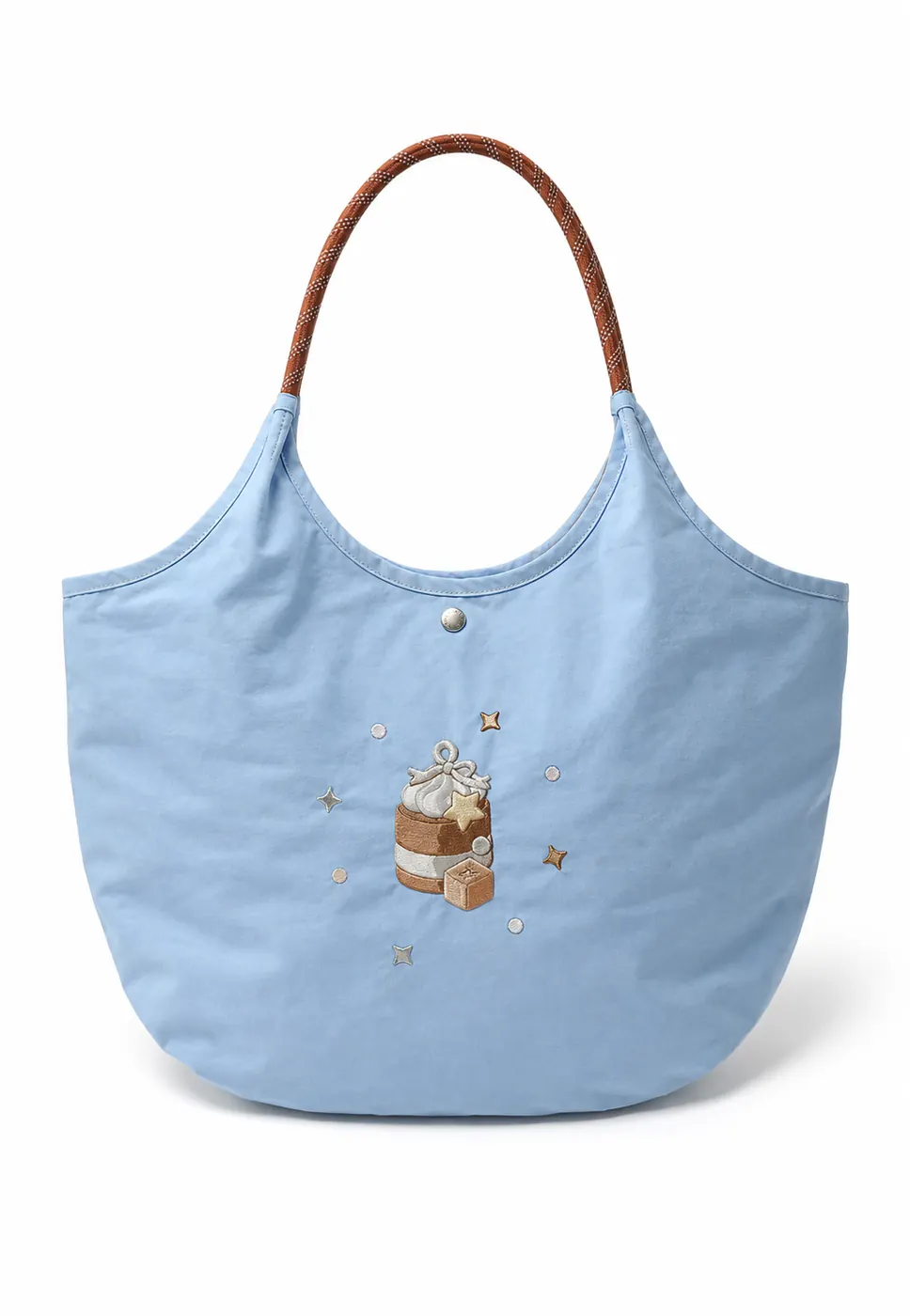
Soft Rounded Tote
A softer daily-use shape with a distinctive handle, useful for fan merch and lifestyle goods that need a different silhouette.
Satin / Polyester
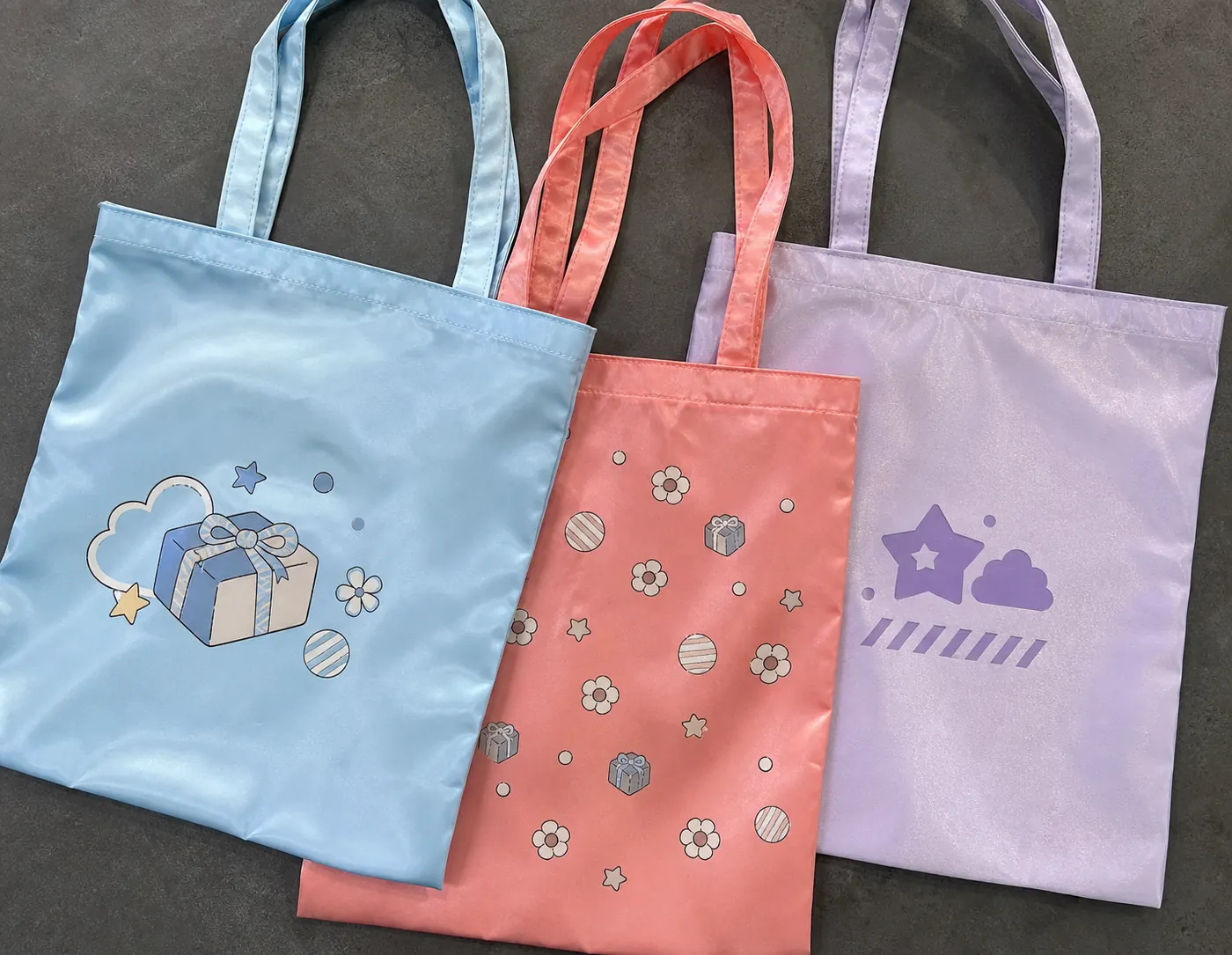
Good for lightweight bags, gloss, and full-color artwork. Transfer, sublimation, and inkjet appearance should be checked on the target fabric.
Ruffle Satin Tote
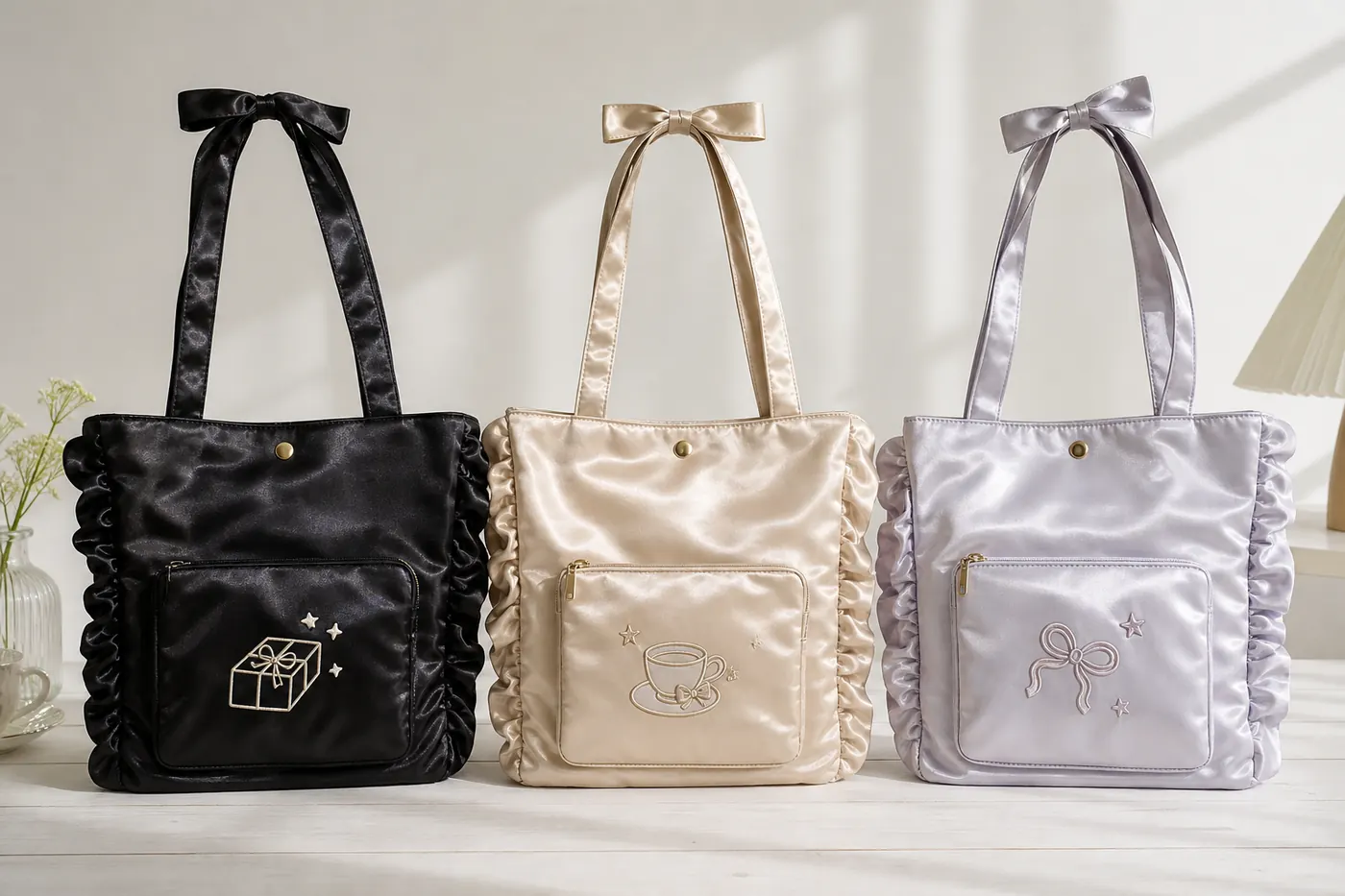
Combines ribbon details, gathered side seams, and front pockets for retail merchandise. Sewing cost and visual impact should be balanced.
Plush Tote
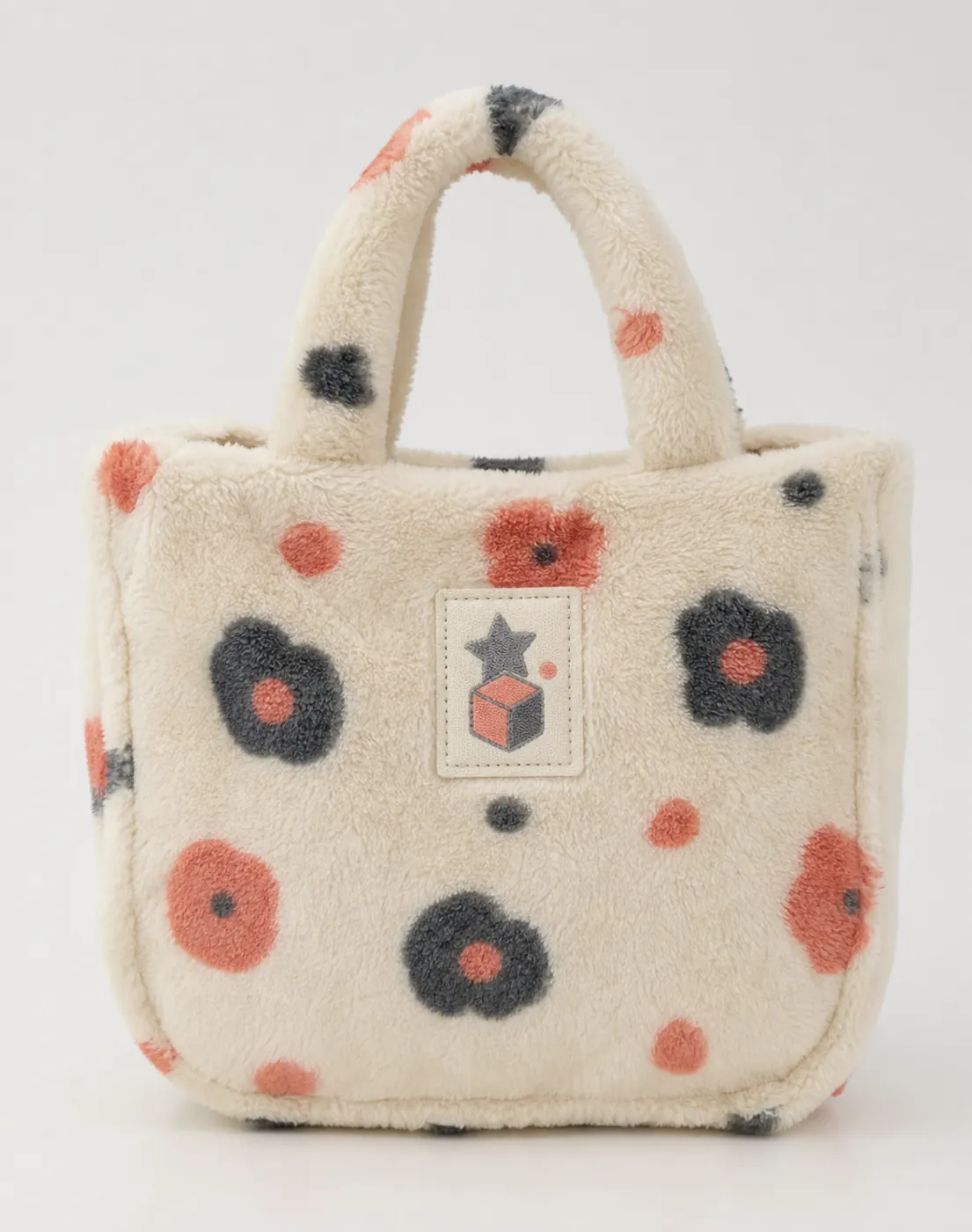
Works for winter goods, soft mascot-style programs, and limited novelty lines. Pile direction, lint, label placement, and compression in packaging matter.
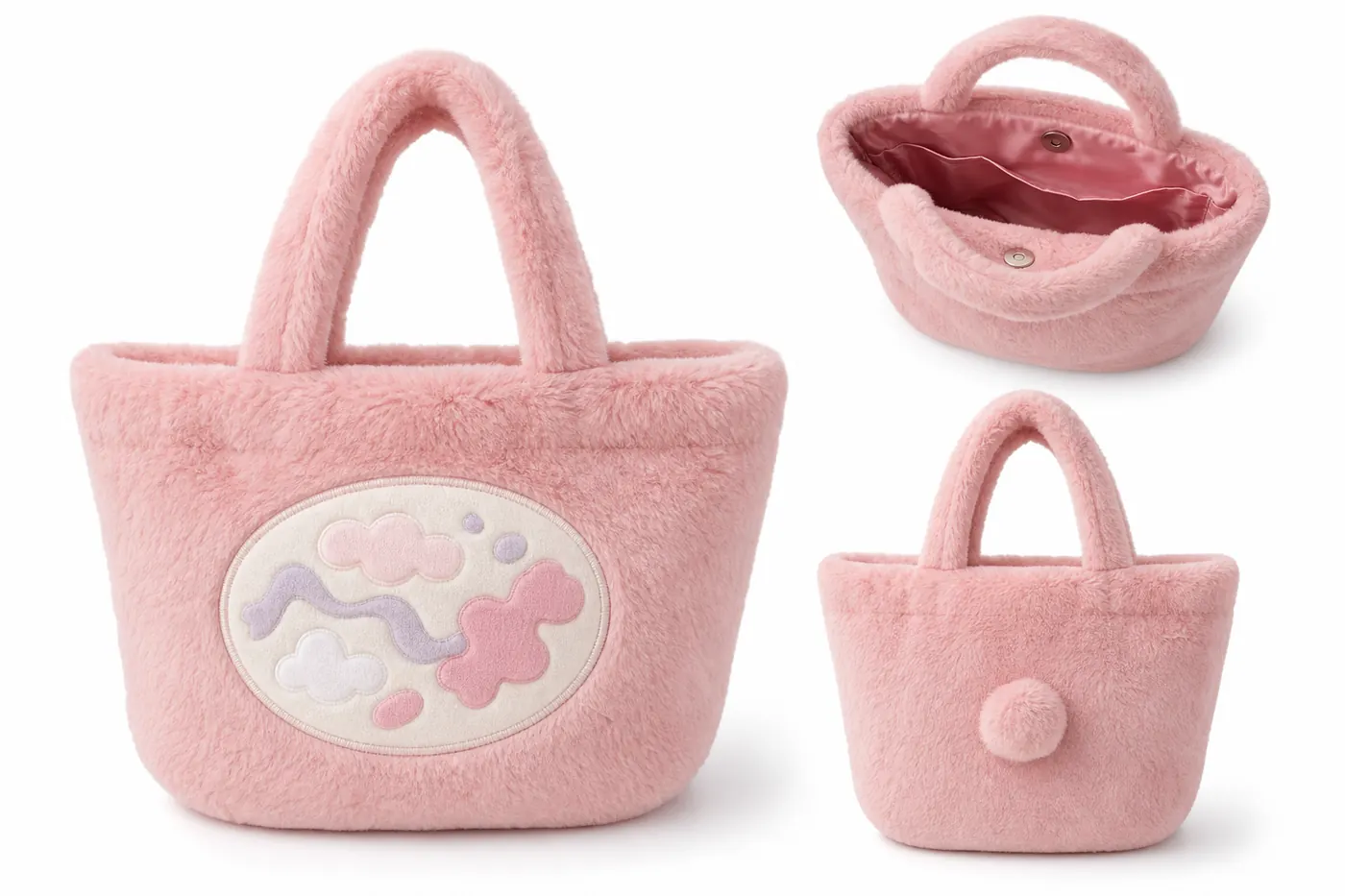
Plush Mini With Magnet
For mini-bag and set-item programs. Inner lining, magnetic snap, and back-side details should be confirmed in sample review.
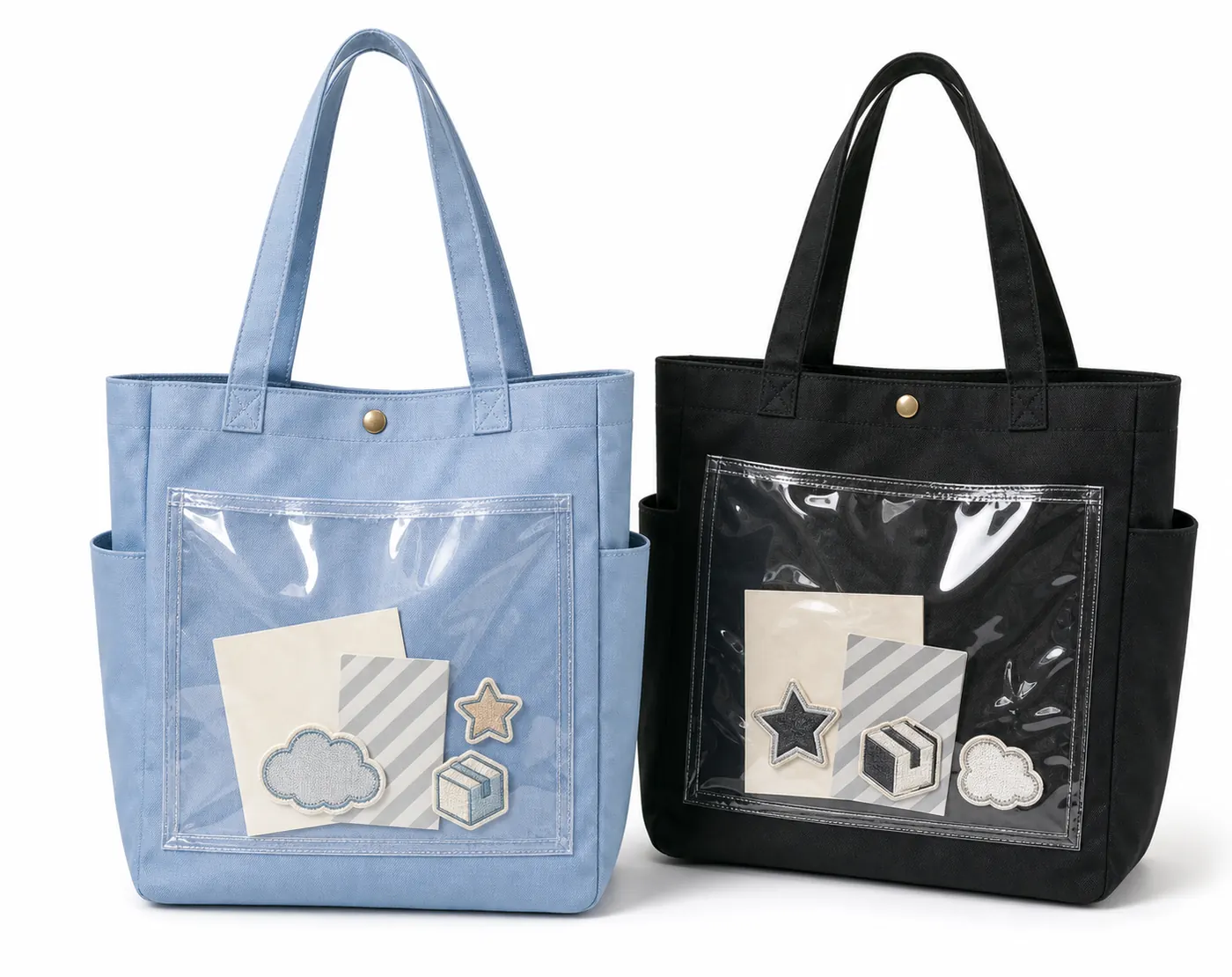
Clear PVC Pocket
Useful for fan goods that display cards, badges, patches, or photos. PVC thickness, seam allowance, glare, and pocket size must be checked.
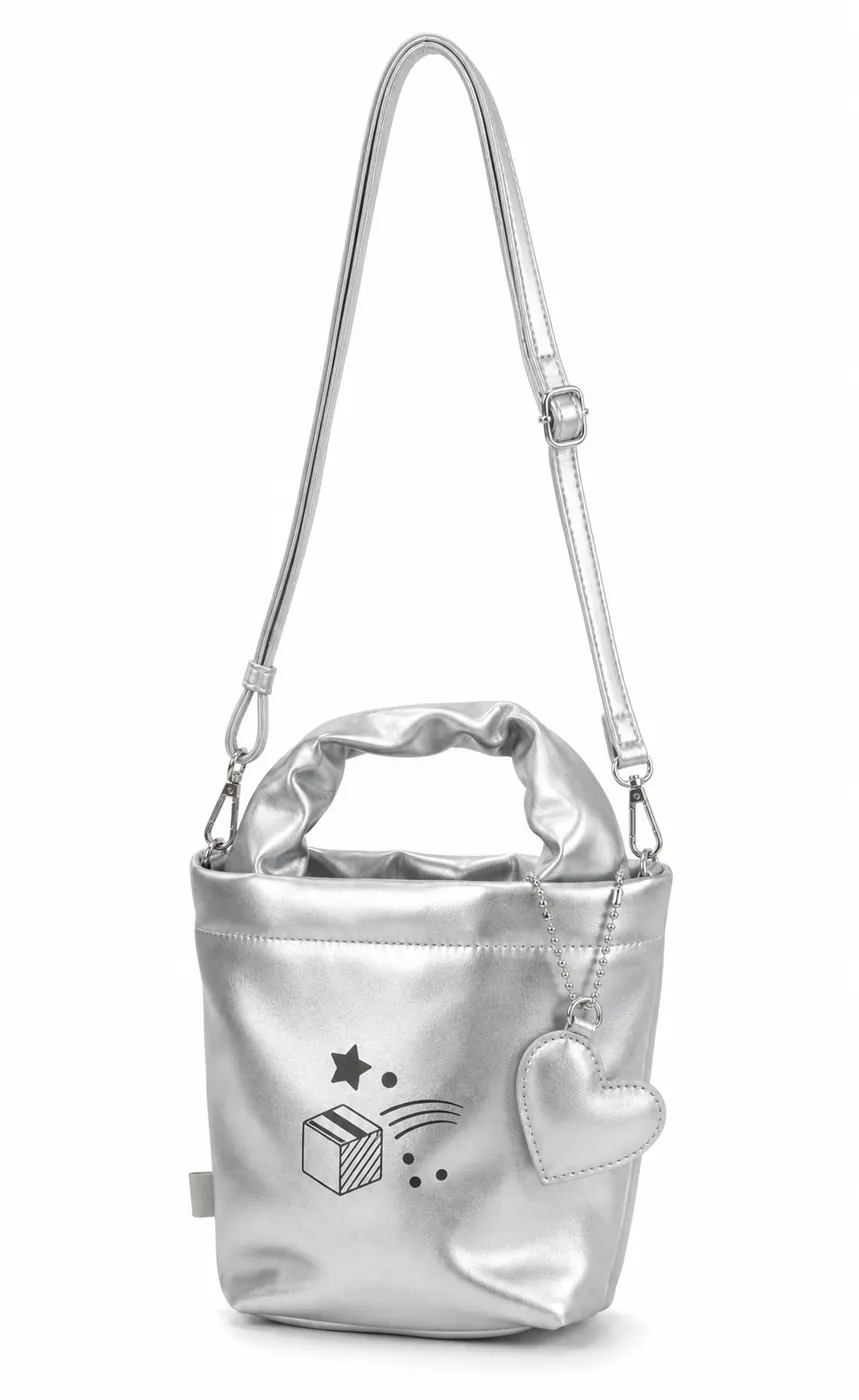
PU Mini Shoulder
For glossy mini-bag and pouch-like items. Surface wrinkles, hardware marks, print adhesion, and abrasion resistance need sample confirmation.
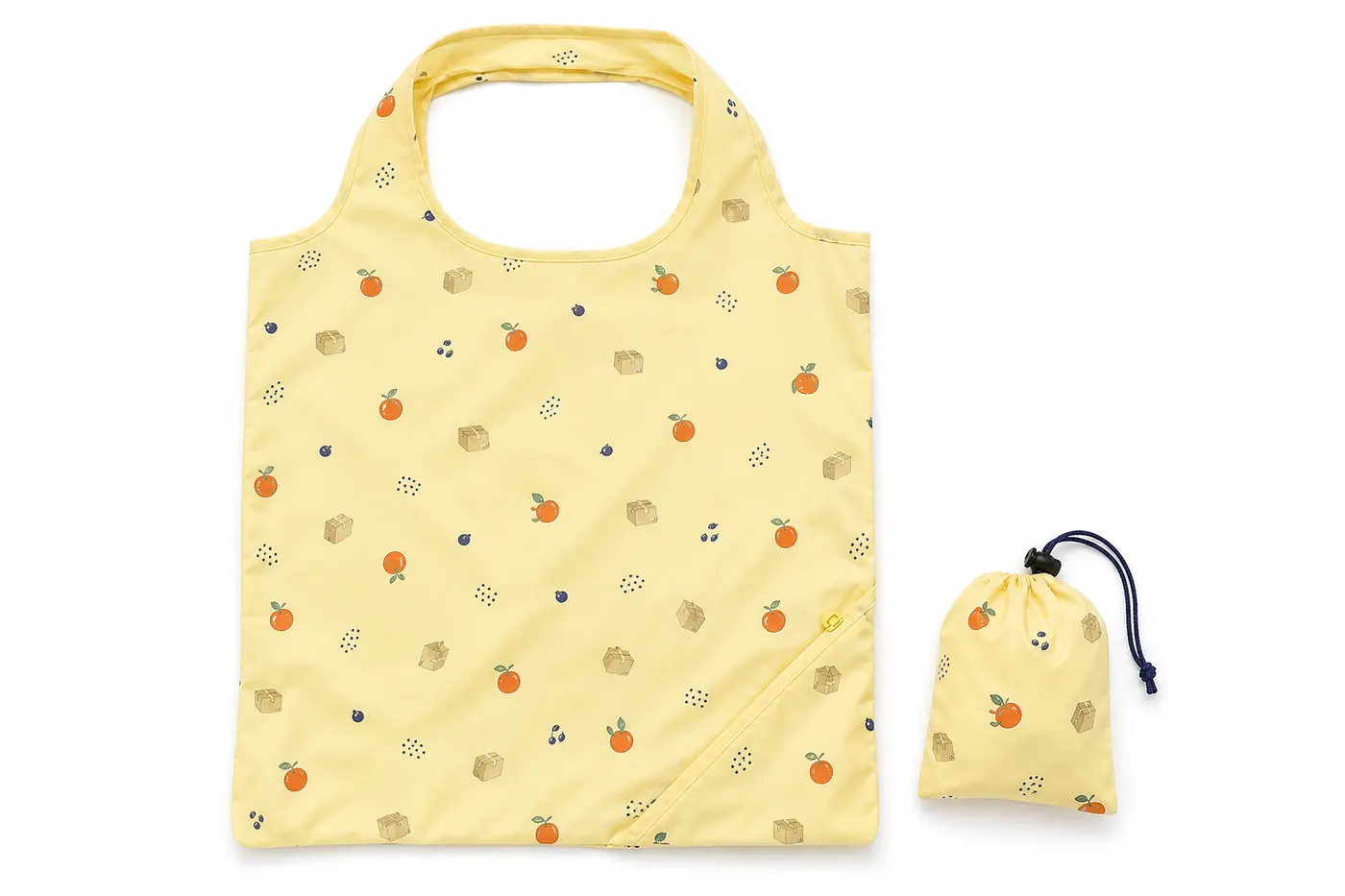
Foldable Eco Bag
Good for corporate novelty programs, ecommerce inserts, and event giveaways. Pouch storage, fold lines, cord, and print durability should be checked.
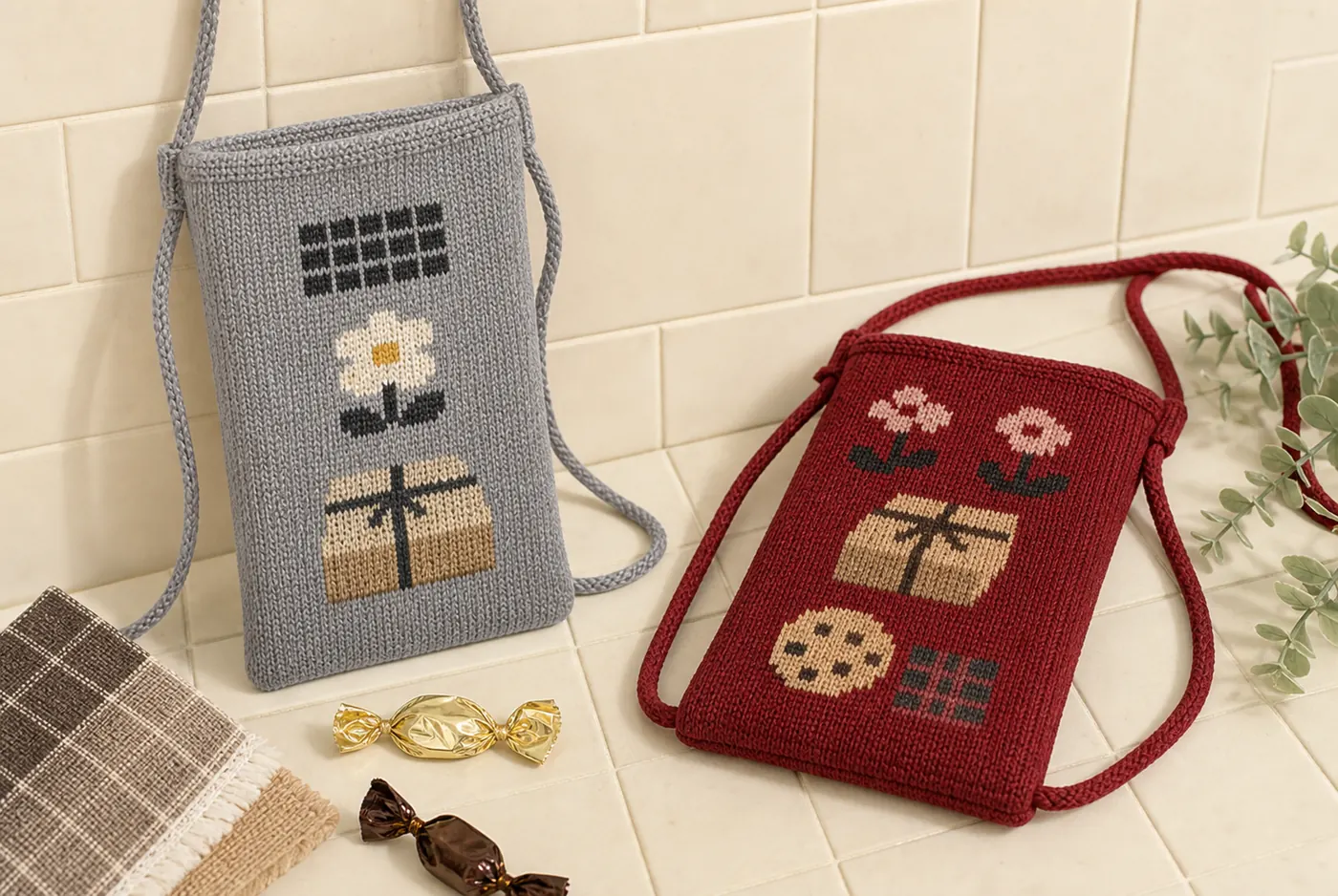
Knit Phone Pouch
A mini-bag extension from tote programs. Jacquard pattern, cord strap, stretch, phone size, and opening stability should be reviewed.
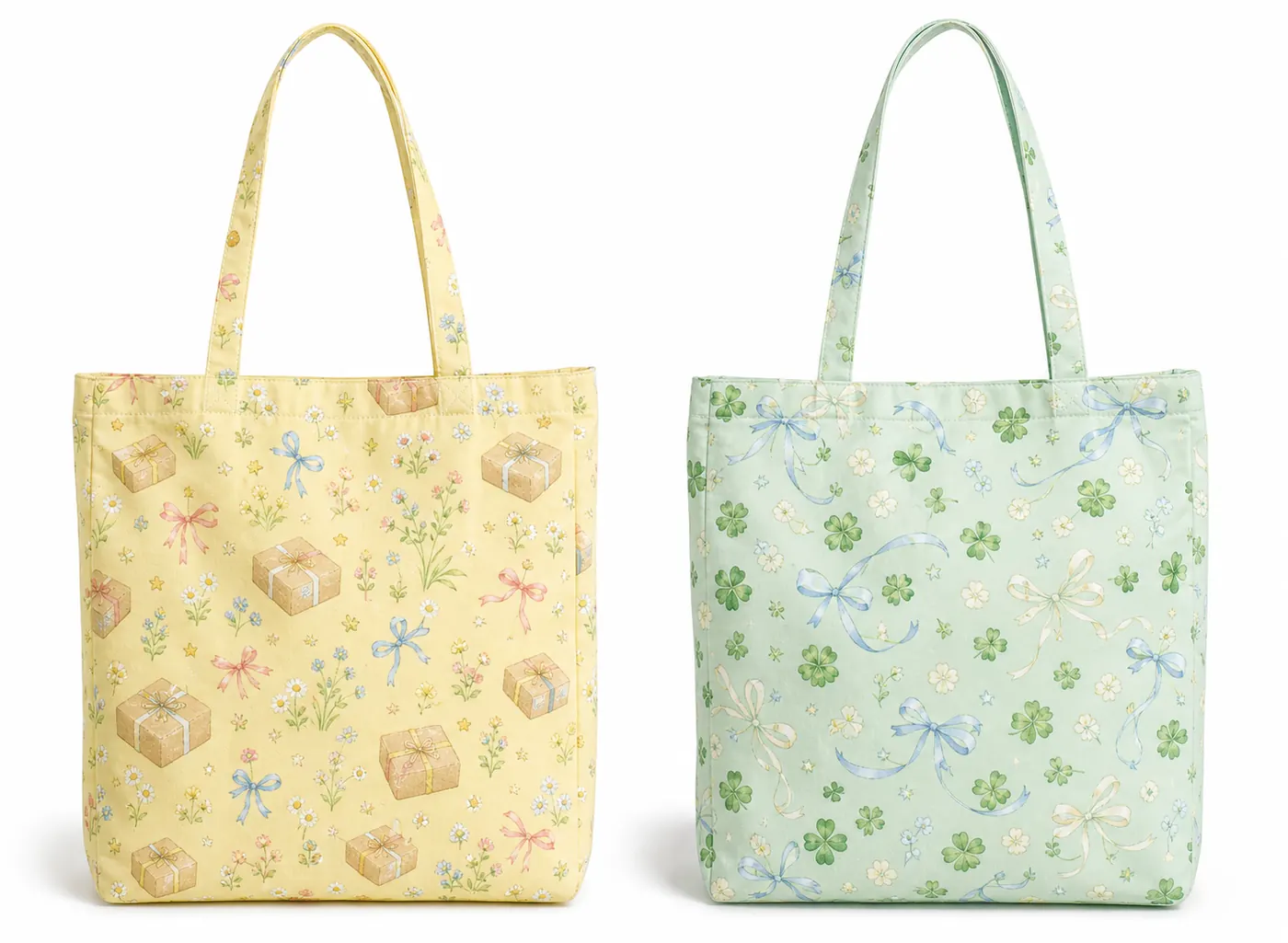
All-Over Print Tote
Patterns such as flowers, ribbons, and gift motifs can cover the full bag. Repeat alignment, seams, and side gussets need production checks.
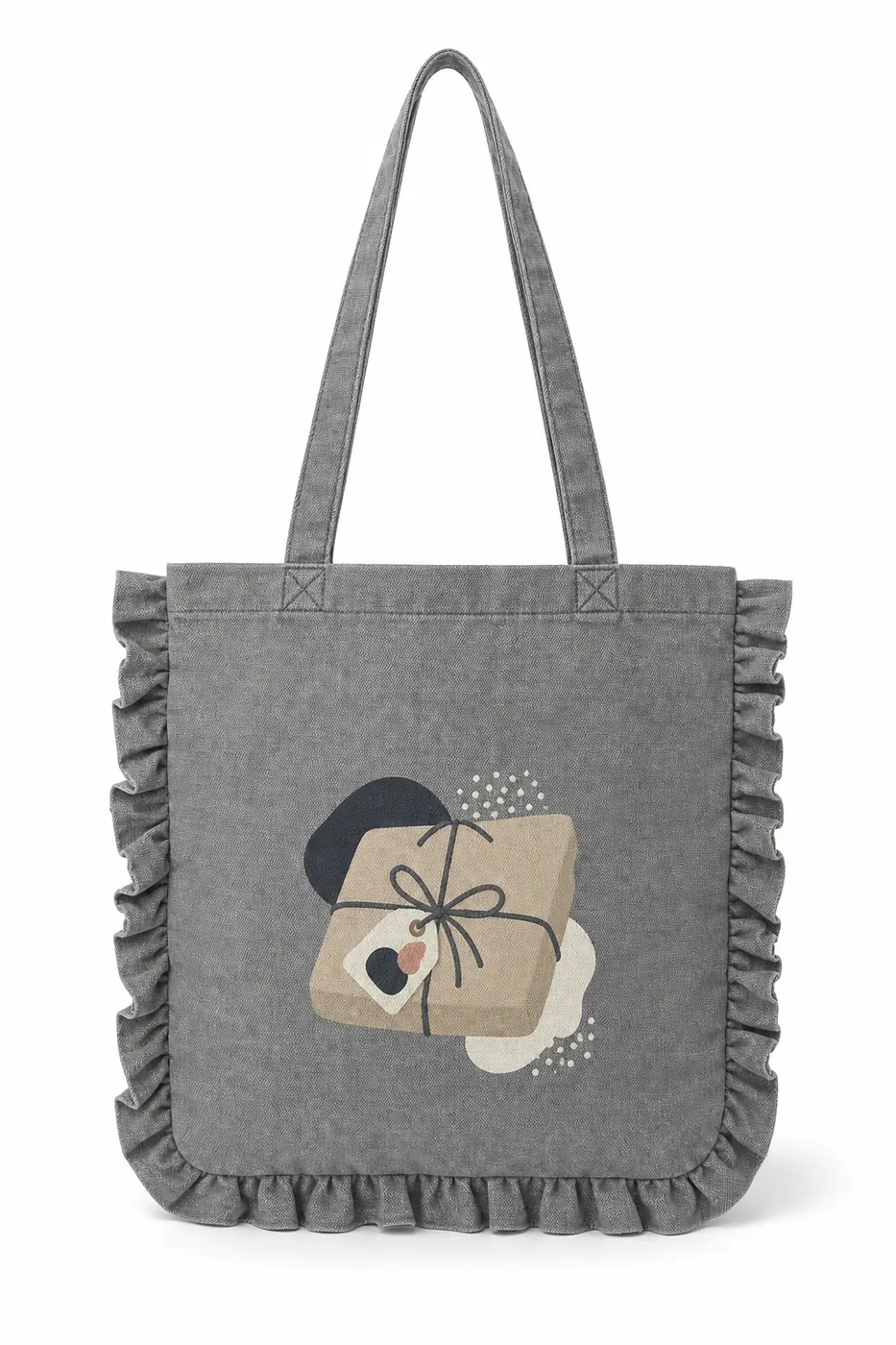
Ruffle Canvas Tote
Uses sewn ruffle trim to soften a standard tote shape. Sewing consistency and left-right balance require more attention than a plain tote.
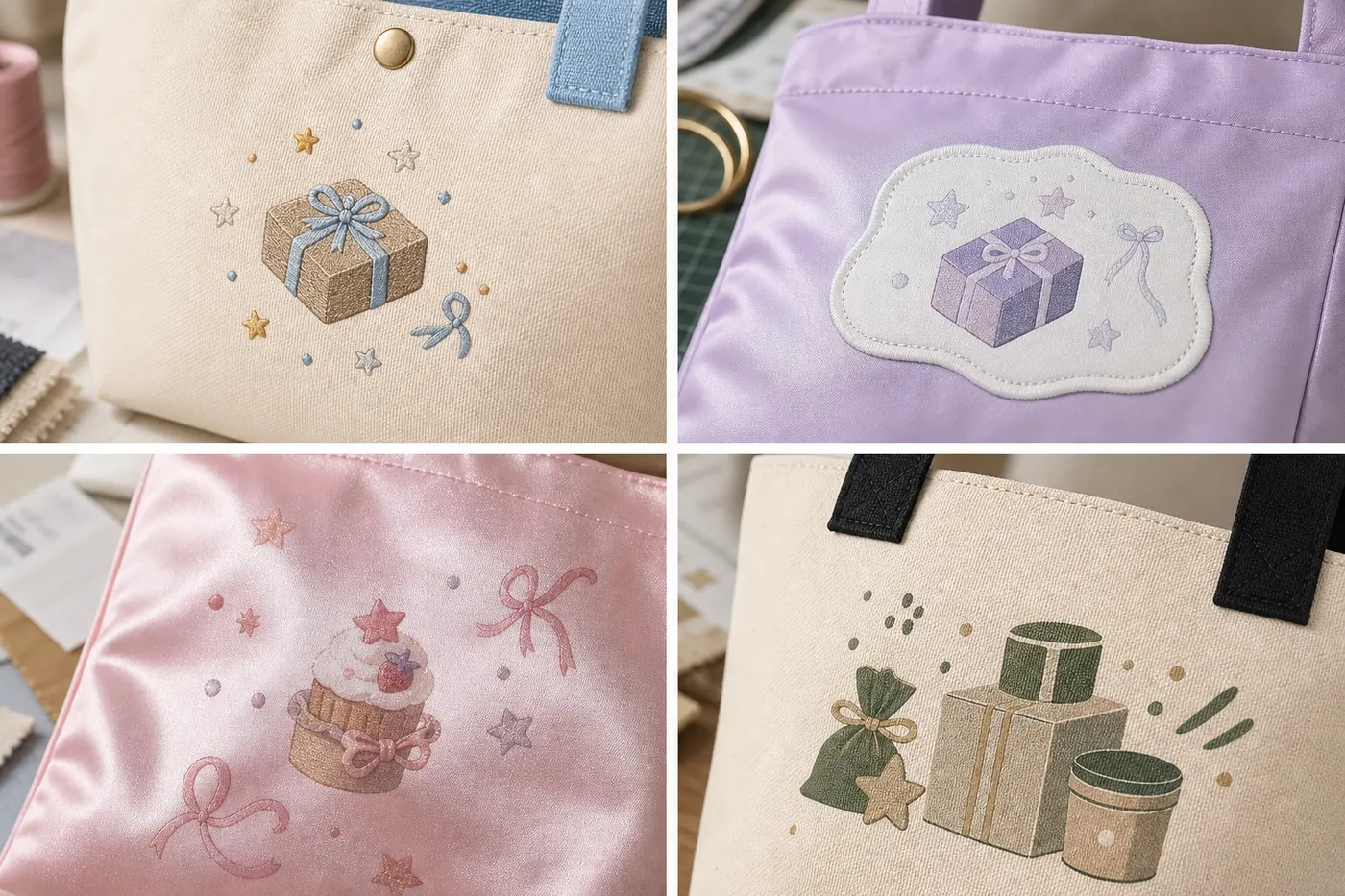
Process Options
Choose embroidery, transfer, inkjet, or screen printing by material and artwork
The same artwork behaves differently on canvas, satin, polyester, plush, and PU. Line thickness, color count, gradients, abrasion resistance, cost, production lot, and schedule should be checked through sampling before mass production.
| Process | Suitable Materials | Best For | Checkpoints |
|---|---|---|---|
| Embroidery | Canvas, plush, heavier polyester | Logos, patches, simple line artwork | Thread color, stitch count, backing, sink-in on plush pile |
| Heat Transfer | Polyester, satin, selected PU | Full color, gradients, small-lot samples | Film edge, abrasion, heat marks, curve following |
| Inkjet Print | Canvas, polyester, satin | Multi-color artwork, photo-like graphics, all-over print | Color, fabric bleeding, seam alignment after sewing |
| Screen Print | Canvas, nonwoven, heavier fabric | One-color or few-color high-volume items | Number of screens, ink thickness, fine lines, color-change cost |
Material Decision
Material choice affects sewing, printing, and packing, not only appearance
At the concept stage, buyers often choose a material because it looks appealing. In production, thickness, shrinkage, color variation, lint, wrinkles, print adhesion, and folding behavior also matter.
Canvas / Cotton
A standard material that works well with print and embroidery. Natural fabric shade, weave, stains, and bottom-gusset seam allowance should be checked.
Polyester / RPET
Lightweight and suitable for foldable bags or all-over prints. Thinness, transparency, folding wrinkles, and transfer temperature should be confirmed.
Satin
Creates gloss and an event-merch feeling. Reflection, seam shift, scratches, wrinkles, and photography appearance need review.
Plush Fabric
Creates a soft feel. Pile direction, lint, sewn-in edges, label sinking, and compression during individual packing should be checked.
PU
Works for mini bags and premium-looking items. Surface wrinkles, hardware marks, print adhesion, abrasion, and protective packing are key points.
PVC / Clear Pockets
Useful for fan display bags. Transparency, thickness, seam allowance, glare, card size, and heat deformation risk should be reviewed.
MOQ & Schedule
Small-lot feasibility depends on the production route
We avoid publishing a fixed guaranteed MOQ because ready-made printing, existing-pattern customization, and fully custom sewing require different preparation and costs.
| Route | Best For | What To Confirm | Notes |
|---|---|---|---|
| Printing on stock bags | Novelty items, short event schedules, internal giveaways | Stock style, color, print position, process, quantity | Bag size and handle changes are limited by the stock format |
| Existing-pattern customization | Retail merch, IP goods, repeat series | Handle color, tags, pockets, embroidery, packaging | Changes must stay within the existing pattern range |
| Fully custom sewing | Special materials, plush, satin, PU, storage-focused design | Pattern, material, sewing specs, sample, inspection criteria | Sampling and pattern correction time should be planned |
| Series development | Color variants, member variants, set products | SKU table, artwork swaps, JAN, individual packing, cartons | Packaging and post-packing checks help prevent mixed SKUs |
Risk Checklist
Common tote bag mass-production issues should be checked early
A bag is a sewn product, not just a printed flat surface. Even when artwork is correct, the final result can change because of handles, gussets, pockets, seam allowance, and fabric stretch. These risks should be made visible during sampling.
Artwork position shift.Designs near pockets or seams need an agreed tolerance range for mass production.
Color and material variation.Fabric lots, transfer temperature, and satin reflection can change perceived color, so approved samples should be used as the benchmark.
Handle strength.Large bags and load-bearing uses need reinforced stitches, seam allowance, and stress-point checks.
Packing deformation.Plush, PU, and satin can show compression or fold marks, so folding and individual packing should be tested.
SKU & Packaging
Color variants, pattern variants, and sets need SKU and packing rules first
Tote bag programs often expand into colors, handle variations, materials, pouch sets, or badge-display styles. Managing backing cards, OPP bags, JAN labels, and carton labels in one table reduces mix-ups before shipment.
SKU Table
Product name, color, size, material, process, JAN, quantity, carton quantity, and delivery destination are organized together.
Packing Specs
OPP, PP bags, backing cards, tags, pouch inclusion, set packing, warnings, and sealing position are confirmed.
Carton Label
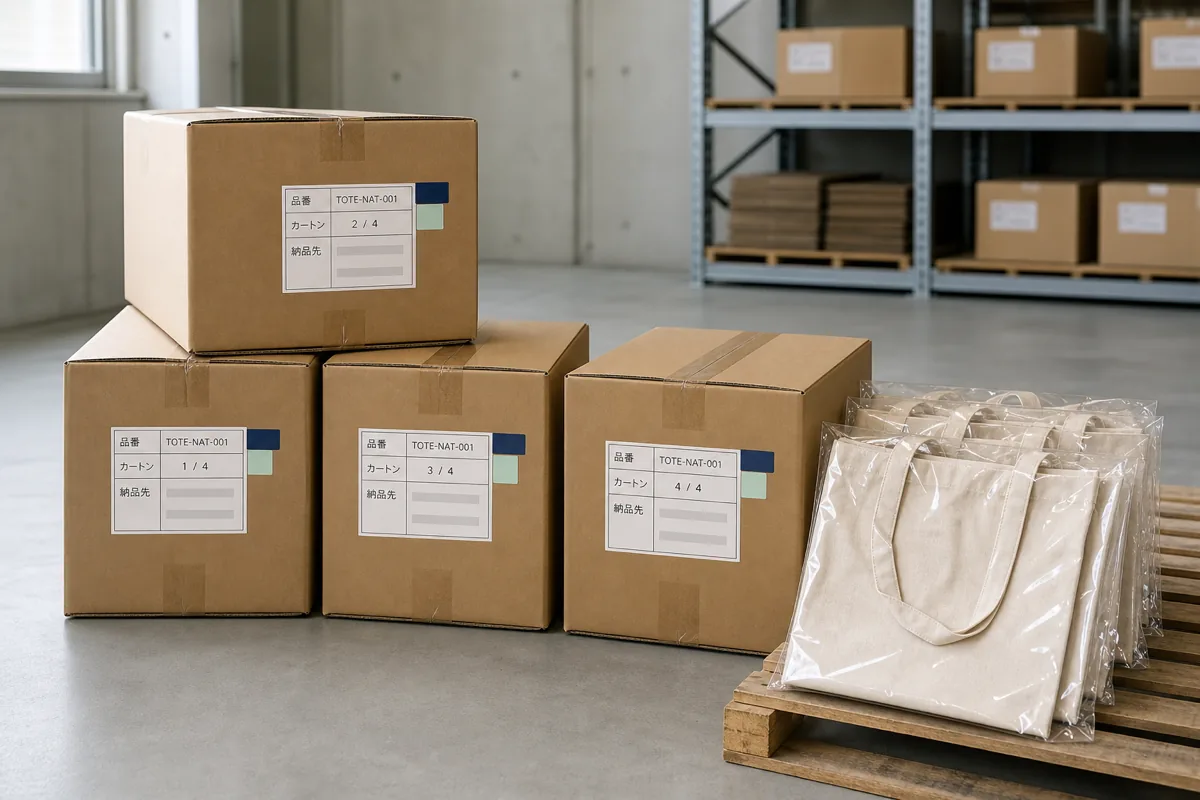
Item code, quantity, carton number, delivery destination, weight, and mixed-carton status are checked to avoid warehouse issues.
Project Flow
From consultation to mass production and Japan delivery
Use case, quantity, budget, sales channel, contents, and preferred material are confirmed.
Bag shape, size, material, print, embroidery, tags, and packing are organized in a spec sheet.
Color, hand feel, print position, sewing, and packing method are checked with real samples.
Approved sample, SKU table, packing instructions, and inspection items are fixed.
Sewing, printing, embroidery, and packing are checked by process.
Quantity, JAN, cartons, delivery destination, and shipping documents are confirmed.
Before Quotation
Information to prepare before requesting a quote
You do not need a complete specification sheet at the first contact. The following information helps us quickly decide whether a stock-bag print, existing-pattern modification, or fully custom sewing route is suitable.
Use Case & Quantity
Event merchandise, novelty goods, ecommerce products, lottery prizes, or set items. Share the target quantity and delivery destination.
Size & Contents
A4 folders, fan goods, acrylic stands, smartphones, lunch boxes, pouch sets, or other contents should be checked.
Material & Shape
Canvas, plush, satin, polyester, PU, clear PVC pockets, foldable designs, and other preferred forms can be shared as references.
Artwork Data
AI, PSD, PDF, PNG, rough sketches, or reference images. If real IP is used, permission scope should be confirmed by the rights holder side.
Decoration Process
Embroidery, transfer, inkjet, screen print, woven labels, tags, patches, and hardware requirements should be listed.
Packing & Delivery
OPP bags, backing cards, JAN labels, set packing, carton labels, DDP delivery, and event-site delivery can be planned.
Buyer Decision
Choose tote specifications from the use case
A tote bag should be specified from what it must carry, how it will be sold or distributed, and how it will be packed and delivered. This makes it easier to choose between stock-bag printing, an existing-pattern modification, and fully custom sewing.
| Buyer use case | Contents and handling | Specification priority | Production route to review |
|---|---|---|---|
| Event merchandise | Fan goods, brochures, purchases carried at the venue | Capacity, handle comfort, artwork visibility, venue delivery | Existing-pattern customization or fully custom sewing |
| Retail character goods | Daily-use product sold by SKU | Material feel, sewing finish, label position, individual packaging | Existing-pattern customization or fully custom sewing |
| Promotional giveaway | Catalogs, campaign items, lightweight contents | Quantity, print area, packing speed, distribution deadline | Stock-bag printing or a simplified existing pattern |
| Multi-SKU IP series | Character, color, or artwork variants | Artwork table, SKU labels, quantity by design, carton separation | Shared construction with controlled artwork or color changes |
| Set product or split delivery | Pouch set, backing card, warehouse and event allocation | Set assembly, carton marks, destination quantities, delivery sequence | Route selected after packaging and logistics review |
Final feasibility, MOQ, unit price, and schedule are confirmed after material, construction, artwork, packaging, inspection, and delivery conditions are reviewed.
Comparable RFQ
Compare supplier quotes on the same scope
A low unit price is not comparable when one quote excludes sampling, individual packing, labels, inspection, or delivery allocation. Send the same RFQ fields to every supplier and mark undecided items as options.
Evidence job: carton numbering, SKU quantity, destination marks, and split-delivery allocation.
| RFQ field | What to provide | Why it changes the quote |
|---|---|---|
| Quantity and SKU count | Total quantity plus quantity per character, color, size, or artwork | Setup, material purchasing, printing changes, packing labor, and carton separation |
| Size and construction | Finished dimensions, gusset, handles, pockets, lining, closure, expected contents | Pattern work, fabric consumption, sewing operations, reinforcement, and sample corrections |
| Material and decoration | Fabric, color, print method, embroidery, labels, hardware, and artwork files | Material availability, screens or setup, color changes, processing time, and QC points |
| Packaging and labels | OPP bag, backing card, barcode/JAN, warning label, set assembly, carton marks | Packaging materials, manual work, inspection scope, and SKU-mix risk |
| Delivery conditions | Destination, required date, split shipment, Incoterm request, receiving rules | Carton allocation, documents, freight route, and delivery sequence |
Multi-SKU Packing
Lock SKU and packaging rules before packing starts
For character, color, or artwork variants, the approved SKU table should connect each product to its artwork, label, individual bag, quantity, carton number, and destination. This reduces mixed-SKU errors after bulk sewing is complete.
Individual pack
Confirm bag orientation, label position, sealing method, insert, warning text, and whether sets are packed together.
SKU control
Use one row per design or color with item code, artwork version, quantity, barcode/JAN, and carton allocation.
Dispatch evidence
Reconcile packed quantities, carton labels, packing lists, and destination totals before shipment.
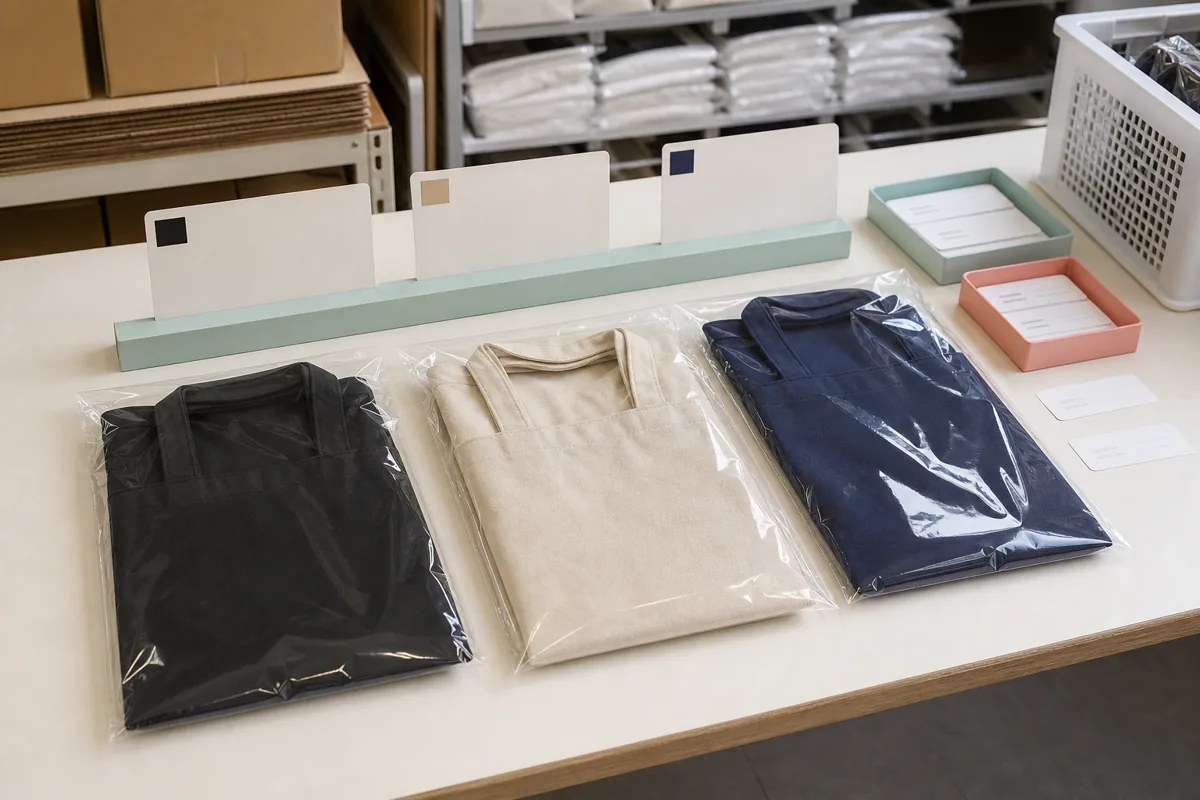
Evidence job: SKU separation, individual packaging, label placement, and quantity control.
Pre-Production Approval
Approve the pre-production sample before bulk production
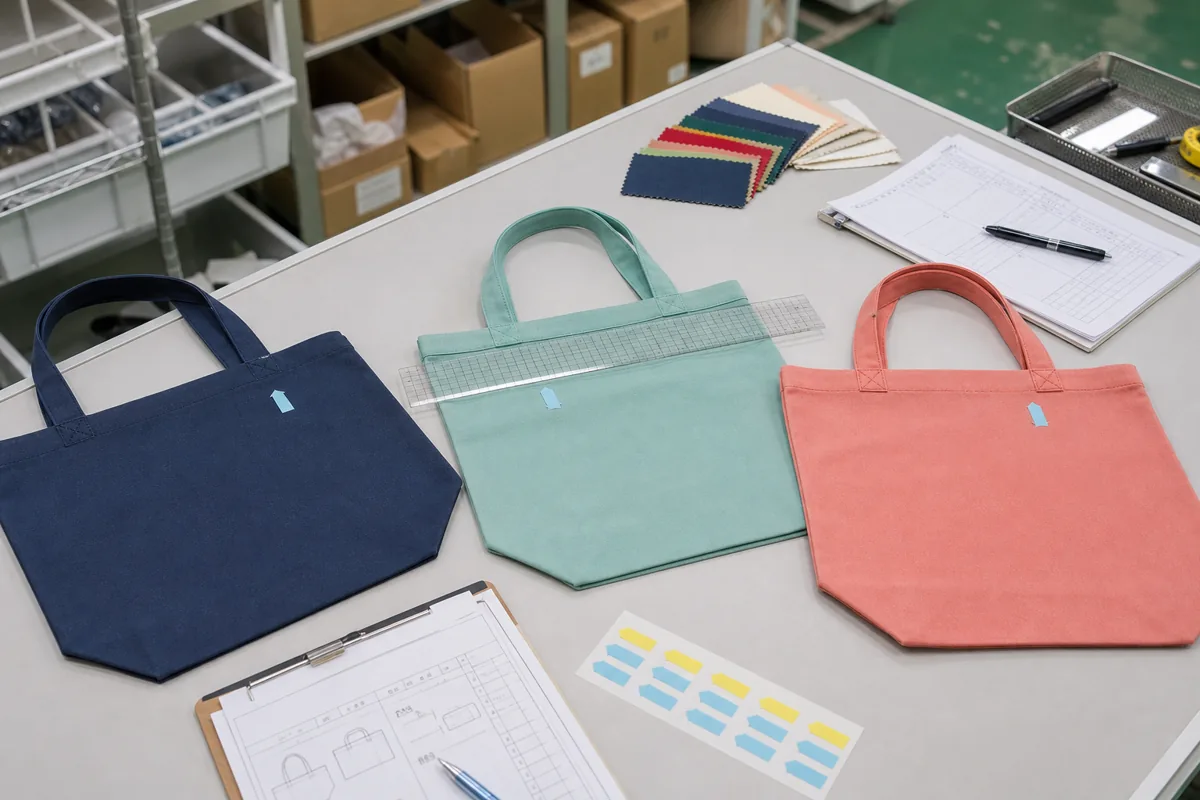
The approved sample should become the reference for bulk sewing, printing, inspection, and packaging. Approval is most useful when comments are converted into measurable specifications instead of being left as general visual feedback.
- Finished size, gusset, handle length, pocket position, opening, and expected capacity.
- Material, fabric color, print or embroidery position, artwork scale, and visible color differences.
- Stitching, reinforcement, zipper or snap function, lining, labels, and hardware.
- Individual packing, barcode/JAN placement, set assembly, carton marks, and approved folding method.
- Named approval owner, approved sample version, revision record, and mass-production release date.
Evidence job: construction, artwork placement, stitching, measurements, and packaging approval before bulk production.
FAQ
Frequently asked questions about custom tote bag OEM
Can you support small-lot tote bag projects?
Yes, depending on the route. Printing on ready-made bags, modifying an existing pattern, and fully custom sewing each have different quantity and cost requirements. We confirm quantity, material, and process before proposing a realistic route.
Can you make tote bags using real character or IP artwork?
We can proceed when artwork is supplied by the rights holder or an authorized planning company, with NDA and data-sharing scope confirmed. Public sample images on this page do not use unauthorized real IP assets.
Should we choose embroidery or full-color printing?
Embroidery is suitable for bold lines, logos, and patch-like effects. Transfer, inkjet, or sublimation is better for multi-color artwork, gradients, photo-like designs, and all-over prints. The best option depends on material and quantity.
Can you make plush, satin, or PU bags?
These materials can be discussed. Compared with standard canvas, they require more checks for sewing, compression, wrinkles, stains, print adhesion, and individual packing, so physical sample confirmation is recommended.
Can you make fan tote bags with clear PVC pockets?
Yes, depending on the specification. Card, badge, patch, or photo display bags need checks for display-item size, PVC thickness, pocket sewing, glare, and whether the pocket needs a closure.
Can you produce all-over printed tote bags?
In many cases, yes. Repeat alignment, seam position, gussets, and handle-pattern appearance should be checked with a sample before mass production.
Can you support packaging and JAN labels?
Yes. OPP bags, backing cards, tags, JAN labels, SKU control, set packing, and carton labels can be organized by project. JAN issuance is usually managed by the brand or seller side.
Can we request a quote with only a rough idea?
Yes. If you can share use case, quantity, approximate size, material image, reference bag form, delivery destination, and target schedule, we can organize the required specification checks.
Contact
We can help organize bag shape, material, and decoration process
Share reference images, rough artwork, size, quantity, target material, and delivery schedule. We will check whether stock-bag printing, existing-pattern customization, or fully custom sewing is the better route.
Related Pages