
Plush Fabric Selection Guide
Custom Plush Fabric Selection Guide
B2B guide to plush fabric selection guide: buyer inputs, samples, MOQ, production risks, quality checks, lead time, and quote preparation.
Custom plush fabric affects more than hand feel. It changes character outline, facial visibility, embroidery stability, finished dimensions, sewing, packaging and quotation conditions.
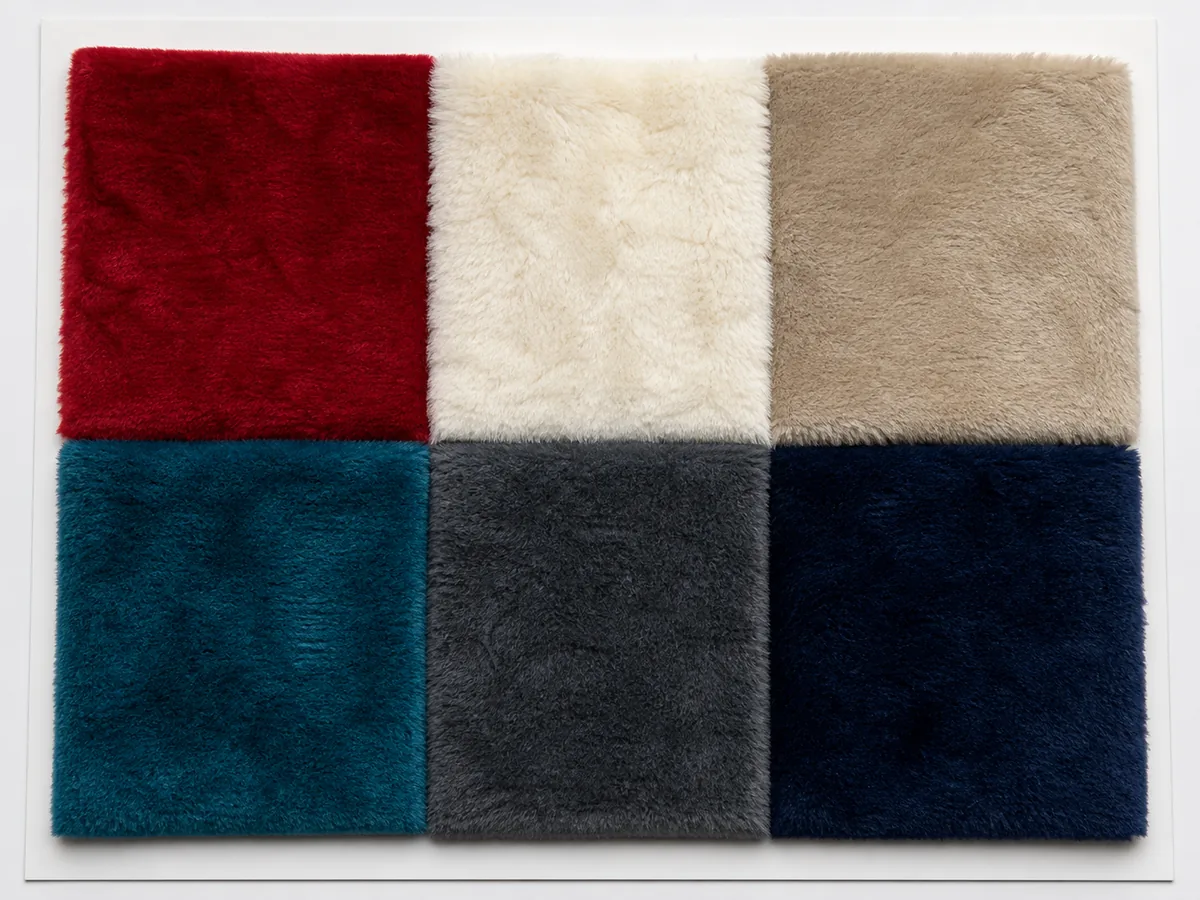
Six decision points for narrowing fabric options
Review appearance, processing and quotation conditions together from the product use and artwork.
Longer pile feels softer but can hide small outlines and embroidery.
Stretch supports squeeze and rebound but changes dimension and filling control.
Check whether fine embroidery, applique or printing remains stable on the surface.
Change priorities for mascots, cushions, keychains, baby items or display goods.
Confirm target color, lot variation, stock, dyeing and substitution before quotation.
Thickness, slip, pile direction and compression recovery affect production and cartons.
Comparison of common custom plush fabrics
Names are indicative. Confirm the actual swatch, code, backing and stretch direction.
| Fabric type | Appearance and feel | Typical use | Quotation check | Risk to review |
|---|---|---|---|---|
| Short fur | Short soft pile with a clear outline and visible facial details | Small mascots, fan plush and facial panels | Pile, density, direction, color and embroidery | Gate Direction changes shade and highlight |
| Boa | Full fuzzy surface with animal-like volume | Animal characters, costume looks and accents | Pile, curl, thickness, seam allowance and stock | Gate Small parts and thin lines may disappear |
| Velboa | Smooth, relatively flat surface with mild sheen | Face-focused mascots, clothing and panels | Density, sheen, direction and color difference | Gate Color appearance changes by angle and light |
| Soft stretch fabric | Stretchy, soft surface with squeeze and rebound | Cushions, hugging plush and larger items | Stretch direction, thickness, filling, print and embroidery | Gate Dimensions and embroidery may wave or distort |
| Fleece | Light, matte surface with very short pile | Clothing, lining, simple bodies and accents | Thickness, pilling, color and sewability | Gate Review pilling and edge treatment by use |
| Felt or contrast fabric | Holds shape and adds small color areas | Inner ears, markings, claws, clothing and small parts | Thickness, stiffness, cut edge, glue or sewing | Gate Review bending, fuzzing and separation |
Common plush fabric types used for custom dolls
Chinese factory fabric names are useful during quotation and sampling, but they should not be treated as final specifications by themselves. Before production, confirm the actual swatch code, pile height, density, stretch direction, filling compatibility and color lot.
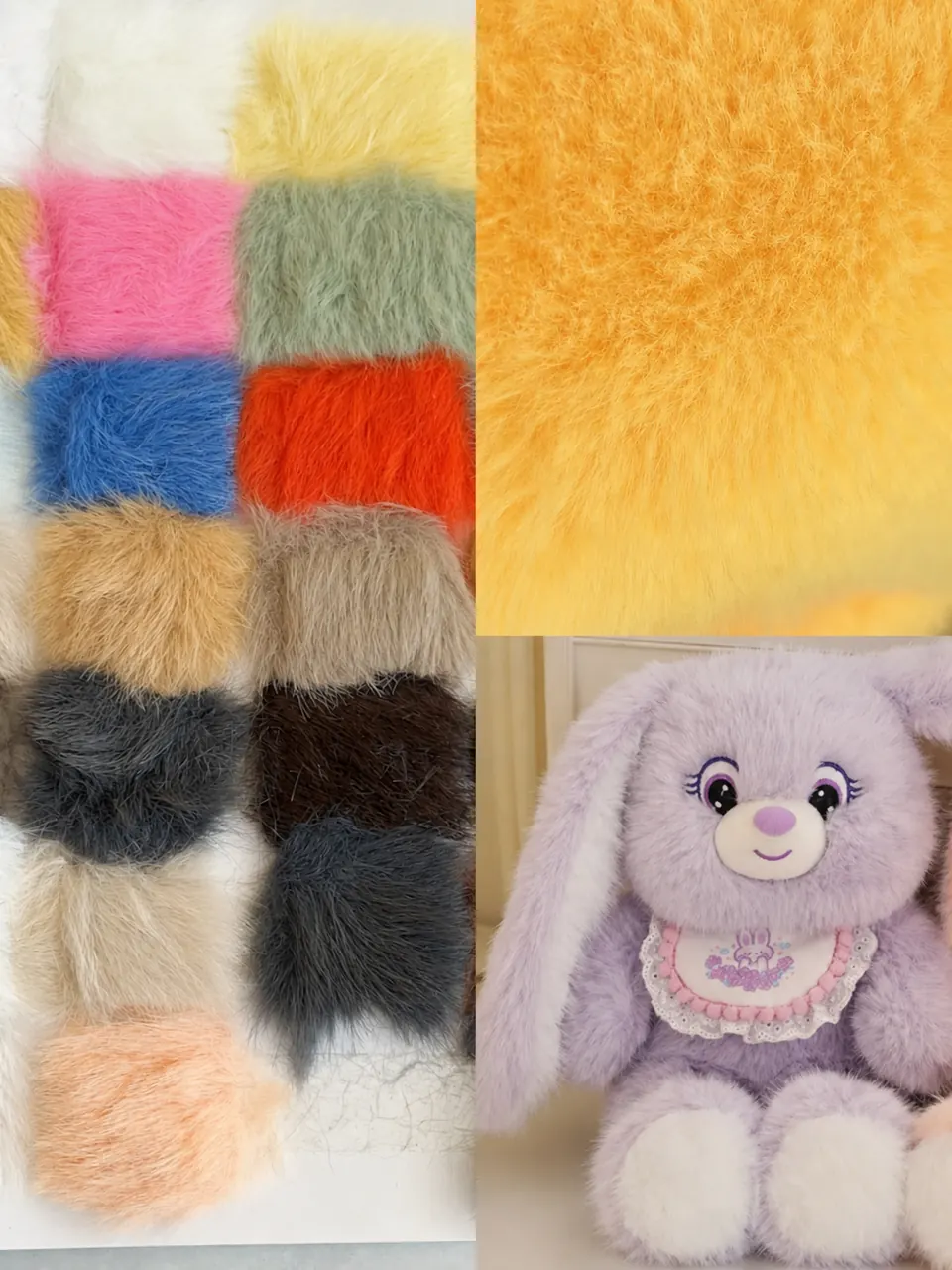
A soft, fluffy long-pile option for a more premium handfeel. It works well for plush bodies or accent areas where a richer surface is required.
Check: pile, density, shedding, color lot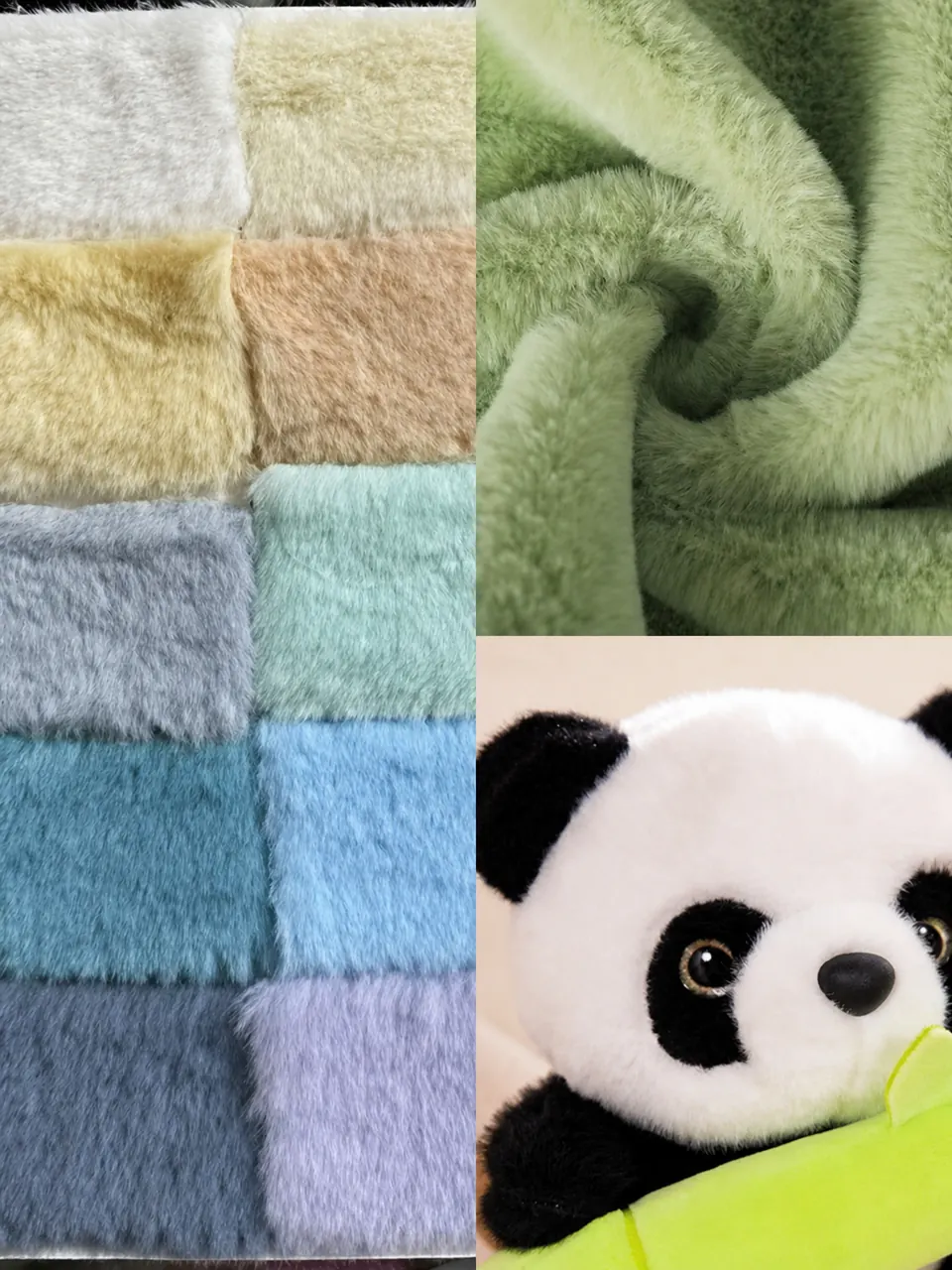
A dense, cloud-soft long-pile fabric with a warmer, fuller handfeel. It is often selected for long-pile plush toys and dolls over about 10 cm.
Typical pile: 8 mm, 15 mm, 20 mm / 10 cm+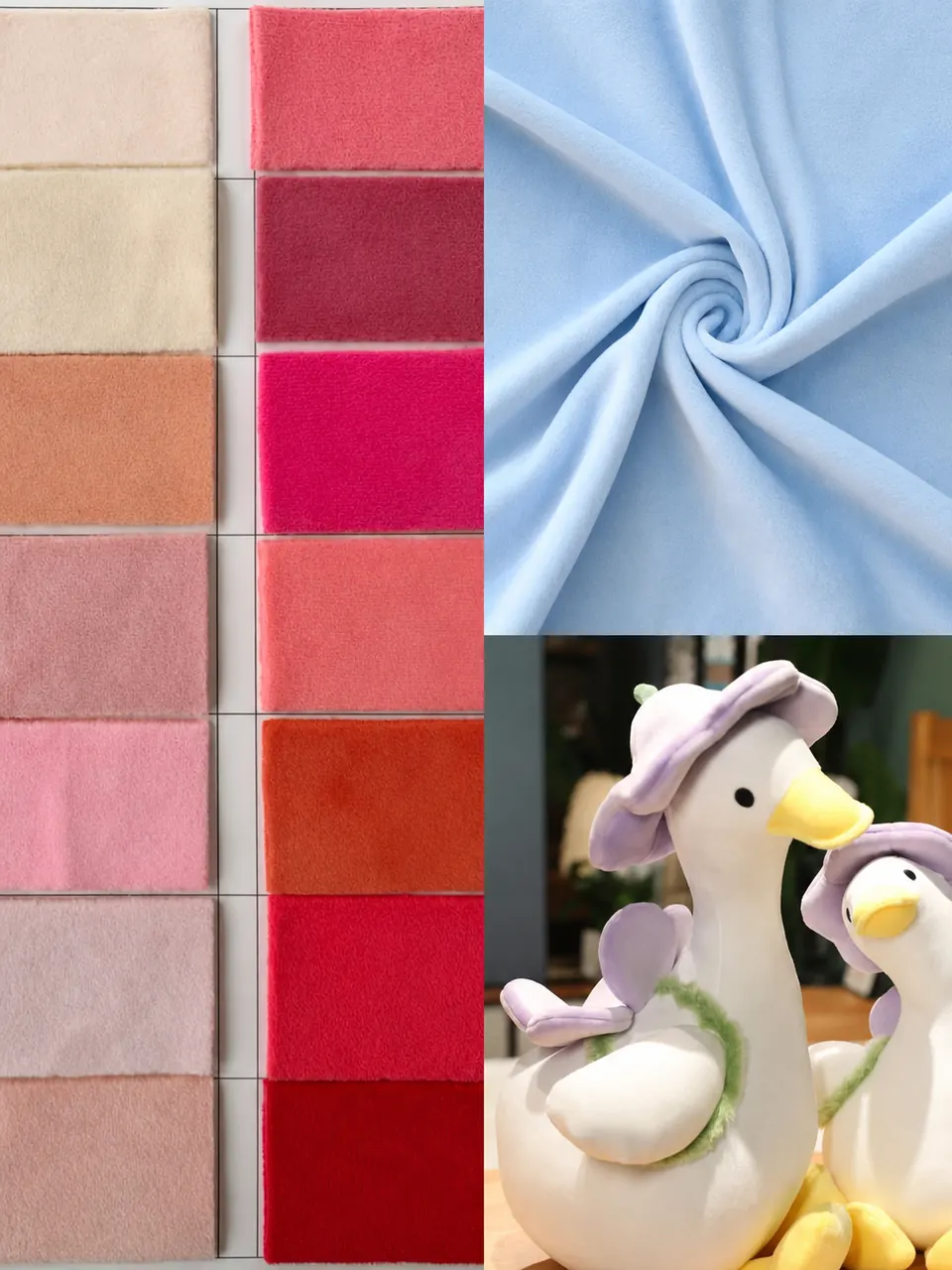
Visually close to crystal super-soft minky, but softer and more elastic. It helps create a plush, cushion-like feel for dolls and pillows above about 5 inches.
Typical pile: 1-1.5 mm / pillows and cushions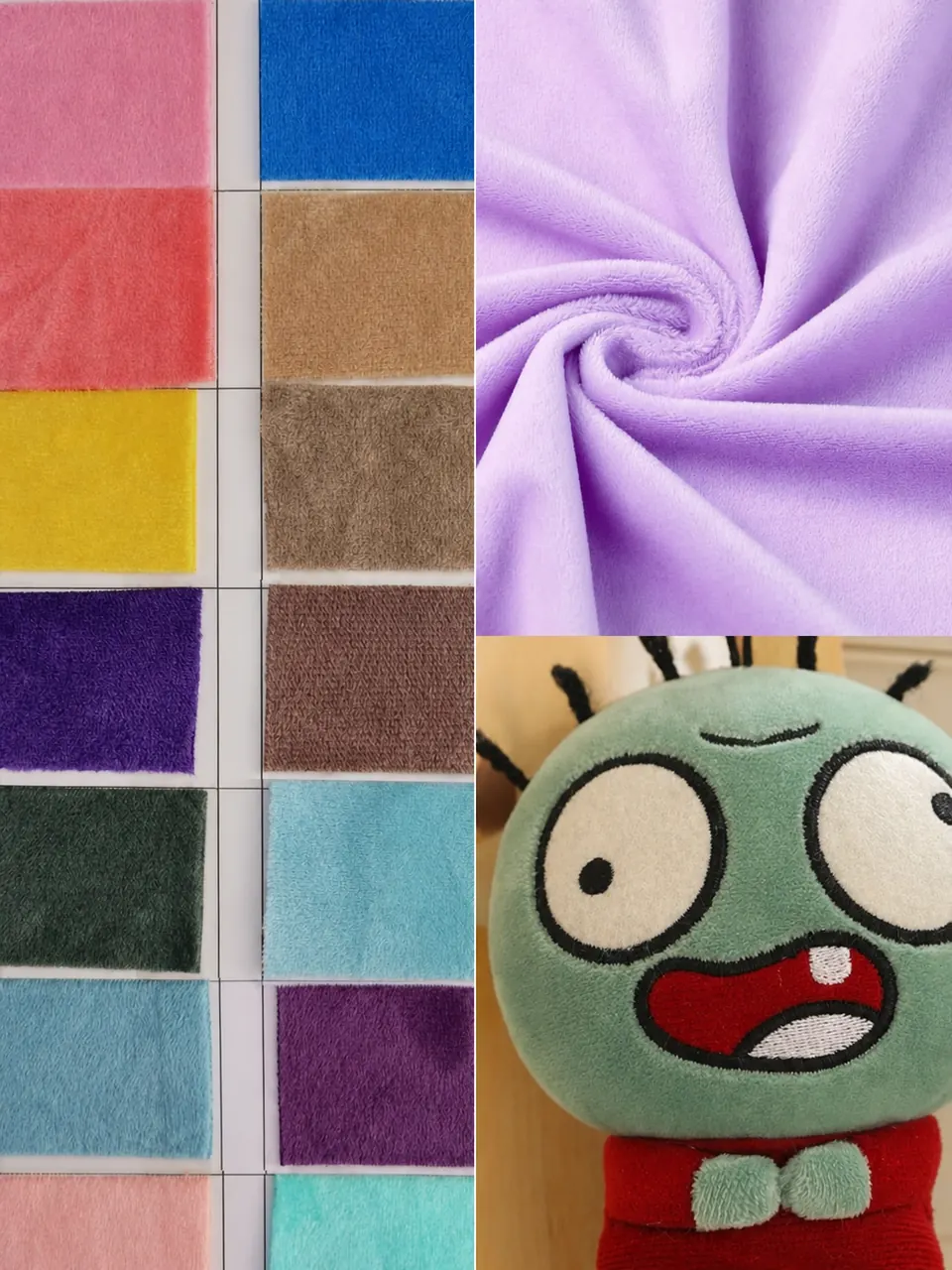
A widely used short-pile plush fabric with a smooth, soft surface. It can support small 5 cm goods through large plush pieces when the correct weight and backing are selected.
Typical pile: 1-5 mm / 5 cm-200 cm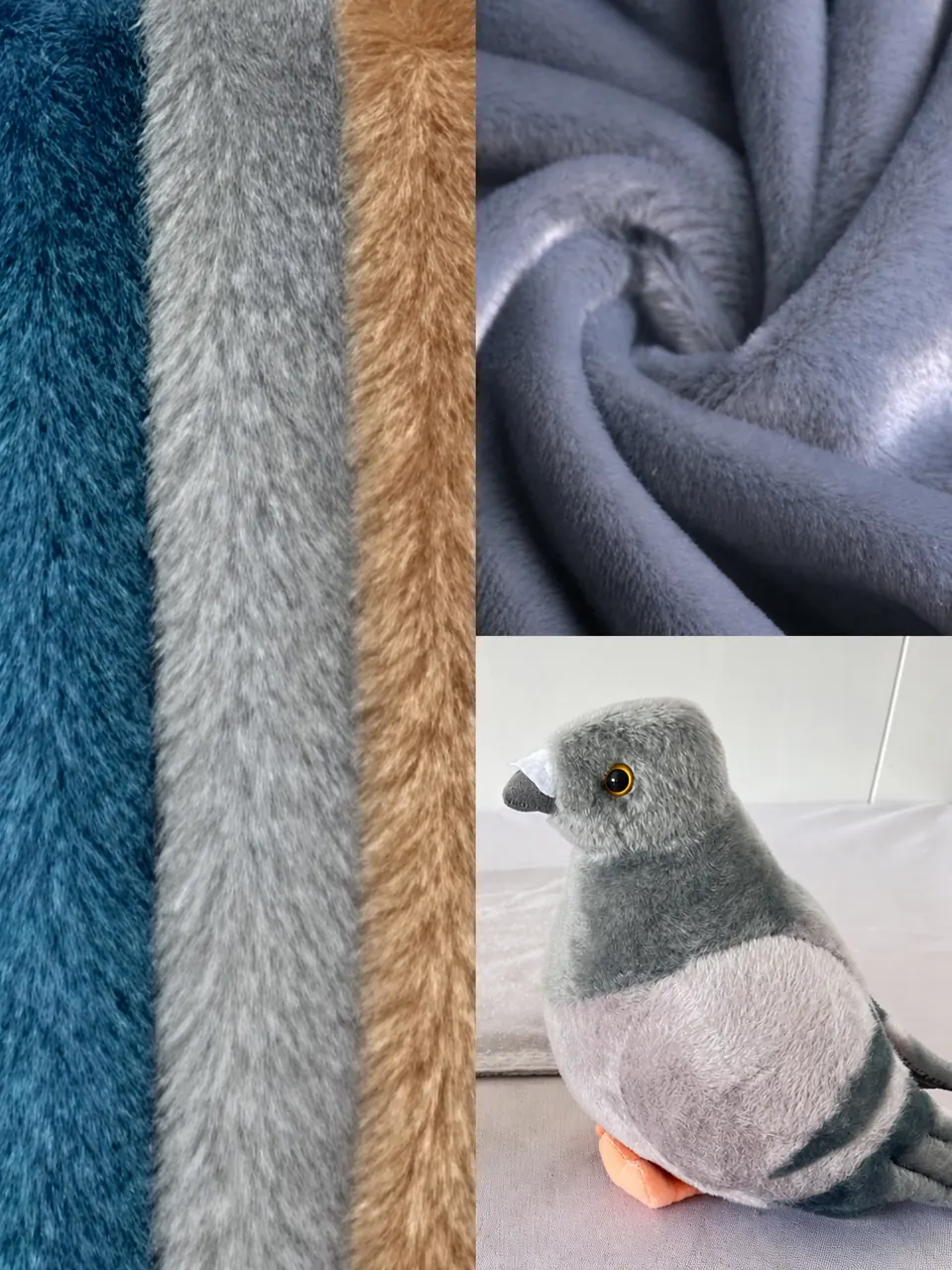
Not as soft or fluffy as rabbit faux fur, but it can provide a long-pile visual effect. It is useful when a smaller plush needs a fur-like look without a heavier long-pile fabric.
Typical pile: 3 mm, 5 mm, 7 mm / small plush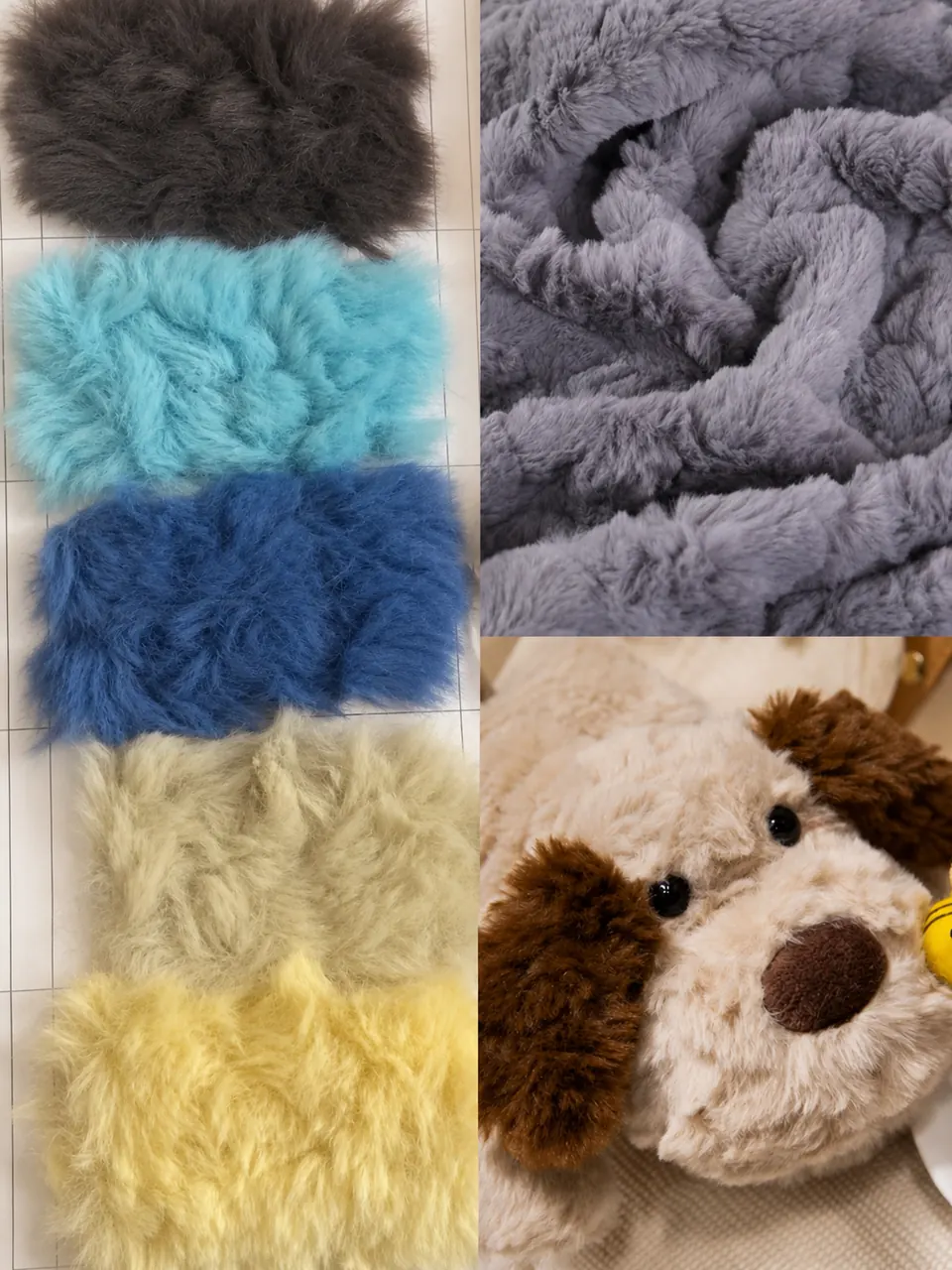
A textured, layered faux fur for a more expressive surface. It can be soft and easy to handle, but approval standards for color variation and pile direction should be agreed before production.
Check: pattern, pile direction, shedding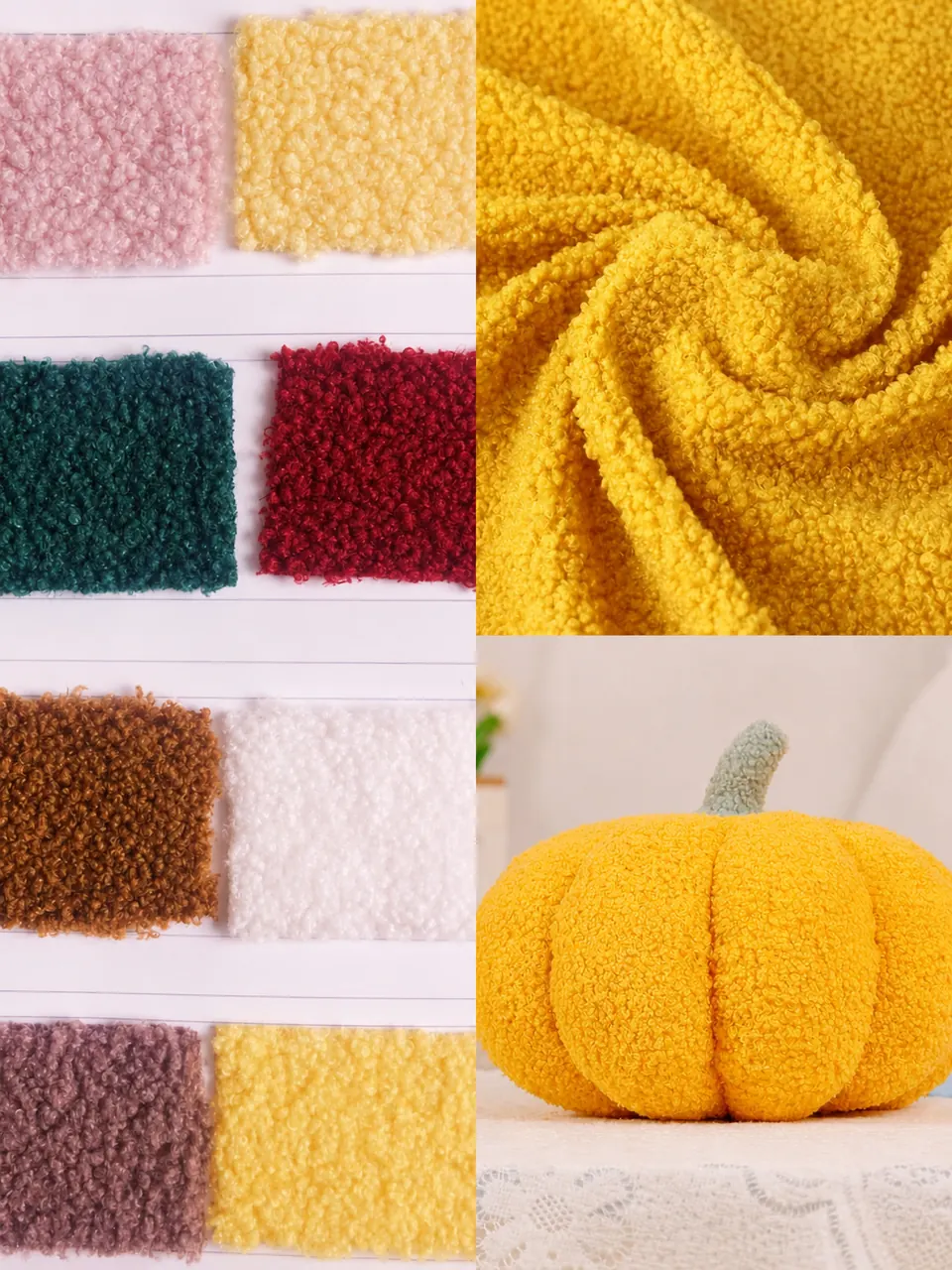
A soft, warm-looking fleece with a cozy surface. It is suitable for seasonal plush goods and cushion-like items when pilling, abrasion and seam thickness are controlled.
Check: pilling, abrasion, seam bulk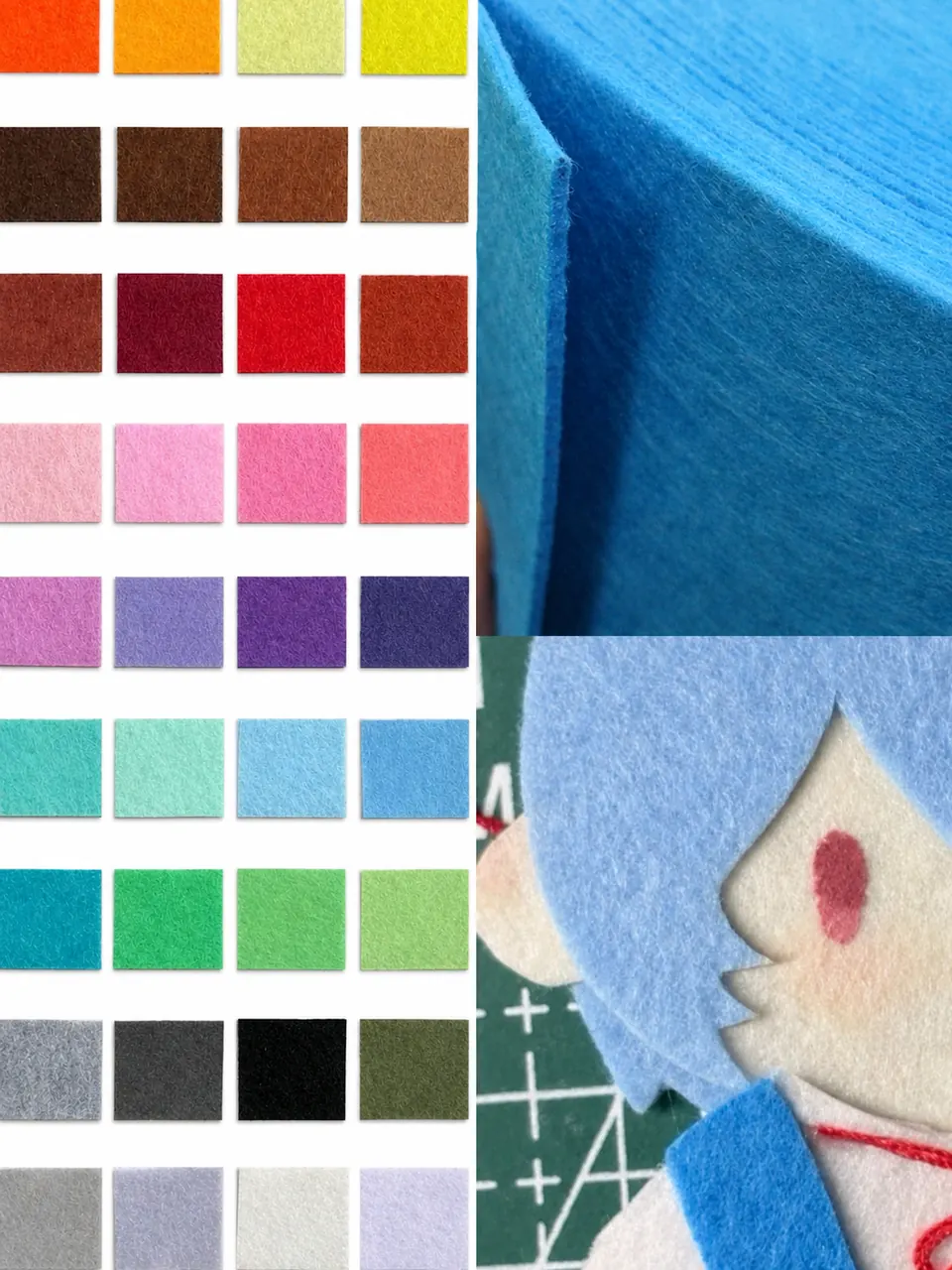
Not a main plush pile fabric, but useful for inner ears, facial panels, outfits, logos and small color-block details. Edge finish and bonding strength should be confirmed.
Check: edge finish, stiffness, bonding| Fabric type | Typical pile | Best-fit usage | Production check |
|---|---|---|---|
| Small mink-style long faux fur | Long pile | Premium plush bodies and accent panels | Pile direction, seam allowance and shedding tolerance |
| Rabbit faux fur | Approx. 8 mm, 15 mm, 20 mm | 10 cm+ dolls and long-pile plush | Whether pile covers facial embroidery or printed details |
| Spandex super-soft stretch plush | Approx. 1-1.5 mm | 5 in+ dolls, pillows and cushions | Stretch direction, filling rebound and sewing distortion |
| Crystal super-soft minky | Approx. 1-5 mm | Small charms through large plush toys | Color variance, surface finish and embroidery or print result |
| Sailer velour | Approx. 3 mm, 5 mm, 7 mm | Small plush requiring a long-pile look | Handfeel difference, pile direction and detail visibility |
| Brushed rabbit faux fur | Varied long pile | Expressive surfaces and character fur details | Pattern placement, color variation and approved pile direction |
| Teddy fleece | Loop or boa-like surface | Seasonal plush goods and cuddle-focused items | Pilling, abrasion resistance and seam bulk |
| Felt or applique fabric | No pile | Applique, inner ears, outfits and small parts | Edge finish, bonding, stiffness and color transfer |
Decide fabric, stuffing and pellets in one specification sheet
Short-pile fabric, boa, velboa and soft stretch materials should be reviewed together with stuffing volume, pellet position, embroidery and print stability.
Useful when small mascots or facial panels need a clear outline. Review pile direction, color lot, backing and embroidery line width together.
Creates a fuller plush feel, but fine facial details and small parts can disappear into the pile unless checked on a sample.
Often considered for cushions, hugging plush and soft promotional goods. Confirm stretch direction, stuffing rebound and embroidery waviness.
Controls sitting stability, center of gravity, hand feel and rebound. Record gram weight, placement, inner bagging and inspection points.
| Spec item | Decision before quotation | What to approve on the sample |
|---|---|---|
| Pile and density | Separate short fur, boa and velboa candidates by use case | Face outline, eye and mouth visibility, seam sink-in |
| Stretch direction | Limit where soft stretch or mochi-style fabric is used | Dimension recovery, shape stability, waviness around embroidery |
| Stuffing volume | Define firm, soft, squeezable feel and compression packaging conditions | Hand feel, thickness, symmetry and rebound after packing |
| Pellet placement | Define sitting area, center of gravity and foreign-matter control method | Inner bagging, seam closure, weight variation and inspection records |
| Embroidery or print | Choose printing vs embroidery for plush toys according to the fabric surface | Line width, color output, shrinkage and pile coverage |
Original Flow: From Artwork to Production Fabric Freeze
Narrow options from use and expression, then confirm swatches, samples and production references.
Mascot, keychain or cushion
Pile and embroidery
Color, stretch and backing
Shape, feel and processing
Code, color and substitution
Four effects commonly missed when fabric changes
A similar color in another material can change appearance, dimensions, decoration and packaging.
Pile and sheen change the contrast of eyes, mouth and outline.
Thickness and stretch can affect patterns, filling and measurement.
Check needle penetration, shrinkage, waviness and color output.
Stock, minimum purchase, dyeing, substitution and material count affect quotation.
Three fabric points to confirm physically
Match swatches, decorated samples and pre-production appearance rather than screen color names alone.
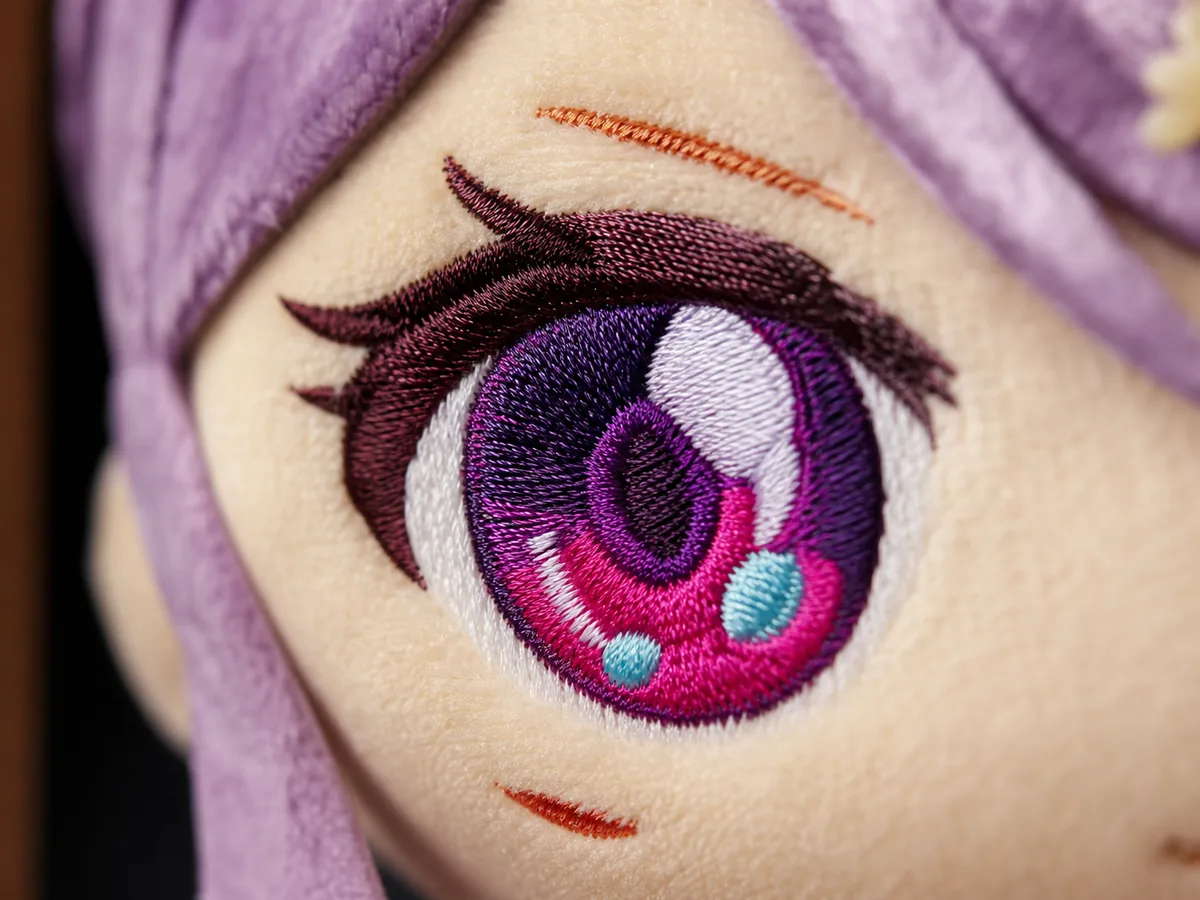
Check whether facial details remain visible within the pile.
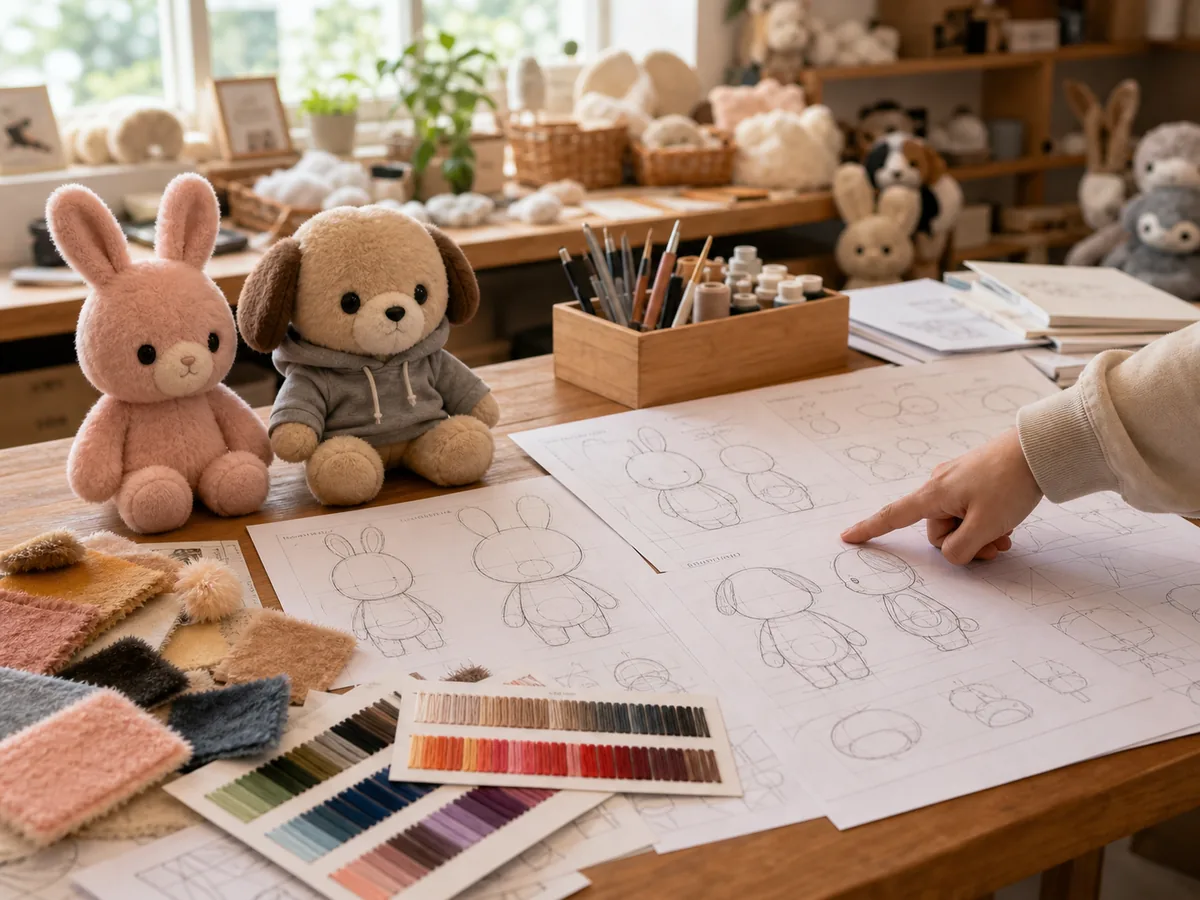
List fabric code, target color, application area and quantity in the quote brief.
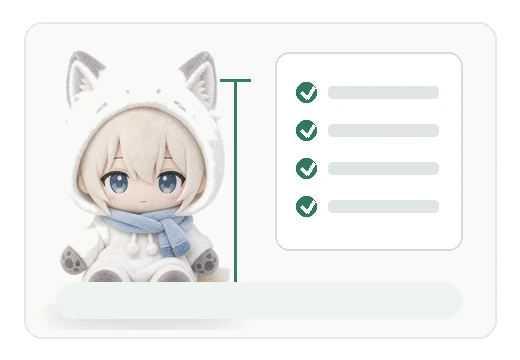
Compare pile direction, shade, seams and shape against the approved sample.
Information to prepare before fabric consultation
Even without a known fabric name, describe the desired look and use with references.
- Finished size and use
- SKU count and quantity
- Application area and filling feel
- Short or long pile
- Matte or sheen
- Softness and stretch target
- Embroidery, printing or applique
- Clothing, hardware and small parts
- Compression packaging
- Color code or physical reference
- Substitution allowance
- Repeat-order plan
Related pages
Fabric selection connects to OEM specifications, quotation, embroidery, cost design, samples and production approval.
FAQ
Which fabric is best for custom plush?
There is no universal best fabric. Choose by use, size, expression, feel, decoration and quantity, then compare swatches and samples.
What is the difference between short fur and velboa?
Pile, density, sheen and flatness often differ, but the trade name alone does not define the specification. Confirm the physical code.
Can soft stretch fabric be embroidered?
It may be possible, but sample-check waviness, shrinkage, line width and backing reinforcement caused by stretch.
What if the exact color is unavailable?
Review a close stock color, another code, dyeing or application-area changes, together with quantity, cost and schedule impact.
Can fabric change during production?
Because it affects appearance, dimensions, sewing, embroidery and price, freeze the code before production and define recheck scope for any change.
What is needed for a quotation?
Share artwork, size, quantity, SKUs, use, hand-feel reference, decoration, packaging, color and substitution conditions.
Should stuffing and pellets be decided with the fabric?
Yes. Soft stretch fabric, firm or soft stuffing, and pellet-filled weight or sitting stability should be sampled together because fabric stretch and pile change the final feel.
Share the use, expression, feel and decoration conditions to narrow fabric options for an OEM quotation
Provide artwork, size, quantity, target pile, softness, stretch, embroidery and packaging requirements so project-specific checks can be organized.